
REVIEW · BEACON HILL & BACK BAY WALKS
Boston: Underground Railroad History Tour of Beacon Hill
You can’t learn this Civil War story from plaques alone. This Beacon Hill walking tour traces Black abolitionists, safe houses, and integration battles across 10 landmark stops. It also spots the neighborhood beauty—cobblestones, courtyards, and meeting-house steps—while keeping the focus where it belongs.
I especially like the way this route ties big national events to close-up street corners in Boston. You’ll get a small-group experience (max 16), with frequent stops built for questions and pacing. One trade-off: it’s a solid amount of walking on hills and uneven surfaces, so comfy shoes matter more than style.
If you want a fast, easy checklist tour, you might find this one runs long. But if you’re in the mood for serious history told clearly, it’s a strong use of a morning or afternoon.
In This Review
- Key things to know before you go
- Beacon Hill on Foot, with the Underground Railroad Front and Center
- Price, Time, and Small-Group Size: Is $35 Good Value?
- Starting at Soldiers and Sailors Monument: Get Your Bearings Fast
- Acorn Street and Beacon Hill’s Elite Squares: Beauty with a Purpose
- Phillips School and the Story of Integration by 1855
- Abolitionist Leadership at John J Smith House
- Charles Street Meeting House: Debates on Racial Integration
- The Underground Railroad Safe House at 66 Phillips St
- Otis House and the Power of Boston’s Political Shockwaves
- African Meeting House: Cultural Center and Oldest Extant Black Church Building
- 5 Pinckney St and the Long View of Freedom
- Ending at the Robert Gould Shaw and 54th Regiment Memorial
- How the Guides Tell It: Pace, Questions, and Storytelling Styles
- Who This Tour Suits Best (and Who Should Skip)
- Should You Book This Underground Railroad History Tour of Beacon Hill?
- FAQ
- How long is the Boston Underground Railroad History Tour of Beacon Hill?
- What is the price per person?
- How big is the group?
- Where does the tour start and where does it end?
- What language is the tour offered in?
- Does the tour include admission to any buildings?
- Do I need to print anything or can I use a phone ticket?
- Is the tour mainly outdoors?
- What happens if the weather is bad?
- FAQ
- Can I cancel for a full refund?
- Is this tour okay for someone who has trouble standing?
- Is a service animal allowed?
- Is public transportation nearby?
- Does the tour run only with a minimum group size?
Key things to know before you go
- 10 Black Heritage Trail landmarks, mostly outdoors: you’ll cover a full loop of key sites without hopping between far-apart buildings.
- African Meeting House includes admission time: one stop isn’t just a photo moment.
- Guides bring the story through people: abolitionists, lawmakers, and everyday community members drive the narrative.
- Beacon Hill walking is real walking: hills, cobbles, and standing time are part of the deal.
- English mobile tickets: you’ll check in with a phone ticket and head out from Boston Common.
Beacon Hill on Foot, with the Underground Railroad Front and Center
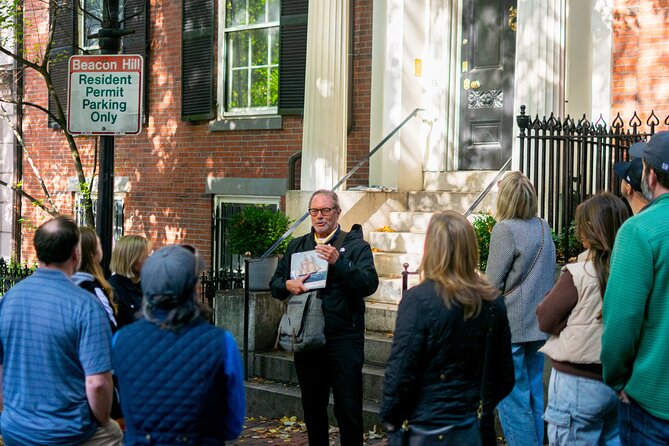
Beacon Hill looks like old postcards—until your guide starts connecting it to escape routes, abolition meetings, and racial injustice baked into the 1800s. The magic here is that you’re not touring a museum hallway. You’re walking the neighborhood where these debates happened and where people had to live with the consequences.
A lot of Boston’s Civil War era gets told in broad strokes. This tour keeps it local and human. You’ll hear about Black Bostonians and abolitionists shaping the fight over slavery and integration, right alongside the famous marble-and-granite monuments.
Two things I really like: the tour’s small-group size and its strong sense of pacing. Stops are short enough to stay moving, but long enough for real context. Second, you get the architecture—Beacon Hill’s streets and landmarks—without the story getting lost in scenery.
Price, Time, and Small-Group Size: Is $35 Good Value?
At $35 per person for about 2 hours 30 minutes, you’re paying for guided interpretation plus access to the Black Heritage Trail landmarks. Most entries along the way are free, so the value comes from the direction and the connections your guide makes between places.
You’re not squeezed into a crowd of strangers. With a max of 16 guests, it feels easier to ask questions and to follow along when the conversation turns specific—school integration, abolitionist organizing, and the way the city debated slavery-era change.
The main consideration is physical. This isn’t a short stroll. You’ll be standing and walking on uneven ground and up hills. Reviews also flag that you should plan on more than “casual sightseeing time,” so treat this as a scheduled outing, not a wander-and-snack break.
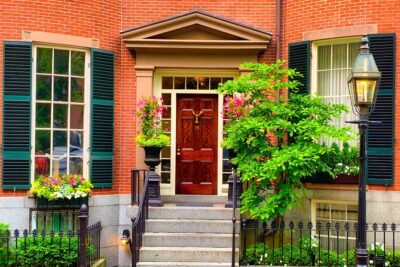
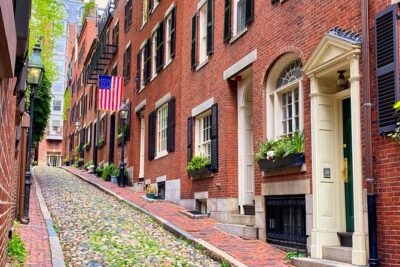
Gas lamps, bow fronts, brownstones. Keep walking
Starting at Soldiers and Sailors Monument: Get Your Bearings Fast
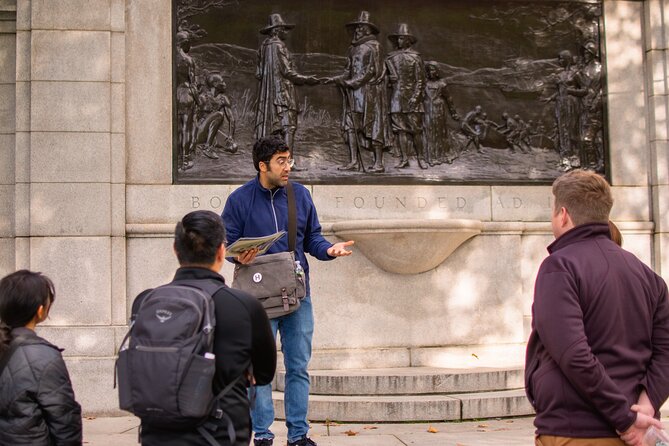
The tour begins at the Soldiers and Sailors Monument in the center of Boston Common. Look for the white granite column topped by a female figure holding a flag. Four bronze statues ring the base, making it a solid landmark even when you’re looking for a meeting point.
This is a clever starting point because it places you right inside Boston’s public memory machine. From here, the guide can contrast what people celebrated in stone versus what people fought for in real life—especially around race, freedom, and the coming Civil War.
If you’re arriving by transit, this meeting spot is workable. It’s also a good place to settle before the walking starts, because the first stretch is mostly about orientation and story setup.
Acorn Street and Beacon Hill’s Elite Squares: Beauty with a Purpose
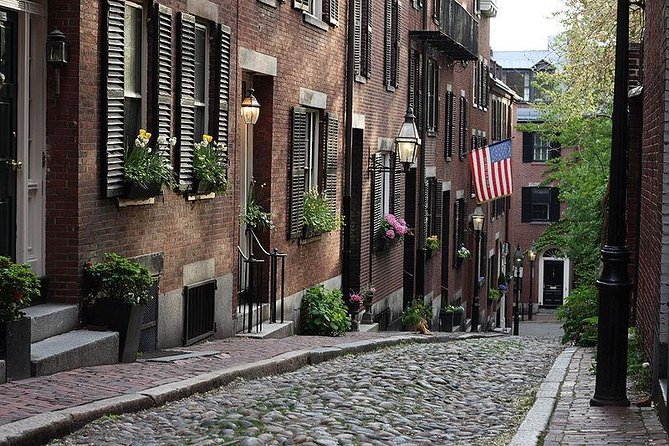
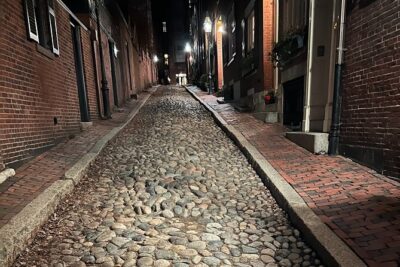
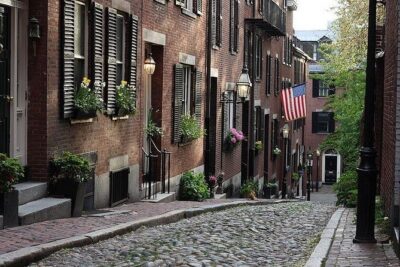
A few blocks into Beacon Hill, you’ll see Acorn Street, one of those narrow cobblestone alleys that feels like it belongs to a film set. It’s easy to fall into “pretty street” mode. Don’t. Your guide uses these visual cues to talk about who lived where—and who was shut out.
Then you’ll move into a more formal pocket of Beacon Hill, tied to the 19th-century “Boston Brahmins.” This is where the tour does something important: it doesn’t treat wealth as neutral scenery. It explains how power operated in Boston society and how that shaped policies and attitudes during the slavery era.
It’s a strange mix at first—old-world charm paired with hard history. But that contrast is the point. You’re learning how systems stayed in place, even when the streets looked calm.
Phillips School and the Story of Integration by 1855
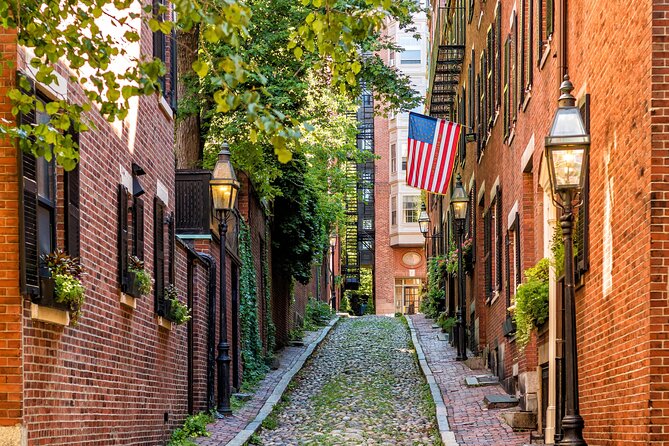
Next comes the Phillips School, built in 1824 as a whites-only school. That detail hits hard, because it explains how education access was structured long before “separate but equal” became the phrase people remember.
What makes the stop valuable is the pivot. The tour notes that by 1855, Phillips School was among the first schools in Boston to integrate. That’s not just trivia. It’s a marker of activism, legal pressure, and community persistence.
If you care about how social change actually happens, this stop gives you an anchor. You can picture the brick school days when families had to organize for basic fairness—and how slow progress still counted as progress.
Abolitionist Leadership at John J Smith House
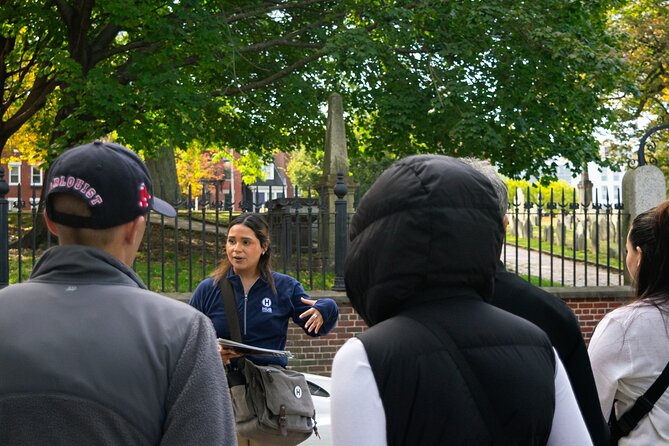
At the John J Smith House, the story narrows to a specific person: a leading abolitionist and state legislator, and a former barber. That combination matters. It reminds you that abolition wasn’t only speeches and pamphlets. It was networking, local influence, and community ties.
Your guide uses this kind of detail to show how people moved between public and private spaces—using jobs and civic roles to build credibility and support.
This stop also helps if you’re trying to understand the Underground Railroad as more than a single dramatic escape route. It was also about organizing. About gathering information. About trust.
Three centuries deep, more Boston history
- Boston: Freedom Trail History Small Group Walking Tour★ 5.0 · 6,450 reviews
- Boston Food & History: Pizza, North End & Freedom Trail★ 5.0 · 1,772 reviews
- Boston: Freedom Trail History Small Group Walking Tour★ 4.9 · 1,590 reviews
- City Cruises Boston Historic Sightseeing Harbor Cruise★ 4.5 · 1,388 reviews
- Boston’s North End Food Tour: Italian Flavors & Heritage Walk★ 5.0 · 1,322 reviews
Charles Street Meeting House: Debates on Racial Integration
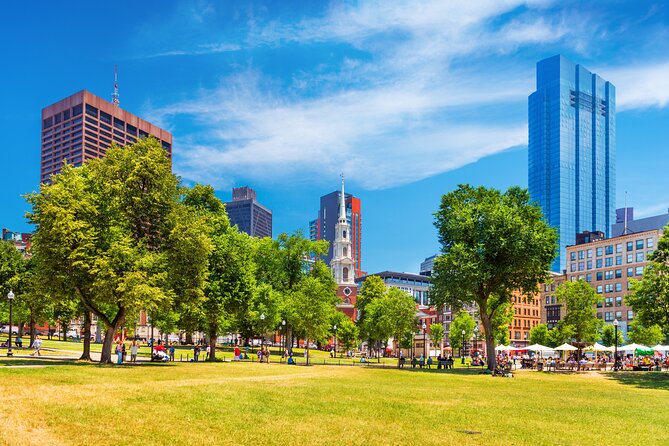
You’ll spend time at the Charles Street Meeting House (built 1807), and it’s here that the tour gets very real. This meeting house was a site of contentious debate over racial integration, a reminder that abolition-era change didn’t arrive politely.
Church and civic life were often linked in 1800s Boston. That’s why a meeting house stop works so well: you can connect public arguments to community decisions.
This is also one of those points where your guide’s storytelling style matters. In reviews, guides like Dana, Will, Meghan, Lin, and Drew get praised for making the timeline and the stakes feel clear, not like a list of dates. If you prefer straightforward explanations, you’re likely to enjoy this section.
The Underground Railroad Safe House at 66 Phillips St
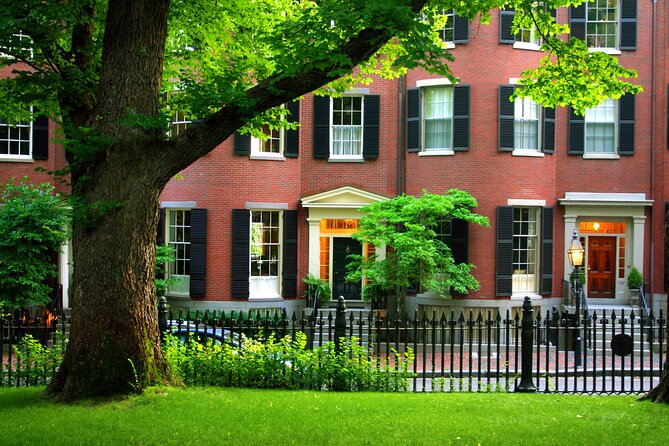
Now comes one of the most compelling parts of the route: 66 Phillips St, an Underground Railroad safe house owned by the Haydens—described as staunch abolitionists who were formerly enslaved.
This is where Beacon Hill’s story shifts from debates to survival. Your guide explains how people created shelter and offered help to those trying to escape enslavement. Even when you can’t see hidden doors or secret passages in a literal way, you can still grasp the risk involved: harboring people escaping bondage wasn’t just kindness. It was dangerous.
If you’re the type who likes “how did it actually work” explanations, this is the stop that tends to land best. Reviews specifically mention that guides masterfully explain the mechanics and realities of the Underground Railroad.
Practical note: you’ll likely be listening closely here, standing in a tight urban spot. Slow down, and give yourself a minute to take it in.
Otis House and the Power of Boston’s Political Shockwaves
The Otis House is next. It’s the 1796 residence of Harrison Gray Otis, Boston mayor and nephew of Revolutionary figure James Otis Jr. Your guide uses this location to talk about political lineage and influence—and then, again, brings you back to the slavery fight.
The tour also references another historical moment tied to abolitionist conflict in the U.S. Capitol: a U.S. Senator who opposed slavery in 1856 was beaten unconscious in the Capitol. The point isn’t sensationalism. It’s clarity about how violently the nation resisted abolition and how Boston figures fit into those broader tensions.
If you’re mapping the Civil War era in your head, these stops help you see Boston as a place where national politics had local consequences. The neighborhood isn’t a backdrop. It’s part of the story’s engine.
African Meeting House: Cultural Center and Oldest Extant Black Church Building
The highlight stop for many people is the African Meeting House, a cultural center for Boston’s African-American community and the oldest extant black church building in the U.S. (built 1806). This is also where admission is included, so plan on more than just a quick curbside glance.
This matters for your experience. It’s one of the few times you get a chance to slow down inside a space that carried community memory. You’re not just looking at the outside of history; you’re standing in a place that helped hold the community together across generations.
If you’re traveling with kids or teenagers, this is often where interest clicks—because the story becomes tangible. Reviews also praise the way guides weave in the role of women and less-remembered figures, and the Meeting House setting is ideal for that kind of storytelling.
5 Pinckney St and the Long View of Freedom
On 5 Pinckney St, you’ll see the oldest extant house in Beacon Hill (from 1787) and hear that it was home to an African-American Revolutionary War veteran. This stop widens the lens. It’s not only about the Underground Railroad decades later. It’s about how freedom—and its limitations—played out across eras.
The tour also links this to the broader abolitionist network and the education questions of the period, including the founding of an African-American school in 1835 that served Boston’s Black children in a segregated system. Again: it’s painful history, but it’s the kind that helps you understand why abolition work had to keep evolving.
Ending at the Robert Gould Shaw and 54th Regiment Memorial
Your walk finishes at the Robert Gould Shaw and the 54th Regiment Memorial, across from 24 Beacon Street near the Massachusetts State House. This ending is smart because it connects abolition-era organizing to the Civil War’s fighting reality.
The 54th Regiment—associated with Robert Gould Shaw—became one of the most famous Black military stories of the Civil War period. Ending here gives your tour a kind of emotional closure, without pretending the struggle ended cleanly.
For many visitors, this is the moment where it all clicks: the activism, the safe houses, the integration arguments, the community institutions, and then the leap into war-era action.
How the Guides Tell It: Pace, Questions, and Storytelling Styles
The guide is the difference-maker on a tour like this. In the reviews, several names come up again and again: Dana (praised for passionate, comprehensive storytelling), Will (praised as a top historian with great explanations), Meghan (praised for clarity and keeping a good pace), Lin (praised for measured pacing and a relatable approach), Joe (praised for organization and engaging delivery), and Drew (praised for trivia and making history come alive).
You can also take useful expectations from the comments:
- Expect a measured pace with frequent stops, not a nonstop lecture.
- Bring water and plan on comfy shoes for hills and uneven surfaces.
- There’s a lot to cover, and at least one review notes the tour ran longer than expected, likely because the story has too many important turns to compress.
If you like to ask questions, this tour is set up for that. If you hate standing, you’ll want to think hard before booking.
Who This Tour Suits Best (and Who Should Skip)
This fits you if you want history that connects places to people. You’ll probably love it if you care about how the Underground Railroad worked in practice, not just as a concept. It’s also a strong choice if you’re visiting Beacon Hill anyway and want your walk to mean more than architecture and old streets.
You might skip it if you need a low-walking, minimal-standing experience. The tour is designed for moderate physical fitness, and it’s not recommended for people who struggle with extended standing.
It’s a good fit for adult travelers and teens who can handle intense topics like slavery, abolition conflict, and integration battles. Reviews mention that even kids can stay engaged when the guide keeps the story moving and focuses on people, not just institutions.
Should You Book This Underground Railroad History Tour of Beacon Hill?
I think this is a great booking if you’re the type who wants the real Boston story, not just the postcard version. For $35, you get a full Black Heritage Trail loop, a chance to spend time at the African Meeting House, and a guide-led explanation that links abolition to Civil War-era change.
Book it if you can handle 2.5 hours of walking on a hilly, older neighborhood. If you can’t, you’ll be fighting your body instead of listening to the story.
If you do book, show up with comfortable shoes, bring water, and be ready for history that’s direct. You’ll leave with Beacon Hill looking different—in the best way.
FAQ
How long is the Boston Underground Railroad History Tour of Beacon Hill?
It lasts about 2 hours 30 minutes.
What is the price per person?
The tour costs $35.00 per person.
How big is the group?
The tour has a maximum of 16 travelers.
Where does the tour start and where does it end?
It starts at the Soldiers and Sailors Monument at 139 Tremont Street area in Boston Common, and it ends at the Robert Gould Shaw and the 54th Regiment Memorial near 26 Beacon Street.
What language is the tour offered in?
The tour is offered in English.
Does the tour include admission to any buildings?
Most landmarks are part of the trail with no paid admission noted, but admission is included for the African Meeting House. Museum entry beyond that is not included.
Do I need to print anything or can I use a phone ticket?
You’ll have a mobile ticket.
Is the tour mainly outdoors?
Yes. It’s a walking tour around Beacon Hill’s historic area, with landmarks at specific stops.
What happens if the weather is bad?
It requires good weather. If it’s canceled due to poor weather, you’ll be offered a different date or a full refund.
FAQ
Can I cancel for a full refund?
Yes, you can cancel for a full refund if you cancel at least 24 hours before the experience starts.
Is this tour okay for someone who has trouble standing?
It’s not recommended for travelers who have difficulty standing for extended periods.
Is a service animal allowed?
Yes, service animals are allowed.
Is public transportation nearby?
Yes, it’s near public transportation.
Does the tour run only with a minimum group size?
Yes. If the minimum traveler count isn’t met, it may be canceled and you’ll be offered a different date/experience or a full refund.
Boston History, Volume Two



More of the Boston Ledger


Beacon Hill and Back Bay, Continued



New on the Boston Docket
- Boston to Newport Mansions Private Day Trip
★ 5.0 · 3 reviews - Boston Massachusetts Private Photography Tour
★ 5.0 · 3 reviews - Homemade Dumplings 101 in Boston
★ 3.5 · 3 reviews - Self-Guided Audio Tour of Boston North End
★ 4.5 · 3 reviews - Old Boston: Beacon Hill & Back Bay Walking Tour in French
★ 4.7 · 3 reviews
Beacon Hill & Back Bay Walks, compared.
 ★ 4.5Downtown Freedom Trail, Beacon Hill & Back Bay Walking TourFrom $65473 reviews
 ★ 5.02-Hour Beacon Hill True Crime Expert Guided TourFrom $35182 reviews
 ★ 5.0Beacon Hill Boston History + Photo Walking Tour (SMALL Group)From $45163 reviews
 ★ 5.0Beacon Hill + Back Bay History + Photo Walking Tour(SMALL Group)From $5560 reviews
 ★ 5.0Votes for Women History Tour of Back BayFrom $3549 reviews
 ★ 4.5Guided Walking Tour of Copley Square to Downtown Boston Freedom TrailFrom $6546 reviews
 ★ 4.9Underground Railroad History Tour of Beacon HillFrom $3538 reviews
 ★ 5.0Back Bay Chocolate and Art Galleries TourFrom $6529 reviews
Browse the lists this tour appears in