
REVIEW · FREEDOM TRAIL & REVOLUTION WALKS
Boston: Freedom Trail History Small Group Walking Tour
Revolutionary Boston comes into focus fast. This small-group Freedom Trail walk zeroes in on the years 1760 to 1775 with a historian guide, hitting all 16 official landmarks from Boston Common to Copp’s Hill. You’ll also get time to ask questions, not just follow a line of tourists.
I love the chronological storytelling that keeps the Revolution timeline from getting tangled, and I love the small group size (up to 16) that makes it easier to hear the guide and interact. A possible drawback: it’s a lot of outdoor walking, and museums or inside stops aren’t included—so you’ll want to plan a separate visit if you really want to go in.
In This Review
- Key Takeaways Before You Go
- Where the Walk Starts: Boston Common to Copp’s Hill Terrace
- The 1760 to 1775 Focus: What You’ll Actually Learn
- Stop-by-Stop: Boston Common’s Puritan Roots and the City’s Starting Line
- What to watch for
- Granary Burying Ground: Graves That Turn Into a History Lesson
- The practical side
- Benjamin Franklin Area: Schools, Printing, and the Spread of Ideas
- Boston Massacre Site and Faneuil Hall: When Tension Turns Public
- North Square Park: The North End’s Public Square Energy
- Paul Revere’s Connection: Home, Statue, and the Lantern Signals
- Copp’s Hill Terrace Finale: The Harbor View and Two Big Anchors
- Small Group Style: How the Guide Makes the Difference
- Price and Value: Is $35.10 Worth It?
- Who Should Book This (and Who Might Want to Skip It)
- Should You Book This Freedom Trail Tour?
- FAQ
- Where does the tour start and where does it end?
- How long is the Freedom Trail walking tour?
- What is the group size limit?
- Is it accessible for wheelchairs or strollers?
- Is museum or indoor admission included?
- What happens if weather is bad or I need to cancel?
Key Takeaways Before You Go
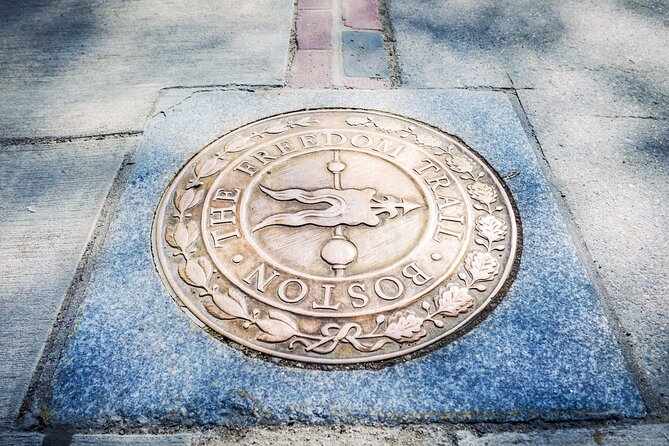
- 16 official Freedom Trail landmarks in one 2.5-hour route so you can cover a lot without overthinking logistics
- Historian guide, question-friendly pace focused on the 1760–1775 Revolutionary years
- From Boston Common to Copp’s Hill with a satisfying end view across the harbor to the bigger sites
- Small group up to 16 which helps the guide manage details and keep conversations flowing
- Winter-ready effort for comfort with sheltered moments and occasional warm-up opportunities on very cold days
Where the Walk Starts: Boston Common to Copp’s Hill Terrace
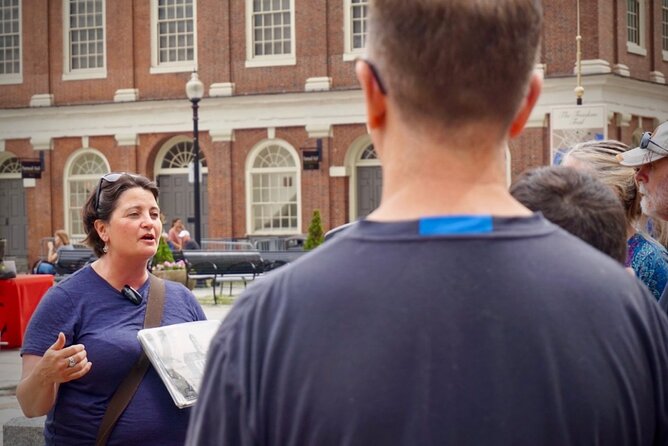
You’ll meet at the Boston Foundation Monument at the northern edge of Boston Common, across from 50 Beacon Street. This is a smart starting point because Boston Common is the city’s oldest public land—and it’s also the launchpad for everything that follows. Once you check in, the group heads out together and stays together. That matters on the Freedom Trail, where it’s easy to lose your place if you’re flying solo.
The tour ends at Copp’s Hill Terrace, overlooking the Charles River and across toward two big-name Revolutionary-era landmarks: the U.S.S. Constitution and Bunker Hill Monument. Ending here feels practical. You finish with a view, not with a fence and a dead end.
The 1760 to 1775 Focus: What You’ll Actually Learn
Most Freedom Trail walks give you the highlights and move on. This one stays anchored in the years right before open conflict and through the sparks that lead to war—1760 through 1775. That framing helps you connect cause and effect.
You’ll spend time on political pressure, public unrest, and the everyday details that pushed people toward confrontation. The guide’s job is to make those moments feel less like textbook bullet points and more like a chain reaction—laws, protests, and propaganda all nudging the city closer to open rebellion.
The red brick line keeps going. More Trail walks here
Stop-by-Stop: Boston Common’s Puritan Roots and the City’s Starting Line
The first stop at the Boston Foundation Monument sets a tone for the entire walk. The granite memorial includes a bronze relief showing two men shaking hands, tied to the Puritans arriving in 1630. It’s not just a decorative start. It gives you a baseline: Boston begins here, then changes fast.
From there, you move into Boston Common itself. This is where the Revolution-era stories make physical sense, because you’re standing in the oldest communal grazing pasture in the city. When you hear about how public space shaped protest and politics, Boston Common helps the ideas click.
You’ll also pass the Massachusetts State House and the Hub of the Solar System marker (dating to 1798). It’s a good reminder that even while the country is forming its identity, Boston is building its own civic stage. The guide connects that shift to what’s happening in the later 1700s.
What to watch for
- Listen for how the guide links each stop to the broader timeline (1760 to 1775).
- If you like visual cues, take a moment at each landmark to note what the area was used for—meeting, debate, punishment, signaling, or commerce.
Granary Burying Ground: Graves That Turn Into a History Lesson
Granary Burying Ground is one of those places where the past feels close without being dramatic. You’re stepping into a cemetery that dates back to the 1600s, including Revolutionary Boston figures. It’s described as Boston’s third-oldest burying ground, and the tone here is quieter than most Freedom Trail stops.
The guide uses the cemetery setting to talk about the people and the social stakes behind the Revolution. When history is taught in names and dates, it’s easy to forget the human weight. In a cemetery, you don’t get that luxury.
You’ll also hear about how older burial grounds sit alongside later political upheavals, showing how the city held onto its structure even as beliefs and power shifted. It’s also a smart place to learn because you slow down a little. That gives your brain time to absorb.
The practical side
You’ll likely stand and listen outdoors in this stretch. If cold or wind is a problem, keep moving between pauses and wear layers you can adjust quickly.
Boston was built for walking. More routes
- Boston: Freedom Trail History Small Group Walking Tour★ 5.0 · 6,450 reviews
- Harvard University Campus Guided Walking Tour★ 4.5 · 3,632 reviews
- Boston Freedom Trail Walking Tour with Costumed Guide★ 4.5 · 2,531 reviews
- The Full Revolutionary Story Epic Small Group Boston Walking Tour★ 5.0 · 2,356 reviews
- Boston’s Freedom Trail: A Revolutionary Walking Tour★ 4.9 · 1,748 reviews
Benjamin Franklin Area: Schools, Printing, and the Spread of Ideas
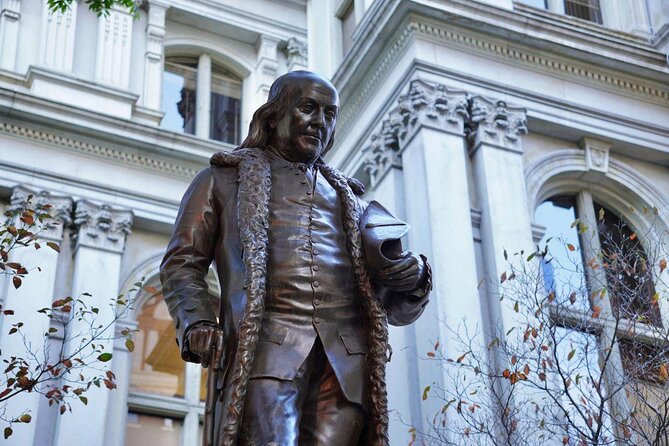
Next is the Statue of Benjamin Franklin area, and the guide uses it as a launching point for education and public debate. You’ll hear that Boston Latin School (from 1635) is the oldest public school in the Americas, which helps frame the Revolution-era push for literacy and persuasion.
From there the walk connects the dots between publishing and political momentum, including the former publishing house of Ticknor & Fields (1718). You also get details tied to major political and civic sites nearby, including a congregational meeting house associated with the origin site of the Boston Tea Party (1773). Another nearby anchor mentioned is the colonial capitol of the Massachusetts Bay Colony and the oldest public building in Boston (1713).
This stop works well for two kinds of travelers:
- If you like politics, you’ll track how laws and power get challenged in public.
- If you like ideas, you’ll see how schools, printing, and meeting houses help spread them.
Boston Massacre Site and Faneuil Hall: When Tension Turns Public
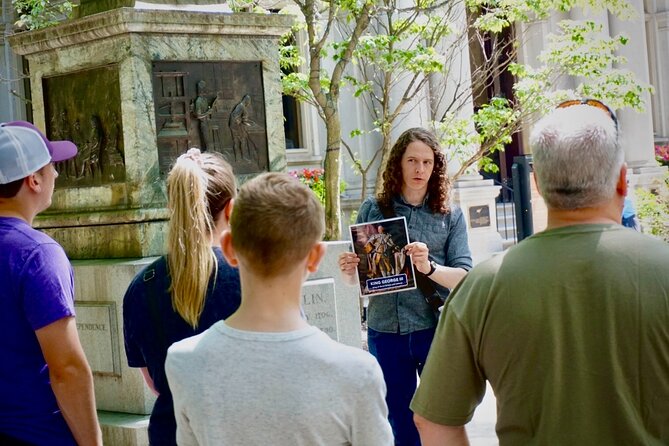
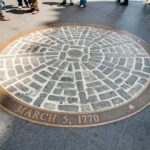
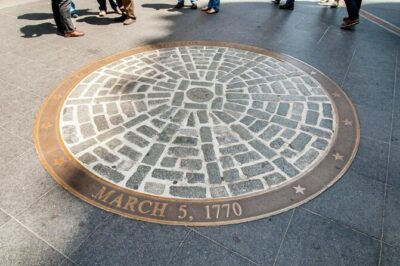
The Boston Massacre Site is the emotional pivot of the walk. British soldiers killing five Bostonians in 1770 is presented in a way that helps you understand why this wasn’t just one violent moment. It became fuel—proof for some, propaganda for others, and a spark that shaped public opinion.
Right after that, you’ll head to Faneuil Hall Marketplace, often called the Cradle of Liberty. It’s tied to Boston town meetings (1742), which gives you a clearer picture of how debate happened in public before the fighting escalated. You’re not just seeing a building. You’re seeing a mechanism: a place where disagreement could turn into coordinated action.
There’s also a fun practical detail here. You’ll pass the Old Corner Book Store building connection and an old restaurant presence in the historic fabric of the area. Even if you’re not entering anywhere, these layers show you that Boston’s Revolutionary-era streets didn’t vanish. They evolved.
North Square Park: The North End’s Public Square Energy
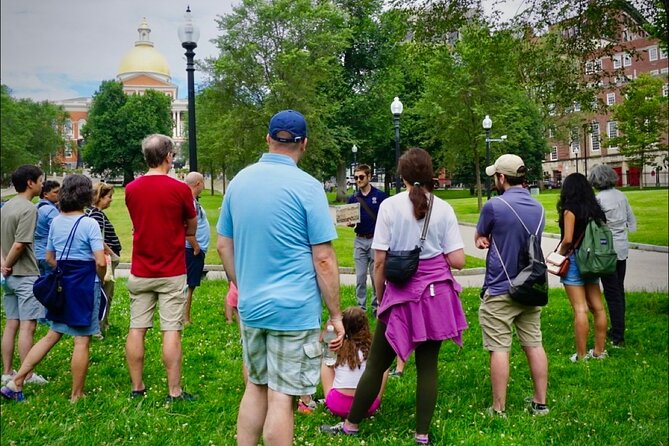
North Square Park is a smaller stop, but it adds rhythm. It’s a historic public square in the heart of Boston’s North End (1634). This is where the guide helps you see the city as a neighborhood system, not just a list of famous spots.
You get the sense that people lived, argued, and organized close to where they ate, worked, and prayed. That matters because the Revolution wasn’t an abstract event. It was local, daily, and public.
Paul Revere’s Connection: Home, Statue, and the Lantern Signals
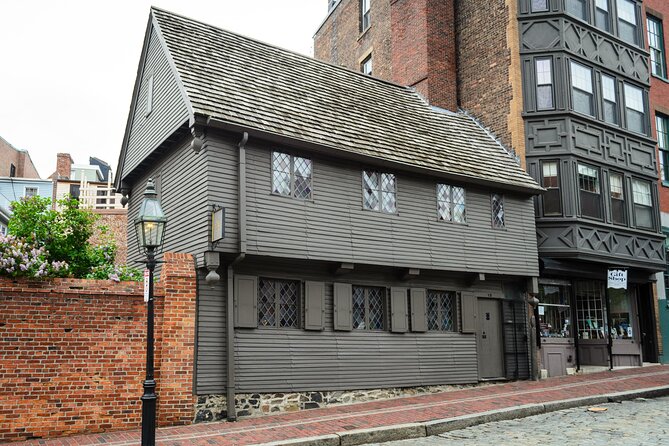
As you move toward Paul Revere-related stops, the tour gets vivid. You’ll see the Paul Revere House area, described as the home of Paul Revere and the oldest structure in Downtown Boston (1680). It’s a powerful contrast: the Revolution story is huge, but here you get a human scale.
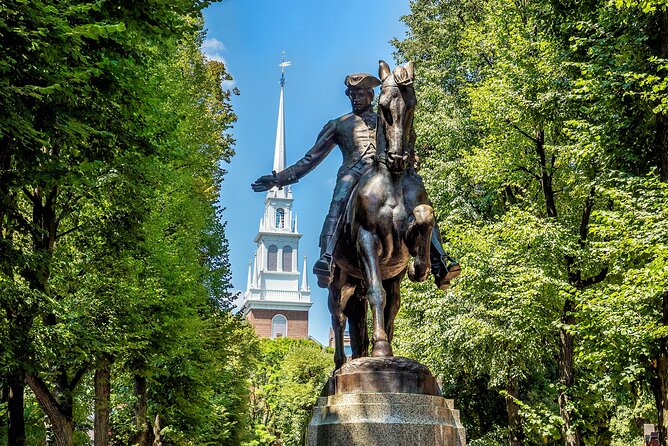
Then the walk includes the Paul Revere Statue, set in a pedestrian-only space honoring the Midnight Ride (1775). A statue can feel like a photo spot. Here, it works better because the guide gives you the sequence behind the legend and ties it to why signaling mattered in a city where fast information could change outcomes.
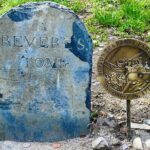
You’ll also hear about the oldest church that held signal lanterns during the Midnight Ride of Paul Revere (1723). Nearby, the walk references a second-oldest burying ground in Boston (1659), bringing you back to the idea that the city’s physical landscape carried memory even as its politics shifted.
Copp’s Hill Terrace Finale: The Harbor View and Two Big Anchors
The tour ends at Copp’s Hill Terrace, and this is a smart finale for first-time Boston visitors. You look out across the Charles River with a view toward major Revolutionary landmarks: the U.S.S. Constitution (1797) and Bunker Hill Monument (1775 battle).
This ending view helps you place what you just learned. Instead of treating the Revolution as only something that happened in Boston’s core streets, you see the wider geography—water routes, nearby strongholds, and the way movement shaped the conflict.
If you want an easy dinner plan, the North End is right here. Hanover Street is steps away with Italian restaurants, pastry shops, pizza, and more, so you can turn the walk into a full evening without hopping around.
Small Group Style: How the Guide Makes the Difference
This is a small-group experience with a maximum of 16 guests. That’s not just a comfort detail. It’s how you get a better conversation flow.
The guide’s style is built for interactive Q&A along the way. Many guides are praised for answering questions clearly and keeping the Revolution story in a clean order—so you don’t leave with a collection of random facts.
You might be led by guides such as Krista, Cyrus, Jon, Mark, Alejandro, Maura, Nick, Cal, Maz, Miles, or Amelia. Across these different personalities, the consistent thread described is strong storytelling and a plan for keeping people engaged even when it’s cold.
And yes, Boston winters can be brutal. Several departures highlight that guides make an effort to keep things tolerable, including using indoor or sheltered spaces when available. If you’re visiting in colder months, plan for layers and a hat—you’ll enjoy it more.
Price and Value: Is $35.10 Worth It?
At $35.10 per person for about 2.5 hours, you’re paying for three things: a historian guide, a guided route that covers all 16 official Freedom Trail landmarks, and small-group time that helps you ask questions.
Here’s why that price can be good value:
- You’re not just paying for walking. You’re paying for interpretation that helps the 1760–1775 period make sense.
- Covering 16 official landmarks on foot in a short window saves time compared to trying to plan it yourself—especially if it’s your first trip.
- The group limit means you’re more likely to hear what matters and get your questions answered.
Where the value shifts a bit: museum entry is not included. So if you’re the type who wants to spend time inside churches or museums, you’ll likely add a second outing. Still, as an orientation to the Revolution-era landscape, this tour is a fast way to get your bearings.
Who Should Book This (and Who Might Want to Skip It)
This tour is a great fit if:
- You’re a history buff or you want a strong start for a first visit.
- You prefer structured storytelling over wandering.
- You like walking and can handle 2.5 hours with breaks at stops.
It may be less ideal if:
- You have difficulty standing for extended periods, since the tour involves a moderate physical fitness level and long stretches outdoors.
- You expect lots of museum time. Inside access isn’t part of the included experience.
It’s also listed as wheelchair and stroller accessible. If you’re traveling with mobility needs, it’s wise to bring what you need for comfort and have a realistic plan for outdoor pacing.
Should You Book This Freedom Trail Tour?
I’d book it if you want a tight, guided way to understand the Revolution years 1760–1775 and see the main Freedom Trail landmarks without building a detailed self-guided itinerary. The small group size and question time make it feel like a guided conversation, not a lecture on the move.
I’d skip it only if you know you want a heavy inside-museum day, or if standing outdoors for long stretches is tough for you. In that case, consider pairing a lighter self-guided route with a separate museum or church visit where you can slow down.
FAQ
Where does the tour start and where does it end?
You start at the Boston Foundation Monument at 49 Beacon St, Boston, MA 02108. The tour ends at Copp’s Hill Terrace, 520 Commercial St, Boston, MA 02109.
How long is the Freedom Trail walking tour?
The tour runs about 2 hours 30 minutes.
What is the group size limit?
This is a small-group tour with a maximum of 16 travelers.
Is it accessible for wheelchairs or strollers?
Yes. The tour is wheelchair and stroller accessible, and service animals are allowed.
Is museum or indoor admission included?
Admission inside museums is not included.
What happens if weather is bad or I need to cancel?
The experience requires good weather. If it’s canceled due to poor weather, you’ll be offered a different date or a full refund. You can cancel for a full refund up to 24 hours in advance. If you cancel less than 24 hours before the start time, you won’t receive a refund.
On Foot Through Old Boston

More of the Boston Ledger



Follow the Red Bricks Further


New on the Boston Docket
- Boston to Newport Mansions Private Day Trip
★ 5.0 · 3 reviews - Boston Massachusetts Private Photography Tour
★ 5.0 · 3 reviews - Homemade Dumplings 101 in Boston
★ 3.5 · 3 reviews - Self-Guided Audio Tour of Boston North End
★ 4.5 · 3 reviews - Old Boston: Beacon Hill & Back Bay Walking Tour in French
★ 4.7 · 3 reviews
Freedom Trail & Revolution Walks, compared.
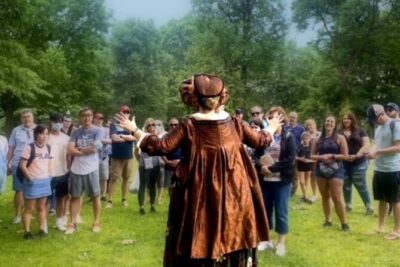 ★ 4.5Boston Freedom Trail Walking Tour with Costumed GuideFrom $262,531 reviews
 ★ 4.5Boston Tea Party Ships and Museum AdmissionFrom $352,512 reviews
 ★ 5.0The Full Revolutionary Story Epic Small Group Boston Walking TourFrom $552,356 reviews
 ★ 4.8Boston Tea Party Ships and Museum Interactive TourFrom $351,926 reviews
 ★ 5.0Boston Food & History: Pizza, North End & Freedom TrailFrom $901,772 reviews
 ★ 4.9Boston’s Freedom Trail: A Revolutionary Walking TourFrom $311,748 reviews
 ★ 4.9Freedom Trail History Small Group Walking TourFrom $351,590 reviews
★ 5.0Boston’s Freedom Trail: A Revolutionary Walking TourFrom $311,343 reviews
★ 4.9Freedom Trail History Small Group Walking TourFrom $351,590 reviews
★ 5.0Boston’s Freedom Trail: A Revolutionary Walking TourFrom $311,343 reviews
Browse the lists this tour appears in