
REVIEW · FREEDOM TRAIL & REVOLUTION WALKS
Boston’s Freedom Trail: A Revolutionary Walking Tour
Boston’s Freedom Trail is history you can actually walk through. What makes this tour work is the way it connects headline events with the street-level places where they happened, turning a simple loop into a fast, memorable story. I especially love the chance to see the MA State House Golden Dome up close and the fact you cover 16 official sites in one go, not in pieces. One drawback to plan for: if you struggle with spoken English at speed, some guides talk very quickly, so you may need to concentrate from the start.
This is a guide-led walk, not a sit-down lecture. You meet at the Embrace statue right next to the Visitor Center on Boston Common, and your guide is easy to spot because they won’t wear a costume and will carry a flag for Boston History Company.
What really sells the experience is the storytelling style. In the best runs, guides like Rob, Kenneth, Matthew, Alissa, and Charlie R mix sharp details with humor (yes, cheap dad jokes show up) while also weaving in stories of women, African Americans, and immigrant patriots and pioneers. You should still come with your own curiosity, because the tour goes at a steady pace and covers a lot of ground.
In This Review
- Key highlights you should care about
- The Freedom Trail makes more sense when you walk it once
- Meet at the Embrace and find your guide fast
- How you fit 16 sites into 2.5 hours
- Stop-by-stop: from Boston Common to the MA State House
- Park Street, Granary Burying Ground, and the people behind the Revolution
- Old South Meeting House, Old State House, and the Boston Massacre site
- From Faneuil Hall to Paul Revere: where planning met performance
- Old North Church, the lanterns, and Copp’s Hill Cemetery views
- USS Constitution and Bunker Hill: the finale with scale
- Price and value: $31 for a guided Revolution circuit
- What makes the guide factor so important
- Who should book this Freedom Trail walk
- Should you book this tour
- FAQ
- Where does the tour start?
- How long is the Freedom Trail tour?
- Which language are the tours offered in?
- Is entry to attractions included?
- Are video recordings allowed during the tour?
- What should I bring for the walk?
- Is the tour wheelchair accessible?
- Is it suitable for people with mobility impairments?
- Where does the tour end?
Key highlights you should care about
- All 16 official Freedom Trail sites covered in one 2.5-hour walking loop
- Golden Dome views and big-leader stops tied to real locations and graves
- Boston Massacre and Boston Tea Party context placed right at the scenes
- Paul Revere and the lantern legend explained where it truly played out
- A guide you can talk to, with humor that keeps the group moving
The Freedom Trail makes more sense when you walk it once
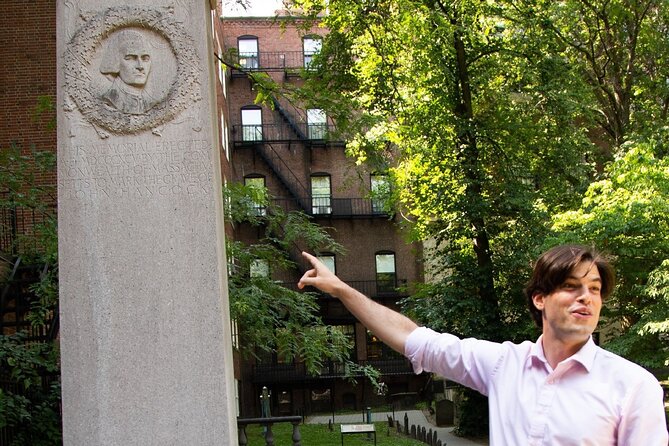
The Freedom Trail can feel like a list—until you walk it with a guide who links each stop to what was happening in the moment. This tour is built around that idea: you’re not just ticking off landmarks, you’re getting cause-and-effect, from rebel networks to public panic to revolutionary planning.
I like that it doesn’t stay locked on the famous names only. You’ll hear about Paul Revere and John Hancock, but you’ll also get attention on lesser-told threads, including women, African Americans, and immigrant patriots and pioneers. That wider lens helps you understand Boston not just as a setting, but as a driver of change in abolition, American education, and immigration.
The tour also includes the human side of the Revolution—rebels, gangs, and Midnight Riders. That matters, because without the people and the tension, the events can feel like distant textbook pages.
Meet at the Embrace and find your guide fast
Your tour starts just inside Boston Common at the Embrace statue, located next to the Visitor Center on Boston Common on Tremont Street (listed as 139 Tremont Street). The guide is not in costume, which keeps things straightforward, and they’ll have a flag marked Boston History Company so you can identify them quickly.
This matters more than it sounds. Freedom Trail tours often start at busy intersections, and a clear meeting point reduces stress—especially if you’re visiting with only a small slice of time. If you want a smooth start, show up a few minutes early so you can get oriented before the group moves.
The tour ends back at the meeting point. That’s convenient if you plan to return to Boston Common afterward, but it’s worth thinking about if you want to go straight to another destination by car or on a very specific timeline.
The red brick line keeps going. More Trail walks here
How you fit 16 sites into 2.5 hours
A 2.5-hour duration means the pace is purposeful. You will cover the Freedom Trail’s official stops, moving from one key location to the next, with your guide filling in context along the way.
For value, this is a big deal. At $31 per person, you’re not paying for entry tickets or museum time—you’re paying for a live guide who can compress a lot of history into a single, walkable format. If you only have a layover, a half-day, or you’re visiting Boston for the first time, that efficiency is exactly what you’re buying.
There’s also a practical upside: you get a mental map. After the tour, you’ll know where things are relative to each other, so you can return on your own later if you want slower, deeper time in one area.
Stop-by-stop: from Boston Common to the MA State House
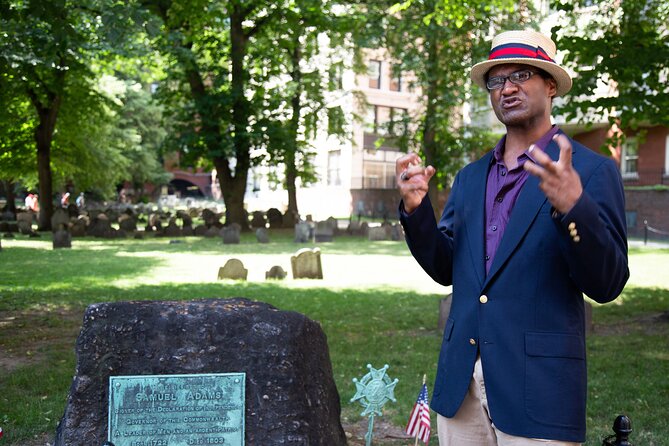
The tour begins at Boston Common near the Embrace, then it quickly builds momentum into the core revolutionary area. Expect a mix of churches, meeting spaces, burial grounds, and public buildings—places where ideas, arguments, and mobilization all took physical form.
One moment you’ll likely remember is seeing the MA State House Golden Dome. Even if you’ve seen photos, it lands differently in person because the building connects to the later story of how Massachusetts shaped political identity after the break from Britain.
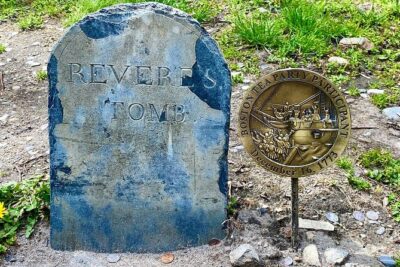
You’ll also visit final resting places tied to major revolutionary figures, including John Hancock, Paul Revere, and Samuel Adams. Funeral and memorial locations sound quiet, but on this tour they matter, because they turn monuments into a story about legacy—who is honored, how they’re remembered, and what their names represented at the time.
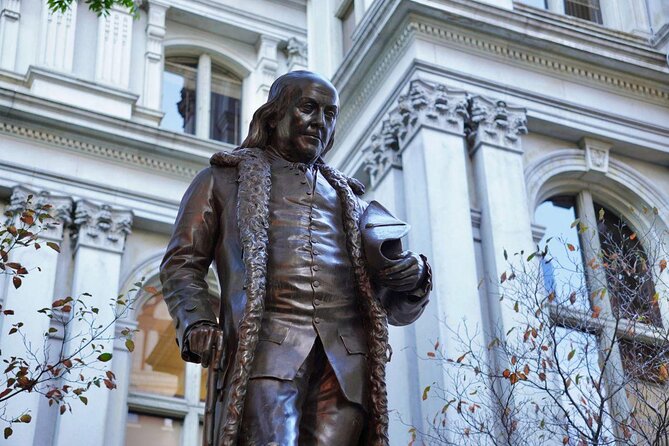
Along this section, you’ll pass through areas like Park Street Church and Granary Burying Ground, plus stops such as King’s Chapel and the Benjamin Franklin statue area. The value here is that the guide ties each religious or civic site to the social web behind political change.
Park Street, Granary Burying Ground, and the people behind the Revolution
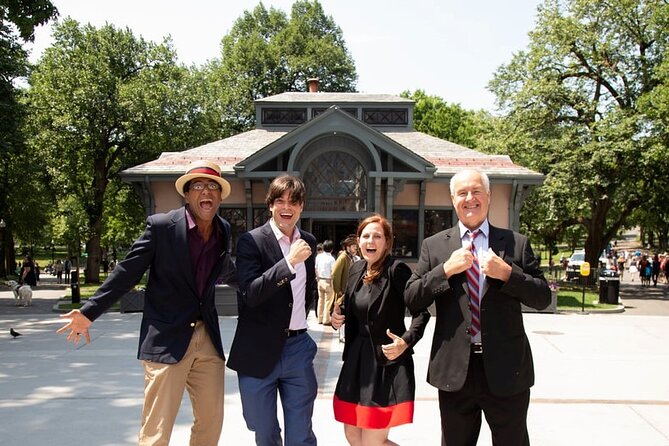
These are the stops that help you stop thinking only about speeches and battles. Burial grounds and historic churches show you how communities organized memory and values, long before mass media existed.
At places like Granary Burying Ground, the story moves beyond names into the idea of public commemoration. You see how the city treated certain lives as foundational, and your guide connects that to the bigger question: what kind of society were revolutionaries building?
Then you’ll move toward Franklin-era and print-era touchpoints like the Old Corner Bookstore area. When your guide links it to communication and information, you start to understand why debates spread so fast in 18th-century Boston. It’s not just that people had opinions—it’s that the city had ways to circulate them.
Old South Meeting House, Old State House, and the Boston Massacre site
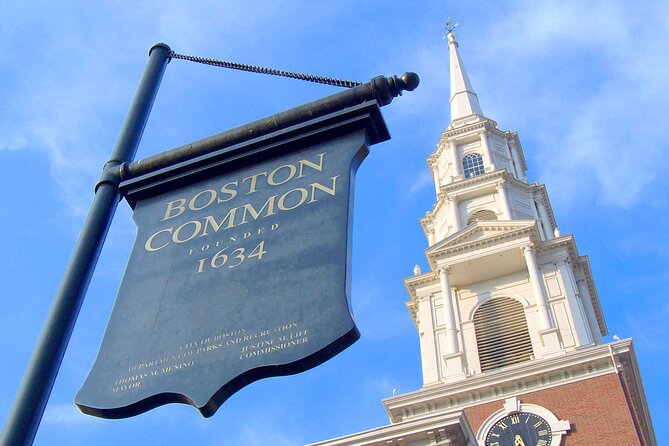
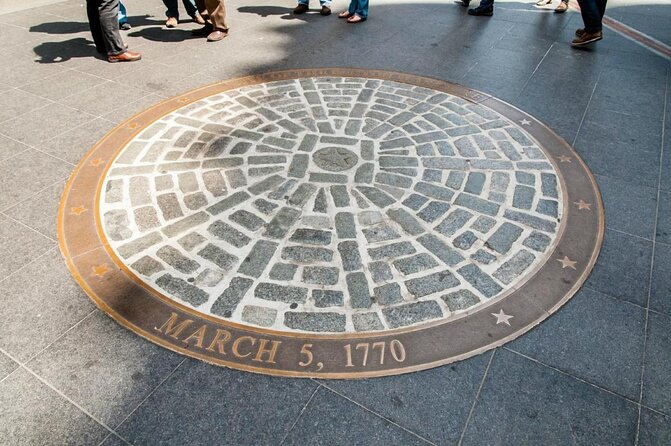
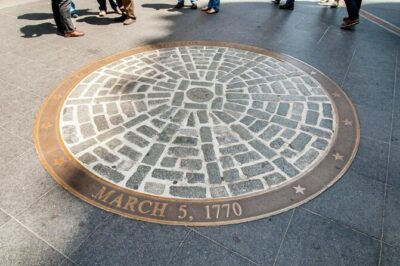
When the tour hits the Boston Massacre Site, it’s doing more than pointing at a spot. It sets up the event as an explosive moment—why it inflamed anger, how it shaped public perception, and how violence became a political tool.
You’ll also get the background for major revolutionary flashpoints like the Boston Tea Party, placed into the places where you can picture the tension. This is the kind of context that helps your brain connect to what the crowd might have felt like: fear, anger, and momentum all at once.
The route then works in civic and political backdrops such as the Old South Meeting House and the Old State House area. Those buildings matter because they were where decisions and pressures condensed. Standing near them, you can see why meetings and public arguments became part of the revolutionary engine.
Boston was built for walking. More routes
- Boston: Freedom Trail History Small Group Walking Tour★ 5.0 · 6,450 reviews
- Harvard University Campus Guided Walking Tour★ 4.5 · 3,632 reviews
- Boston Freedom Trail Walking Tour with Costumed Guide★ 4.5 · 2,531 reviews
- The Full Revolutionary Story Epic Small Group Boston Walking Tour★ 5.0 · 2,356 reviews
- Boston’s Freedom Trail: A Revolutionary Walking Tour★ 4.9 · 1,748 reviews
From Faneuil Hall to Paul Revere: where planning met performance

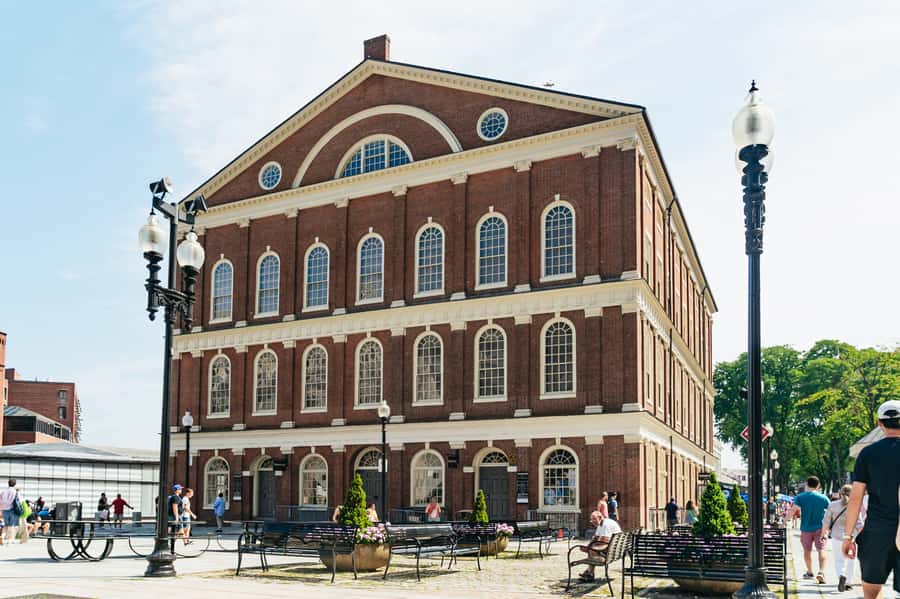
Faneuil Hall is one of the stops that keeps popping up in revolution stories for a reason. On this tour, it’s not treated like a photo backdrop—it’s used as a reference point for how Boston’s public spaces fed debate and mobilization.
Then comes Paul Revere’s world. You’ll visit the Paul Revere House area, and you’ll also hear how the legend grew out of real networks and real urgency. The guiding point is simple: the Revolution wasn’t only about big leaders—it was powered by messengers, plans, and people who could move fast.
You’ll also take in the Benjamin Franklin thread again through the broader story of information and civic action. Your guide ties it back to how Boston became a hub for ideas.
Old North Church, the lanterns, and Copp’s Hill Cemetery views

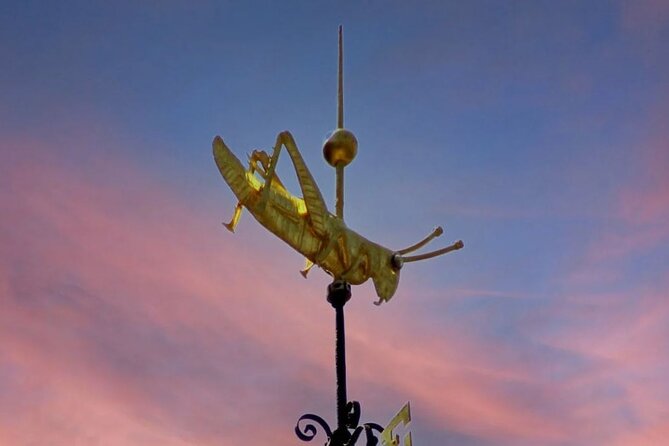
The Old North Church area is where the tour turns cinematic without turning fake. You’ll see the steeple connected to the lantern story—where the plan involved hanging two lanterns to signal what was happening. Your guide explains how the signal fit into the larger scheme and why it became part of the enduring myth.
Copp’s Hill Burying Ground is another highlight worth your attention. It’s not just old stone and names; it’s a place that adds texture to the story because cemeteries hold a long timeline. From here, the tour’s tone shifts from the immediate shock of events to the longer afterlife of those events in Boston’s streets.
If you like when history changes pace—more reflective, less explosive—these stops deliver that feeling.
USS Constitution and Bunker Hill: the finale with scale
The tour’s ending stretch gives you a sense of scale. You’ll pass the USS Constitution, a reminder that the Revolution also played out in the physical world of ships, ports, and supply.
Then you’ll reach the Bunker Hill Monument area. You might not get a prolonged, inside-the-building experience, but the viewpoint and the setting matter. This is where you can feel why people talk about Bunker Hill as a symbol even beyond the tactical outcomes.
Ending back at the meeting point keeps the loop tidy. It’s great if you want to re-center at Boston Common, grab a snack, or keep walking on your own afterward.
Price and value: $31 for a guided Revolution circuit
At $31 per person for about 2.5 hours, this tour is priced like a smart “first pass” through Boston’s revolutionary core. You’re paying for a live guide and a walking format, not for museum entries or attraction tickets.
That’s why the value is strongest if you fall into one of these groups:
- You’re short on time and want the big sites, explained well
- You want a guide to help you connect locations to events
- You prefer walking to reading maps for hours
The tour does require the one thing you can’t buy: comfortable walking conditions. Bring water and good shoes, because the schedule is built to move.
What makes the guide factor so important
This is one of those tours where the guide really changes the experience. Multiple guides have earned high praise for packaging history into stories you can follow, with humor that keeps the group engaged.
You’ll hear how important that is from comments about guides like Rob, Kenneth, Matthew, Charlie R, and Alissa, who consistently showed strong pacing and an ability to answer questions in a natural way. Some also had a fast speaking style, so if English speed is a concern for you, arrive ready to focus early.
Also, because your guide is guiding in real time through crowded city streets, they’re managing timing, group attention, and transitions. When that works, the 2.5 hours can feel quick instead of exhausting.
Who should book this Freedom Trail walk
This tour is a great fit if you want an efficient route through Boston’s most meaningful revolutionary stops, and you like your history guided with personality.
You’ll likely enjoy it most if:
- It’s your first time in Boston and you want bearings fast
- You want to cover the main sites in a single session
- You like stories that include more than just the usual names
You might want to think twice if you have significant mobility limits. The activity is described as wheelchair accessible, but it’s also marked not suitable for people with mobility impairments, so you should evaluate your own needs carefully before booking.
If your group needs a slow, deeply paced museum-style experience, this may feel too brisk. But if you want a smart, story-led walking circuit, it’s a solid choice.
Should you book this tour
If your goal is to understand Boston’s Revolution in one organized walk, I’d book it. The combination of 16 official sites, a live guide, and a tight 2.5-hour format makes it a strong value, especially when you don’t want to spend your whole day navigating on your own.
I’d also book it if you like history told through people and moments, not just dates. The best guides here seem to know how to keep attention, answer questions, and turn street corners into context.
One final tip: treat this tour as your foundation layer. Afterward, you’ll know where you want to return for slower time, whether that’s the Mass State House area, the old meeting houses, or the sites tied to the lantern signal.
FAQ
Where does the tour start?
You meet your guide at the Embrace statue right next to the Visitor’s Center on Boston Common at 139 Tremont Street.
How long is the Freedom Trail tour?
The tour duration is 2.5 hours.
Which language are the tours offered in?
The live guide language is English.
Is entry to attractions included?
No. Entry tickets to attractions are not included.
Are video recordings allowed during the tour?
No, video recording is not allowed.
What should I bring for the walk?
Bring comfortable shoes and comfortable clothes, plus water.
Is the tour wheelchair accessible?
The tour is marked as wheelchair accessible.
Is it suitable for people with mobility impairments?
The activity is marked not suitable for people with mobility impairments, so you should consider your needs before booking.
Where does the tour end?
The tour ends back at the meeting point on Boston Common near the Embrace statue.
On Foot Through Old Boston




More of the Boston Ledger



Follow the Red Bricks Further

New on the Boston Docket
- Boston to Newport Mansions Private Day Trip
★ 5.0 · 3 reviews - Boston Massachusetts Private Photography Tour
★ 5.0 · 3 reviews - Homemade Dumplings 101 in Boston
★ 3.5 · 3 reviews - Self-Guided Audio Tour of Boston North End
★ 4.5 · 3 reviews - Old Boston: Beacon Hill & Back Bay Walking Tour in French
★ 4.7 · 3 reviews
Freedom Trail & Revolution Walks, compared.
 ★ 5.0Freedom Trail History Small Group Walking TourFrom $356,450 reviews
 ★ 4.5Boston Freedom Trail Walking Tour with Costumed GuideFrom $262,531 reviews
 ★ 4.5Boston Tea Party Ships and Museum AdmissionFrom $352,512 reviews
 ★ 5.0The Full Revolutionary Story Epic Small Group Boston Walking TourFrom $552,356 reviews
 ★ 4.8Boston Tea Party Ships and Museum Interactive TourFrom $351,926 reviews
 ★ 5.0Boston Food & History: Pizza, North End & Freedom TrailFrom $901,772 reviews
★ 4.9Freedom Trail History Small Group Walking TourFrom $351,590 reviews
★ 5.0Boston Food & History: Pizza, North End & Freedom TrailFrom $901,772 reviews
★ 4.9Freedom Trail History Small Group Walking TourFrom $351,590 reviews
 ★ 5.0Boston’s Freedom Trail: A Revolutionary Walking TourFrom $311,343 reviews
Browse the lists this tour appears in