
REVIEW · FREEDOM TRAIL & REVOLUTION WALKS
Boston: Boston Tea Party Ships and Museum Interactive Tour
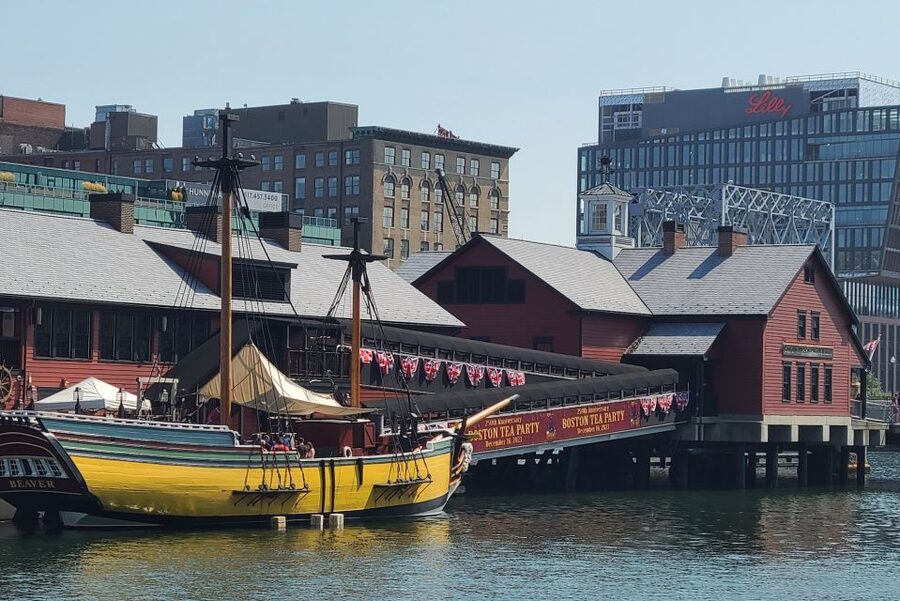
Throw tea, then watch history argue back at you. On this Boston Tea Party Ships and Museum interactive tour, I love how the night of Dec 16, 1773 comes alive with live actors and 3D holograms, not just a wall of text.
I also liked the practical, hands-on moment where you march to Griffin’s Wharf and take part in the tea toss. The main drawback to plan around: it’s about an hour, so if you want to linger over every artifact, the pace might feel tight.
In This Review
- Quick highlights
- Entering Through Congress Street Bridge: Your Timed Start
- Getting Your Role: Handbills, Meeting House, and the Mohawk March
- The Tea Toss at Griffin’s Wharf (What You Really Throw)
- Ship Replicas: Wandering Two 18th-Century Vessels
- 3D Holograms and Live Arguments Inside the Museum
- The Wraparound Theater Battle Scene
- Value Check: Is $35 Worth It for a One-Hour Tour?
- Who This Fits Best in Boston (and Who Might Skip)
- Should You Book This Boston Tea Party Interactive Tour?
- FAQ
- How long is the Boston Tea Party Ships and Museum interactive tour?
- How much does the tour cost?
- Where does the experience start?
- What is included with my ticket?
- Are there museum guides in other languages?
- Do I skip the ticket line?
- Is food or beverages included?
- Is the experience wheelchair accessible?
- What are the payment and cancellation options?
Quick highlights

- Character roles from a colonist handbill that shape how you experience the story
- Mohawk disguise moment in the meeting house before the march begins
- A tea crate toss over the water that recreates the action using period-style containers (not loose tea leaves)
- Two faithful ship replicas to explore up close
- 3D holographic arguments between British soldiers and colonial patriots
- A wraparound theater finale that ties the night’s chaos to the bigger Revolution story
Entering Through Congress Street Bridge: Your Timed Start

Your tour starts at the Boston Tea Party Ships & Museum right on the Congress Street Bridge. If you’re using a map, don’t aim for the “idea” of the museum—aim for the bridge-side entrance so you’re not guessing when your timed slot is about to begin.
Plan to arrive with enough time to check in and get seated. Timed museum admission is included, and you’ll present your ticket on arrival. The process is designed to keep things moving, and one big practical win is that the experience includes a skip-the-ticket-line style entry. That matters in Boston, where you can burn 20 minutes just standing around while your schedule slips.
Inside, you’ll meet your host/greeter in English, and you can expect the tour to feel like one guided story rather than a set of disconnected stops. The guides and performers also work hard to keep the tone consistent—stage-style, but not silly. The net effect: by the time you reach the waterfront scenes, you’ll already understand who’s who and why the tea mattered.
If you want the best seats and timing, book ahead, especially on weekends. Tickets can sell out, so last-minute planning tends to backfire.
Getting Your Role: Handbills, Meeting House, and the Mohawk March
Right away, you’re pulled into the story. One of the clever choices here is that you don’t just watch history happen—you start with a prop and a role. You’ll pick up a handbill from a colonist, and that handbill cues what part you’ll play in the night’s events.
Then comes the meeting house scene, which sets the emotional temperature. You hear the story of the night of December 16, 1773, and you receive your own mohawk disguise before the march to Griffin’s Wharf begins. That costume moment sounds like a gimmick until you realize what it does: it turns abstract political protest into something physical and human. You’re not imagining the fear, tension, and determination—you’re acting alongside it.
A standout detail is how the performers stay in character while guiding the group through the progression. In reviews, guides like Mrs. Grant were singled out for running the tour with precise timing, keeping everyone engaged from scene to scene. Another performer, Ebeneezer McIntosh, also drew praise for making the characters feel real.
There’s also a fun rhythm in how the story is delivered. Several guests noted that the language feels period-leaning (including verse-style presentation). For you, that means it doesn’t read like a modern lecture. It feels like a script that expects you to listen, respond, and react.
Possible downside: if you show up late or miss the role assignment moment, you may feel like you arrived after the plot engine started.
The Tea Toss at Griffin’s Wharf (What You Really Throw)
The headline moment is the tea toss. You’ll head toward Griffin’s Wharf and get the chance to throw a crate of tea into the sea, recreating the Sons of Liberty action.
Here’s a practical clarification that helps your expectations: the toss is not you throwing loose tea leaves. Multiple guests noted that you throw covered milk crates styled to match how tea was carried. You’re tossing a prop that represents the shipment, which keeps the action dramatic without turning the experience into a messy stunt.
This is also where the tour earns its “interactive” label. Your hands get involved, but the story stays attached. You’re not just doing something because it’s fun; you’re doing it because the guides keep explaining what the protest meant—taxation, control, resistance, and the escalation toward revolution.
If you’re traveling with kids, this is the moment that usually seals the deal. Reviews mentioned young visitors loving the chance to participate, even when adults were there mainly for history. One family angle I liked from the feedback: the experience worked as both an action event and a learning one, so different ages had their own reasons to care.
If you hate getting pushed into group activities, this may be the one part that tests your comfort level. The good news is that it’s well structured; you’re not left scrambling for what to do next.
Ship Replicas: Wandering Two 18th-Century Vessels

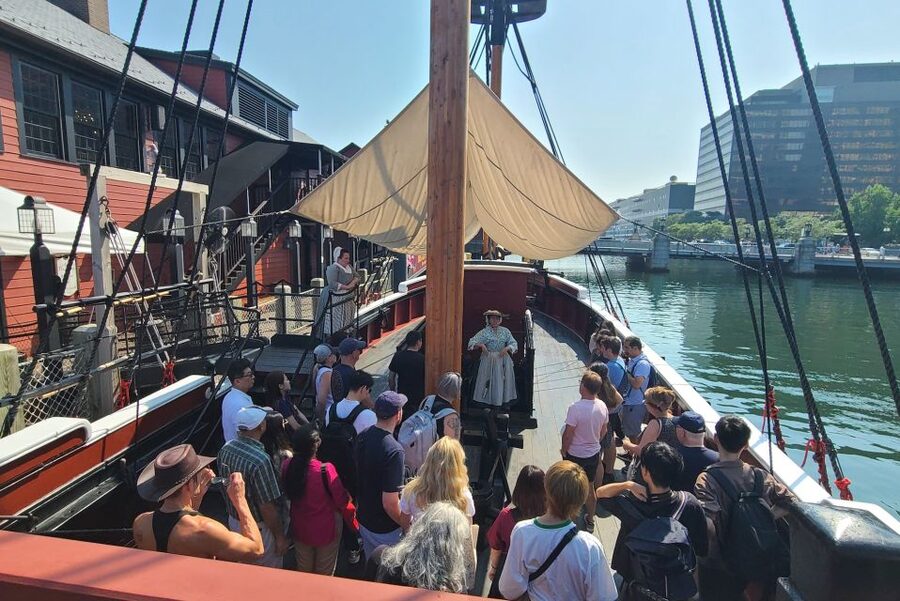
After the waterfront scene, you shift into exploration mode. The museum includes impressive, faithfully recreated replicas of two tea party ships, designed to help you picture what the original vessels and waterfront environment would have been like.
This is a different kind of value than the theater-style moments. Instead of being told what to think, you get a chance to look at structure and space—how a ship’s layout might affect movement, how a deck feels at human scale, and how the setting would have looked from the water.
A practical tip: the pace is guided. Even if you find yourself wanting to keep looking, the tour is still a one-hour experience, so your time on the replicas may feel like a “taste,” not a slow wander.
That’s why I’d book it as a story-and-activity experience first, and only then layer extra museum time if you’re the type who likes lingering. One guest noted they didn’t have enough time to fully explore artifacts and even mentioned a secret room area—so if that’s your thing, you might want to arrive ready to move fast, then return later if you can.
Also, keep an eye out for how the ship viewing connects back to the broader Revolutionary context. Even when you’re just walking boards and railings, you’re building mental pictures for what happens in the hologram and theater segments.
3D Holograms and Live Arguments Inside the Museum
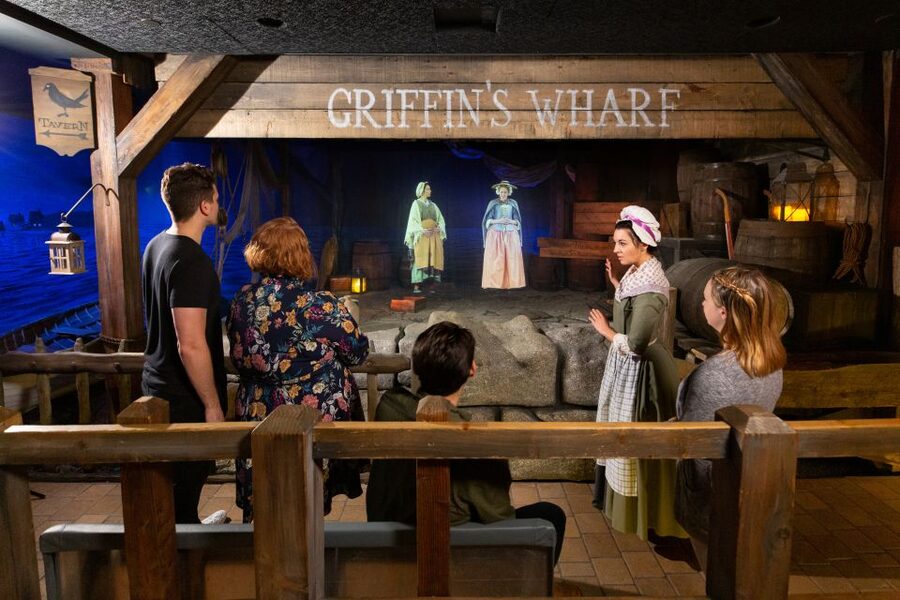
Inside the museum, the tone changes from physical to visual—and it’s one of the best parts of the whole set of scenes. You’ll meet 3D holographic characters that appear and talk right before your eyes, including British soldiers and colonial patriots who argue in front of you.
This isn’t just flashy tech. For you, the value is that arguments are where you learn the logic behind the conflict. The Boston Tea Party wasn’t a random night of chaos. It was a political pressure point—people reacting to laws, enforcement, and the shrinking options for protest.
The holograms help you track that shift from local grievance to revolutionary momentum. You’re seeing a moment where rhetoric matters, where side-taking is immediate, and where the British and colonial camps interpret events very differently.
Reviews also praised the balance of education and entertainment, with guests saying the tour was engaging “from the moment we entered the meeting room.” Another detail worth noting: the script and presentation include multiple forms of instruction—live performances plus film/speeches elements—so you’re not stuck watching one format for the entire hour.
One thing to watch for: this is still a show with timing. If you’re the kind of visitor who wants to read every placard and stop for long reflections, you’ll likely want extra self-guided time on top of the timed tour.
The Wraparound Theater Battle Scene

The finale happens in a giant wraparound theater, where you experience a battle-like sequence connected to the night and its ripple effects. This is the moment that ties the story together so it doesn’t feel like you only participated in a single stunt.
For you, the best part about ending this way is that it gives the political drama a sense of consequence. The Tea Party wasn’t an ending—it was a turn. The wraparound presentation helps you feel the acceleration toward conflict rather than treating the tea toss as the final headline.
Guests repeatedly highlighted that the experience includes a well structured flow: start with character and setting, build tension with arguments and demonstrations, then land on a big visual summary in theater form. Some even mentioned a short film surprise near the end, which suggests the tour may include a couple of media beats you might not expect when you book.
If you dislike crowds or prefer quieter attractions, this theater portion may be the least comfortable part because it’s typically seated and group-paced. But it’s also where the big-picture storytelling is easiest to absorb.
Value Check: Is $35 Worth It for a One-Hour Tour?
At $35 per person for about one hour, you’re paying for a lot more than entry into a museum room. You’re paying for:
- Timed admission to keep the flow tight
- An interactive guided tour with scripted live characters
- A waterfront tea toss participation moment
- Museum time with 3D holograms and a wraparound theater finale
- Printed foreign language guides for 14 languages
That value equation matters. A regular museum ticket might give you artifacts and static displays, but it won’t give you the participatory story elements: costume disguise, role playing, theatrical argument scenes, and a hands-on action moment that’s tied to historical meaning.
Is it perfect for everyone? Not necessarily. The one-hour format means you’ll likely feel like you got a highlight reel, not a full museum day. If you’re the type who wants to read deeply and wander slowly, you may feel rushed on the artifact areas.
But if you want a high-energy way to understand why the Boston Tea Party is treated as such a turning point, this is one of the better uses of an hour in Boston. It also pairs nicely with other history activities you might already be doing. One review even pointed out that it tied in well with the Freedom Trail the day before—meaning if you’ve already walked the city’s Revolutionary sites, this tour gives you the story behind the scenes.
Also, note what isn’t included: food and beverages. You’ll want to eat before or after.
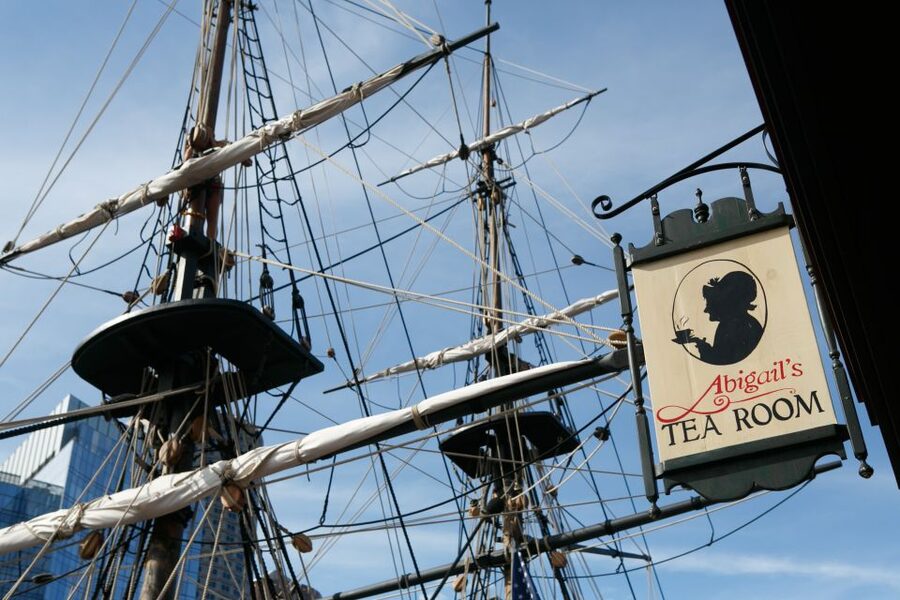
If you like tea culture, there’s also a tea-room element mentioned in reviews (including reference to Abigail’s tea room). That’s not a substitute for lunch, but it can be a pleasant stop after you’ve finished the show.
Who This Fits Best in Boston (and Who Might Skip)

I’d steer you toward this tour if you fall into one of these buckets:
- You want hands-on history, not just reading panels.
- You’re traveling with kids who need an action beat to stay interested.
- You’re a first-timer in Boston who wants a focused Revolutionary subject with clear context.
- You like theater-style storytelling and can tolerate a scripted pace.
From the reviews, the sweet spot seems to be families and history-minded visitors who appreciate performances staying in character throughout. Several guests praised the guides and performers for being energetic and clearly trained, including the ability to keep large groups organized.
Who might skip it? If you’re a “slow museum” person—someone who wants to quietly study artifacts for 2–3 hours—an hour-long guided experience may feel too tight. Also, the tour is listed as not suitable for wheelchair users, so you’ll need to look for other options if mobility access is a priority.
If you’re sensitive to staged crowd scenes, you should plan your expectations around group pacing—especially during the theater segment.
Should You Book This Boston Tea Party Interactive Tour?

Yes, if you want a smart, engaging way to understand how the Boston Tea Party connects to the American Revolution—and you don’t mind trading some quiet museum time for participation and performance.
I’d book it now if:
- You’re aiming to do a Revolutionary story-focused activity in one hour
- You want the mohawk disguise, the tea toss, and the technology-and-theater mix (holograms plus wraparound theater)
- You like learning through action, not just explanation
I’d think twice if:
- You need wheelchair-friendly access (this isn’t rated for that)
- You prefer unstructured wandering over a guided show
- You’re hoping for a long, calm artifact study session
If you fit the first list, this is a strong value at $35, because you’re getting a complete themed experience rather than just museum admission.
FAQ
How long is the Boston Tea Party Ships and Museum interactive tour?
It lasts about 1 hour.
How much does the tour cost?
The price is $35 per person.
Where does the experience start?
You start at the Boston Tea Party Ships & Museum on the Congress Street Bridge. Use your timed ticket on arrival.
What is included with my ticket?
Your ticket includes timed museum admission plus an interactive tour.
Are there museum guides in other languages?
Yes. Printed foreign language guides are available for the museum experience in 14 languages.
Do I skip the ticket line?
Yes, the experience includes skip-the-ticket-line entry.
Is food or beverages included?
No. Food and beverages are not included.
Is the experience wheelchair accessible?
No, it is listed as not suitable for wheelchair users.
What are the payment and cancellation options?
You can reserve now and pay later. You can also cancel up to 24 hours in advance for a full refund.
Freedom Trail & Revolution Walks, compared.
 ★ 5.0Freedom Trail History Small Group Walking TourFrom $356,450 reviews
 ★ 4.5Boston Freedom Trail Walking Tour with Costumed GuideFrom $262,531 reviews
 ★ 4.5Boston Tea Party Ships and Museum AdmissionFrom $352,512 reviews
 ★ 5.0The Full Revolutionary Story Epic Small Group Boston Walking TourFrom $552,356 reviews
 ★ 5.0Boston Food & History: Pizza, North End & Freedom TrailFrom $901,772 reviews
 ★ 4.9Boston’s Freedom Trail: A Revolutionary Walking TourFrom $311,748 reviews
★ 4.9Freedom Trail History Small Group Walking TourFrom $351,590 reviews
★ 5.0Boston’s Freedom Trail: A Revolutionary Walking TourFrom $311,343 reviews
★ 4.9Boston’s Freedom Trail: A Revolutionary Walking TourFrom $311,748 reviews
★ 4.9Freedom Trail History Small Group Walking TourFrom $351,590 reviews
★ 5.0Boston’s Freedom Trail: A Revolutionary Walking TourFrom $311,343 reviews
Browse the lists this tour appears in