
REVIEW · FREEDOM TRAIL & REVOLUTION WALKS
Boston’s Freedom Trail: A Revolutionary Walking Tour
Hook: Boston’s revolution story is on your feet.
This Freedom Trail walking tour is a fast, focused way to see the 16 official sites without getting lost in the weeds, and I like that it connects local history to big themes like abolition, women’s rights, education, and immigration across 400 years. Two things I really love: the way the guide makes the Revolution feel specific to place, and the tight small-group feel (max 25) that helps you keep up and ask questions—especially when guides like Kenny, Alissa, or Noah keep the pace lively and the stories clear.
One possible drawback: in a 2.5-hour route with lots of ground covered, some portions can feel brisk, and if you’re near the back you may struggle to hear certain details. If you use a walking stick or need slower transitions, plan to pace yourself and be ready to stop the group quickly to catch your breath.
In This Review
- Key Things You’ll Notice Right Away
- Freedom Trail in 2.5 Hours: Why This Format Works
- Starting at The Embrace Beside Boston Common
- Massachusetts State House: From Cornerstone to Power
- The 1809 Red Brick Church and Abolition-Era Boston
- Patriot Graves and the 1754 Anglican Church Crypts
- The Tea Party Starts Here: The 1729 Meeting House
- Old Corner Bookstore and the Power of Print
- Old State House and the Bloody Massacre Moment
- Faneuil Hall: The Cradle of Liberty at the Public Counter
- Paul Revere House and the Signal of Old North
- Bunker Hill Territory: Copp’s Hill Terrace Views and the 221-Foot Marker
- Pacing, Hearing, and Comfort: What to Do So You Enjoy It
- Price and Value: Is $31 Worth It?
- Who This Tour Suits Best (and Who Might Prefer Something Else)
- Should You Book This Freedom Trail Walking Tour?
- FAQ
- How much does the Freedom Trail walking tour cost?
- How long is the tour?
- Where does the tour start and end?
- Is the tour offered in English?
- Are there all 16 official Freedom Trail sites on this tour?
- What ticket format do I get?
- Is the tour physically demanding?
- Is the group size limited?
- What’s the cancellation policy if weather is poor?
Key Things You’ll Notice Right Away
- All 16 official Freedom Trail sites in one guided walk, so you don’t have to plan the route yourself
- Small group size (25 max), which helps you feel more connected than on giant tours
- Strong guide storytelling—people repeatedly mention clear speaking, humor, and answering even niche questions
- A built-in mix of famous and lesser-known stories, not just Paul Revere talk
- A finish with big views from Copp’s Hill Terrace, including the sightline toward Bunker Hill and USS Constitution
- Weather matters, since this tour is described as requiring good conditions
Freedom Trail in 2.5 Hours: Why This Format Works
The Freedom Trail can be done on your own. But this tour is built for time-strapped first-time visitors who still want context, not just plaques. In about 2 hours 30 minutes, you’re guided through downtown Boston and out toward the North End, moving through centuries in a way that feels chronological instead of random.
I like how the tour doesn’t treat the Revolution like a single movie moment. It layers in earlier and later threads: Boston’s leadership in abolition, women’s rights, education, and immigration—so the trail stops become parts of a bigger city story.
The tradeoff is that it’s a walking tour with a lot of stops. If you like long sittings, slow wandering, and lots of time for photos at every corner, this may feel like you’re on a tight schedule. But if you want a high-value overview that sets you up for deeper exploring afterward, it’s a strong deal.
Starting at The Embrace Beside Boston Common
Your tour begins at The Embrace, a recent statue honoring Martin Luther King Jr. and Coretta Scott King. It’s right by the Boston Common Visitor Information Center at 139 Tremont Street, and that start spot is helpful because you’re already in the middle of Boston’s central action.
This opening does more than mark a meeting point. It signals that the Freedom Trail isn’t only about 1770s riots and muskets—it’s also about ideas that kept evolving in Massachusetts. That matters because the tour keeps returning to themes like freedom, civic change, and who gets to speak for society.
Practical note: since you start near Boston Common, you can easily grab coffee or water before the walkthrough. If you’re traveling with kids or teens, this is also a good place to do the quick pre-walk pep talk.
The red brick line keeps going. More Trail walks here
Massachusetts State House: From Cornerstone to Power
Next up is the Massachusetts State House with its golden dome, the seat of Massachusetts state government. You’ll hear how the original cornerstone was laid by Samuel Adams in 1795, which helps reframe the building from scenic architecture into political theater.
This stop is valuable because it anchors the idea of governance. The Revolution wasn’t just about fighting—it was about building new rules and institutions afterward. When the guide connects what happened in the streets to what got shaped in government, the rest of the trail clicks into place.
You’ll also be standing at a point where you can see how power works in real city form: important buildings, civic crowds, and the visual message that comes with state authority. Even if you’re not a politics person, this is one of the “why it mattered” stops.
The 1809 Red Brick Church and Abolition-Era Boston
One of the early stops is a red brick church built in 1809, where an abolitionist congregation held services. The focus here is on anti-slavery speeches and the intensity of what people argued from within those walls—some of the first ever given in America, according to what the guide covers.
This matters because it expands what the Freedom Trail means for you. Yes, you’re walking the Revolution. But Boston’s claim to leadership didn’t stop at independence papers. The city kept wrestling with freedom—who had it, who didn’t, and what it would take to change that.
If you’re interested in civil rights history beyond the headlines, this stop gives you a bridge from the colonial era to later activism. It also changes the tone of the tour: less battle-plan focus, more moral urgency.
Patriot Graves and the 1754 Anglican Church Crypts
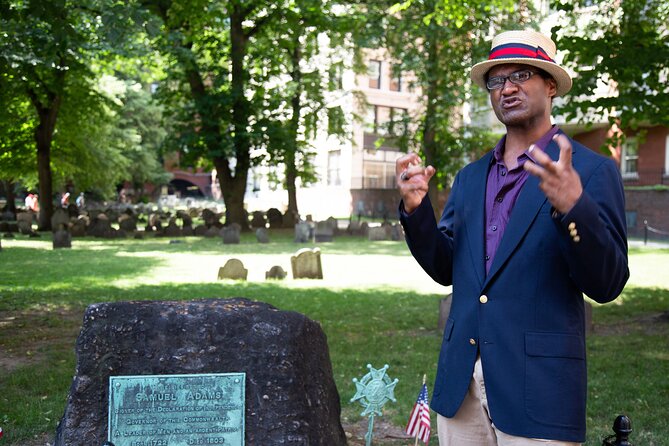
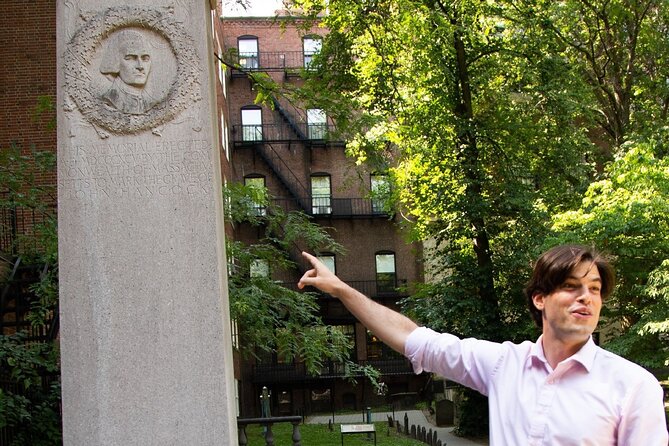
You’ll then reach burying grounds dating back to 1660, with the tour naming major patriots like John Hancock, Paul Revere, and Samuel Adams. Standing near graves on a history walk can feel quiet—but that’s kind of the point. It turns “names on a textbook page” into real people with real endings.
Right after that, you’ll see a stone church built in 1754, described as the first Anglican Church in Boston, plus the burying ground next to it and the crypts beneath. The guide’s job here is to make you understand why burial sites and church crypts belong in a Revolution story: they show community structure, faith, status, and the physical footprint of old Boston.
One consideration: cemeteries and burying grounds can be slower terrain for groups. If you’re someone who needs extra time, this is the moment to speak up early or adjust your pace. People with a walking stick have said they struggled when the schedule tightened here.
The Tea Party Starts Here: The 1729 Meeting House
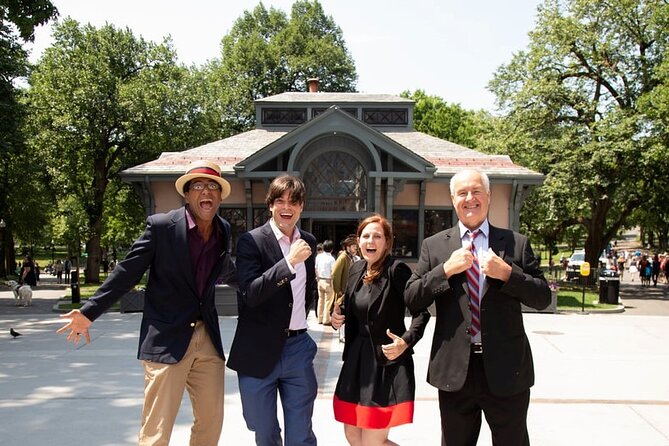
The Puritan meeting house built in 1729 is where the famous Boston Tea Party began, and the guide tells the story of how that act of civil disobedience took shape. This isn’t treated like trivia. It’s framed as a chain reaction: beliefs, politics, pressure, and the decision to act publicly.
I like this stop because it teaches you how protest works. Not every protest looks like a clean parade with signs and speeches. Sometimes it looks like secrecy, risk, and a calculated disruption designed to change policy and public opinion.
And because it’s a meeting house, you get a sense of how information and persuasion circulated. If you remember only one thing from this part of the tour, make it this: Revolution-era politics often started with arguments people made in rooms, then moved out into the street.
Boston was built for walking. More routes
- Boston: Freedom Trail History Small Group Walking Tour★ 5.0 · 6,450 reviews
- Harvard University Campus Guided Walking Tour★ 4.5 · 3,632 reviews
- Boston Freedom Trail Walking Tour with Costumed Guide★ 4.5 · 2,531 reviews
- The Full Revolutionary Story Epic Small Group Boston Walking Tour★ 5.0 · 2,356 reviews
- Boston’s Freedom Trail: A Revolutionary Walking Tour★ 4.9 · 1,748 reviews
Old Corner Bookstore and the Power of Print
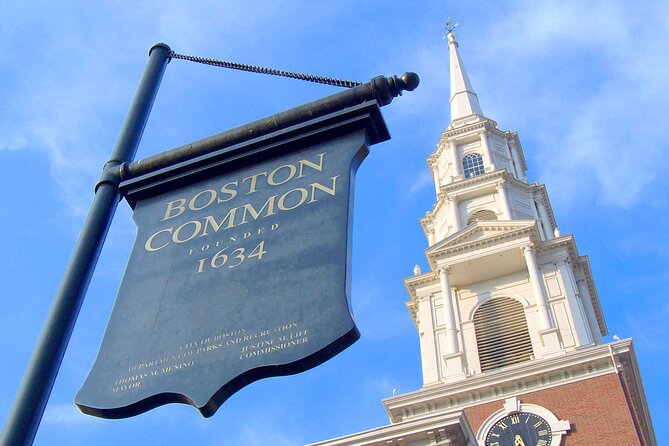
You’ll also stop at a 1718 brick building that later housed the publishing house Ticknor & Fields, after beginning as a colonial apothecary. The guide talks about the literary giants connected to that publishing legacy.
This is one of those “I didn’t expect to care about this” stops that turns into one of your favorites. The Revolution and early American identity weren’t just built with muskets. They were built with ideas—pamphlets, books, and the spread of arguments that could travel farther than a sermon or a speech.
If you like culture and communication history, this is where the tour gets extra interesting. It helps explain why Boston mattered as a place where people argued loudly and then printed those arguments for broader audiences.
Old State House and the Bloody Massacre Moment

Next, you’ll reach the Old State House, constructed in 1713 and decorated with symbols of Great Britain—specifically a Lion and Unicorn. The guide frames the building as once centered around British government in Massachusetts, and you’ll hear about confrontations and speeches that happened inside.
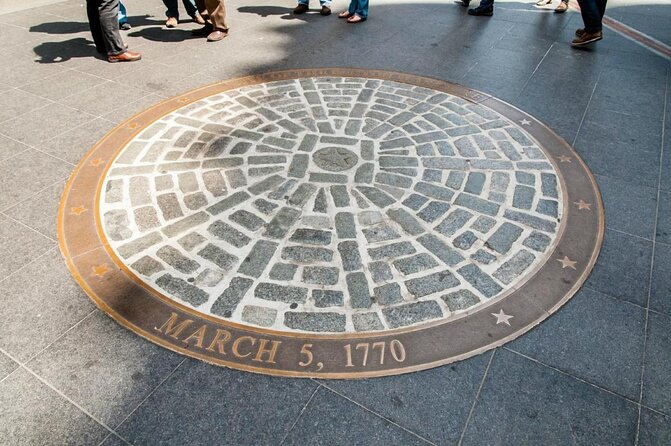
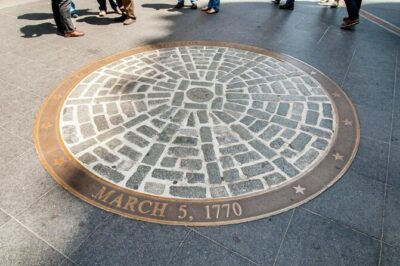
Then comes a circle of stones marking the official site of the infamous Bloody Massacre of 1770. You get a moment-by-moment account of that night when redcoat musket fire left five colonists dead.
These two stops work as a pair. The Old State House represents authority and control, while the massacre site represents the breaking point. Standing in both places back-to-back gives you a clearer cause-and-effect story than reading about events separately.
One practical tip: the massacre story is intense, so if you’re with kids, remind them history is heavy here. A good guide will balance the facts, but it’s still a grim scene.
Faneuil Hall: The Cradle of Liberty at the Public Counter
Faneuil Hall was originally built as a common marketplace in 1743. But it became far more important as a meeting hall and a place where incendiary speeches were delivered—often described as the Cradle of Liberty.
This stop is one of the best “feel the energy” moments on the walk. You’re not only learning what happened. You’re learning how public spaces shape public behavior. A marketplace draws people in. Once people are gathered, speech becomes power.
If you want to understand why the colonists could mobilize quickly, Faneuil Hall helps. It’s a reminder that civic life is practical: people meet, talk, trade, and then organize when pressure rises.
Paul Revere House and the Signal of Old North
The Paul Revere House is a wooden house dating to 1680 and described as the oldest building in Boston, once home to the Revere family. The tour connects his family life to the moment he stepped out to take part in major events during American history.
This stop is more than a photo moment. It personalizes the Revolution by shrinking it back to everyday life—where someone lived, who he shared time with, and what his world looked like before the ride and the myth.
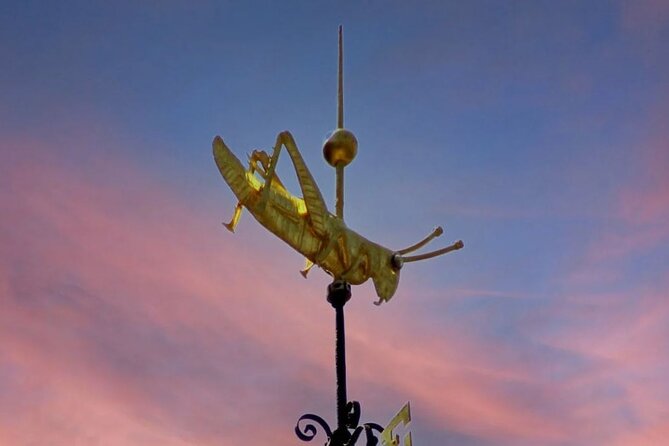
After that, you’ll see the Old North Church (built in 1723). The guide explains the famous lantern signal on April 18, 1775—one if by land, two if by sea—and why that signal mattered on the eve of the Revolution, including how it was arranged.
This is where the tour’s story skills shine. The lantern detail ties timing, risk, and communication into one memorable image. Even if you think you know this story, you’ll often learn something new in how the guide connects it to the larger night’s tension.
Bunker Hill Territory: Copp’s Hill Terrace Views and the 221-Foot Marker
Your final stretch centers on burial grounds linked to British cannon emplacements during the Battle of Bunker Hill, followed by views from Copp’s Hill Terrace. From there, you can see the 221-foot obelisk marking the site where colonial militia defended hastily made earthworks and repelled two redcoat charges before retreating.
What you get at the end is a payoff: the tour moves from names and dates to an actual sense of geography. That’s key because Bunker Hill is famous partly because it’s hard to picture until you’re looking at the terrain.
Then you finish with a view toward USS Constitution—the oldest warship afloat anywhere in the world—visible from the end point area with masts and rigging in view. That ending is smart because it pulls you into the larger American story beyond the Revolution.
Pacing, Hearing, and Comfort: What to Do So You Enjoy It
This tour hits a lot of ground, and that’s the whole point. But the pacing can be a lot if you’re not used to continuous walking and frequent stop-and-start.
One recurring piece of feedback: some people want more time in the cemetery portion, and others mentioned difficulty hearing when the guide wasn’t facing them. So do yourself a favor—try to stay closer to the front, and don’t be shy about asking questions when there’s a natural pause.
Comfort checklist based on what you’re walking through:
- Wear comfortable walking shoes (you’ll cover miles across downtown and historic areas)
- Bring water, especially on hot days
- If you use a walking stick, plan to take your time at the burying ground stops
Also, the guides’ skill level seems consistently high. In the reviews you can see patterns: people praised guides who answer questions directly, keep families engaged, and use humor to break up heavy moments.
Price and Value: Is $31 Worth It?
At $31.00 per person for about 2 hours 30 minutes, this tour is priced like a practical investment in time and context. You’re not paying for access to one museum exhibit. You’re paying for someone to stitch together 16 sites into a story you can actually remember.
Here’s why the value works:
- You’re covering all 16 official sites in a single outing, so you don’t spend your day bouncing between separate plans
- You get guided explanations that make familiar landmarks feel less generic
- Group size max 25 means you’re more likely to get your questions answered than on huge tours
If you’re only in Boston for a short visit, this is one of the easiest ways to build a foundation. If you have more time, you can use what you learn here to choose what to revisit on your own later.
Who This Tour Suits Best (and Who Might Prefer Something Else)
This Freedom Trail walk suits first-time visitors who want the big storyline without spending half a day figuring out route logistics. It also fits history buffs and families because the guide style can keep even teenage attention moving.
It’s also a good choice if you like your history in human scale—speaking about Paul Revere, John Hancock, Samuel Adams, and the streets around them—while still covering broader social issues like abolition and women’s rights themes.
If you prefer a slower pace, you may find the walk intense. If hearing clearly is crucial for you, aim for better placement near the front. And if you want lots of independent exploration time at each stop, this format might feel too structured.
Should You Book This Freedom Trail Walking Tour?
I’d book it if your goal is to get your bearings fast, learn the connections between stops, and walk away with a strong timeline you can build on. The guide-led format is what turns the trail from a list into a narrative, and at $31.00 you’re paying for that storytelling and route efficiency.
I’d skip it if you want long, quiet museum-style pacing at each location or you struggle with dense walking schedules. In that case, you could consider a self-guided Freedom Trail route and add a separate stop for the topics that matter most to you.
If you do book: bring good shoes, stay closer to the front for sound, and treat cemeteries and massacre-history stops as moments to slow down, not rush through.
FAQ
How much does the Freedom Trail walking tour cost?
The price is $31.00 per person.
How long is the tour?
It lasts about 2 hours 30 minutes.
Where does the tour start and end?
It starts at The Embrace, 139 Tremont St, Boston, MA 02108. It ends at Copp’s Hill Terrace in Boston’s North End, with the tour end area listed at 520 Commercial St and an address of 7 Jackson Ave, Boston, MA 02113.
Is the tour offered in English?
Yes, the tour is offered in English.
Are there all 16 official Freedom Trail sites on this tour?
Yes, the tour highlights checking off all 16 official sites in one walking tour.
What ticket format do I get?
You’ll receive a mobile ticket.
Is the tour physically demanding?
It’s recommended for people with a moderate physical fitness level.
Is the group size limited?
Yes. The maximum group size is 25 travelers.
What’s the cancellation policy if weather is poor?
Cancellation is free. You can cancel up to 24 hours in advance for a full refund. The experience requires good weather, and if it’s canceled due to poor weather you’ll be offered a different date or a full refund.
On Foot Through Old Boston


More of the Boston Ledger



Follow the Red Bricks Further
New on the Boston Docket
- Boston to Newport Mansions Private Day Trip
★ 5.0 · 3 reviews - Boston Massachusetts Private Photography Tour
★ 5.0 · 3 reviews - Homemade Dumplings 101 in Boston
★ 3.5 · 3 reviews - Self-Guided Audio Tour of Boston North End
★ 4.5 · 3 reviews - Old Boston: Beacon Hill & Back Bay Walking Tour in French
★ 4.7 · 3 reviews
Freedom Trail & Revolution Walks, compared.
 ★ 5.0Freedom Trail History Small Group Walking TourFrom $356,450 reviews
 ★ 4.5Boston Freedom Trail Walking Tour with Costumed GuideFrom $262,531 reviews
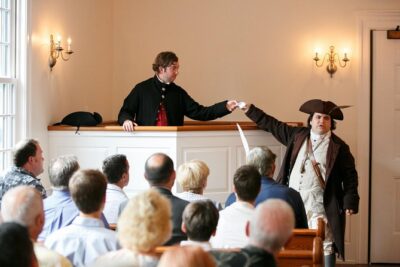 ★ 4.5Boston Tea Party Ships and Museum AdmissionFrom $352,512 reviews
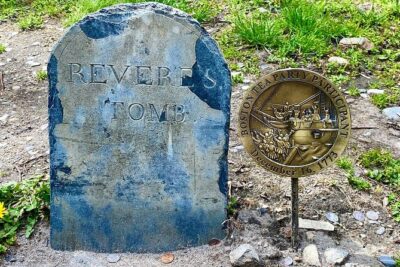 ★ 5.0The Full Revolutionary Story Epic Small Group Boston Walking TourFrom $552,356 reviews
 ★ 4.8Boston Tea Party Ships and Museum Interactive TourFrom $351,926 reviews
 ★ 5.0Boston Food & History: Pizza, North End & Freedom TrailFrom $901,772 reviews
 ★ 4.9Boston’s Freedom Trail: A Revolutionary Walking TourFrom $311,748 reviews
★ 4.9Freedom Trail History Small Group Walking TourFrom $351,590 reviews
★ 4.9Boston’s Freedom Trail: A Revolutionary Walking TourFrom $311,748 reviews
★ 4.9Freedom Trail History Small Group Walking TourFrom $351,590 reviews
Browse the lists this tour appears in