

REVIEW · FREEDOM TRAIL & REVOLUTION WALKS
Boston: Freedom Trail History Small Group Walking Tour
A walk through Boston’s revolution in 150 minutes. You’ll follow the Freedom Trail with a local guide and a small group (15 max), hitting major Revolutionary landmarks and the graves tied to people like Paul Revere and Samuel Adams. I love the pacing and the story-led stops that help you connect loyalty, rebellion, and everyday Boston life without getting lost in facts. One consideration: it’s about 2 miles of mostly outdoor walking, and winter weather can make that feel longer.
You start at the Boston Foundation Monument on the edge of Boston Common, then work your way through key meeting houses, street-corner sites, and burial grounds that explain why this city became the American Revolution’s pressure cooker. The tour ends at Copps Hill Terrace in the North End, with a great line of sight toward USS Constitution and the Bunker Hill Monument across the river.
In This Review
- Key highlights I’d plan around
- Freedom Trail on a small group: why 150 minutes works
- Boston Foundation Monument and Boston Common: the handshake start
- State House to Granary Burying Ground: politics, churches, and martyrs
- King’s Chapel, Boston Latin, and the Franklin statue: learning and old power
- Old South Meeting House and Old State House: the meetings and the flashpoint
- Quincy Market break to Paul Revere House: food pause, then the legend
- North End finish: Old North Church and Copps Hill burial ground
- USS Constitution to Bunker Hill Monument views: why the skyline matters
- Pace, comfort, and who should choose this tour
- Should you book this Freedom Trail walking tour?
- FAQ
- How long is the Boston Freedom Trail History small group tour?
- What does the tour cost?
- Where do I meet the guide?
- Does the tour include all 16 Freedom Trail landmarks?
- Is Charlestown included in the tour?
- Are museum admissions included?
- Is video recording allowed?
- How far do you walk during the tour?
- Is it suitable for young children?
Key highlights I’d plan around
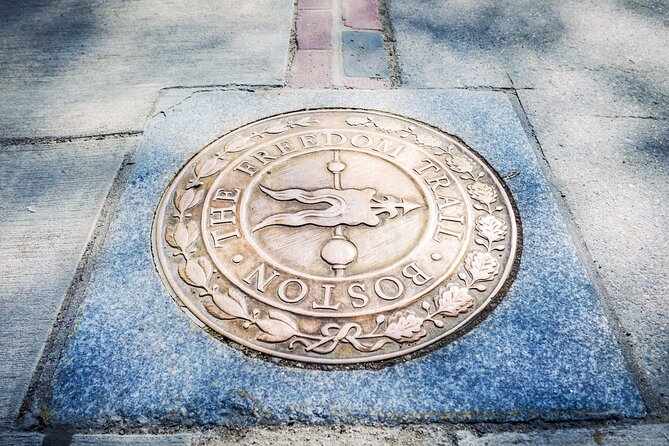
- Small group size (15 max) so you can actually hear the guide and ask questions.
- All 16 official Freedom Trail landmarks plus scenic viewpoints toward Charlestown.
- Real Revolutionary context, centered on the push-and-pull between loyalty to the Crown and rebellion.
- Stop-and-see story points, including Granary Burying Ground, Old South Meeting House, and the Boston Massacre Site.
- A practical mid-walk break, where you can use the bathroom and grab a drink (timing depends on the day).
Freedom Trail on a small group: why 150 minutes works
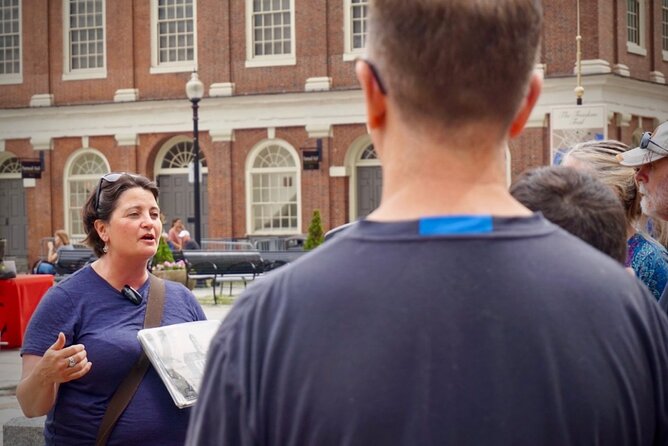
The Freedom Trail is famous, but it can also feel like a checklist if you’re on your own. This tour keeps it human. A guide connects each stop to the bigger political argument building over roughly 15 years, so Boston’s Revolution stops feeling random.
The 150-minute length is the sweet spot. Long enough to hit major sites from Boston Common to the North End, but short enough that you’re not stuck outdoors all afternoon. And because the group is limited to 15, you’re less likely to get drowned out or forced to shuffle along with giant crowds.
Is it worth $35? For the amount of ground covered and the number of named landmarks included, it’s a decent deal—especially if you like your history told with specifics instead of a bland lecture. You’re also not paying museum admission; the value is in the walking route and the guide’s storytelling.
Boston Foundation Monument and Boston Common: the handshake start
You meet inside Boston Common at the Boston Foundation Monument, on the northern edge of the park, opposite 50 Beacon Street. The granite memorial has a bronze relief showing two men shaking hands, a visual cue for the Puritan arrival that helped set the tone for early Boston.
From there, you work your way through the Boston Common area as the tour frames the central question of the era: who felt loyalty to Crown and country, and who chose rebellion. That matters, because later stops make more sense when you already understand that many colonists weren’t simply evil rebels or obedient subjects—they were people arguing over risk, duty, and survival.
If you’re coming in cold weather, do what you’d do anywhere in Boston: dress for wind, not just temperature. I’d also wear shoes you trust. The route is on sidewalks and historic surfaces, and you’ll be walking steadily for a full 2+ miles.
The red brick line keeps going. More Trail walks here
State House to Granary Burying Ground: politics, churches, and martyrs
Next on the route is the Massachusetts State House. The guide’s goal here is to set the political stage, because you’re not just walking pretty old buildings—you’re tracing the machinery of governance and protest.
Park Street Church follows. This is where the tour tends to shift from politics-at-a-distance to the neighborhoods and institutions shaping the day-to-day world of colonial Bostonians.
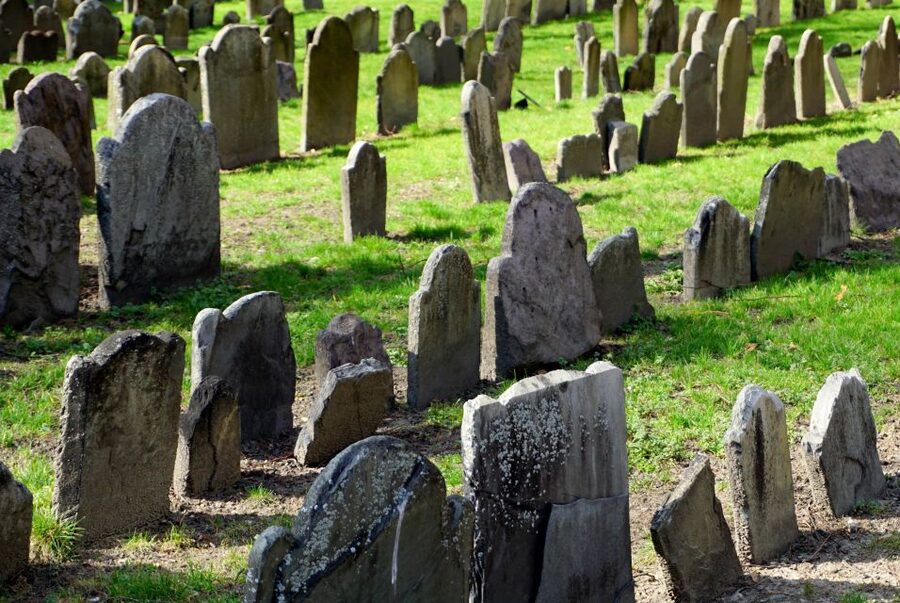
Then comes one of the most moving stops: Granary Burying Ground. It’s one thing to learn names in a textbook. It’s another thing to stand near the final resting places of key figures tied to the Revolution. In this part of the walk, I love how the guide turns the cemetery from a quiet background into a readable map of who mattered and why.
A practical note: cemeteries are quieter, but also colder and less sheltered. If it’s icy, slow down and keep your attention on footing.
King’s Chapel, Boston Latin, and the Franklin statue: learning and old power
King’s Chapel is next, and it’s an important contrast point. This area helps explain that revolutionary energy wasn’t only driven by street crowds. It also came from established institutions and familiar civic spaces.
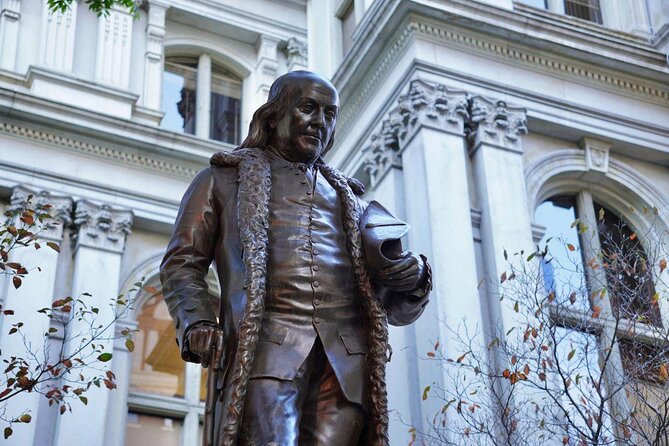
Then you pass Boston Latin School and the Benjamin Franklin statue. That stop usually lands well because it reminds you the Revolution had an intellectual side. People argued about rights and public responsibility, and you can see how education and public ideas fed into the political crisis.
Old City Hall and the Old Corner Book Store are quick but memorable. These are the kind of historic corners where it’s easy to walk past on your own. With a guide, the same streets feel like part of the conversation—where print, meetings, and public attention shaped outcomes.
You’ll also notice how often the tour ties storytelling back to place. That’s the big win here: it’s not only what happened, it’s where it happened and what the streets meant.
Old South Meeting House and Old State House: the meetings and the flashpoint
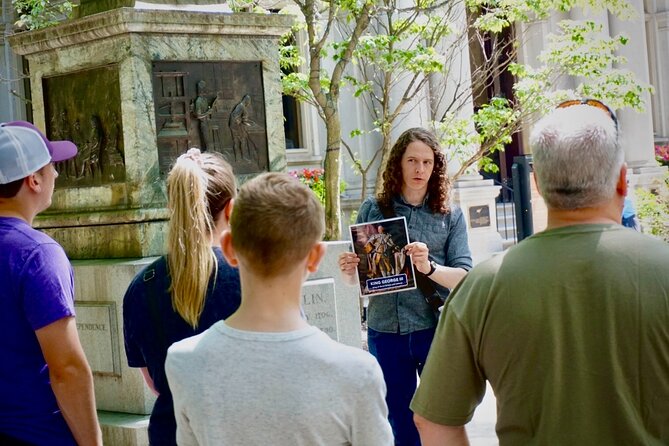
Old South Meeting House comes mid-walk, and it’s one of those stops that clarifies why Bostonians kept gathering in the same places. This is where you understand that revolution didn’t appear from nowhere—it built through repeated public meetings and organized messaging.
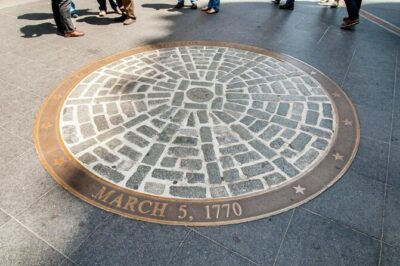
Old State House follows. It’s a major stop for the Revolution story because it’s tied to the Boston Massacre Site. Here, you’ll hear the events and the aftermath, and you may also hear context that challenges simplistic retellings, like framing it as self-defense that escalated. The guide’s approach matters, and many groups get a history-minded storyteller who keeps the account balanced rather than one-note.
Faneuil Hall is next. Even with only a short stop, it helps connect the dots between speeches, crowds, and the political pressure that led from protest to confrontation.
One drawback to plan for: this section can feel emotionally intense. If you’re sensitive to conflict scenes, give yourself a second to breathe. The guide usually paces you well, but you’ll still feel the weight of what you’re seeing.
Quincy Market break to Paul Revere House: food pause, then the legend
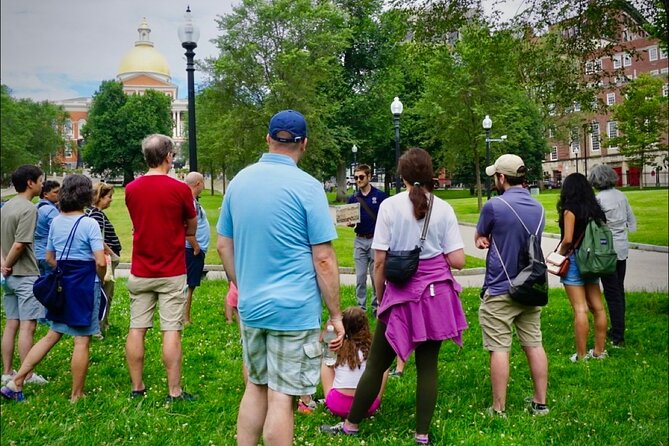
You get a break at Quincy Market. This is useful in a very practical way: use the bathroom if you need it and grab a drink or snack. In cold weather, even a short pause can make the rest of the walk feel easier to handle.
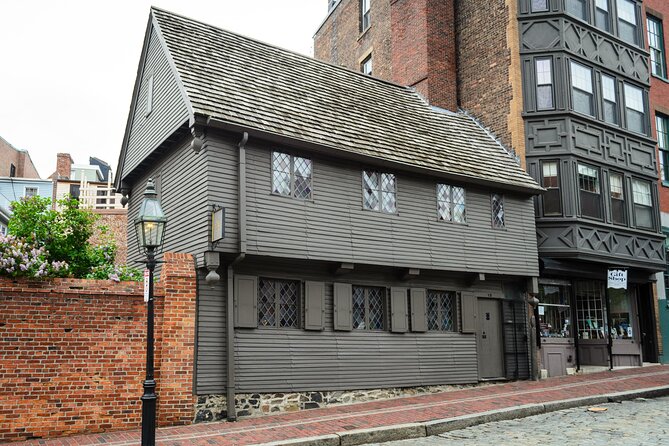
Then it’s on to the Paul Revere House. This stop is where the tour often shifts from mass events to individual agency. You’ll talk about Revere’s role and how his actions fit into the larger web of signals, fear, and urgency sweeping the city.
From there you walk through Hanover Street and then see the Paul Revere Statue. If you’ve heard the midnight-ride version of the story before, this is often where myths get nudged. Some guides correct details—like clarifying that Paul Revere did not complete the full midnight ride as the popular story suggests—so you leave with fewer oversimplifications.
Boston was built for walking. More routes
- Boston: Freedom Trail History Small Group Walking Tour★ 5.0 · 6,450 reviews
- Harvard University Campus Guided Walking Tour★ 4.5 · 3,632 reviews
- Boston Freedom Trail Walking Tour with Costumed Guide★ 4.5 · 2,531 reviews
- The Full Revolutionary Story Epic Small Group Boston Walking Tour★ 5.0 · 2,356 reviews
- Boston’s Freedom Trail: A Revolutionary Walking Tour★ 4.9 · 1,748 reviews
North End finish: Old North Church and Copps Hill burial ground
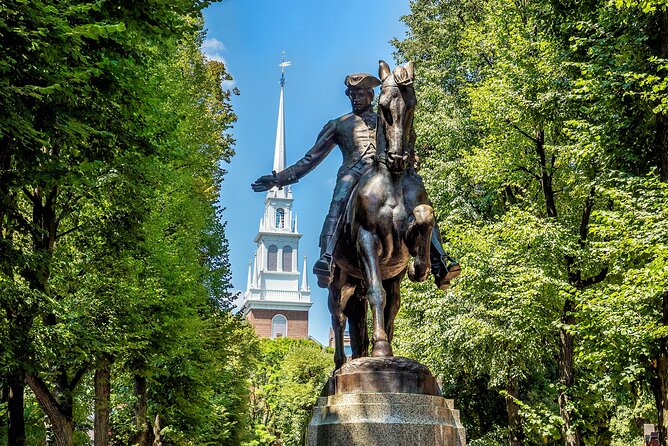
The North End portion starts to feel like a different Boston. The streets tighten, the atmosphere changes, and the guide’s story often turns more personal again.
Old North Church is a key moment. It’s not just a famous building; it’s a launching point for the communication side of the Revolution, when quick messages could change the next move. Then you visit Copps Hill Burying Ground, where the focus returns to the people tied to the conflict and to the city’s long memory.
As you finish, Copps Hill Terrace delivers a final viewpoint that feels like a payoff. You’ll get sightlines toward USS Constitution and the Bunker Hill Monument across the water.
This viewpoint helps the tour’s structure make sense. Earlier you walked through the story inside Boston. Now you see how that story expands outward into Charlestown and the wider battlefield geography.
USS Constitution to Bunker Hill Monument views: why the skyline matters
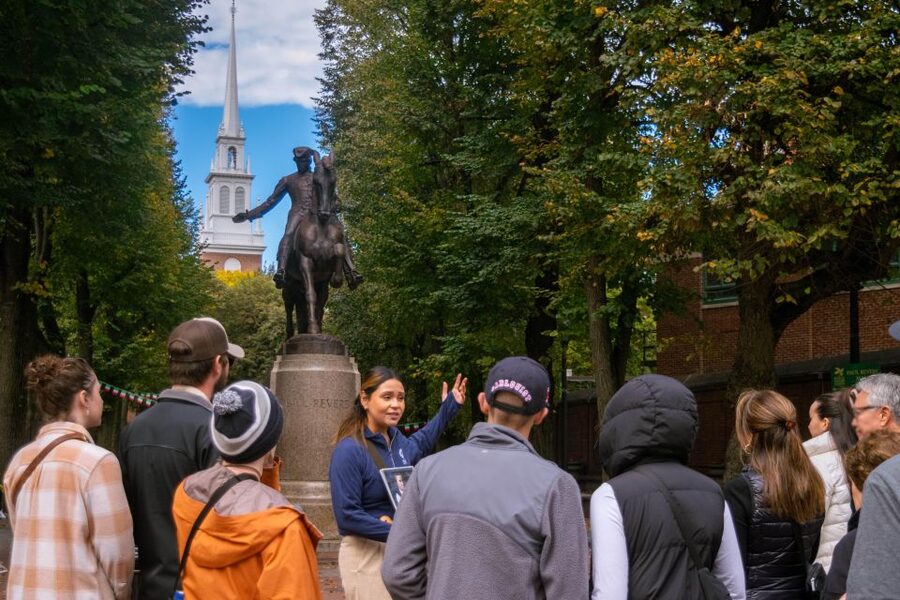
Toward the end, you’re treated to scenic views as the tour moves you toward the final terrace. USS Constitution is a big name for a reason, and you’ll see it from a distance, where its presence feels like a bridge between the Revolution era and later American identity.
You also look toward the Bunker Hill Monument. It’s one of those landmarks that can feel distant and symbolic when seen alone. With the guide’s earlier focus on decision-making, meetings, and conflict escalation, the view reads like the end of a chain of events rather than a random tourist stop.
Important limitation: Charlestown itself is not included for walking inside the neighborhood. Still, the views are designed to give you that end-stage connection without extending the walking day.
Pace, comfort, and who should choose this tour
At roughly 2.0 miles (3.2 km), this is a solid walk for a 2.5-hour history outing. It’s not a sprint, but it’s continuous enough that low stamina can become an issue—especially in freezing temps or wet snow.
The tour is listed as wheelchair accessible, but it also notes it may not be suitable for people with mobility impairments. If that applies to you, don’t guess based on optimism—ask ahead and be honest about what you can handle comfortably.
This tour fits best if you:
- Want a guided Freedom Trail overview with the main Revolutionary stops included
- Like story-first history, not just dates and plaques
- Prefer small-group dynamics over shoulder-to-shoulder touring
It’s not a great pick for kids under 6, based on the tour’s suitability note. For everyone else, bring comfortable shoes and weather-appropriate clothing, because the outdoors will do most of the work.
Should you book this Freedom Trail walking tour?
If you want the Freedom Trail experience with fewer crowds and better context, I’d book it. The main reason: you’re not only seeing famous places, you’re following a guided timeline that explains why people in Boston argued their way toward revolution.
I’d particularly choose this tour if:
- You’re visiting Boston for the first time and want a strong orientation from Boston Common to the North End
- You care about understanding competing loyalties, not just cheering for one side
- You like guides who keep the walk organized and the stories easy to follow, as many groups describe
Skip it if you hate walking long distances outdoors, you need lots of indoor breaks, or you’re looking for museum time instead of street-level history.
FAQ
How long is the Boston Freedom Trail History small group tour?
It runs for about 150 minutes (2.5 hours), and the duration may vary slightly but won’t be more than 3 hours.
What does the tour cost?
The price is $35 per person.
Where do I meet the guide?
Meet inside Boston Common at the Boston Foundation Monument, on the northern boundary of the park, opposite 50 Beacon Street (02108).
Does the tour include all 16 Freedom Trail landmarks?
Yes. It covers all 16 official landmarks, with scenic views included toward USS Constitution and the Bunker Hill Monument.
Is Charlestown included in the tour?
No. Charlestown neighborhood is not included, though you do get scenic views of USS Constitution and Bunker Hill Monument.
Are museum admissions included?
No. Admission inside museums is not included.
Is video recording allowed?
No. Video recording is not allowed.
How far do you walk during the tour?
The accessible route travels approximately 2.0 miles (3.2 km).
Is it suitable for young children?
It is not suitable for children under 6 years old.
On Foot Through Old Boston


More of the Boston Ledger



Follow the Red Bricks Further

New on the Boston Docket
- Boston to Newport Mansions Private Day Trip
★ 5.0 · 3 reviews - Boston Massachusetts Private Photography Tour
★ 5.0 · 3 reviews - Homemade Dumplings 101 in Boston
★ 3.5 · 3 reviews - Self-Guided Audio Tour of Boston North End
★ 4.5 · 3 reviews - Old Boston: Beacon Hill & Back Bay Walking Tour in French
★ 4.7 · 3 reviews
Freedom Trail & Revolution Walks, compared.
 ★ 5.0Freedom Trail History Small Group Walking TourFrom $356,450 reviews
 ★ 4.5Boston Freedom Trail Walking Tour with Costumed GuideFrom $262,531 reviews
 ★ 4.5Boston Tea Party Ships and Museum AdmissionFrom $352,512 reviews
 ★ 5.0The Full Revolutionary Story Epic Small Group Boston Walking TourFrom $552,356 reviews
 ★ 4.8Boston Tea Party Ships and Museum Interactive TourFrom $351,926 reviews
 ★ 5.0Boston Food & History: Pizza, North End & Freedom TrailFrom $901,772 reviews
 ★ 4.9Boston’s Freedom Trail: A Revolutionary Walking TourFrom $311,748 reviews
★ 5.0Boston’s Freedom Trail: A Revolutionary Walking TourFrom $311,343 reviews
★ 4.9Boston’s Freedom Trail: A Revolutionary Walking TourFrom $311,748 reviews
★ 5.0Boston’s Freedom Trail: A Revolutionary Walking TourFrom $311,343 reviews
Browse the lists this tour appears in