
REVIEW · FREEDOM TRAIL & REVOLUTION WALKS
The Full Revolutionary Story Epic Small Group Boston Walking Tour
Hook: Boston’s Revolution story walks like a movie.
What I like most is the guide-led chronological storytelling on the Freedom Trail, so the history clicks into place instead of feeling like a checklist. I also like the small-group feel, usually capped at 15 people, which makes it easier to ask questions and keep up with the pace. One thing to consider: it’s a lot of walking on mostly outdoor streets, so wear comfortable shoes and dress for the weather.
You’ll start at City Hall Plaza, near the Bill Russell statue and the big Boston sign, and the tour builds forward from Puritan roots to the moments that led to independence. I particularly like that it spends time on the people and arguments behind the Revolution, not just famous names. A possible drawback is that it moves quickly between sites, so if you want long breaks for photos or lingering in shops, plan for less downtime than you might expect.
In This Review
- Key highlights to expect
- Freedom Trail, told in chronological order (not just walked)
- Meeting at City Hall Plaza: start with the right landmarks
- King’s Chapel Burying Ground and early Massachusetts: the backstory before the fireworks
- Granary Burying Ground to the heart of politics: Sons of Liberty and power in stone
- Boston Massacre site and the push-pull of loyalists, soldiers, and patriots
- Old South Meeting House, the lead-up to the Tea Party, and downtown pressure
- Faneuil Hall Marketplace and Quincy Market: public debate to crowd energy
- From Rose Kennedy Greenway to the Paul Revere House: pretty squares with real meaning
- Old North Church, the midnight ride, and the shot heard around the world
- Bunker Hill and the view that makes battle scale feel real
- North End and the harbor finish: history meets dinner plans
- Price and value: $55 for a lot of guided walking
- Guide style: the storytelling engine (Tyler, Mike, Chris, Tom)
- Practical tips so you stay comfortable on this much walking
- Who should book this tour (and who might not love it)
- Should you book the Full Revolutionary Story Epic Small Group Boston Walking Tour?
Key highlights to expect
- Freedom Trail, but in story order so the Revolution unfolds the way it happened
- Puritan and protest history beyond the obvious stops like King’s Chapel Burying Ground
- Granary Burying Ground to Old State House momentum through the key power struggles
- Downtown + North End + Boston Harbor finish with a view-focused send-off
- Interactive visual aids and props that help the battle and politics make sense
Freedom Trail, told in chronological order (not just walked)
Most Freedom Trail tours follow the bricks in a straight geographical line. This one does something smarter for your brain: it routes you through landmarks in roughly the same sequence as the Revolutionary timeline, weaving between sites so you understand cause and effect. You’re not just collecting monuments—you’re building a story.
That matters because Boston’s Revolution wasn’t one dramatic moment. It was debates, speeches, sermons, pamphlets, and escalating public conflict. The guide’s job is to connect those dots while you’re standing right where it happened. By the time you reach the Boston Tea Party lead-up and the later battles, the earlier “why” starts to feel obvious instead of memorized.
Meeting at City Hall Plaza: start with the right landmarks
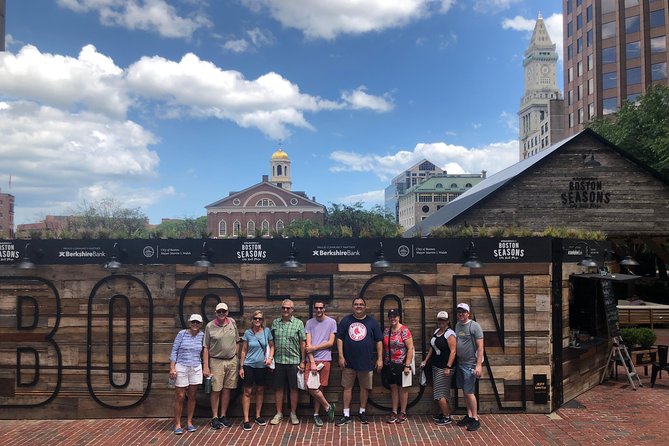
You begin at City Hall Plaza, a central pedestrian-only area with great sightlines. You’ll meet near Five Iron Golf and City Hall, with the guide positioned by the seasonal beer garden and a large Boston sign—plus Faneuil Hall in the background for an easy first photo.
This start is practical. City Hall Plaza puts you close to downtown foot traffic and public transit, and you get moving right away. The tour is designed to be easy to find, but also to get your bearings fast so you don’t spend your first 15 minutes figuring out where to stand.
The red brick line keeps going. More Trail walks here
King’s Chapel Burying Ground and early Massachusetts: the backstory before the fireworks
One of the tour’s strong choices is how early it goes. You don’t jump straight into Paul Revere and tea. You start with King’s Chapel Burying Ground, where you learn about early settlers in Massachusetts Bay—especially the Puritan influence, which the guide frames as more important (and stranger) than most first-time visitors expect.
Then the walk turns to places that shaped public life and religious speech. You’ll pass the first Anglican Church in Boston and hear about Brimstone corner, a spot linked to fiery anti-slavery preaching—July 4, 1829, when William Lloyd Garrison made his first public address against slavery.
Even if you’re there for the Revolution, this section helps you understand Boston as a culture built on public argument. The Revolution didn’t spring from nowhere; it grew from a city used to loud ideas and high-stakes opinion.
Granary Burying Ground to the heart of politics: Sons of Liberty and power in stone
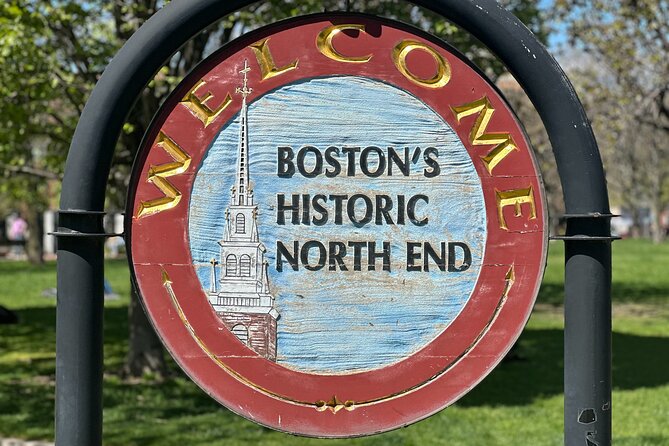
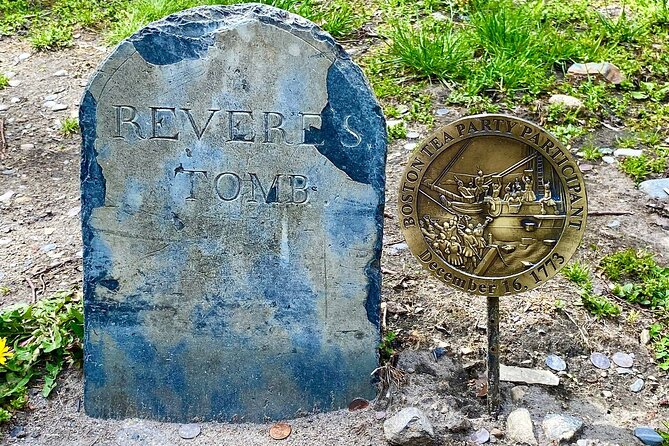
Granary Burying Ground is where the tour swings into the people-versus-power theme. You’ll visit the tombs of Paul Revere, John Hancock, and Sam Adams and connect them to the question behind the Sons of Liberty: who had the right to speak, protest, and lead?
Next comes Old City Hall and Old State House. These stops are a good reminder that you can read political conflict right into architecture and location. You’ll talk about the challenges of democracy while standing by buildings that later became symbols of governance. It’s also a nice chance to slow down mentally, because you’re not only learning names—you’re learning what the system was fighting about.
You also pass the Statue of Benjamin Franklin and connect him to schooling and public life. That detail gives Franklin more than a tourist-label feel and helps him function as a real figure in Boston’s public conversation.
Boston Massacre site and the push-pull of loyalists, soldiers, and patriots
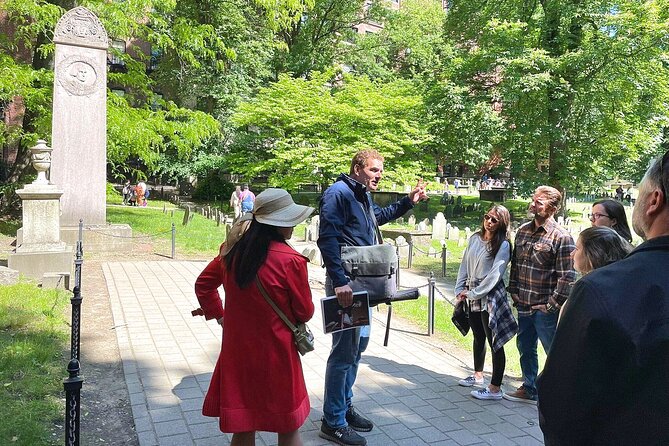
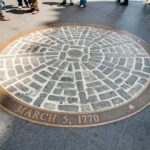
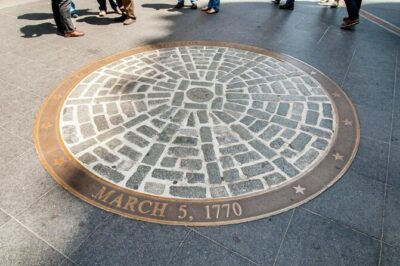
At the Boston Massacre site, the tour focuses on how quickly tension could turn into action. You’ll hear about the soldiers, citizens, loyalists, and patriot leaders pulled into that explosion of anger.
The useful part here is balance. It’s easy to tell Revolution stories as clean “good vs evil.” This tour frames the situation as messy human conflict—people with competing loyalties and fears. When you do that on-site, the event becomes more believable and less like a single-line textbook entry.
Old South Meeting House, the lead-up to the Tea Party, and downtown pressure
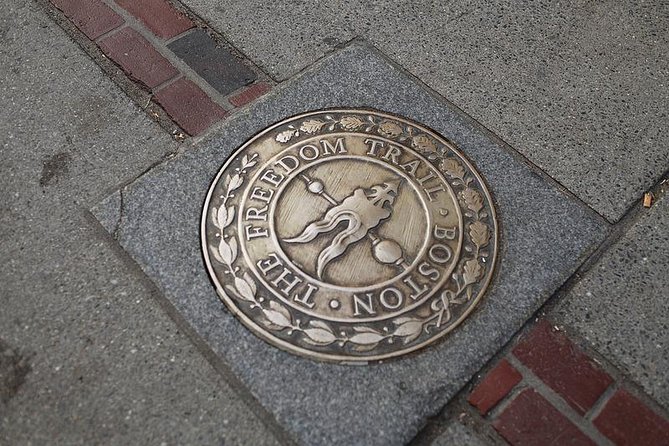
One of the biggest turning points is Old South Meeting House, where you learn about the Boston Tea Party beginning. You’ll also hear the idea that once the chain of events starts moving, there’s no easy reverse gear. That’s a great lesson to carry with you, because it matches the way revolutions often unfold: each action narrows the options.
From there, the tour keeps your feet moving through the downtown mix of history and finance. You’ll pass Post Office Square and the Financial District, with the guide pointing out how education, healthcare, and finance sit next to the revolutionary path. This is one reason the tour is worth doing even if you’ve already seen a few Freedom Trail stops: you get to compare “then” and “now” while staying in the same walking band.
Boston was built for walking. More routes
- Boston: Freedom Trail History Small Group Walking Tour★ 5.0 · 6,450 reviews
- Harvard University Campus Guided Walking Tour★ 4.5 · 3,632 reviews
- Boston Freedom Trail Walking Tour with Costumed Guide★ 4.5 · 2,531 reviews
- The Full Revolutionary Story Epic Small Group Boston Walking Tour★ 5.0 · 2,356 reviews
- Boston’s Freedom Trail: A Revolutionary Walking Tour★ 4.9 · 1,748 reviews
Faneuil Hall Marketplace and Quincy Market: public debate to crowd energy
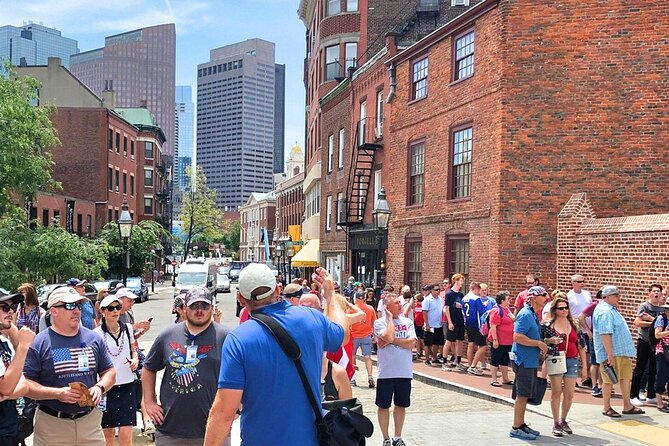
You stop at Faneuil Hall Marketplace, often treated as a poster-symbol of democracy. Here, it’s tied back to the idea that protest becomes revolution—and that the building wasn’t just a landmark, it was a stage.
Then comes Quincy Market, with a real-world note: tourist traps exist. Even so, it’s a useful stop because the guide’s mission is to keep you oriented to the city you’re in, not only the past. If you want a break to grab something to drink, this is where you’ll usually get that chance.
From Rose Kennedy Greenway to the Paul Revere House: pretty squares with real meaning

After the downtown crowd zones, the tour swings into calmer, greener areas like Rose Fitzgerald Kennedy Greenway. It’s one of those stretches where you can reset your legs and still feel like you’re walking through “Boston the present,” not just Boston the museum.
You’ll also pass North Square Park, described as the oldest residential square in America, and the Paul Revere House area—done not as a legend dump, but as a neighborhood moment surrounded by some of the best places to eat. You’ll then get a quick Paul Revere statue photo stop.
If you’re traveling with food interests, this section helps you plan. You’ll walk past practical meal zones, so you’re not forced to hunt later with a tired brain.
Old North Church, the midnight ride, and the shot heard around the world
Old North Church and Historic Site is where the guide usually turns story energy up. You’ll hear about Paul Revere’s famous warning—one if by land, two if by sea—and how the steeple factors into that moment. Then the story connects forward to the Lexington and Concord chaos and the famous line about the shot heard around the world.
This is a good stop for anyone who likes “sequence matters.” The guide’s approach helps you picture the chain of signals and movement, not just the headline phrase.
Bunker Hill and the view that makes battle scale feel real
The tour includes Bunker Hill Monument and does a complete recreation of the battle of Bunker Hill. Even if you’ve heard the general story before, this kind of guided reenactment-in-words tends to make the stakes clearer—especially because you’re on the ground near where the geography shapes decisions.
Then you also get a waterfront angle on USS Constitution—described as the oldest commissioned naval vessel in the world, Old Ironsides. The ship itself isn’t part of the American Revolution, and the tour makes that distinction, but you still get a quick overview and practical tips for how to see it best later.
That’s smart tour design: you keep your focus on the Revolution, but you still leave with ideas for next steps.
North End and the harbor finish: history meets dinner plans
The tour ends in Boston’s North End, called the oldest residential neighborhood in America, where you’ll get the final short run through the “Little Italy” feel. You’ll talk about food and culture here as part of Boston’s modern identity, not as an afterthought.
From there, you stroll along the Boston Harbor area, around Christopher Columbus Park, and continue along the Harborwalk for city views and ocean breezes from the piers and wharfs. The finish point is Lewis Wharf, which is practical for transit and also handy if you need restrooms.
This end section is more than pretty. It’s also a pacing decision. After hours of walking and heavy political content, switching to views helps your brain reset so you leave with the story still intact instead of cooked.
Price and value: $55 for a lot of guided walking
At $55 per person for about 3 to 3.5 hours, the value comes from three things:
- Small-group attention (up to 15 people) helps you actually track the narrative and ask questions.
- Lots of major stops packed into one flow without making you chase tickets for each site.
- Built-in breaks at key points like Faneuil Hall Marketplace and Quincy Market, where you can use the pause for snacks and orientation.
You’re not paying for costumes or performance art. You’re paying for story craft and guide time. That’s a good deal if you want more than “look at that building” history.
Guide style: the storytelling engine (Tyler, Mike, Chris, Tom)
Names you may meet include Tyler, Mike, Chris, and Tom. Across that range, the consistent theme is energy and teaching technique: interactive moments, visual aids, and props used to explain difficult parts (like the battle recreation at Bunker Hill).
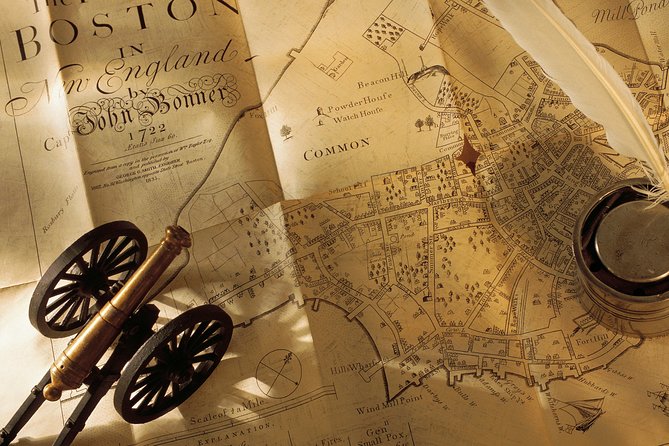
One review-specific detail I find especially practical is the use of visual tools like maps and props—for example, Lego soldier style illustrations of battle moments. That’s the kind of help that turns abstract conflict into something your brain can hold.
If you like history that feels like a guided lesson rather than a lecture, this tour’s guide setup is built for you.
Practical tips so you stay comfortable on this much walking
This is a “moderate fitness” walk. That means you should plan for steady outdoor time, repeated pavement stretches, and weather changes. A few practical moves will help:
- Bring layers. The tour is outdoors, and wind can be a factor near the harbor.
- Wear good walking shoes. You’ll cover a lot of ground over three-plus hours.
- Bring water and a snack if you’re the type who gets hungry between stops, especially because you’re not entering lots of museums.
- If you need restroom access, end-of-tour Lewis Wharf has public restrooms, and you’ll also have built-in pauses in downtown areas like Faneuil Hall and Quincy Market.
Also note: service animals are allowed, and children must be accompanied by an adult. It’s not pitched as a kids-only story hour, but it’s appropriate for all ages if you’re okay with real events and real conflict.
Who should book this tour (and who might not love it)
Book it if you:
- Love American history but want more than memorized dates
- Want Freedom Trail context without feeling stuck in a straight-line walk
- Prefer a guide who tells you why events happened, not only what happened
- Enjoy a finish that includes views and food neighborhood energy
Rethink it if you:
- Want lots of time inside museums or long indoor stops
- Struggle with extended walking on city sidewalks
- Need very frequent long breaks for pacing
This tour is best for people who enjoy moving and thinking at the same time.
Should you book the Full Revolutionary Story Epic Small Group Boston Walking Tour?
I’d book it if your goal is to understand Boston’s Revolution story as one connected sequence—and to see modern Boston right alongside it. The $55 price makes sense when you factor in the guide-led narrative, the small-group size, and how many major sites you cover in one outing.
If you’re on the fence, here’s my simple test: do you want history that comes with a clear storyline and a bit of visual help? If yes, this is a strong choice. If you just want a short list of must-sees with minimal walking, you’ll likely feel this tour is more than you asked for.
On Foot Through Old Boston


More of the Boston Ledger



Follow the Red Bricks Further

New on the Boston Docket
- Boston to Newport Mansions Private Day Trip
★ 5.0 · 3 reviews - Boston Massachusetts Private Photography Tour
★ 5.0 · 3 reviews - Homemade Dumplings 101 in Boston
★ 3.5 · 3 reviews - Self-Guided Audio Tour of Boston North End
★ 4.5 · 3 reviews - Old Boston: Beacon Hill & Back Bay Walking Tour in French
★ 4.7 · 3 reviews
Freedom Trail & Revolution Walks, compared.
 ★ 5.0Freedom Trail History Small Group Walking TourFrom $356,450 reviews
 ★ 4.5Boston Freedom Trail Walking Tour with Costumed GuideFrom $262,531 reviews
 ★ 4.5Boston Tea Party Ships and Museum AdmissionFrom $352,512 reviews
 ★ 4.8Boston Tea Party Ships and Museum Interactive TourFrom $351,926 reviews
 ★ 5.0Boston Food & History: Pizza, North End & Freedom TrailFrom $901,772 reviews
 ★ 4.9Boston’s Freedom Trail: A Revolutionary Walking TourFrom $311,748 reviews
★ 4.9Freedom Trail History Small Group Walking TourFrom $351,590 reviews
★ 5.0Boston’s Freedom Trail: A Revolutionary Walking TourFrom $311,343 reviews
★ 4.9Boston’s Freedom Trail: A Revolutionary Walking TourFrom $311,748 reviews
★ 4.9Freedom Trail History Small Group Walking TourFrom $351,590 reviews
★ 5.0Boston’s Freedom Trail: A Revolutionary Walking TourFrom $311,343 reviews
Browse the lists this tour appears in