
REVIEW · BEACON HILL & BACK BAY WALKS
Boston: Votes for Women History Tour of Back Bay
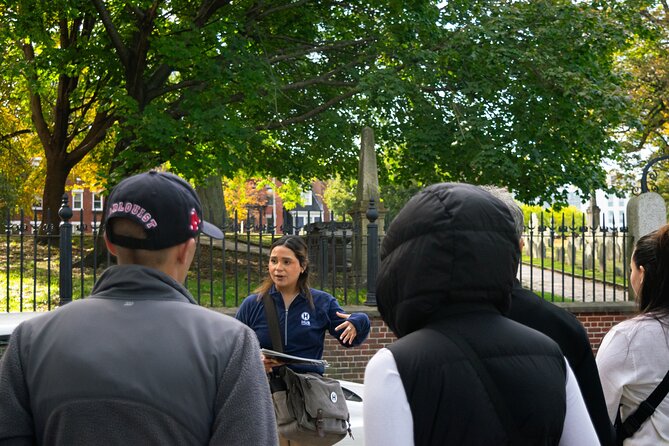
Boston’s vote-rights fight shows up in plain sight. This Back Bay walk threads women’s history through buildings and streets you already pass, with an expert guide like Maura bringing names, motives, and arguments into focus. You’ll cover major landmarks while staying in a small group (max 15), so questions actually get answered.
What I like most is the direct match between theme and setting: the tour doesn’t treat suffrage as an abstract concept. You’ll connect specific people to specific spots, including both supporters and opponents of the vote, and you’ll get context you can’t get from reading a plaque. I also like that the pacing is built for 2.5 hours of steady walking with frequent, short stops—so it feels like a guided stroll, not a long grind.
One thing to consider: since it’s mostly outdoors and you’ll be standing at multiple stops, it’s not a great fit if you have trouble standing for extended periods. Also, there’s no museum entry included, so plan on seeing the exteriors and learning the stories around them.
In This Review
- Key highlights I’d plan around
- Why Boston’s Back Bay tells the suffrage story in a unique way
- The opening at Make Way for Ducklings and the Public Garden start
- Marlborough Street and the power of who gets funded
- Homes, church roots, and the two sides of suffrage debate
- The College Club and the Historic Museum of Natural History building
- Copley Square, the Boston Public Library, and the offices where arguments lived
- Finishing at the Boston Women’s Memorial with names you’ll carry
- The $35 price and 2.5 hours of guided Back Bay value
- Who this tour suits best (and who should skip it)
- FAQ
- How long is the Boston Votes for Women History Tour of Back Bay?
- What is the price of the tour?
- How big is the group?
- Where does the tour start and end?
- What language is the tour offered in?
- Are museum entries included?
- Should you book this Back Bay Votes for Women tour?
Key highlights I’d plan around
- Back Bay landmarks tied to named suffrage leaders like Pauline A. Shaw, Julia Ward Howe, and Blanche Ames
- Pro-and-anti suffrage perspectives shown side by side through addresses and organizations
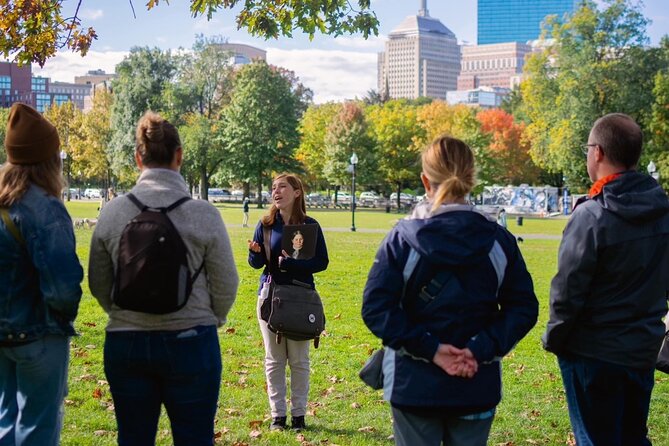
- Small-group format (15 max) that keeps Maura’s explanations interactive
- Outdoor-first itinerary with free stops, plus a “head to the next landmark” rhythm
- Not just suffrage campaigning: you’ll hear about organizing spaces like women’s clubs and public meeting sites
- Memorial finale at the Boston Women’s Memorial with Abigail Adams, Phillis Wheatley, and Lucy Stone
Why Boston’s Back Bay tells the suffrage story in a unique way
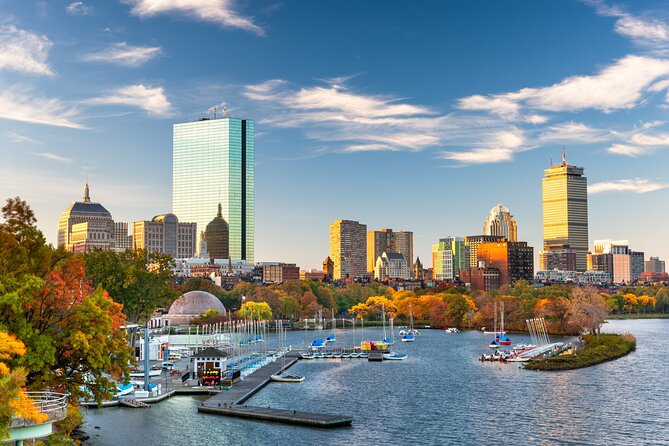
Back Bay is the part of Boston you might think you already know: wide streets, big buildings, and classic city views. This tour flips that assumption. Instead of treating the neighborhood as just pretty architecture, you use it like a timeline map.
You’ll learn how the fight for the vote was also a fight over public influence: who gets to speak, who gets to organize, and where decisions happen. You’ll hear about finance, media, civic groups, and even debates around birth control—because suffrage didn’t live in a vacuum.
And because it’s guided by a historian like Maura, you get more than names. You get why those people acted, how they argued, and what they feared. That’s the difference between a walk that’s just sightseeing and one that actually teaches you how a movement operated.
The opening at Make Way for Ducklings and the Public Garden start
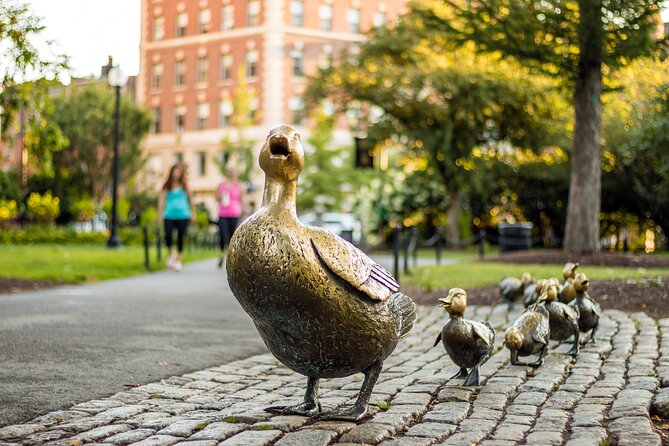
You’ll meet near the Make Way for Ducklings sculpture on Charles St. That’s a smart opener because it gets you in a Boston mindset fast: this is a city where children’s books, public space, and civic identity sit side by side.
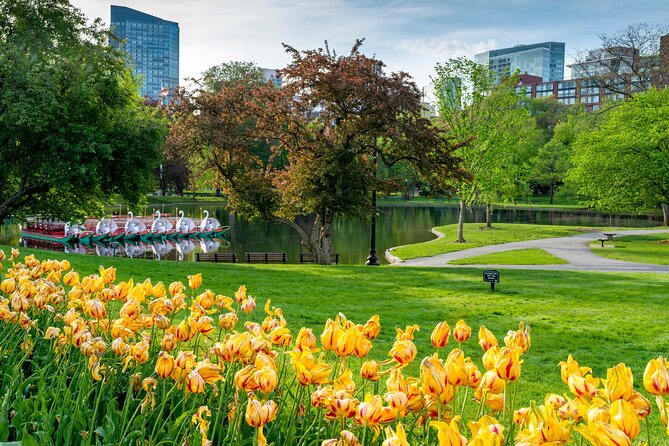
From there, you head into the Boston Public Garden, the first public botanical garden in the United States, established in 1837. The stop is short, but it sets a tone: public spaces matter. The women’s rights movement you’ll hear about relied on getting attention in shared places, not only behind closed doors.
If you like walking tours that help you see the city’s purpose, this start is a good match. You’re in a spot that feels designed for strolling and talking, which makes the later political storytelling land better.
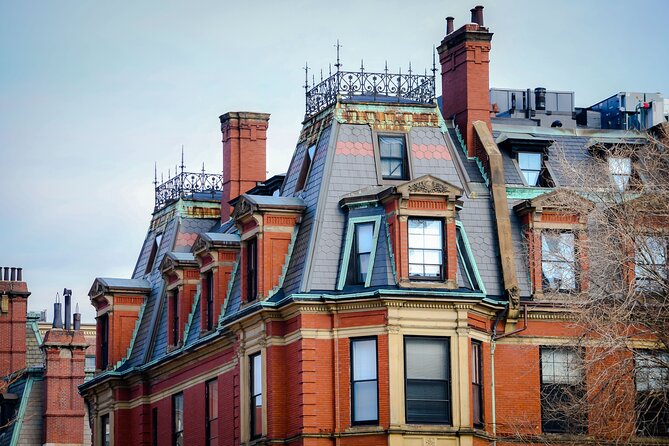
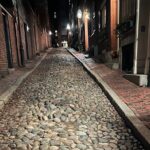
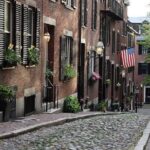
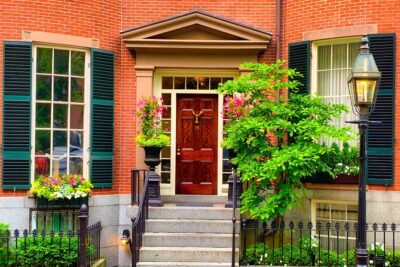
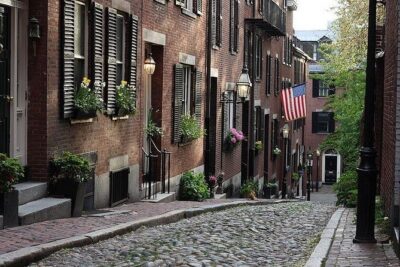
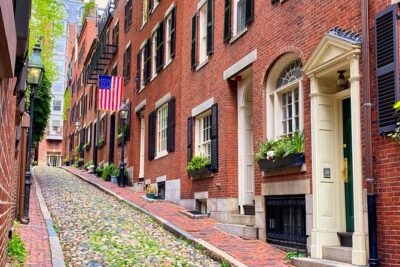
Gas lamps, bow fronts, brownstones. Keep walking
Marlborough Street and the power of who gets funded
One of the best things about this tour is how it assigns weight to money and organization. At 6 Marlborough St, you’ll learn about Pauline A. Shaw, a financier who helped back Boston’s women’s suffrage movement and founded the Boston Equal Suffrage Association for Good Government.
This stop works because the point isn’t just that Shaw supported suffrage. It’s that movements need structure: people willing to fund the effort, create associations, and keep momentum going when progress is slow.
After that, you move into a cluster of Back Bay addresses where the tour zooms in on how public debate played out in real community settings. The guide ties the stories to the streets you’re standing on, so you start to notice how often political arguments showed up in everyday life—neighbors, churches, homes, and meeting spaces.
Homes, church roots, and the two sides of suffrage debate
A lot of suffrage tours focus only on supporters. This one includes both sides, and that makes it more honest and more interesting.
You’ll pass a church founded in 1630 that later became a center of the Transcendentalist movement. Even if you don’t know the names, the takeaway is clear: ideas travel through institutions. Churches, schools, and meeting halls weren’t just background—they were engines.
Then you’ll learn about Elizabeth Putnam, an anti-suffragist who was also the first woman to preside over a state electoral college. That combination matters. The tour doesn’t treat politics as simple good-versus-bad. It shows how someone can oppose the vote yet still hold authority and shape public processes.
You also visit the home of Julia Ward Howe. The tour uses her name to connect the suffrage movement to wider strands of activism and persuasion in Boston. And then you go to Blanche Ames, a pro-suffrage cartoonist and early advocate for birth control—another reminder that suffrage arguments intersected with social issues people debated in public.
Next comes the Ames Mansion area and the family dynamic behind it. The tour explains how the Ames family’s fortune connected to politics, including Mary Shreve Ames (associated with anti-suffrage) and Blanche Ames (pro-suffrage). If you want a tour that shows how families and networks influenced political outcomes, this is where it starts feeling sharper.
The long avenue segment—with trees, grassy areas, benches, and statues—helps break up the heavier stories with something calmer. Use that moment to reset, because you still have a full run of landmarks ahead.
The College Club and the Historic Museum of Natural History building
As you move along, the tour shifts from individuals to institutions. At the College Club of Boston, you’ll see where women formed an organized space specifically as a college club—said to be the first women’s college club in the United States.
That matters because voting wasn’t only about laws. It was about building a public identity. Clubs and associations trained members to speak, meet, write, and act together. They were practice grounds for civic power.
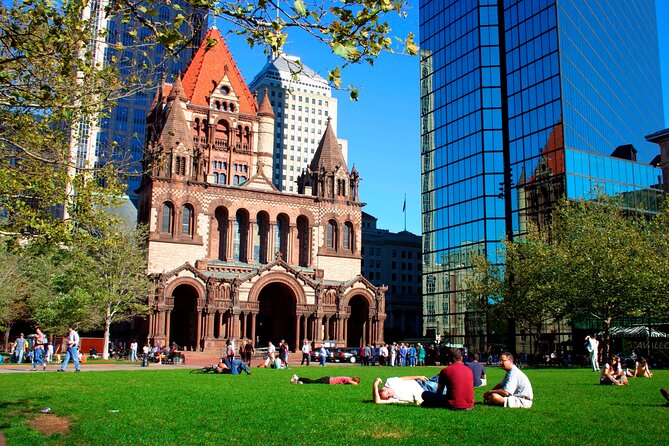
From there, you head to RH Boston | The Gallery at the Historic Museum of Natural History, the building that housed the Museum of Natural History from 1864 to 1951. Even though you’re not going inside as part of the tour, the exterior stop gives you a concrete anchor for the story.
The tour connects this building to Katherine McCormick’s work—specifically, her protest against popular fashion as part of the suffrage movement, while at an MIT lab. That’s a reminder that activism wasn’t limited to parades or petitions. It also involved controlling cultural signals that affected how women were treated and perceived.
The guide also notes that the building was designed in 1877 and recognized by the American Association of Architects as one of the top 10 buildings in the country. That detail isn’t just trivia. It supports the bigger point: these were grand civic spaces, and the movement’s advocates navigated a world that valued visible institutions and public credibility.
Copley Square, the Boston Public Library, and the offices where arguments lived
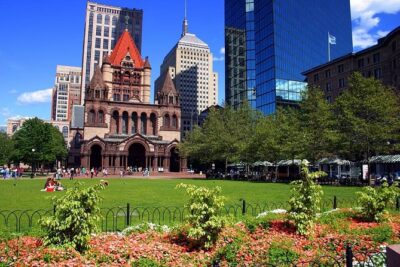
Copley Square is your next major stop. The tour frames it as the cultural center of Boston, which makes sense here because suffrage battles weren’t only about private beliefs. They were fought for attention in shared, high-visibility public areas.
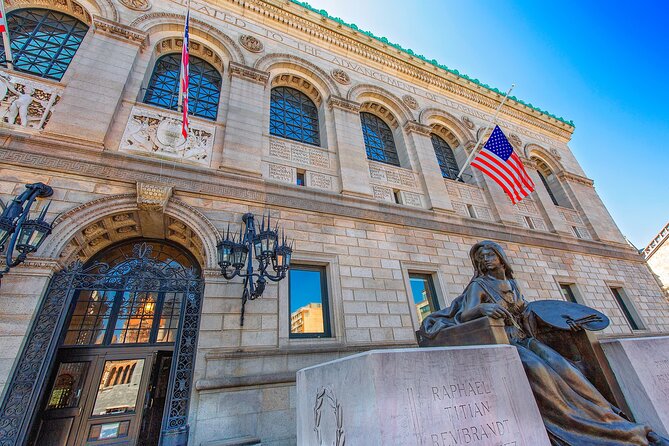
Then you reach the Boston Public Library, founded in 1848 and described as the third-largest public library in the United States. Again, the stop is brief, but the message is clear: knowledge and public access are political.
Here’s where the tour gets especially tangible. You’ll learn about Chauncy Hall (the former name tied to the area), which housed offices of pro-suffrage organizations such as the Massachusetts Woman Suffrage Association and The Women’s Journal.
You’ll also hear about the Kensington Building (later demolished in 1967), which housed offices for the Massachusetts Association Opposed to Further Extension of Suffrage to Women. That juxtaposition is powerful. It shows that pro- and anti-suffrage forces were active, organized, and vocal in the same city spaces.
If you’re the kind of person who likes seeing both sides of a political struggle without getting spun, this is one of the best segments. It also helps you understand that movements are networks, not just single speeches.
The tour then touches the Boston Marathon finish line as well as the Commonwealth Avenue area known for shopping and dining. It’s a light shift after the organizing office stories, and it helps you connect the history to the Boston you’ll actually enjoy after the tour.
Finally, you pass a Spiritualist Temple where women were allowed to lead public meetings. That’s a great closing detail because it shows another route to public voice: when legal structures lag, people still find ways to speak.
Three centuries deep, more Boston history
- Boston: Freedom Trail History Small Group Walking Tour★ 5.0 · 6,450 reviews
- Boston Food & History: Pizza, North End & Freedom Trail★ 5.0 · 1,772 reviews
- Boston: Freedom Trail History Small Group Walking Tour★ 4.9 · 1,590 reviews
- City Cruises Boston Historic Sightseeing Harbor Cruise★ 4.5 · 1,388 reviews
- Boston’s North End Food Tour: Italian Flavors & Heritage Walk★ 5.0 · 1,322 reviews
Finishing at the Boston Women’s Memorial with names you’ll carry
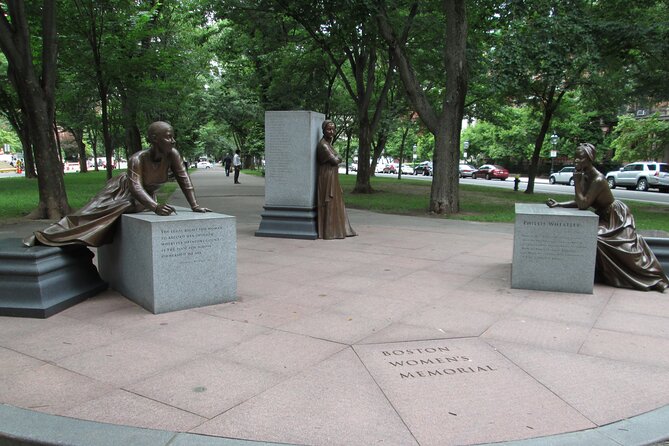
The tour ends at the Boston Women’s Memorial on Commonwealth Ave. This isn’t just a photo stop. The memorial depicts Abigail Adams, Phillis Wheatley, and Lucy Stone—three women connected to ideas, advocacy, and public influence.
I like memorial endings because they force you to compress what you learned into something memorable. You walk in with a handful of names and a sense of what suffrage demanded. You walk out with a clearer understanding of how diverse the movement’s story is—and how many kinds of work added up to change.
It also helps that the finish is in a central, walkable area. The start and end points are about 0.8 miles apart, so even after the tour, you can keep strolling and connect more dots on your own.
The $35 price and 2.5 hours of guided Back Bay value
At $35 per person for about 2 hours 30 minutes, this tour is priced like an efficient, guide-led walking experience. You’re paying for interpretation: someone stitching together why a street address matters, why an argument happened, and what a person believed.
Because most stops are free to view and the tour doesn’t require museum admissions, you’re not paying extra along the way. That helps your budget.
Also, with a max group size of 15, you’re more likely to get personal answers rather than listening to a script from the back of a crowd. If you’ve ever done a large walking tour and felt like a tourist in a line, this one is a better fit for getting real explanations.
One more practical note: the tour runs in English and uses a mobile ticket. So it’s easy to manage on the spot, especially if you’re stacking this with other Boston plans.
Who this tour suits best (and who should skip it)
This is a strong choice if you like walking tours that trade generic narration for specific people and specific places. It’s also a good pick if you’re the type who wants to ask questions and get straight answers from someone like Maura.
It’s a reasonable fit for many visitors since the tour is mostly a stroll with frequent short stops. Still, I’d skip it if you struggle with standing for long periods, since it’s not structured like a sit-down lecture.
It can also be a smart supplement to the classic Boston narrative routes. If you’re already thinking about big civic history walks in Boston, this one gives you a different angle—women’s rights and voting power—set right in the buildings you’ll keep seeing long after your tour ends.
FAQ
How long is the Boston Votes for Women History Tour of Back Bay?
It’s approximately 2 hours 30 minutes.
What is the price of the tour?
The tour costs $35.00 per person.
How big is the group?
The tour has a maximum of 15 travelers and is described as a small-group walking tour.
Where does the tour start and end?
It starts at Make Way for Ducklings at 4 Charles St, Boston, MA 02116, and ends at the Boston Women’s Memorial at 256 Commonwealth Ave, Boston, MA 02116.
What language is the tour offered in?
The tour is offered in English.
Are museum entries included?
No. Admission inside museums is not included, so you’ll mainly focus on landmarks and exterior areas during the walk.
Should you book this Back Bay Votes for Women tour?
Yes, if you want Boston women’s rights history taught through the actual streets and addresses where the movement worked. This tour hits a sweet spot: strong expert guiding, a small group, and specific stories tied to landmarks across Back Bay.
I’d book it especially if you like your history grounded in real places and you want more than a general overview of suffrage. If standing for extended periods is an issue for you, then choose a different style of tour. Otherwise, $35 for a focused 2.5-hour guided walk is a solid value in one of Boston’s most interesting neighborhoods.
Boston History, Volume Two


More of the Boston Ledger


Beacon Hill and Back Bay, Continued

New on the Boston Docket
- Boston to Newport Mansions Private Day Trip
★ 5.0 · 3 reviews - Boston Massachusetts Private Photography Tour
★ 5.0 · 3 reviews - Homemade Dumplings 101 in Boston
★ 3.5 · 3 reviews - Self-Guided Audio Tour of Boston North End
★ 4.5 · 3 reviews - Old Boston: Beacon Hill & Back Bay Walking Tour in French
★ 4.7 · 3 reviews
Beacon Hill & Back Bay Walks, compared.
 ★ 4.5Downtown Freedom Trail, Beacon Hill & Back Bay Walking TourFrom $65473 reviews
 ★ 5.02-Hour Beacon Hill True Crime Expert Guided TourFrom $35182 reviews
 ★ 5.0Beacon Hill Boston History + Photo Walking Tour (SMALL Group)From $45163 reviews
 ★ 5.0Underground Railroad History Tour of Beacon HillFrom $35141 reviews
 ★ 5.0Beacon Hill + Back Bay History + Photo Walking Tour(SMALL Group)From $5560 reviews
 ★ 4.5Guided Walking Tour of Copley Square to Downtown Boston Freedom TrailFrom $6546 reviews
★ 4.9Underground Railroad History Tour of Beacon HillFrom $3538 reviews
★ 4.5Guided Walking Tour of Copley Square to Downtown Boston Freedom TrailFrom $6546 reviews
★ 4.9Underground Railroad History Tour of Beacon HillFrom $3538 reviews
 ★ 5.0Back Bay Chocolate and Art Galleries TourFrom $6529 reviews
Browse the lists this tour appears in