
REVIEW · BEACON HILL & BACK BAY WALKS
Beacon Hill Boston History + Photo Walking Tour (SMALL Group)
Beacon Hill is a perfect outdoor photo set. This 90-minute walk pairs neighborhood history with hands-on picture coaching as you move from quiet side streets to the famous corners.
I especially like the way Saba Alhadi turns everyday details—doors, ironwork, window boxes—into clear photo opportunities. And you get a small-group feel that keeps the pace relaxed and questions welcome.
One drawback to plan for: there are no restroom stops, so you’ll want to time your water and bathroom break before you start.
In This Review
- Key things to know before you go
- Beacon Hill’s brick sidewalks turn into a real photo lesson
- Phone-friendly photography tips (and how Saba actually teaches them)
- Acorn Street: the famous block, shot the smart way
- Louisburg Square: where elegance shows up in ironwork and entrances
- Massachusetts State House, plus Boston Common and the Public Garden
- Timing, crowd control, and why small groups feel better in Boston
- Who should book this Beacon Hill photo walking tour
- Should you book it?
- FAQ
- How long is the Beacon Hill Boston History + Photo Walking Tour?
- What will I see during the tour?
- Is this tour good for phone cameras or only for traditional cameras?
- Are there restroom stops during the tour?
- How big is the group?
- What if the weather is bad?
Key things to know before you go
- Small group, max 15: more time for questions and better chances to get your shot without rushing.
- Saba Alhadi’s style: friendly storytelling plus practical phone-and-camera tips, including framing ideas.
- Acorn Street + Louisburg Square: two of Beacon Hill’s most photogenic blocks, handled with thoughtful positioning.
- A 90-minute walking loop: enough time to explore, but still an outdoor trek with limited downtime.
- No restroom stops: bring a little patience and plan ahead.
- Weather matters: the tour requires good weather, with a different date or a full refund if it’s canceled for conditions.
Beacon Hill’s brick sidewalks turn into a real photo lesson
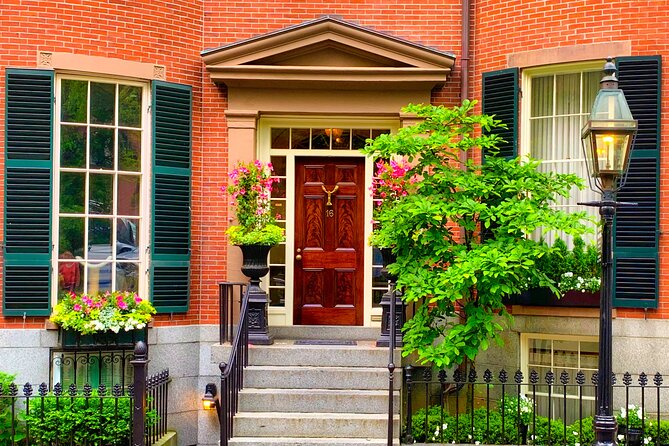
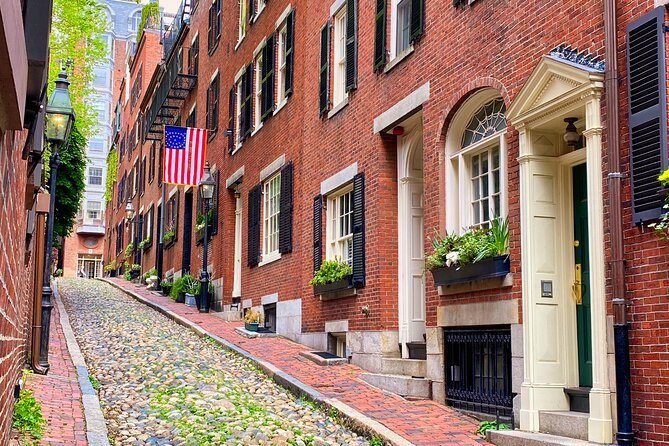
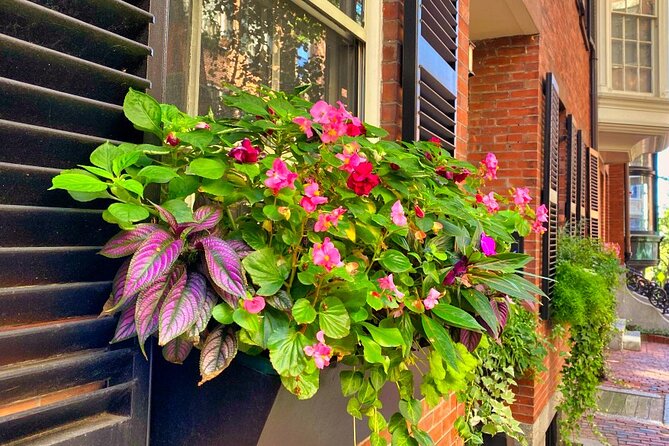
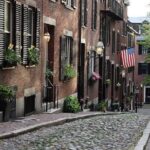
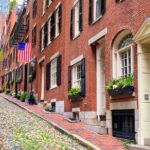
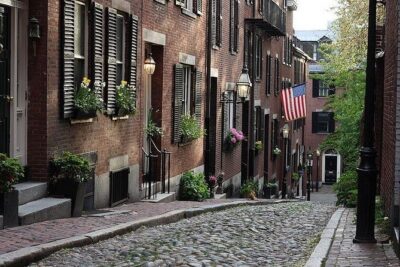
Beacon Hill can look like one of those postcards you’ve seen a hundred times—brick sidewalks, narrow streets, and antique-style street lamps. But this tour makes you slow down and notice what actually creates the look. You’ll focus on the texture of the neighborhood: weathered stone, old masonry details, and the colorful flowers spilling from window boxes.
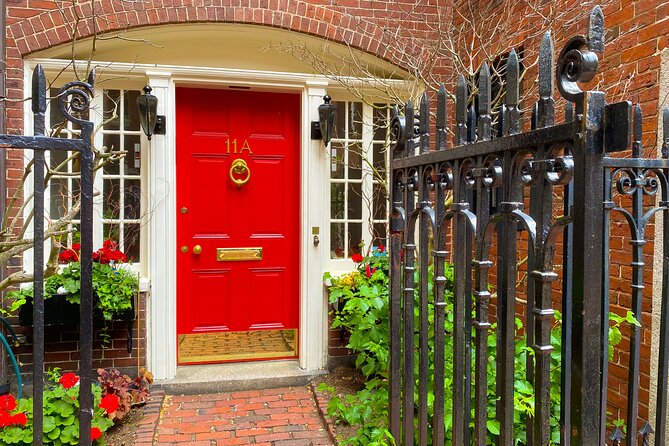
You’ll also learn to look for the small, specific subjects that most people walk past: unique doors and door knockers, decorative iron details, and the kind of “in-between” scenes that often end up better than the headline landmark. In Beacon Hill, that’s half the game. The other half is timing and positioning—standing where the street lines, light, and architectural rhythm work together.
I like that this experience doesn’t push you into an intense workshop vibe. Instead, it feels like you’re with a local who knows where the good angles are and why certain spots photograph better. If you’ve ever aimed your camera at Acorn Street and felt like your photo looked flat, you’re exactly the person who’ll benefit from this kind of guided eye.
Phone-friendly photography tips (and how Saba actually teaches them)
The core promise here is practical: improve your photography skills while learning Beacon Hill in a single outing. You’ll get insider tips that apply whether you’re using a phone or a camera. The photography guidance is built for real travel moments—quick stops, changing views, and figuring out framing on the fly.
From what you can expect on the ground, the advice focuses on:
- angles and positioning (where you stand matters as much as what you shoot)
- composition tricks to make streets and buildings look less cramped
- how to use what’s already in the scene—like iron railings, window boxes, and street lines—as “foreground” to add depth
Saba Alhadi is a big part of why people rate this tour so highly. Multiple visitors highlight her enthusiasm for the work and the way she answers questions directly—whether you’re curious about photography or the stories behind the buildings. Some groups also note she’ll help by taking pictures of you during the walk, which is a great convenience when you’re traveling as a couple or as a family.
A useful thing to keep in mind: this isn’t described as a technical, gear-heavy class. It’s a walking photo tour with photo tips layered over history and architecture. If you’re hoping for advanced settings instruction, you might find the approach more casual and compositional than classroom-style.
Gas lamps, bow fronts, brownstones. Keep walking
Acorn Street: the famous block, shot the smart way
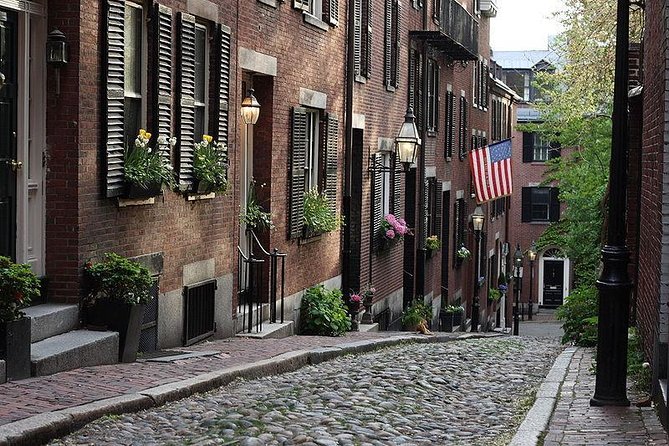
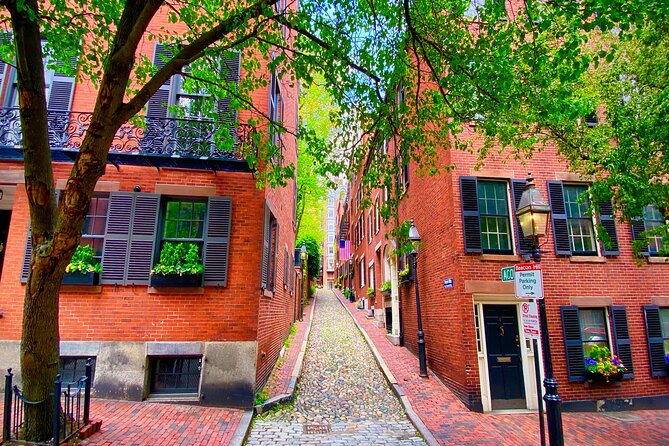
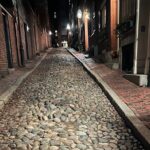
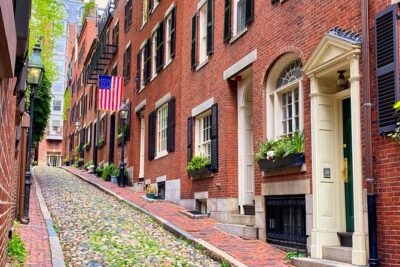
Acorn Street is the standout name for a reason. It’s known as the most photographed street in Boston’s Beacon Hill. You’ll see those preserved 19th-century row houses, plus the look that draws photographers in every season: narrow street perspective, cobblestone-style paving, and gas-lit lantern vibes.
Here’s the value of having a guide at this point. Acorn Street is crowded and “everyone tries the same photo.” With guidance, you’ll get better results by changing how you frame the scene—using the street’s curves and the vertical lines of the buildings to add depth. You’ll also get a better understanding of the architecture you’re photographing: Federal-style elements, brick facades, and the iconic flower boxes.
Even if you’ve seen Acorn Street in photos online, seeing it in person still feels special because of the compression of space. The street is narrow in a way that makes everything look closer and more dramatic. The guide’s job is to help you turn that tight geometry into an image with a clear subject, not just a “busy street” snapshot.
How to make your best shot here:
- Don’t just aim straight down the street. Try a slight shift so you capture building rhythm plus street leading lines.
- Pay attention to what’s in the bottom third of your frame (street details or foreground architecture). That’s where photos often gain realism.
- If you’re shooting with a phone, move your feet rather than only your zoom. Small changes in position can fix a cramped composition fast.
Louisburg Square: where elegance shows up in ironwork and entrances
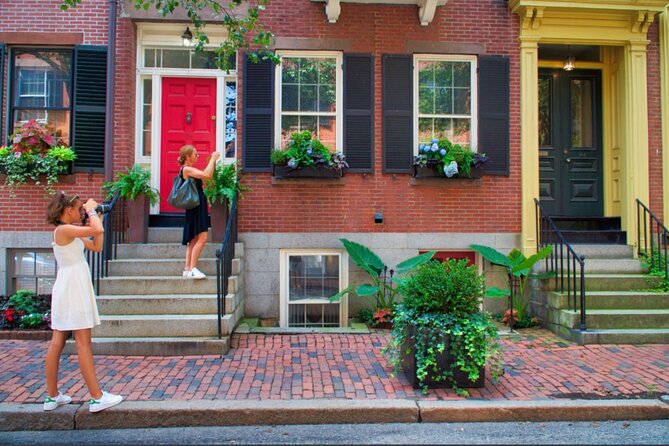
Right after Acorn Street, you move toward another type of Beacon Hill beauty: Louisburg Square. This is an exclusive residential square, known for 19th-century townhouses with brick facades, decorative ironwork, and grand entrances.
This stop is especially rewarding if you like architecture with personality rather than one big postcard view. Louisburg Square gives you lots of “pattern photos”: repeating details in ironwork, consistent brick textures, and door-and-window compositions that look carefully designed. The architecture style shows through too, with Greek Revival and Federal-style features that you can spot as you walk the perimeter.
One underrated part of a guided photo walk is that it helps you notice details you’d never think to photograph solo. Many visitors end up with shots that aren’t the obvious “main building” view, but the kind of image you’d want to hang on your wall: a doorway with character, an entrance with strong contrast, a slice of the square that shows both structure and mood.
If you’re traveling with someone who isn’t as photo-focused, this is a good balance stop. The story and setting keep it interesting, and the visuals are still striking even if you only take a few photos.
Massachusetts State House, plus Boston Common and the Public Garden
The tour doesn’t stop at Beacon Hill’s charm. You also get classic Boston landmarks that expand your photo variety and your understanding of the city.
You’ll reach the Massachusetts State House, built in 1795 on land that was once owned by John Hancock. This matters for your photos because it turns your walk from “cute neighborhood street scenes” into “Boston’s civic identity.” You’re capturing a building that signals power and history—different subject matter, different light behavior, and different compositional challenges than narrow brick streets.
After that, you’ll see Boston’s oldest public park, founded in 1630. Boston Common changes the feel of the day. Instead of tight streets, you get open space, broader sightlines, and a chance to photograph people and buildings with breathing room in your frame. For many travelers, that’s a welcome reset, especially if you’ve been photographing nonstop.
Then you’ll encounter the Public Garden, founded in 1837 as the first public botanical garden in America. If you love color and seasonal texture, this stop is a big payoff. Even if the plants aren’t at peak bloom, the idea matters: you’re photographing a designed landscape, not just architecture.
Practically, these landmark stops help you build a mini story in your photo set: neighborhood details → famous street → historic square → civic landmark → park → botanical garden. That’s what makes your trip photos feel like more than random snapshots.
Timing, crowd control, and why small groups feel better in Boston
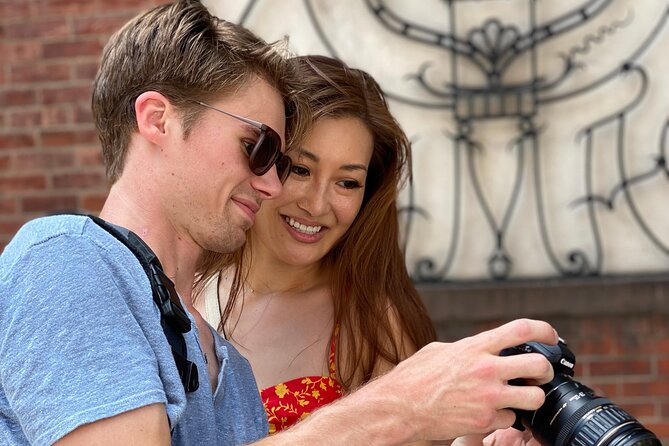
This is designed for a maximum of 15 travelers, which is a sweet spot for a walking tour. Big groups move like a wave. Small groups move like a conversation. That difference shows up in the details: you get time to step aside, take a shot, and ask a question without feeling like you’re holding everyone up.
It also helps you avoid some of the most intense crowd moments. Acorn Street in particular is famous, which means it attracts people who also want the same photo. A smaller group with a guide can help you keep your momentum and still slow down at the right points. You’re not fighting the street as much, because you’re following a route built around the best places to pause and frame.
Pacing is another real value here. Reviews and the tour format point toward a relaxed rhythm with time for questions and photo opportunities. That matters when you want photos that actually look composed, not just rushed.
A couple of practical “heads up” notes:
- Uneven surfaces can be a factor in old neighborhoods. Beacon Hill is known for its brick sidewalks; you’ll be fine if you watch your footing.
- There’s no restroom stop, so plan before you meet. If you’re easily slowed down by heat, come prepared with water and sun protection.
- The tour requires good weather. If it’s canceled due to conditions, you’ll be offered a different date or a full refund.
Boston was built for walking. More routes
- Boston: Freedom Trail History Small Group Walking Tour★ 5.0 · 6,450 reviews
- Harvard University Campus Guided Walking Tour★ 4.5 · 3,632 reviews
- Boston Freedom Trail Walking Tour with Costumed Guide★ 4.5 · 2,531 reviews
- The Full Revolutionary Story Epic Small Group Boston Walking Tour★ 5.0 · 2,356 reviews
- Boston’s Freedom Trail: A Revolutionary Walking Tour★ 4.9 · 1,748 reviews
Who should book this Beacon Hill photo walking tour
Book this if you want a mix of history and photos without turning your day into a class. It’s a strong fit for:
- couples who want a guided route with plenty of chances for photos that include both of you
- phone-camera shooters who want simple composition fixes
- travelers who enjoy architecture and door-level details, not just big monuments
- families with older kids or teens who can handle a 90-minute walk and benefit from stories and photo stops
I’d also recommend it if you already like photography but feel stuck in “point and shoot” mode. The coaching is meant to give you new ways to see the same street. People also mention that Saba can tailor her attention to what you’re aiming to capture, whether that’s a quick memorable frame or a more careful composition.
If your top priority is a deeply technical photography workshop, you may be happier with a dedicated class. This walk is more about seeing better and taking better-looking photos while you explore.
Should you book it?
If your goal is one memorable afternoon in Beacon Hill with real storytelling and photo tips that work for phones, I’d say yes. The price point is low enough that it feels like a value play, especially because you’re not only getting history—you’re also getting practical guidance at the exact spots you’d want to photograph.
The biggest reason to skip is simple: no restroom stops and it’s outdoors, so plan for comfort. If you can handle that, you’ll likely come away with a stronger sense of Beacon Hill and a photo set that feels intentional, not accidental.
FAQ
How long is the Beacon Hill Boston History + Photo Walking Tour?
It runs about 1 hour 30 minutes. Beacon Hill is the main portion, with additional stops including Acorn Street, Louisburg Square, and other Boston landmarks.
What will I see during the tour?
You’ll walk through Beacon Hill, stop at Acorn Street, visit Louisburg Square, and also see the Massachusetts State House. The experience also includes Boston Common (founded in 1630) and the Public Garden (founded in 1837 as the first public botanical garden in America).
Is this tour good for phone cameras or only for traditional cameras?
It’s designed to help with photography using a phone or a camera, and the tips are meant for casual learning while you walk.
Are there restroom stops during the tour?
No. The tour has no restroom stops, so it’s smart to use the bathroom before you start.
How big is the group?
The tour has a maximum of 15 travelers, which helps keep it personal and gives time for questions and photos.
What if the weather is bad?
This experience requires good weather. If it’s canceled due to poor weather, you’ll be offered a different date or a full refund.
On Foot Through Old Boston


More of the Boston Ledger



Beacon Hill and Back Bay, Continued
New on the Boston Docket
- Boston to Newport Mansions Private Day Trip
★ 5.0 · 3 reviews - Boston Massachusetts Private Photography Tour
★ 5.0 · 3 reviews - Homemade Dumplings 101 in Boston
★ 3.5 · 3 reviews - Self-Guided Audio Tour of Boston North End
★ 4.5 · 3 reviews - Old Boston: Beacon Hill & Back Bay Walking Tour in French
★ 4.7 · 3 reviews
Beacon Hill & Back Bay Walks, compared.
 ★ 4.5Downtown Freedom Trail, Beacon Hill & Back Bay Walking TourFrom $65473 reviews
 ★ 5.02-Hour Beacon Hill True Crime Expert Guided TourFrom $35182 reviews
 ★ 5.0Underground Railroad History Tour of Beacon HillFrom $35141 reviews
 ★ 5.0Beacon Hill + Back Bay History + Photo Walking Tour(SMALL Group)From $5560 reviews
 ★ 5.0Votes for Women History Tour of Back BayFrom $3549 reviews
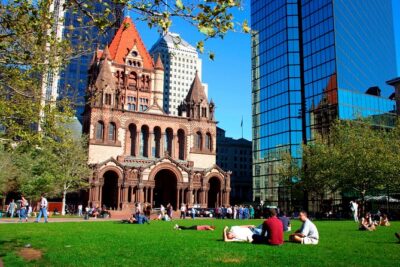
 ★ 4.5Guided Walking Tour of Copley Square to Downtown Boston Freedom TrailFrom $6546 reviews
★ 4.9Underground Railroad History Tour of Beacon HillFrom $3538 reviews
★ 4.5Guided Walking Tour of Copley Square to Downtown Boston Freedom TrailFrom $6546 reviews
★ 4.9Underground Railroad History Tour of Beacon HillFrom $3538 reviews
 ★ 4.5Self-Guided Boston’s Beacon Hill Underground Railroad Audio Tour Walking TourFrom $929 reviews
Browse the lists this tour appears in