
REVIEW · BEACON HILL & BACK BAY WALKS
Self-Guided Boston’s Beacon Hill Underground Railroad Audio Tour Walking Tour
Beacon Hill’s hidden stories run under your feet. I like the phone-guided narration that ties real locations together, and I also like the named people you meet along the walk. One thing to consider: if your phone setup hiccups or you drift off the route, getting back on track can be a hassle.
This is a self-guided walking tour in Boston’s Beacon Hill focused on African-American history and the Underground Railroad. You buy a mobile ticket, start at Charles Street Meeting House (70 Charles St), and finish at 46 Joy St at the African American Meeting House. The walk clocks in at about 45 to 55 minutes, and you can generally start and stop when you want instead of marching on a strict schedule.
If you like history you can actually stand next to, you’ll probably enjoy this. Wear comfortable shoes, because Beacon Hill includes hills and you’ll be on foot the whole time. Language is English and the experience is designed for individuals or small groups moving together rather than a guided group lecture.
In This Review
- Key takeaways before you go
- How the audio tour works on your phone
- Getting oriented: Charles Street Meeting House to African American Meeting House
- Stop-by-stop: the Underground Railroad network you can walk to
- John J. Smith House and the mechanics of escape
- 83 Phillips Street: John Sweat Rock and early firsts
- Lewis Hayden’s home: a place of risk and rescue
- Leonard Grime and the conductor role
- Old Temperance Boarding House: shelter and momentum
- Old Phillips School: education as a civil-rights milestone
- Vilna Shul: the Jewish community’s Underground Railroad support
- John Coburn’s gaming house: station master work in plain sight
- Charles Sumner’s birthplace: abolitionist context
- What you’ll actually feel during the walk (and what to expect)
- Value check: why $9.75 can make sense in Boston
- Practical tips so your Beacon Hill Underground Railroad tour stays smooth
- Should you book this Underground Railroad audio tour?
- FAQ
- How long is the self-guided walking tour?
- How much does it cost?
- Where does the tour start and end?
- Is the tour self-guided or do I need to join a group?
- What language is the narration available in?
- What if my plans change?
Key takeaways before you go
- Mobile audio you control: pause, resume, and go back when you want, plus options to go deeper into the stories.
- Real Beacon Hill addresses: you’ll move from stop to stop tied to people like Lewis Hayden and Harriet Tubman’s era.
- Short but meaningful route: plan on roughly 45–55 minutes of walking plus a few moments at each location.
- Narration with variety: the storytelling uses dramatized narration with multiple voices, which helps the content stick.
- Follow the route arrow: directions are easier when you let the app guide you stop-by-stop.
- App setup matters: have your ticket and access instructions ready before you step outside.
How the audio tour works on your phone
This is a self-guided audio experience, meaning the tour runs through your phone instead of a live guide meeting you at every corner. After you book, you get confirmation and access codes, and you’re expected to open the experience from your mobile device during the walk.
What I like about this setup is how much control you get. You’re not stuck listening at full volume on someone else’s timeline. The audio is designed so you can pause and restart, and there’s also a go-deeper feature if you want extra context around the people and places.
I’d also treat the start of the tour as a “ready-check.” One downside that shows up in the provided feedback is that activation can fail if you miss the step for launching the experience through the app. Before you walk into Beacon Hill streets, make sure you’ve downloaded/connected whatever the tour requires and that your code or ticket access is working on your phone. If it doesn’t activate right away, don’t keep guessing while you’re freezing on a street corner—sort it before you press play.
Getting oriented: Charles Street Meeting House to African American Meeting House
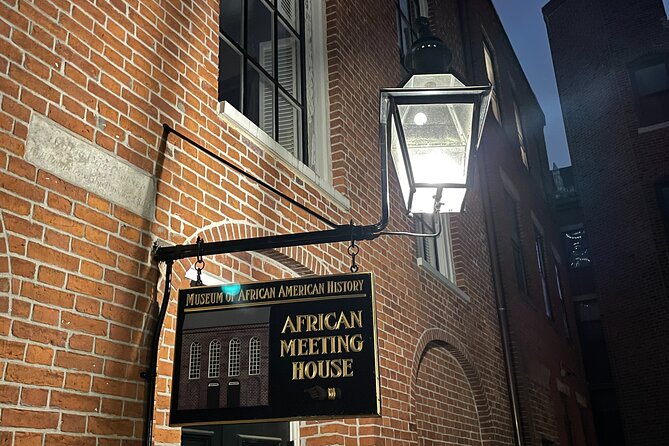
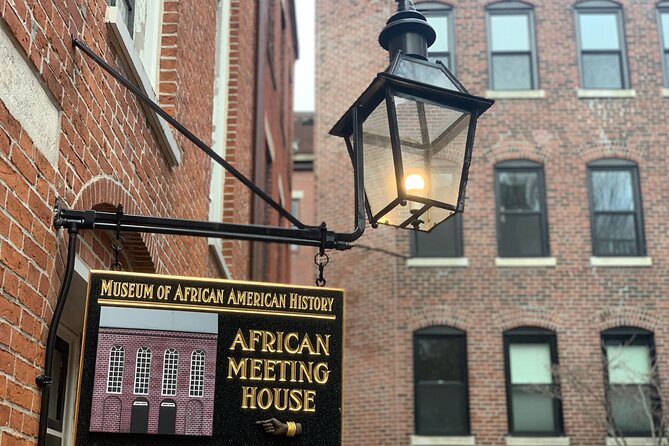
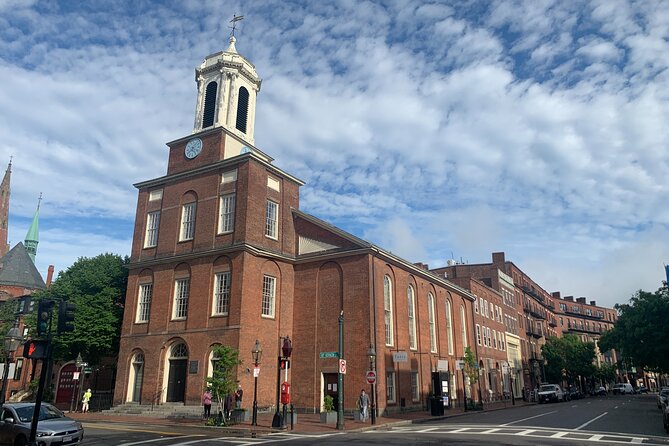
The tour begins at Charles Street Meeting House, 70 Charles St, Boston, MA 02114. You’ll follow the audio prompts from there through Beacon Hill. The route then ends at 46 Joy St, where the African American Meeting House sits—listed here as the oldest extant black church building in America.
This start-to-finish structure matters because it keeps the stories anchored in geography. You’re not just learning about events in the abstract. You’re walking a route that connects homes, meeting places, and institutions that played roles in sheltering and supporting people seeking freedom.
You also get flexibility. The tour is designed so you can begin and end whenever you want, which is helpful if you’re pacing yourself, stopping for photos, or grabbing a quick drink of water. Still, because it’s location-aware stop navigation, you’ll get the best experience by following the sequence instead of skipping around.
Finally, it’s a private activity for your group only. That can make a big difference in a self-guided setting, because you’re free to move at your own pace without feeling like you’re constantly trying to keep up with a larger crowd.
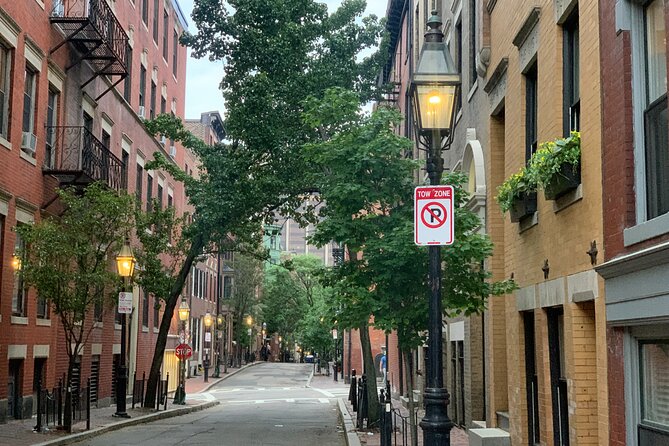
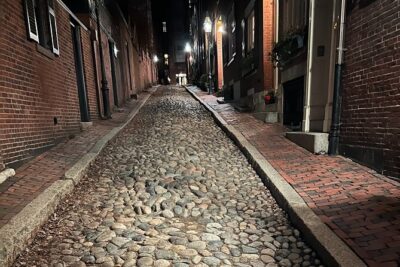
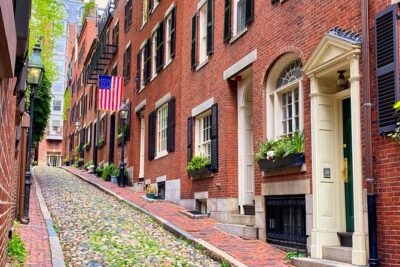
Gas lamps, bow fronts, brownstones. Keep walking
Stop-by-stop: the Underground Railroad network you can walk to
Beacon Hill is compact, but the stories here are big. The tour moves you through a series of locations tied to Underground Railroad participants and allies. The narration builds a timeline while you’re still able to look up and around at the neighborhood that framed their choices.
I’d expect the walk to feel like a sequence of “story chapters,” with each stop adding a new piece: how the Underground worked, who used local knowledge, and how brave individuals turned ordinary buildings into lifelines.
Below is what you’ll encounter in the order the route presents it.
John J. Smith House and the mechanics of escape
Your first major stop is the John J Smith House. This is where the tour explains how the Underground Railroad operated and then zooms in on John J Smith and his station connection—along with the people he helped.
This beginning is valuable because it teaches you the basics before you get to the more personal stories. You’re not thrown into names and addresses without context. Even if you already know the broad idea of the Underground Railroad, hearing how it functioned while you’re standing at a specific location helps you see the neighborhood as part of the system—not just a backdrop.
One practical note: the tour is entirely walking-based, so plan for short moments at each stop. If you pause too long early, you may end up rushing late to finish within your own comfort window.
83 Phillips Street: John Sweat Rock and early firsts
Next up is 83 Phillips Street, described here as the former home of John Sweat Rock. This stop highlights his many firsts in history and ties his life to the broader Underground Railroad narrative.
What I like about including this location is the way it broadens the story beyond a single event or a single family. The Underground Railroad wasn’t only about one dramatic escape. It was also about community knowledge, leadership, and people who had to keep moving forward in a world that refused them equality.
If you’re the kind of visitor who likes learning how different individuals contributed, this stop gives you that human texture. And because it’s a specific address, you can picture the setting instead of imagining it.
Lewis Hayden’s home: a place of risk and rescue
The tour then stops at the station master Lewis Hayden’s home. The audio story focuses on how he saved countless runaways from Beacon Hill—showing bravery that wasn’t theoretical.
This is one of those stops where the content tends to land emotionally, because “saved runaways” turns a headline into a lived reality. You can walk up, listen, then look at the street as it is today. The contrast can be jarring in a good way: you’re seeing the past through a street you can photograph.
Boston was built for walking. More routes
- Boston: Freedom Trail History Small Group Walking Tour★ 5.0 · 6,450 reviews
- Harvard University Campus Guided Walking Tour★ 4.5 · 3,632 reviews
- Boston Freedom Trail Walking Tour with Costumed Guide★ 4.5 · 2,531 reviews
- The Full Revolutionary Story Epic Small Group Boston Walking Tour★ 5.0 · 2,356 reviews
- Boston’s Freedom Trail: A Revolutionary Walking Tour★ 4.9 · 1,748 reviews
Leonard Grime and the conductor role
After Hayden, you’ll encounter the stop connected with Leonard Grime, described as a conductor on the Underground Railroad. This part adds another layer to how the system moved people along—who helped with directions, who carried out the work, and how the network depended on roles.
If you like structure, you’ll probably appreciate this. The audio doesn’t only tell you that help existed. It explains that different people did different jobs inside the system.
Old Temperance Boarding House: shelter and momentum
Next is the Old Temperance Boarding House. The tour describes it as a stop on the Underground Railroad.
This is a reminder that survival often required ordinary services. Boarding houses, meeting spaces, and informal support could all be part of how someone stayed safe long enough to continue onward. Even without extra technical detail in the audio, the stop itself helps you connect “place” with “purpose.”
Old Phillips School: education as a civil-rights milestone
The tour also stops by the Old Phillips School. Here, the key claims are that it was the first integrated school in Boston and that it had the first African American teacher to teach at an integrated school.
This part is especially important because it expands the Underground Railroad story into the broader arc of African-American history in Boston. Freedom-seeking didn’t end when someone reached safety. Education, institutions, and representation mattered too.
Vilna Shul: the Jewish community’s Underground Railroad support
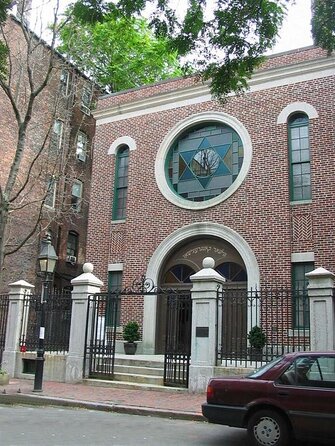
You’ll pass the historic Vilna Shul, described here as the oldest immigrant synagogue in Boston. The audio includes the story of the Jewish community that helped on the Underground Railroad.
I like that this stop refuses the idea of a single-actor narrative. The Underground Railroad was a network, and networks usually include people from multiple communities who shared values and acted when it counted.
From a practical standpoint, this also gives you a strong change of pace in the walk: the story shifts to community support in a visible landmark you can recognize as a place with long roots.
John Coburn’s gaming house: station master work in plain sight
Another stop on the route is the house of John Coburn, described as a gaming house and a station master.
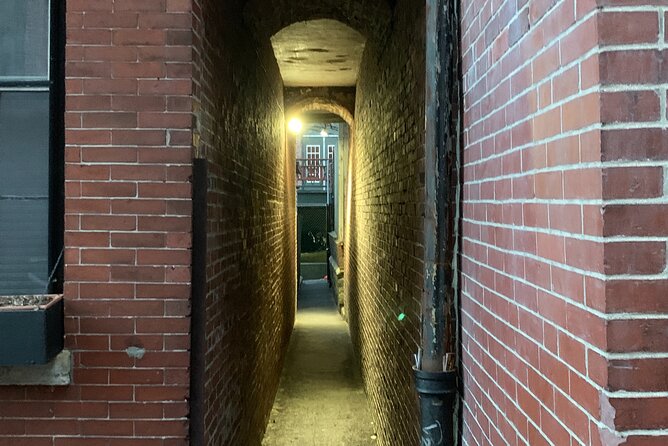
This is the kind of detail that makes the Underground Railroad feel real. It’s easy to imagine secrecy as something like a dim alleyway and a whisper. But this stop suggests something else: station work could happen inside regular social spaces, where community life offered cover and opportunity.
Charles Sumner’s birthplace: abolitionist context
The tour then stops by the abolitionist Charles Sumner’s Birthplace. This adds political and civic context to the neighborhood story, helping you understand how abolitionism shaped what people were willing to do locally.
If you’re pairing this with other Boston walking time, this stop acts like a bridge between the Underground Railroad and the broader abolitionist movement.
What you’ll actually feel during the walk (and what to expect)
Because the tour is about 45 to 55 minutes, it’s not trying to replace a full museum visit. Instead, it aims to do something simpler and often more memorable: it connects a chain of names to a chain of streets.
I think the best part is that you’re not limited to one type of site. You’ll hear about homes, schools, boarding houses, and institutions. That matters because the Underground Railroad depended on many kinds of help, not only one dramatic rescue.
The narration is also a key quality point. In the provided feedback, the narration is praised for being informative and enjoyable, with narration by a variety of voices. That can make a big difference in a self-guided tour, because you’re alone with your phone and you need the storytelling to keep moving.
There is, however, a real-world consideration: route navigation and “flow.” One piece of feedback describes walking directions being difficult to follow and the transition from a go-deeper section back to the main story feeling jumbled. If you choose the go-deeper option, I’d give it your full attention, then re-check where the app expects you to be before continuing. Think of it like reading a footnote while you’re walking—useful, but don’t lose the page number.
And if you end up off route, you may not want to brute-force it by rewinding endlessly. A clearer approach is to use the tour’s stop guidance (including any on-screen next-stop indicator) to get back into sequence.
Value check: why $9.75 can make sense in Boston
At $9.75 per person, this is priced like a low-commitment way to get a focused education without booking a formal guided session. The value comes from three things:
First, it’s built around specific locations. You’re paying for a route that points you to identifiable sites rather than a generic history lesson.
Second, it’s flexible time-wise. A 45–55 minute walk is a manageable chunk of your day, especially in Boston where weather and schedules can shift.
Third, it’s in English and mobile. Most people can participate, you get a mobile ticket, and you can pause and go back. That kind of control is worth something in a city full of distractions.
The only time the value equation changes is if your phone setup fails or you spend the first chunk of time troubleshooting access. In that scenario, the experience becomes less fun and more frustrating. So, if you want the “cheap and cheerful learning win,” do the quick tech check before you start walking.
Practical tips so your Beacon Hill Underground Railroad tour stays smooth
Here are the things I’d do to make the walk painless and enjoyable.
Bring comfortable shoes. More than one tip points out you’re doing a lot of walking and Beacon Hill includes hills. If your feet hate you, you won’t remember the stories.
Bring water and consider the weather. The walk is short, but it’s still outdoors. Heat and cold both change how you experience the neighborhood. If it’s warm, take a sip break instead of powering through.
Follow the next-stop guidance in the app. Route direction issues are the most common friction point mentioned. Using the app’s stop sequence helps you avoid wandering and then losing track of where you are in the story.
Use the go-deeper feature intentionally. If you click extra context, give it a moment to settle, then make sure you’re back on the main narration line at the correct stop.
Test your access before you leave. If you wait until you’re standing outside in unpleasant weather to figure out which app to open or how to activate the code, you’ll burn time and patience. Quick readiness beats emergency problem-solving.
Should you book this Underground Railroad audio tour?
Yes, I’d book it if you want a focused, low-cost way to connect African-American history to real places in Beacon Hill. The route is short, the narration is praised for being clear and moving, and the named stops make the story feel tangible—like you’re learning along a street-level map rather than reading a page.
Skip it, or at least go in with eyes open, if you strongly prefer a live guide or if you expect very smooth phone activation every time. The experience is self-guided, and that means your phone and routing matter. When those parts work, the tour is an efficient way to turn Boston walking time into meaningful education.
If you’re already in Boston for the Freedom Trail vibe and you want the stories to go beyond the obvious stops, this audio walk can be a satisfying add-on that’s easier on your schedule and your budget.
FAQ
How long is the self-guided walking tour?
The tour runs for about 45 to 55 minutes.
How much does it cost?
It costs $9.75 per person.
Where does the tour start and end?
It starts at Charles Street Meeting House, 70 Charles St, Boston, MA 02114, and ends at 46 Joy St, Boston, MA 02114 at the African American Meeting House.
Is the tour self-guided or do I need to join a group?
It is self-guided. It’s also private in the sense that only your group participates.
What language is the narration available in?
The tour is offered in English.
What if my plans change?
Free cancellation is available. You can cancel up to 24 hours in advance for a full refund. If you cancel less than 24 hours before the start time, the amount paid is not refunded.
On Foot Through Old Boston


More of the Boston Ledger



Beacon Hill and Back Bay, Continued




New on the Boston Docket
- Boston to Newport Mansions Private Day Trip
★ 5.0 · 3 reviews - Boston Massachusetts Private Photography Tour
★ 5.0 · 3 reviews - Homemade Dumplings 101 in Boston
★ 3.5 · 3 reviews - Self-Guided Audio Tour of Boston North End
★ 4.5 · 3 reviews - Old Boston: Beacon Hill & Back Bay Walking Tour in French
★ 4.7 · 3 reviews
Beacon Hill & Back Bay Walks, compared.
 ★ 4.5Downtown Freedom Trail, Beacon Hill & Back Bay Walking TourFrom $65473 reviews
 ★ 5.02-Hour Beacon Hill True Crime Expert Guided TourFrom $35182 reviews
 ★ 5.0Beacon Hill Boston History + Photo Walking Tour (SMALL Group)From $45163 reviews
 ★ 5.0Underground Railroad History Tour of Beacon HillFrom $35141 reviews
 ★ 5.0Beacon Hill + Back Bay History + Photo Walking Tour(SMALL Group)From $5560 reviews
 ★ 5.0Votes for Women History Tour of Back BayFrom $3549 reviews
 ★ 4.5Guided Walking Tour of Copley Square to Downtown Boston Freedom TrailFrom $6546 reviews
★ 4.9Underground Railroad History Tour of Beacon HillFrom $3538 reviews
★ 4.5Guided Walking Tour of Copley Square to Downtown Boston Freedom TrailFrom $6546 reviews
★ 4.9Underground Railroad History Tour of Beacon HillFrom $3538 reviews
Browse the lists this tour appears in