
REVIEW · BOSTON HARBOR & CHARLES RIVER CRUISES
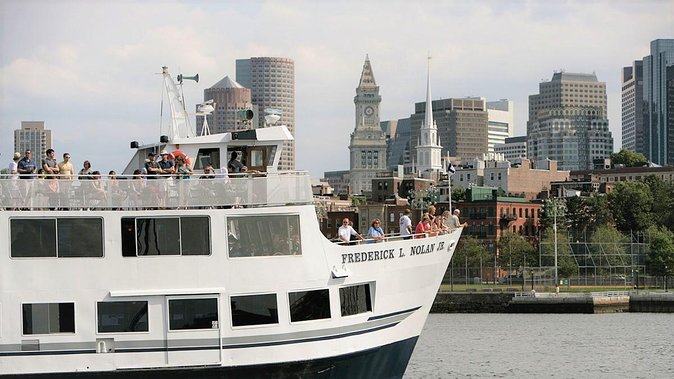
City Cruises Boston Historic Sightseeing Harbor Cruise
Boston’s harbor tells its story from the water. This 60-minute Historic Sightseeing Harbor Cruise turns the inner and outer harbor into an easy, memorable walk-through, with narrated stops that connect Revolutionary-era Boston to what you can still see today. I especially like the up-close look at USS Constitution and the fact that the narration is geared for real sightseeing, not museum-size info overload.
A practical note: the experience can be a bit hit-or-miss for hearing and window clarity depending on where you sit on the boat.
In This Review
- Key things I’d bet on (before you board)
- Why Boston Harbor City Cruises works as a one-hour plan
- Getting oriented at Long Wharf before the cruise starts
- Fort Independence area passes: where multiple wars share one coastline
- USS Constitution and Old Ironsides: the close-up that sells the cruise
- The Bunker Hill link: turning a shoreline into a story
- Old North Church signal and the Tea Party ships you can spot from the water
- Boston Light on Little Brewster Island: an old lighthouse still doing its job
- Harbor Islands National Park Area and the working port: where the view feels alive
- Where to sit for the best views and the clearest narration
- Snack bar reality: what food and drink look like on board
- Price and value: is $46 a fair trade for one hour?
- Who should book this cruise (and who might skip it)
- Should you book City Cruises Boston Historic Sightseeing Harbor Cruise?
- FAQ
- How long is the Boston Harbor Historic Sightseeing Harbor Cruise?
- What does the tour cost?
- Where does the cruise start?
- What’s included in the ticket?
- Is food or drink included?
- Is the tour narrated and what language is used?
- What’s the boarding time?
- Are mobile tickets used?
- What happens if weather is poor?
- Can I bring a service animal?
Key things I’d bet on (before you board)
- Narration that moves at a sightseeing pace: enough detail to stick, not so much you feel trapped indoors.
- Close views of USS Constitution, plus Fort Independence area passes for big-historic context without getting bogged down.
- Boston Light on Little Brewster Island: the cruise route gives you the lighthouse focus that many visitors don’t manage on their own.
- Revolutionary and legend storytelling including the Old North Church signal line: one if by land, and two if by sea.
- Harbor Islands National Park Area + the working port: history meets boats that are still in motion.
Why Boston Harbor City Cruises works as a one-hour plan
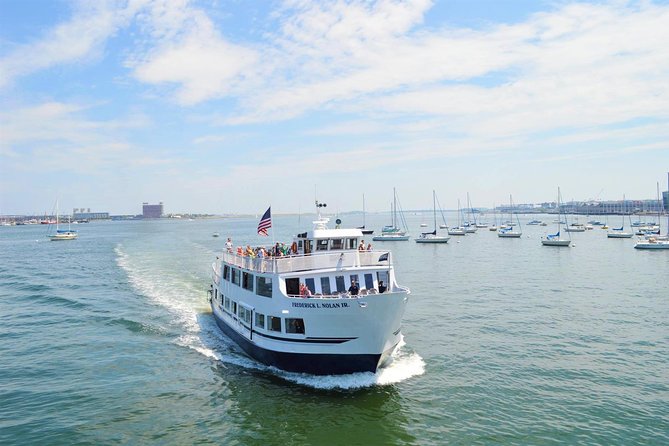
If your time in Boston is tight, a harbor cruise is one of the best “time-savers” you can buy. You cover a lot of coastline in about an hour, and you get a moving vantage point that turns scattered waterfront sights into a single, connected story.
This cruise is also well matched to mixed groups. It’s not only for history buffs. Families, couples, and solo visitors tend to like it because the route is straightforward, the main landmarks are visible from the water, and the narration keeps things moving. It’s offered in English, with mobile tickets and a smooth “skip the ticket booth” boarding flow so you head straight to the boat.
Value-wise, $46 per person sounds like a splurge until you compare it to the cost of doing the same sightseeing effort by transit and on foot. For one fixed price, you get waterfront orientation, iconic photo angles, and a guided explanation of what you’re looking at—without spending your whole day stitching neighborhoods together.
Getting oriented at Long Wharf before the cruise starts
Your trip begins at 1 Long Wharf in Boston, and it returns to the same meeting point. That matters more than you’d think. Long Wharf is a high-traffic hub, so you’ll likely find it simpler to reach before departure than a stop tucked somewhere inconvenient.
Boarding begins 15 minutes before departure, and you should arrive early. Late arrivals can mean you miss the boat, and you don’t want that stress when you’re paying for a timed slot.
What to bring mentally: this is a harbor sail with indoor and outdoor areas. On cooler days, I’d plan to use the interior for comfort and still pop outside when the route is about to hit key views. One-hour cruises move fast. The best approach is to stay flexible: watch from where you can hear, then shift seats when the views are worth it.
Still deciding at the dock? Other Boston boats worth boarding
Fort Independence area passes: where multiple wars share one coastline
One of the first named stops on the route is the Fort Independence area. The cruise frames it as a site that has been used across major conflicts, including the Civil War, World War I, and World War II.
From the water, you’re not just seeing “a fort.” You’re seeing why Boston’s harbor mattered to successive generations. Forts don’t stay relevant by accident; they stay relevant because the geography keeps doing its job. The cruise narration typically ties the physical location to why ships and defenses had to be placed exactly here.
A good takeaway for you: if you want the harbor to feel more than scenery, Fort Independence is one of those anchor points. It helps you connect the dots between what the city built and what the sea demanded.
USS Constitution and Old Ironsides: the close-up that sells the cruise
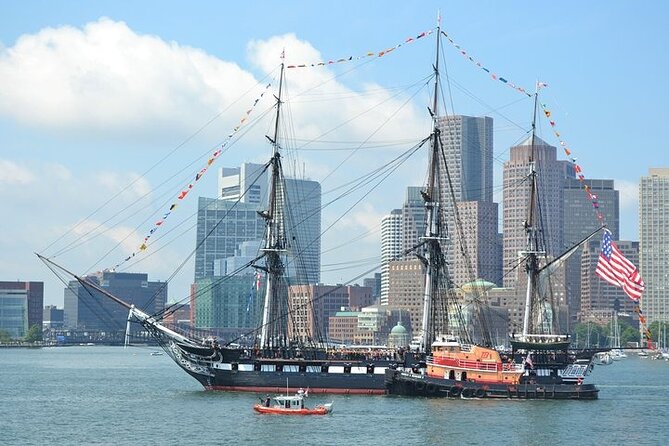
If the harbor has a headline, it’s usually USS Constitution, often called Old Ironsides. This is one of the biggest “you can’t fake this from land” moments. You’re looking at a ship that’s still a commissioned naval warship afloat—an odd and wonderful combo that makes it feel both historical and very real.
The cruise route brings you past it with enough closeness to make photos worth the price. Even if you’ve seen pictures, seeing it from the water changes the scale. The ship looks sturdier and more imposing than you expect. And because it’s part of a moving narration, you’ll likely understand what it represents before the photo dust settles.
Practical advice: if you care about photos, pay attention to when your guide emphasizes the ship. Don’t just hold your phone up and hope. Look, listen for the key context, then shoot when you’re at the strongest angle.
The Bunker Hill link: turning a shoreline into a story
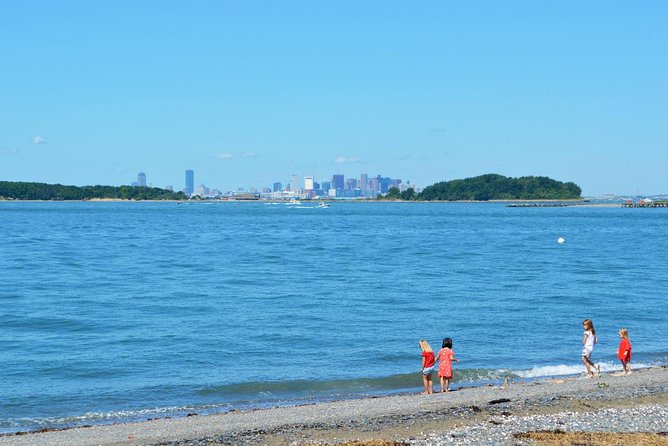
The cruise also marks Bunker Hill. Even if you don’t remember every detail of the battle, the narration helps connect it to the harbor’s bigger role in Revolutionary-era events.
This part works especially well because it gives you a way to understand Boston’s geography. The harbor isn’t separate from the revolution; it’s part of how people moved, supplied, and communicated. From the water, that logic becomes easier to picture than from a map alone.
If you like history that explains cause-and-effect—why things happened where they did—this is the section that starts to click.
Old North Church signal and the Tea Party ships you can spot from the water
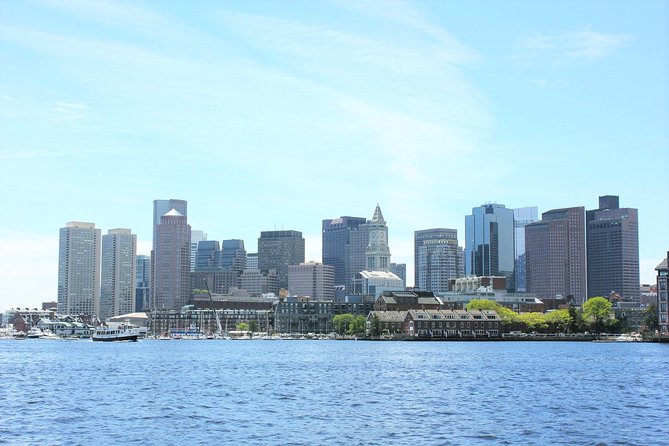
The cruise narration doesn’t stop at ships and forts. It also points out famous Boston Revolutionary landmarks along the way, including Old North Church, tied to the legendary signal story: one if by land, and two if by sea.
Then there’s the “where the story is staged” side of Boston’s waterfront: you may see the Boston Tea Party ships and the floating Boston Museum from the harbor. Even if you don’t plan to step off for museum time, this is a useful preview. It helps you decide later whether you want deeper time on land.
This matters because harbor cruises often become a blur of “cool views.” Here, the stories add structure, so your photos and memories have captions in your head.
The whole town in a single booking, other takes
- City Cruises Salem High Speed Ferry to/from Boston★ 4.5 · 727 reviews
- Boston City View Bicycle Tour: History and Landmarks★ 5.0 · 638 reviews
- City Cruises Boston Codzilla High-Speed Thrill Boat Ride★ 4.0 · 424 reviews
- City Cruises Boston 90-Minute Harbor Sunset Sightseeing Cruise★ 4.5 · 411 reviews
- Boston: City Cruises Sunset Skyline Cruise with Commentary★ 4.6 · 381 reviews
Boston Light on Little Brewster Island: an old lighthouse still doing its job
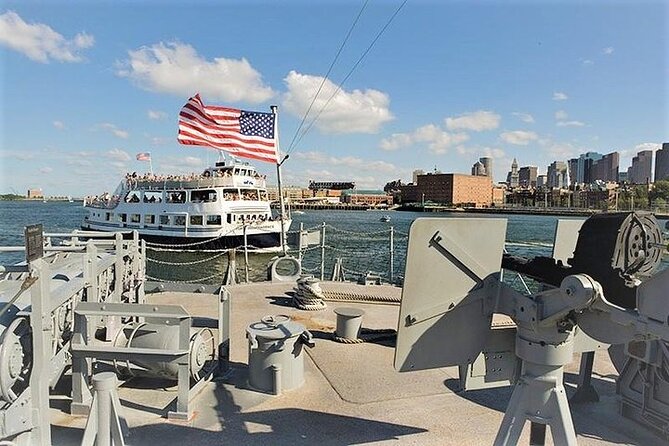
The outer harbor stop centers on Boston Light, located on Little Brewster Island. The cruise calls it the first light station established on the North American continent and also highlights its status as America’s oldest continuously manned lighthouse.
That’s the kind of fact that lands better when you actually see the lighthouse framed against open water. From the boat, Boston Light is one of the most visually clear landmarks on the route. The setting helps you understand what a lighthouse is for: not just being old, but being useful in real weather and real navigation.
If you only do one harbor cruise moment where you stop trying to multi-task and just watch, make it the Boston Light segment.
Harbor Islands National Park Area and the working port: where the view feels alive
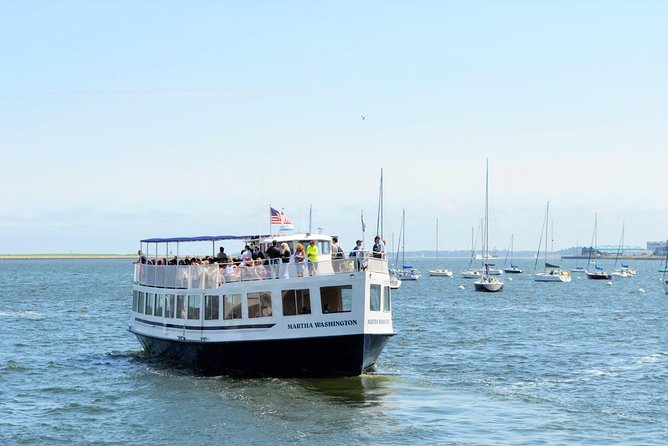
The highlight list also points to sailing through the Harbor Islands National Park Area and alongside Boston’s working port. This is a big reason the cruise feels more grounded than a “tour-only” experience.
When you see working harbor activity from the water—boats moving, harbor operations implied—you get a sense that Boston is still a coastal city with a working coastline. It’s the contrast between old Boston and the current maritime life that makes the cruise more than nostalgia.
And if you like variety: inner harbor scenes can feel tight and dense, while outer harbor sections feel bigger, windier, and more open.
Where to sit for the best views and the clearest narration
This is where you can control a lot of your comfort.
First, choose your deck based on your priority:
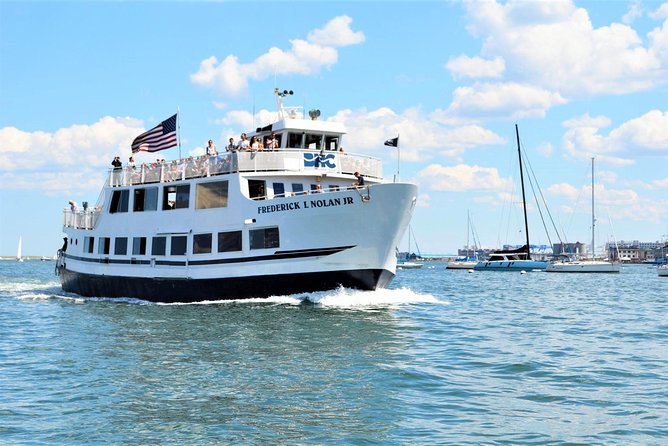
- If you want the clearest sightlines, the top deck is often the best bet for panoramic harbor views.
- If it’s cold, use the indoor space and then head outside when the route hits the key landmarks.
Second, be aware of the audio reality. Some people report the sound system wasn’t always crystal clear, and harbor noise can make it harder to catch every word, especially from lower levels. If you struggle with hearing, sit where the narration is easiest to receive and be ready to move once you identify which section of the boat gives you the best audio.
Third, windows and seating quality can vary. A couple of notes point to dirty windows on a lower deck and seating that didn’t feel pristine. You can’t fully control the boat’s condition, but you can avoid the worst angle by preferring the upper open areas when possible.
One more tip from the way the cruise is run: staff help with boarding flow. You’ll save time and stress if you follow their instructions early instead of trying to find your seat at the last second.
Snack bar reality: what food and drink look like on board
Food and drinks are not included, but you can purchase them onboard. Reviews describe a functional setup that can serve as a bar for snacks and drinks, but there are also complaints about limited choices at times.
So plan like this:
- If you care about a specific snack or drink, consider eating before you board.
- Treat purchases on board as a convenience, not a meal plan.
The good news is that the cruise timing is short. You’re not committing to a long onboard food experience. The main value is the sight-and-story route.
Price and value: is $46 a fair trade for one hour?
For $46, you’re paying for three things:
- A guided narration that makes the landmarks understandable.
- Time compression—you see far more shoreline than you could comfortably stitch together on foot in the same time.
- A waterfront perspective that you simply can’t replicate from sidewalks.
I’d call it a solid deal if you’re the type of traveler who wants structure without complexity. If you’re the type who already knows the city’s history in depth and only cares about views, you might feel the cost more sharply, especially if you end up in a seat where audio is tough.
On the other hand, for many visitors this is a “best first harbor tour” kind of purchase—especially when you want an overview that helps you decide what to do next on land.
Who should book this cruise (and who might skip it)
This cruise is a strong fit for:
- First-time Boston visitors who want a quick harbor orientation
- People who like history told through places you can actually see
- Couples, families, and solo travelers who want a low-effort, high-reward outing
It may be less ideal if:
- You hate the idea of one-hour tours and prefer slower, in-depth museum or walking plans
- You’re very sensitive to audio issues and have trouble hearing narrators outdoors or through speakers
- You want guaranteed top-to-bottom views from every seat (some views depend on deck and positioning)
One hour is also the sweet spot for weather. Even on wet or misty days, the cruise can still feel worthwhile because you’re not standing outside for a long time. Still, the experience requires good weather, and if it’s canceled due to poor conditions you’ll be offered another date or a full refund.
Should you book City Cruises Boston Historic Sightseeing Harbor Cruise?
I think you should book if you want a fast, well-structured way to see Boston from the water and get the stories behind the skyline, forts, and lighthouses without spending your whole day planning logistics.
Book it early if you can—slots are popular and it’s often reserved about 10 days in advance. For your odds of a better experience, arrive on time for boarding, aim for the upper areas when the wind and cold allow, and be ready to adjust seats if you can’t hear the narration clearly.
If your priority is simply seeing the big icons—USS Constitution, Boston Light, and the Revolution-era landmarks along the harbor—this cruise is one of the easiest ways to do it in a single, focused outing.
FAQ
How long is the Boston Harbor Historic Sightseeing Harbor Cruise?
The cruise lasts about 60 minutes.
What does the tour cost?
The price is $46.00 per person.
Where does the cruise start?
It starts at 1 Long Wharf, Boston, MA 02110 and ends back at the same meeting point.
What’s included in the ticket?
Your ticket includes the 60-minute historic sightseeing cruise, narration, and the chance to see panoramic views from the harbor. It also includes a skip-the-ticket-booth boarding process.
Is food or drink included?
No. Food and beverages aren’t included, but they are available for purchase onboard.
Is the tour narrated and what language is used?
Yes, it’s narrated, and it’s offered in English.
What’s the boarding time?
Boarding begins 15 minutes before departure, and late arrivals may miss the boat.
Are mobile tickets used?
Yes. Tickets are mobile.
What happens if weather is poor?
This experience requires good weather. If it’s canceled due to poor weather, you’ll be offered a different date or a full refund.
Can I bring a service animal?
Yes. Service animals are allowed. The tour is also listed as near public transportation and suitable for most travelers.
The Full Boston Circuit


More of the Boston Ledger



Out on Boston Harbor
New on the Boston Docket
- Boston to Newport Mansions Private Day Trip
★ 5.0 · 3 reviews - Boston Massachusetts Private Photography Tour
★ 5.0 · 3 reviews - Homemade Dumplings 101 in Boston
★ 3.5 · 3 reviews - Self-Guided Audio Tour of Boston North End
★ 4.5 · 3 reviews - Old Boston: Beacon Hill & Back Bay Walking Tour in French
★ 4.7 · 3 reviews
Boston Harbor & Charles River Cruises, compared.
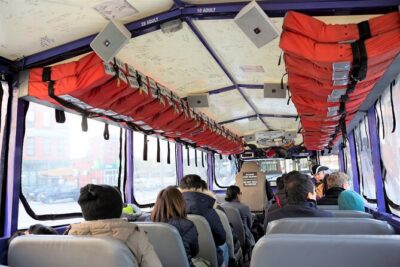 ★ 4.5Boston Duck Boat Sightseeing City Tour with Cruise Along Charles RiverFrom $599,378 reviews
 ★ 4.5City Cruises Whale Watching CruiseFrom $854,710 reviews
 ★ 4.5City Cruises Boston Whale Watching Cruise by High-Speed BoatFrom $853,115 reviews
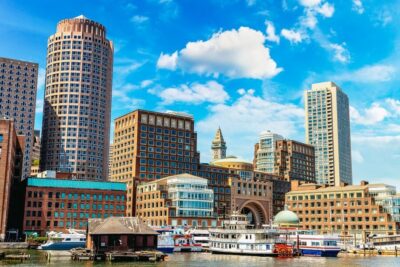 ★ 4.6City Cruises Historical Sightseeing CruiseFrom $461,771 reviews
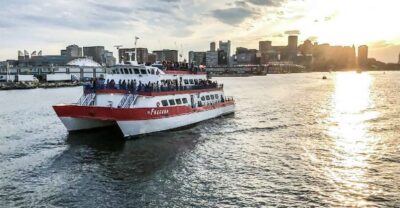 ★ 4.5Boston Harbor Sunset CruiseFrom $31888 reviews
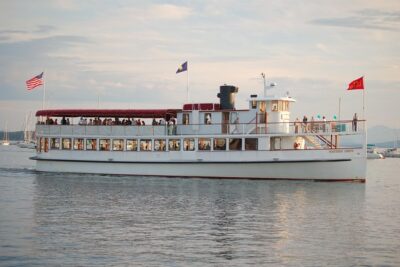 ★ 4.5Boston Harbor Sunset CruiseFrom $54632 reviews
 ★ 4.5Classic Tall Ship Cruise in Boston HarborFrom $35615 reviews
 ★ 5.0Schooner Fame Sailing TourFrom $50571 reviews
Browse the lists this tour appears in