
REVIEW · FENWAY PARK & BOSTON SPORTS TOURS
Tour of Historic Fenway Park, America’s Most Beloved Ballpark
Fenway Park feels like baseball the way it should feel. In about one hour, you’ll get close to the Green Monster, learn the Red Sox timeline, and wander into the Fenway Park Living Museum collection. I especially love that this isn’t just seat talk—it’s about the stadium as a working history book, told by guides such as Steve, Matt, Don, and Mary Ella.
There’s one catch: you’ll be outside a lot and there are stairs, so it helps to dress for New England weather and have a moderate fitness level.
In This Review
- Key highlights at Fenway in 60 minutes
- Why Fenway Park still hits you in the gut
- Price and what you truly get for $45.16
- Timing your booking: 25 days out is smart
- Getting started at Fenway’s Gate B (and not losing time)
- The 60-minute route: what you’ll see and why it matters
- Roof deck and right-field views
- Icon landmarks: the Green Monster and Pesky’s Pole
- The Fenway Park Living Museum: history you can actually walk through
- World Series moments and Red Sox legends
- The Green Monster experience: photos are nice, but the perspective is the point
- Living Museum collections: how to make the most of a crowded brain
- What to wear and how weather affects your comfort
- Languages: Spanish and Japanese with advance notice
- Who this tour is best for (and who can skip it)
- Small details that can make or break the experience
- Should you book the Fenway Park tour?
- FAQ
- FAQ
- How long is the Fenway Park Historic Ballpark tour?
- What does the ticket price include?
- Where do I meet the guide?
- Is the tour in English, and are other languages available?
- Does the tour run in bad weather?
- Are large bags allowed?
- Do I need to be in good physical shape?
Key highlights at Fenway in 60 minutes
- Green Monster time: Sit atop the world-famous wall before you move on.
- Pesky’s Pole plus landmarks: Learn why the smallest details became legend.
- Fenway Park Living Museum access: Step through a collection of 170,000+ artifacts and 150,000+ photographs.
- Red Sox World Series and stars: You’ll connect major titles with players like Ted Williams, Carl Yastrzemski, and others.
- Roof deck views: You’ll see Fenway from above, including sightlines toward right field.
Why Fenway Park still hits you in the gut

Some stadiums feel new and shiny. Fenway feels old in the best way. It’s the kind of ballpark where the quirks are not bugs—they’re part of the identity.
This tour is built around that idea. You’re not just walking through a museum hallway. You’re moving through a stadium where the Green Monster and Pesky’s Pole still shape the way fans talk, teams play, and stories get remembered. That makes it a good fit whether you’re a lifelong Red Sox person or you just want to understand why Boston cares.
And the guide factor matters. The best moments come from how the stories are told. Names like Steve, Jack, and Mary Ella show up repeatedly in the feedback, and that usually means the tour leans practical and human—fun pacing, photo-friendly attitude, and real answers when you ask questions.
Price and what you truly get for $45.16
At $45.16 per person for about 60 minutes, this isn’t the cheapest thing in Boston. But it also isn’t just a casual walk around the outside.
You’re paying for three big value pieces:
- Access inside Fenway and the Living Museum (not just a photo stop).
- A real guided explanation of what you’re seeing and why it matters.
- Green Monster access, which is the kind of stadium moment you usually only get by being in the right place during a game.
If you’re comparing it to doing nothing but buying a self-guided photo tour, the guide and Living Museum ticket are what make the price feel fair. If you’re tightly budgeted, you might feel it’s steep—especially if you’re already planning to see a Red Sox game. But if you’re not sure you’ll get game tickets, this tour is a strong “Fenway education” option.
From the Green Monster to the Garden, more game days

Timing your booking: 25 days out is smart
This tour is often booked in advance—on average 25 days ahead. That matters in Boston, where weather and schedules can change your plans quickly.
If you’re traveling during peak periods (holidays, school breaks, or right before a series), lock in your time early. You’ll also have more flexibility choosing a starting hour that fits daylight or your energy level for stairs and outdoor stretches.
Getting started at Fenway’s Gate B (and not losing time)
Your meeting point is Fenway Park’s Gate B on Ipswich Street (Jersey Street area is listed too). In plain terms: arrive early enough to find the entrance without stress.
One small detail that makes the experience smoother: make sure your ticket redemption or check-in is handled well before the tour starts. People have described redeeming tickets at the gates as a moment that can eat time if instructions aren’t clear. So give yourself a buffer, especially in winter when everyone is standing around in cold gear.
The tour ends back at the Boston Fenway area, so you don’t have to plan a long post-tour detour.
The 60-minute route: what you’ll see and why it matters
The itinerary stays focused—one main stop, but it covers the stadium highlights and the museum collection.
Roof deck and right-field views
Early on, you’ll get up to Fenway’s roof deck, which looks out toward the right-field side. This is where the tour helps you understand the park’s geometry fast.
You start seeing how Fenway’s shape creates angles and how fans experience the game from places that look different than typical stadium tours.
Three centuries deep, more Boston history
- Boston: Freedom Trail History Small Group Walking Tour★ 5.0 · 6,450 reviews
- Boston Food & History: Pizza, North End & Freedom Trail★ 5.0 · 1,772 reviews
- Boston: Freedom Trail History Small Group Walking Tour★ 4.9 · 1,590 reviews
- City Cruises Boston Historic Sightseeing Harbor Cruise★ 4.5 · 1,388 reviews
- Boston’s North End Food Tour: Italian Flavors & Heritage Walk★ 5.0 · 1,322 reviews
Icon landmarks: the Green Monster and Pesky’s Pole
Then comes the part people actually talk about afterward.
The Green Monster is the 37-foot (11-meter) tall wall, and the tour doesn’t treat it like a photo prop. You’ll learn how it became part of Red Sox identity—because it’s not just tall, it’s dramatic. The wall changes how plays unfold, and that’s exactly why it’s such a legend magnet.
Next, you’ll go by or reference Pesky’s Pole, another Fenway-specific marker where the stadium’s quirks translate into stories fans keep repeating.
If you’re the type who enjoys stadium trivia, this section is your payoff. If you’re not, it still works because the guide connects landmarks to real baseball moments.
The Fenway Park Living Museum: history you can actually walk through
You’ll also have access to the Fenway Park Living Museum, which is where the tour becomes more than sightseeing.
The collection includes:
- 170,000+ artifacts tied to Fenway Park and the Boston Red Sox
- 24,000+ 3-D artifacts
- 150,000+ photographs
- Memorabilia connected to players like Ted Williams, Babe Ruth, and Carl Yastrzemski
- Items tied to World Series teams and moments, plus exhibit displays
A practical way to think about this: without the museum, Fenway tour stories can feel like a highlight reel. With the museum, those highlights become grounded. You can connect a name, a year, a bat, or a ball to something you’re actually looking at.
World Series moments and Red Sox legends
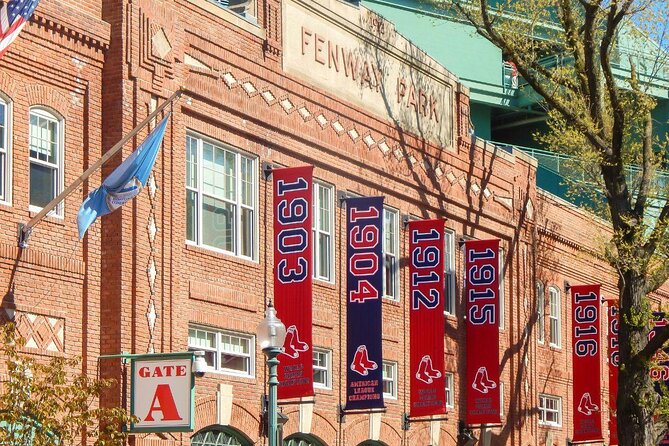
Fenway’s story is inseparable from the Red Sox’s big runs. Your guide helps you relive World Series wins across key years: 1903, 1912, 1915, 1916, 1918, 2004, 2007, and 2013.
Then you’ll hear about player careers associated with the franchise, including Ted Williams, Carl Yastrzemski, and other noted Red Sox legends such as Fisk, Rice, and Tiant.
This is more valuable than it sounds if you’re a casual fan. The names become connected to the stadium. You stop thinking of Red Sox history as something that happened long ago and start seeing it as something still built into the walls.
The Green Monster experience: photos are nice, but the perspective is the point
Lots of stadium tours let you look at famous spots. This one lets you sit atop the Green Monster area, which gives you a different view of the field and the stands.
That changes your perspective quickly. From up there, Fenway feels smaller and more intimate, like the crowd and the field are closer than in bigger modern parks. You also get a better sense of why the wall has always mattered to hitters and defenders.
And yes, you’ll probably want a photo. Just don’t miss the lesson: the Green Monster isn’t a background set. It’s an active part of how the game plays out.
Living Museum collections: how to make the most of a crowded brain
With 170,000+ artifacts and 150,000+ photographs, the Living Museum can feel like information overload if you rush. The fix is simple: pick one thread and follow it.
Here are three easy ways to do that:
- Follow a favorite era (for example, the late-century displays and World Series collections).
- Follow a player name you recognize, then see related artifacts and photographs.
- Follow the stadium itself—early years through modern moments—so you understand how Fenway changed over time.
Because the tour includes guidance, you don’t have to memorize everything. You just need to stay curious. That’s usually where the best comments come from—questions about what you’re seeing and why it’s displayed in that exact spot.
What to wear and how weather affects your comfort
This tour runs in all weather conditions. That’s Boston code for: you should dress for wind, rain, snow, or sharp cold.
It’s also a moderate-fitness experience. There are stairs, and even when everything feels manageable, you’ll still spend time moving through stadium levels.
My practical advice:
- Wear shoes you trust on stadium stairs and outside surfaces.
- Bring a jacket you can move in (not just something for standing still).
- If it’s wet, plan for damp hands while holding your phone.
If you tend to get cold, treat it like winter sightseeing, not like a short indoor attraction.
Languages: Spanish and Japanese with advance notice
The tour is offered in English, and Spanish and Japanese tours are available with advance notice. If you want a non-English option, plan early so the right guide setup is possible.
Who this tour is best for (and who can skip it)
This is built for baseball fans, but the real secret is that it works for non-fans too—because it’s about place, not just stats.
You’ll be especially happy if:
- You want a stadium intro without guessing where to go.
- You’re visiting Boston and want a Red Sox-focused activity that doesn’t require game tickets.
- You like museum-style history but want it tied to a real building you can still watch baseball in.
You might skip it if:
- You’re going to a game and you only care about seats, not history or museum artifacts.
- You hate stairs and don’t want outdoor time, even in short stretches.
Small details that can make or break the experience
A few things I’d treat as “tour-smart”:
- Start times matter: pick an hour when you’re not rushed before or after.
- Bring your questions: the guide experience seems to be a major reason people rate the tour so highly.
- Arrive early for check-in at the gate area so your group doesn’t feel like you’re sprinting.
- Respect the bag rules: no bags larger than 12x12x6 are allowed (medical or diaper bags are exceptions). If you show up with a bigger bag, you can lose time and get stressed.
Reviews also mention how guides helped with photos, kept the mood light, and handled questions with patience—especially in smaller, winter-style groups. You can’t count on every tour being tiny, but the general tone is that the guide wants people comfortable and engaged.
Should you book the Fenway Park tour?
If you’re asking me for the simple call: yes, book it if you want Fenway to make sense quickly.
It’s strong value for the combo of:
- Green Monster access
- roof deck views
- Fenway Park Living Museum entry
- a guided Red Sox story tied to real landmarks
It’s also a great rainy-day or winter option compared to many outdoor-only activities because the tour runs in most weather and still delivers a clear plan.
If you’re short on time or money, you could prioritize a single Boston must-do. But if you’re in Boston long enough to enjoy one stadium experience, this one is hard to beat.
FAQ
FAQ
How long is the Fenway Park Historic Ballpark tour?
The tour lasts about 1 hour.
What does the ticket price include?
Your ticket includes a 1-hour guided tour, access to the Fenway Park Living Museum, and admission, plus it covers Fenway Park tour guide and Green Monster seating access.
Where do I meet the guide?
Meet at Fenway Park’s Gate B on Ipswich Street.
Is the tour in English, and are other languages available?
The tour is offered in English, and Spanish and Japanese tours are available with advance notice.
Does the tour run in bad weather?
It operates in all weather conditions. If it’s canceled due to poor weather, you’ll be offered a different date or a full refund.
Are large bags allowed?
No bags larger than 12x12x6 are allowed, except for medical or diaper bags.
Do I need to be in good physical shape?
You should have a moderate physical fitness level. The tour involves stairs and moving through stadium areas. Children must be accompanied by an adult.
Boston History, Volume Two



More of the Boston Ledger



Game Day at Fenway and the Garden



New on the Boston Docket
- Boston to Newport Mansions Private Day Trip
★ 5.0 · 3 reviews - Boston Massachusetts Private Photography Tour
★ 5.0 · 3 reviews - Homemade Dumplings 101 in Boston
★ 3.5 · 3 reviews - Self-Guided Audio Tour of Boston North End
★ 4.5 · 3 reviews - Old Boston: Beacon Hill & Back Bay Walking Tour in French
★ 4.7 · 3 reviews
Fenway Park & Boston Sports Tours, compared.
 ★ 4.8Boston Fenway Park: Guided Ballpark Tour with OptionsFrom $203,606 reviews
 ★ 4.1TD Garden Arena Tour54 reviews
 ★ 4.5Boston Red Sox Baseball Game Ticket at Fenway ParkFrom $6419 reviews
 ★ 4.3Bruins Heritage Hall & Optional Sports Museum TourFrom $3014 reviews
 ★ 4.5Boston Celtics Basketball Game Ticket at TD GardenFrom $10914 reviews
 ★ 4.4Boston Bruins Ice Hockey Game Ticket at TD GardenFrom $9712 reviews
 ★ 3.5Boston Red Sox Baseball Game Ticket at Fenway ParkFrom $236 reviews
 ★ 5.0Boston Strong Sports Walking TourFrom $304 reviews
Browse the lists this tour appears in