
REVIEW · FREEDOM TRAIL & REVOLUTION WALKS
Relive 1776: See Boston’s History in Augmented Reality (AR)
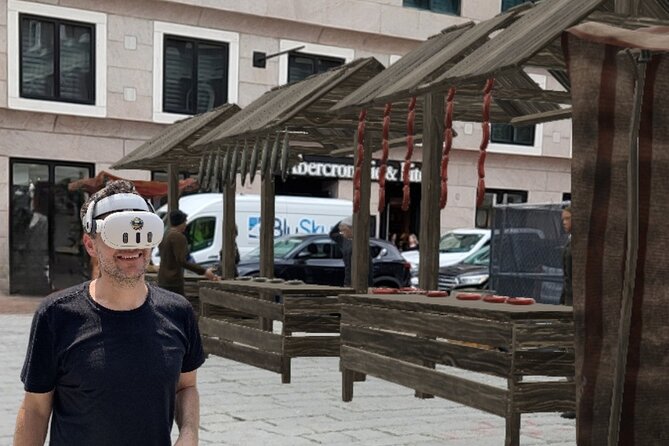
History walks with you, in headset form. This Freedom Trail tour layers augmented reality on real Boston streets, so key scenes from 1765 to 1775 appear as you move between landmark stops with your guide.
I especially like the no-VR-nausea setup: it’s augmented reality using Meta Quest headsets or tablets, with you still seeing the world around you. I also like the “do it on location” style—each historical moment comes with short AR experiences (plus a 1-minute video) that aim to make the setting feel like part of the story, not just a backdrop.
One possible drawback: the tour has an AR-first pacing. If you skip the audio/video parts during an experience, you may come away feeling like the tech did the talking more than the history did.
In This Review
- Key things to know before you go
- Entering The Freedom Trail in Mixed Reality
- How long it takes and how the timing works
- The “5-part” story: what you’ll relive (1765–1775)
- Boston Common: meeting the key players where it all starts
- Granary Burying Ground and the Franklin stop: history meets place
- Old Corner Bookstore and Old State House: words and power
- Faneuil Hall Marketplace: the push toward action
- Paul Revere House and the big ending at Bunker Hill
- The tech setup: AR headsets and tablet mode (no VR nausea)
- Group size: small enough for help, big enough for fun
- Price and value: is $30 worth it?
- Who this tour suits best (and who might pass)
- Practical tips to get more out of every scene
- Should you book Relive 1776?
- FAQ
- FAQ
- What’s the duration of Relive 1776?
- How much does the tour cost?
- Does this use VR or augmented reality?
- What languages are available?
- What technology is included during the tour?
- Where does the tour start and end?
- Is there transportation provided to the meeting point?
- Is there a limit on group size?
- Is free cancellation available?
Key things to know before you go
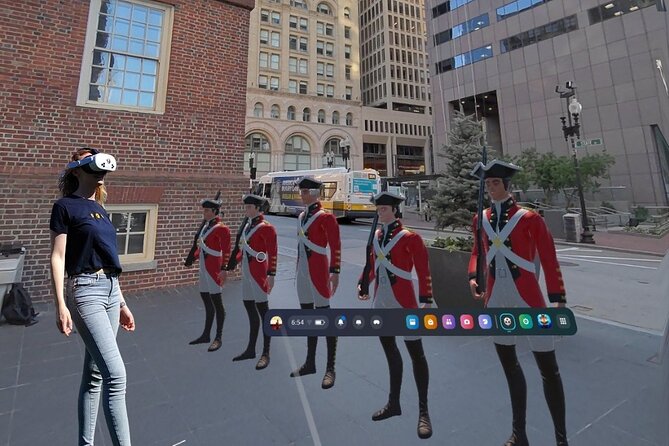
- Meta Quest AR or tablet mode means you can choose the comfort level that fits you.
- Five AR experiences, 5–15 minutes each keep the walk from dragging.
- Clear focus on 1765–1775: you meet major players and then push toward independence-era events.
- Interactive historical moments can include things like colonial fashion and even operating a historically accurate field cannon.
- Small group size (max 8) helps the guide keep the flow tight.
- Family-friendly, low-stress content: designed to be fun and educational, with no gore.
Entering The Freedom Trail in Mixed Reality

Boston’s Freedom Trail is already visual. You’ve got cobblestones, old stone, and big political landmarks all in one walk. Relive 1776 adds a new layer: short scenes in augmented reality that show up right where the moment belongs.
This is also why the format is so smart. Instead of standing in one spot for a long lecture, you keep moving, and the story updates as the landscape changes. The tour guide stays with you through the main stops and historical beats, so you’re not just playing a tech demo while you wander.
The biggest payoff is that you’re not stuck choosing between history and technology. The guide does the human part. The AR does the “wait, that’s happening here” part.
How long it takes and how the timing works
Plan for about 2 hours total, walking included. The tour is designed with multiple short experiences. Each one runs 5–15 minutes, and they’re paired with a 1-minute video.
That matters because it keeps the experience from feeling like one long AR session. You get enough time to understand what you’re seeing, then you’re moving again. You won’t feel trapped in a headset for the whole walk.
Also, there are several time slots, which is helpful in a city where schedules can get messy fast. If you like to travel early, you can usually work this around the rest of your day without rushing.
The red brick line keeps going. More Trail walks here
The “5-part” story: what you’ll relive (1765–1775)
Relive 1776 is built as a sequence of connected moments set in the run-up to the founding of the United States, from 1765 to 1775. The story arc starts with key figures and culminates in the late-revolution era energy.
At the beginning, you meet people central to the movement under the Great Elm Tree in Boston Common: Paul Revere, John Hancock, and Samuel Adams. From there, the tour pushes toward action against tyranny, leading to the founding-era events you’d expect along the Freedom Trail route.
You’re not getting a single reenactment. You’re getting a set of scenes that can cover everything from dressing and period-life details to hands-on-style historical activities—one part includes trying on colonial fashion, and another includes operating a historically accurate field cannon.
And yes, the tone stays family-appropriate. The experiences are fun and educational, and the tour specifically notes no gore. That makes it easier to bring kids without worrying about graphic content.
Boston Common: meeting the key players where it all starts

Boston Common is one of the best starting points in the city, period. It’s central, it’s iconic, and it’s easy to orient yourself before you start walking the trail.
For this tour, it’s also where the narrative clicks into place. You begin at the Boston Common Visitors Center at 139 Tremont St. Then you move into the story beneath the Great Elm Tree, where you’re introduced to the founding-era figures—Paul Revere, John Hancock, and Samuel Adams.
What I like about starting here is that it gives you a mental anchor. You’re not just learning dates. You’re learning names in the right setting, and that makes the later moments feel more connected.
Granary Burying Ground and the Franklin stop: history meets place
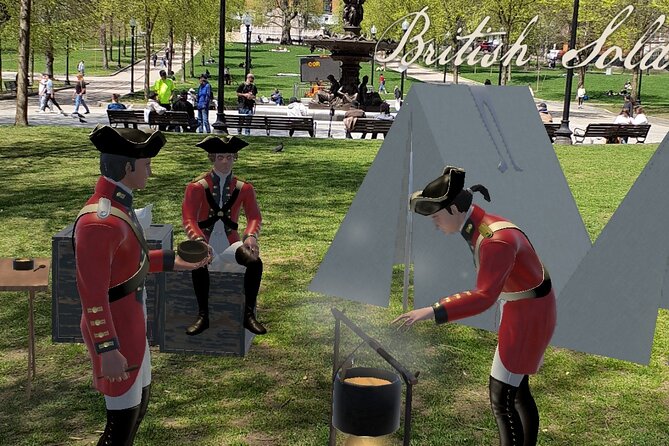
After Boston Common, the route continues along major Freedom Trail landmarks, including Granary Burying Ground and a Benjamin Franklin statue stop.
This is where the AR format can do some real work for you. Granary Burying Ground is the kind of place where a classic tour might ask you to stand still and listen. With Relive 1776, the goal is to make the story feel like it’s occurring as you look around—less “reading text from a distance,” more “the moment is happening now.”
If you enjoy learning through context, this style tends to stick. You can see the location while the story references it, and your brain doesn’t have to do all the connecting by itself.
Old Corner Bookstore and Old State House: words and power

The tour passes by Old Corner Bookstore and the Old State House, two stops that practically scream for a story about influence and public opinion.
The Old State House also helps because it’s the kind of building that feels political even if you don’t know the details yet. With AR experiences layered into the route, you’re more likely to connect the setting with the event themes—pressure, resistance, and the grind toward independence.
One practical note: you’ll likely want comfortable shoes here. These streets are old-school Boston. The tour is short, but you still do the walking.
Three centuries deep, more Boston history
- Boston: Freedom Trail History Small Group Walking Tour★ 5.0 · 6,450 reviews
- Boston Food & History: Pizza, North End & Freedom Trail★ 5.0 · 1,772 reviews
- Boston: Freedom Trail History Small Group Walking Tour★ 4.9 · 1,590 reviews
- City Cruises Boston Historic Sightseeing Harbor Cruise★ 4.5 · 1,388 reviews
- Boston’s North End Food Tour: Italian Flavors & Heritage Walk★ 5.0 · 1,322 reviews
Faneuil Hall Marketplace: the push toward action
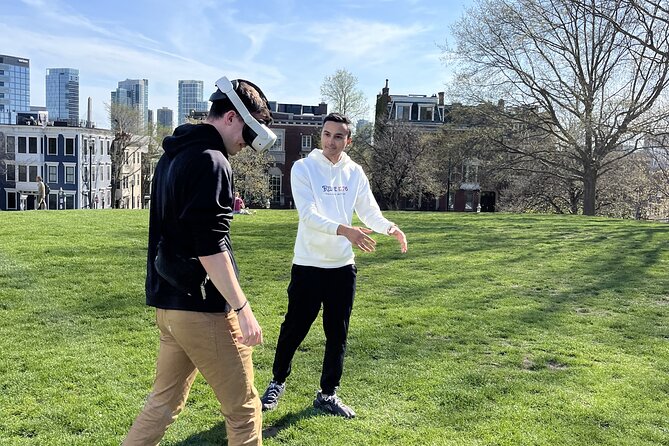
Next up is Faneuil Hall Marketplace, another landmark where you can feel the civic energy even today. This is the kind of stop that helps the story shift from people and ideas to movement and decisions.
Faneuil Hall fits the tour’s theme of responding to tyranny. The AR experiences are designed to be quick and active, and the guide keeps the thread going as you move from one key location to the next.
Paul Revere House and the big ending at Bunker Hill
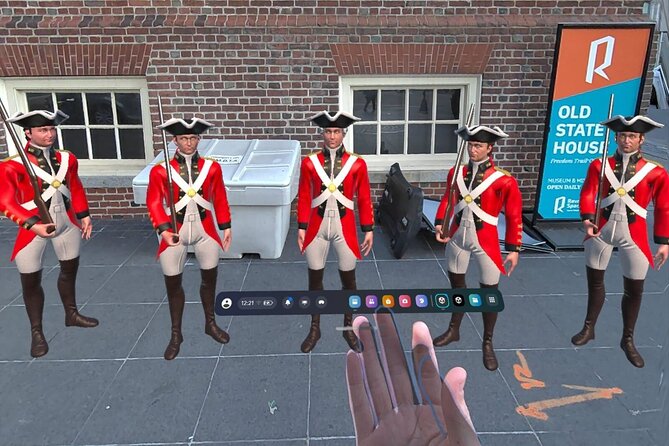
The later part of the tour focuses on the revolutionary momentum, including the Paul Revere House and then the final experience at Bunker Hill, where the walking tour ends.
This is also where the tour earns its reputation for being memorable. One theme from the experience notes: the ending is the part people talk about after they step away from the route. It’s not just a stop. It’s the payoff.
If you want the full emotional arc, don’t plan to half-finish the last segment. This tour works as a sequence. When you skip part of the route, the story loses momentum.
The tech setup: AR headsets and tablet mode (no VR nausea)
Relive 1776 specifically uses AR, not VR. That’s not marketing fluff—it’s a real comfort factor. The key benefit is that you keep access to the real world around you while the AR layers appear over it.
You get Meta Quest AR headsets, and you also have tablets available for AR experiences without headsets. That’s handy if you’re sensitive to headgear, prefer a different view, or just want your comfort to win.
The guide also plays an important role here. AR only stays fun when it’s easy to operate, and the experience is designed to be usable without drama. In practice, that means you’re spending time learning the story rather than troubleshooting the tech.
Group size: small enough for help, big enough for fun
The tour caps at 8 travelers. That’s a great size for AR-based experiences because the guide can actually manage the flow at each moment.
In a bigger group, AR can get awkward fast—people waiting, headsets passed around, everyone watching the same screen angle. Here, the small cap helps keep it moving.
Price and value: is $30 worth it?
At $30 per person, Relive 1776 is priced in a way that feels realistic for what you’re getting: a guided walk plus provided AR hardware (headsets and/or tablets).
The value isn’t just the technology. It’s the combination of:
- real Freedom Trail landmarks
- guided storytelling throughout
- multiple short AR experiences with video support
- included souvenir: the reusable tea bag called Illegal Tea with a discount card
If you’re the type of traveler who learns best by doing (not just listening), this pricing makes sense. You’re paying for “history + participation” during a short visit window.
If you only want a classic narration-style tour with no tech, you might feel like you’re paying for a gimmick. The tour is clearly built around the AR moments. The history is there, but the story delivery uses technology as a major piece of the experience.
Who this tour suits best (and who might pass)
This is a strong fit for:
- families with kids who like interactive activities
- adults who want a new way to see the Freedom Trail beyond photo stops
- visitors who are curious about AR but don’t want VR-style isolation
It’s less ideal if:
- you want a purely lecture-based history tour with minimal gadgets
- you dislike wearing headsets at all (tablet mode helps, but AR is still central)
It also helps if you can commit to the full sequence of experiences. The tour is structured, and the story builds toward the Bunker Hill ending.
Practical tips to get more out of every scene
A few simple habits will make the whole thing smoother.
First, treat each AR experience like it’s part of the show, not a pause. That means paying attention during the 5–15 minute segment, including the audio/video portion.
Second, wear comfortable shoes and keep your water plan in mind. This is still a walking tour. Your stamina affects your ability to stay with the full route.
Third, if you’re choosing between headsets and tablets, pick what lets you stay focused. The best choice is the one you won’t keep fiddling with.
Finally, go in with a flexible attitude. You’re seeing familiar landmarks, but the story is told through tech. That difference is the point.
Should you book Relive 1776?
If you want the Freedom Trail in a fresh format, I’d book it. The setup is friendly (AR instead of VR), the group is small, and the experiences are designed to be short, fun, and education-forward. It’s also a smart way to make the route feel less repetitive when you’ve already seen Boston’s big exterior sights.
Skip it only if you strongly prefer classic narration with zero tech focus. Otherwise, Relive 1776 is a good value bet at $30 for a 2-hour, guided, high-participation tour that ends with a memorable finale at Bunker Hill.
FAQ
FAQ
What’s the duration of Relive 1776?
The tour runs about 2 hours.
How much does the tour cost?
The price is $30.00 per person.
Does this use VR or augmented reality?
It uses augmented reality (AR), not VR.
What languages are available?
The tour guide is English only.
What technology is included during the tour?
You receive Meta Quest AR headsets and you also have access to tablets for the AR experiences.
Where does the tour start and end?
It starts at the Boston Common Visitors Center at 139 Tremont St, and it ends back at the meeting point.
Is there transportation provided to the meeting point?
No transportation is included to the meeting point.
Is there a limit on group size?
Yes. The tour/activity has a maximum of 8 travelers.
Is free cancellation available?
Yes, you can cancel for a full refund up to 24 hours in advance.
Boston History, Volume Two



More of the Boston Ledger



Follow the Red Bricks Further


New on the Boston Docket
- Boston to Newport Mansions Private Day Trip
★ 5.0 · 3 reviews - Boston Massachusetts Private Photography Tour
★ 5.0 · 3 reviews - Homemade Dumplings 101 in Boston
★ 3.5 · 3 reviews - Self-Guided Audio Tour of Boston North End
★ 4.5 · 3 reviews - Old Boston: Beacon Hill & Back Bay Walking Tour in French
★ 4.7 · 3 reviews
Freedom Trail & Revolution Walks, compared.
 ★ 5.0Freedom Trail History Small Group Walking TourFrom $356,450 reviews
 ★ 4.5Boston Freedom Trail Walking Tour with Costumed GuideFrom $262,531 reviews
 ★ 4.5Boston Tea Party Ships and Museum AdmissionFrom $352,512 reviews
 ★ 5.0The Full Revolutionary Story Epic Small Group Boston Walking TourFrom $552,356 reviews
 ★ 4.8Boston Tea Party Ships and Museum Interactive TourFrom $351,926 reviews
 ★ 5.0Boston Food & History: Pizza, North End & Freedom TrailFrom $901,772 reviews
 ★ 4.9Boston’s Freedom Trail: A Revolutionary Walking TourFrom $311,748 reviews
★ 4.9Freedom Trail History Small Group Walking TourFrom $351,590 reviews
★ 4.9Boston’s Freedom Trail: A Revolutionary Walking TourFrom $311,748 reviews
★ 4.9Freedom Trail History Small Group Walking TourFrom $351,590 reviews
Browse the lists this tour appears in