

REVIEW · FREEDOM TRAIL & REVOLUTION WALKS
Boston’s Freedom Trail: A Self-Guided Tour of All 16 Sites
Sixteen stops, zero waiting, and a good story. This self-guided Freedom Trail walk ties together the big moments of Boston’s Revolution-era past using an offline audio guide and maps in the VoiceMap app, so you can move at your pace instead of marching with strangers.
I especially love the auto-start narration as you reach each marker. I also like having offline maps and geodata, which makes it easy to keep walking even if your signal is spotty.
The main thing to consider: you’ll need your own smartphone and headphones, and the map/location tracking can occasionally be a bit slow, meaning you might need to tap forward yourself.
In This Review
- Key things that make this Freedom Trail walk work
- Freedom Trail, but paced for real life
- Price and value: $14.99 that you can reuse
- The walk’s timing: from Tremont Street to Copp’s Hill Terrace
- Faneuil Hall: from town meeting hall to street-level storytelling
- Brewer Fountain and the Massachusetts State House: the politics you can see
- King’s Chapel Burying Ground: names that stop you mid-step
- The 1713 stop: Old State House and Boston’s trading power
- Old City Hall: the American legal system origin story
- Old South Meeting House and the planned Tea Party
- Beantown Pub: a practical break inside the historical walk
- The Irish immigrant stop: the tragedy that shaped lives
- Boston Massacre site: street-level scale and consequence
- Copp’s Hill Terrace finish: closing with views and momentum
- Who this Freedom Trail audio tour suits best
- Final call: should you book it?
Key things that make this Freedom Trail walk work
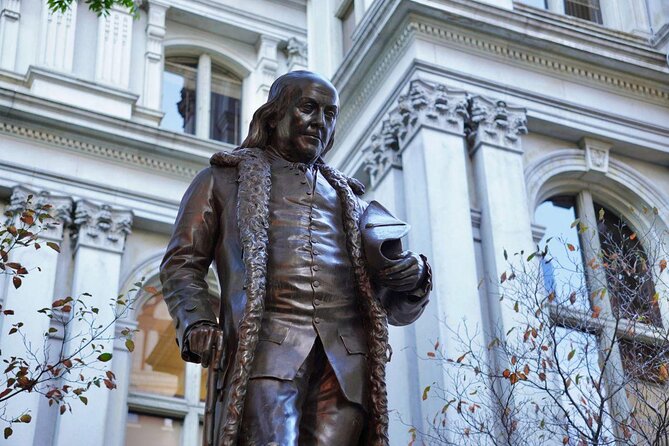
- Auto-start narration that begins when you arrive at each site
- Offline audio, maps, and geodata so you can keep going without service
- All 16 Freedom Trail stops, tied to the Tea Party, the Boston Massacre, and the Midnight Ride
- Clear directions and a strong storyteller voice, so you don’t feel lost while walking
- Flexible pacing, with built-in moments to stop, reset, and grab a bite near the route
- Lifetime access to the audio tour in English, so you can reuse it on another trip
Freedom Trail, but paced for real life
This tour is built for how most people actually travel: you want to see a lot, but you also want control. With the VoiceMap app, you’re walking the Freedom Trail while listening to a guided story in the background. The experience is English-language only, and it’s designed around hitting all 16 sites on the route.
The best part for me is that it feels like a guide without the pressure. You can pause when a detail grabs you, and you can keep moving when you’re in a hurry. That matters on the Freedom Trail, because you’ll be passing major landmarks back-to-back, and it’s easy for a traditional group tour to feel like a sprint.
Expect about 2 hours to 2 hours 40 minutes. That range is realistic because you can either do it fast (brief stops, quick photos) or take your time with the narration as it builds the connections between sites.
Price and value: $14.99 that you can reuse
At $14.99 per person, the value depends on one question: do you want to own your pace? For this price, you get lifetime access in English, plus offline access to audio, maps, and geodata. That’s not just convenience. It’s also smart if you plan to revisit Boston later, or if you want to replay sections when you’re back home thinking about what you saw.
What’s not included is also part of the math. You’ll need your own smartphone and headphones. You’ll also want to budget separately for food and any museum tickets along the way, since those aren’t part of the tour. For me, that’s fine—Freedom Trail highlights are mostly street-and-building viewing—but it’s good to know so you aren’t surprised at the midway point.
If you prefer structured tours where someone stays with you the whole time, this won’t replace that. But if you like freedom and you can handle a phone-based setup, it’s an efficient way to cover the full trail without paying for a group guide.
The red brick line keeps going. More Trail walks here
The walk’s timing: from Tremont Street to Copp’s Hill Terrace
The start is 139 Tremont St, Boston and the tour ends at Copp’s Hill Terrace, 520 Commercial St. The app is designed so you’re not guessing where to go next—you’re following the route as the audio cues match the walking sequence.
One small practical point: start in a time window when you can actually absorb what you’re hearing. If you start too late, you might feel rushed near the end. One solid approach I like is to begin in the mid-morning, when the light is good for photos and you’re not counting minutes under a tight schedule.
Also, you don’t need to commit to the whole thing in one shot. The tour format supports you pausing, taking a break, then continuing later—useful if you want to stop for a snack or step into a shop close to the route.
Faneuil Hall: from town meeting hall to street-level storytelling

Your walk hits Faneuil Hall early in the experience. This is a key stop because it’s more than a pretty building. The narration frames it as a former town meeting hall where Samuel Adams spoke—then contrasts that past with what you see today as a government auditorium with old artwork.
Why I like this stop: it anchors the idea that Boston’s political energy wasn’t just in famous speeches and battles. It was also in everyday civic meetings. As you stand there, you start to connect the Freedom Trail sites into one theme: public debate, collective action, and stubborn independence.
A possible drawback here is simple: Faneuil Hall is popular. If you hit it when crowds are dense, you may have to work around foot traffic to get the best focus for the audio story. Still, the trail is designed for street-level viewing, so you’re not dependent on tickets or museum hours to get the core experience.
Brewer Fountain and the Massachusetts State House: the politics you can see
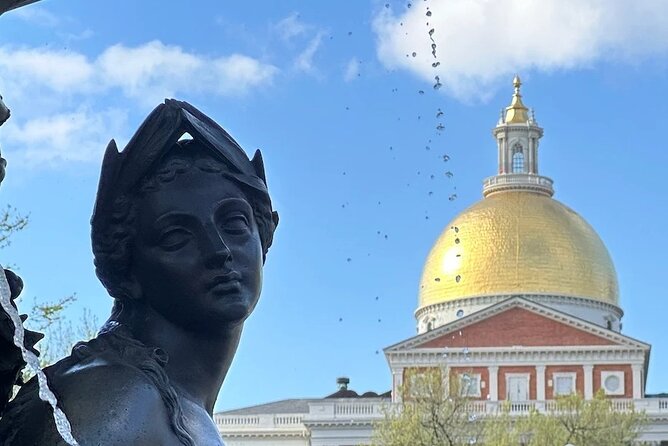
From there, the tour takes you toward Brewer Fountain, where the audio explains how Boston was formed—then pushes you on to the Massachusetts State House.
This is where the Freedom Trail stops feel less like isolated monuments and more like a timeline you can walk through. The State House is described as an impressive gold-and-brick structure, and the narration uses it to tie the Revolution era to the civic machinery that grew from it.
I found this combination works well because you’re not only looking at architecture. You’re also getting the story behind the city’s political identity. If you tend to enjoy cause-and-effect history—how events lead to institutions—this is one of the more satisfying stretches.
King’s Chapel Burying Ground: names that stop you mid-step

One of the most moving segments comes at the graveyard stop, where the tour highlights a roster of Boston figures: James Otis, John Hancock, Paul Revere, and Samuel Adams. The narration helps you read the place as more than a cemetery. You’re looking at a physical reminder that the people driving big events also lived, died, and were remembered in the same city streets you’re walking now.
This is also where I slow down if you have that kind of mindset. The audio makes the connections, but the site itself does the quiet work. It’s also a nice counterbalance if you’ve spent earlier stops sprinting for photos.
Potential consideration: like most outdoor historical cemeteries, it can feel dusty and weather-exposed. Bring whatever you need to stay comfortable on a long walk so you don’t end up rushing through this one.
Boston at your own pace, more options
- Self Guided Classic Freedom Trail Location Aware (GPS) Walking Audio Tour★ 4.5 · 258 reviews
- Boston Freedom Trail Self-Guided Tour with Audio Narration & Map★ 4.5 · 98 reviews
- Self-Guided Boston’s Beacon Hill Underground Railroad Audio Tour Walking Tour★ 4.5 · 29 reviews
- Self Guided “Historic Boston Downtown Freedom Trail” Audio/GPS Walking Tour★ 4.0 · 22 reviews
- Boston’s Old North Church Admission with Self-Guided Audio Tour★ 4.5 · 19 reviews
The 1713 stop: Old State House and Boston’s trading power

Next is an older building described as dating back to 1713. The narration ties it to Boston’s unique trading position—again reinforcing the idea that economics was never separate from politics.
I like this stop because it gives you a “why” that helps the rest of the trail click. When you understand that trade and commerce shaped daily life, the Tea Party planning and the crackdown that follows feel less like random drama and more like predictable consequences.
If you’re the type who loves architecture, you’ll probably enjoy the age of this building. If you’re less into buildings, don’t worry. The audio story is doing the heavy lifting here.
Old City Hall: the American legal system origin story
The tour then moves to Boston’s Old City Hall, described as having a grand façade and as a place tied to the birth of the American legal system. Even when you can’t picture the courtroom scene in your head, the context matters: you’re standing at a location connected to how law and civic authority took shape.
This stop works best if you like history that explains how systems form. It’s not only about famous people; it’s also about institutions and enforcement—how order gets created after chaos.
If you’re short on time, you can skim this stop. But if you’re settling in and giving the audio your full attention, Old City Hall is one of the better payoff points.
Old South Meeting House and the planned Tea Party
Then comes Old South Meeting House. The narration frames it as the largest building in colonial Boston at one point and as a central planning site for the Boston Tea Party, a catalyst for the American Revolution.
This is one of the most story-driven stops because the audio connects the meeting place to the action. You’re not just hearing that tea was dumped into the harbor. You’re getting the idea that the Revolution was organized, argued, and planned like a serious campaign.
I also like that this stop reinforces the theme of civic participation. It makes the Tea Party feel less like a single night of chaos and more like a network of decisions leading to a turning point.
Beantown Pub: a practical break inside the historical walk
Mid-route, there’s a Beantown Pub refreshment stop described as a Boston favorite and home of Sam Adams beer. You don’t need to drink to enjoy the built-in logic here. A planned break is a smart idea on a tour that covers a lot of ground in a short time.
This is a good place to reset and check your phone battery. If you’re using offline audio, you’re saving your data, but your phone still needs juice. Grab water, take a breath, and restart the walk feeling human again.
If you want snack ideas, you may also hear food suggestions within the narration, like a cannoli recommendation that shows up in the tour’s storytelling style. (Even if you skip it, that kind of practical detail makes the audio feel more like a companion than a lecture.)
The Irish immigrant stop: the tragedy that shaped lives
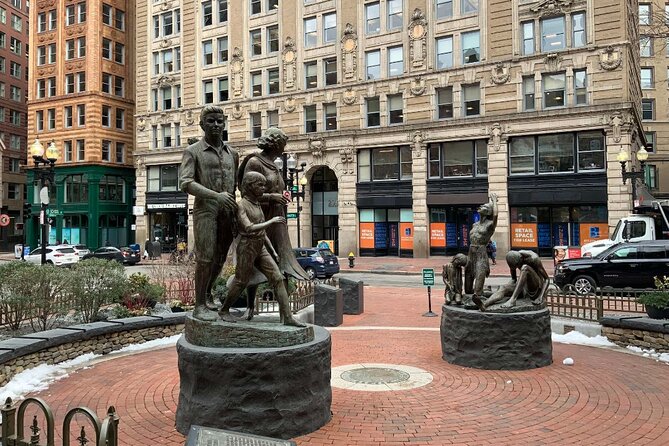
Another emotionally heavy point in the tour is the stop focused on Irish immigrants and a “biological tragedy” that forced them to leave their homeland. The narration frames this as a turning point that pushed people into the unknown.
This isn’t the kind of site you should rush through. If you’re sensitive to heavy history, give yourself a minute to listen fully before moving on. The Freedom Trail can lean into dramatic Revolutionary moments, but this part adds the broader human cost behind migration and survival.
A practical tip: if you’re taking photos, do it quickly and then keep the audio in front of you. You want your attention on the story, not just your camera roll.
Boston Massacre site: street-level scale and consequence
The audio guides you to the site of the Boston Massacre incident in 1770, described as nine British officers facing a crowd of hundreds, with five Boston lives lost during the revolt.
This is one of those moments where the narration matters because you’re dealing with numbers and tension, not just a single object to view. Standing in the area, you can feel how a small confrontation can balloon when fear and anger collide.
I recommend you keep your expectations realistic here. You might not see a big monument that explains everything at a glance. The value is in how the audio sets the scene, then helps you read the location through that lens.
Copp’s Hill Terrace finish: closing with views and momentum
The tour ends at Copp’s Hill Terrace, which is a strong finish because it’s an outdoor wrap-up in a spot that naturally encourages a pause. This is also where you may get a sense of place for nearby landmarks associated with the Revolution-era world—especially if you’re looking toward the USS Constitution and the Bunker Hill area.
This ending works for two kinds of travelers. If you like to complete things cleanly, you’ll like having a defined final stop. If you like to keep wandering, this ending sets you up to decide what to do next without feeling trapped in a rigid schedule.
If you specifically want to visit attractions like museums or major monuments tied to that final view, plan that as an add-on. The audio wraps up at the terrace viewpoint area rather than serving as a ticketed hop-on hop-off system.
Who this Freedom Trail audio tour suits best
You’ll likely love this format if:
- You want to do the full 16-stop Freedom Trail route without booking a group tour.
- You’re traveling with someone who has different pacing preferences, and you want control over when to stop.
- You like stories with humor and human tone, not just dates and facts.
- You’ll be walking for a couple of hours and you value offline access.
You might not love it if:
- You strongly prefer a live guide who can answer questions on the spot.
- You don’t want to manage an app, headphones, and your phone battery during a walking route.
- You want every stop to include a ticketed interior experience, since this tour is built around on-the-ground route viewing.
Final call: should you book it?
I think this is a strong buy if you want a low-stress way to hit the Freedom Trail’s key moments—Tea Party planning, the Midnight Ride reference, and the Boston Massacre—while keeping your own timing. The offline maps and audio are a big part of the value, and the auto-start style narration helps you feel guided even when you’re moving solo.
Book this if you’d enjoy a clear walk with story context, plus the freedom to linger. Skip it only if you need a live human guide or you know you won’t handle headphone-and-phone basics on a long city walk.
Boston Without a Group in Sight




More of the Boston Ledger




Follow the Red Bricks Further



New on the Boston Docket
- Boston to Newport Mansions Private Day Trip
★ 5.0 · 3 reviews - Boston Massachusetts Private Photography Tour
★ 5.0 · 3 reviews - Homemade Dumplings 101 in Boston
★ 3.5 · 3 reviews - Self-Guided Audio Tour of Boston North End
★ 4.5 · 3 reviews - Old Boston: Beacon Hill & Back Bay Walking Tour in French
★ 4.7 · 3 reviews
Freedom Trail & Revolution Walks, compared.
 ★ 5.0Freedom Trail History Small Group Walking TourFrom $356,450 reviews
 ★ 4.5Boston Freedom Trail Walking Tour with Costumed GuideFrom $262,531 reviews
 ★ 4.5Boston Tea Party Ships and Museum AdmissionFrom $352,512 reviews
 ★ 5.0The Full Revolutionary Story Epic Small Group Boston Walking TourFrom $552,356 reviews
 ★ 4.8Boston Tea Party Ships and Museum Interactive TourFrom $351,926 reviews
 ★ 5.0Boston Food & History: Pizza, North End & Freedom TrailFrom $901,772 reviews
 ★ 4.9Boston’s Freedom Trail: A Revolutionary Walking TourFrom $311,748 reviews
★ 4.9Freedom Trail History Small Group Walking TourFrom $351,590 reviews
Browse the lists this tour appears in