
REVIEW · FREEDOM TRAIL & REVOLUTION WALKS
Boston Freedom Trail Self-Guided Tour with Audio Narration & Map
Freedom Trail in Boston gets more fun with audio. This self-guided GPS walking tour turns the red-brick route into a choose-your-own-adventure with hands-free storytelling. You can start when you want, pause for photos, and jump back in without losing your place. The one catch: it’s still a long walk, and the end point is different from where you start.
For $9.99, you’re getting a lot of value: a route that strings together major Revolutionary-era landmarks, plus 50+ audio stories that play based on your location. I also like that you can use an app with offline maps after you download, so you’re not stuck searching for cell service mid-walk. The main consideration is tech dependency: you’ll need a phone with GPS and to make sure the audio is set up correctly before you begin.
In This Review
- Key things I’d pin on your map before you go
- Freedom Trail at $9.99: where the real value lives
- Price and pacing: how long this walk really takes
- Getting set up: download for offline use and avoid the day-of panic
- How the GPS cues feel on the ground (and what to do if they don’t)
- Boston Common and the Massachusetts State House: start where the story begins
- Park Street Church and Granary Burying Ground: politics outside, people inside the past
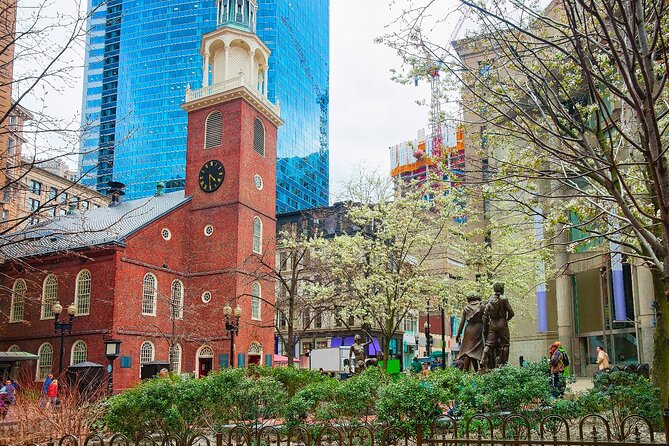
- The Irish Famine Memorial and Old South Meeting House: immigration after the Revolution
- Old State House to the Boston Massacre site: protest becomes danger
- Faneuil Hall Marketplace, Quincy Market, and Haymarket: history plus modern Boston energy
- Paul Revere House, Old North Church, and Copp’s Hill: lanterns and last resting places
- Charlestown Navy Yard, USS Constitution, and Bunker Hill: the final push
- Parking, crowds, and the “sore legs” reality
- Who this self-guided Freedom Trail tour is best for
- Should you book it
- FAQ
- FAQ
- What’s included in the Freedom Trail self-guided tour?
- Do I need cell service while walking?
- How do I start the tour when I arrive?
- Can I pause the tour and resume later?
- How long and how far is the walk?
- Where does the tour end?
- Is this tour worth it for the price?
Key things I’d pin on your map before you go
- GPS-based audio that plays automatically as you reach each stop, so you can keep walking
- Offline maps and offline playback once the tour is downloaded
- Start and stop whenever you like, including breaks for lunch and shopping
- A big “greatest hits” lineup from Boston Common to Bunker Hill and USS Constitution
- Lifetime access so you can listen again on a future visit
Freedom Trail at $9.99: where the real value lives
At $9.99 per person, this is a budget-friendly way to experience Boston’s famous historical backbone without booking a pricey guided group tour. What you’re really paying for is time: you get a clear route, location-based audio cues, and a structured story arc across about 3 to 4 hours of walking.
The Freedom Trail itself is free and easy to spot thanks to the red-brick marker. The tour’s job is to explain what you’re seeing and why it matters—so you don’t just “pass by” Faneuil Hall or the Paul Revere House. For many people, that’s the difference between a walking photo spree and an actually memorable day.
Price and pacing: how long this walk really takes

The tour is built around the Freedom Trail route, with stops that add up to roughly over 3 miles and plenty of time for listening. Plan on 3 to 4 hours if you keep a steady pace and mostly stay outside at each site.
If you linger, go into buildings, or pause for extra reading and photos, expect longer. One common practical range is 4 to 5 hours, and if you add interior visits along the way, it can stretch toward 6 hours. Heat and crowds also matter, especially on busier days.
The red brick line keeps going. More Trail walks here
Getting set up: download for offline use and avoid the day-of panic
Before you start walking, you’ll want to do the tech steps in advance. After booking, you’ll get an email and text with instructions plus a password. You download the separate Action’s Tour Guide app, enter the password, and then download the tour content while you’re on strong Wi‑Fi or cellular.
Why that matters: the tour is designed to work without constant signal. Offline maps are included, and it’s meant to keep running once downloaded. If you skip the download step or do it on weak service, you can turn a simple walk into constant troubleshooting.
You’ll also start from the first story point on your route. There’s no guide meeting you at the start. Once you open the tour in the app onsite, audio should begin automatically and then keep switching as you move along the path.
How the GPS cues feel on the ground (and what to do if they don’t)

The experience is built for “walk and listen.” The app uses your location so the stories can play as you reach each highlight. That hands-free setup is exactly why self-guided audio works so well on the Freedom Trail—you’re not juggling a printed map while trying to absorb details.
That said, GPS isn’t magic. Some people find the automatic triggering doesn’t always behave perfectly, which can mean you occasionally have to keep an eye on the phone to confirm you’re on the right story. If that happens, slow down for a moment at a stop and check that the correct audio is playing.
A small but smart move: use earbud audio you’re comfortable with, keep your screen brightness manageable, and keep the phone accessible. If your audio gets cut off or glitches, support is available for troubleshooting during the provider’s listed hours.
Boston Common and the Massachusetts State House: start where the story begins

Your walk kicks off around Boston Common, and you’ll begin near the Visitor Center to find the red-brick path. Boston Common is the anchor point for much of early-colonial Boston, and the open green space helps you understand how these events unfolded in a real city setting.
Right at the corner is the Massachusetts State House with its eye-catching golden dome. This stop is more than a photo op: you’ll get Revolutionary-era context and also a key related landmark story through the Robert G Shaw and 54th Memorial located opposite.
If you’re trying to orient yourself for the rest of the day, this is the place to slow down. The State House area sets the tone, then Park Street and the Granary route pull you deeper into the political and human side of the Revolution.
Park Street Church and Granary Burying Ground: politics outside, people inside the past

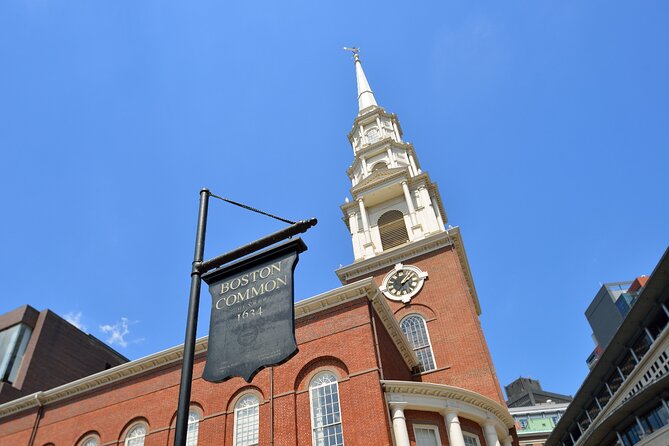
From the State House area, the route continues toward Park Street Church. This stop focuses on a big question: what pushed the Revolutionary War into motion. That “why it happened” angle is useful because it frames later stories—especially the ones involving conflict, protest, and escalation.
Then you reach Granary Burying Ground, founded in 1660. This is one of those stops where Boston’s history feels personal fast. You’ll hear stories tied to well-known Revolutionary figures, including Paul Revere, John Hancock, and Sam Adams, plus Robert Paine and James Otis.
It also mixes in something charming and unsettling: it’s said to be where you’ll find the grave associated with Mother Goose. And because this cemetery connects to the lead-up to major events, it helps you connect names to dates instead of treating them as random facts.
Boston at your own pace, more options
- Self Guided Classic Freedom Trail Location Aware (GPS) Walking Audio Tour★ 4.5 · 258 reviews
- Boston Freedom Trail Self-Guided Tour with Audio Narration & Map★ 4.5 · 98 reviews
- Self-Guided Boston’s Beacon Hill Underground Railroad Audio Tour Walking Tour★ 4.5 · 29 reviews
- Self Guided “Historic Boston Downtown Freedom Trail” Audio/GPS Walking Tour★ 4.0 · 22 reviews
- Boston’s Old North Church Admission with Self-Guided Audio Tour★ 4.5 · 19 reviews
The Irish Famine Memorial and Old South Meeting House: immigration after the Revolution
A few steps from the route near the Latin School area, you’ll find the Boston Irish Famine Memorial. This stop jumps to a later chapter—new waves of immigrants after the Revolution and the hardships they faced. It’s a good reset if your brain is stuck in 1770s politics.
Right across the street, you’ll pause at the Old South Meeting House. This is where the story heads toward the Boston Tea Party, including the organizers, their motivations, and what came next.
This pairing works well because it shows Boston wasn’t only about one moment in time. You get the conflict and then the follow-on human reshaping of the city.
Old State House to the Boston Massacre site: protest becomes danger

The tour then brings you to the Old State House, where you’ll look at key architectural features and learn why this building mattered. It’s a strong stop for understanding how government, conflict, and public life were intertwined in colonial Boston.
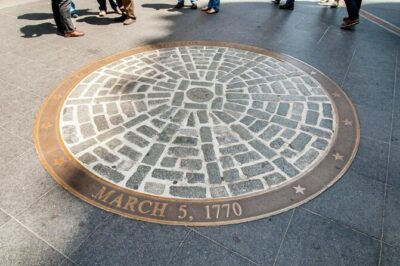
After that, you reach the Boston Massacre Site. You’ll hear the debate behind the event: was it really a massacre, or a rowdy riot as the British described it? This adds useful nuance, and it doesn’t treat the story as a single simplified headline.
You also get the story of Crispus Attucks, honored as an American hero tied to the event. That human detail is what makes this stop stick.
Faneuil Hall Marketplace, Quincy Market, and Haymarket: history plus modern Boston energy
Next up is Faneuil Hall Marketplace and Quincy Market. This section is practical as well as historical because it’s one of the easiest places to take a snack break without derailing the tour. Even if you don’t go inside anywhere, it’s a good moment to pause and rehydrate.
Then the route moves toward Haymarket. Here you’ll hear about the historical Haymarket area plus a reference to the Holocaust Memorial outside, along with a view toward the Custom House Tower.
What I like about this stretch is contrast. You’re still on the Freedom Trail, but the setting is more “current Boston” than quiet colonial streets, so the audio feels like it’s connecting past and present.
Paul Revere House, Old North Church, and Copp’s Hill: lanterns and last resting places
The tour continues to the Paul Revere House. This is where you’ll hear about the famous Midnight Ride, how it became immortalized in a poem by Henry Wadsworth-Longfellow, and which parts are myth versus reality. That’s a smart inclusion because it helps you spot when Boston’s legends got bigger than the facts.
From there, you walk to Old North Church, the iconic spot for the lantern signal. The audio focuses on the one if by land, two if by sea signal, and it connects the moment to British troop movements and colonial revolutionaries.
Then comes Copp’s Hill Burying Ground, older than Granary by about a year. Cemeteries are never just “old rocks” on this route—they’re story engines. You’ll likely find this stop especially meaningful if you like seeing how real people shaped the Revolution, and how Boston remembers them.
Charlestown Navy Yard, USS Constitution, and Bunker Hill: the final push
Over the bridge you head into Charlestown Navy Yard, where you’ll see USS Constitution. The audio gives the battle context, including her epic fight against the Guerriere. If you’ve been focusing on the political and civilian side of the Revolution, this is where the story turns into naval conflict and military grit.
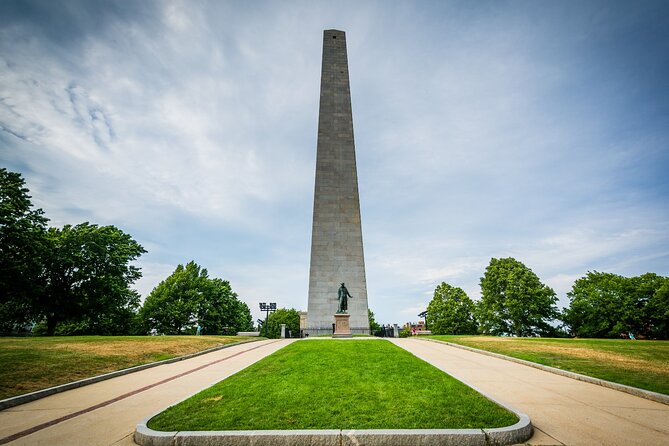
Your last major stop is the Bunker Hill Monument. This is the end of the core route, built to commemorate the Battle of Bunker Hill. The audio encourages you to walk around the hill and understand the brutality and intensity of the fighting.
Because it’s the finish, think about logistics now. The tour ends in a different location than where you started, so you’ll want a plan for getting back.
Parking, crowds, and the “sore legs” reality
Practical reality check: parking near key parts of the Freedom Trail fills up quickly, so arriving early helps. On busier days, foot traffic and motor traffic can make the walk feel slower and louder than you might expect.
Also, because the trail runs point-to-point and ends at the final major highlight, you can’t treat this like a simple out-and-back hike. One helpful strategy if you parked near the end of your day and then walked the full stretch: use the subway to return. A concrete option mentioned is hopping on the Orange Line at Community College Station near Bunker Hill and riding to Park Street Station by Boston Common.
It’s also totally valid to break the day up. The audio is designed to let you stop, pause, and resume later, which makes it easier to manage heat, fatigue, or a longer lunch.
Who this self-guided Freedom Trail tour is best for
This works best if you want a structured route but hate feeling herded. It’s ideal for solo travelers who want flexibility, couples who can keep moving without crowd pacing, and anyone who prefers clearer audio than relying on a group’s ability to hear a guide.
It’s also a good fit if you like to control your own depth. You can spend longer outside certain stops, then speed through less interesting ones without losing the flow.
If you want zero phone use and you dislike troubleshooting tech on the go, this might be less comfortable. This experience depends on you having a compatible smartphone and using the app as your guide.
Should you book it
Book it if you want an affordable way to cover the Freedom Trail with story context, clear pacing, and the freedom to stop for lunch or wandering. The combination of a spot-easy walking route, GPS-triggered audio, and offline access after download is what makes it a strong deal.
Skip it or choose a different format if you’re sensitive to audio glitches or you don’t want to rely on your phone for navigation and story timing. If that’s you, you might find an in-person guide less hassle.
FAQ
FAQ
What’s included in the Freedom Trail self-guided tour?
You get the self-guided walking audio tour with a map, plus an app that plays audio based on your location. Admission tickets or attraction entry passes are not included.
Do I need cell service while walking?
No. The tour is designed to work offline after you download it with strong Wi‑Fi or cellular.
How do I start the tour when I arrive?
You open the separate Action’s audio tour guide app onsite, enter the password provided after booking, and launch the tour version that matches your planned starting point and direction. Then you go to the first story’s point and audio should begin automatically.
Can I pause the tour and resume later?
Yes. You can start, stop, and take breaks freely, then continue where you left off.
How long and how far is the walk?
Expect about 3 to 4 hours for the route. It covers more than a few miles along the Freedom Trail and can take longer if you linger at stops or go into buildings.
Where does the tour end?
The activity ends in a different location from where you start. Since the last stop is Bunker Hill Monument, you should plan transportation back from the Charlestown area.
Is this tour worth it for the price?
At $9.99 per person, you’re paying for an organized route, offline-capable audio storytelling, and hands-free GPS prompts across many major Freedom Trail landmarks, without needing separate tickets for each site.
Boston Without a Group in Sight



More of the Boston Ledger




Follow the Red Bricks Further



New on the Boston Docket
- Boston to Newport Mansions Private Day Trip
★ 5.0 · 3 reviews - Boston Massachusetts Private Photography Tour
★ 5.0 · 3 reviews - Homemade Dumplings 101 in Boston
★ 3.5 · 3 reviews - Self-Guided Audio Tour of Boston North End
★ 4.5 · 3 reviews - Old Boston: Beacon Hill & Back Bay Walking Tour in French
★ 4.7 · 3 reviews
Freedom Trail & Revolution Walks, compared.
 ★ 5.0Freedom Trail History Small Group Walking TourFrom $356,450 reviews
 ★ 4.5Boston Freedom Trail Walking Tour with Costumed GuideFrom $262,531 reviews
 ★ 4.5Boston Tea Party Ships and Museum AdmissionFrom $352,512 reviews
 ★ 5.0The Full Revolutionary Story Epic Small Group Boston Walking TourFrom $552,356 reviews
 ★ 4.8Boston Tea Party Ships and Museum Interactive TourFrom $351,926 reviews
 ★ 5.0Boston Food & History: Pizza, North End & Freedom TrailFrom $901,772 reviews
 ★ 4.9Boston’s Freedom Trail: A Revolutionary Walking TourFrom $311,748 reviews
★ 4.9Freedom Trail History Small Group Walking TourFrom $351,590 reviews
★ 4.9Boston’s Freedom Trail: A Revolutionary Walking TourFrom $311,748 reviews
★ 4.9Freedom Trail History Small Group Walking TourFrom $351,590 reviews
Browse the lists this tour appears in