

REVIEW · FREEDOM TRAIL & REVOLUTION WALKS
Boston’s Freedom Trail: A Self-Guided Audio Tour
Boston walks like a living history book. This self-guided audio walk turns the Freedom Trail into a story you can control, and I like offline audio plus your own pace. The one real drawback: the whole experience depends on the VoiceMap app working on your phone, and if you get off-route, it can take a bit to re-sync.
You start in front of the Massachusetts State House, Boston’s high point on the trail, and you’ll get a quick feel for how VoiceMap guides you before you really hit the landmarks. I also appreciate that you’re not done when you finish the streets, because you get lifetime access plus an included option to revisit the sites later with a virtual tour.
Plan for a proper walking window of about 1 hour 15 minutes to 1 hour 30 minutes. You’ll want your smartphone and headphones, and you should know museum entry fees aren’t included, so you’ll be listening to stories outside most attractions rather than paying to go in.
In This Review
- Key takeaways before you go
- Getting oriented at the Massachusetts State House
- Granary Burial Ground: where the audio makes names feel real
- Paul Revere and John Hancock: stories with surprising bite
- Paul Revere’s grave and the 13 careers detail
- John Hancock and the Madeira wine trouble
- Omni Parker House: Dickens and John Wilkes Booth in one stop
- King’s Chapel and the weird logic of history
- Old City Hall and Old South Meeting House: statues and museums
- Old State House and Faneuil Hall: the Puritan connection
- Old North Church and Paul Revere’s many rides
- The Paul Revere Statue and the final walk to his house
- Price, timing, and what you really need to budget
- How the VoiceMap app experience can go smoothly or go sideways
- Who this Freedom Trail audio walk suits best
- Should you book this self-guided Freedom Trail audio tour?
- FAQ
- How long does the Freedom Trail audio tour take?
- What does the tour cost?
- Is this tour available in English?
- Can I use the tour without cellular service?
- Where does the tour start and end?
- Do I need to bring a smartphone or headphones?
Key takeaways before you go
- Offline audio and maps keep you moving even without cellular service.
- Turn-by-turn guidance helps you stick to the route while still walking at your own speed.
- Humans, not textbooks: you’ll hear story-driven details at major Freedom Trail stops, including Paul Revere and John Hancock.
- Built-in flexibility: you can pause and resume later without feeling rushed through everything.
- Lifetime access means you can refresh the highlights at home when you’ve got more time to think.
Getting oriented at the Massachusetts State House

The tour kicks off at 24 Beacon St, in front of the Massachusetts State House, the highest point on the Freedom Trail. That’s a smart start. It gives you an easy landmark for orientation, and it sets the tone: this isn’t just a list of sites, it’s a guided walk where the audio helps you understand why these places mattered.
Right away, you’ll learn how the VoiceMap app works while you’re standing there before the route really gets going. That matters more than it sounds. If you’ve ever tried to fumble with an app on a busy sidewalk, you know the difference between a smooth first five minutes and a frustrating first five minutes. Starting at the State House is also practical because the area makes it easy to line up before you commit to the walk.
This is where you’ll also get the major themes for the route as you move. The effect is subtle but useful: instead of just hearing names, you start noticing connections as you go. You’ll carry those ideas with you into the next stops, which makes the whole trail feel like one story unfolding rather than a set of unrelated markers.
One practical consideration: because the tour is self-guided, you’re the one managing timing. If you want to stop for photos often, count on the upper end of the duration estimate. If you keep moving and only do quick looks, you’ll likely come in closer to the 75-minute mark.
Granary Burial Ground: where the audio makes names feel real
Your next big stop is Granary Burial Ground, one of the trail’s most powerful stretches. Walking through a graveyard is already a different kind of experience than watching a building. The audio helps you slow down in the right way, so you’re not just looking at stones—you’re hearing context.
This is one of those moments where you’ll feel the value of listening. Without audio, it’s easy to read dates and names but miss what made those people influential. With the narration, you get a clearer sense of why these individuals still show up in American stories today.
The route through Granary Burial Ground also gives you a breather from the busier streets. Even if Boston is moving around you, this pocket feels quieter. It’s a good place to take in details and let the tour’s pacing reset.
If you’re sensitive to crowds or you’d rather not be in too many tight clusters, you’ll likely find this section manageable because it’s mainly a walking-and-standing experience. Just keep an eye on where you’re standing so you don’t accidentally wander away from the guided path.
The red brick line keeps going. More Trail walks here
Paul Revere and John Hancock: stories with surprising bite
From Granary Burial Ground, the tour moves you toward two of the trail’s most famous names: Paul Revere and John Hancock.
Paul Revere’s grave and the 13 careers detail
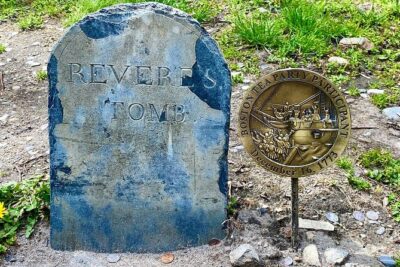
As you pass the Paul Revere Grave, the audio adds a detail you probably won’t get from a quick photo-stop: the story about Revere’s 13 successful careers. That kind of nugget changes how you think about him. You start seeing him less as one famous midnight ride and more as a person with many professional identities, which is the point of this kind of narration.
Also, Revere on the Freedom Trail is never just one location. The tour keeps echoing his presence, so what you learn at his grave becomes a reference point later. If you like when facts connect rather than repeat, you’ll enjoy this.
John Hancock and the Madeira wine trouble
Next comes John Hancock’s Grave. The audio brings in a human, slightly mischievous angle: trouble caused by his love of Madeira wine. It’s a reminder that historical figures were not living spreadsheet lives. They had appetites, habits, and problems, and that makes the story more believable.
If you’re the kind of traveler who gets bored by speeches and prefers stories that feel like people, this stop is a highlight. You’ll likely find yourself listening a little longer, not because you’re being forced to, but because the audio is giving you reasons to care.
Omni Parker House: Dickens and John Wilkes Booth in one stop

As the tour passes the Omni Parker House, the narration talks about famous former guests, including Charles Dickens and John Wilkes Booth. That pairing is the kind of historical contrast the Freedom Trail loves. One name brings you to literature and Victorian writing; the other brings you into the darker political aftermath of the 19th century.
What I like about this stop is how it expands your idea of “history on the trail.” You’re not only visiting revolutionary sites. You’re also seeing how Boston life and national stories overlap in places you might otherwise treat as just a hotel or landmark.
This is also a good example of why an audio tour can be better than just walking and reading plaques. The plaques may tell you what the building is, but the narration helps you understand what people did there and why that matters.
Boston at your own pace, more options
- Self Guided Classic Freedom Trail Location Aware (GPS) Walking Audio Tour★ 4.5 · 258 reviews
- Boston Freedom Trail Self-Guided Tour with Audio Narration & Map★ 4.5 · 98 reviews
- Self-Guided Boston’s Beacon Hill Underground Railroad Audio Tour Walking Tour★ 4.5 · 29 reviews
- Self Guided “Historic Boston Downtown Freedom Trail” Audio/GPS Walking Tour★ 4.0 · 22 reviews
- Boston’s Old North Church Admission with Self-Guided Audio Tour★ 4.5 · 19 reviews
King’s Chapel and the weird logic of history
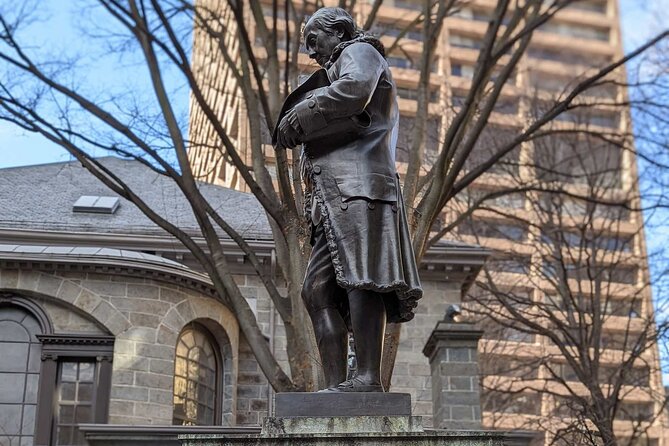
Next up: King’s Chapel, where the audio shares why the chapel was built on top of a cemetery. That’s the kind of detail that makes you look twice. It’s not just a quirky fact; it hints at how cities evolve when space, beliefs, and practicality collide.
From a traveler’s view, this stop is valuable because it changes the way you read the area around you. If you notice what was built where, you start seeing the city as layered, not erased.
One caution: places like King’s Chapel often sit near crowds and foot traffic. Since your tour is self-guided, you’ll get the best experience if you keep your pace steady and don’t stop in the middle of busy sidewalks to replay audio. Step aside, pause safely, then listen.
Old City Hall and Old South Meeting House: statues and museums

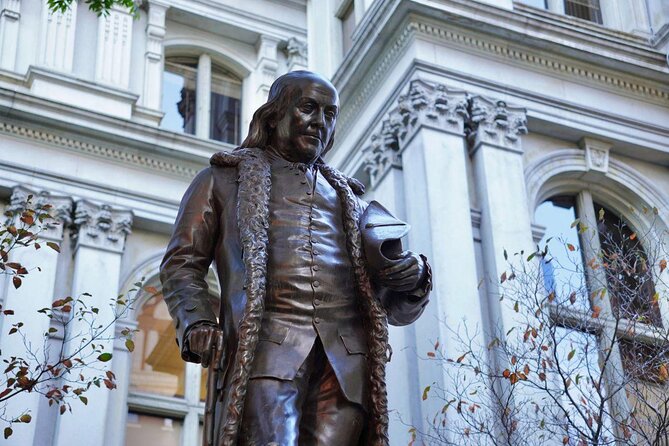
The tour then moves you past Old City Hall, where you’ll hear about the statue in front of the building. This is the kind of narration that makes a statue feel like more than a photo prop. You start realizing that the city didn’t just place monuments randomly; they’re part of a message someone wanted to deliver.
After that, you’ll pass the Old South Meeting House. The audio connects this stop to the museum, so you’ll be primed for what you might look for if you decide to go inside on your own time.
A practical point: the tour does not include museum entry fees. So you’ll likely stay outside here, listening to the audio and taking in what you can from the exterior. If museum time is high on your list, budget extra money and extra time before you start the walk.
Old State House and Faneuil Hall: the Puritan connection
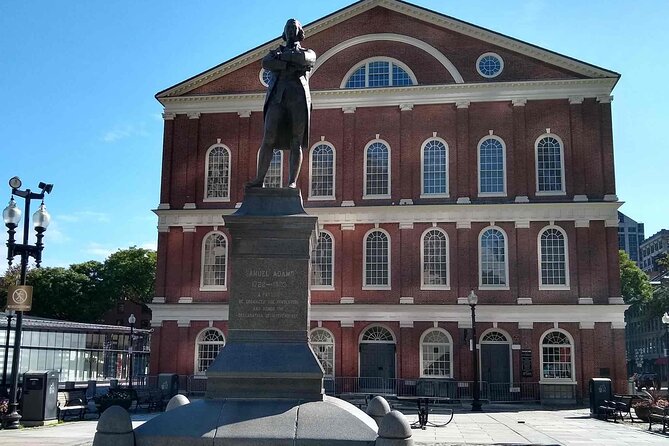
As you continue, the tour passes the Old State House, where you’ll hear the building’s history while walking by. This stop works well in an audio format because the narration can explain the why behind the walls, rather than leaving you to guess.
Then comes Faneuil Hall, where the audio makes a point about how the Puritans are connected to the hall. Again, you’re getting the connective tissue. Without audio, you might treat Faneuil Hall as a major stop and move on. With the guided story, you’re more likely to pay attention to the ideas that fed political and civic life.
If you’re doing the Freedom Trail as a first-time overview, these stops are where you start forming a mental map of how people argued, organized, and built institutions in Boston.
Old North Church and Paul Revere’s many rides
Next is the Old North Church, one of the most iconic sights on the trail. The audio focuses on some of Paul Revere’s many rides, and that phrasing matters. You’re not stuck with one famous moment. You get the sense that his role involved repeated action and logistics, not only a single night.
This is also a spot where people often slow down naturally. The audio gives you a reason to look around, so you’re not just sightseeing, you’re listening for the story’s logic.
Practical tip: if the area is crowded, keep your place on the route and don’t drift away just to take a longer look at the church itself. Your audio guidance works best when you’re in the right position for the next segment.
The Paul Revere Statue and the final walk to his house
The tour passes the Paul Revere Statue, and you’ll learn about the horse Paul rode. That kind of detail might sound small, but it’s exactly what makes a self-guided tour feel personal. It turns an otherwise static landmark into a scene you can picture.
Finally, the experience ends at The Paul Revere House (19 N Square), noted as Boston’s oldest standing structure. You’ll finish right in front of the house, which is a satisfying ending point. It feels like closing the loop: you start with a big civic landmark, you move through people and places that shaped the story, and you end at the surviving home base of one of the tour’s key figures.
If you’ve been taking your time, this is also a great place to pause and decide what you want to follow up on later. The tour’s included option to revisit sites later helps you keep that momentum after your walk.
Price, timing, and what you really need to budget
The price is $11.99 per person, with an estimated duration of about 1 hour 15 minutes to 1 hour 30 minutes. For a self-guided tour, value comes down to how much you’ll actually listen and whether you can use it without stress.
Here’s why this one can feel like good value:
- You get lifetime access, so it’s not just a one-day “buy and forget” purchase.
- You also get offline access to audio, maps, and geodata, which removes one of the biggest headaches in cities.
- The narration isn’t generic. It includes story details like Revere’s 13 successful careers and Hancock’s Madeira wine trouble.
What you must budget for, aside from the $11.99:
- Smartphone and headphones are not included.
- No museum or attraction tickets are included along the way.
- Transportation isn’t included, so you’ll need to get yourself to 24 Beacon St to start.
Timing-wise, aim to start when you’re fresh. Because it’s self-paced, you can stretch it, but you’ll still want energy to walk the full route without rushing through the listening parts.
How the VoiceMap app experience can go smoothly or go sideways
Let’s talk about the part that controls everything: the app.
On the good side, you’re getting offline access to audio and maps, which means you don’t have to rely on cellular signal to keep the tour moving. You also get a structured route with turn-by-turn directions, which helps you not get lost.
On the tricky side, you’re following a set route. If you wander off and explore nearby areas, it can become harder to jump back onto the correct flow of the tour. Also, the tour isn’t designed to be reordered from the opposite direction. If you start at the wrong end or try to walk it in reverse, directional cues can stop making sense.
If you do pause or stop to check something nearby, you may be able to use the app’s Resume function to pick up again. The resume process can show a list of the closest locations so you can restart at the right point.
One more thing: technical issues happen. Some people report the app failing to start or downloading being a problem even when they had a modern iPhone. My practical advice is simple: download the VoiceMap app and test it before you leave your lodging, and make sure you’ve saved the tour so you’re not fighting with setup on a sidewalk.
If the app does act up while you’re there, VoiceMap support has been reachable by both email and telephone, and they’ve asked for details to troubleshoot and consider solutions.
Who this Freedom Trail audio walk suits best
This tour is a strong fit if you want history with room to breathe.
You’ll likely enjoy it if:
- You like walking at your own pace and don’t want to match someone else’s schedule.
- You want the Freedom Trail story without paying for repeated guided group time.
- You’re traveling with time limits but still want more than what a quick plaque-reading session gives you.
- You like the idea of using it again later through the included virtual tour option.
You might think twice if:
- You depend on your phone for everything and you don’t want to risk an app issue.
- You plan to stray off the main route constantly. The tour guidance works best when you stay aligned with the path.
- You want museum interiors included, not just exterior listening.
Should you book this self-guided Freedom Trail audio tour?
I’d book it if you want a practical, story-forward way to cover the Freedom Trail without getting pushed along. The biggest selling points are the offline audio/maps and the fact that you’re paying for something you can use again later with lifetime access.
Skip it if you’re the type who refuses to use apps while walking, or if your phone battery and connectivity are often unreliable. In that case, you might feel better with a more traditional on-site approach or a backup plan.
FAQ
How long does the Freedom Trail audio tour take?
The tour lasts about 1 hour 15 minutes to 1 hour 30 minutes.
What does the tour cost?
It costs $11.99 per person.
Is this tour available in English?
Yes, it’s offered in English.
Can I use the tour without cellular service?
Yes. The tour includes offline access to audio, maps, and geodata.
Where does the tour start and end?
It starts at the Massachusetts State House, 24 Beacon St, Boston, MA 02133 and ends in front of the Paul Revere House, 19 N Square, Boston, MA 02113.
Do I need to bring a smartphone or headphones?
Yes. A smartphone and headphones are not included, so you’ll need to bring your own.
Boston Without a Group in Sight




More of the Boston Ledger




Follow the Red Bricks Further



New on the Boston Docket
- Boston to Newport Mansions Private Day Trip
★ 5.0 · 3 reviews - Boston Massachusetts Private Photography Tour
★ 5.0 · 3 reviews - Homemade Dumplings 101 in Boston
★ 3.5 · 3 reviews - Self-Guided Audio Tour of Boston North End
★ 4.5 · 3 reviews - Old Boston: Beacon Hill & Back Bay Walking Tour in French
★ 4.7 · 3 reviews
Freedom Trail & Revolution Walks, compared.
 ★ 5.0Freedom Trail History Small Group Walking TourFrom $356,450 reviews
 ★ 4.5Boston Freedom Trail Walking Tour with Costumed GuideFrom $262,531 reviews
 ★ 4.5Boston Tea Party Ships and Museum AdmissionFrom $352,512 reviews
 ★ 5.0The Full Revolutionary Story Epic Small Group Boston Walking TourFrom $552,356 reviews
 ★ 4.8Boston Tea Party Ships and Museum Interactive TourFrom $351,926 reviews
 ★ 5.0Boston Food & History: Pizza, North End & Freedom TrailFrom $901,772 reviews
 ★ 4.9Boston’s Freedom Trail: A Revolutionary Walking TourFrom $311,748 reviews
★ 4.9Freedom Trail History Small Group Walking TourFrom $351,590 reviews
★ 4.9Boston’s Freedom Trail: A Revolutionary Walking TourFrom $311,748 reviews
★ 4.9Freedom Trail History Small Group Walking TourFrom $351,590 reviews
Browse the lists this tour appears in