
REVIEW · FREEDOM TRAIL & REVOLUTION WALKS
Walk the Historic Freedom Trail with Costumed Guide
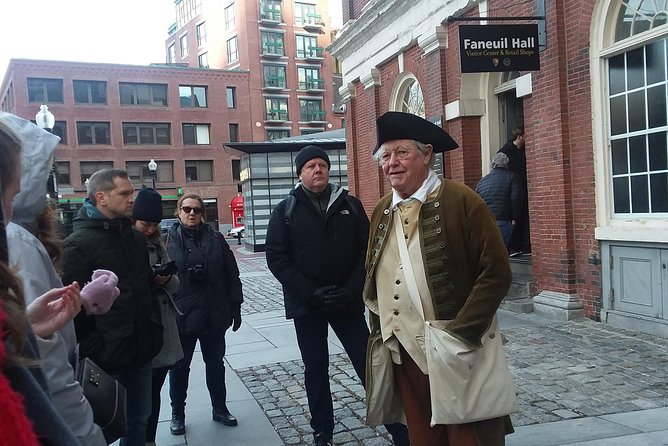
A costumed guide makes Boston’s rebellion stick. This 90-minute Freedom Trail walk (run by Boston Town Crier – Tours of Freedom Trail) is built for getting your bearings fast, with period-dress narration and entry tickets included as you move stop to stop. It is a shorter, easygoing option when you want the big moments without losing an entire morning.
I like that the pace is gentle and the timing is friendly. Still, do plan for downtown street noise and lots of standing, so if you rely on hearing clearly, aim for the front and wear something comfortable.
In This Review
- Key things that make this Freedom Trail tour worth your time
- Entering the Freedom Trail at Tremont: a simple start, a clean finish
- The 90-minute format: how much you really see
- Stop-by-stop: what each site adds to the story
- Park Street Church: where religious ideas shift
- Boston Common: the early core of the city
- Massachusetts State House: consent, legitimacy, and power
- Granary Burying Ground: patriots in stone (and names you know)
- King’s Chapel: England roots, Boston branches
- Boston Latin School: education as a backbone
- Old South Meeting House: the meeting before the storm
- Old State House: British power to American control
- Boston Massacre site: when engraving made history spread
- Faneuil Hall Marketplace: the tour’s landing point
- The period-costumed guide: why this format lands for most people
- Price and value: why $30 can work (if you use the time well)
- Logistics that actually matter: shoes, hearing, weather
- What to do right after: making the most of the ending at Faneuil Hall
- Should you book this Freedom Trail walk?
- FAQ
- How long is the Freedom Trail walk?
- How much does the tour cost?
- Where do I start and where does the tour end?
- Is the tour offered in English?
- Are admission tickets included?
- What happens if the weather is poor?
Key things that make this Freedom Trail tour worth your time
- Costumed, character-style guiding that turns names and dates into scenes you can picture
- Included admission tickets at each major stop, so you are not juggling extra costs
- A short walk with major anchors from Park Street Church to Faneuil Hall
- A manageable duration of about 1 hour 30 minutes, with time left for the rest of Boston
- Small-group limits and mic support, which helps—though streets can still be loud
Entering the Freedom Trail at Tremont: a simple start, a clean finish
The tour starts at 139 Tremont St, Boston (right in the downtown flow), and it ends at Faneuil Hall Marketplace. That end point matters. When you finish at Faneuil Hall, you are already in one of the easiest areas to keep exploring—restaurants, snacks, and quick connections to other neighborhoods.
This is also set up to be straightforward for first-time visitors. You get a mobile ticket and the tour is in English. Since it is near public transportation, it is easy to plug into a day with other sights rather than building your whole schedule around the Freedom Trail.
The 90-minute format: how much you really see
This walk runs about 1 hour 30 minutes and feels like a controlled, guided stroll rather than a marathon. You spend time at 10 big places along the route, and the overall effect is that you cover the major stops on a shorter version of the Freedom Trail (11 of 16 sites on that longer loop).
A review-based theme here is comfort: it is not strenuous, and you are not dealing with big hills. One of the practical notes you should take seriously is that you will be standing and walking a lot, even if the distance stays reasonable. Think about it as a moving orientation session plus short storytelling breaks, not a sit-down museum day.
Group size is capped (maximum 45 travelers), and the tour uses a microphone. That said, Boston streets are Boston streets. If you are in the back, you may catch less because of traffic noise and crowding—so head to the front if you care about hearing every detail.
The red brick line keeps going. More Trail walks here
Stop-by-stop: what each site adds to the story
Below is the sequence you will experience, and why each stop helps the bigger picture click.
Park Street Church: where religious ideas shift
You begin at Park Street Church, a key starting point for Boston’s religious evolution. The talk at this stop focuses on how early Puritanism shaped what came next, and how the city’s religious tone changed over time. Even if you have never read much about Boston’s churches, this is a strong opener because it frames why politics and protest grew so naturally in the same place.
Practical note: you only spend about 5 minutes here, so treat it as a “set the stage” stop.
Boston Common: the early core of the city
Next up is Boston Common, where the guide connects the site to early Boston life. This stop works because it is not just a pretty park moment. The narration turns the space into a reference point for how Boston developed and why people kept coming back to certain civic spaces.
Expect about 10 minutes here. It is a good balance: enough time to hear the story, not enough time to drag.
Massachusetts State House: consent, legitimacy, and power
At the Massachusetts State House (built in 1795), the guide shifts into government and legitimacy. The messaging you will hear is that government is illegitimate without the people’s consent—an idea that echoes through later events on the trail.
This is another short stop, around 5 minutes. It is not about lingering inside every detail. It is about landing the theme so you can understand the later revolutionary flashpoints with context.
Boston was built for walking. More routes
- Boston: Freedom Trail History Small Group Walking Tour★ 5.0 · 6,450 reviews
- Harvard University Campus Guided Walking Tour★ 4.5 · 3,632 reviews
- Boston Freedom Trail Walking Tour with Costumed Guide★ 4.5 · 2,531 reviews
- The Full Revolutionary Story Epic Small Group Boston Walking Tour★ 5.0 · 2,356 reviews
- Boston’s Freedom Trail: A Revolutionary Walking Tour★ 4.9 · 1,748 reviews
Granary Burying Ground: patriots in stone (and names you know)
Granary Burying Ground is one of the most memorable stops, partly because it is atmospheric and partly because the guide gives you names to attach to the place. This graveyard is over 350 years old, and it is known for having more signers of the U.S. Constitution than anywhere else in America.
You will spend about 15 minutes here, which is longer than most stops. That longer time is useful because the stories at cemeteries land best when you have a bit of breathing room. Do bring your patience too—this can be a stop where you feel the difference between a rushed walkthrough and a guided interpretation.
King’s Chapel: England roots, Boston branches
King’s Chapel follows (about 10 minutes). The key idea here is that it was originally a Church of England building, dating to around 1688. The guide uses the site to show how Boston was never isolated: beliefs traveled, institutions shifted, and old structures kept telling new stories.
If you are the kind of history traveler who likes “how did this become that,” this stop is satisfying. If you prefer only the loud revolution moments, it can feel more reflective—but it still supports the larger theme.
Boston Latin School: education as a backbone
Boston Latin School is next, and it is brief—about 5 minutes. The story you hear is that it is the oldest public school in the United States, founded in 1635.
What makes this worth your time is how it broadens the tour beyond battles. Education is one of the quiet engines behind political life, and this stop gives you a reason why civic leadership kept emerging from the same Boston communities.
Old South Meeting House: the meeting before the storm
Old South Meeting House is a crowd favorite, around 10 minutes. The guide points to famous gatherings there, including a meeting just before the Boston Tea Party in 1773.
This is a strong stop for visual learners. The guide helps you picture the room and the tension right before the match was struck. Even with a short stay, this is the kind of place where the narration makes the walls feel smaller and the stakes feel bigger.
Old State House: British power to American control
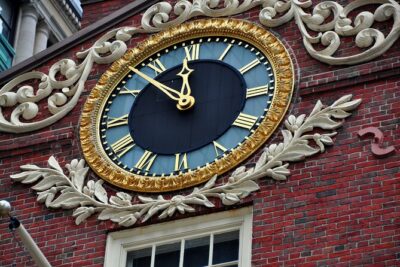
At the Old State House (built in 1713), the story turns into a timeline you can feel. It started under British control, then shifted to American control in 1775.
This stop is about 5 minutes, but the guide usually uses it to connect earlier civic spaces to the moment Boston’s power balance changed hands. It is one of those fast stops that still leaves a lasting mental image.
Boston Massacre site: when engraving made history spread
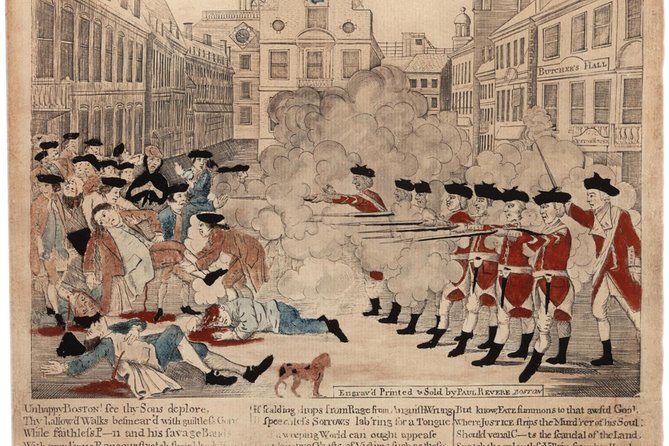
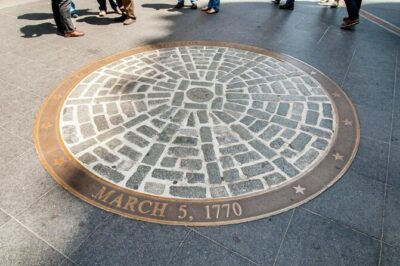
You then reach the Boston Massacre site (about 10 minutes). The core facts are clear: in 1770, five Americans were killed by British soldiers, and Paul Revere made a famous engraving of the site.
This stop is powerful because it shows how history traveled. You are not just hearing about violence—you are hearing about how the story was carried forward and turned into public persuasion.
Faneuil Hall Marketplace: the tour’s landing point
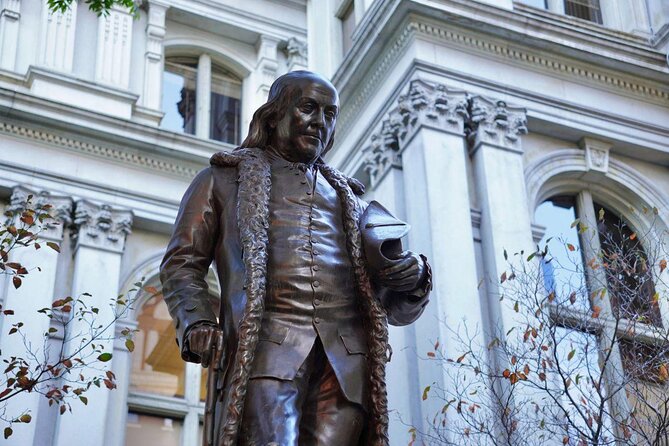
Finally, you end at Faneuil Hall Marketplace (about 5 minutes at the conclusion). The guide ties things together by focusing on Faneuil Hall’s role in the revolutionary era. The marketplace is also home to a statue of Samuel Adams, a key founder figure in the revolution story.
This ending is practical: you finish where it is easy to eat and wander next, not at some remote corner. In other words, the tour ends cleanly and does not steal your whole day.
The period-costumed guide: why this format lands for most people
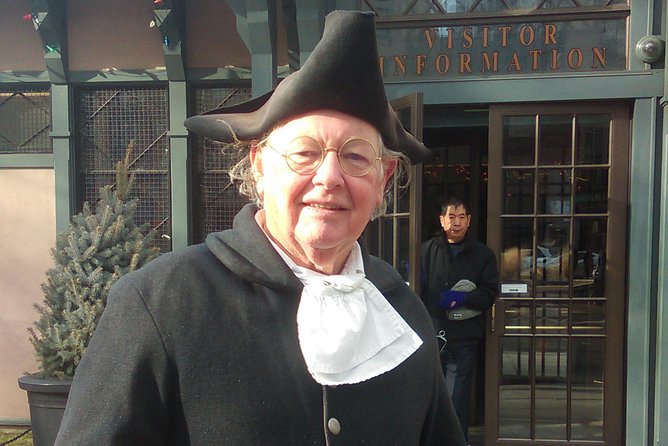
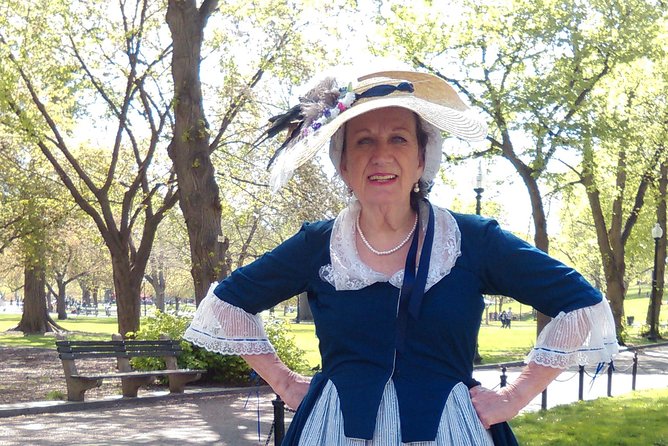
The main difference on this tour is the character-style, period-dress approach. The guide talks as you walk, which helps you keep the timeline straight. It also makes the history feel less like memorizing names and more like watching a story unfold through real locations.
The tone also matters. Multiple guides are praised for mixing humor with accuracy, which is a real plus when you are standing on busy sidewalks for 90 minutes. Names you may hear connected to this style include Thomas, James Otis (sometimes referenced as the Handsome Man), Steven, and Jeff—each described as witty, fast, and strong on details.
That said, character-guided tours are not for everyone. If you want deep museum-style reading or long quiet time inside buildings, a shorter walk can feel like a highlight reel. The value here is perspective and momentum. You leave knowing what to chase next.
Price and value: why $30 can work (if you use the time well)
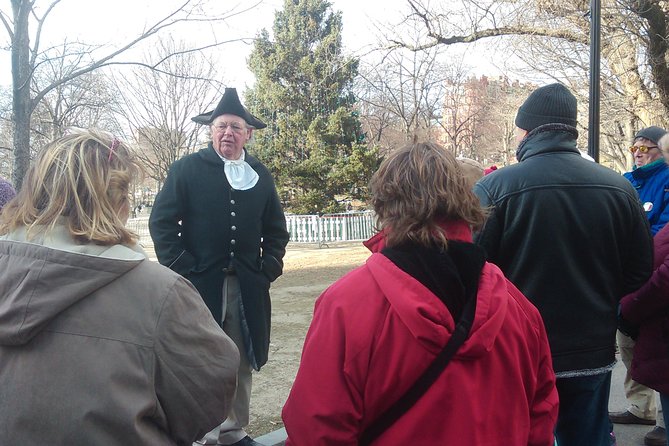
At $30 per person for about 1 hour 30 minutes, this is priced as an efficient orientation experience. You get three things that usually cost extra when you do it solo: a professional guide, structured stops, and admission tickets included at the stops on this route.
The biggest value is time. The Freedom Trail can take hours if you wander and second-guess where to start. This option gives you a guided sequence that hits major anchors without asking you to build a whole itinerary. If you only have a day in downtown Boston, this is a good way to get history context while still leaving plenty of time for food, neighborhoods, and more casual sightseeing.
Logistics that actually matter: shoes, hearing, weather
Plan for a walking day, even if it feels easy. Wear comfortable shoes, and dress for the weather since the tour requires good conditions. One practical point: you may get light drizzle sometimes, so check forecasts and be ready.
For hearing, the tour uses a microphone. Still, the city’s noise is real. If you have any hearing challenges or you just hate missing details, position yourself closer to the guide and stay attentive in the quieter pauses between streets.
Service animals are allowed, and the tour is designed so that most people can participate. If you are traveling with a child on a tighter schedule, one review specifically highlighted that the tour worked well for a high-functioning autistic child—mainly because the route is not overly long and stays focused.
What to do right after: making the most of the ending at Faneuil Hall
Since the tour ends at Faneuil Hall Marketplace, your next step is easy: grab a bite nearby and keep wandering. One guide’s tip that showed up in the tour style is stopping for lobster rolls at Legal Sea Foods. If you want to pivot from civic history to food and street life, you can also head toward the North End area after the tour, where you will find plenty of places to eat and window-shop.
The point is simple: you are not stuck. The tour ends in a high-energy zone that makes it easy to stay in motion without rushing.
Should you book this Freedom Trail walk?
Book it if you want a focused, guided introduction to Boston’s revolutionary-era story in about 90 minutes. This is especially smart for time-tight trips, first-timers who want context, and history lovers who like strong storytelling with a period-costumed guide.
Skip it or consider a longer option if you want to spend more time inside buildings, you hate standing, or you feel strongly about hearing every word from the back of a group. Also, if you only want the biggest “battle moment” sites and not the education and church stops, you might prefer a route that stays tighter to those themes.
Bottom line: for $30, the combination of a costumed guide, included admissions, and a short route that covers the most important Freedom Trail anchors makes this a solid value—provided you show up ready to walk and listen.
FAQ
How long is the Freedom Trail walk?
It lasts about 1 hour 30 minutes (approx.).
How much does the tour cost?
The price is $30.00 per person.
Where do I start and where does the tour end?
The tour starts at 139 Tremont St, Boston, MA 02111 and ends at Faneuil Hall Marketplace, Boston, MA 02109.
Is the tour offered in English?
Yes, it is offered in English.
Are admission tickets included?
Yes. Admission tickets are included for the stops listed on the route.
What happens if the weather is poor?
The experience requires good weather. If it is canceled due to poor weather, you will be offered a different date or a full refund.
On Foot Through Old Boston


More of the Boston Ledger



Follow the Red Bricks Further
New on the Boston Docket
- Boston to Newport Mansions Private Day Trip
★ 5.0 · 3 reviews - Boston Massachusetts Private Photography Tour
★ 5.0 · 3 reviews - Homemade Dumplings 101 in Boston
★ 3.5 · 3 reviews - Self-Guided Audio Tour of Boston North End
★ 4.5 · 3 reviews - Old Boston: Beacon Hill & Back Bay Walking Tour in French
★ 4.7 · 3 reviews
Freedom Trail & Revolution Walks, compared.
 ★ 5.0Freedom Trail History Small Group Walking TourFrom $356,450 reviews
 ★ 4.5Boston Freedom Trail Walking Tour with Costumed GuideFrom $262,531 reviews
 ★ 4.5Boston Tea Party Ships and Museum AdmissionFrom $352,512 reviews
 ★ 5.0The Full Revolutionary Story Epic Small Group Boston Walking TourFrom $552,356 reviews
 ★ 4.8Boston Tea Party Ships and Museum Interactive TourFrom $351,926 reviews
 ★ 5.0Boston Food & History: Pizza, North End & Freedom TrailFrom $901,772 reviews
 ★ 4.9Boston’s Freedom Trail: A Revolutionary Walking TourFrom $311,748 reviews
★ 4.9Freedom Trail History Small Group Walking TourFrom $351,590 reviews
★ 4.9Boston’s Freedom Trail: A Revolutionary Walking TourFrom $311,748 reviews
★ 4.9Freedom Trail History Small Group Walking TourFrom $351,590 reviews
Browse the lists this tour appears in