
REVIEW · FREEDOM TRAIL & REVOLUTION WALKS
Small Group Revolutionary Tour of Lexington, Concord, and Boston
Paul Revere’s story becomes real fast. This small-group route links Boston, Lexington, and Concord with a clear, start-to-finish timeline of the American Revolution, from the lantern signal to the first major battles. You’ll ride in an air-conditioned vehicle, then walk short stretches at key sites with a guide who keeps the events in order.
I really like two things about this tour. First, the itinerary builds a continuous chain of events, so you don’t just see monuments—you understand what happened next and why it mattered. Second, the stops include both famous icons and specific “this is the place” locations, like the Old North Church lantern site and the Lexington Battle Green.
One drawback to plan for: this day is long. Expect about 7 to 9 hours, and while the walking is generally manageable, it can still add up across many stops. If you’re sensitive to long sitting in a car or prefer a slower pace, you may want to prepare with breaks and layers.
In This Review
- Key points that make this tour worth your time
- Paul Revere Mall and Old North Church: where the lantern story starts
- The Midnight Ride route to Lexington: from Hancock and Adams to the first shot
- Concord and the North Bridge: the shot heard around the world
- Concord free time and the Concord Museum’s real lantern artifact
- Hartwell Tavern, the Nelson House site, and the Battle Road Trail
- Cambridge Common and Wadsworth House: Washington takes command
- Bunker Hill Monument and the timing phrase you hear everywhere
- Price and what feels like value at $225
- What you should do before you go
- Who this tour suits best
- Should you book this Lexington, Concord, and Boston Revolutionary tour?
- FAQ
- How long is the tour?
- What does the tour cost?
- What’s included in the price?
- Is lunch provided?
- Where does the tour start and end?
- How many people are in the group?
- Is free cancellation available?
Key points that make this tour worth your time
- A tight Revolutionary timeline that moves from Boston to Lexington to Concord without losing the thread
- Old North Church included with the famous lantern signal setting the tone for the whole day
- Real artifacts at Concord Museum, including the lantern from the Old North Church story
- Multiple “exact location” moments, like the capture site and the North Bridge
- Small group size (max 9), which makes it easier to ask questions and hear explanations
- Lunch not included, but you get free time in Concord to handle it your way
Paul Revere Mall and Old North Church: where the lantern story starts
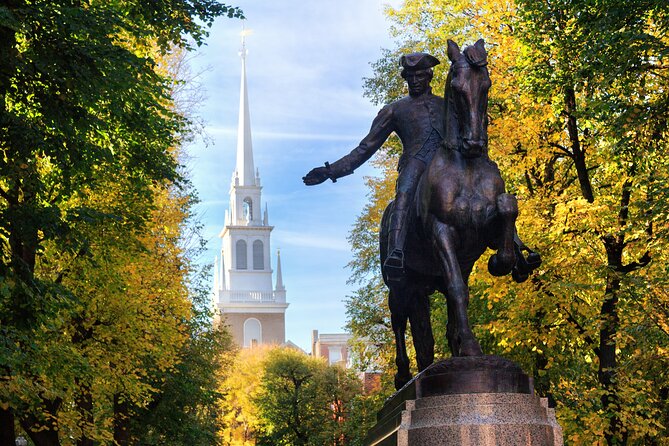
The tour begins at the Paul Revere Mall, right by the Paul Revere statue, with the Old North Church as a visual anchor. Even before you start learning details, this is a smart way to set the scene: you’re standing in the same neighborhood where the British threat felt close and where information traveled fast.
You’ll get a quick look at colonial life in the North End on the eve of the American Revolution. That matters because it helps you understand that these were real people dealing with fear, rumor, and political tension—not characters in a textbook.
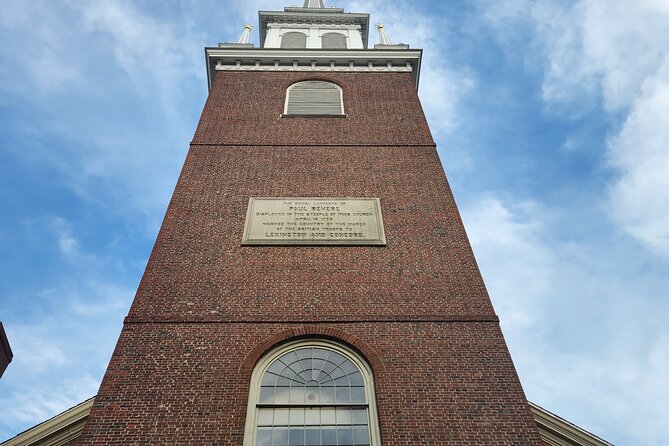
Then you move into Old North Church & Historic Site. This stop is a highlight for me because it connects a dramatic moment to a real building. The church is described as the oldest church in Boston, and it’s tied to the famous lantern signal: one if by land, two if by sea. The idea works best when you see the physical setting, not just the phrase.
Practical note: this is an indoor/outdoor mix area. You’ll want to keep your eyes open for how the guide connects the lantern signal to what happened on the ground afterward.
The Midnight Ride route to Lexington: from Hancock and Adams to the first shot
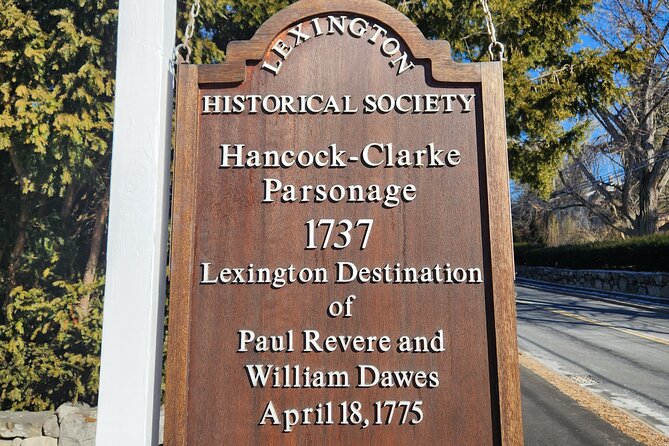
From Boston, the tour follows the actual route of Paul Revere’s Midnight Ride out toward Lexington, and the next key stop is the Hancock-Clarke House. This is the kind of place that makes history click. You’re not only learning the story; you’re looking at a specific location where Paul Revere warned John Hancock and Sam Adams about approaching British troops.
One reason I like this stop is that it turns the ride into a sequence of moments with clear consequences. Revere isn’t just “riding somewhere.” He’s delivering warnings that people act on—just not fast enough to prevent violence.
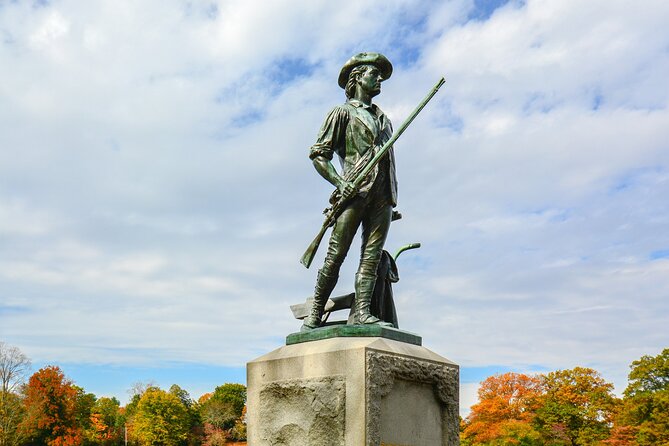
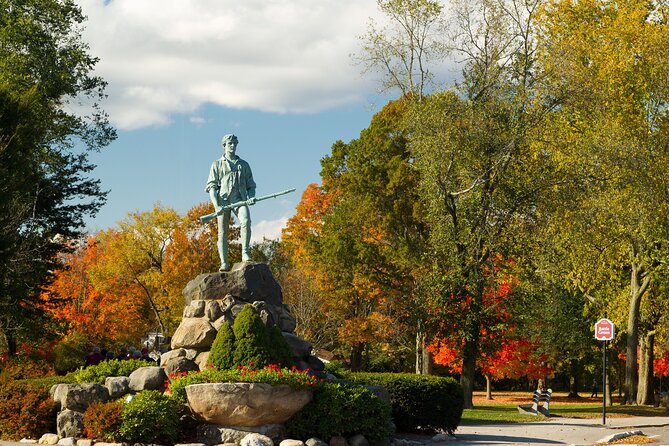
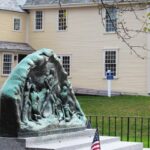
Next up is Lexington Green, tied to the Battle Green and the first shot of the American Revolution on April 19, 1775. Lexington Green can sound like a single famous spot, but the guide’s job here is to translate what you’re seeing into the reality of that morning—confusion, quick decisions, and the way small actions can snowball.
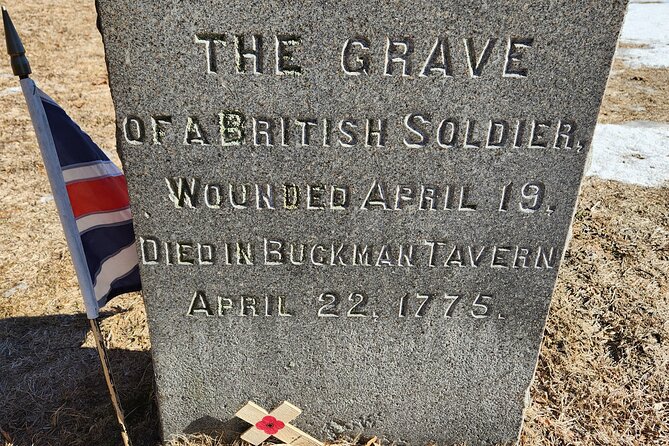
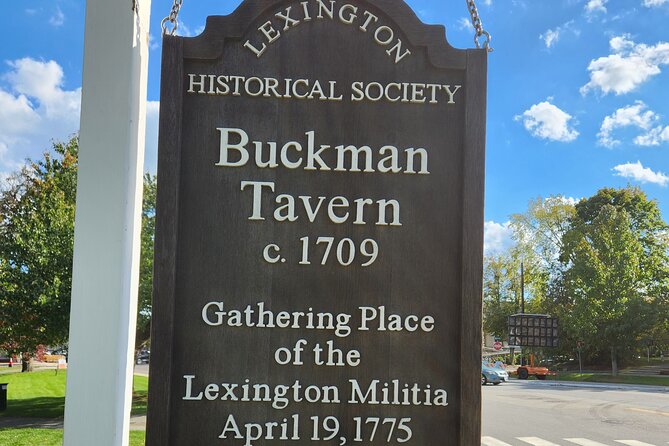
Right after that, you’ll stop at Buckman Tavern, a gathering place for colonists while they waited for the arrival of the British. Taverns like this are historically important because they weren’t just restaurants; they were information hubs and meeting points. If you’ve ever wondered how people managed to coordinate in an era without phones, this is one answer.
The stop at Paul Revere Capture Site then adds an extra layer. The tour doesn’t keep the story heroic. It shows the turning point where Revere was captured by the British. Seeing both the warning moment and the capture moment helps you understand how quickly plans can change.
If you like story structure, this section is where the tour really earns its keep: it’s not random sightseeing—it’s the action moving forward.
The red brick line keeps going. More Trail walks here
Concord and the North Bridge: the shot heard around the world
Once you head to Concord, the tour tightens the focus on key “turning point” locations. The Old North Bridge is one of them, and it’s where you’ll hear how the phrase the shot heard ’round the world connects to what happened on the ground.
This stop works especially well because it’s simple: you stand at a specific crossing, and then the guide explains the significance in plain terms. You’re not trying to memorize dates while craning your neck. You’re hearing why this location became symbolic far beyond its immediate surroundings.
Then you’ll visit Old Hill Burying Ground, which gives you a clever perspective shift. Instead of looking only through the eyes of the Americans, you’ll learn about what the British officers could see from this point. There are also entertaining stories tied to how Concord residents hid war supplies from being found. That’s one of the tour’s strengths: it balances high drama with human details that make the day feel more real.
This whole Concord stretch is a good reminder that the Revolution wasn’t one big heroic moment. It was hours of movement, hiding, searching, and choices made by ordinary people under pressure.
Concord free time and the Concord Museum’s real lantern artifact
After the historic sites, the tour gives you free time for lunch and shopping in Concord. This is one of the smartest parts of the schedule because it lets you refuel without being stuck on a tight timeline with a set meal. Lunch isn’t included, so you’ll want to plan for it here (snacks also aren’t included). If you prefer to keep your day moving, Concord’s shop options can work well during this block.
Then you head to the Concord Museum, where admission is included. This is where the tour shifts from sites into objects, and that change is genuinely useful. You’ll see the real lantern that hung in the Old North Church on the night of April 19, 1775, plus many preserved real artifacts from the Revolution.
I like museums after walking outdoors because your brain gets a chance to slow down and make connections. The museum section also gives you something memorable to take home: the physical proof of stories you’ve probably heard for years.
If you’re the type who hates rushing through indoor stops, you’re in luck here. You get about 45 minutes at the museum, which is enough to look around without feeling panicked.
Hartwell Tavern, the Nelson House site, and the Battle Road Trail
After Concord Museum, the tour continues with more “on-the-ground” locations tied to the aftermath and movement of troops. At Hartwell Tavern, you’ll see the best preserved stretch of the Battle Road Trail and learn about the bloody retreat of the British from Concord.
Retreat is a word people skip in casual history talk, but it’s crucial. This is the moment when the situation changes from attack to disorder, and the terrain becomes part of the story. A preserved road stretch helps you picture how fast things went and why it was so hard to control events.
Next is the Thomas Nelson Jr. House Site. This stop emphasizes colonists getting revenge for earlier casualties at Lexington Battle Green. You’ll stand in a forrested area to take in the setting and the feel of the place—an important reminder that battles happen where people live, travel, and hide.
The guide’s challenge here is to make the landscape readable without turning it into pure scenery. Even with only about 15 minutes, this stop can leave you with a stronger understanding of why certain places mattered strategically.
Then comes Munroe Tavern, driven by rather than a long stop. It was used by the British as a field hospital and headquarters on April 19th, 1775. The tour also notes that George Washington stayed at the tavern on his commemorative tour of Lexington.
That Washington link is a helpful “bookend” idea: the day’s violence isn’t just the Revolution’s beginning. The story continues into commemoration and national memory.
Cambridge Common and Wadsworth House: Washington takes command
The day then folds into Cambridge and Boston, where the story shifts from fighting in the field to command and organization.
At Cambridge Common, you’ll see the exact spot where George Washington first assumed command of the Continental Army. This isn’t about heroic posture—it’s about structure. If Lexington and Concord show the spark, Washington’s command shows what the spark became.
The tour also drives by Wadsworth House, where Washington lived for six months while commanding the colonial army out of Harvard University. Even though this is a drive-by, it’s still valuable because it grounds the revolution in specific buildings and real logistical decisions.
You get a sense that leadership wasn’t just theory. People stayed somewhere, planned somewhere, and wrote and organized from physical places.
Out to the battle greens, more ways to go
- 90-Min Narrated Trolley Tour of Lexington and Concord, MA★ 4.5 · 358 reviews
- From Boston: Full-Day Historical Lexington & Concord Tour★ 4.8 · 111 reviews
- Lexington & Concord 250th Birthday Tour with Concord Museum Entry★ 4.5 · 83 reviews
- Lexington, MA Battle Green Walking Tour with Costumed Guide★ 5.0 · 59 reviews
- Lexington & Concord 3 hour private tour from Boston★ 5.0 · 31 reviews
Bunker Hill Monument and the timing phrase you hear everywhere
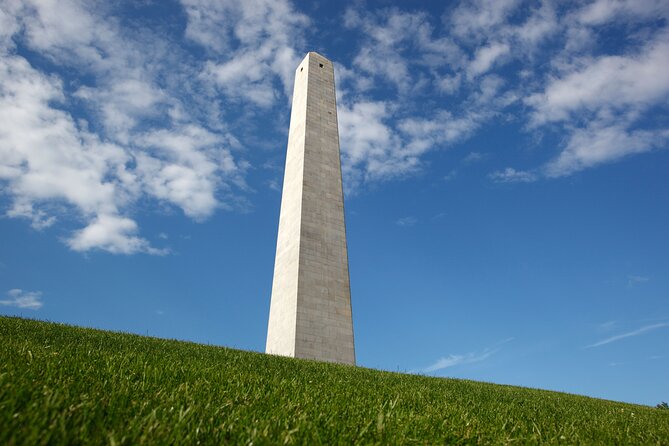
The final major stop is Bunker Hill Monument, where you’ll learn about the first official battle of the American Revolution. You’ll also hear the story behind the famous line don’t fire until you see the white’s of their eyes.
This moment is one of the tour’s best closing acts. It ties the day’s earlier moments—warning, searching, first shots—to an event that helped shape how the conflict would be remembered. You’ll also leave with a sense of why the British faced fierce resistance and why the Americans were ready to fight even under pressure.
Bunker Hill can feel like a standalone “end point” on other tours. Here, it works better because you’ve been walking through the timeline all day.
Price and what feels like value at $225
At $225 per person, the value depends on what you want from the day.
Here’s what’s included that matters in practice:
- Air-conditioned vehicle for a long day across towns
- Fuel surcharge and parking fees (which is often where “cheap tours” quietly get expensive)
- Bottled water
- Admission included at Old North Church and Concord Museum
What’s not included:
- Lunch and snacks
For $225, I’d call it fair if you want guided clarity and less guesswork. You’re getting a route that stitches together many separate sites that would be harder to coordinate on your own in one day—especially when you also want explanations that keep the timeline straight.
Also, the small group size (max 9) is part of the value. In a big group, you can lose the story. In a smaller one, the guide can pace the stops so you actually absorb them.
What you should do before you go
This tour is built for a moderate physical fitness level, so don’t plan for zero walking. Even though many stops are short, you’ll be moving through outdoor areas and spending time standing and looking around.
My practical checklist:
- Wear comfortable shoes with grip. You’ll step on uneven sidewalks and outdoor paths.
- Bring a layer. You’ll be switching between car A/C and outdoors.
- Plan your lunch ahead of time in Concord, since lunch isn’t included.
- Keep a phone charged. The tour uses a mobile ticket, and you’ll want it handy.
Who this tour suits best
This works best if you want:
- A day that’s history with order, not random stops
- A mix of iconic sites and specific locations tied to named people
- The kind of tour where artifacts (like the Old North lantern) support what you just saw outside
If you already know every detail of the Revolution and only want museums, you might feel the pacing is “fast.” But if you’re the kind of traveler who wants to understand the storyline, this is a strong fit.
It also suits people who like asking questions. With a maximum of 9 travelers, there’s more room for back-and-forth.
Should you book this Lexington, Concord, and Boston Revolutionary tour?
Yes—if you want a guided day that connects the Revolution’s key beats from start to finish, you’re likely to enjoy this one. The best part isn’t any single monument. It’s how the tour ties together the lantern signal, the warning at Hancock-Clarke House, the first shot at Lexington Green, Concord’s key sites, and then Washington’s command moments.
If you’re set on flexible touring only, skip it. If you prefer a long, structured day with a small group and clear explanations, this is a solid choice.
FAQ
How long is the tour?
It runs about 7 to 9 hours.
What does the tour cost?
The price is $225.00 per person.
What’s included in the price?
Included items are bottled water, an air-conditioned vehicle, fuel surcharge, and parking fees. Admission is included at Old North Church and Concord Museum.
Is lunch provided?
No. Lunch and snacks are not included, but you do get free time in Concord for lunch and shopping.
Where does the tour start and end?
You start at the Paul Revere Statue, Paul Revere Mall, Boston, MA 02113. The tour ends at 600 Commercial St, Boston, MA 02109. Your guide can also drop you off in the North End or your hotel within 1.5 miles of the North End.
How many people are in the group?
The tour has a maximum of 9 travelers.
Is free cancellation available?
Yes. You can cancel for a full refund up to 24 hours in advance of the experience start time.
More of the Boston Ledger




Where the First Shots Fired

Follow the Red Bricks Further
New on the Boston Docket
- Boston to Newport Mansions Private Day Trip
★ 5.0 · 3 reviews - Boston Massachusetts Private Photography Tour
★ 5.0 · 3 reviews - Homemade Dumplings 101 in Boston
★ 3.5 · 3 reviews - Self-Guided Audio Tour of Boston North End
★ 4.5 · 3 reviews - Old Boston: Beacon Hill & Back Bay Walking Tour in French
★ 4.7 · 3 reviews
Freedom Trail & Revolution Walks, compared.
 ★ 5.0Freedom Trail History Small Group Walking TourFrom $356,450 reviews
 ★ 4.5Boston Freedom Trail Walking Tour with Costumed GuideFrom $262,531 reviews
 ★ 4.5Boston Tea Party Ships and Museum AdmissionFrom $352,512 reviews
 ★ 5.0The Full Revolutionary Story Epic Small Group Boston Walking TourFrom $552,356 reviews
 ★ 4.8Boston Tea Party Ships and Museum Interactive TourFrom $351,926 reviews
 ★ 5.0Boston Food & History: Pizza, North End & Freedom TrailFrom $901,772 reviews
 ★ 4.9Boston’s Freedom Trail: A Revolutionary Walking TourFrom $311,748 reviews
★ 4.9Freedom Trail History Small Group Walking TourFrom $351,590 reviews
★ 4.9Boston’s Freedom Trail: A Revolutionary Walking TourFrom $311,748 reviews
★ 4.9Freedom Trail History Small Group Walking TourFrom $351,590 reviews
Browse the lists this tour appears in