

REVIEW · FREEDOM TRAIL & REVOLUTION WALKS
Public Authentic Revolutionary Boston Walking Tour
The Revolution starts on a city park. This Public Authentic Revolutionary Boston Walking Tour connects familiar Boston landmarks to 21st-century questions, with fresh research and guides who can adapt to your interests. My only caution is that a few major stops—King’s Chapel, Old South Meeting House, and Old State House—have separate admission if you want to go inside.
You’re looking at about 1 hour 30 minutes to 2 hours, walking from Boston Common toward the Haymarket area. I like that the group is capped at 16 people, so you can ask questions without shouting over a crowd. One more practical thing: the route may run a little longer or shorter depending on walking pace and time.
This tour is built to help you think, not just memorize dates. It’s designed for modern audiences, with an inclusive story line and a focus on active citizenship and critical thinking. Guides also bring strong personalities—Adam comes up in reviews as funny, patient, and very easy to talk to.
In This Review
- Key highlights worth planning around
- Boston Common to Haymarket: a 90-minute timeline you can walk
- What makes the Revolution story feel current: civics and critical thinking
- Guides like Adam: humor, patience, and room for your questions
- Stop 1: Boston Common and why an old park signals bigger ideas
- Stop 2: Granary Burying Ground and the power of the overlooked details
- Stop 3: King’s Chapel—international reach, pause outside, optional entry
- Stop 4: Old South Meeting House—Boston Tea Party origins plus broader meaning
- Stop 5: Old State House and the legacy of the Boston Massacre
- The Boston Massacre spot without traffic stress
- Revolutionary meeting space, a marketplace, and British armory—and more
- The lantern-era church and the paradox of freedom and bondage
- Value check: $45 for guided meaning, plus optional museum doors
- Who this walk is for—and who might prefer a different plan
- Should you book the Public Authentic Revolutionary Boston Walking Tour?
- FAQ
- How long is the walking tour?
- How much does the tour cost?
- Where does the tour start and end?
- What’s included in the tour ticket?
- Do I need separate tickets for the museums or sites on the route?
- How big are the groups?
- Can I cancel for a full refund?
Key highlights worth planning around

- A tight 1.5–2 hour route from Boston Common Visitors Center to Haymarket
- Small group size (max 16) for better conversation and pacing
- Fresh, inclusive framing of Revolution-era figures and places
- Guides like Adam who mix clarity, humor, and patience
- Outdoor-first stops with optional museum entry when separate tickets are needed
- A smart flow through key locations, including the Boston Massacre area without getting stuck in traffic
Boston Common to Haymarket: a 90-minute timeline you can walk
Boston’s Revolution story can feel like it’s scattered across plaques, museums, and street corners that tourists speed past. This tour solves that problem by moving you through a sequence of places that make the ideas easier to hold onto. You start at the Boston Common Visitors Center (139 Tremont St) and end in the Haymarket area (100 Hanover St), with the walking designed to fit into about two hours.
Because the group is limited to 16 people, the pacing feels more human than group-bus tourism. You can also get answers to the questions you actually care about, whether that’s the people behind the headlines or how the city’s geography shapes what happened.
Also, it’s a mobile ticket experience, so you’re not hunting for paper vouchers. That matters in Boston, where you’ll often be moving quickly between subway stops, sidewalks, and historical sites.
What makes the Revolution story feel current: civics and critical thinking

The biggest thing I like about this tour is the mindset it builds. It doesn’t treat the American Revolution like a sealed museum exhibit. Instead, it keeps circling back to what the Revolution means for modern life—history that stays relevant in the 21st century.
You’ll also get a story that’s designed to be diverse and inclusive, not one-track. The framing focuses on iconic figures and places, but with “new research” energy—ideas that are updated rather than recycled. That’s especially useful if you’ve visited Boston before and feel like you already know the standard soundbites.
Finally, the tour aims at active citizenship and critical thinking. In plain terms: you should walk away more able to ask good questions about how power, rights, and community decisions work—then apply that thinking to today.
The red brick line keeps going. More Trail walks here
Guides like Adam: humor, patience, and room for your questions
Guides can make or break a walking tour. This one leans hard on guides who are described as passionate, articulate, and professional, with an affable, charismatic style. The tour also claims guides can customize to your needs, and that matches what good guides do best: they respond to your questions and adjust the emphasis.
In the reviews, Adam is repeatedly singled out as a standout. He’s praised for being very knowledgeable, but just as importantly for being patient and funny, which helps when you’re standing outside for multiple stops. One detail I appreciate from the feedback: he’s not just reading facts. He’s also making time for interaction and for the little “lesser-known facts” that usually don’t make it into quick self-guided tours.
If you like learning with a guide who can explain complex ideas without turning it into a lecture, this is a strong match.
Stop 1: Boston Common and why an old park signals bigger ideas
Boston Common is where the tour begins, and it sets the tone immediately. This oldest public park in the US is also a symbolic site tied to America’s cultural founding, so it’s more than scenery. It’s a place where the tour can anchor you before moving into the details of the Revolution.
You’ll spend about 15 minutes here, and the admission is free. That’s a nice way to start: you get context without feeling like you’re paying again for your first stop. It also gives you a chance to orient your brain—Boston’s map can be confusing at first, and this helps you see the route as a connected story rather than a checklist.
Stop 2: Granary Burying Ground and the power of the overlooked details
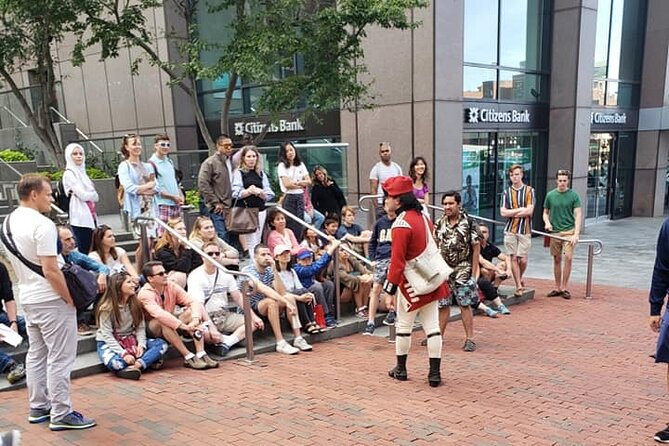
Next up is Granary Burying Ground, another free stop with admission included in the “no extra cost” department. The emphasis here isn’t just on the location—it’s on the lesser known details of one of Boston’s oldest cemeteries.
A cemetery can sound heavy, and it can be. But on a tour like this, it becomes part of the larger argument: how communities remember people, and how those memories shape civic identity. You’ll get about 10 minutes, which is long enough for context without dragging you through a full self-guided museum pace.
This stop is also a reminder that the Revolution story isn’t only about battles. It’s about people, reputations, and how later generations interpret what earlier choices meant.
Stop 3: King’s Chapel—international reach, pause outside, optional entry
King’s Chapel is where the tour widens your lens beyond a single street-level story. The point here is that it’s more than a beautiful church building; it’s presented as reflecting the international scope of the Revolution in Boston.
You’ll pause and speak outside (about 8 minutes). Entrance into the chapel requires a separate private ticket, which is a key planning note. So go into this expecting two possible experiences:
- If you only want the outside explanation, you’re good with what the walking tour provides.
- If you want to step inside, you’ll need to budget for that separate admission.
If you enjoy moments where the guide reframes a famous location with a larger perspective, this stop tends to land well.
Boston was built for walking. More routes
- Boston: Freedom Trail History Small Group Walking Tour★ 5.0 · 6,450 reviews
- Harvard University Campus Guided Walking Tour★ 4.5 · 3,632 reviews
- Boston Freedom Trail Walking Tour with Costumed Guide★ 4.5 · 2,531 reviews
- The Full Revolutionary Story Epic Small Group Boston Walking Tour★ 5.0 · 2,356 reviews
- Boston’s Freedom Trail: A Revolutionary Walking Tour★ 4.9 · 1,748 reviews
Stop 4: Old South Meeting House—Boston Tea Party origins plus broader meaning
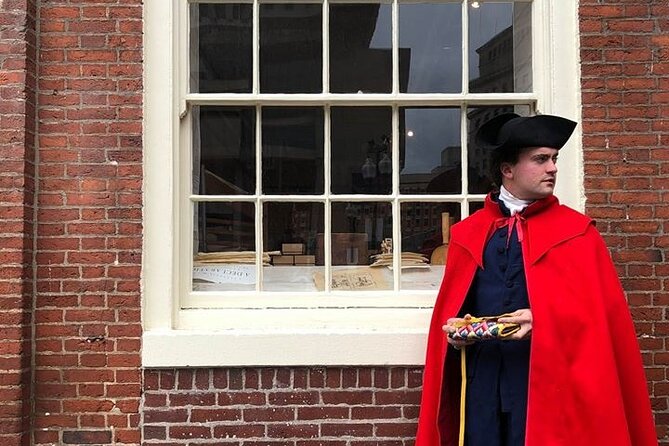
Old South Meeting House is one of the Revolutionary-era anchors visitors recognize, and the tour uses that familiarity as a jumping-off point. The building is described as spawning the Boston Tea Party, but the tour pushes for its broader significance too.
Again, plan on pausing and speaking outside for about 8 minutes. Like King’s Chapel, entrance into the meeting house requires a separate private ticket.
Here’s how I think about this as a value decision: the walk still gives you the story and context even if you don’t buy separate entry. But if you’re the type who likes to see interiors, displays, or curated exhibits, then it’s worth adding the extra ticket so you don’t feel like you missed the “inside perspective.”
Either way, this stop is one of the points where you’ll likely start connecting the Revolution story to how public meetings and decisions were made.
Stop 5: Old State House and the legacy of the Boston Massacre
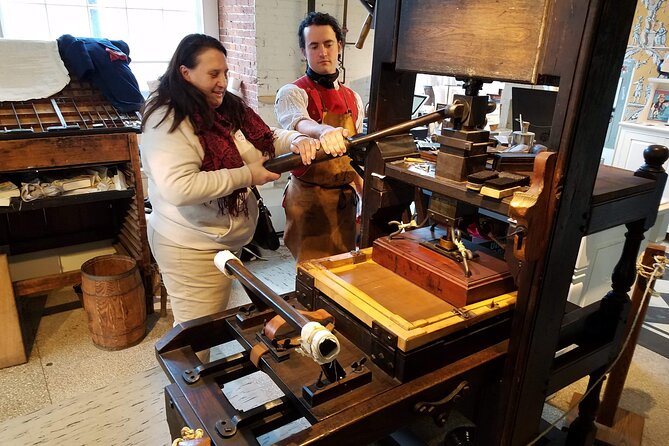
Old State House is the tour’s stop for the Boston Massacre. The tour describes it as the city’s leading site covering the diverse story and legacy of the massacre, and the framing matters: it isn’t just about the event itself, but how its meaning rippled forward.
You’ll pause and speak outside for about 6 minutes. Entrance into the State House requires a separate private ticket, so the same “inside is optional” rule applies.
One reason I like the structure here is pacing. By the time you reach Old State House, you’ve already built some context from the earlier stops. So when you arrive, the guide can focus on interpretation and “why it matters,” rather than starting from scratch.
The Boston Massacre spot without traffic stress
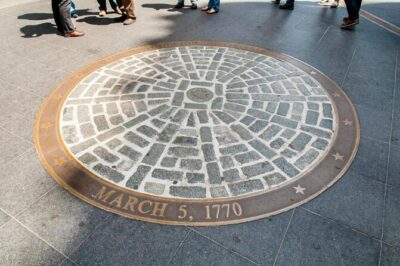
After Old State House, the tour walks over the spot of the infamous Boston Massacre—but with a practical promise: don’t stay in traffic. That matters in a city center where sidewalks are crowded and intersections can swallow time fast.
This segment is the kind of moment that helps you make history feel physical. You’re not just hearing about the past from a distance. You’re moving through the same general geography the story depends on, and the guide’s timing helps you keep the flow instead of getting stuck waiting for the right corner.
If you’ve ever done tours where you lose the thread while searching for the next stop, this is the opposite. You keep momentum.
Revolutionary meeting space, a marketplace, and British armory—and more
Not every tour is honest about what happens between “big” stops. This one includes those connective moments: a Revolutionary meeting space, a marketplace, a British armory, and more along the way.
The goal is simple: these in-between locations help you understand the Revolution as part of everyday urban life, not just a parade of famous addresses. When your guide points out how different spaces functioned—where people gathered, where commerce ran, where power was organized—it’s easier to understand why events unfolded the way they did.
Since the specifics of each additional location aren’t listed as separate named stops here, you should think of this portion as guided context you’ll feel more than memorize. It’s the “street-level meaning” section.
The lantern-era church and the paradox of freedom and bondage
One of the most memorable parts of this tour is the stop at a church famous for lanterns that signaled the Revolution. The tour also highlights a harder theme: the paradox of freedom and bondage.
That pairing is important. It forces you to hold two truths at once—because historical change rarely comes without contradictions. A tour that can point you toward that tension does more than entertain; it helps you practice critical thinking with real examples.
You’ll spend time here (the tour description lists additional steps after Boston Massacre, including this lantern church stop), and it’s a good reminder that the Revolution story isn’t only about triumph. It’s also about who got included in the definition of freedom—and who didn’t.
Value check: $45 for guided meaning, plus optional museum doors
At $45 per person, this tour is priced in the mid-range for a walking experience with multiple stops and professional guides. The main value comes from what you’re paying for:
- A guide who interprets the sites, not just points at them
- A sequence of stops that helps you understand how the story connects
- A small group size that keeps interaction possible
You’ll also hit several free outdoor stops—Boston Common and Granary Burying Ground—so your money isn’t only going toward paid admission logistics. The route includes paid sites only if you choose to add separate private museum entry.
Where costs can change is when you decide to go inside King’s Chapel, Old South Meeting House, and Old State House. If you buy those extra admissions, your total trip cost rises. If you don’t, you can still get the core storytelling from the outdoor explanations.
My practical tip: if you’re trying to keep things tight on budget, consider touring the interiors only if the exhibits match what you want most. If you’re flexible, adding at least one interior can make the story feel more tangible.
Who this walk is for—and who might prefer a different plan
This is ideal if you want Boston’s Revolution story to feel relevant and human. It works especially well if you:
- Like guides who can explain ideas and take questions
- Prefer walking as your main “learning mode”
- Want an inclusive narrative with modern civic themes
- Enjoy hearing the kind of details that don’t show up on the first page of a guidebook
It may be less ideal if you don’t enjoy standing outside in traffic-prone city areas for short talks, or if you only want fully self-directed museum time. Since multiple major stops are described as outside pauses with optional entry, the tour is designed for interpretation on the street, not for long museum wandering.
If your goal is to see key Revolution spots quickly with a guide, this hits the sweet spot.
Should you book the Public Authentic Revolutionary Boston Walking Tour?
Book this tour if you want a structured way to connect Boston’s Revolution sites into a story you can actually use. The $45 price makes sense when you treat it as guided thinking plus a well-planned walk, not as a ticket bundle.
I’d especially recommend it if you care about how history shows up in modern life—through active citizenship, critical thinking, and an inclusive lens. And if you’re a fan of guides who bring humor and patience, the repeated praise for Adam is a good sign.
One decision rule to keep it simple: if you’re willing to handle separate admissions for select interiors, you’ll get the best-rounded experience.
FAQ
How long is the walking tour?
It runs about 1 hour 30 minutes to 2 hours.
How much does the tour cost?
The price is $45.00 per person.
Where does the tour start and end?
It starts at Boston Common Visitors Center, 139 Tremont St, Boston, MA 02111, and ends at Haymarket, 100 Hanover St, Boston, MA 02108.
What’s included in the tour ticket?
The guides are included. The walking tour is described as having a mobile ticket.
Do I need separate tickets for the museums or sites on the route?
Yes. Admission to King’s Chapel, Old South Meeting House, and Old State House is not included, and you would need separate private tickets if you want to enter.
How big are the groups?
The tour has a maximum of 16 travelers.
Can I cancel for a full refund?
Yes. You can cancel up to 24 hours in advance for a full refund.
On Foot Through Old Boston




More of the Boston Ledger



Follow the Red Bricks Further

New on the Boston Docket
- Boston to Newport Mansions Private Day Trip
★ 5.0 · 3 reviews - Boston Massachusetts Private Photography Tour
★ 5.0 · 3 reviews - Homemade Dumplings 101 in Boston
★ 3.5 · 3 reviews - Self-Guided Audio Tour of Boston North End
★ 4.5 · 3 reviews - Old Boston: Beacon Hill & Back Bay Walking Tour in French
★ 4.7 · 3 reviews
Freedom Trail & Revolution Walks, compared.
 ★ 5.0Freedom Trail History Small Group Walking TourFrom $356,450 reviews
 ★ 4.5Boston Freedom Trail Walking Tour with Costumed GuideFrom $262,531 reviews
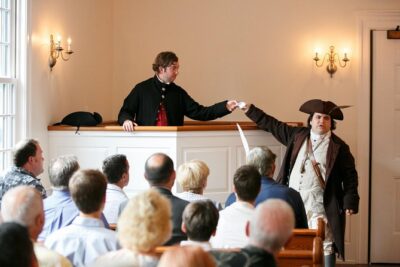 ★ 4.5Boston Tea Party Ships and Museum AdmissionFrom $352,512 reviews
 ★ 5.0The Full Revolutionary Story Epic Small Group Boston Walking TourFrom $552,356 reviews
 ★ 4.8Boston Tea Party Ships and Museum Interactive TourFrom $351,926 reviews
 ★ 5.0Boston Food & History: Pizza, North End & Freedom TrailFrom $901,772 reviews
 ★ 4.9Boston’s Freedom Trail: A Revolutionary Walking TourFrom $311,748 reviews
★ 4.9Freedom Trail History Small Group Walking TourFrom $351,590 reviews
Browse the lists this tour appears in