

REVIEW · FREEDOM TRAIL & REVOLUTION WALKS
PRIVATE Authentic Revolutionary Boston Walking Tour
A fake British uniform is optional, but the real context hits hard. This private Revolutionary Boston walking tour turns the usual historic stops into a story you can actually use in today’s world. I like how it stays focused on what you care about, not a one-size script, and how it connects the Revolution to questions we still argue about now.
I also love the guide style. Adam, for example, brings the history with humor and energy, and you can feel he’s prepared. The tour is built for a private group, so the pace and the angle can shift based on your questions.
One thing to consider: parts of the route touch several major sites where you may need to pay separately for indoor entry. You can still see plenty from outside, but if you’re hoping to go into every building, budget a bit extra.
In This Review
- Key Things You’ll Appreciate
- Why This Private Revolutionary Walk Feels Different
- Start Smart at Boston Common Visitors Center
- Stop 1: Boston Common and the Political Heartbeat
- Stop 2: Granary Burying Ground and the Radical Demographics Angle
- Stops 3 and 4: King’s Chapel and Old South Meeting House (Outside Views, Clear Context)
- King’s Chapel: International Scope, More Than a Pretty Church
- Old South Meeting House: The Boston Tea Party With Bigger Meaning
- Stop 5: Old State House and the Boston Massacre Legacy
- Stop 6: Faneuil Hall Marketplace (Revolution Meeting Space and Everyday Life)
- Stop 7: Old North Church and the Paradox of Freedom and Bondage
- Price and Value: Why $75 Can Make Sense
- The Guide Factor: Adam’s Period Flair and Real Preparation
- Mobile Ticket, Private Logistics, and Where the Tour Ends
- Who This Tour Fits Best
- Should You Book This Private Revolutionary Boston Walking Tour?
- FAQ
- How long is the private walking tour?
- Is the tour private?
- Does the price include admission to the churches and museums?
- Where does the tour start and end?
- Is it accessible for people who use mobility aids?
- What happens if the weather is bad?
Key Things You’ll Appreciate

- Private-group format means the route and pace can follow your interests
- Fresh research on famous figures and lesser-known angles of the Revolution
- External-first stops keep most of the walk ticket-light, with some indoor entrances extra
- Period-inspired guide touches like Adam’s British-uniform look, plus real wit
- Practical help including where to find the cleanest bathrooms in the city
Why This Private Revolutionary Walk Feels Different

Boston’s Revolution sites are famous, but the usual approach can be pretty scripted: walk, recite dates, move on. This tour works because it slows you down where it matters and builds meaning as you go.
For me, the biggest win is the way the story is framed for today. Instead of treating the Revolution as a museum exhibit, you get a set of questions to carry with you: Who benefited? Who was excluded? What does freedom mean when people are still trapped by power? That tone is useful whether you’re traveling with teens, grandparents, or just yourself and a stack of questions.
Second, the private setup changes everything about learning. You’re not shouting over a crowd, and you’re not stuck with the guide’s preferred emphasis. If you care more about religion, politics, protest, or the everyday people caught in big events, your guide can steer the conversation.
The humor helps, too. Adam’s period outfit and easygoing delivery make it feel more like a strong conversation on the street than a formal lecture.
Start Smart at Boston Common Visitors Center
The tour begins at Boston Common Visitors Center (139 Tremont St). That location is a good choice because it’s central, easy to find, and close enough to major transit options that you’re not burning time crossing the city just to start.
You also get a clean “reset point.” When you start at Boston Common, the Revolution story has an anchor. It’s not random. You’re standing in the one place that reads like the city’s political living room.
Timing-wise, plan for about 1 hour 30 minutes to 2 hours. That’s long enough to build momentum and cover meaningful stops, but short enough that you can still have a full afternoon afterward.
The red brick line keeps going. More Trail walks here
Stop 1: Boston Common and the Political Heartbeat
Boston Common is the oldest public park in the United States, and it’s more than a pretty meeting spot. In this tour, it functions like a symbol—one of the places where Boston’s political and cultural identity shows up early and often.
What I like here is that the guide doesn’t rush past it as scenery. You get the sense of scale and civic purpose. This is where the idea of public life takes physical form, which matters because the Revolution wasn’t only about battle tactics. It was about political community—who belongs, who speaks, and what public spaces should do for people.
Practical note: Admission for this park stop is free, and you’re typically just taking in the area rather than paying to enter anything at this point.
Stop 2: Granary Burying Ground and the Radical Demographics Angle

Next is Granary Burying Ground, one of Boston’s oldest cemeteries. This stop pays attention to details many people miss, especially when it comes to how the graves can reflect the people living at the time.
The tour frames this as more than genealogy. You’re invited to notice patterns: who is remembered, who is not, and what the choices around burial say about social status and community power. It’s a way of reading history without needing a textbook open in your lap.
Admission here is also free, and you’ll generally keep it brief (about ten minutes). That brief timing works well because the cemetery can feel heavy if you linger too long—so the guide gives you a focused experience rather than an endurance test.
Stops 3 and 4: King’s Chapel and Old South Meeting House (Outside Views, Clear Context)

This is where the tour makes an important distinction: some sites are best understood through their setting, not just inside rooms.
King’s Chapel: International Scope, More Than a Pretty Church
At King’s Chapel, the guide highlights that it’s not only an attractive stone Anglican church. It’s also a visible clue to how international the Revolution could be in Boston—how ideas, institutions, and networks traveled across borders.
You’ll pause and speak outside, which is helpful because it keeps the focus on context right in front of you. Inside entry is separate and not included, so if you want to go into the chapel itself, plan to buy that ticket separately.
Boston was built for walking. More routes
- Boston: Freedom Trail History Small Group Walking Tour★ 5.0 · 6,450 reviews
- Harvard University Campus Guided Walking Tour★ 4.5 · 3,632 reviews
- Boston Freedom Trail Walking Tour with Costumed Guide★ 4.5 · 2,531 reviews
- The Full Revolutionary Story Epic Small Group Boston Walking Tour★ 5.0 · 2,356 reviews
- Boston’s Freedom Trail: A Revolutionary Walking Tour★ 4.9 · 1,748 reviews
Old South Meeting House: The Boston Tea Party With Bigger Meaning
Then you hit Old South Meeting House, often associated with the Boston Tea Party. But the tour treats that famous moment as a starting point, not the whole story.
This is one of the best stops for people who want the Revolution to feel political instead of theatrical. You get the building’s significance in a broader frame—why meeting houses mattered, how gatherings turned into pressure, and how protest was organized through civic spaces.
Same deal on access: you can pause and talk outside, but entry into the meeting house requires a separate private ticket.
Tip that helps: If you’re the type who hates surprise costs, you’ll want to check ahead which sites you plan to enter. The tour structure keeps most of the walk outside-focused, but the indoor experiences are optional add-ons.
Stop 5: Old State House and the Boston Massacre Legacy

Next is the Old State House, where the tour focuses on the legacy of the Boston Massacre. Even if you’ve heard the story before, you’ll likely find it reads differently when framed through a civic lens.
This stop helps you see how public events can become political symbols quickly. A massacre is not only violence—it’s also messaging, fear, propaganda, and the story different groups tell afterward.
The tour keeps it short (around eight minutes), with the same external format: you pause near the intersection, and any indoor museum entry is not included.
If you want your trip to feel like more than a history reel, this is a stop that does that. It connects the event to how communities learn, argue, and remember.
Stop 6: Faneuil Hall Marketplace (Revolution Meeting Space and Everyday Life)

Faneuil Hall Marketplace is a fast stop, about five minutes, but it packs in a lot. It’s presented as a Revolutionary meeting space, but also a place with market energy and other practical roles in the city.
What I like about this kind of framing is that it stops the Revolution from feeling like it happened somewhere off to the side. It happened in places where people also bought, sold, worked, and talked.
The tour doesn’t ask you to treat history as a timeline you pass through. It encourages you to treat it as a set of real locations where people lived their normal days—then made extraordinary choices.
This stop is free for the external experience.
Stop 7: Old North Church and the Paradox of Freedom and Bondage
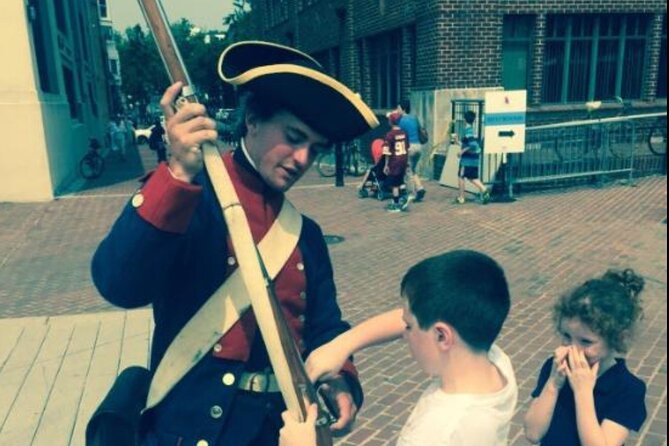
The last major stop is Old North Church & Historic Site, a standout for the lantern signal tied to the Revolution. The tour also brings in something heavier: the paradox of freedom and bondage in that era.
That contrast matters. A lot of Revolution storytelling can skim over who was free, who was promised liberty, and who was still trapped. Here, you get nudged to hold both truths at once: the courage of action and the reality of unequal systems.
As with other indoor sites, the tour format keeps you outside for the main discussion. Entrance into the church itself requires a separate private ticket.
This closing stop is often the one that sticks. It gives you something to think about after you leave the sidewalk—how freedom has always been a contested promise, not a single finished product.
Price and Value: Why $75 Can Make Sense
At $75 per person, this private walk is not a budget “group tour deal.” But it can be good value depending on what you want from your day.
Here’s why it can be worth it:
- It’s private. You’re paying for your group’s attention, not a shared mass experience.
- You get customization. If you’re the kind of traveler who hates generic stops, that alone can justify the price.
- Some admission is free. Several stops are external with free admission for your viewing, so you aren’t paying entry fees for every block you walk.
- Time-efficient learning. At 1.5 to 2 hours, you’re not losing half a day to history. You still get substantial context.
If you plan to enter every indoor site along the way, your total cost will climb because separate private tickets aren’t included for several museums. But if you’re happy with outside views plus strong commentary, the price feels more reasonable.
The Guide Factor: Adam’s Period Flair and Real Preparation
The reviews make one thing clear: the guides are a key part of the experience. Adam gets singled out for being well prepared and professional, with an outfit that adds a fun period flavor. He’s also described as funny, and that matters because humor keeps history from turning into a grind.
One detail that’s especially practical: the guide can help with mobility needs. One review mentions wheelchair navigation through historic Boston, which tells me the guide thinks about the physical reality of these streets, not just the script.
You’re also told the guide knows where the cleanest bathrooms are. That’s the kind of city know-how you can’t Google quickly when you’re walking and on a schedule.
Mobile Ticket, Private Logistics, and Where the Tour Ends
You’ll use a mobile ticket. That’s convenient because you’re not trying to manage paper while you’re walking.
The tour ends at Haymarket (100 Hanover St, Boston). The end point is customizable with private bookings. That’s a big deal in practice: if you’re pairing this tour with a later plan—Fenway, the waterfront, a lunch spot near North End—you’re more likely to finish close to what you want next.
And because it’s near public transportation, it’s easier to hop off afterward without a complicated plan.
Who This Tour Fits Best
I’d point you toward this tour if:
- You want Revolution history with real context, not just famous names.
- You like a guide who can adjust to your curiosity and your pace.
- You’re traveling as a private group—family, friends, school group, or small group of colleagues.
- You care about the Revolution story being diverse and inclusive, with attention to the people affected beyond the obvious headlines.
You might not love it as much if:
- You’re chasing a self-guided list of buildings and don’t want a guided conversation.
- You want a full inside museum crawl at every stop. This tour is built around external viewing, with indoor tickets separate at a few key places.
Should You Book This Private Revolutionary Boston Walking Tour?
Book it if you want Boston’s Revolution to feel current, human, and connected to big questions—not just dates and markers. The private format and guide approach make the difference, especially if you’re the type who asks why events happened, not only what happened.
Skip or adjust expectations if you’re strictly hunting for an all-in indoor museum route. Plan for optional extra tickets at select sites, and you’ll feel in control of your budget and your time.
If you want your walk through Boston to come with clarity and a little humor, this is a strong pick. And if you finish near Haymarket with your brain firing on history questions, that’s exactly the point.
FAQ
How long is the private walking tour?
The tour runs about 1 hour 30 minutes to 2 hours.
Is the tour private?
Yes. It’s a private tour/activity, so only your group participates.
Does the price include admission to the churches and museums?
It includes only external visits. Ticket costs for indoor entries at sites like King’s Chapel, Old South Meeting House, Old State House, and Old North Church are not included.
Where does the tour start and end?
It starts at Boston Common Visitors Center, 139 Tremont St, Boston, MA 02111. It ends at Haymarket, 100 Hanover St, Boston, MA 02108, and the end point can be customizable for private bookings.
Is it accessible for people who use mobility aids?
The experience notes that most travelers can participate, and one review specifically mentions wheelchair help from the guide.
What happens if the weather is bad?
The tour requires good weather. If it’s canceled due to poor weather, you’ll be offered a different date or a full refund.
On Foot Through Old Boston




More of the Boston Ledger



Follow the Red Bricks Further

New on the Boston Docket
- Boston to Newport Mansions Private Day Trip
★ 5.0 · 3 reviews - Boston Massachusetts Private Photography Tour
★ 5.0 · 3 reviews - Homemade Dumplings 101 in Boston
★ 3.5 · 3 reviews - Self-Guided Audio Tour of Boston North End
★ 4.5 · 3 reviews - Old Boston: Beacon Hill & Back Bay Walking Tour in French
★ 4.7 · 3 reviews
Freedom Trail & Revolution Walks, compared.
 ★ 5.0Freedom Trail History Small Group Walking TourFrom $356,450 reviews
 ★ 4.5Boston Freedom Trail Walking Tour with Costumed GuideFrom $262,531 reviews
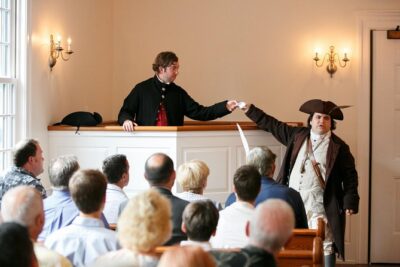 ★ 4.5Boston Tea Party Ships and Museum AdmissionFrom $352,512 reviews
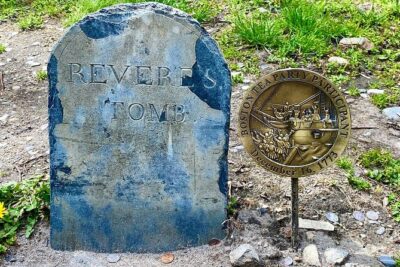 ★ 5.0The Full Revolutionary Story Epic Small Group Boston Walking TourFrom $552,356 reviews
 ★ 4.8Boston Tea Party Ships and Museum Interactive TourFrom $351,926 reviews
 ★ 5.0Boston Food & History: Pizza, North End & Freedom TrailFrom $901,772 reviews
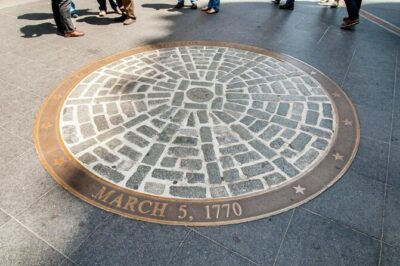 ★ 4.9Boston’s Freedom Trail: A Revolutionary Walking TourFrom $311,748 reviews
★ 4.9Freedom Trail History Small Group Walking TourFrom $351,590 reviews
★ 4.9Boston’s Freedom Trail: A Revolutionary Walking TourFrom $311,748 reviews
★ 4.9Freedom Trail History Small Group Walking TourFrom $351,590 reviews
Browse the lists this tour appears in