
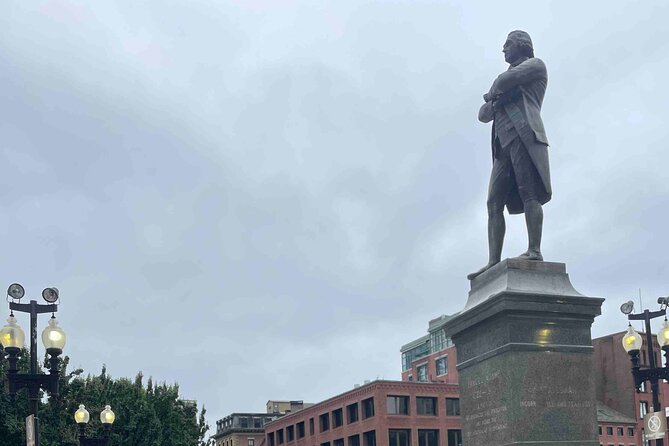
REVIEW · FREEDOM TRAIL & REVOLUTION WALKS
Heart of the Freedom Trail – 60 Minute Private Walking Tour
Freedom Trail history, without the marathon. This private walking tour strings together four major stops on Boston’s Revolutionary story, with a one-hour guide who keeps the pace tight and the details clear. You’ll use a mobile ticket, and you’ll get a guided walk that’s built for a quick first visit.
What I like most is the balance of “where you are” plus “what mattered.” You’ll hit the Old State House, Faneuil Hall, King’s Chapel, and the Old South Meeting House, and each stop connects to big turning points without turning into a lecture. I also like the private format: it can feel small, fun, and flexible enough to work even when kids are along.
One consideration: with four stops in about an hour, you move fast. If you’re the type who wants long looks inside or lots of time to wander on your own, you may want to add extra time after the tour.
In This Review
- Key things you’ll notice on this tour
- Price and what $175 really means for your group
- Starting at Faneuil Hall Marketplace: the easiest place to begin
- Old State House: the balcony scene and the missing voices of liberty
- Faneuil Hall Marketplace: why a marketplace gift came with a moral complication
- King’s Chapel and Dr. Joseph Warren: patriot leadership as a human story
- Old South Meeting House: the Tea Act sparks protest in a major room
- What the tour feels like in real life: private group focus
- Timing and logistics: where you end and how to keep your day flowing
- Should you book Heart of the Freedom Trail?
- FAQ
- How long is the Heart of the Freedom Trail tour?
- What’s the group size for this private walking tour?
- Where does the tour start?
- Where does the tour end?
- How much does the tour cost?
- Is there an admission fee for the stops?
- Is free cancellation available?
Key things you’ll notice on this tour
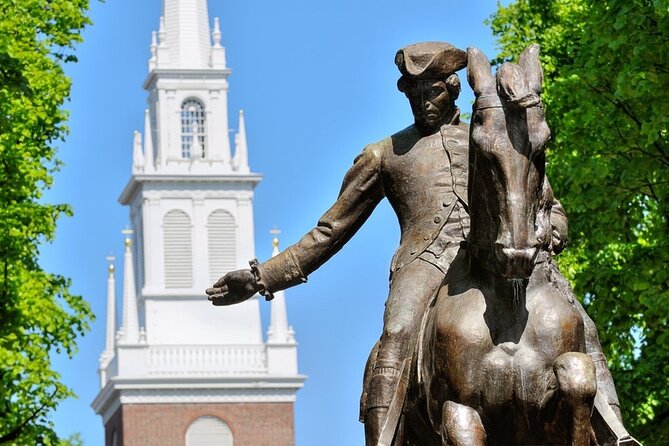
- Four Freedom Trail stops in 60 minutes so you get the big story quickly.
- Old State House balcony-to-declaration connection and the uncomfortable parts of liberty.
- Faneuil Hall’s marketplace story, including the merchant world behind it.
- King’s Chapel and Dr. Joseph Warren, tying politics to everyday lives.
- Old South Meeting House and the Tea Act era, focused on protest and cause.
- Small private group energy, with guides who can keep the mood human.
Price and what $175 really means for your group
The tour costs $175 per group, up to 12 people, and it runs about 1 hour. That pricing is best when you’re splitting it with friends or family—because the per-person cost drops fast as your group fills out.
For a private tour, this is usually a strong value when you want structure. You’re buying someone’s time and walking brainpower to connect the Freedom Trail dots for you, not just a “show up and look” experience.
Also worth noting: you’re not paying extra for admissions at these stops, since the tour info lists admission ticket free for each location.
Starting at Faneuil Hall Marketplace: the easiest place to begin
You start at 1 Faneuil Hall Market Pl. It’s a good choice because it’s central to the Revolutionary-era web and easy to orient yourself before you begin walking.
From the start, the tour’s tone is practical: your guide frames what you’re looking at and then hands you a reason why it matters. That makes the next three stops hit harder, because you already know what kinds of events and people this area helped produce.
The red brick line keeps going. More Trail walks here
Old State House: the balcony scene and the missing voices of liberty
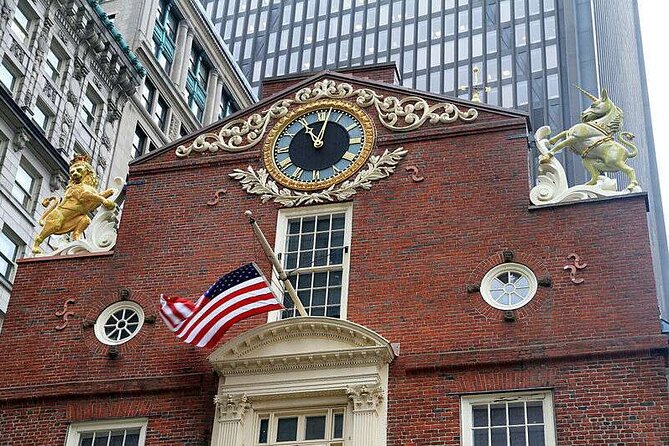
Stop one is the Old State House, constructed in 1713 and described as Boston’s oldest public building. The building is meant to impress, and your guide points out how it towered over the surrounding area—built for the kind of government business that wanted attention.
Here’s the key story beat: the same balcony where royal governors proclaimed the king’s decrees is also tied to when the Declaration of Independence was read on July 18, 1776. That contrast—power from above turning into independence in the open—gives you a real sense of how fast the political story shifted.
And then there’s the darker reminder that liberty didn’t arrive for everyone. The tour specifically highlights that African Americans and women remained without a voice, even as the Revolution advanced. It’s the sort of detail that makes the stop feel honest, not just dramatic.
Possible drawback: because this is the first stop, guides can set up a lot fast. If you want to linger and fully absorb the building itself, you may feel a little pressure to keep moving.
Faneuil Hall Marketplace: why a marketplace gift came with a moral complication
Stop two is Faneuil Hall Marketplace. Your guide sets the scene with Boston as a working port town—around 14,000 people, a safe harbor, busy dock activity, and trade that exported goods to Europe and the West Indies.
Then comes the marketplace origin story: in 1742, merchant Peter Faneuil offered Boston a central marketplace idea, similar to what he’d seen in large European cities. Your tour adds the uncomfortable part too: the wealth behind him is connected to the transatlantic slave trade.
What I like about the way this stop is explained is that it isn’t just a “cool building” moment. You learn that the town initially refused the offer because it worried about the impact on existing businesses, and then accepted it by a slim margin. Your guide also notes that Faneuil decided to add a second floor at the last minute.
That’s a lot to fit into a short stop, but the point lands: public spaces in colonial Boston were never neutral. They were tied to money, power, and arguments.
King’s Chapel and Dr. Joseph Warren: patriot leadership as a human story
Stop three is King’s Chapel. This church became the first Church of England congregation in Boston in 1686, created to give the newly appointed royal governor a place to worship. Your guide points out how the church’s presence next to Boston’s oldest burying ground made it a symbol of what many colonists disliked about England.
As the Revolution begins, the story shifts to a specific person: Dr. Joseph Warren. The tour explains that King’s Chapel became the place where Warren was eulogized, tying this site to Boston’s patriotic leadership.
Warren’s profile is also grounded in the everyday: your guide describes him as an accomplished physician who cared for Patriots and Loyalists, not just one side. Then it connects his medical work to his political impact—he’s presented as inspirational and influential in organizing, including militia involvement.
This is one of the most human stops on the route. It helps you see the Revolution as something carried out by people who had jobs, relationships, and roles that didn’t neatly fit one box.
Old South Meeting House: the Tea Act sparks protest in a major room
Stop four is the Old South Meeting House, built in 1729. It’s described as the largest meeting space in Boston, designed to fit how Puritans worshiped and lived. That matters, because the building wasn’t just a backdrop—it was built for gathering, discussion, and public decisions.
Your guide emphasizes that it hosted public protest meetings. Then you get one of the most famous time stamps tied to the building: December 16, 1773.
Here’s the cause-and-effect setup the tour gives you: the East India Company was supplying tea to the colonies, and it was struggling because of Europe’s poor economy. Parliament responded with the Tea Act of 1773, effectively bailing the company out and giving East India exclusive access.
Your guide connects that to why people protested. You’re not just hearing about tea—you’re seeing how one policy decision was meant to protect a company while forcing a political reality onto the colonies.
Possible drawback: if you’re hoping for a long, inside-the-building experience, remember this is a fast walking tour. You’ll get the story and context, but you’ll likely want follow-up time afterward if you want to sit and soak it all in.
Boston was built for walking. More routes
- Boston: Freedom Trail History Small Group Walking Tour★ 5.0 · 6,450 reviews
- Harvard University Campus Guided Walking Tour★ 4.5 · 3,632 reviews
- Boston Freedom Trail Walking Tour with Costumed Guide★ 4.5 · 2,531 reviews
- The Full Revolutionary Story Epic Small Group Boston Walking Tour★ 5.0 · 2,356 reviews
- Boston’s Freedom Trail: A Revolutionary Walking Tour★ 4.9 · 1,748 reviews
What the tour feels like in real life: private group focus
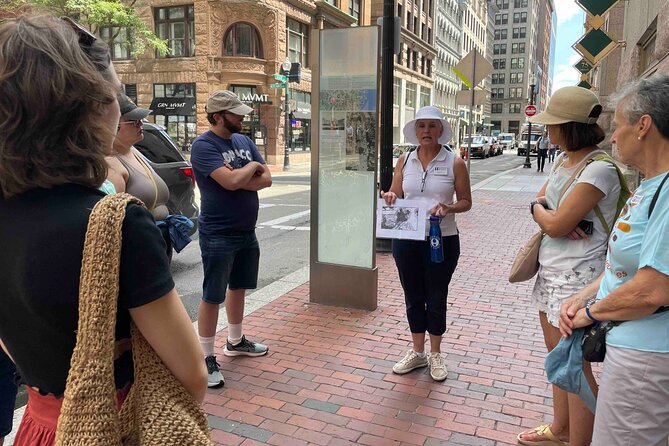
The tour’s format is a private walking experience, meaning it’s designed for only your group rather than mixing with random strangers. That usually changes the vibe: the guide can shape explanations to the pace you can handle.
In particular, the tone seems tuned for engagement. Guides connected to this route—like Kate—are known for story-after-story momentum, and for being patient when the tour includes young children. Another guide, Marcie, is described as a standout teacher-type: the kind of person who helps even long-time locals pick up new angles.
That matters because Freedom Trail sites can become “photos and facts” if your guide doesn’t connect them. This tour keeps you moving and keeps you understanding why each stop is more than just a landmark.
Timing and logistics: where you end and how to keep your day flowing
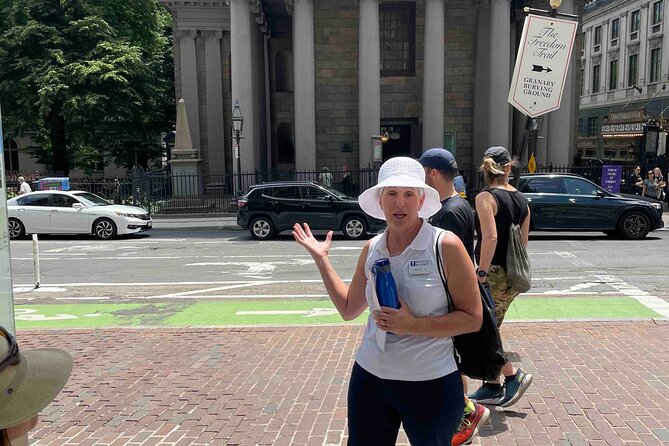
The itinerary is structured with about 15 minutes per stop, so four stops plus walking adds up to roughly an hour. You’ll start at Faneuil Hall and end around One Beacon Street (1 Beacon St).
That end point can be useful if you’re continuing your day in that part of downtown. You might be able to roll directly into another neighborhood walk, museum stop, or a meal without backtracking.
Practical tip: plan to wear comfortable shoes and expect a bit of wind, sun, or rain depending on the day. Since it’s a walking tour, you’ll feel weather more than you would in a museum.
Also, the tour runs near public transportation. If you’re using transit, it’s easier to build a simple start-to-finish plan.
Should you book Heart of the Freedom Trail?
Book it if you want a tight first pass at Boston’s Revolutionary story. The route is set up to help you get your bearings fast: government in the Old State House, commerce at Faneuil Hall, religion tied to authority at King’s Chapel, and protest politics at the Old South Meeting House.
I’d especially recommend it when:
- you have limited time and want the big connections
- you prefer a guided explanation over reading on your own
- you’re traveling with kids and want a guide who can keep things moving
- you’re splitting the cost with a group up to 12
Skip (or plan extra time) if:
- you want deep time at one site, like sitting inside for a long stretch
- you’re looking for a longer “Freedom Trail in full” experience rather than a one-hour primer
If you do book, I suggest pairing it with your own follow-up at the site that hooks you most. This tour gives you the map; your extra time lets you experience the atmosphere at your speed.
FAQ
How long is the Heart of the Freedom Trail tour?
It lasts about 1 hour.
What’s the group size for this private walking tour?
It’s a private tour for your group, up to 12 people.
Where does the tour start?
The tour starts at 1 Faneuil Hall Market Pl, Boston, MA 02109.
Where does the tour end?
It ends in the general area of 1 Beacon St, Boston, MA 02108 (One Beacon Street).
How much does the tour cost?
The price is $175.00 per group (up to 12).
Is there an admission fee for the stops?
The tour lists admission ticket free for each of the stops included.
Is free cancellation available?
Yes. You can cancel up to 24 hours in advance of the experience for a full refund.
On Foot Through Old Boston



More of the Boston Ledger



Follow the Red Bricks Further

New on the Boston Docket
- Boston to Newport Mansions Private Day Trip
★ 5.0 · 3 reviews - Boston Massachusetts Private Photography Tour
★ 5.0 · 3 reviews - Homemade Dumplings 101 in Boston
★ 3.5 · 3 reviews - Self-Guided Audio Tour of Boston North End
★ 4.5 · 3 reviews - Old Boston: Beacon Hill & Back Bay Walking Tour in French
★ 4.7 · 3 reviews
Freedom Trail & Revolution Walks, compared.
 ★ 5.0Freedom Trail History Small Group Walking TourFrom $356,450 reviews
 ★ 4.5Boston Freedom Trail Walking Tour with Costumed GuideFrom $262,531 reviews
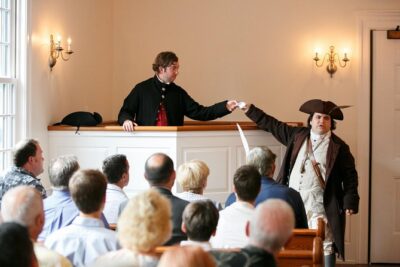 ★ 4.5Boston Tea Party Ships and Museum AdmissionFrom $352,512 reviews
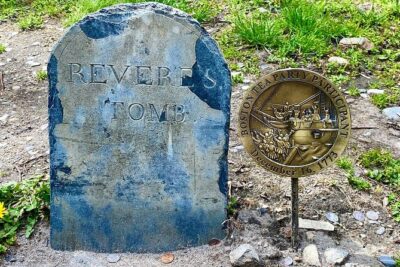 ★ 5.0The Full Revolutionary Story Epic Small Group Boston Walking TourFrom $552,356 reviews
 ★ 4.8Boston Tea Party Ships and Museum Interactive TourFrom $351,926 reviews
 ★ 5.0Boston Food & History: Pizza, North End & Freedom TrailFrom $901,772 reviews
 ★ 4.9Boston’s Freedom Trail: A Revolutionary Walking TourFrom $311,748 reviews
★ 4.9Freedom Trail History Small Group Walking TourFrom $351,590 reviews
★ 4.9Boston’s Freedom Trail: A Revolutionary Walking TourFrom $311,748 reviews
★ 4.9Freedom Trail History Small Group Walking TourFrom $351,590 reviews
Browse the lists this tour appears in