
REVIEW · FREEDOM TRAIL & REVOLUTION WALKS
Full-Day Minivan Tour of Revolutionary Boston, Lexington and Concord
You can connect Boston to the first shots in 1775 fast. This full-day, private-style run covers major Revolutionary War landmarks in Boston plus the Lexington and Concord sites that set the whole story in motion.
What I like most is the comfort-first private minivan and the way the guide builds a clear timeline across the sites. You’ll also get picked up near your door and moved between stops without wasting time on transit. The main drawback: the schedule is tight, so many stops are short, and you’ll be skimming unless you plan a return visit.
In This Review
- Key things to know before you go
- Revolutionary Boston, Lexington and Concord in 6 hours: what the tour feels like
- The price and value math for a private group
- Pickup and comfort: why the minivan experience matters in Boston
- Boston’s Revolution primer: from Paul Revere to the Old South
- Paul Revere House: the oldest Boston proper stop
- Old North Church and the famous signal
- USS Constitution: the warship view that keeps the day balanced
- Faneuil Hall Marketplace: the cradle of liberty
- Old State House: the Boston Massacre nearby
- King’s Chapel and Boston’s evolving church story
- Granary Burying Ground: names you’ll recognize
- Boston Common and Louisburg Square: open space plus neighborhood context
- Acorn Street: quick photo, big vibe
- Old South Meeting House and the road to the Boston Tea Party
- Hancock-Clarke House: Revere’s urgency
- Lexington and Concord: the day changes from politics to consequences
- Buckman Tavern: militia waiting before the skirmish
- Lexington Green: the skirmish and the Second Amendment angle
- Old North Bridge visitors area: shots fired, video, exhibits
- Concord literary stops: Alcott, Emerson, and Thoreau
- Louisa May Alcott’s Orchard House: Little Women in context
- Ralph Waldo Emerson House: a philosopher’s home stop
- Walden Pond State Reservation: Thoreau’s pond and the work it sparked
- Longfellow House / Washington’s Headquarters: two lives in one address
- Timing, pacing, and what you should plan for
- Who this tour is best for (and who may want something else)
- Should you book this Revolutionary Boston minivan tour?
- FAQ
- How long is the full-day tour?
- Is pickup included?
- What is the group size for this private tour?
- What transportation do you use?
- What’s included in the price?
- Is lunch included?
- What language is the tour offered in?
- Are admission tickets included?
- What kind of ticket do you get?
- Can I cancel for free?
Key things to know before you go
- Private group of up to 6: easier pace control and more chances to ask questions than with a bus tour.
- Air-conditioned minivan: you bounce between Boston and the Concord area without long hassle.
- A built-in Revolutionary storyline: from Revere and North Bridge to Tea Party planning sites, it reads like one connected lesson.
- Short, high-impact stops: you’ll see a lot, but some photo stops are brief—come ready with comfortable walking shoes.
- Museum time where it counts: the North Bridge area includes an exhibit-and-video style stop to tie meaning to the geography.
- Many stops list free admission tickets: the day includes entry where it’s highlighted on the route.
Revolutionary Boston, Lexington and Concord in 6 hours: what the tour feels like
This is the kind of history day trip that gives you momentum. You’re not just collecting landmarks—you’re getting a guided sequence that ties Boston’s political unrest to the events outside the city that escalated into open conflict. In six hours, you cover a lot of ground, which is exactly why this works well when you’re on a schedule.
The minivan matters more than you’d think. Even within Boston, traffic, parking, and walking between far-flung neighborhoods can chew up your day. Here, you’re getting delivered to the right corners and then released for quick site time—so the day stays focused on seeing and learning, not figuring out the logistics.
One more thing: this tour is built as a compact sampler. That’s great if you want the big picture and you’re trying to decide what to revisit later. It’s less ideal if you crave long, slow wandering and deep museum time at every stop.
The price and value math for a private group
This tour costs $975 per group (up to 6) and runs about 6 hours. If you fill all six seats, that works out to about $162.50 per person. If you have a smaller group, the per-person cost rises fast—so value is best when you travel with friends or family who are into Revolutionary history.
What you’re really paying for isn’t just transportation. It’s the guide’s ability to connect locations into a timeline, plus the convenience of pickup and an air-conditioned ride. A tour like this also reduces the chance you’ll accidentally miss key sites because you found the others but didn’t realize how far apart they are.
Also, it’s booked far in advance on average. That’s a hint that people use it early to get their bearings—especially if it’s one of your first days in Boston.
The red brick line keeps going. More Trail walks here
Pickup and comfort: why the minivan experience matters in Boston
Pickup is offered at your home, hotel, or any convenient location, and the tour uses a comfortable air-conditioned vehicle with bottled water. That’s not a small detail in Boston, where winter chill and summer humidity can make outdoor stops feel longer than they are.
The tour is also described as private, meaning only your group participates. That translates into a less stressful experience: you’re not squeezed into a bus schedule where stops are timed to the slowest group. You can also ask quick questions without feeling like you’re hijacking the flow.
The day includes a lunch break window, but lunch itself is not provided. In practice, that means you’ll want a simple plan for where to eat when the guide signals it’s time—especially if you’re traveling during a busy season.
Boston’s Revolution primer: from Paul Revere to the Old South
The Boston portion moves through several “anchor” sites that people keep bringing up when they explain how the Revolution built steam. You’ll start with some Puritan-era staying power, then shift into churches and meeting places tied to political action, and finish with the kind of streets and neighborhoods that make the story feel real.
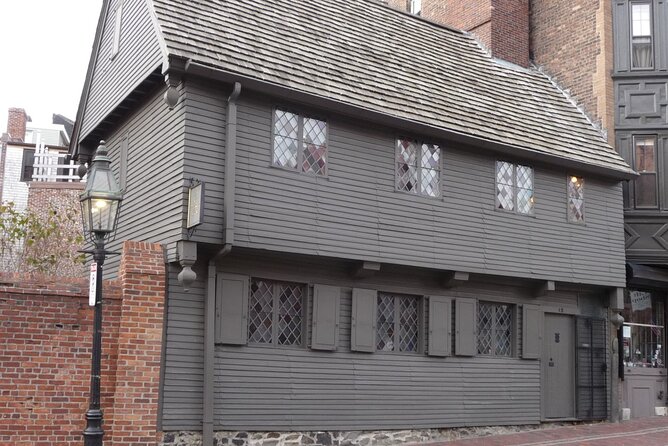
Paul Revere House: the oldest Boston proper stop
You begin at the Paul Revere House, described as the oldest house in Boston proper. The key value here is architecture and continuity. You see Puritan-era building style and learn how early construction choices influenced New England design.
It’s also a strong opener because it helps you “place” the people. Before you get to clashes and battles, you’re grounded in the long-lived streets where this society formed.
Old North Church and the famous signal
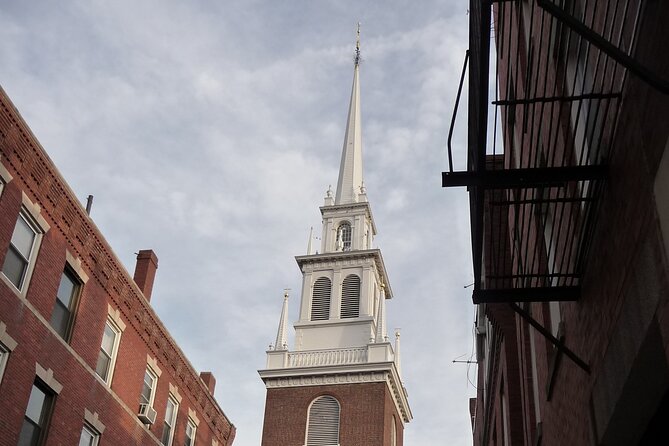
Next is the Old North Church & Historic Site, where you hear the story behind Longfellow’s poem and the signal: one if by land, two if by sea. This is one of those moments where a phrase becomes a map. You’ll leave knowing what the signal was meant to accomplish and why it mattered in the night-time urgency of 1775.
A quick heads-up: this is timed as a short stop. If signals and night raids are your thing, you’ll probably want more time later—but the tour gives you a clear why first.
Out to the battle greens, more ways to go
- 90-Min Narrated Trolley Tour of Lexington and Concord, MA★ 4.5 · 358 reviews
- From Boston: Full-Day Historical Lexington & Concord Tour★ 4.8 · 111 reviews
- Lexington & Concord 250th Birthday Tour with Concord Museum Entry★ 4.5 · 83 reviews
- Lexington, MA Battle Green Walking Tour with Costumed Guide★ 5.0 · 59 reviews
- Lexington & Concord 3 hour private tour from Boston★ 5.0 · 31 reviews
USS Constitution: the warship view that keeps the day balanced
You’ll then view USS Constitution, described as the oldest commissioned warship in the world and nicknamed Old Ironsides. This adds a different angle to the day: you’re not just hearing about meetings and speeches—you’re also seeing Revolutionary-era military context.
Even when it’s brief, this stop prevents the tour from feeling like it’s only about politics. It gives you something physical and tangible to picture.
Faneuil Hall Marketplace: the cradle of liberty
At Faneuil Hall Marketplace, you get the idea of Boston as a political engine. The guide frames it as the cradle of liberty, tied to the Sons of Liberty planning the Revolution. The point isn’t just that they met here—it’s the role Boston played as a place where ideas and action were tightly linked.
Old State House: the Boston Massacre nearby
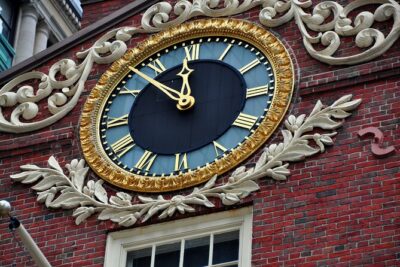
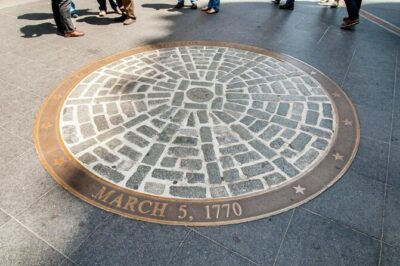
At the Old State House, you learn about the Boston Massacre that happened nearby. The location helps you understand how close daily life was to the flashpoints. You’re not imagining events far away—you’re standing in the city’s historic center where tensions boiled.
King’s Chapel and Boston’s evolving church story
King’s Chapel is built in 1742 to replace an earlier wooden church from the 1680s. That detail matters because it shows how Boston changed while still living inside older patterns. It’s not just a pretty stop; it’s a reminder that even institutions that feel “traditional” were actively updated.
Granary Burying Ground: names you’ll recognize
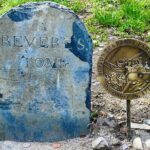
At Granary Burying Ground, you see graves of Samuel Adams, Paul Revere, and John Hancock, plus other important figures from the Revolutionary era. If you’ve ever felt history becomes names-without-faces, this helps fix that. The guide ties the people to the political and military thread you’ve been following.
Boston Common and Louisburg Square: open space plus neighborhood context
You’ll step into Boston Common, noted as the country’s oldest public park established by Puritans in 1634. Then there’s Louisburg Square on Beacon Hill, described as a prominent Federalist neighborhood.
This part gives you “breathing room” in both time and mental space. After churches and meeting houses, open public land and neighborhood fabric help the story feel like lived-in geography.
Acorn Street: quick photo, big vibe
At Acorn Street, you get Boston’s most photographed street. The stop is short, but it’s useful. You’ll be able to place it later in your own exploring, because you’ll know it’s not random scenery—it’s within the historic core you learned about earlier.
Old South Meeting House and the road to the Boston Tea Party
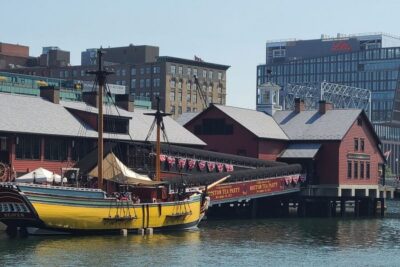
Next is the Old South Meeting House, with the story of the meetings leading up to the Boston Tea Party. Then you shift to Boston Tea Party Ships & Museum to see replica ships in the harbor representing those involved.
This is one of the better “meaning-to-object” transitions on the day: you move from planning discussions to the tangible harbor scene.
Hancock-Clarke House: Revere’s urgency
At the Hancock-Clarke House, you hear about the moment Paul Revere woke Sam Adams and John Hancock to warn them the British might be looking for them to hang them for treason. This stop gives you emotion and immediacy—fear, time pressure, and what “being hunted” means.
The fact it’s framed around a warning is useful. It turns a famous messenger story into something more practical: who needed to know, when, and why.
Lexington and Concord: the day changes from politics to consequences
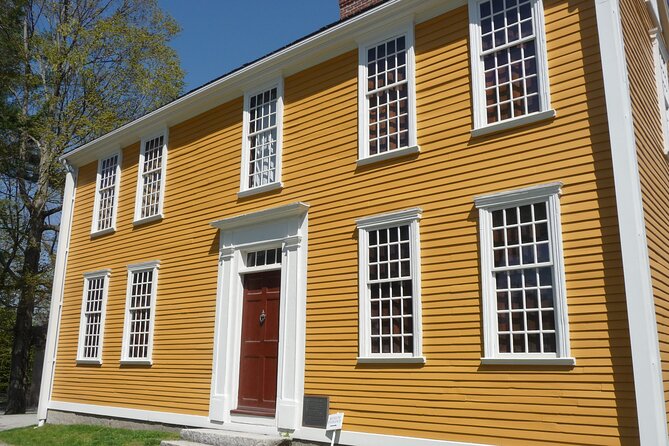
Once you leave Boston and head to Lexington and Concord, the tone shifts. The story becomes about actions and consequences, and the geography starts to feel more like a battlefield map than a museum brochure.
Buckman Tavern: militia waiting before the skirmish
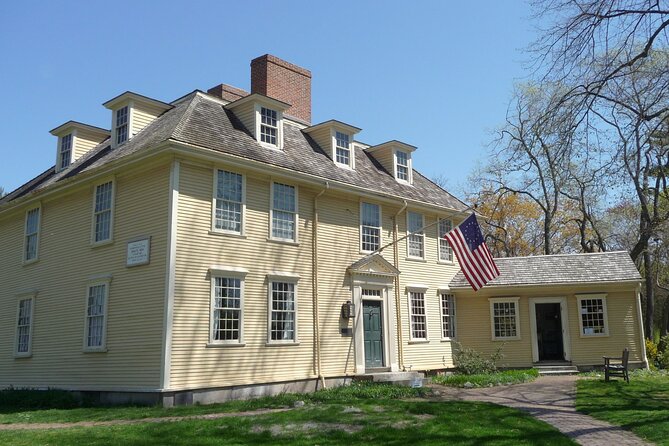
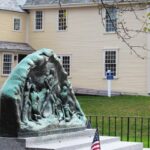
At Buckman Tavern, you see where the Lexington Militia awaited the arrival of British troops before the skirmish on Lexington Green. This stop helps you understand that the “start” of conflict wasn’t a single dramatic moment—it was a tense wait with people positioned for impact.
Again, it’s short. But it puts you in the right mindset for what happens next.
Lexington Green: the skirmish and the Second Amendment angle
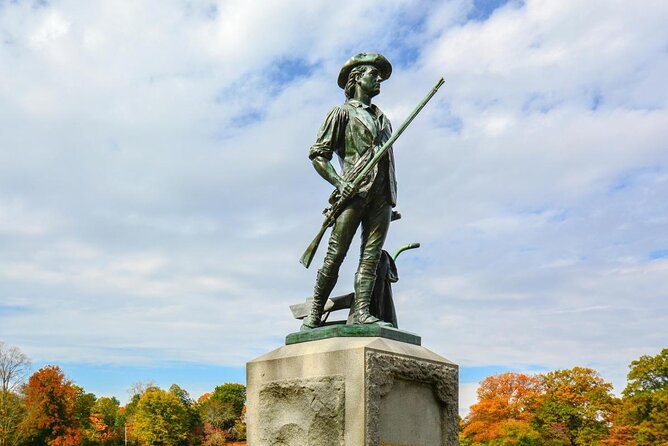
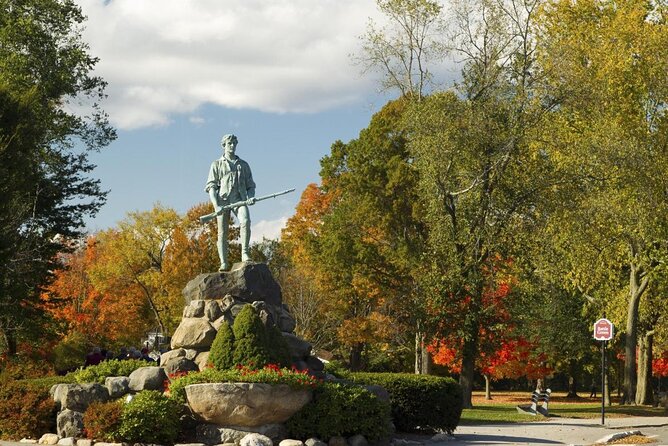
At Lexington Green, you hear the story of the skirmish where many consider the birth of the Second Amendment to have taken place. This is the sort of phrasing you’ll want to keep in your own head as a theme, not a footnote—because it affects how you interpret the conflict.
It’s also the moment where your earlier Boston context becomes more than background. You’ll feel the timeline click: ideas and decisions weren’t abstract. They created a chain of events.
Old North Bridge visitors area: shots fired, video, exhibits
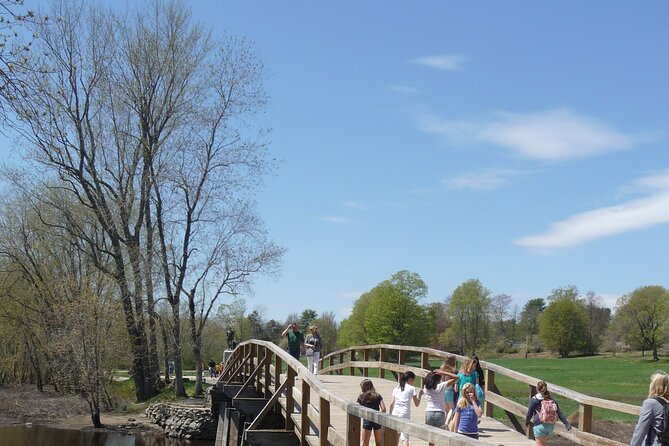
The centerpiece is the Old North Bridge area. You travel through the national park and hear the story of the night in 1775 when shots were first fired by patriots at the British. You also get the eight-minute video in the visitors center and related exhibits.
This is where the tour likely gives you the most “deep understanding per minute.” You’re not only seeing a site—you’re getting guided interpretation tied to what you see. It’s the best stop for people who want context, not just photos.
There’s also a brief museum-style stop in the route that’s described as visiting the museum and viewing exhibits about why the events changed American history. I’d treat this as your chance to slow down inside and let the guide’s narrative land.
Concord literary stops: Alcott, Emerson, and Thoreau
Concord is where history gets a more reflective feel. After conflict and political crisis, you shift into the places linked to writing and thought—Henry David Thoreau’s Walden Pond, Louisa May Alcott’s Orchard House, and Ralph Waldo Emerson’s home.
Louisa May Alcott’s Orchard House: Little Women in context
At Louisa May Alcott’s Orchard House, you see where she and her sisters were raised and where she wrote Little Women. The value here is seeing that literature isn’t floating in space. It’s connected to a physical upbringing and a real environment.
The stop is brief, but it works as an “aha.” You can connect Revolutionary-era America to the later culture that helped define American identity.
Ralph Waldo Emerson House: a philosopher’s home stop
At the Ralph Waldo Emerson House, you see the home of one of America’s influential poets and philosophers. Even with minimal time, this type of stop helps you understand why Concord became a magnet for ideas.
Walden Pond State Reservation: Thoreau’s pond and the work it sparked
At Walden Pond State Reservation, you see the pond that captured Henry David Thoreau’s imagination and led to his most famous written work. This stop is one of the best for resetting your brain during a fast-paced day.
If you like the Revolutionary story but also love the American thought tradition that followed, this is the perfect mid-afternoon shift.
Longfellow House / Washington’s Headquarters: two lives in one address
The tour ends at Longfellow House Washington’s Headquarters National Historic Site, where George Washington lived when he commanded the Continental Army. Later it became Henry Wadsworth Longfellow’s home.
This stop ties the day together beautifully: the same walls connected wartime command and later literary life. It’s a reminder that America’s story didn’t stop with 1775—it kept evolving.
Timing, pacing, and what you should plan for
A six-hour schedule means you’ll experience the “hit list” version of these sites. Many stops are described as around one to five minutes, with a longer stretch at Old North Bridge and time on the Concord side.
That’s not bad—it’s a trade. You’ll cover a ton, but you should expect:
- short outdoor photo windows
- guided context first, then quick site time
- museum/video time focused on the most explanatory area
You also should expect a structured day with a set lunch break allowed. Since lunch isn’t included, you’ll want to eat something light earlier or be ready to grab a meal nearby when the tour pauses.
If you’re traveling with a teen or history-loving kid, this style can be great. It keeps the day moving while still giving enough story to feel meaningful.
Who this tour is best for (and who may want something else)
This tour is ideal if you want:
- a smart first pass through Boston’s core Revolutionary landmarks
- a connected Boston–Lexington–Concord story in one day
- the comfort of an air-conditioned ride and pickup near your hotel
- a guide-driven day that helps you avoid missing the important threads
It’s less ideal if you want long stays at museums, deep reading time, or a slow walk through neighborhoods without time pressure. In that case, you might be happier with a smaller set of sites and extra self-guided hours.
Also, it helps if you like variety. The day moves from Revere and churches to warship context, then to waiting militia, then to an American literary and philosophical break.
Should you book this Revolutionary Boston minivan tour?
If you’re trying to fit Boston history into a busy itinerary, I think this is a strong yes. You’ll get a fast but coherent storyline, lots of recognizable sites, and the convenience of private-group comfort. The value is best when your group can fill closer to the six-person limit, because then the per-person cost drops and you’re paying more for the guide and less for empty seats.
Book it especially early in your trip. It’s built to give you bearings, so you can decide what to revisit on your own. And if you’re choosing between doing Boston walking first and then stretching out farther, this offers the kind of structure that prevents your day from turning into guesswork.
FAQ
How long is the full-day tour?
It runs for about 6 hours.
Is pickup included?
Yes. The tour offers pickup at your home, hotel, or any convenient location.
What is the group size for this private tour?
It’s a private tour/activity, and it’s listed as up to 6 people per group.
What transportation do you use?
You travel in an air-conditioned minivan.
What’s included in the price?
The tour includes an air-conditioned vehicle and bottled water.
Is lunch included?
Lunch is not included, but a lunch break time is allowed.
What language is the tour offered in?
The tour is offered in English.
Are admission tickets included?
The itinerary lists many stops with admission ticket free status, and includes museum and visitors-center time where noted.
What kind of ticket do you get?
You receive a mobile ticket.
Can I cancel for free?
Yes. Free cancellation is available if you cancel up to 24 hours in advance for a full refund.
Boston by the Carload



Where the First Shots Fired

Follow the Red Bricks Further

New on the Boston Docket
- Boston to Newport Mansions Private Day Trip
★ 5.0 · 3 reviews - Boston Massachusetts Private Photography Tour
★ 5.0 · 3 reviews - Homemade Dumplings 101 in Boston
★ 3.5 · 3 reviews - Self-Guided Audio Tour of Boston North End
★ 4.5 · 3 reviews - Old Boston: Beacon Hill & Back Bay Walking Tour in French
★ 4.7 · 3 reviews
Freedom Trail & Revolution Walks, compared.
 ★ 5.0Freedom Trail History Small Group Walking TourFrom $356,450 reviews
 ★ 4.5Boston Freedom Trail Walking Tour with Costumed GuideFrom $262,531 reviews
 ★ 4.5Boston Tea Party Ships and Museum AdmissionFrom $352,512 reviews
 ★ 5.0The Full Revolutionary Story Epic Small Group Boston Walking TourFrom $552,356 reviews
 ★ 4.8Boston Tea Party Ships and Museum Interactive TourFrom $351,926 reviews
 ★ 5.0Boston Food & History: Pizza, North End & Freedom TrailFrom $901,772 reviews
 ★ 4.9Boston’s Freedom Trail: A Revolutionary Walking TourFrom $311,748 reviews
★ 4.9Freedom Trail History Small Group Walking TourFrom $351,590 reviews
★ 4.9Boston’s Freedom Trail: A Revolutionary Walking TourFrom $311,748 reviews
★ 4.9Freedom Trail History Small Group Walking TourFrom $351,590 reviews
Browse the lists this tour appears in