
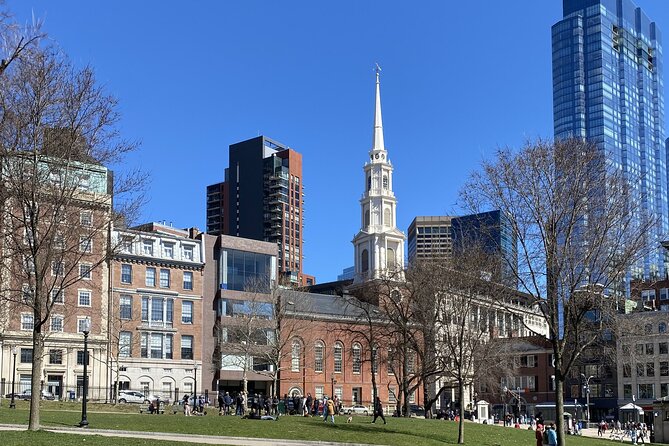
REVIEW · FREEDOM TRAIL & REVOLUTION WALKS
Freedom Trail Walking Tour in Boston in French
One hour and you get it all.
This French-speaking Freedom Trail tour strings together the key Boston landmarks into a story you can actually follow, from the city’s founding to the Revolution and beyond. I like how the guide keeps it human, with name-to-face context and original anecdotes (the kind that make you remember what you saw). I also love the photo-friendly route, especially the big-picture views near Copp’s Hill and the North End streets. One thing to consider: it’s a walking tour with no museums, so you’ll want decent walking shoes and a weather-ready layer.
The best part is the way Boston downtown starts to feel like an open-air museum in motion. You’ll cover the big institutions and the smaller details too: the Boston Common start, Revolution stops along the way, and later the North End. The guide is passionate and professional, and the small group size (up to 12) makes it easier to ask questions and keep the pace comfortable. The one drawback I’d flag is the overall time: at about 2 hours 30 minutes, you won’t linger long at every stop.
In This Review
- Key highlights you’ll notice fast
- Why this Freedom Trail route clicks for first-timers
- Price and value: what $45 buys you in real terms
- Timing, start point, and how to plan your day
- Boston Common and the Emerald Necklace start: where the trail makes sense
- Shaw’s memorial and Beacon Hill’s architectural lesson
- Old City Hall and the Old Corner Bookstore: the city gets quieter here
- Old South Meeting House and the lead-up to revolution
- Boston Massacre site: the day Boston’s story turned sharper
- Faneuil Hall Marketplace and Quincy Market: from liberty to everyday life
- Union Oyster House and the Blackstone Block lanes: history you can eat near
- North End: the neighborhood portion that makes the Revolution feel local
- Paul Revere House, the statue, and Old North Church: the story gets specific
- Copp’s Hill Burying Ground finish: your reward is the panorama
- The guide makes the difference: Maria’s approach in particular
- Who this tour is for (and who should choose something else)
- Should you book this Freedom Trail walking tour in French?
- FAQ
- What is the duration of the Freedom Trail walking tour?
- How much does the tour cost?
- Does the tour include museum visits?
- Is it a walking tour?
- What language is the guide?
- Where does the tour start and end?
- What time does the tour begin?
- How large is the group?
- Are any sites admission-based?
- What is the cancellation policy?
Key highlights you’ll notice fast
- A French guide who tells stories with momentum, not just dates and plaques
- Boston Common to the North End, with classic Freedom Trail sites plus extra context
- Landmarks that connect Revolution, abolition, education, and immigration to everyday life
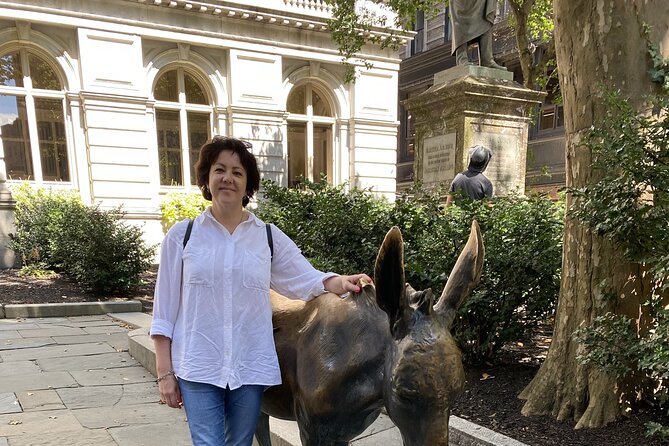
- You see modern Boston too, including public sculptures like The Embrace
- End at Copp’s Hill Terrace, right by the Old North Church area and Italian Quarter dining
Why this Freedom Trail route clicks for first-timers
Boston’s Freedom Trail is famous for a reason, but first-time visits can feel like you’re scanning a checklist. This tour helps you avoid that. Instead of treating each stop as a separate event, the guide links them so the whole walk reads like one continuous chapter—how Boston was founded, why certain places mattered, and how conflict shaped the city.
What I like is the balance between the obvious and the surprising. Yes, you hit the headline sites like Boston Common and Faneuil Hall. But you also get side stories about construction, architecture, notable figures, abolition, American education, immigration, and even contemporary daily life. That mix is what turns a self-guided stroll into something you can talk about afterward.
Another plus: the small-group feel. With a maximum of 12 people, you’re not just following a herd. You can usually keep up, hear the guide clearly, and catch explanations without needing to stand in the back. The pace is also described as adaptable to your wishes and your speed, which matters on cobblestones and uneven sidewalks.
Price and value: what $45 buys you in real terms
At $45 per person, this tour sits in a very reasonable zone for a guided city walk—especially because you’re getting a specialist guide for about 2.5 hours. The tour price includes fees and taxes, and you’ll also get a mobile ticket.
Most of the stops are free to view on arrival (many are listed with admission ticket free). So you’re paying mainly for interpretation: the “why it mattered” layer. That’s the value here. If you’re the type who likes reading plaques, you can do this on your own—but a good French-speaking guide makes the route much faster to understand, and it saves you time hunting for the right context.
There’s also no museum pressure. You won’t be sent inside for a ticketed exhibit. That keeps the experience flexible: you’re outside, walking between big moments in Boston’s story.
The red brick line keeps going. More Trail walks here
Timing, start point, and how to plan your day
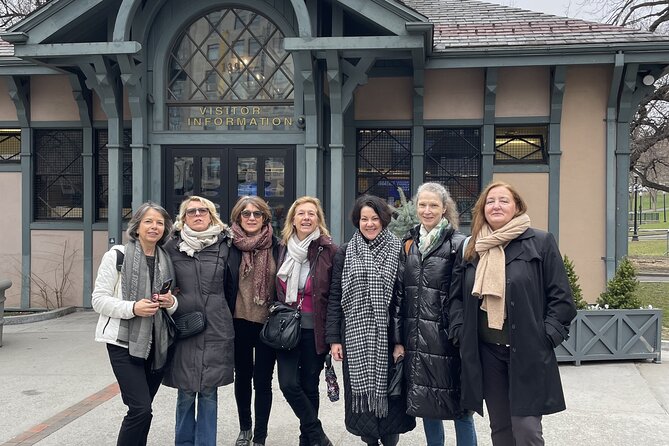
The tour starts at 11:00 am at the Boston Common Visitors Center, 139 Tremont St, Boston. It ends at Copp’s Hill Terrace in the North End/Italian Quarter area, steps from the Old North Church and close to places to eat.
A 2 hours 30 minutes walking window is a good length for Boston’s core sites. It’s long enough to feel like you did something meaningful, but short enough that you can still plan another neighborhood activity the same day. If you’re staying downtown, this is also a smart way to get bearings quickly, because you end in the North End where you can keep wandering.
Bring a weather plan. One of the reviews specifically called out chilly weather, and since this is an outdoor walk, layers matter. If it’s sunny, you’ll get the kind of light that helps photos near the finish terraces. If it’s cold or windy, you’ll appreciate that the route doesn’t rely on indoor breaks.
Boston Common and the Emerald Necklace start: where the trail makes sense
You begin at Boston Common, which you’ll learn is the oldest public park in the United States (dating to 1634). The guide also connects it to the Emerald Necklace—an interconnected chain of six parks. That helps you understand Boston as a city that planned green space alongside civic life.
This stop also sets the tone for the rest of the route. The Freedom Trail begins here, but you’re not just seeing a park. You’re seeing the civic center of an evolving city, with monuments that anchor different eras. The tour description highlights places like the Boston Massacre Memorial, the Great Elm Tree, and the Soldiers and Sailors Monument.
You’ll also stop at Telegraph Hill, tied to the city’s founding story. Even if you’ve never studied Boston before, the “founding roots” framing makes the later Revolution sites feel more logical, not random.
Practical tip: at Boston Common, the ground can be open and exposed. If weather is rough, consider a hat or a scarf early—before the route moves you into tighter streets later.
Shaw’s memorial and Beacon Hill’s architectural lesson
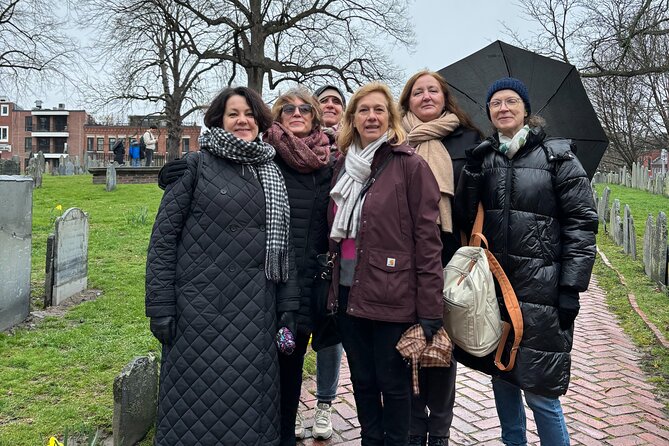
Next up is the Robert Gould Shaw and the 54th Regiment Memorial. The key detail here is the artwork: a bronze bas-relief by sculptor Augustus Saint-Gaudens. That matters because it turns a memorial stop into a conversation about how art carries memory and respect.
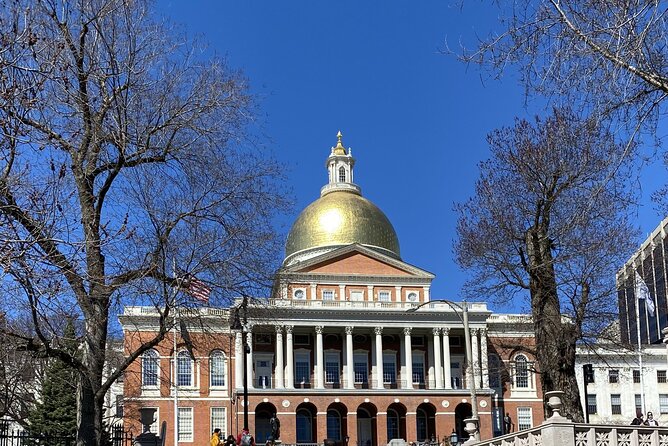
From there you head to the Massachusetts State House, described as an architectural gem with its golden dome. Built at the end of the 18th century by architect Charles Bulfinch in Federal style, it’s a dominant landmark on Beacon Hill. If you like architecture, this is one of those stops where you understand why people talk about Boston’s civic identity.
The tour doesn’t treat architecture as decoration. You get the context that makes the buildings part of the story: how civic power looked, where it concentrated, and how the city’s design reflected its ambitions.
Old City Hall and the Old Corner Bookstore: the city gets quieter here
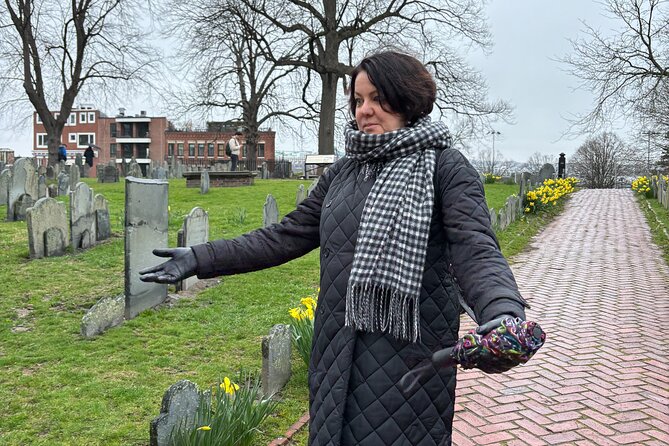
You’ll see Old City Hall, built in 1865 in French Second Empire style, and used by Boston’s city council from 1865 to 1969. The style reference matters if you know European architecture—this is where Boston shows its links and influences.
Then comes a quick stop for the Old Corner Bookstore, built in 1718. It’s in the oldest commercial building in downtown Boston, and it operated as a publishing house in the 19th century, putting out multiple famous American classics. This is a smart “breather” stop: it shifts you from politics and conflict to words, printing, and learning.
Even though there’s no museum visit, these brief stops work because the guide gives you the connection: why ideas and literacy matter alongside rebellion and government.
Boston was built for walking. More routes
- Boston: Freedom Trail History Small Group Walking Tour★ 5.0 · 6,450 reviews
- Harvard University Campus Guided Walking Tour★ 4.5 · 3,632 reviews
- Boston Freedom Trail Walking Tour with Costumed Guide★ 4.5 · 2,531 reviews
- The Full Revolutionary Story Epic Small Group Boston Walking Tour★ 5.0 · 2,356 reviews
- Boston’s Freedom Trail: A Revolutionary Walking Tour★ 4.9 · 1,748 reviews
Old South Meeting House and the lead-up to revolution
At the Old South Meeting House (built in 1729), you’re stepping into a former Puritan church that functioned as a gathering place for nearly three centuries. That time span is the clue. Boston didn’t reinvent itself overnight; it reused spaces, kept traditions, and adapted when history demanded it.
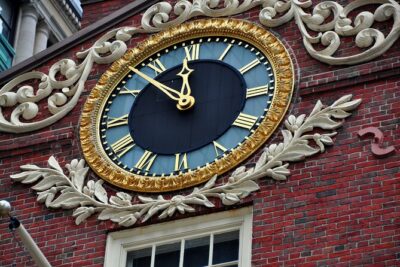
Then you move to Old State House (1713), where the guide points out how the building’s “frozen in time” feeling contrasts with the modern buildings around it. This is one of the most vivid moments on the trail: on July 18, 1776, the text of the United States Declaration of Independence was read from the balcony.
If you only remember one line about this tour, it should be this: the Freedom Trail is not just about what happened—it’s about where public announcements were made and how citizens absorbed them. Standing near this balcony framing makes that idea click.
Note on pacing: these stops are short (often around 5 to 10 minutes). That’s deliberate. You get the key context, then you move on before the walk gets too stretched.
Boston Massacre site: the day Boston’s story turned sharper
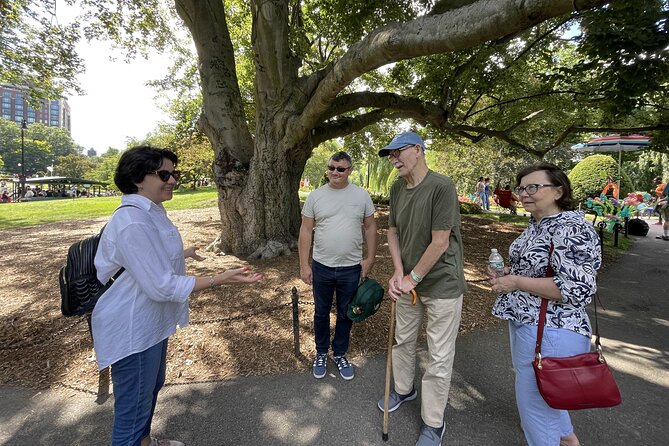
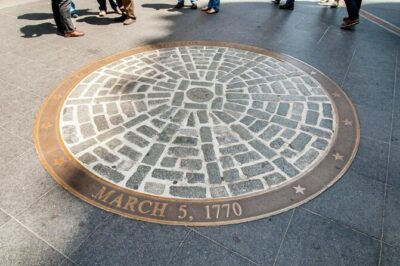
The Boston Massacre site is a key turning point. The explanation focuses on what happened in 1770: British soldiers opened fire in front of a public building, killing five Bostonians. This event is called the Boston Massacre, and it’s one reason tensions escalated toward open conflict.
This stop is where the guide’s storytelling style matters most. With the right tone, the moment doesn’t become theatrical—it becomes historical cause-and-effect. You start understanding why “public spaces” were never neutral in Boston. The street corner and the building façade were part of the conflict.
Practical tip: wear shoes you trust. Even short stops feel longer if you’re uncomfortable.
Faneuil Hall Marketplace and Quincy Market: from liberty to everyday life
You’ll reach Faneuil Hall Marketplace, tied to 1741 and described as the Cradle of Liberty. The stop includes the golden grasshopper weathervane, which became Boston’s first and most famous symbol.
Then you get a Food Court stop at Quincy Market (1824), a former market now filled with stalls and shops. The way the description frames it is useful: Quincy Market is a reminder that Revolution-era symbolism lives alongside commerce. Boston always traded ideas and goods.
This part of the tour is also where you can shift your mindset. Up to this point, you’ve spent a lot of time on conflict and civic authority. Here, you see how a historic city actually functions day to day—through markets, street life, and constant movement.
Union Oyster House and the Blackstone Block lanes: history you can eat near
At the Union Oyster House, the tour points out that it’s the oldest restaurant in the United States (dating to 1826), located in a historic building from 1704. A particularly interesting detail: the future king of France, Louis-Philippe, lived there in a modest apartment on the second floor.
You also get a quick passage behind the Bostonian hotel to old pedestrian streets, including Blackstone Block, listed on the National List of Historic Places. This is a nice switch from major landmark façades to the kind of quieter streets that make Boston feel like a place you can live in.
Even if you don’t eat right away, this section helps you “read” the city: you begin to notice how pedestrian-only lanes keep the atmosphere distinct from the wider downtown blocks.
North End: the neighborhood portion that makes the Revolution feel local
The tour spends time in the North End, literally the northern district. You’ll be there for about 30 minutes, which is the longest block in the second half. This is intentional. It’s where the Freedom Trail theme stops feeling like a museum exhibit and starts feeling like a living neighborhood.
The guide includes more than just landmarks here. The tour description mentions topics like immigration and contemporary daily life, and the North End is where those themes feel tangible. The streets, the density, and the sense of tradition make the area a natural endpoint for a Revolution-focused walk.
What to expect: you’ll be on narrower sidewalks and more turns than earlier downtown stops. If you’re traveling with someone who prefers slower walking, this is a good place to ask for extra time.
Paul Revere House, the statue, and Old North Church: the story gets specific
You’ll visit the Paul Revere House (1676), one of the last colonial-era vestiges. The famous revolutionary lived there from the 1780s to 1800s. This stop works best if you’re someone who likes connecting a big legend to a real address.
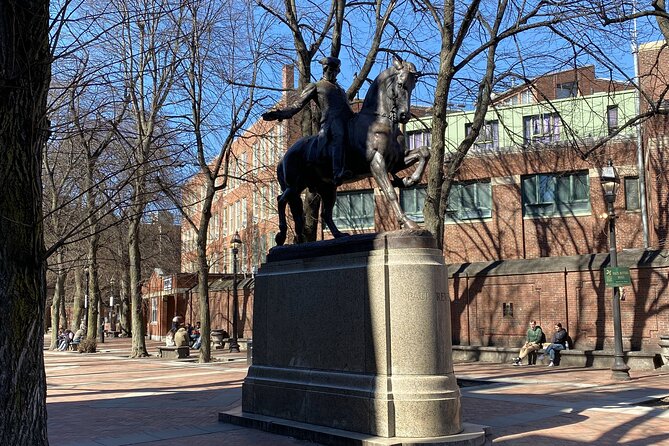
Next is the Paul Revere Statue, in a historic pedestrian space honoring the Midnight Ride (1775). Then comes the Old North Church & Historic Site. The guide highlights that the first church on this site was built in 1650, and that during the colonial period it was the most influential church in the Northeast and a stronghold of Puritan faith.
This trio—house, ride statue, church—gives you a clear chain of meaning. You’re not just hearing names. You’re seeing how physical places shaped communication, movement, and community beliefs.
If you care about the mechanics of history—how messages spread and how people coordinated—this is the part that makes the Revolutionary story feel practical.
Copp’s Hill Burying Ground finish: your reward is the panorama
The walk ends at Copp’s Hill Burying Ground, erected in 1632, the highest point in Boston’s North End. The cemetery dates back to 1659, and the tour notes the terrace viewpoint.
From Copp’s Hill Terrace, you get a magnificent panorama of the Charles River, plus views of the Bunker Hill Obelisk and the USS Constitution across the way. This is a strong “wrap” because it turns the walk into a skyline lesson. You see how Boston’s past sits beside its present geography.
It’s also a convenient finish. You’re in the Italian Quarter, steps from the Old North Church, with plenty of dinner options nearby. So the day doesn’t end with a drop-off into nowhere.
The guide makes the difference: Maria’s approach in particular
The standout theme in the feedback is the guide’s style. Maria is described as incredibly knowledgeable and passionate, and more than that, she’s praised for sharing fascinating anecdotes and staying engaging even when the weather turned chilly. One review also mentions interactive discussions and the way she helped people feel connected to Boston’s story.
That kind of guiding matters on a walking tour. Without good storytelling, you’ll end up with a series of photos and a vague sense of chronology. With a guide like this, you leave with a firmer map in your head: which sites mattered, what events changed the city, and how different themes like abolition and immigration fit into the bigger picture.
Also, the tour is French-speaking, which can be a big relief if you want history explained without translation strain.
Who this tour is for (and who should choose something else)
This is a great match if you:
- want the Freedom Trail essentials without museum stops
- prefer a guided explanation in French
- like being outdoors but still want clear context
- want a short, efficient orientation of downtown Boston plus the North End
It may be less ideal if you:
- want lots of indoor time or paid museum exhibits
- need a slower tour with extensive pauses at every site
- dislike walking for 2.5 hours through dense streets
The good news: the guide adapts to your pace, and the max group size of 12 keeps things manageable.
Should you book this Freedom Trail walking tour in French?
I’d book it if you’re visiting Boston for the first time and you want your day to make sense fast. At $45 for a guided 2.5-hour walk that hits major Revolution landmarks, adds North End context, and finishes with panoramic views, the value is in the interpretation.
Skip it only if you’re chasing museums, long sit-down breaks, or very slow sightseeing. This tour is built for motion and clarity: you’ll get the core story, see the key places, and come away with better understanding than a standalone brochure-style walk.
If you’re aiming to see Boston like an open-air museum, with a guide who speaks French and actually tells the story, this one is an easy “yes.”
FAQ
What is the duration of the Freedom Trail walking tour?
It runs about 2 hours 30 minutes.
How much does the tour cost?
The price is $45.00 per person.
Does the tour include museum visits?
No. Museum visits are not planned.
Is it a walking tour?
Yes. Transportation is not included, and it’s done on foot.
What language is the guide?
The guide is a French speaker.
Where does the tour start and end?
It starts at Boston Common Visitors Center, 139 Tremont St, Boston, MA 02111, and ends at Copp’s Hill Terrace, Boston, MA 02113.
What time does the tour begin?
The start time is 11:00 am.
How large is the group?
The tour has a maximum of 12 travelers.
Are any sites admission-based?
The stops listed are marked with admission ticket free.
What is the cancellation policy?
You can cancel for a full refund up to 24 hours before the experience start time. If you cancel less than 24 hours before, the amount paid is not refunded.
On Foot Through Old Boston


More of the Boston Ledger



Follow the Red Bricks Further
New on the Boston Docket
- Boston to Newport Mansions Private Day Trip
★ 5.0 · 3 reviews - Boston Massachusetts Private Photography Tour
★ 5.0 · 3 reviews - Homemade Dumplings 101 in Boston
★ 3.5 · 3 reviews - Self-Guided Audio Tour of Boston North End
★ 4.5 · 3 reviews - Old Boston: Beacon Hill & Back Bay Walking Tour in French
★ 4.7 · 3 reviews
Freedom Trail & Revolution Walks, compared.
 ★ 5.0Freedom Trail History Small Group Walking TourFrom $356,450 reviews
 ★ 4.5Boston Freedom Trail Walking Tour with Costumed GuideFrom $262,531 reviews
 ★ 4.5Boston Tea Party Ships and Museum AdmissionFrom $352,512 reviews
 ★ 5.0The Full Revolutionary Story Epic Small Group Boston Walking TourFrom $552,356 reviews
 ★ 4.8Boston Tea Party Ships and Museum Interactive TourFrom $351,926 reviews
 ★ 5.0Boston Food & History: Pizza, North End & Freedom TrailFrom $901,772 reviews
 ★ 4.9Boston’s Freedom Trail: A Revolutionary Walking TourFrom $311,748 reviews
★ 4.9Freedom Trail History Small Group Walking TourFrom $351,590 reviews
★ 4.9Boston’s Freedom Trail: A Revolutionary Walking TourFrom $311,748 reviews
★ 4.9Freedom Trail History Small Group Walking TourFrom $351,590 reviews
Browse the lists this tour appears in