

REVIEW · FREEDOM TRAIL & REVOLUTION WALKS
Freedom Trail Walking Tour 250
A walking tour can be a shortcut to a city. This one—Boston’s Freedom Trail in 1.2 miles—turns colonial sites into a story you can actually follow. What makes it fun is the costumed, in-character guide and the focus on the Founding Fathers and the Revolution, not just dates on a plaque.
I really like how much you cover for the price, and how the guide ties stops together so it feels like one unfolding thread. I also like that you’re not stuck on a long bus ride—this is mostly on foot, with quick pauses where you can ask questions and reset your ears when the streets get loud. One thing to consider: the walk is short, but popular spots can feel crowded, so bring patience and plan to stand where you can hear.
In This Review
- Quick hits before you go
- A 1.2-mile Freedom Trail that makes Boston make sense
- Starting at the Massachusetts State House: setting the political frame
- Park Street Church: hymn history in a church that still matters
- Granary Burying Ground: where the Revolution gets personal
- King’s Chapel and Boston’s oldest English burial ground
- Boston Latin School and Franklin: education as a revolution engine
- Old Corner Bookstore: where printing shaped the moment
- Old South Meeting House: the Tea Party story at street level
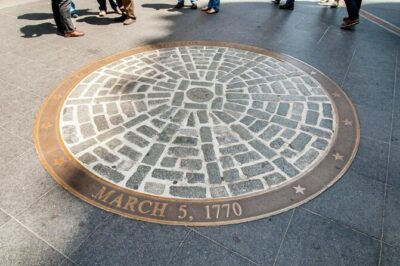
- Old State House and the Boston Massacre site: protest turns into battle cry
- Faneuil Hall Marketplace: the iconic final beat
- Where the Paul Revere House fits in
- Price value: why $26 can feel like a steal
- What I’d pack and how I’d time it
- Should you book Freedom Trail Walking Tour 250?
- FAQ
- FAQ
- How long is the Freedom Trail Walking Tour 250?
- How far do you walk?
- What does it cost?
- Is the tour in English?
- Do you need to buy tickets for the stops?
- Does the tour run in bad weather?
- Are there different start times?
- Can I cancel for a refund?
Quick hits before you go
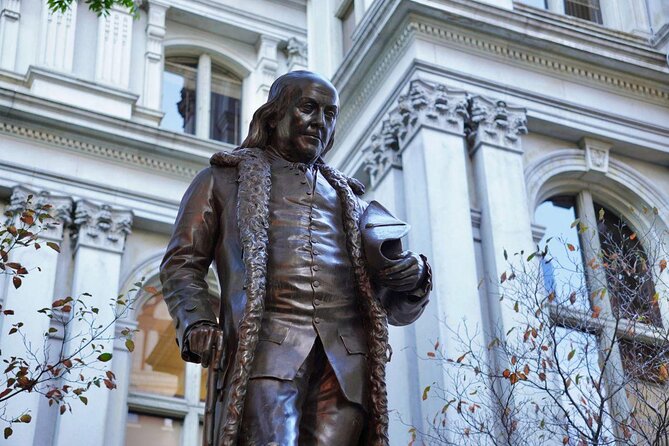
- Costumed, in-character storytelling keeps the colonial era human-sized
- A tight route: about 1.2 miles (roughly a mile and a half), about 1 hour 45 minutes
- Free admission at most stops, with Old South Meeting House not included
- Many “name” moments: Franklin, Sam Adams, Paul Revere, and more
- A small group feel capped at 50 travelers, though streets still get busy
A 1.2-mile Freedom Trail that makes Boston make sense
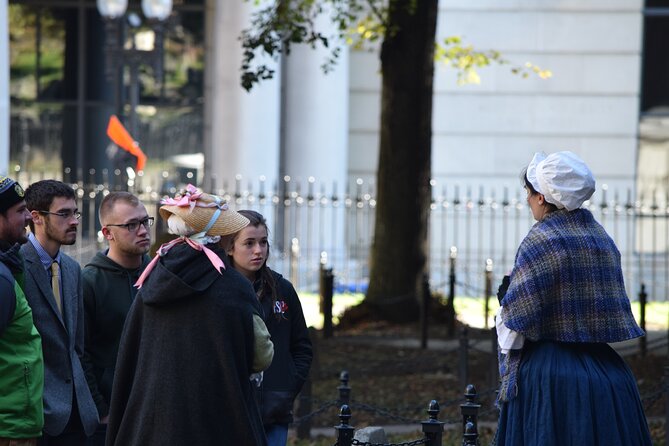
This tour is designed for people who want the Freedom Trail without spending half a day hunting for context. You’ll move at an easy walking pace and hit the main landmarks quickly, so you leave with a mental map. It’s also long enough to feel like a real tour, but short enough that you don’t need to treat it like a hike.
You’ll also get a guide who uses character-based storytelling. That matters because the Freedom Trail can turn into a grab bag of famous names. Here, the guide helps you connect why these sites matter—how protests, churches, schools, printers, and meetinghouses all fed the Revolution. In reviews, the best experiences often line up with guides like Ben and Elizabeth, who kept the pacing smooth and made it easy to hear even when other groups packed the same corners.
If you’re visiting in cool weather, you’re good either way, since it operates in all weather. Just dress for Boston. This isn’t a sit-down museum plan.
Starting at the Massachusetts State House: setting the political frame
The tour begins at the Massachusetts State House. Think of this as the “why are we here” stop. You’re not yet at the postcard icons; instead, you’re given a starting point for how early governance worked and how Boston’s political life set the tempo for what came next.
It’s a smart opening because it primes you to understand the rest of the walk. When you hit the meetinghouses and government buildings later, you’ll already know what to listen for: power, protest, and who got to speak.
This first segment is also where you’ll feel the guide’s style. Some guides are more theatrical than others, but they’re all there to keep the story moving so you don’t get stuck staring at your feet.
The red brick line keeps going. More Trail walks here
Park Street Church: hymn history in a church that still matters
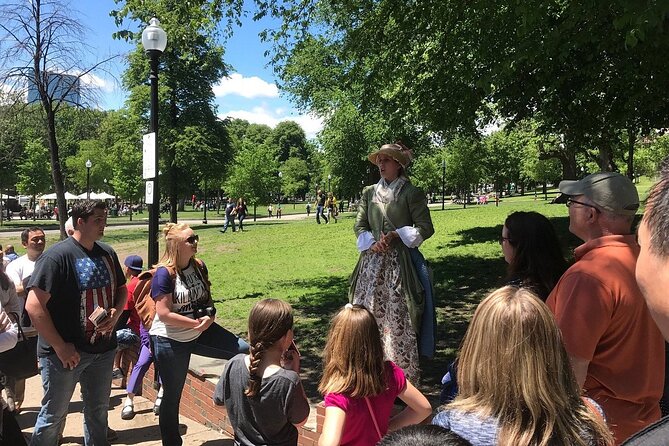
Park Street Church is where the tour nods to the famous patriot hymn, My Country ’Tis of Thee, and its early performance. It’s a quick stop, but it works because music shows up in revolutions as public emotion. It’s not just politics; it’s culture, identity, and unity.
In practice, this is one of those stops where you’ll want to stand where you can hear. Church exteriors can be breezy, and when the street gets crowded, your best bet is to keep your position stable and let the guide pull you into the story.
Time here is short, so don’t plan a lot of lingering. Use it as a reset point: listen, look for any details the guide points out, then move on without checking your phone too much.
Granary Burying Ground: where the Revolution gets personal
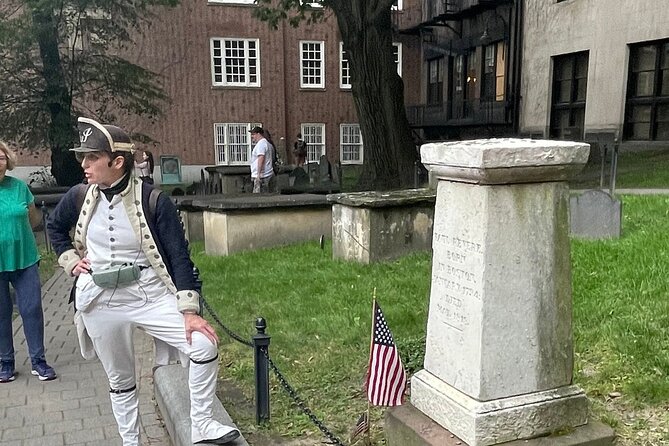
Next up is Granary Burying Ground, and this is one of the most emotional stops on the route. The focus is on Founding Fathers at their final resting place. Even when you know the names, the setting changes how you think about them.
There’s a balance here. This is a deeply meaningful site, but it can also be the part where some people feel the tour slows down. Reviews include a complaint about spending too much time in the burial ground for those who wanted more walking. So if you’re the type who gets restless standing still, prepare yourself for a stretch of listening in a quiet, reflective space.
The best guides handle this well by keeping stories specific and tying them back to what you’ll see next—so the pause doesn’t feel like a detour. If you get a guide like Catherine or Mark, people report the storytelling stays clear and the pace stays fair.
King’s Chapel and Boston’s oldest English burial ground
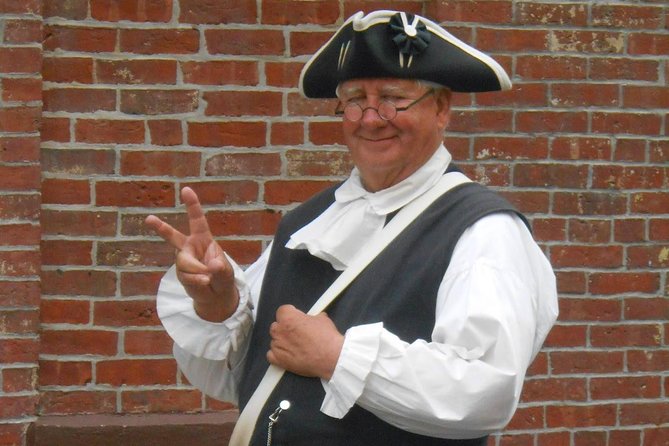
King’s Chapel is one of the stops that broadens the tour beyond just Revolutionary politics. It’s described as America’s first Anglican church, which helps you understand the religious landscape early New England lived with—then you can compare it to what you’ll see in other religious sites later.
Right after that, you’ll also be at Boston’s oldest English burial ground. This is another “listening spot,” but it adds texture. You see how early Boston organized community life, even around death and memory.
Drawback-wise: these are the places where groups from multiple tours overlap. When that happens, the guide’s volume and your position matter. If you can, choose a spot near the front and stick with it. You’ll hear better without constantly shifting.
Boston Latin School and Franklin: education as a revolution engine
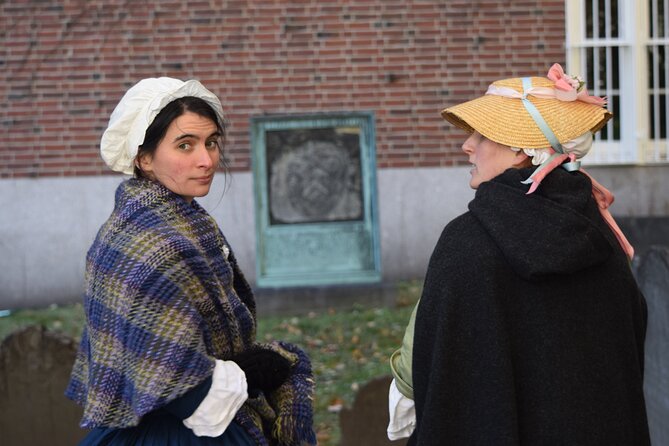
Boston Latin School is one of the tour’s clever anchors. It’s America’s first public school, and the tour connects it to Benjamin Franklin as the school’s most famous alumnus.
This stop works because it explains a less-obvious side of the Revolution: ideas don’t just appear out of thin air. People learned, argued, printed, and organized. When you connect the school to Franklin, the walk turns from memorials into cause-and-effect.
The stop itself is brief, but the story can be memorable—especially if your guide is good at making connections without rushing. Some guides in the reviews were praised for tying the route together so it feels like one continuous lesson rather than eight separate lectures.
If you’re traveling with teens or grandparents, this is the part that often makes everyone perk up. Education ties to daily life now, not just back then.
Boston was built for walking. More routes
- Boston: Freedom Trail History Small Group Walking Tour★ 5.0 · 6,450 reviews
- Harvard University Campus Guided Walking Tour★ 4.5 · 3,632 reviews
- Boston Freedom Trail Walking Tour with Costumed Guide★ 4.5 · 2,531 reviews
- The Full Revolutionary Story Epic Small Group Boston Walking Tour★ 5.0 · 2,356 reviews
- Boston’s Freedom Trail: A Revolutionary Walking Tour★ 4.9 · 1,748 reviews
Old Corner Bookstore: where printing shaped the moment
Old Corner Bookstore is described as America’s oldest commercial building, and the tour links it to the publication of Midnight Ride of Paul Revere. Even if you’ve heard Paul Revere’s story a hundred times, this framing gives it a “how it traveled through the public” angle.
That’s useful on the Freedom Trail because so much of the Revolution was fueled by messaging—letters, pamphlets, newspapers, and printed tales. When the guide highlights the printing angle, you stop thinking of the Revolution as only battles and start seeing it as communication.
This is a short stop. The key is to watch how the guide narrates the connection between a building and an idea. If you miss it, you might assume it’s just a landmark photo moment. Stay focused for the minute or two you’re there.
Old South Meeting House: the Tea Party story at street level

Old South Meeting House is where you hear about the Boston Tea Party. This is one of the tour’s biggest “scene-setting” moments because it’s connected to a specific public act, not just broad political disagreement.
Important practical note: admission here is listed as not included. That doesn’t mean you can’t appreciate the site from outside, but if you want to go in, budget for that extra cost.
Time here is around 10 minutes in the tour pacing, so again, don’t plan long wandering. The value is in the guide’s story making the meetinghouse feel like a stage where real people made real choices.
Old State House and the Boston Massacre site: protest turns into battle cry
The tour also includes Boston’s oldest standing government building in Boston (the Old State House area). From there, you head to the Boston Massacre site.
This pair is valuable because it shows a shift: public protest hardens into conflict. The Boston Massacre stop is framed as a massacre and protest that became a battle cry throughout the Revolutionary War. That’s why it’s not just a “grim moment.” It’s a turning point in how people rallied.
These are outdoor, street-level stops, but crowds can form fast. If the sidewalks feel tight, follow the guide’s direction on where to stand. You’ll get more out of the story when you can hear the details, not when you’re trying to crane your neck.
Also, listen for how the guide references Sam Adams. The tour includes a specific Sam Adams tale, and that character shows you how Revolution-minded politics worked through persuasion, organization, and fiery public speech.
Faneuil Hall Marketplace: the iconic final beat
Near the end, you reach Faneuil Hall Marketplace. This is one of Boston’s most recognizable historic sites, and it lands as a high-energy closer.
The value here is timing. By the time you reach Faneuil Hall, you’ve already heard enough about churches, schools, printing, and government that the marketplace doesn’t feel like just a famous building. It feels like part of the same public world where people debated and mobilized.
This stop is brief, but it’s an easy one to photograph and then continue exploring on your own afterward if you’d like to stay longer.
If you’re trying to make the most of a short trip, this is the moment when you’ll likely feel ready to branch out—because the tour gives you names and context to guide your next steps.
Where the Paul Revere House fits in
The route also highlights the Paul Revere House as Boston’s oldest residential building, built in 1680. Even if you don’t spend time inside (not mentioned here), the inclusion helps anchor the Revolution in ordinary life: people didn’t live in history books. They lived in homes like this one.
This is a great stop for anyone who likes the human scale of the Freedom Trail. You can look at it and think about what it would mean to watch famous neighbors go about their day—right before major events changed everything.
Price value: why $26 can feel like a steal
At $26 per person for about 1 hour 45 minutes, you’re paying for three things: guided storytelling, a planned route, and context. The route covers multiple major sites, and many stops are marked as free admission (so you’re not constantly paying entry fees to get value).
The one site where admission isn’t included is Old South Meeting House, so keep that in mind. But overall, the structure helps you avoid the common “I paid for access” disappointment. You’re paying for explanation, and that tends to be worth it in a place where the plaques alone can feel flat.
Group size also matters for value. With a maximum of 50 travelers, the tour should feel manageable. That said, Boston streets are Boston streets, so you still need to accept some crowding at famous corners.
What I’d pack and how I’d time it
Plan for standing and short walks on uneven sidewalks. Wear shoes you can move in. Bring a layer even if the forecast looks mild, because wind can bite around historic buildings.
If you hate waiting in lines, choose one of the few start times and commit to it. You’ll get more out of the tour if you’re not rushing between stops afterward. Also, because it runs in all weather, don’t pick your clothes based only on sun. Pick based on comfort for a mostly outdoors experience.
Finally: if you care a lot about hearing every detail, aim for where the guide can project. That sounds obvious, but it’s the difference between feeling the tour clicks versus feeling lost in the crowd.
Should you book Freedom Trail Walking Tour 250?
Yes, if you want a short, high-impact way to understand colonial Boston and the Revolution. This tour is especially worth it if you like story-driven guiding and want a guide who stays in character while keeping the route moving.
Book it if you’re traveling with kids, teens, or multi-generation groups too. Reviews repeatedly praise guides for adapting the energy level—some were singled out for being great with younger kids, and others for handling questions well.
Skip it (or at least manage expectations) if you strongly prefer lots of walking over standing and listening. Some stops are naturally pause-heavy, like burial-ground moments. Also, if you’re sensitive to jokes, pick your expectations accordingly: the tone can be playful, and in a few reviews the humor style didn’t land for everyone.
FAQ
FAQ
How long is the Freedom Trail Walking Tour 250?
It runs about 1 hour 45 minutes.
How far do you walk?
The tour covers about 1.2 miles (about 2 kilometers).
What does it cost?
The price is $26.00 per person.
Is the tour in English?
Yes, it’s offered in English.
Do you need to buy tickets for the stops?
Many stops are listed as free admission. Old South Meeting House is noted as admission not included.
Does the tour run in bad weather?
Yes. It operates in all weather conditions, and you should dress appropriately. If canceled due to poor weather, you’ll be offered another date or a full refund.
Are there different start times?
Yes. There are a few start times available to fit your schedule.
Can I cancel for a refund?
Free cancellation is available. You can cancel up to 24 hours in advance for a full refund.
On Foot Through Old Boston


More of the Boston Ledger



Follow the Red Bricks Further
New on the Boston Docket
- Boston to Newport Mansions Private Day Trip
★ 5.0 · 3 reviews - Boston Massachusetts Private Photography Tour
★ 5.0 · 3 reviews - Homemade Dumplings 101 in Boston
★ 3.5 · 3 reviews - Self-Guided Audio Tour of Boston North End
★ 4.5 · 3 reviews - Old Boston: Beacon Hill & Back Bay Walking Tour in French
★ 4.7 · 3 reviews
Freedom Trail & Revolution Walks, compared.
 ★ 5.0Freedom Trail History Small Group Walking TourFrom $356,450 reviews
 ★ 4.5Boston Freedom Trail Walking Tour with Costumed GuideFrom $262,531 reviews
 ★ 4.5Boston Tea Party Ships and Museum AdmissionFrom $352,512 reviews
 ★ 5.0The Full Revolutionary Story Epic Small Group Boston Walking TourFrom $552,356 reviews
 ★ 4.8Boston Tea Party Ships and Museum Interactive TourFrom $351,926 reviews
 ★ 5.0Boston Food & History: Pizza, North End & Freedom TrailFrom $901,772 reviews
 ★ 4.9Boston’s Freedom Trail: A Revolutionary Walking TourFrom $311,748 reviews
★ 4.9Freedom Trail History Small Group Walking TourFrom $351,590 reviews
★ 4.9Boston’s Freedom Trail: A Revolutionary Walking TourFrom $311,748 reviews
★ 4.9Freedom Trail History Small Group Walking TourFrom $351,590 reviews
Browse the lists this tour appears in