
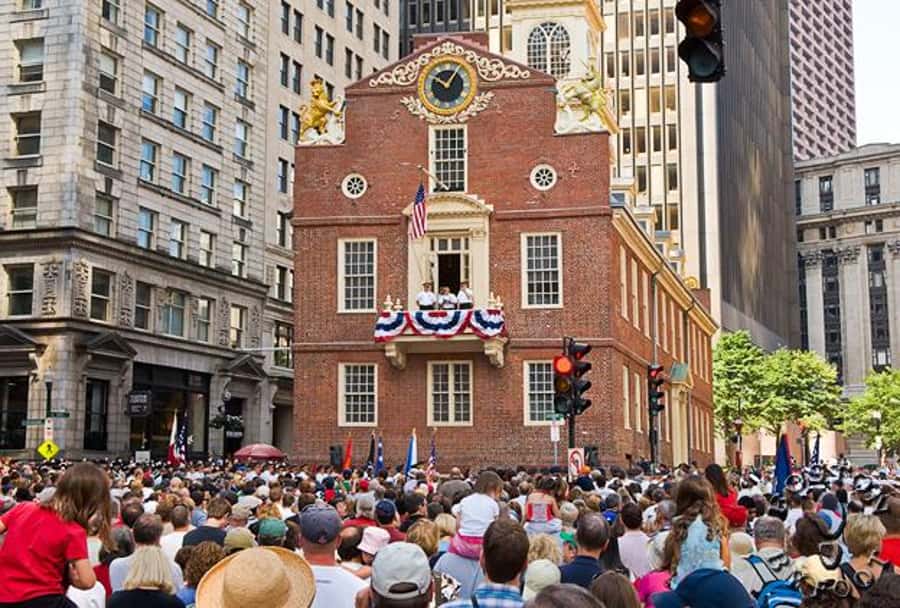
REVIEW · FREEDOM TRAIL & REVOLUTION WALKS
Freedom Trail: Small Group or Private 2 Hour Walking Tour
Boston’s rebellion starts with a walk. This small private Freedom Trail tour keeps things tightly connected to the American Revolution, not just a string of stops. I like the private size (up to two people) because you can ask questions in plain English, and I also like the emphasis on the lesser known stories behind major events. One note: it’s a 2-hour walk, so if you want long photo stops at every corner, you may feel a little pressed.
You’ll start near King’s Chapel at the corner of Tremont and Beacon and finish at Copps Hill Terrace, moving from the downtown core toward the North End storylines. Guides like Chad, Tressa, and John get called out for making the past feel real, not like a lecture you endure.
Expect the tour to tackle the headline moments you’ve heard of, including the Tea Party fallout and the March 5, 1770 incident often labeled the Boston Massacre, with enough context that you can decide if that label fits. You’ll also hear why Paul Revere was such an effective messenger and how printed words and images from Boston’s presses helped push emotions across the colonies.
In This Review
- Key points worth knowing before you go
- How a 2-hour Freedom Trail with a guide actually helps
- Meeting at Tremont and Beacon by King’s Chapel: getting your bearings fast
- Freedom Trail in historic downtown: the city as a political machine
- The Tea Party story and March 5, 1770: where context beats slogans
- Paul Revere and the power of messages: why messenger skill mattered
- North End walk: connecting neighborhoods to the Revolution’s mood
- Finishing at Copps Hill Terrace: a natural end point for the big story
- Price and value: $20 per person for a private 2-hour walk
- Who should book this tour (and who should skip it)
- Practical tips to make the most of the two hours
- Should you book this Freedom Trail small-group tour?
- FAQ
- How long is the Freedom Trail walking tour?
- What is the price per person?
- Is the tour private?
- Where does the tour start?
- Where does the tour end?
- What language is the guide?
- Is the tour wheelchair accessible?
- What is included in the price?
- What time should I arrive?
- What are the cancellation terms?
- FAQ
- How large are the groups?
- Does it run as a guided walking tour?
- Are there different starting times?
- Can I reserve without paying right away?
Key points worth knowing before you go
- Private group up to two means faster Q&A and less waiting around.
- Freedom Trail with less obvious stories helps you connect causes to consequences.
- Tea Party and March 5, 1770 context gives you room to form your own view of what happened.
- Paul Revere and the power of print explain how messages moved and emotions spread.
- Two hours, one clear route is great for a first Boston history trip, but you’ll stay on the move.
How a 2-hour Freedom Trail with a guide actually helps
A Freedom Trail walk can be great on your own. But a guide changes the experience. In just two hours, you’re not trying to remember dates or decode plaques. You’re following a person who’s built the story so you understand why Boston became a pressure cooker in the 1760s and 1770s.
What I like about this format is the focus. You’re not bouncing around with a huge group that forces you to listen at arm’s length. With up to two people, the guide can slow down when something is confusing, like why certain events inflamed anger or how Boston’s public arguments became political action. That matters because the American Revolution wasn’t sparked by one dramatic moment. It was built by repeated tensions: economic, social, and even environmental pressures that shaped everyday life in the city.
The other advantage is that you get to walk and think at the same time. You’re seeing the layout and the feel of the downtown and North End areas while the guide explains the forces that were changing Boston and pushing colonists toward open rebellion.
If you prefer long, slow tours where you linger, this one may feel too efficient. But if you want clarity fast, this is a strong match.
Meeting at Tremont and Beacon by King’s Chapel: getting your bearings fast
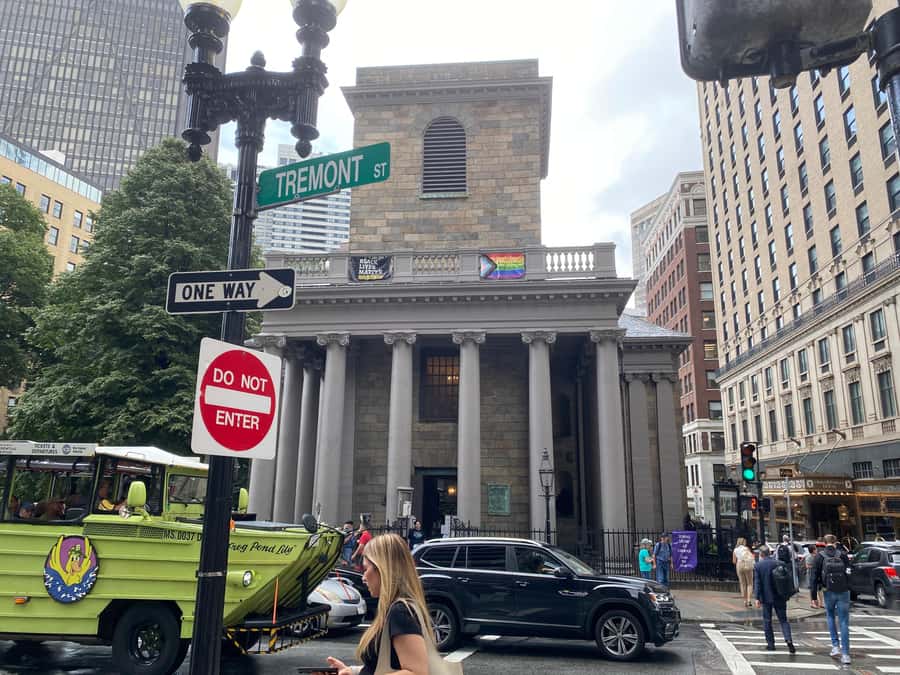
Your tour starts at the corner of Tremont and Beacon streets, across from King’s Chapel. You’re also listed as starting at One Beacon Street, which lines up with this immediate downtown area. That location is useful because it’s central. It lets the guide set the scene quickly and explain how the downtown core connects to the Freedom Trail story you’re about to walk.
Starting near King’s Chapel also gives you a clean visual anchor. Even if you don’t know Boston well yet, you’ll have a recognizable point to orient yourself. The most practical tip here is simple: arrive 10 minutes early and be at the right corner. One guest reported a problem where no guide was present when they arrived, which is exactly the kind of situation you can prevent by showing up early and watching for the meeting landmark.
Once you’re gathered, the guide takes you from there into the historic downtown context. Expect the early portion to set up the “why.” Not just what happened, but what was happening in Boston that made people ready to fight.
The red brick line keeps going. More Trail walks here
Freedom Trail in historic downtown: the city as a political machine
This tour walks through Boston’s historic downtown with the North End in the arc of the route. The key difference is that the guide isn’t treating the Freedom Trail like a highlight reel. They’re using the buildings and sites as clues to explain how Boston transformed through economic, environmental, and social change.
Here’s what that means for you on the ground:
- You’ll connect political anger to city life, including how people experienced change through trade, community conflict, and the strain of rapid shifts.
- You’ll get background on the period leading up to the American Revolution, which makes the later dramatic events feel less random.
- You’ll hear “lesser known stories” behind significant events, which is often where the real understanding lives.
A good part of the downtown segment is how the guide frames the emotional build-up. Revolutionary events didn’t only happen because someone shouted a slogan. They happened because people read, talked, and reacted to information that felt personal. The guide’s job is to show you that chain.
If you’re a first-timer to the Freedom Trail, this section is where you’ll feel your brain start organizing the maze. If you already know the big names, this is still worth it because the tour’s emphasis is on how the pieces connect.
The Tea Party story and March 5, 1770: where context beats slogans
One of the main reasons to choose this tour is how it treats the headline moments. You’ll hear details behind Boston’s infamous Tea Party and then move into the March 5, 1770 incident—the one many people learn about as the Boston Massacre.
The clever part is that the guide pushes you to decide for yourself if the label is fair. That’s not a word game. It’s a chance to look at the event through the conditions around it: tensions on the street, how authority was perceived, and how quickly a “small spark” could become a symbol for an entire generation.
You’ll also get a sense of how information travels and hardens into public belief. Boston’s presses printed words and images that stirred emotions. The tour connects those prints to real behavior—protest, confrontation, and escalating rhetoric.
For you, that means the lesson isn’t just that an event happened. It’s how events became political tools. That’s exactly what makes the Revolution feel alive instead of like distant textbook drama.
Paul Revere and the power of messages: why messenger skill mattered
Boston’s Revolution story is usually told through battles and speeches. This tour adds another layer: communication. You’ll learn why Paul Revere was such an effective messenger and how messaging worked in a world without instant broadcast.
Instead of treating Revere as just a name on a poster, the guide ties him to the larger system of reaching people fast enough to matter. That’s the practical takeaway: in moments of political conflict, timing and clarity can shape what people do next.
There’s also the second half of the communication story: print. You’ll learn how the words and images printed in Boston helped stir emotions across colonial America. Again, you’re not just hearing that newspapers existed. You’re seeing the point: printed material turned private worries into public action.
If you like history that connects cause to effect—how one piece of communication triggers another step—this part is likely to be a highlight.
And because the tour is private and short, you can ask follow-up questions without feeling like you’re slowing down a big crowd. That’s where the named guides stand out. Chad is praised for insight that makes the tour click, and John gets credit for mixing deep knowledge with a sense of humor while pointing out where things happened.
North End walk: connecting neighborhoods to the Revolution’s mood
The route isn’t only downtown. It’s built to include Boston’s North End as part of the journey. That matters because the North End isn’t just an attractive historic area. It’s part of the city’s social fabric, and the guide uses that context to explain how people and events ignited a nation.
On this tour, you’re not only moving through geography. You’re moving through a shift in mood. The guide ties the neighborhood story into how Boston became a hotbed of rebellion in the 1760s and 1770s.
What you’ll likely notice is how the guide keeps pulling you back to the human side of events:
- Who people were listening to
- What people were afraid of or angry about
- Why certain stories caught fire
This is where history buffs tend to enjoy it, and first-timers often appreciate it too. The “events that ignited a nation” are explained with enough clarity that you can follow the logic even if you’re new to the Freedom Trail.
Boston was built for walking. More routes
- Boston: Freedom Trail History Small Group Walking Tour★ 5.0 · 6,450 reviews
- Harvard University Campus Guided Walking Tour★ 4.5 · 3,632 reviews
- Boston Freedom Trail Walking Tour with Costumed Guide★ 4.5 · 2,531 reviews
- The Full Revolutionary Story Epic Small Group Boston Walking Tour★ 5.0 · 2,356 reviews
- Boston’s Freedom Trail: A Revolutionary Walking Tour★ 4.9 · 1,748 reviews
Finishing at Copps Hill Terrace: a natural end point for the big story
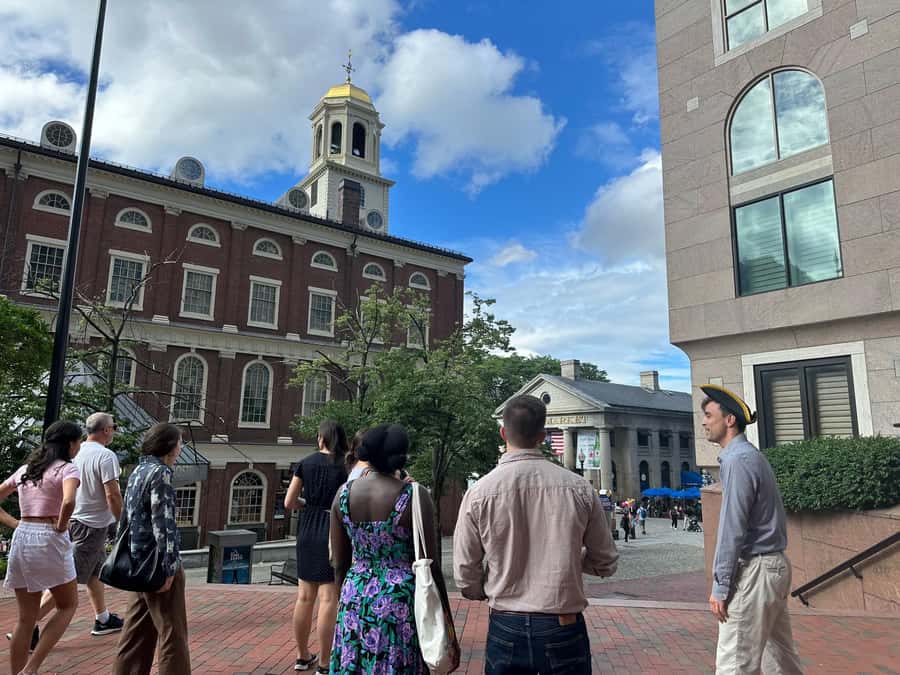
Your walk ends at Copps Hill Terrace. That closing point matters because it gives the tour a clean stop instead of ending mid-block. The guide uses the final stretch to bring the themes together—how Boston’s transformation and communication systems fed the momentum toward open resistance.
You may not get a formal “final lecture” here. It’s more like the guide wraps the story so you leave with a map in your head: downtown conflict, North End context, and the Revolution’s communication engine connecting them.
It’s also a practical bonus. After two hours of walking, you’ll be in a spot that feels like it belongs to the story, not just a convenient place to stop.
Price and value: $20 per person for a private 2-hour walk
At $20 per person for a 2-hour private walking tour, the value comes from two things: time efficiency and control.
Time efficiency because the duration is tight. You’re paying for focused storytelling in one concentrated window. You’re not spending your afternoon on transit and re-orientation between far-apart sites.
Control because the private group setup (up to two people) lets you guide the pacing with questions. If your travel style is “ask why, not just what,” the private format can be worth more than a cheaper group option because you’ll actually get answers you care about.
Also, the tour length is a good fit for visitors who are juggling other plans in Boston. If you want Freedom Trail context without turning the whole day into a history marathon, this hits a sweet spot.
The one downside is the same as earlier: it’s not a slow stroll. If you want extra time to wander or linger, you’ll need to schedule additional independent exploring before or after.
Who should book this tour (and who should skip it)
This is a strong fit if you fall into one of these groups:
- First-timers who want the Freedom Trail explained in plain terms.
- History lovers who want the “why” behind familiar events like the Tea Party and the March 5, 1770 incident.
- People who care about how communication works—Paul Revere as a messenger and Boston’s presses as a political tool.
- Small-group travelers who like conversation, not just listening.
It might be less ideal if you:
- Want a long, unhurried walk with lots of free time at each site.
- Prefer to read everything on your own pace first, then take a quick guide only for Q&A.
Practical tips to make the most of the two hours
Here’s how to get the best experience from this specific format:
- Arrive 10 minutes early at the corner of Tremont and Beacon, across from King’s Chapel. It’s the meeting point you should use as your anchor.
- Wear comfortable shoes. You’re moving through historic parts of Boston on foot for the full 2 hours.
- Bring one or two “history curiosity” questions. The private setup is where those questions pay off.
- If you’re interested in the March 5, 1770 debate, be ready to weigh details and not just memorize a label.
Also, if weather is bad, you might want to plan for a wet walk. The tour is walking-based, and the whole point is the street-level context.
Should you book this Freedom Trail small-group tour?
I’d book it if you want a focused, conversation-friendly way to understand why Boston turned into a rebellion engine—especially if you care about what people believed and how they shared those beliefs. The guide storytelling is a clear strength, and names like Chad, Tressa, and John show up repeatedly for bringing the material to life with humor and clarity.
If you’re the type who likes to control pacing and linger, then consider either pairing this with your own self-guided time afterward or picking a longer tour. But for most people, two hours of tight context is a great way to get oriented and feel the American Revolution story in the streets.
FAQ
How long is the Freedom Trail walking tour?
The tour lasts 2 hours.
What is the price per person?
It costs $20 per person.
Is the tour private?
Yes. It offers a private group option, designed for groups of up to 2.
Where does the tour start?
The meeting point is at the corner of Tremont and Beacon streets, across from King’s Chapel (starting location: One Beacon Street).
Where does the tour end?
The tour ends at Copps Hill Terrace.
What language is the guide?
The live tour guide provides the tour in English.
Is the tour wheelchair accessible?
Yes, it is wheelchair accessible.
What is included in the price?
A private guided walking tour is included.
What time should I arrive?
Please arrive 10 minutes prior to the scheduled departure.
What are the cancellation terms?
You can cancel up to 24 hours in advance for a full refund.
FAQ
How large are the groups?
The tour is designed for groups of up to 2.
Does it run as a guided walking tour?
Yes, it is a live guided walking tour.
Are there different starting times?
Starting times depend on availability.
Can I reserve without paying right away?
Yes, you can reserve now and pay later.
On Foot Through Old Boston


More of the Boston Ledger



Follow the Red Bricks Further
New on the Boston Docket
- Boston to Newport Mansions Private Day Trip
★ 5.0 · 3 reviews - Boston Massachusetts Private Photography Tour
★ 5.0 · 3 reviews - Homemade Dumplings 101 in Boston
★ 3.5 · 3 reviews - Self-Guided Audio Tour of Boston North End
★ 4.5 · 3 reviews - Old Boston: Beacon Hill & Back Bay Walking Tour in French
★ 4.7 · 3 reviews
Freedom Trail & Revolution Walks, compared.
 ★ 5.0Freedom Trail History Small Group Walking TourFrom $356,450 reviews
 ★ 4.5Boston Freedom Trail Walking Tour with Costumed GuideFrom $262,531 reviews
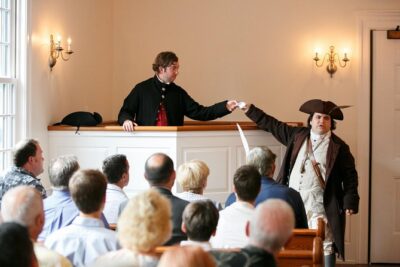 ★ 4.5Boston Tea Party Ships and Museum AdmissionFrom $352,512 reviews
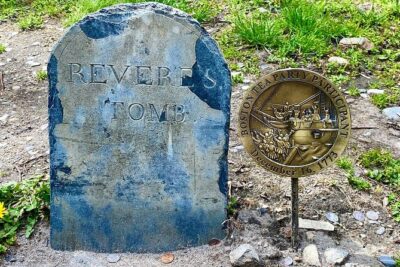 ★ 5.0The Full Revolutionary Story Epic Small Group Boston Walking TourFrom $552,356 reviews
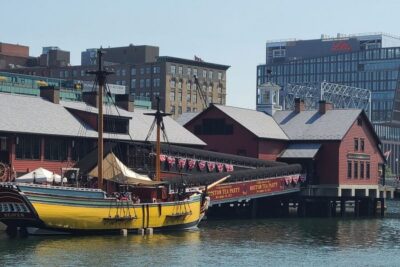 ★ 4.8Boston Tea Party Ships and Museum Interactive TourFrom $351,926 reviews
 ★ 5.0Boston Food & History: Pizza, North End & Freedom TrailFrom $901,772 reviews
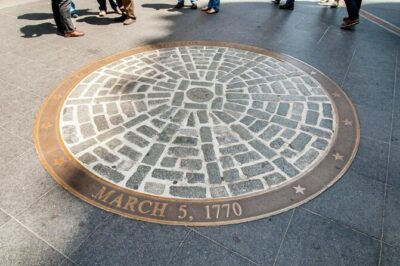 ★ 4.9Boston’s Freedom Trail: A Revolutionary Walking TourFrom $311,748 reviews
★ 4.9Freedom Trail History Small Group Walking TourFrom $351,590 reviews
★ 4.9Boston’s Freedom Trail: A Revolutionary Walking TourFrom $311,748 reviews
★ 4.9Freedom Trail History Small Group Walking TourFrom $351,590 reviews
Browse the lists this tour appears in