
REVIEW · FREEDOM TRAIL & REVOLUTION WALKS
Freedom Trail Experience
Follow Boston’s Revolution trail on foot.
This guided Freedom Trail walk turns a list of landmarks into a clear storyline, with quick stops that keep you moving and listening. I especially like how the route hits the big names fast, from Park Street through the North End, and still gives you enough time at the cemetery to notice what matters most. You’ll use a mobile ticket, and the guide keeps the group together with an easy-to-hear setup.
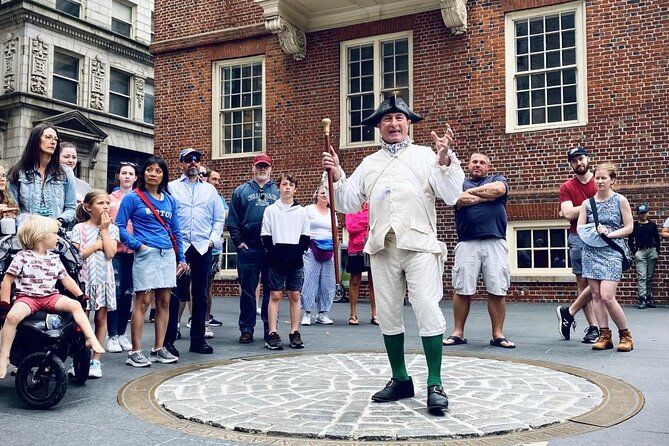
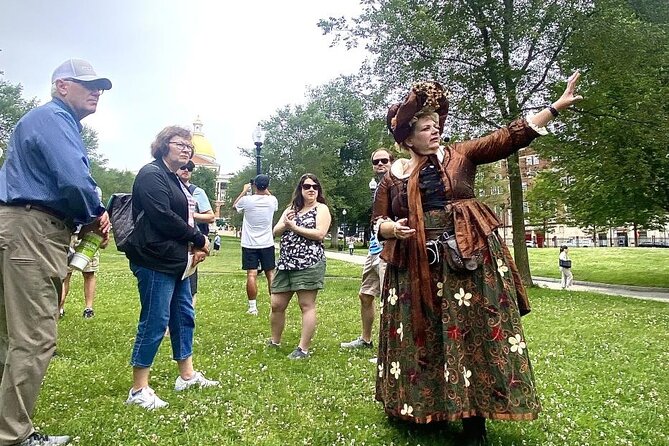
What I love most is the mix of famous names and everyday details you can see right in front of you. The standout stop for me is Granary Burying Ground, where you’re guided to key tombs, and you get a real sense of who shaped the Revolution. I’ve also seen the difference great guides make firsthand—names like Roseli, Sarah, Jeremiah Poope, Mother Goose (Elaine), and Geoff show up in this tour’s history through their style, pacing, and theatrical touches like Sarah’s clear mic delivery and Mother Goose singing My Country ’tis of Thee to make the point stick.
One drawback to consider: not every stop is an in-depth visit. Several locations are brief (a couple minutes here, a few there), and the Paul Revere House admission isn’t included, so if you want to go inside, you’ll likely need to handle that separately. If you’re expecting a slow museum-style experience, this is more of a guided walk-and-look format.
In This Review
- Key highlights you can count on
- A 1.5-to-1.8-hour walk that makes the Freedom Trail click
- Where the tour begins (and what your first 10 minutes will feel like)
- Park Street Church: the song origin you’ll recognize on sight
- Granary Burying Ground: the Revolution in tombstones
- King’s Chapel: a Revolutionary town with long timelines
- Boston Latin School: education as a Revolutionary ingredient
- Benjamin Franklin statue: a short stop with an active role
- Old South Meeting House: where the tea story gets concrete
- Boston Massacre site: a Colonial costumed guide moment
- Old Corner Bookstore: where Paul Revere’s ride story was published
- Old State House: government, power, and nearby conflict
- Paul Revere House (admission not included) and the finish by Old North
- Price and logistics: is $35 good value?
- Guides make the story stick: Roseli, Sarah, Jeremiah Poope, Mother Goose, Geoff
- What it’s like on the ground: walking pace, group size, and weather reality
- Who should book this Freedom Trail walk, and who might want a different option
- Should you book the Freedom Trail Experience?
- FAQ
- How long is the Freedom Trail Experience?
- How much does it cost?
- Where does the tour start and end?
- Is the tour in English?
- Do I get a mobile ticket?
- Is admission included for all stops?
- Is there a group size limit?
- Are service animals allowed?
- Are dogs allowed everywhere on the route?
- When should I book?
Key highlights you can count on
- Mobile ticket for a quick start at 120 Tremont St
- Major Revolutionary sites in one loop, including Granary Burying Ground and Old South Meeting House
- A mic-and-speaker setup that makes the narration easy to follow
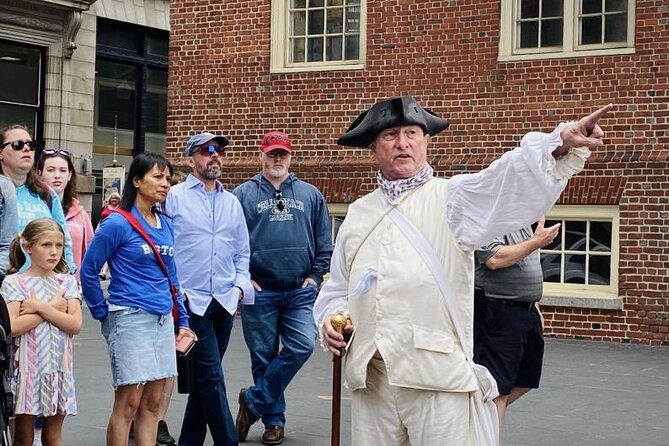
- Great guide energy, with styles ranging from time-period costumes (Geoff) to storytelling and song (Mother Goose)
- Short, efficient stop times, so you cover a lot without turning it into a marathon
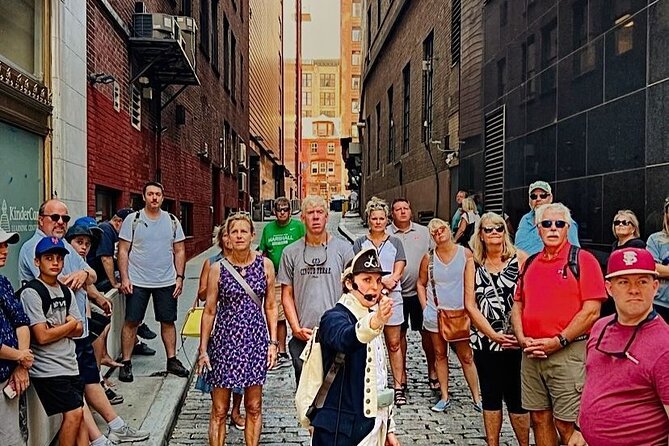
- Small-group feel with a maximum of 30 people
A 1.5-to-1.8-hour walk that makes the Freedom Trail click
The best way to describe this tour is simple: it’s a guided route through the places that shaped the Revolution, paced to keep you learning without dragging you from one stop to the next. The total time is about 1 hour 30 minutes to 1 hour 55 minutes, which works well if you have other plans in Boston later the same day.
You’re not just looking at buildings and street corners—you’re being told why they mattered, and how they connect. That connection is what makes the Freedom Trail worth doing with a guide. Left to your own devices, it can turn into a sightseeing checklist. With a good guide, it becomes a timeline you can actually follow.
The tour also has a practical setup for listening. In the feedback I’ve seen, guests consistently mention the mic and speaker, which is a big deal when you’re outside and the street noise can otherwise swallow the story.
Where the tour begins (and what your first 10 minutes will feel like)
You meet at 120 Tremont St, Boston, MA 02108. The end point is The Paul Revere House, 19 N Square, Boston, MA 02113, right in the Historic North End.
The meeting area and the final location are both in zones where you can likely grab public transit nearby, which helps if you’re arriving from another neighborhood. And yes, it’s a walk, so plan on comfy shoes. Even when individual stops are short, you’ll still be moving for most of the tour.
You’ll also get a confirmation at booking and receive a mobile ticket, so you’re not digging around for paper. That small detail matters when you’re standing with other people trying to start on time.
The red brick line keeps going. More Trail walks here
Park Street Church: the song origin you’ll recognize on sight
The tour begins with Park Street Church, an iconic spot tied to My Country ’tis of Thee and important Revolutionary-era history. The stop is brief—about 5 minutes—but it sets the tone.
Why this first stop works: it gives you a cultural hook, not just political facts. A song you’ve heard before suddenly has a real location attached to it. When the story connects to something familiar, you retain more of what comes next.
Practical tip: since the stop is short, listen carefully early. Your guide will likely use this moment to explain how the rest of the route fits together.
Granary Burying Ground: the Revolution in tombstones
Next up is Granary Burying Ground, part of the Freedom Trail’s main concentration of landmarks. This is one of the few longer pauses—about 20 minutes—and it’s where the names start feeling real.
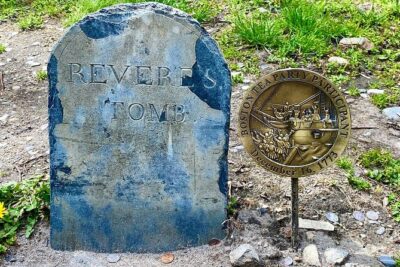
You’ll get guided context around major figures, including the tombs of Samuel Adams and Paul Revere, plus John Hancock and others. This stop also includes admissions as part of the tour.
Here’s the value of doing this guided: cemeteries are full of information, but without direction it can become a blur of dates and stone details. With a guide, you learn what to look for and why those particular graves matter to the Revolutionary story.
Accessibility note matters here. If you can’t climb stairs, you can enter the Granary Burial Ground from a separate entrance.
And if you’re traveling with a dog, plan ahead: dogs cannot enter Granary Burial Ground. Service animals are allowed.
King’s Chapel: a Revolutionary town with long timelines
At King’s Chapel, you’ll hear how this building connects to Boston’s Revolutionary setting while also spanning over 300 years. The stop is extremely quick—around 2 minutes—so think of it as a “snapshot stop.”
Even in a short time, this kind of stop helps you understand that history didn’t freeze in 1775. Buildings kept being used, repurposed, and reinterpreted. That long arc is part of what makes Boston feel like a living classroom rather than a reenactment set.
Boston Latin School: education as a Revolutionary ingredient
Then comes Boston Latin School, often described as the first public school in America, where some of the country’s founding figures were educated. The stop is about 5 minutes and admission-free.
This matters because Revolution-era change wasn’t only about battles and speeches. It was also about ideas, literacy, and leadership formation. A quick stop like this can make the route feel more complete—you’re seeing the Revolution’s “human infrastructure,” not just its conflict.
- Boston Duck Boat Sightseeing City Tour with Cruise Along Charles River★ 4.5 · 9,378 reviews
- Boston: Freedom Trail History Small Group Walking Tour★ 5.0 · 6,450 reviews
- Boston Hop-On Hop-Off Trolley Tour with 13 Stops★ 4.5 · 5,576 reviews
- Boston Duck Tour: The Original and World-Famous★ 4.6 · 3,935 reviews
- Harvard University Campus Guided Walking Tour★ 4.5 · 3,632 reviews
Benjamin Franklin statue: a short stop with an active role
The tour includes a statue of Benjamin Franklin. It’s about 5 minutes, free, and focused on Franklin’s role in Revolutionary Boston.
A statue can feel like a dead object unless you know why to care. With a guide, you’ll get enough context that Franklin doesn’t become just a famous name. You start to see him as a working presence in the city’s story.
Old South Meeting House: where the tea story gets concrete
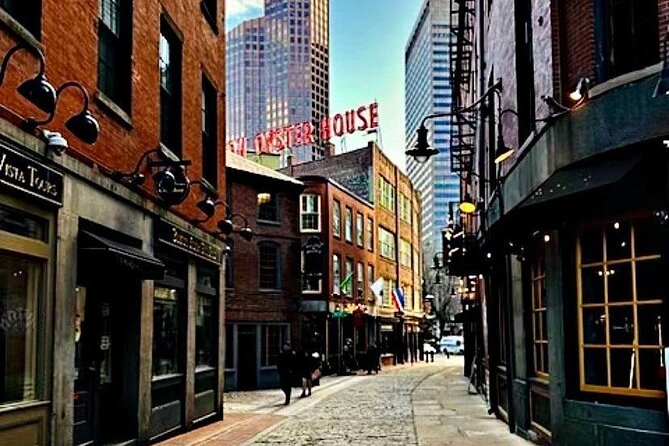
At Old South Meeting House, you’ll hear the story of the Boston Tea Party and how the Revolution played out in Boston. The stop is around 5 minutes, free.
This is one of those “you’re in the right place” experiences. The meeting house setting makes the political drama feel less like a distant chapter in a textbook and more like a high-stakes event unfolding in a real community.
Watch your time here: the stop is short, so let your guide guide your attention to the details that tie into the Tea Party narrative.
Boston Massacre site: a Colonial costumed guide moment
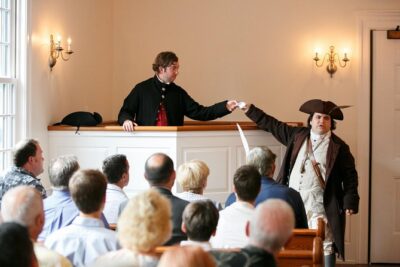
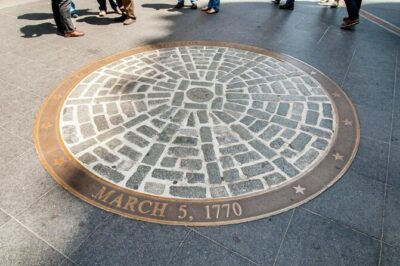
The tour then moves to the Boston Massacre site, another 5-minute, free stop. The story here is told by a Colonial costumed guide, which can make the episode feel more immediate.
When history comes with costume, the goal isn’t costume for costume’s sake. It’s to keep your brain in “story mode.” That’s helpful on a walking tour, because it keeps you listening instead of drifting into autopilot.
Old Corner Bookstore: where Paul Revere’s ride story was published
At the Old Corner Bookstore, you’ll learn about Paul Revere’s Ride and see the connection to where it was originally published. The stop is about 5 minutes and free.
This is a smart kind of stop for two reasons. First, printing and communication are part of how revolutions spread. Second, it reminds you that the Revolution wasn’t only fought—it was narrated.
Old State House: government, power, and nearby conflict
Next is the Old State House, roughly 10 minutes and free. It’s described as a center of Colonial government and is also near the Boston Massacre site.
This stop helps you connect the story points you heard earlier. When you know where power was concentrated, the chaos makes more sense. You also get a natural geographical link between political authority and the violence that challenged it.
Paul Revere House (admission not included) and the finish by Old North
The tour ends with the Paul Revere House, Boston’s oldest residential house from 1680—a key starting place for the famous midnight ride. The stop is about 15 minutes, but admission here is not included in the tour price.
So you’ll get the chance to see and hear the story, but if you want to go inside, you’ll need to plan for additional entry costs. If you’re the type who likes interiors—rooms, artifacts, period details—factor that into your day.
The final stretch includes Paul Revere Mall, with a statue and a connection to Old North Church. This is about 10 minutes and included admission for that stop.
Finishing in the North End makes sense. It’s the part of Boston where the Revolution story feels close to the streets and the old skyline.
Price and logistics: is $35 good value?
At $35.00 per person, the value depends on what you’re aiming for.
If you want a guided “hits and connections” tour, this is a strong deal. You cover a long list of major sites in one outing, including an admission-included cemetery stop and an included admission stop near the end. The walk is long enough to matter, but the total time keeps you from losing half your day.
Also, the tour includes multiple free stops, so your money goes mostly into interpretation—someone helping you connect the dots. In a city like Boston, that’s often the difference between seeing history and understanding it.
One more practical point: the tour is often booked around 32 days in advance on average. That’s not a guarantee, but it’s a hint that you should plan ahead rather than assuming you can just show up last minute.
Guides make the story stick: Roseli, Sarah, Jeremiah Poope, Mother Goose, Geoff
This tour has a personality, and the guides are a big part of it. In the feedback I’ve seen, certain names come up again and again:
- Roseli: praised for turning the Trail of Freedom into a living narrative with facts and events that feel connected rather than chopped up.
- Sarah: singled out for making it a next-level experience, especially with a mic-and-speaker setup that keeps things easy to hear.
- Jeremiah Poope: described as personable and fun, while still staying informed. If you get him, the tour tends to feel less like a lecture and more like a story you’re walking through.
- Mother Goose (Elaine): known for vivid, interesting storytelling and even singing My Country ’tis of Thee. That’s a great sign if you like your history with drama and rhythm.
- Geoff: noted for period clothing and strong knowledge, which works especially well for kids or anyone who likes a more theatrical tone.
The common thread is pace and clarity. A short-stop itinerary only works when the guide can compress meaning without making it feel rushed. The best guides do exactly that.
What it’s like on the ground: walking pace, group size, and weather reality
The group has a maximum of 30 travelers, so it’s not a tiny private chat, but it’s also not so large that you’re constantly losing people. The narration setup and the relatively structured stops help you keep track.
As for weather: Boston will do Boston things. I’ve seen notes that rain didn’t ruin the experience, mostly because the guide and group kept the pace manageable and the tour stayed focused on storytelling, not lingering.
For you, the main takeaway is practical: pack layers and expect to move. Even with short stops, your body still feels the walk.
Who should book this Freedom Trail walk, and who might want a different option
This tour fits best if you:
- want a guided, efficient way to see many Freedom Trail highlights without planning a route yourself
- like history stories told in context, not just as dates and names
- appreciate clear audio through a mic and speaker
It might be less ideal if you:
- want long interior time in museums (the Paul Revere House is not included, and most other stops are short)
- need a totally slow pace with frequent breaks
- are traveling with a dog (Granary Burying Ground is off-limits to dogs)
If you’re visiting with family, this format can also work well because costumes and storytelling tend to keep attention.
Should you book the Freedom Trail Experience?
I’d book it if you want to get oriented fast and leave with a real sense of how Boston’s Revolution unfolded across specific locations. At $35, the price-to-time ratio is fair, especially because you get a guided narrative plus included admissions at key stops.
If you’re the kind of traveler who cares about interiors, museums, and deep time spent inside buildings, you might treat this as the “story foundation” tour and then plan a separate add-on for the Paul Revere House if you want to go beyond the exterior and the talk.
FAQ
How long is the Freedom Trail Experience?
It runs about 1 hour 30 minutes to 1 hour 55 minutes.
How much does it cost?
The price is $35.00 per person.
Where does the tour start and end?
It starts at 120 Tremont St, Boston, MA 02108 and ends at The Paul Revere House, 19 N Square, Boston, MA 02113.
Is the tour in English?
Yes, it’s offered in English.
Do I get a mobile ticket?
Yes, the tour uses a mobile ticket.
Is admission included for all stops?
No. Admission is included for Granary Burying Ground and for Paul Revere Mall, but Paul Revere House admission is not included.
Is there a group size limit?
Yes. The tour has a maximum of 30 travelers.
Are service animals allowed?
Yes, service animals are allowed.
Are dogs allowed everywhere on the route?
No. Dogs cannot enter Granary Burial Ground.
When should I book?
On average, this tour is booked 32 days in advance.
More of the Boston Ledger




Follow the Red Bricks Further
New on the Boston Docket
- Boston to Newport Mansions Private Day Trip
★ 5.0 · 3 reviews - Boston Massachusetts Private Photography Tour
★ 5.0 · 3 reviews - Homemade Dumplings 101 in Boston
★ 3.5 · 3 reviews - Self-Guided Audio Tour of Boston North End
★ 4.5 · 3 reviews - Old Boston: Beacon Hill & Back Bay Walking Tour in French
★ 4.7 · 3 reviews
Freedom Trail & Revolution Walks, compared.
 ★ 5.0Freedom Trail History Small Group Walking TourFrom $356,450 reviews
 ★ 4.5Boston Freedom Trail Walking Tour with Costumed GuideFrom $262,531 reviews
 ★ 4.5Boston Tea Party Ships and Museum AdmissionFrom $352,512 reviews
 ★ 5.0The Full Revolutionary Story Epic Small Group Boston Walking TourFrom $552,356 reviews
 ★ 4.8Boston Tea Party Ships and Museum Interactive TourFrom $351,926 reviews
 ★ 5.0Boston Food & History: Pizza, North End & Freedom TrailFrom $901,772 reviews
 ★ 4.9Boston’s Freedom Trail: A Revolutionary Walking TourFrom $311,748 reviews
★ 4.9Freedom Trail History Small Group Walking TourFrom $351,590 reviews
★ 4.9Boston’s Freedom Trail: A Revolutionary Walking TourFrom $311,748 reviews
★ 4.9Freedom Trail History Small Group Walking TourFrom $351,590 reviews
Browse the lists this tour appears in