
REVIEW · FREEDOM TRAIL & REVOLUTION WALKS
Freedom Trail: Boston Common, Old State House, Faneuil Hall
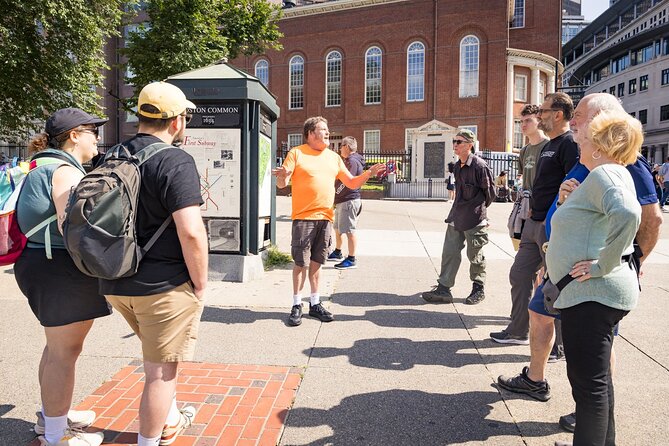
Two hours can fix your Freedom Trail. This small-group walking tour strings together the best-known sites plus the details that make the story click, from Boston Common to Faneuil Hall Marketplace.
I love the easy Q&A feel. You’ll walk with Brian, a local Boston tour guide and historian, and you can ask questions as you go. I also like how the tour points out facts you don’t notice from plaques alone, turning each stop into something you can picture.
The one thing to consider: the pacing can feel information-heavy. Brian’s energy is high, and if you prefer slower breaks (or you’re with very young kids), you might want to plan for extra pauses on your own.
In This Review
- Key things to know before you go
- Boston Common to Old State House: why this route works
- Stop 1: Boston Common, from troop camp to rally grounds
- Stop 2: Massachusetts State House and the view of power
- Stop 3: Park Street Church and the power of a steeple
- Stop 4: Granary Burying Ground and the names that stick
- Stop 5: King’s Chapel and loyalty, faith, and architecture
- Stop 6: Old South Meeting House and how the Tea Party took shape
- Stop 7: Old State House and the balcony moment
- Stop 8: Faneuil Hall, the Cradle of Liberty
- Price and time: is $39 a fair deal?
- Group size, pace, and who this tour fits best
- Practical tips to get the most from the walk
- Should you book this Freedom Trail walk?
- FAQ
- How long is the Freedom Trail tour?
- What does the tour cost?
- What time does the tour start?
- Where does the tour start?
- Where does the tour end?
- How many stops are included?
- Are there admission fees at the stops?
- What group size should I expect?
- Is the tour offered in English?
- Can I cancel for a full refund?
Key things to know before you go
- Up to 15 people means more back-and-forth than a big bus tour
- Mobile ticket helps you start without hunting for paper
- 8+ Freedom Trail stops in about 2 hours keeps things focused
- Granary Burying Ground admission is included, while most other stops are free
- Brian adds side details that don’t always make it onto quick self-guided routes
Boston Common to Old State House: why this route works
The Freedom Trail can feel like a checklist if you do it alone. This tour avoids that trap by turning the walk into a sequence with cause-and-effect. You don’t just see buildings. You connect what happened there to what came next.
You start in the area of Tremont St and Park Street (near Winter St). From there, the route naturally funnels you into the first big mood shift: quiet green space, then government buildings, then church steeples, then meeting halls and courthouses. In other words, you get a real sense of how daily Boston life collided with politics.
The tour lasts about 2 hours and you’ll spend around 15 minutes at each stop. That’s long enough for stories and context, but short enough to keep your legs moving.
Stop 1: Boston Common, from troop camp to rally grounds
Boston Common is a calm first chapter. It’s famously founded in 1634, and it wears that age well: big open space, old trees, and a setting that makes it easier to absorb the timeline.
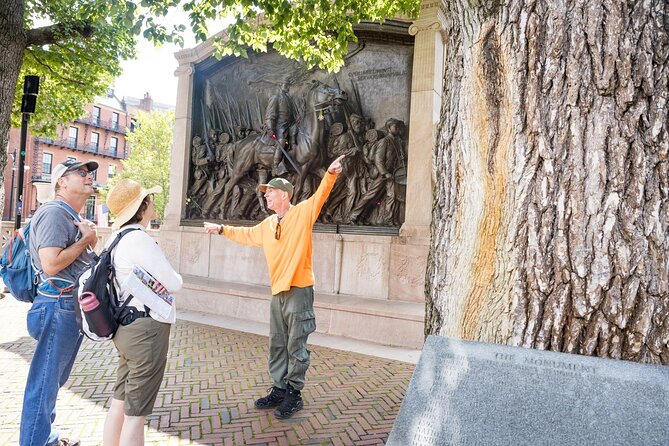
Brian uses the park to set the tone. This isn’t just scenery. Boston Common has seen British troop encampments during the Revolutionary War, and it later played a role in civil rights rallies in the 20th century. That jump from revolution to civil rights is a smart tour trick. It shows you that Boston’s fight for freedom didn’t end in 1776.
What I like here is the breathing room. Even if the next stops get intense, you start with a place that helps you settle in and get your bearings.
The red brick line keeps going. More Trail walks here
Stop 2: Massachusetts State House and the view of power
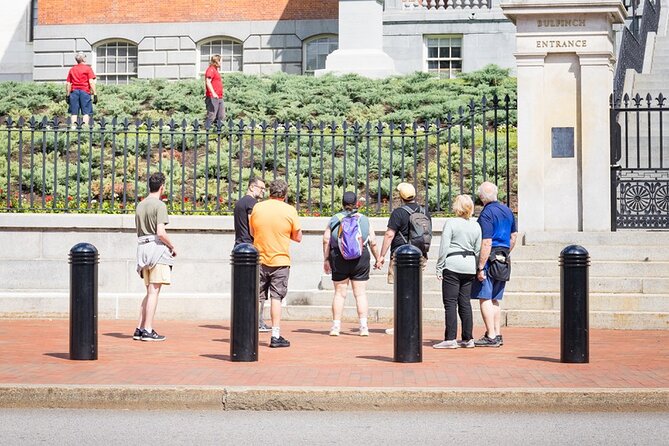
Next comes the Massachusetts State House, completed in 1798. The signature feature is the golden dome, but the point of the stop is what the building represents: the seat of state government.
This is where you start seeing the Freedom Trail as more than a collection of Revolutionary-era facts. The tour frames it as a living political idea. You’re looking at architecture built to signal authority, order, and public decision-making.
Since the stop is about 15 minutes, you won’t get lost in one topic. You get enough to understand why the dome matters, then you move on.
Stop 3: Park Street Church and the power of a steeple
Park Street Church was erected in 1809, and it lands you in another kind of power: moral and civic pressure. Brian points out that this church was tied to the first public anti-slavery address in the U.S.
It’s a standout stop because it breaks a common assumption. The Freedom Trail isn’t only about crowds, tea, and battles. It’s also about persuasion and speeches, and about the people willing to challenge the status quo.
The church’s towering steeple also gives you a practical benefit: it’s a landmark you can spot while you walk around the area. When you’re done with the tour, you’ll likely remember where you are in the city by visual anchors like this.
Stop 4: Granary Burying Ground and the names that stick
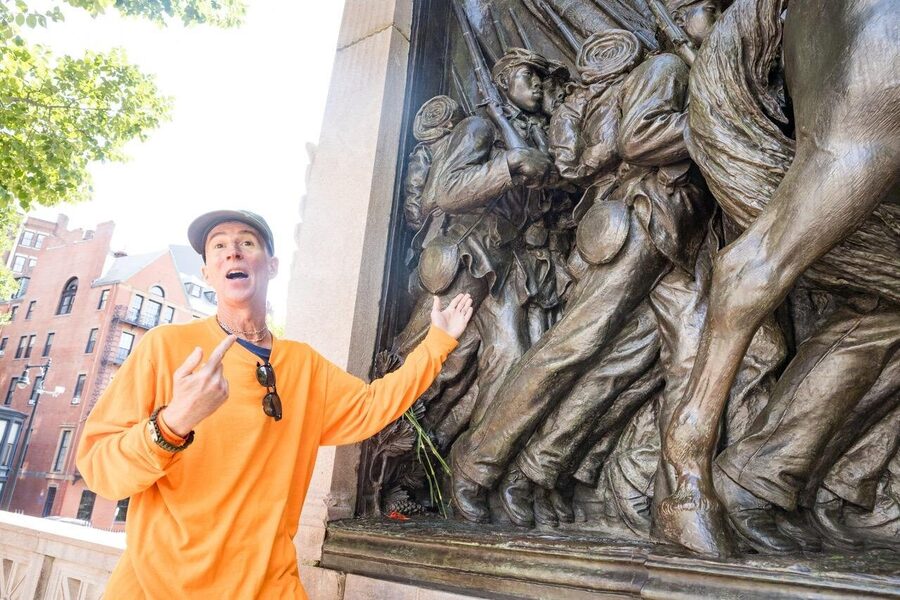
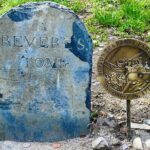
Granary Burying Ground is one of the most emotionally direct stops on the walk. It’s included with admission, and it hits you with a roster of early American figures: Paul Revere, Samuel Adams, and John Hancock.
Then Brian adds one name that carries extra weight: Crispus Attucks, described as the first casualty of the Boston Massacre. The tour frames Attucks as a symbol of the fight for freedom, and it’s the kind of moment where the walk slows down in your head, even if your feet keep moving.
Here’s a small detail I really liked: the guide may point out the Franklin memorial and the quick visual joke that goes with it—Ben Franklin isn’t where you expect to see him. It’s not just a gimmick. It helps you remember the spot, and it makes the history feel human.
This stop can be the right kind of solemn. If you’re the type who likes to connect a moment in history to actual people—not just slogans—this is where the tour starts feeling personal.
Stop 5: King’s Chapel and loyalty, faith, and architecture
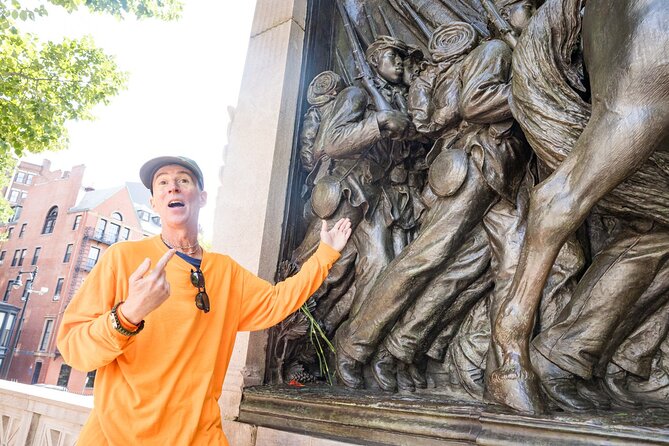
King’s Chapel (built in 1754) brings you to Georgian architecture and to a different lens on the Revolution. This church’s story includes ties to loyalist congregants during the Revolutionary period, plus its continuing role in Boston’s spiritual community.
It’s a useful counterbalance. Lots of tour routes paint the Revolution as one clean side-versus-the-other story. This stop nudges you toward the messy reality: communities had different loyalties, and religion sat inside those conflicts.
Even if you only get a short look at the building, you’ll come away with an image. Georgian style tends to feel orderly and formal, and that makes the Revolutionary-era tensions easier to visualize.
Rainy day in Boston? These doors are open
- Boston: View Boston Observation Deck Entry Ticket★ 4.7 · 1,451 reviews
- New England Aquarium Admission Ticket in Boston★ 4.0 · 446 reviews
- Boston: Franklin Park Zoo Entry Ticket★ 4.3 · 430 reviews
- Boston Pass: 40+ Things To Do – Includes Franklin Park Zoo★ 4.0 · 359 reviews
- View Boston Observation Deck Admission Tickets★ 4.5 · 314 reviews
Stop 6: Old South Meeting House and how the Tea Party took shape
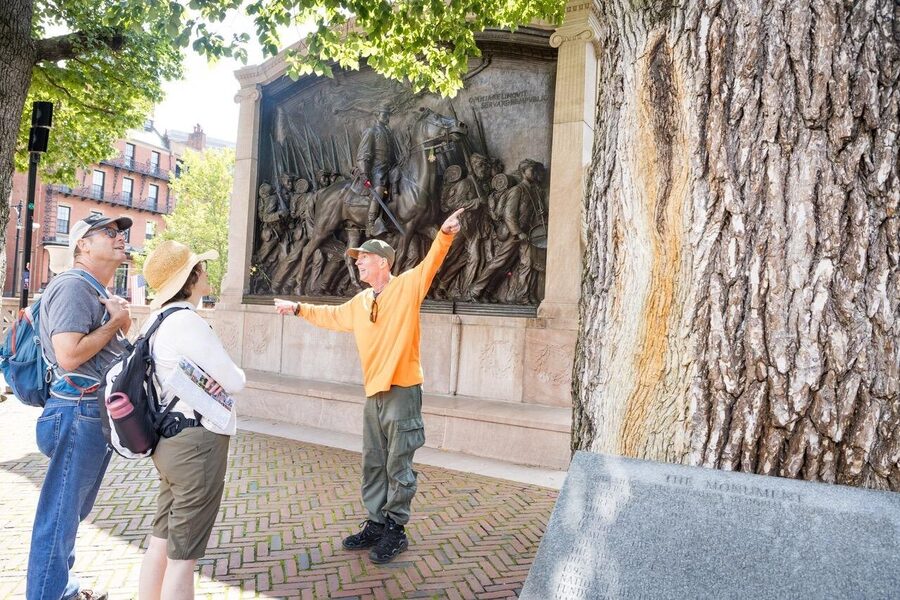
Old South Meeting House, built in 1729, is the kind of stop where your imagination does most of the work. Brian highlights that this was a pivotal meeting place, and that plans for the Boston Tea Party were famously set into motion here.
This is where you learn to read buildings differently. A meeting hall is not just a shell. It’s a room built for gathering, debating, and turning anger into action.
If you like speeches and political theater, this stop will land. If you don’t, it still works because the story connects a specific action (the Tea Party) to a real meeting space.
Stop 7: Old State House and the balcony moment
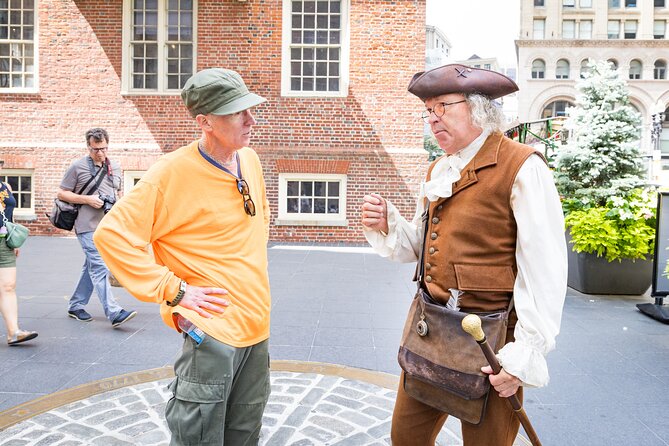
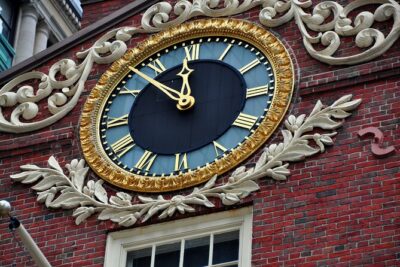
Then you reach Old State House, dating back to 1713. It was the seat of colonial government and hosted major moments on the road to revolution.
The stop is especially famous for the balcony where the Declaration of Independence was read. Brian uses that moment to explain why it mattered. It’s one thing to read about independence. It’s another to see where government announcements became public sparks.
Old State House also helps you understand the Freedom Trail pattern: each site is a step in a chain. You start with public spaces and civic institutions, you add moral pressure, then you hit places where collective action gets organized, and finally you reach sites where ideas go official.
Stop 8: Faneuil Hall, the Cradle of Liberty
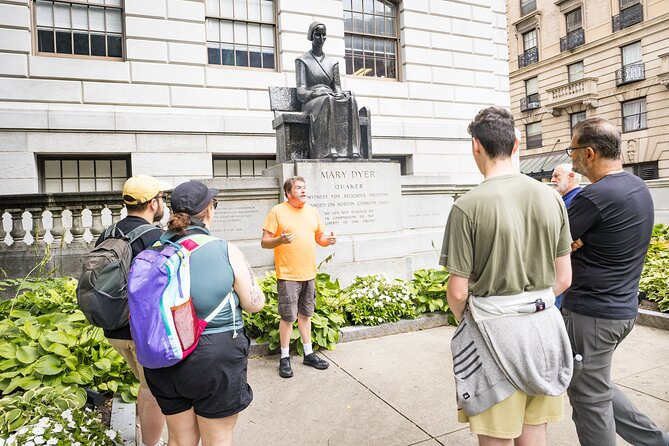
Faneuil Hall is the final headline. It’s known as the Cradle of Liberty, and it’s been a marketplace and meeting hall since 1742.
Here, Brian focuses on why it matters in plain terms: this is where fiery debates and speeches pushed independence forward. In a city full of historic walls, Faneuil Hall feels like the place where words became momentum.
The tour ends at Faneuil Hall Marketplace, which is convenient. You can grab a snack right after without needing to reposition.
Price and time: is $39 a fair deal?
At $39 per person for about 2 hours, the value comes from what you’re buying: guided local commentary plus a tight route through the most important sites.
Also, costs are manageable because admissions are mostly free for the stops on the route. The one admission that’s specifically handled is Granary Burying Ground, which is included. So you’re not paying a second time for entry at every stop.
The small-group format (max 15 people) matters too. Even with a high-energy guide, you can ask questions and steer your own understanding. That’s harder to do on large group tours.
Add in the mobile ticket and English-language guiding, and $39 starts to feel like a straightforward way to avoid the common Freedom Trail mistake: wandering with no context.
Group size, pace, and who this tour fits best
This is a good choice if you want history that moves. You’ll cover 8+ stops on foot, with about 15 minutes per stop, and Brian keeps the story going across them.
I think it fits best for:
- Adults who like the big turning points, plus the human details
- People who want a guide to connect sites into one story
- Anyone visiting Boston for a first or second time who wants the highlights without building a plan
The drawback is pacing. If you’re easily overwhelmed by fast delivery, or you’re bringing very young kids who need frequent checks for patience, plan on stepping out briefly if necessary and giving yourselves extra time elsewhere in the city.
Practical tips to get the most from the walk
Because it’s a walking tour with multiple stops, your comfort matters more than you might expect. Wear shoes you trust, and bring water if you run hot. If you’re sensitive to crowds, consider arriving a couple minutes early so you’re not stressed right at the start.
Also, lean into the Q&A moment. The tour works best when you treat it like an active conversation. Brian’s best stories tend to connect to what you’re curious about in that moment—Revolution politics, civic protests, or the personal stories behind the names.
Should you book this Freedom Trail walk?
If your goal is to see Boston’s Freedom Trail highlights and understand how they connect, this tour is a strong pick. You get the core stops (Boston Common, Old State House, Faneuil Hall) plus the in-between sites that explain why the city’s arguments escalated into action.
I’d especially book it if you want a small group and a guide who can answer questions on the spot. The only reason to hesitate is if you need a very slow pace or you’re traveling with kids who can’t do building-and-story stops for long.
FAQ
How long is the Freedom Trail tour?
It runs for about 2 hours.
What does the tour cost?
The price is $39.00 per person.
What time does the tour start?
The start time is 10:30 am.
Where does the tour start?
It starts at Tremont St & Park Street & Winter St, Boston, MA 02108.
Where does the tour end?
The tour ends at Faneuil Hall Marketplace, Boston, MA 02109.
How many stops are included?
You’ll visit 8+ stops along the Freedom Trail.
Are there admission fees at the stops?
Most stops are free, and admission for Granary Burying Ground is included.
What group size should I expect?
The tour has a maximum of 15 travelers.
Is the tour offered in English?
Yes, it’s offered in English.
Can I cancel for a full refund?
Yes. You can cancel up to 24 hours in advance for a full refund.
More of the Boston Ledger




Boston Behind the Turnstiles



Follow the Red Bricks Further
New on the Boston Docket
- Boston to Newport Mansions Private Day Trip
★ 5.0 · 3 reviews - Boston Massachusetts Private Photography Tour
★ 5.0 · 3 reviews - Homemade Dumplings 101 in Boston
★ 3.5 · 3 reviews - Self-Guided Audio Tour of Boston North End
★ 4.5 · 3 reviews - Old Boston: Beacon Hill & Back Bay Walking Tour in French
★ 4.7 · 3 reviews
Freedom Trail & Revolution Walks, compared.
 ★ 5.0Freedom Trail History Small Group Walking TourFrom $356,450 reviews
 ★ 4.5Boston Freedom Trail Walking Tour with Costumed GuideFrom $262,531 reviews
 ★ 4.5Boston Tea Party Ships and Museum AdmissionFrom $352,512 reviews
 ★ 5.0The Full Revolutionary Story Epic Small Group Boston Walking TourFrom $552,356 reviews
 ★ 4.8Boston Tea Party Ships and Museum Interactive TourFrom $351,926 reviews
 ★ 5.0Boston Food & History: Pizza, North End & Freedom TrailFrom $901,772 reviews
 ★ 4.9Boston’s Freedom Trail: A Revolutionary Walking TourFrom $311,748 reviews
★ 4.9Freedom Trail History Small Group Walking TourFrom $351,590 reviews
★ 4.9Boston’s Freedom Trail: A Revolutionary Walking TourFrom $311,748 reviews
★ 4.9Freedom Trail History Small Group Walking TourFrom $351,590 reviews
Browse the lists this tour appears in