
REVIEW · FREEDOM TRAIL & REVOLUTION WALKS
Entire Freedom Trail Walking Tour: Includes Bunker Hill and USS Constitution
Boston tells its founding story best on foot. This tour strings together Downtown to Charlestown so you hear cause-and-effect, not just dates, with Bunker Hill and USS Constitution as the finish. I love the way the guide links each stop to the next, and I love the built-in pacing for a long walk. One thing to weigh is the distance: you’ll be on your feet for about 4 hours over roughly 2.8 miles, and some stops have interiors that cost extra.
You’ll start at Beacon St @ Park St and end at the USS Constitution area in the Charlestown Navy Yard. The group stays small (max 16), and recent tours were led by guides like Mark and Mike, who are known for keeping the mood friendly and the story clear.
In This Review
- Key reasons this walk works so well
- Why this Freedom Trail tour feels like the whole story
- Price and what you really get for $79
- Getting your bearings: start point, timing, and pacing
- Stop-by-stop: what you’ll see and why each place matters
- Massachusetts State House: where state power takes center stage
- Park Street Church: abolition links and the Brimstone Corner lore
- Granary Burying Ground: graves that read like a cast list
- King’s Chapel: the religious spark that turned political
- Old City Hall and the Franklin marker
- Old South Meeting House: the Boston Tea Party starts here
- Old State House: courts, a court battle, and the Boston Massacre
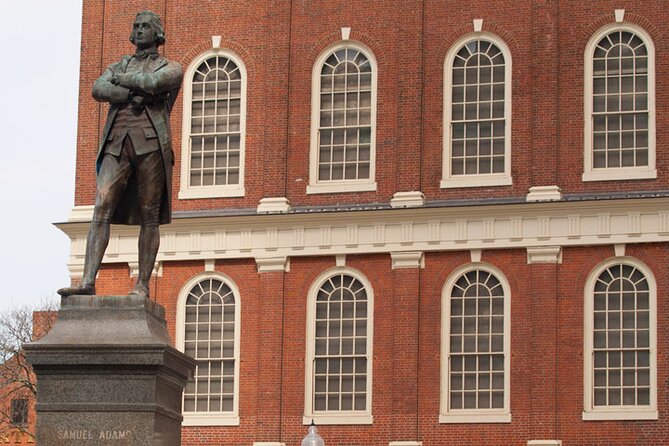
- Faneuil Hall Marketplace: speeches that sent the message
- Ebenezer Hancock House and the Blackstone Block
- The Paul Revere House: one home, sixteen children, real life
- Old North Church: the signal story that reached across water
- Copp’s Hill Burying Ground: battle geography in one walkable view
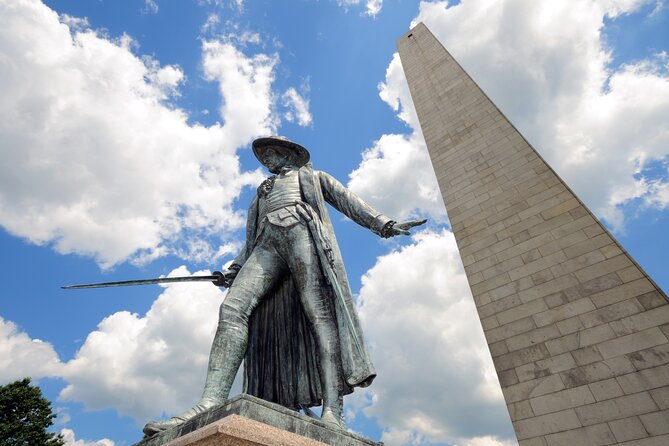
- Bunker Hill Monument: the battle, the losses, and the meaning
- USS Constitution: Old Ironsides as the final chapter
- What’s included vs. what may cost extra
- Small group energy: why it feels less scripted
- Weather and comfort: how to set yourself up for an easy win
- Should you book this Freedom Trail tour?
- FAQ
- How long is the Entire Freedom Trail Walking Tour?
- What does the tour include for the $79 price?
- Are any stop interiors included?
- How big is the group?
- Where do I meet and where does the tour end?
- What is the cancellation/refund rule?
Key reasons this walk works so well
- Full Freedom Trail coverage plus Bunker Hill and USS Constitution so you do the whole arc in one go
- Small group size (up to 16) keeps questions easy and the pace comfortable
- Stop-by-stop storytelling that connects the Revolution’s sparks to what happened next
- Free outdoor access at key stops while interiors are the only common extra cost
- An ending at Old Ironsides that makes it easy to keep exploring Charlestown
Why this Freedom Trail tour feels like the whole story
The Freedom Trail can be done on your own, sure. But the magic here is the structure: you follow a literal line through places tied to independence, then you push beyond the usual endpoints to the battles and the naval power that followed.
I like that this tour doesn’t treat Boston history as a museum wall of names. You’re walking from a government building to churches to meeting houses to burial grounds, and the guide keeps explaining why each location mattered at that moment. That means you start to see the Revolution as a chain of decisions, rumors, court rulings, speeches, and acts of defiance.
The final stretch is also a big deal. Many Freedom Trail walks stop sooner. Here, you end at USS Constitution, the oldest commissioned warship in the world, finishing the day with a clear sense of where the fight went after the shouting started.
Price and what you really get for $79

At $79 per person for about 4 hours, the value comes from the total package: a guided, narrated walk of the full 2.8-mile Freedom Trail route plus visits to Bunker Hill and USS Constitution.
You’re also paying for something that’s hard to replace on your own: a guide who can connect what you’re seeing with what was happening politically, religiously, and socially. In past tours, guides like Mark have used maps and kept the pace manageable, including for people who don’t want a speed-walk.
One practical note: the tour covers stops where exteriors and key points are accessible without extra entry, but it doesn’t bundle admission for building interiors. So if you want every interior detail at every stop, you may spend more than the base price.
The red brick line keeps going. More Trail walks here
Getting your bearings: start point, timing, and pacing
You meet at Beacon St @ Park St at 10:00 am. The tour runs about 4 hours and ends at Old Ironsides (USS Constitution) in the Charlestown Navy Yard area.
This is not a sit-down tour. It’s a walking tour through dense downtown streets plus the Charlestown approach. The company lists moderate physical fitness as the expectation, and the route is about 2.8 miles (and roughly 2.75 miles in step-talk from past guests). That distance is very doable for most visitors, but plan on comfortable walking shoes and a bit of stamina.
The upside of the small group (max 16) is that the guide can slow down when someone’s asking questions, and the tour doesn’t turn into a drifting crowd. I also like that the guide gratuity is handled in the price, with a clear message that your guide does not expect or accept tips.
Stop-by-stop: what you’ll see and why each place matters
The guide moves in a smooth historical sequence, starting with Massachusetts governance and working through the public power centers—churches, courts, meeting houses, marketplaces—before heading toward the decisive events in Charlestown.
Massachusetts State House: where state power takes center stage
You start at the Massachusetts State House. You’ll see all three buildings used as the seat of Massachusetts government, and you’ll learn about the current State House design credited to Charles Bulfinch.
Even if you mainly care about Revolution-era drama, this stop helps you understand the setting: independence didn’t happen in a vacuum. It happened in institutions, and people fought for how those institutions should work.
Park Street Church: abolition links and the Brimstone Corner lore
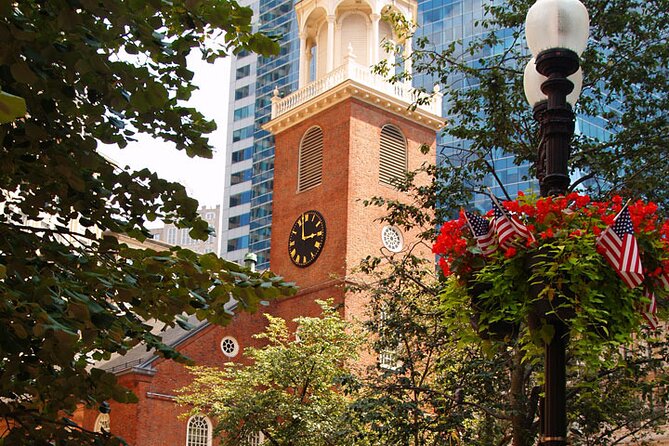
Next is Park Street Church, which at one point was the tallest building in the country. This is also tied to the Abolition Movement, and the guide shares local nickname lore about Brimstone Corner—connected to fiery sermons and a surprise cellar storage history.
If you’re the type who likes to understand how moral arguments fed political action, this stop delivers.
Consideration: you’ll likely see the most important parts from the outside unless you buy a separate interior ticket. The tour notes that admission to interiors is not included.
Boston was built for walking. More routes
- Boston: Freedom Trail History Small Group Walking Tour★ 5.0 · 6,450 reviews
- Harvard University Campus Guided Walking Tour★ 4.5 · 3,632 reviews
- Boston Freedom Trail Walking Tour with Costumed Guide★ 4.5 · 2,531 reviews
- The Full Revolutionary Story Epic Small Group Boston Walking Tour★ 5.0 · 2,356 reviews
- Boston’s Freedom Trail: A Revolutionary Walking Tour★ 4.9 · 1,748 reviews
Granary Burying Ground: graves that read like a cast list
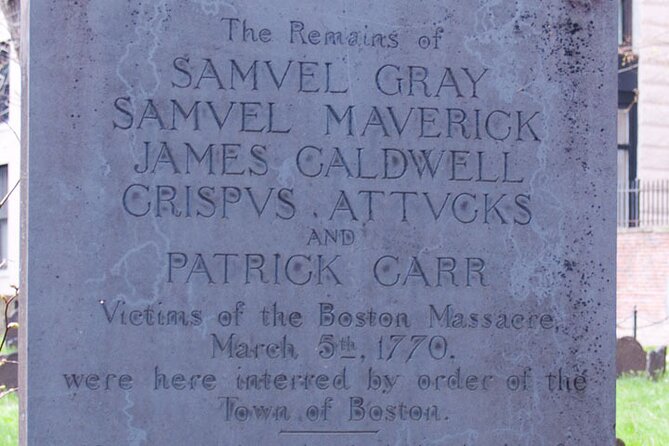
At Granary Burying Ground, you focus on the people. You’ll get a brief introduction to key figures buried here, including Samuel Adams, Paul Revere, John Hancock, and victims of the Boston Massacre.
This stop is one of the easiest ways to make the Revolution feel real. You’re not just hearing that these people existed; you’re standing near their final resting places.
King’s Chapel: the religious spark that turned political
King’s Chapel (a 1749 Anglican church) connects Puritan Boston to conflict with the King. The tour highlights an episode when the King took land in Boston to place an unwanted church—one more reason politics and faith were tangled.
If you’ve ever wondered why religious institutions mattered so much, this is a clear example.
Old City Hall and the Franklin marker
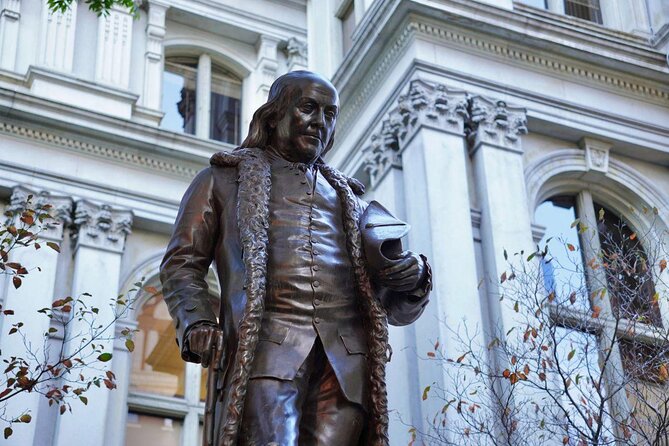
Then you pass by Old City Hall, including a statue of Benjamin Franklin and a marker tied to the oldest and still-operating school in the colony.
This is a smaller stop, but it’s useful: it shows how Boston valued civic identity and education long before independence got formal.
Old South Meeting House: the Boston Tea Party starts here
At Old South Meeting House, you’ll learn why meeting halls mattered. People heard preachers and politicians there, and the guide connects this location to Samuel Adams and the Boston Tea Party.
The tour frames the Tea Party as something that practically guaranteed war would follow. That’s the kind of cause-and-effect lesson that makes the rest of the walk click.
Old State House: courts, a court battle, and the Boston Massacre
The Old State House is one of the most emotionally charged stops on the route. You’ll hear about a fiery court battle in 1761 tied to the disregard for Colonial rights under British authority.
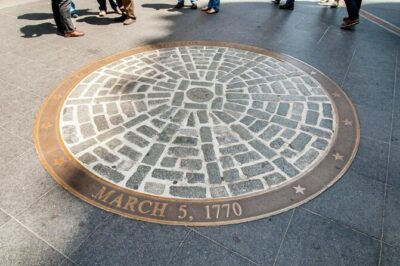
You’ll also connect it to the 1770 Boston Massacre. The guide brings up the idea that the story can be more complicated than the simplified version you may have heard elsewhere.
Tip for you: if you care about how history gets told, ask a question here. This is the point where simple narratives start to break.
Faneuil Hall Marketplace: speeches that sent the message
At Faneuil Hall Marketplace, you’ll see how speakers shaped public action. The tour connects the famous anger of the era with Samuel Adams and No taxation without representation. It also brings in Frederick Douglass, tying him to abolition and escape from slavery.
This is where Boston’s role feels less like a single event and more like a communications machine.
Ebenezer Hancock House and the Blackstone Block
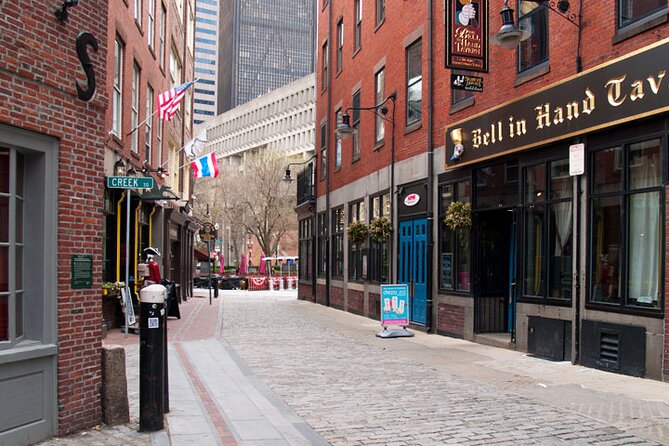
Next is Ebenezer Hancock House, part of the Blackstone Block. The guide points out details like offices tied to the Massachusetts Spy newspaper and the Headquarters of the Revolution (noting it as a bar today). You’ll also hear about Ebenezer Hancock, brother of John Hancock, and how his home was used to store money sent from the French supporting the Revolution.
This stop is a good reminder: the Revolution took funding, information, and coordination. It wasn’t only about battles and uniforms.
The Paul Revere House: one home, sixteen children, real life
At the Paul Revere House, you’ll see one of the oldest homes remaining in Boston. The guide shares that Paul Revere purchased it in 1770, and it’s where he had sixteen children with two wives.
It’s a short stop, but it adds a human layer. You leave this section remembering that revolutionary figures had regular lives, homes, responsibilities, and families alongside their public roles.
Old North Church: the signal story that reached across water
Old North Church and the Historic Site focuses on messaging. You’ll learn how Patriots across the narrow waters in Charlestown were notified about British movements toward Lexington and Concord.
If you want to understand how communication tactics mattered, this is a clear lesson. The guide’s explanation makes the geography feel purposeful, not just scenic.
Copp’s Hill Burying Ground: battle geography in one walkable view
At Copp’s Hill Burying Ground, you get a brief stop meant to help you understand the geography of the Battle of Bunker Hill. The guide also points out a grave marker with an interesting story.
This stop works well if you’re the type who learns through sight lines. You’ll start to imagine why someone chose a position when the terrain mattered.
Bunker Hill Monument: the battle, the losses, and the meaning
Next comes Bunker Hill Monument. You’ll learn about the battle fought on Breed’s Hill. Even though the British won, the tour emphasizes that British losses were triple those of the Patriots.
That detail is important because it shows why the conflict continued. A victory can still be a costly message; a tactical defeat can still carry strategic weight. The guide ties that back to why people kept fighting.
USS Constitution: Old Ironsides as the final chapter
Your last stop is USS Constitution, also called Old Ironsides. The tour frames it as the oldest commissioned warship in the world, and explains that it served the US Navy for many years in both U.S. and foreign waters.
This ending hits differently than another church or monument. You close the walk with military reality: the Revolution wasn’t only about declaring independence. It was about sustaining power once war became inevitable.
What’s included vs. what may cost extra
Here’s the practical reality check. The tour includes a four-hour narrated walking tour of the Freedom Trail with the added stops at Bunker Hill and USS Constitution. You get a mobile ticket and the guide’s gratuity is included, with a clear policy that your guide does not expect or accept tips.
Not included is admission for building interiors. That means some stops—like the Massachusetts State House, Park Street Church, King’s Chapel, Old South Meeting House, Old State House, Old North Church, and the Paul Revere House—may require tickets if you want to go inside.
Good news: many of the core moments can be understood from the outside because the guide is narrating the significance right where you’re standing.
Small group energy: why it feels less scripted

A major theme in the best moments of this tour is how the guide tells the story. Past groups have praised guides such as Mark for strong energy, humor, and clear explanations using maps. They also liked that the tour doesn’t rely on acting. It’s more like a well-prepared teacher with a gift for making you track what happened next.
I also appreciate the balance in what gets highlighted, including attention to women’s contributions in the story of the era. That matters on a trail where you can easily focus only on the usual names.
Weather and comfort: how to set yourself up for an easy win
This tour requires good weather, so if conditions are poor, you might be offered a different date or a full refund. If you want the best experience, plan for Boston walking conditions and choose the day you actually feel good outdoors.
For comfort:
- Wear shoes you’d wear for a long walk, not just a nice dinner.
- Bring water and a little snack if that helps your energy level.
- Keep your expectations realistic: it’s a full arc of history, so you’ll be moving and listening the whole time.
Should you book this Freedom Trail tour?
Book it if you want a guided version of the Freedom Trail that goes beyond the usual highlights. If you like seeing how events connect—court decisions to protests, speeches to rebellion, and the Revolution’s early sparks to the later battle and naval power—this tour fits your style.
Skip it (or consider a shorter option) if you don’t want to walk about 2.8 miles in roughly four hours or if you know you only care about a handful of stops. Also, if you’re set on going inside every site, budget for extra admissions because interiors aren’t included.
If you want the most value for your time in Boston, this is a smart way to cover a lot of ground with a guide who can turn streets into a story you can actually follow.
FAQ
How long is the Entire Freedom Trail Walking Tour?
It runs for about 4 hours.
What does the tour include for the $79 price?
You get a four-hour narrated walking tour covering the entire Freedom Trail, plus stops at Bunker Hill and USS Constitution. It also includes guide gratuity, and you’ll use a mobile ticket.
Are any stop interiors included?
No. Admission to interiors is not included. Some stops are listed as admission free, but interiors are the part that typically costs extra.
How big is the group?
The tour has a maximum of 16 travelers.
Where do I meet and where does the tour end?
You start at Beacon St @ Park St, Boston, MA 02108, and the tour ends at the USS Constitution Museum area in the Charlestown Navy Yard, concluding at Old Ironsides.
What is the cancellation/refund rule?
You can cancel for a full refund up to 24 hours in advance of the experience start time. If it’s canceled due to poor weather, you’ll be offered a different date or a full refund.
On Foot Through Old Boston


More of the Boston Ledger



Follow the Red Bricks Further
New on the Boston Docket
- Boston to Newport Mansions Private Day Trip
★ 5.0 · 3 reviews - Boston Massachusetts Private Photography Tour
★ 5.0 · 3 reviews - Homemade Dumplings 101 in Boston
★ 3.5 · 3 reviews - Self-Guided Audio Tour of Boston North End
★ 4.5 · 3 reviews - Old Boston: Beacon Hill & Back Bay Walking Tour in French
★ 4.7 · 3 reviews
Freedom Trail & Revolution Walks, compared.
 ★ 5.0Freedom Trail History Small Group Walking TourFrom $356,450 reviews
 ★ 4.5Boston Freedom Trail Walking Tour with Costumed GuideFrom $262,531 reviews
 ★ 4.5Boston Tea Party Ships and Museum AdmissionFrom $352,512 reviews
 ★ 5.0The Full Revolutionary Story Epic Small Group Boston Walking TourFrom $552,356 reviews
 ★ 4.8Boston Tea Party Ships and Museum Interactive TourFrom $351,926 reviews
 ★ 5.0Boston Food & History: Pizza, North End & Freedom TrailFrom $901,772 reviews
 ★ 4.9Boston’s Freedom Trail: A Revolutionary Walking TourFrom $311,748 reviews
★ 4.9Freedom Trail History Small Group Walking TourFrom $351,590 reviews
★ 4.9Boston’s Freedom Trail: A Revolutionary Walking TourFrom $311,748 reviews
★ 4.9Freedom Trail History Small Group Walking TourFrom $351,590 reviews
Browse the lists this tour appears in