
REVIEW · FREEDOM TRAIL & REVOLUTION WALKS
Boston’s Revolutionary Path The Freedom Trail Tour
Boston’s freedom story starts with a hug.
This 2-hour Freedom Trail tour strings together big ideas—justice, protest, and revolution—through real places you can actually stand in. I like the small group size (max 10) because it keeps the pace human and makes it easier to ask questions as you walk. And you’ll get a local guide who can connect what you see on the street to what was happening behind the scenes.
Second, I love that the route isn’t just monuments. You’ll move from Boston Common to Beacon Hill, then through government landmarks, churches, and two major cemeteries—places that quietly explain how Boston was built and who paid the price. One consideration: the tour is short, so you’ll cover a lot of ground in a limited time. If you like to linger, plan extra time before or after on your own.
In This Review
- Key things I think you’ll love
- A 2-hour Freedom Trail walk that starts at The Embrace
- Why this route mixes MLK, Beacon Hill charm, and Revolution-era power
- Boston Common and Beacon Hill: old Boston before the arguments start
- Inside the machinery of government: Massachusetts State House and Park Street Church
- Two cemetery stops that turn names into meaning: King’s Chapel and Granary
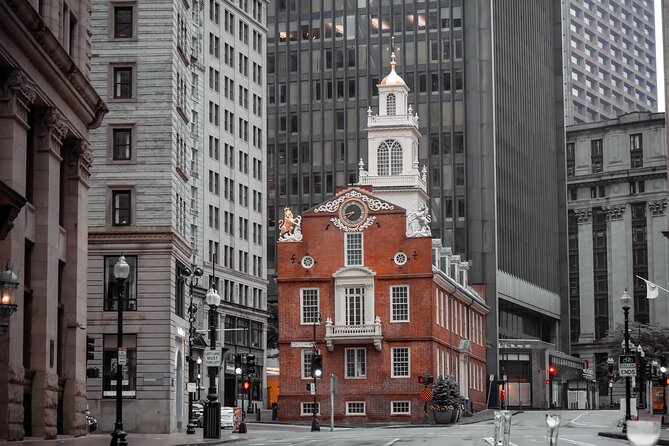
- Old State House and Faneuil Hall: where protest became independence
- Quincy Market finish: eat, regroup, and keep the day flexible
- Price and what $45 really buys you on this Freedom Trail walk
- Who this tour suits best (and who might want a different pace)
- Should you book this Freedom Trail tour?
- FAQ
- How long is the Boston’s Revolutionary Path Freedom Trail Tour?
- What’s the price per person?
- Where does the tour start?
- Where does the tour end?
- Is there a mobile ticket?
- What language is the tour offered in?
- How large is the group?
- Are service animals allowed?
- Is there free cancellation?
Key things I think you’ll love
- The Embrace (2023) starts the story with MLK and Coretta Scott King—love and unity as a civil-rights spark, not just a Revolutionary War footnote.
- Small-group pace (10 max) on a route that covers multiple neighborhoods without feeling rushed beyond reason.
- Cemetery stops at King’s Chapel Burying Ground and Granary Burying Ground make early Boston’s names feel personal, not abstract.
- State House + Park Street Church give you a quick look at how power and community life shaped the city.
- Old State House + Faneuil Hall connect local protest to independence using the exact buildings where events unfolded.
- Quincy Market finish gives you an easy, practical place to reset with food, shops, and street performers after the walk.
A 2-hour Freedom Trail walk that starts at The Embrace
Most Freedom Trail tours start with colonial-era names and steam through to the next landmark. This one makes a smarter opening: you begin at The Embrace at 139 Tremont St.
The Embrace is a bronze sculpture on Boston Common, unveiled in 2023, honoring Dr. Martin Luther King Jr. and Coretta Scott King. The concept comes from a photo of them hugging after Dr. King won the Nobel Peace Prize in 1964. Instead of treating the Freedom Trail like a straight line through one century, the tour frames it as a longer thread—people fighting for justice with courage and partnership.
That opening matters for your experience. You’re not just collecting facts. You’re being set up to understand the American freedom story as something that keeps evolving. If you’re new to Boston, it also helps you feel oriented fast because you start in a major, easy-to-find hub.
Why this route mixes MLK, Beacon Hill charm, and Revolution-era power
The best historical tours don’t just show you what happened. They help you notice what the city is still doing today—how the streets, buildings, and public spaces shape behavior.
Here, you get that mix in a compact route. After The Embrace, you head into Beacon Hill, Boston Common, and then toward government and community institutions. The neighborhood transition is one of the tour’s sneaky wins: Beacon Hill’s cobblestone streets, gas lamps, and Federal-style brick homes give you a visual contrast with the political and religious sites that follow.
Then you step back into history through institutions:
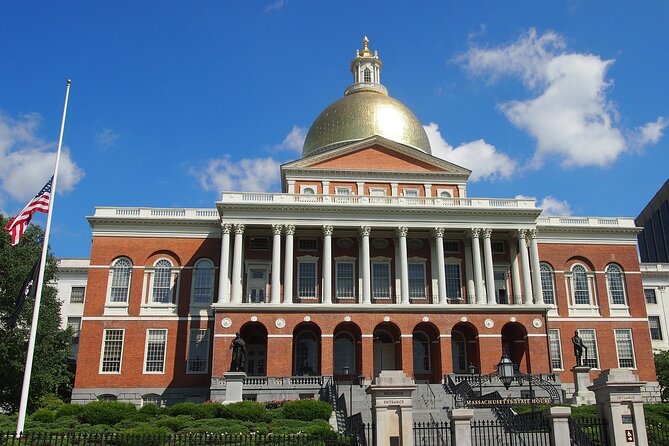
- the Massachusetts State House and its famous golden dome,
- the towering Park Street Church (built in 1809),
- and two early cemeteries that anchor the story in names you might recognize from the Revolution.
That balance keeps the walk from turning into a single-note lecture. You’re seeing how civic life, faith communities, and early settlement all fed into the larger fight for independence.
The red brick line keeps going. More Trail walks here
Boston Common and Beacon Hill: old Boston before the arguments start
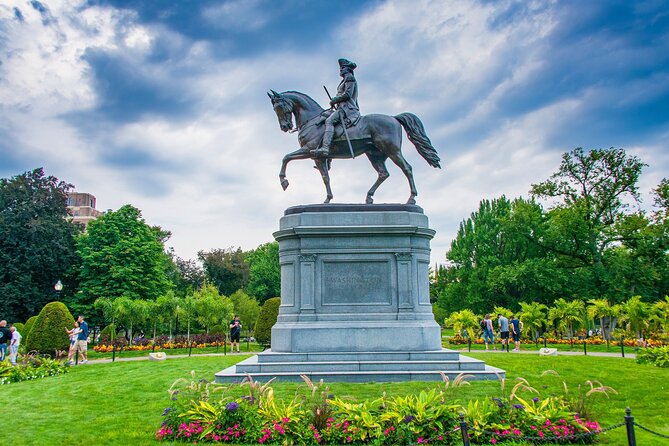
Beacon Hill is one of those places where the streets look like a postcard, but you’ll get more value if you walk it with a purpose. The tour gives you time to notice the details that create the neighborhood’s classic feel: cobblestone streets, gas lamps, and Federal-style brick homes. You can also use the stop to orient yourself—where you are, what direction you’re moving, and how the historic core connects.
Then comes Boston Common, the oldest public park in the U.S. For much of American history, public parks were not just for relaxation. They were civic space—where the city gathers, debates, and breathes. On this tour, it’s also a calm reset between heavier stops. Expect walking paths, greenery, and ponds, plus the sense that you’re right in the middle of the action while still getting a small pause.
Practical tip: if you’re sensitive to walking, treat these as your mini-breaks. They’re a nice blend of atmosphere and orientation before you move into buildings tied to politics and protest.
Inside the machinery of government: Massachusetts State House and Park Street Church
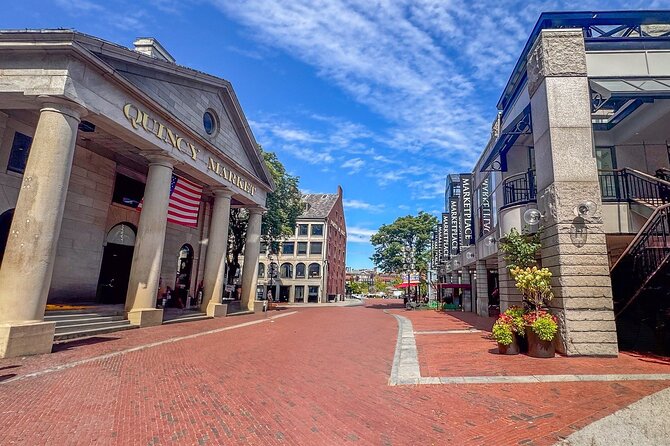
From the open air of Common and the charming streets of Beacon Hill, you shift into buildings that shaped civic power.
At the Massachusetts State House, the emphasis is on the golden dome and the role the building plays as a symbol of the state’s government. The tour also points you toward the idea that Massachusetts political history is baked into the site itself, and that you’ll learn through guided tours connected to the building. Even if you don’t spend lots of time inside, the stop helps you understand why this place became central—government isn’t abstract when you can see it.
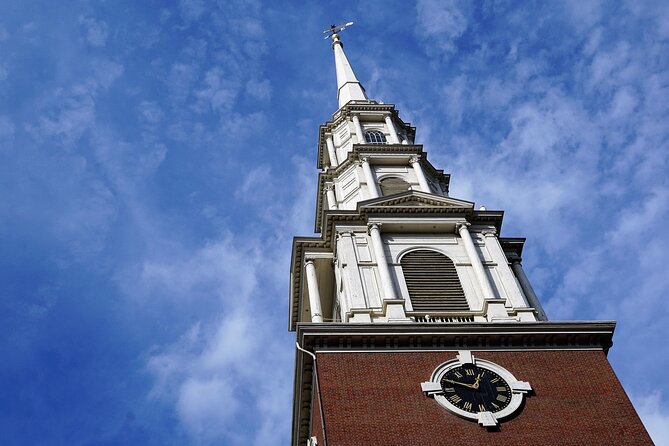
Then you hit Park Street Church, known for its tall white steeple and built in 1809. This stop is a good reminder that history isn’t only about legislation and speeches. Churches were also community engines. The tour spotlights the church’s religious and social history, so it’s easier to see how public debate and community organization often worked hand-in-hand.
If you enjoy architecture, this combo works well. State House for symbolism and civic authority, Park Street Church for community presence and the look of early 19th-century building style.
Two cemetery stops that turn names into meaning: King’s Chapel and Granary
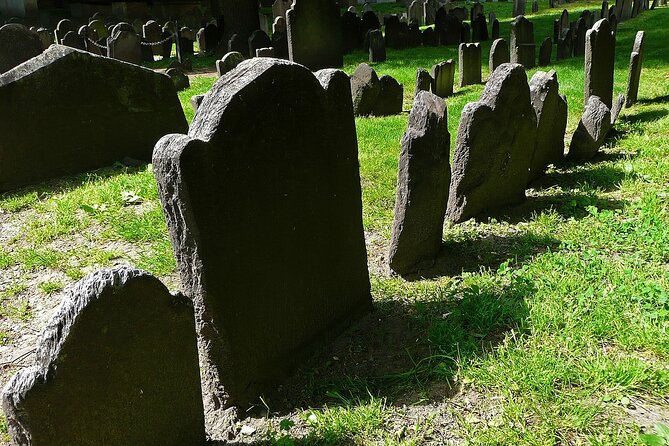
If you’ve ever felt cemeteries are too quiet to matter on a “history” tour, you’ll like what this route does.
You start with King’s Chapel Burying Ground, described as Boston’s oldest cemetery, dating back to 1630, next to King’s Chapel. The quiet setting makes the information land. Here, you’re looking at historic tombstones and learning about early Boston settlers, including notable figures like John Winthrop. Seeing a name tied to the city’s beginnings makes the Revolution-era story feel less like a separate chapter and more like a result of what came before.
Then the tour moves to Granary Burying Ground, dating to 1660 and located near Boston Common. This is where the Revolution-era connections get sharper. The stop includes prominent Revolutionary figures such as Paul Revere, Samuel Adams, and John Hancock. Walking among the gravestones gives you a direct emotional tie to the people whose names appear on textbooks and coins.
Timing matters on a walk like this. These cemetery stops are short, but they’re powerful in a concentrated way. If you’re willing to slow down just a bit, you’ll get more out of them than if you treat them like quick photo stops.
Old State House and Faneuil Hall: where protest became independence
Now you’re in the part of the story most people come for: places where conflict and public action collided with politics.
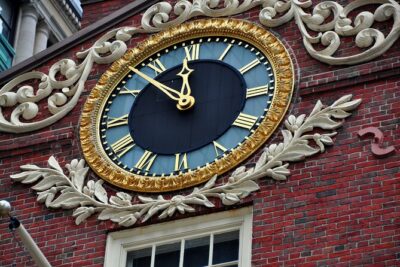
The Old State House was built in 1713 and played a key role in the American Revolution. One of the tour’s most important points is that it was the site of major events, including the reading of the Declaration of Independence. Standing near a building linked to such moments helps you connect the dots between documents and the real-world setting where words became action.
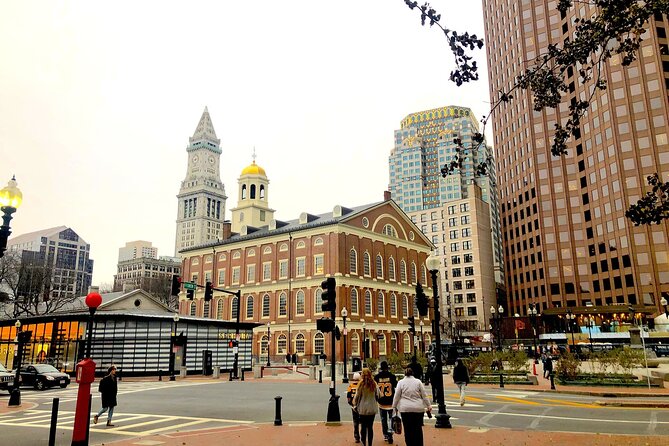
From there, you reach Faneuil Hall, often called the Cradle of Liberty. Built in 1742, it’s tied to early protests against British rule. This is the “why these ideas spread” stop. Faneuil Hall today also functions with a marketplace and museum setup, so you’ll feel both the past and present in the same block.
And here’s the honest value: Faneuil Hall’s continuing role as a public gathering place means the story doesn’t feel frozen. It’s about people showing up, speaking up, and organizing—then doing it again the next time they needed change.
- Boston Duck Boat Sightseeing City Tour with Cruise Along Charles River★ 4.5 · 9,378 reviews
- Boston: Freedom Trail History Small Group Walking Tour★ 5.0 · 6,450 reviews
- Boston Hop-On Hop-Off Trolley Tour with 13 Stops★ 4.5 · 5,576 reviews
- Boston Duck Tour: The Original and World-Famous★ 4.6 · 3,935 reviews
- Harvard University Campus Guided Walking Tour★ 4.5 · 3,632 reviews
Quincy Market finish: eat, regroup, and keep the day flexible
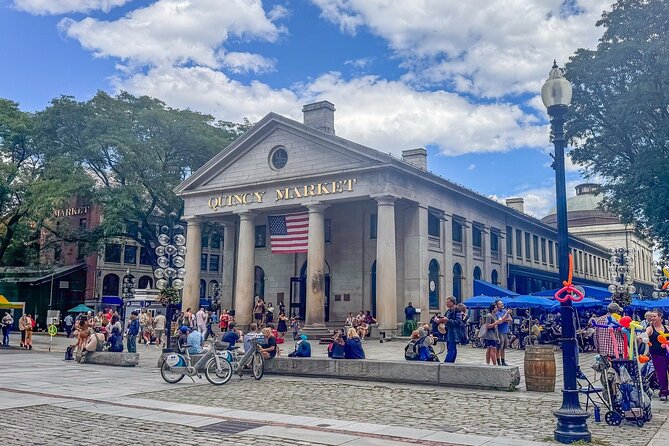
The tour ends at Faneuil Hall Marketplace and the Quincy Market area. This is a practical choice because it gives you immediate payoff after a walk: you can grab food from local vendors, shop, and take in the surrounding street scene. The description also includes street performers, which adds energy while you wait for your next plan.
If you want to turn the tour into a great day, Quincy Market is perfect for two things:
- a sit-down meal that helps you recover from the walking,
- and an easy base to explore nearby at your own pace afterward.
Because the tour only runs about two hours, this final stop helps you stretch the experience without needing another ticket or scheduled activity.
Price and what $45 really buys you on this Freedom Trail walk
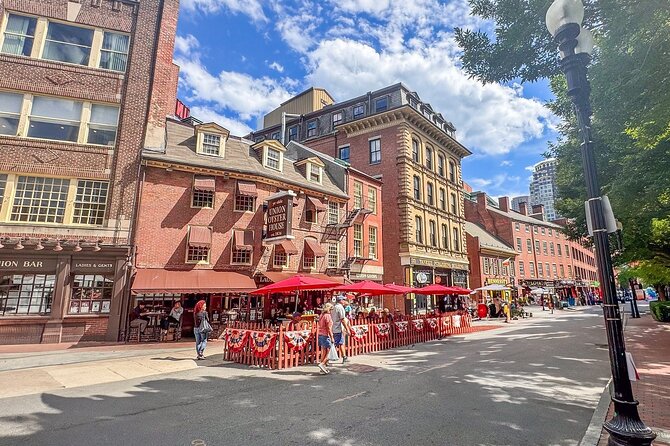
At $45 per person for about 2 hours, the value comes from how much you cover and how guided it is.
You’re paying for:
- a local guide who connects sites to meaning (not just names and dates),
- a small group that keeps the walk manageable,
- and multiple high-impact stops across several important Boston neighborhoods.
It’s also booked about 58 days in advance on average, which hints that it’s popular with people who want a structured walk without spending hours building their own plan.
If you’re doing Boston efficiently—especially if you only have a day or two—$45 can feel very fair. If you’re the type who loves long museum time and deep reading at each stop, you may still enjoy it, but you’ll want to add extra independent exploration afterward.
Who this tour suits best (and who might want a different pace)
This is a strong fit if:
- you want an easy way to see key Freedom Trail-adjacent landmarks in a short window,
- you like walking with context instead of just wandering alone,
- you want a guide to connect the story threads from early settlement through the Revolution.
It may feel less ideal if:
- you prefer very slow sightseeing with lots of time inside buildings,
- you’re uncomfortable with a pack-it-in walking route,
- you want a heavy focus on museum exhibits rather than outdoor landmarks and brief interpretive stops.
Group size helps. With a max of 10, it’s usually easier to feel the guide’s attention rather than getting swallowed by a crowd.
Should you book this Freedom Trail tour?
Yes—if your goal is a clear, guided overview that hits the major landmarks and makes the story feel connected.
I’d book it if you’re new to Boston or you want a structured day without overthinking where to start and what order to see things. The mix of The Embrace, Boston Common, civic buildings, two cemeteries, and the Old State House/Faneuil Hall combo is a smart way to understand both the symbolic and political sides of the American freedom story. Add Quincy Market at the end and you’ve got a convenient payoff to close the day.
Skip it only if you strongly prefer long, slow museum time over a guided walk that prioritizes seeing the places where history actually happened.
FAQ
How long is the Boston’s Revolutionary Path Freedom Trail Tour?
It’s about 2 hours.
What’s the price per person?
The price is $45.00 per person.
Where does the tour start?
The meeting point is The Embrace, 139 Tremont St, Boston, MA 02108.
Where does the tour end?
It ends at Faneuil Hall Marketplace, Boston, MA 02109, in the Quincy Market area.
Is there a mobile ticket?
Yes, the tour includes a mobile ticket.
What language is the tour offered in?
The tour is offered in English.
How large is the group?
The tour has a maximum of 10 travelers.
Are service animals allowed?
Yes, service animals are allowed.
Is there free cancellation?
Yes. There is free cancellation up to 24 hours in advance for a full refund.
More of the Boston Ledger




Follow the Red Bricks Further

New on the Boston Docket
- Boston to Newport Mansions Private Day Trip
★ 5.0 · 3 reviews - Boston Massachusetts Private Photography Tour
★ 5.0 · 3 reviews - Homemade Dumplings 101 in Boston
★ 3.5 · 3 reviews - Self-Guided Audio Tour of Boston North End
★ 4.5 · 3 reviews - Old Boston: Beacon Hill & Back Bay Walking Tour in French
★ 4.7 · 3 reviews
Freedom Trail & Revolution Walks, compared.
 ★ 5.0Freedom Trail History Small Group Walking TourFrom $356,450 reviews
 ★ 4.5Boston Freedom Trail Walking Tour with Costumed GuideFrom $262,531 reviews
 ★ 4.5Boston Tea Party Ships and Museum AdmissionFrom $352,512 reviews
 ★ 5.0The Full Revolutionary Story Epic Small Group Boston Walking TourFrom $552,356 reviews
 ★ 4.8Boston Tea Party Ships and Museum Interactive TourFrom $351,926 reviews
 ★ 5.0Boston Food & History: Pizza, North End & Freedom TrailFrom $901,772 reviews
 ★ 4.9Boston’s Freedom Trail: A Revolutionary Walking TourFrom $311,748 reviews
★ 4.9Freedom Trail History Small Group Walking TourFrom $351,590 reviews
★ 4.9Boston’s Freedom Trail: A Revolutionary Walking TourFrom $311,748 reviews
★ 4.9Freedom Trail History Small Group Walking TourFrom $351,590 reviews
Browse the lists this tour appears in