

REVIEW · FREEDOM TRAIL & REVOLUTION WALKS
Boston’s Old State House & Old South Meeting House Museums
Revolution history fits in two blocks. This visit pairs Old South Meeting House and the Old State House, both tied to the events that pushed Boston toward independence, with exhibits you can take at your own pace.
I like how the experience gives you a clear thread through the Boston Tea Party era: you start in the meeting house built in 1729, then shift to the state house built in 1713, where dramatic Revolution events unfolded. I also love that it’s built for real sightseeing flow—you can finish, snap photos of Revolutionary artifacts, and keep exploring downtown Boston right afterward.
One thing to consider: it’s not set up as a full guided tour the whole time. You’ll be self-guided through museum space, with talks and tours available if you want more context. Also, the Old State House is not currently accessible, while the Old South Meeting House is.
In This Review
- Key Points You’ll Actually Care About
- A Downtown Pairing That Makes the Revolution Feel Understandable
- Price and Value: Why the $15 Ticket Can Still Make Sense
- Old South Meeting House: 1729 and the Place Where Ideas Gathered
- Old State House: 1713 Royal Power and the Moments That Turned It
- Timing Your Visit in Downtown Boston (So It Doesn’t Feel Rushed)
- What the Self-Guided Format Means for You
- Comfort, Staff, and Practical Details That Make the Day Better
- Opening Hours You Can Plan Around
- Should You Book This Old South + Old State House Visit?
- FAQ
- How much does this experience cost?
- How long should I plan for?
- Is it a guided tour?
- Are the museums free to enter?
- What are the opening hours?
- Can I cancel for a full refund?
- Is the Old State House accessible?
Key Points You’ll Actually Care About
- Two landmark interiors in one tight downtown loop
They’re only two blocks apart, so your feet get a workout without long transfers.
- Start with the 1729 meeting house, then pivot to the 1713 state house
The story shifts from mass meetings to government power fast.
- Easy self-guided pace with the option for talks and tours
Good for both quick stops and slower reading time.
- Photo opportunities tied to the American Revolution
Expect artifacts and exhibits that are made for sharing.
- Comfort factor: both sites have air conditioning
A big win on hot days in Boston.
- Accessibility is split
Old South Meeting House is accessible, but Old State House is not currently.
A Downtown Pairing That Makes the Revolution Feel Understandable
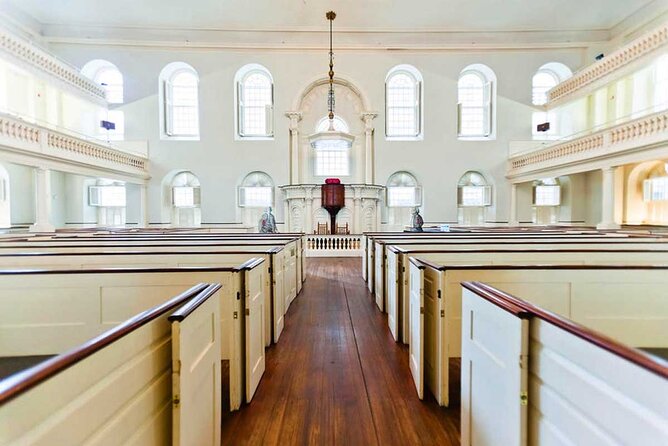
Boston’s Revolutionary history can get big, messy, and hard to place. What I like about this pairing is that it narrows the focus without making it feel like a chore. You walk between two major buildings—each with its own role in the build-up to independence—and the exhibit layout helps you connect the dots at your own speed.
Here’s the practical upside: the route is short. You’re in the heart of downtown, and the two sites are right by each other, so you don’t lose time to logistics. The experience also comes with a mobile ticket, which matters because phones are how you keep moving in a city like Boston.
The other big value is that you’re paying for access to a focused museum visit that’s designed for history lovers, not just casual lookers. If you enjoy artifacts, period rooms, and the “how did we get here?” side of history, you’ll have a good time.
And if you want a little extra support, talks and tours are available to help you explore. That’s useful when you want more context but still want control over your day.
Price and Value: Why the $15 Ticket Can Still Make Sense
The experience lists a price of $15.00 per person and a duration from about 30 minutes to 2 hours, depending on how long you linger. At first glance, that can sound like a small, almost too-short visit. But the value is in the combination: two museums, linked by theme, placed close enough that you’re not fighting the city to get value for time.
Also, each site’s admission is listed as free for the stops. So what you’re really paying for is the experience bundle approach: the structured access across both locations, delivered with a mobile ticket. Even if you only take the highlights, you’re still getting a solid “compare and contrast” between the meeting house and the state house.
In practical terms, this works well if you’re building a day around other downtown sights. You can do it as a half-day history block, then branch out for food, shopping, or more walking without needing a separate plan for getting between attractions.
The red brick line keeps going. More Trail walks here
Old South Meeting House: 1729 and the Place Where Ideas Gathered
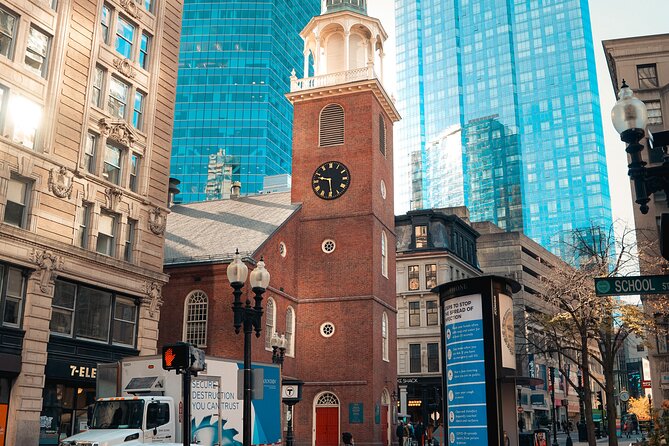
Old South Meeting House is the larger of the two stops in terms of meaning. Built in 1729, it was once the biggest building in colonial Boston and the site of major mass meetings that helped steer the Boston Tea Party and the broader push toward revolution.
When you walk in, it’s easy to understand why this place matters. The building itself sets the mood: this wasn’t a quiet, private meeting room. It was a big public space meant for people to gather, listen, argue, and coordinate. That’s the kind of setting where political change moves from talk into action.
What you can do here:
- Browse museum exhibits that connect the meeting house to the path toward independence.
- Join educational offerings if you want them.
- Use the open space and interpretation tools to put the story into perspective before you head to the next stop.
A detail I’d keep in mind when you plan your pacing: the Old South Meeting House is accessible, which helps if you’re traveling with mobility needs or strollers. The comfort factor is also real—one of the practical positives in the feedback is that this site has air conditioning, so you’re not stuck baking through the exhibits.
This is a strong first stop if you like your history with context. The meeting house angle also makes the revolution feel more human: it’s about crowds, communication, and shared momentum.
Old State House: 1713 Royal Power and the Moments That Turned It
Just two blocks away, the Old State House was built in 1713 and served as the center of royal government in the Massachusetts Bay colony. This is the “power and control” half of the story. If the meeting house shows how public energy built pressure, the state house shows where that pressure collided with authority.
This is also where some of the most dramatic Revolution events took shape in Boston, including the Boston Massacre. Even if you already know the headline facts, the exhibits help you slow down and see how events played out in a specific setting.
What to expect in the space:
- Thought-provoking exhibits that connect the building to Revolution-era turning points.
- Artifact-focused displays that are made for photos.
- A museum environment you can navigate at your own pace.
There are two realities to know before you go. First, the Old State House is not currently accessible, so if mobility is a concern, plan accordingly. Second, it’s still worth it if you’re able to navigate stairs or uneven access routes, because the building’s role in the Revolution is the main event.
The good news: this site also has air conditioning, which makes a difference if you’re visiting in warmer months or between other outdoor walks.
Timing Your Visit in Downtown Boston (So It Doesn’t Feel Rushed)

This experience runs about 30 minutes to 2 hours. That’s a wide range for a reason. You can treat it like a quick history stop, or you can settle in and read longer.
Here’s a simple way to pace it:
- Start at the Old South Meeting House, because the meeting focus helps you understand what was happening in the streets and in public life.
- Then walk to the Old State House and shift into the government, conflict, and turning-point angle.
Because the sites are close, you can keep the logistics friction low. There’s no big transfer time, and you’re already in a part of Boston that’s built for walking. One of the practical upsides here is that after you finish, you’re set up to keep exploring downtown Boston without a separate “get back to your next stop” struggle.
If you’re on a busy itinerary—say you’re doing multiple stops in the city—you’ll like that this is short enough to fit. And if you’re a history-first traveler, you’ll like that it’s long enough to give you real reading time without eating the entire day.
What the Self-Guided Format Means for You
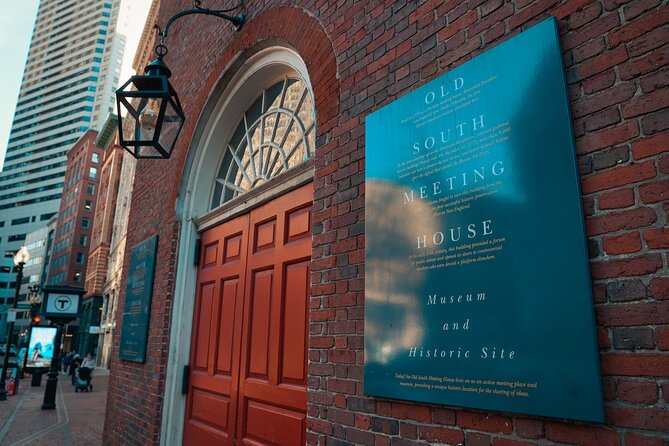
This experience is structured so you can go at your own pace through the museums. That’s a plus for a lot of people. You can spend time on the details that catch your eye, and you don’t feel forced to keep up with a group.
You’ll still find educational support in the mix. The experience notes that talks and tours are available to help you explore, so if you want someone to connect the timeline more explicitly, you can look for those options while you’re there.
In plain terms: self-guided is great when you want flexibility. It can be less ideal when you want a single narrated storyline from start to finish. If you’re the type who likes a guide to explain why each artifact matters, plan to seek out a talk or tour option during your visit, if offered while you’re on-site.
Rainy day in Boston? These doors are open
- Boston: View Boston Observation Deck Entry Ticket★ 4.7 · 1,451 reviews
- New England Aquarium Admission Ticket in Boston★ 4.0 · 446 reviews
- Boston: Franklin Park Zoo Entry Ticket★ 4.3 · 430 reviews
- Boston Pass: 40+ Things To Do – Includes Franklin Park Zoo★ 4.0 · 359 reviews
- View Boston Observation Deck Admission Tickets★ 4.5 · 314 reviews
Comfort, Staff, and Practical Details That Make the Day Better
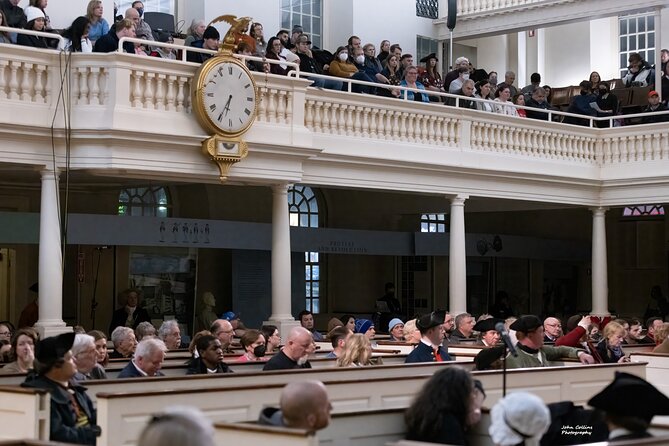
A small thing that can change the whole experience: it feels well kept. The feedback emphasizes that the sites are very well kept, and staff are friendly. That matters because museum navigation can be confusing if you’re unsure where to start, and having someone point you in the right direction makes the exhibits land faster.
Also, both stops have air conditioning, which is a practical win in Boston. It sounds small, but it affects how long you’ll stay. If you’re comfortable, you’ll naturally take in more.
On the practical-travel side:
- The experience is near public transportation.
- It’s suitable for most travelers.
- Service animals are allowed.
One more note: the two sites are not equally accessible right now. Old South Meeting House is accessible; Old State House is not currently. If accessibility is part of your planning, it’s smart to build your day around what you can access comfortably.
Opening Hours You Can Plan Around
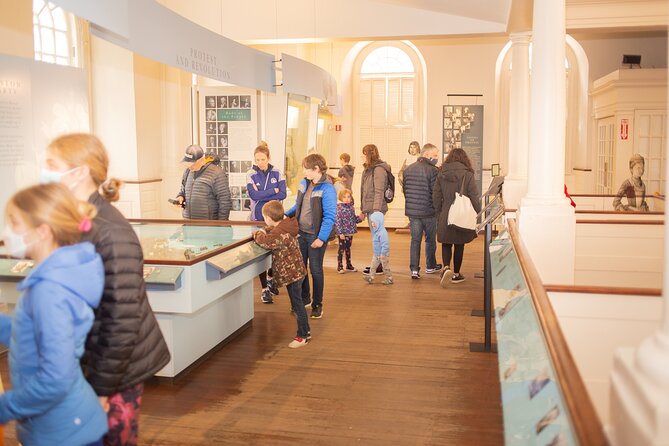
The listed opening hours run from 01/01/2026 to 06/30/2026, with daily hours of 10:00 AM to 5:00 PM (Monday through Sunday). If you’re visiting in that window, you’re looking at a predictable schedule—helpful when you’re stitching together a full day in downtown Boston.
Should You Book This Old South + Old State House Visit?
I’d book it if you want a short, central, high-impact history stop that connects the Boston Tea Party era to the government clash behind the Revolution. This is a smart choice for:
- history lovers who like artifacts and themed interpretation,
- people who want an easy walk between two major downtown sites,
- travelers who want flexibility (self-guided) but might still want a talk or tour if available.
I’d think twice if you strongly prefer an always-guided, fully narrated experience. This is more “go in, read, see, and make it yours,” with educational options available rather than constant guiding.
And if accessibility is a key factor, plan with care: Old South Meeting House is accessible, while Old State House is not currently. You can still get a lot from Old South alone, but you should know what the state house situation is before you commit your time.
If you’re building a downtown Boston day and want a couple of stops that genuinely connect to the revolution story, this pairing is a solid bet.
FAQ
How much does this experience cost?
It’s priced at $15.00 per person.
How long should I plan for?
Plan for about 30 minutes to 2 hours total, depending on how much you read and how much educational programming you add.
Is it a guided tour?
It’s primarily a self-guided museum experience, and talks and tours are available to help you explore if you want more context.
Are the museums free to enter?
The stop details list admission as free for each site, and this experience is sold as a $15 per-person bundle with a mobile ticket.
What are the opening hours?
For 01/01/2026 to 06/30/2026, it runs 10:00 AM to 5:00 PM daily (Monday through Sunday).
Can I cancel for a full refund?
Yes. You can cancel for a full refund if you cancel at least 24 hours before the experience’s start time.
Is the Old State House accessible?
No. The Old State House is not currently accessible, while the Old South Meeting House is accessible. Service animals are allowed at the sites.
More of the Boston Ledger




Boston Behind the Turnstiles




Follow the Red Bricks Further


New on the Boston Docket
- Boston to Newport Mansions Private Day Trip
★ 5.0 · 3 reviews - Boston Massachusetts Private Photography Tour
★ 5.0 · 3 reviews - Homemade Dumplings 101 in Boston
★ 3.5 · 3 reviews - Self-Guided Audio Tour of Boston North End
★ 4.5 · 3 reviews - Old Boston: Beacon Hill & Back Bay Walking Tour in French
★ 4.7 · 3 reviews
Freedom Trail & Revolution Walks, compared.
 ★ 5.0Freedom Trail History Small Group Walking TourFrom $356,450 reviews
 ★ 4.5Boston Freedom Trail Walking Tour with Costumed GuideFrom $262,531 reviews
 ★ 4.5Boston Tea Party Ships and Museum AdmissionFrom $352,512 reviews
 ★ 5.0The Full Revolutionary Story Epic Small Group Boston Walking TourFrom $552,356 reviews
 ★ 4.8Boston Tea Party Ships and Museum Interactive TourFrom $351,926 reviews
 ★ 5.0Boston Food & History: Pizza, North End & Freedom TrailFrom $901,772 reviews
 ★ 4.9Boston’s Freedom Trail: A Revolutionary Walking TourFrom $311,748 reviews
★ 4.9Freedom Trail History Small Group Walking TourFrom $351,590 reviews
★ 4.9Boston’s Freedom Trail: A Revolutionary Walking TourFrom $311,748 reviews
★ 4.9Freedom Trail History Small Group Walking TourFrom $351,590 reviews
Browse the lists this tour appears in