

REVIEW · HISTORICAL TOURS
Boston Walk Through History Private & All-Inclusive Tour
Boston in one morning can feel like homework. This private tour turns it into a guided story you can actually walk through. You start in the downtown core, hit big landmarks, and end with an easy subway exit at South Station. I like that it is private (only your group) and that it mixes famous sites with local food-and-neighborhood flavor. One heads-up: timing depends on the streets that day, and a late guide can happen if traffic hits.
What I like most is the pacing and focus on what to notice. You get a guide who can tailor the experience to what you already know and what you want next (I’ve seen this done with a guide named Manny who asked guests what they had already seen). I also like that the tour is built around the Freedom Trail plus nearby historic stops, so you get both context and good “walkable geography” in a single stretch.
The one drawback to plan around is that private does not always mean perfectly on-time. In one instance, a guide arrived over an hour late due to a road crash and standstill traffic. If you have a hard deadline later that day, add a buffer.
In This Review
- Key things to know before you go
- Why a private Boston history walk beats self-guiding
- Boston Common and the Massachusetts State House: your anchor points
- Granary Burying Ground and King’s Chapel: faith and famous names
- Faneuil Hall, the Paul Revere House, and Old North Church
- The Freedom Trail stretch: pacing matters
- Beacon Hill south side and the North End: neighborhood reality
- Fenway Park, museums, and Harvard: when the tour expands beyond the Revolution
- Price and what the $339 buys you
- Logistics that actually affect your day
- Who this tour is best for (and who should reconsider)
- Should you book this Boston private history tour?
- FAQ
- What does Boston Walk Through History include?
- How long is the tour?
- Is it private or shared with other people?
- What language is the tour offered in?
- Where does the tour start and end?
- Are there admission fees for the stops?
- What happens if the weather is bad?
- Can I get a refund if I cancel?
Key things to know before you go

- Private guide, only your group: No crowds to dodge, and you can ask questions at each stop.
- Freedom Trail plus extras: You’re not doing a bare-bones line on a map; the route connects multiple historical landmarks.
- Mobile ticket included: You’ll have it in your phone, which makes day-of check-in simpler.
- Most stops list free admission: That can make the tour feel more value-forward since you’re not constantly paying entrance fees.
- Easy finish at South Station: Your guide helps you transition to the subway for the ride out.
Why a private Boston history walk beats self-guiding
Boston is a city where “just following the map” can turn into staring at plaques. A private guide changes the whole feel. Instead of reading dates, you learn why these places mattered, how they connect, and what the city looked like when it was still being formed.
This tour is also good for people who want structure without feeling rushed. The stops are clustered in and around central Boston—so you spend time looking at landmarks, not guessing how to get from one side of town to the other.
Finally, the private format is a real advantage if you have specific interests. Want more about the Revolution? More about neighborhoods? More about food and daily life? A good guide can steer the day. One guide named Manny was noted for asking what you already saw so the tour matched your interests.
Boston Common and the Massachusetts State House: your anchor points
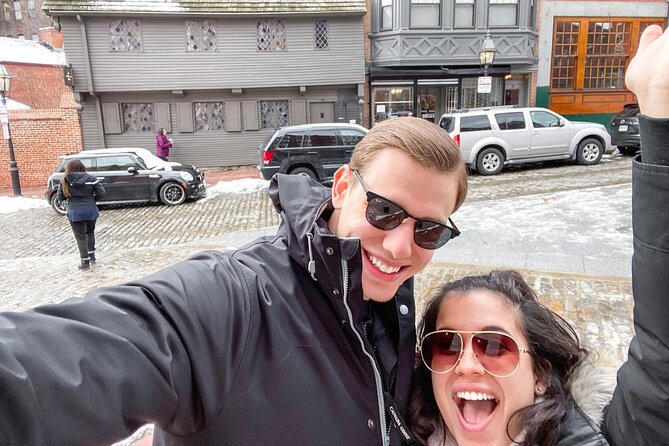
You begin at Boston Common, the oldest city park in the United States (dating to 1634). Even if you’ve seen photos, you’ll feel the scale right away. It’s the kind of place where the city’s layers—old and new—share the same space.
From there you head to the Massachusetts State House in Beacon Hill. This is where Boston becomes more than a tourist city. It’s government, power, and how the city’s civic identity developed over time. The short stop format means you’ll get the orientation you need: where you are in the city, what this building represents, and what to look for as you keep walking.
Practical tip: bring a light layer. You’re in an outdoor-to-outdoor flow early in the tour, and Boston weather can change fast.
Boston was built for walking. More routes


Granary Burying Ground and King’s Chapel: faith and famous names
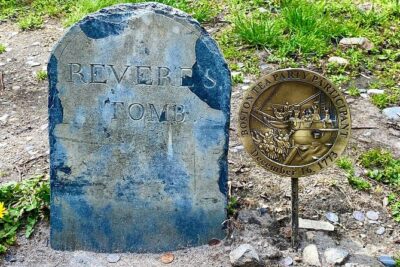
Next up is Granary Burying Ground, Boston’s third-oldest cemetery (founded in 1660). Cemeteries can feel like a background attraction, but this one is often a big turning point in a history walk. You start noticing names and connections, and you understand why Boston cared about legacy so early.
Then you visit King’s Chapel. It’s a religious site with a specific story: a Unitarian Christian congregation with Anglican-style worship and congregational governance. In a short visit, the value is not just the building—it’s the lens. You learn how Boston’s religious life shifted and what that says about the city over time.
This is one of those stop groups where a guide matters. If you’re by yourself, it’s easy to see the place and miss the point. With a guide, you get the why.
Faneuil Hall, the Paul Revere House, and Old North Church
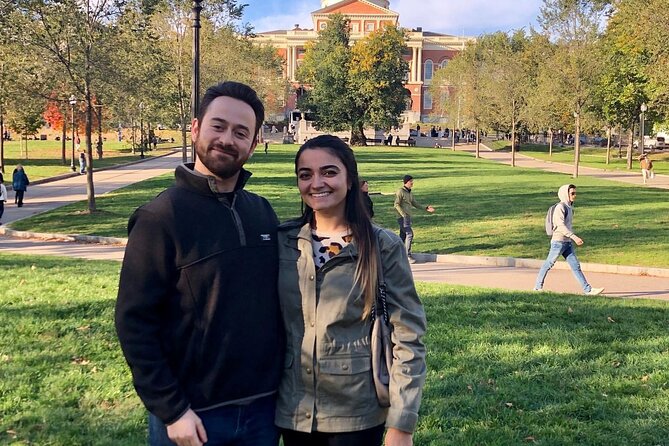
Faneuil Hall Marketplace is where history turns into foot traffic and food choices. The structure is centered on historic market buildings and a promenade, so it works as both a sightseeing moment and a reset. Even if you don’t shop, you’ll get a feel for why this area stayed important as the city grew.
You then go to the Paul Revere House (built around 1680). A home like this is powerful because it makes the Revolution feel less like a page in a book and more like people living day to day. Short stops still work here, because you’re not trying to become an expert in 15 minutes—you’re gathering the human anchor points.
After that comes Old North Church and its historic site, tied to the famous signal story about one if by land, two if by sea. This stop tends to click for many people because the details connect to the wider Revolution narrative you’ve been building across the day.
Timing note: several of these stops are set at around 15 minutes. That can feel perfect if you like motion and context. If you prefer slow, linger-at-everything visits, you may want to ask your guide for a bit more time at the place you care about most.
The Freedom Trail stretch: pacing matters
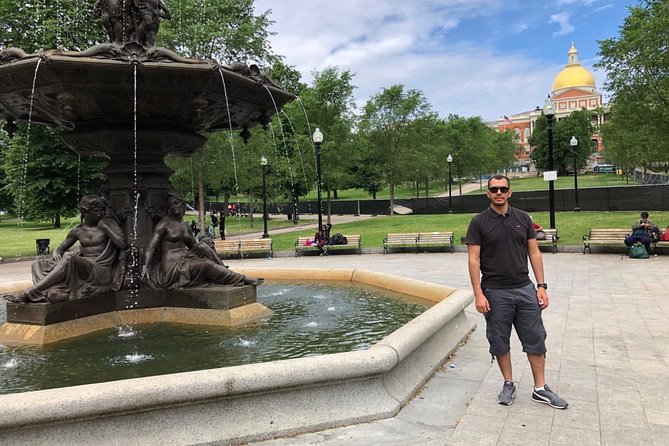
The Freedom Trail portion runs about 2.5 miles total, and in this experience you spend about 1 hour 30 minutes on it. That’s enough time to feel like you’re walking through the story, not speed-walking it. The big benefit of having a guide here is simple: you learn what to connect and what to ignore.
Also, Freedom Trail is not just about the route. The point is the sequence. Start with the city’s early core and keep moving through the Revolution era beats. When you’re on your own, you often miss the connection between stops. With a guide, you’re more likely to remember why the places mattered.
One consideration: comfortable shoes are not optional in Boston. You’re walking between neighborhoods, and the tour’s total duration can run up to 6 hours depending on the pace and the day.
Beacon Hill south side and the North End: neighborhood reality

The tour doesn’t stay stuck in landmark mode. You also get time in neighborhoods that show Boston as a living city.
Beacon Hill, south side is known locally for its association with Boston’s old money families, often called Brahmins. If you’ve only seen the postcard views, this portion can help you understand the neighborhood as a social and architectural identity, not just a pretty street set.
Then you reach the North End, an area with Italian character and a lively flair. It’s also a useful contrast after Beacon Hill—different city vibe, different community history, and a different way Boston has evolved over the centuries.
If you’re the kind of person who likes photos, this is where you’ll take plenty. If you prefer texture over photos, you’ll still like it because the guide can explain how the neighborhood identity formed.
Three centuries deep, more Boston history
- Boston: Freedom Trail History Small Group Walking Tour★ 5.0 · 6,450 reviews
- Boston Food & History: Pizza, North End & Freedom Trail★ 5.0 · 1,772 reviews
- Boston: Freedom Trail History Small Group Walking Tour★ 4.9 · 1,590 reviews
- City Cruises Boston Historic Sightseeing Harbor Cruise★ 4.5 · 1,388 reviews
- Boston’s North End Food Tour: Italian Flavors & Heritage Walk★ 5.0 · 1,322 reviews
Fenway Park, museums, and Harvard: when the tour expands beyond the Revolution
This is where the itinerary becomes more of a sampler. The tour includes stops associated with Boston’s modern cultural powerhouses.
- Fenway Park: Often called America’s Most Beloved Ballpark. Even if you’re not a sports fan, a tour can be a fun way to understand why this place holds civic pride.
- Boston Museum of Fine Arts: Listed stops include Impressionist paintings, ancient Egyptian treasures, and art from Asia and Persian traditions, plus work from ancient Greece and the Middle East. The value here is variety: art as a global lens, not just local decoration.
- Science museum: Designed for hands-on exploration, and the key idea is that it’s not only for kids. It’s about active learning—so you can move through exhibits with more engagement than you’d expect.
- Harvard University: The oldest institution of higher learning in the U.S. The tour notes a student-led walking tour through the Harvard Information Center concept, with lore and personal perspective. That student voice can make campus history feel current instead of museum-still.
Here’s the practical side: adding museums and Harvard to a walking day can stretch your energy. If you’re the type who loves museums, great. If you want only the Revolution and early colonial stops, ask your guide where you should spend the extra attention. A good guide can help you focus on what fits your interests.
Price and what the $339 buys you
At $339 per person, this is not a bargain-basement walking tour. But “private and all-inclusive” matters here because you’re paying for guided time, not just entrance access.
A big value signal in the tour details is that many stops list admission ticket free. In other words, you’re paying for the guide and the route, while the typical entrance-fee friction is reduced (at least as listed for the stops included). You’re also getting a mobile ticket, which helps on day-of.
You also get a wide window on duration—3 to 6 hours. That range usually means the experience can flex around your group pace and curiosity level. If you’re the kind of traveler who hates being herded, private guides can justify the price fast.
One more value point: this tour is booked about 31 days in advance on average. That’s a sign it sells well, so locking in earlier can help you get your preferred time.
Logistics that actually affect your day
The tour starts at Tremont St at the Temple Pl stop in Boston, and it ends at South Station (700 Atlantic Ave), where your guide helps you board the subway. That finish is smart. South Station is a major hub, so you can get moving quickly after a long walking day.
The tour is offered in English and is described as near public transportation. It’s also marked as something most travelers can participate in, which generally means it’s not only for a narrow mobility profile—though you should still plan for walking.
Also, the experience requires good weather. If Boston chooses to be Boston, you may be offered a different date or a full refund instead.
Who this tour is best for (and who should reconsider)
This tour is a strong fit if you want:
- a private guide who can answer questions and steer the day
- a single route that touches both classic landmarks and major neighborhoods
- Freedom Trail context without feeling like you’re doing a homework assignment
It may be less ideal if you:
- have a very tight schedule and cannot handle timing slips
- only want one narrow slice of history (for example, purely Revolution-era stops)
- dislike walking for several hours, especially if your day also includes museum-adjacent stops
As for group size, it’s private, so you won’t be squeezed into a big group vibe. That’s the main reason a private history tour can feel worth it.
Should you book this Boston private history tour?
If you’re deciding, I’d book it when you want structure without crowds. The mix of Boston Common, the State House area, cemetery and church stops, and then Freedom Trail makes sense as a first or second trip. Add in neighborhoods like Beacon Hill and the North End, and you get more than a single-theme tour.
I would skip or adjust expectations if you’re on a strict timetable. In at least one case, the day was affected by traffic after a road crash, with a guide arriving late. If you can build in a buffer, private time becomes a pleasure instead of stress.
Bottom line: for a first-time visitor who wants the city’s story connected across neighborhoods—and you like asking questions—this tour is a solid way to get your bearings fast. If you’re trying to do only the cheapest sites, you can DIY Boston easily. But if you want someone to translate the city as you walk, the private guide is the point.
FAQ
What does Boston Walk Through History include?
It’s a private tour in Boston with a guide. The experience includes a mobile ticket and visits a set of historic stops such as Boston Common, the Massachusetts State House, Granary Burying Ground, King’s Chapel, Faneuil Hall Marketplace, the Paul Revere House, Old North Church & Historic Site, and the Freedom Trail area, with additional stops listed like Fenway Park, Beacon Hill, the Museum of Fine Arts, a science museum, the North End, and Harvard.
How long is the tour?
The duration is listed as approximately 3 to 6 hours.
Is it private or shared with other people?
It’s private. Only your group participates.
What language is the tour offered in?
The tour is offered in English.
Where does the tour start and end?
The start point is Tremont St at the Temple Pl stop in Boston, MA. The end point is South Station at 700 Atlantic Ave, Boston, MA, and your guide helps you board the subway there.
Are there admission fees for the stops?
The details provided list admission ticket free for the listed stops.
What happens if the weather is bad?
The experience requires good weather. If canceled due to poor weather, you’ll be offered a different date or a full refund.
Can I get a refund if I cancel?
Yes. You can cancel up to 24 hours in advance for a full refund. If you cancel less than 24 hours before the start time, the amount paid is not refunded.
Boston History, Volume Two



On Foot Through Old Boston



More of the Boston Ledger



New on the Boston Docket
- Boston to Newport Mansions Private Day Trip
★ 5.0 · 3 reviews - Boston Massachusetts Private Photography Tour
★ 5.0 · 3 reviews - Homemade Dumplings 101 in Boston
★ 3.5 · 3 reviews - Self-Guided Audio Tour of Boston North End
★ 4.5 · 3 reviews - Old Boston: Beacon Hill & Back Bay Walking Tour in French
★ 4.7 · 3 reviews
Historical Tours, compared.
 ★ 5.0History and Hauntings of Salem Guided Walking TourFrom $3614,564 reviews
 ★ 5.0Freedom Trail History Small Group Walking TourFrom $356,450 reviews
 ★ 4.5Tour of Historic Fenway Park, America’s Most Beloved BallparkFrom $453,013 reviews
 ★ 5.0Boston Food & History: Pizza, North End & Freedom TrailFrom $901,772 reviews
 ★ 4.6City Cruises Historical Sightseeing CruiseFrom $461,771 reviews
★ 4.9Freedom Trail History Small Group Walking TourFrom $351,590 reviews
 ★ 4.5City Cruises Boston Historic Sightseeing Harbor CruiseFrom $461,388 reviews
 ★ 5.0Boston’s North End Food Tour: Italian Flavors & Heritage WalkFrom $701,322 reviews
Browse the lists this tour appears in