
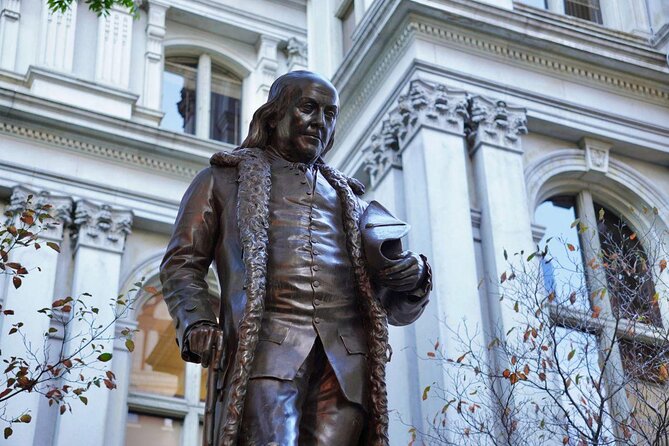
REVIEW · FREEDOM TRAIL & REVOLUTION WALKS
Boston Seafood & Freedom Trail Walking Tour
Seafood and Revolutionary landmarks on one route. This Boston tour ties together Freedom Trail sights and classic New England eats, with stops that make the city feel connected instead of chopped into random photo stops. I like that you get real time at food hubs like Quincy Market and Faneuil Hall, not just roadside bites, and that the harbor viewpoints help you understand why Boston’s history started here.
My other big plus is the guide experience. When the guide is Tim, you can expect sharp, question-friendly history alongside the tasting, so you’re not just walking past plaques—you’re learning what they mean as you go. The one real consideration: this tour is seafood and shellfish focused, and it is not suitable for anyone with a shellfish allergy.
In This Review
- Key highlights worth planning around
- Boston Harbor, Freedom Trail, and seafood: the big idea
- Price and value: why $172.33 can work for you
- How the 5-hour walk is paced (and where you end up)
- Walking stops that connect revolution landmarks to real food
- Independence Wharf and the Tea Party Ship view
- Boston Harborwalk: learning the coastline
- Long Wharf: the port that moved everything
- Quincy Market: food hall time without losing the storyline
- Faneuil Hall Marketplace: meeting hall to Cradle of Liberty
- Rose Fitzgerald Kennedy Greenway: city park + restaurant breaks
- State Street and the Custom House Tower
- Old State House and the Boston Massacre question
- Downtown Crossing: a short trek through the retail artery
- Old City Hall: French Revival architecture and a fun photo moment
- Massachusetts State House views (and possible interior access)
- Beacon Hill: red-brick row houses and the classic look
- Seafood tasting basics: what you might eat, sample sizes, allergies
- Photo stops and photo moments: harbor views, Beacon Hill, and State House
- Should you book this tour?
- FAQ
- FAQ
- How long is the Boston Seafood & Freedom Trail Walking Tour?
- Where do I meet, and where does the tour end?
- Is it a walking tour, and how far do we walk?
- What’s included in the seafood tasting?
- Is the tour suitable for kids?
- Can I join if I have a shellfish allergy?
- Does it run in bad weather?
- Can I cancel for free?
Key highlights worth planning around
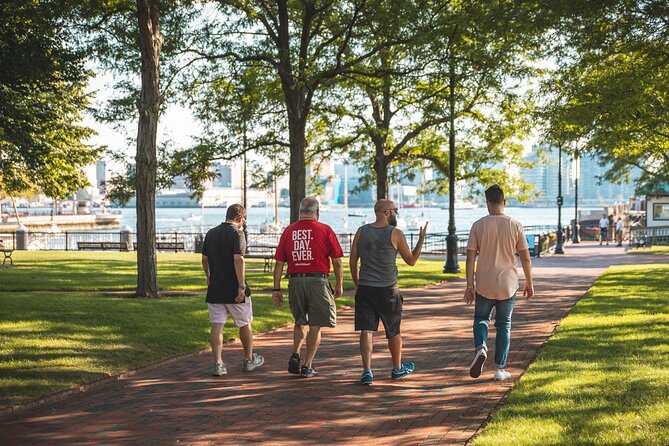
- Seafood tasting that adds up to a meal, not a few token bites
- Freedom Trail + harbor photo stops that actually match the stories
- Small group size (max 12) makes it easier to ask questions and move at a human pace
- Quincy Market and Faneuil Hall time built in, so you can regroup and snack strategically
- Old City Hall and Beacon Hill architecture give you that quintessential Boston look
- State House interior on some weekdays (government hours only) if timing lines up
Boston Harbor, Freedom Trail, and seafood: the big idea
This tour is built for people who want Boston to make sense fast. You start near the water, walk through key downtown Revolutionary-era stops, then finish with that red-brick charm you picture when someone says Beacon Hill. The food fits that same pattern: you’re not tasting seafood in isolation—you’re tasting it while you’re learning why it matters in a port city.
What makes it work is the pacing and pairing. You get harbor views and landmark context early, then you shift to food-centric stops like Quincy Market and Faneuil Hall. By the time you reach the Old City Hall area, the history questions feel more grounded, because you’ve already seen the physical parts of the city that shaped the story.
I also like that the tour leans practical. The guide isn’t just reciting facts. You get recommendations for what else to eat and see, which is exactly what you want after a tasting tour—so your next meal doesn’t turn into guesswork.
Price and value: why $172.33 can work for you
Let’s talk value, because $172.33 per person is not a throwaway add-on. The upside is that you’re paying for three things at once: a guided walk through major sights, a tasting sequence designed to equal a full meal, and an included surprise local treat. If you were planning to do the Freedom Trail and then separately pay for seafood somewhere, you’d likely spend similar money—and you’d still miss the story connection.
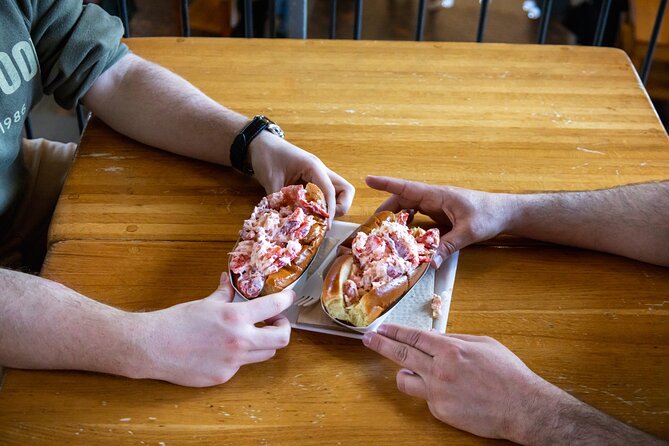
The tasting is the clearest reason this can feel worth it. The seafood samples can include items like lobster roll, New England clam chowder, stuffed clams, quahogs, and even raw oysters. It’s shellfish-centered, and the tour notes that the samples together should add up to a full meal. That matters because you’re not stuck eating only one item and calling it dinner.
A second value driver: the group stays small (up to 12), so the guide can answer questions without turning into a lecture you half-hear while hunting for napkins. And there’s an added “do something with it” angle: you’ll participate in local efforts that promote responsibly sourced and sustainable seafood. Even if you don’t know what that means at first, you’ll leave with a better sense of what you’re eating and why sourcing matters.
The red brick line keeps going. More Trail walks here
How the 5-hour walk is paced (and where you end up)
This is about a 5-hour walking tour with roughly 5.6 km (2.5 miles) covered. That’s manageable for most people, but it’s still a real walk—no long sit-down breaks all day. The route runs rain or shine, or snow unless it turns dangerous, so plan on weather-friendly layers.
You also need to know where you start and end. The meeting point is 470 Atlantic Ave, Boston, MA 02210, and the start time is 1:00 pm. The tour ends at the Public Garden area, which is handy because you can keep your afternoon going nearby without doubling back.
Logistics are also fairly light. You use a mobile ticket, the tour runs with a friendly English-speaking guide, and it’s near public transportation. Service animals are allowed, and children under 6 can join for free. If you’re traveling as a family, this tour is set up to be child-friendly, but you should still expect that walking distance.
Walking stops that connect revolution landmarks to real food
Here’s how the day flows, and what each part is doing for you.
Independence Wharf and the Tea Party Ship view
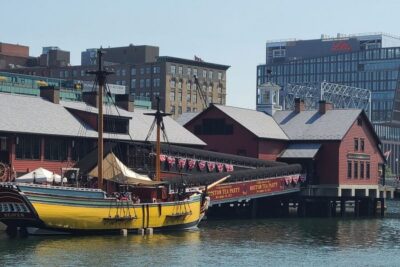
You begin at Independence Wharf and walk around to the back for an impressive view of the Boston Tea Party Ship and Museum. On the way, your guide connects the area to one of the big events that led toward the American Revolution. You’ll also hear pointers to nearby landmarks like Fort Point and the Seaport District, which helps you understand how the waterline shaped Boston’s growth.
Why it matters: you’re setting context before you start eating, and the harbor location makes the Revolution feel less like textbook content.
Boston Harborwalk: learning the coastline
Next is the Harborwalk, a path that links neighborhoods along Boston Harbor. You’ll get a quick education on the harbor’s history and you’ll have time to take in views worth stopping for.
Potential drawback: this is scenic, but it’s also a walking segment—so keep your energy up before the food breaks.
Chowder, lobster rolls, the working piers. More of it
- Boston Seafood Tour: Behind the Scenes at the Historic Fish Pier★ 5.0 · 267 reviews
- Boston Seafood Lovers Food and History Walking Tour★ 5.0 · 208 reviews
- Boston Private Food Tour of 6+ Tastings, Cannoli, Lobster Roll★ 5.0 · 165 reviews
- Boston Seafood Private Tasting Tour★ 5.0 · 102 reviews
- Boston: Guided Seafood Tasting and History Tour★ 4.9 · 90 reviews
Long Wharf: the port that moved everything
Then you pass Long Wharf, the first main port of Boston for almost 200 years. It’s one of those places where the city’s trading power becomes tangible, even if you’re just walking by.
Why it matters: it ties directly to why shellfish seafood culture makes sense in Boston, not just because it’s popular.
Quincy Market: food hall time without losing the storyline
After the waterfront stretches, you get 45 minutes at Quincy Market. This is the busy, famous food hall in downtown Boston, with lots of options and shopping. Even though you’re on a seafood-focused tour, this break gives you breathing room and lets you regroup.
Tip: if you’re an adventurous eater, this stop can be your “if I still want more, I know where to go” moment—since additional food isn’t included.
Faneuil Hall Marketplace: meeting hall to Cradle of Liberty
You head to Faneuil Hall Marketplace, a key meeting place that played a significant role in the American Revolution and is often called the Cradle of Liberty. It’s also a natural spot for photos, partly because the buildings feel so Boston.
Why it matters: this is where the political story gets personal. People weren’t discussing ideas in the abstract—they were gathering here.
Rose Fitzgerald Kennedy Greenway: city park + restaurant breaks
From there, you walk to the Rose Fitzgerald Kennedy Greenway, a public park with green space and restaurants. This is a pleasant transition point. It gives you a change of pace after the more dense downtown stops.
Why it matters: it’s not only pretty; it helps you reset your attention before more historical landmarks.
State Street and the Custom House Tower
Then you’re back in downtown, seeing State Street and the Custom House Tower, noted as the city’s first skyscraper. It’s one of those contrast points: the Revolution-era meeting spaces beside the early modern skyline story.
Old State House and the Boston Massacre question
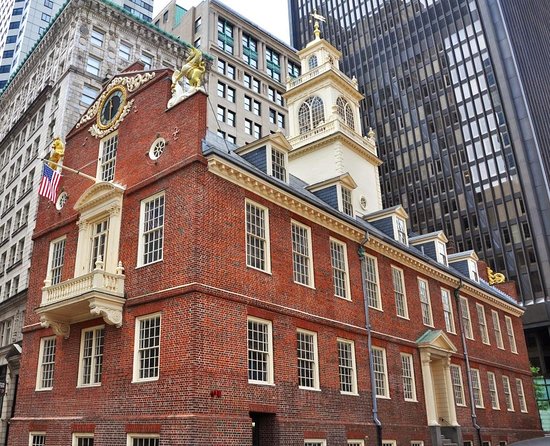
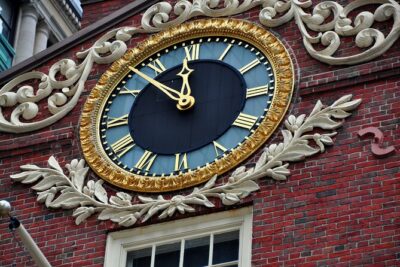
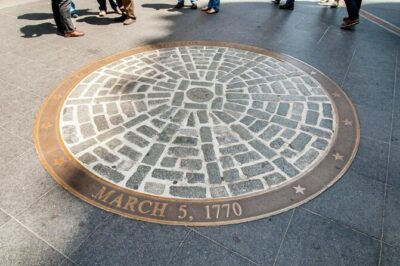
You stop in front of the Old State House and the site associated with the Boston Massacre. Your guide poses a sharp question: was it really a massacre, or was it propaganda for the Revolution? That kind of framing makes the moment feel current instead of sealed in the past.
Why it matters: it trains you to look at history as interpretation, not just a single official version.
Downtown Crossing: a short trek through the retail artery
You get a short walk through Downtown Crossing. It’s not the main learning moment, but it helps connect the history stops with real present-day Boston movement.
Old City Hall: French Revival architecture and a fun photo moment
Next is Old City Hall. The building’s French Revival style is a standout, and it served as the seat of city government for years. It’s also tied to the birth of public education in America, and you can get a photo with the bronze donkey outside.
Photo bonus: that donkey moment is quick, funny, and very Boston. It’s also a good place to pause before the final stretch.
Massachusetts State House views (and possible interior access)
On most weekdays, during government hours only, you may be able to see the State House at work inside. The building was designed and built by Charles Bulfinch in 1798. Outside, you’ll look over modern Boston too, including the Financial District and the John Hancock Tower, noted as the tallest building in New England.
Consideration: interior access depends on weekday timing and government hours, so treat it as a maybe—not a guaranteed museum-style visit.
Beacon Hill: red-brick row houses and the classic look
Finally, you continue through Beacon Hill for a chance to take in that quintessential architecture—red brick row houses that make the neighborhood instantly recognizable.
Why it matters: it’s a satisfying close. You finish with aesthetics, not just facts.
Seafood tasting basics: what you might eat, sample sizes, allergies
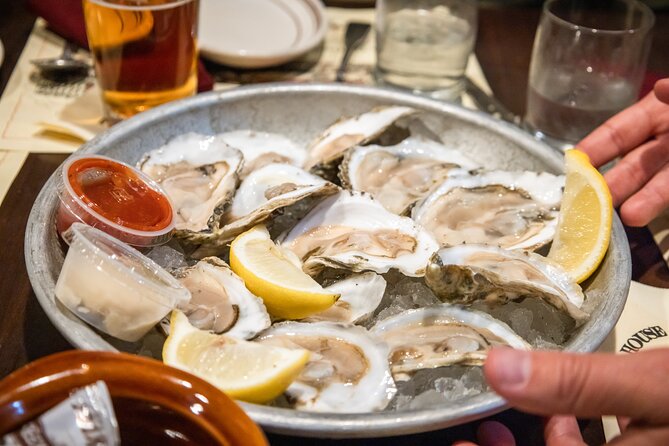
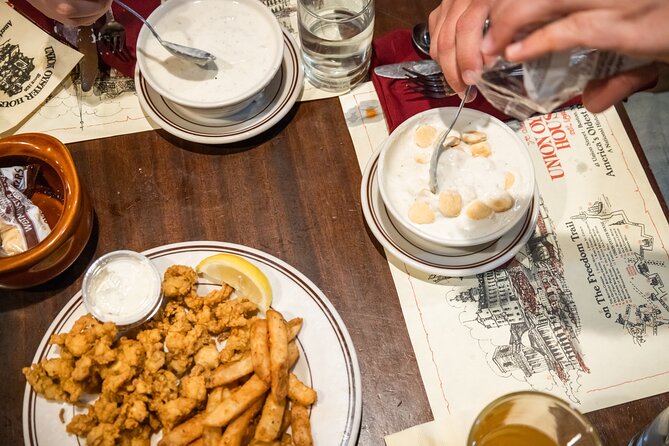
The included part is the heart of the tour. You’ll taste a variety of regional seafood dishes and samples that should add up to a full meal. Items that could appear include lobster roll, New England clam chowder, stuffed clams, quahogs, and raw oysters.
The big practical detail: this is shellfish-centered, so it’s not suitable for a shellfish allergy. The tour also says substitutions aren’t available for shellfish allergy. If you have other allergies, you need to advise at least 24 hours prior so the guide can see what’s possible.
For most food lovers, this format is a smart move. Instead of choosing one dish and calling it dinner, you’re sampling across textures and styles—creamy chowder, buttery lobster roll, and briny items like oysters or quahogs if you’re brave.
You’ll also get a surprise local treat. I like when a tour does this because it keeps you from predicting every single taste. And since you’re walking, the samples are timed to keep you fueled without leaving you stuffed before the best photo stops.
Photo stops and photo moments: harbor views, Beacon Hill, and State House
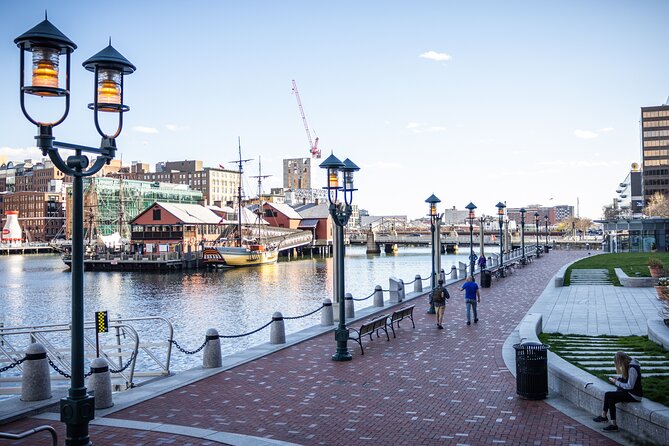
This tour is built for cameras, but it doesn’t rely on one single overlook. The harbor viewpoints show up early, especially around Independence Wharf and the Harborwalk, so you get a strong Boston-skyline connection from the start. Later, you have historic backdrops at places like Faneuil Hall and the Old State House area, plus architecture moments around Old City Hall.
If you’re a “one good view per stop” person, you’ll appreciate that the route repeatedly gives you a reason to pause: the harbor, the Revolutionary landmarks, and finally Beacon Hill’s street-level charm.
One more nice touch: you’re likely to get a guide who helps you photograph better by choosing where to stand and what to frame. And with the group capped at 12, it’s easier to move for photos without constantly pushing through a crowd.
Should you book this tour?
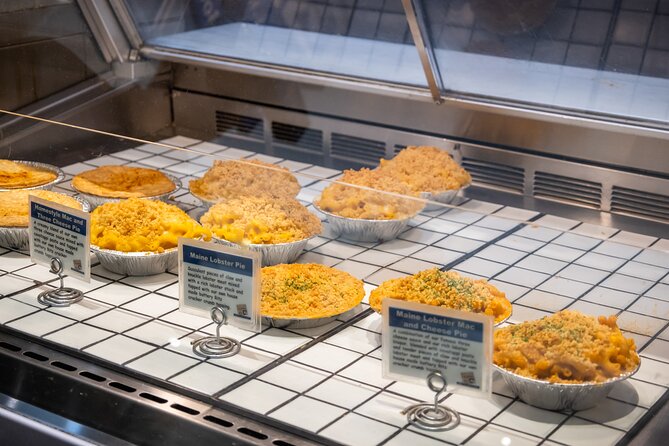
If you want Boston in one tight afternoon—seafood plus the Freedom Trail story—this is a strong pick. The price can feel fair because the tasting is designed to equal a meal, you get multiple key landmarks, and the small-group format keeps the guide’s time useful. If you’re traveling solo or as a couple, it’s also an easy way to avoid getting stuck in “which restaurant?” decision fatigue.
I’d skip it if shellfish is off the table for you, even if you love the idea of walking the Freedom Trail. And if your walking tolerance is low, remember it’s about 2.5 miles over 5 hours.
FAQ
FAQ
How long is the Boston Seafood & Freedom Trail Walking Tour?
It’s about 5 hours.
Where do I meet, and where does the tour end?
You meet at 470 Atlantic Ave, Boston, MA 02210 and the tour ends near the Public Garden in Boston, MA 02116.
Is it a walking tour, and how far do we walk?
Yes. It covers about 5.6 km (2.5 miles) on foot.
What’s included in the seafood tasting?
You’ll taste a variety of seafood samples designed to equal a full meal. Samples could include lobster roll, New England clam chowder, stuffed clams, quahogs, and even raw oysters, plus a surprise local treat.
Is the tour suitable for kids?
Yes, it’s child-friendly. Children under 6 can join free of charge, and it’s suitable for all ages and fitness levels, with the note that you do walk 2.5 miles.
Can I join if I have a shellfish allergy?
No. The tour is shellfish-focused and is not suitable for anyone with a shellfish allergy, and substitutions aren’t offered for that situation.
Does it run in bad weather?
The tour happens rain, shine, or snow unless weather creates a dangerous situation.
Can I cancel for free?
Yes. You can cancel up to 24 hours in advance for a full refund. If you cancel less than 24 hours before the start time, the amount paid is not refunded.
More of the Boston Ledger


The Boston Seafood Beat



Follow the Red Bricks Further


New on the Boston Docket
- Boston to Newport Mansions Private Day Trip
★ 5.0 · 3 reviews - Boston Massachusetts Private Photography Tour
★ 5.0 · 3 reviews - Homemade Dumplings 101 in Boston
★ 3.5 · 3 reviews - Self-Guided Audio Tour of Boston North End
★ 4.5 · 3 reviews - Old Boston: Beacon Hill & Back Bay Walking Tour in French
★ 4.7 · 3 reviews
Freedom Trail & Revolution Walks, compared.
 ★ 5.0Freedom Trail History Small Group Walking TourFrom $356,450 reviews
 ★ 4.5Boston Freedom Trail Walking Tour with Costumed GuideFrom $262,531 reviews
 ★ 4.5Boston Tea Party Ships and Museum AdmissionFrom $352,512 reviews
 ★ 5.0The Full Revolutionary Story Epic Small Group Boston Walking TourFrom $552,356 reviews
 ★ 4.8Boston Tea Party Ships and Museum Interactive TourFrom $351,926 reviews
 ★ 5.0Boston Food & History: Pizza, North End & Freedom TrailFrom $901,772 reviews
 ★ 4.9Boston’s Freedom Trail: A Revolutionary Walking TourFrom $311,748 reviews
★ 4.9Freedom Trail History Small Group Walking TourFrom $351,590 reviews
★ 4.9Boston’s Freedom Trail: A Revolutionary Walking TourFrom $311,748 reviews
★ 4.9Freedom Trail History Small Group Walking TourFrom $351,590 reviews
Browse the lists this tour appears in