

REVIEW · FREEDOM TRAIL & REVOLUTION WALKS
Boston: Old State House/Old South Meeting House Museum Combo
A pair of Boston landmarks turns into a full debate. This Old State House and Old South Meeting House combo lets you step into two different stages of the Revolution—royal government to public uprising—with one ticket and just a few minutes of walking between them. I especially liked how the Old State House centers on the tension of the Boston Massacre era, and how the Old South Meeting House connects you to the mass meetings that fed the Boston Tea Party.
The only real drawback: the Old State House isn’t accessible and has many stairs, so you’ll need to plan around that if mobility is an issue. The flip side is that Old South is wheelchair accessible with elevator access to the restrooms and the Museum Store on the lower level.
In the middle of downtown, you can do this like a self-guided “argument in buildings.” You’ll get exhibits and gallery talks at both sites, and the story they tell together is the point: self-government doesn’t happen by accident—it’s loud, political, and made by people showing up.
In This Review
- Key things to know before you go
- Old State House and Old South Meeting House: one ticket, one argument
- Walking the two-block link on the Freedom Trail
- Entering the Old State House: 1713, royal government, and the Massacre era
- Going into the Old South Meeting House: 1729, civic meetings, and the Tea Party path
- What the exhibits and gallery talks help you do
- Is the $15 price good value for Boston?
- Timing your one-day plan without feeling rushed
- Practical rules: what to expect when you arrive
- Accessibility and where the stairs change your plan
- Who this works best for
- Should you book this Boston combo?
- FAQ
- What does the ticket include?
- Where are the two locations?
- Can I visit the sites in any order?
- What are the opening hours?
- Is the Old State House wheelchair accessible?
- Are there free admission options?
Key things to know before you go

- Two sites, one ticket: Old State House plus Old South Meeting House, valid for entry at both.
- Just a 3-minute walk apart: they’re about two blocks from each other in the heart of the Freedom Trail area.
- Built in different eras: Old State House dates to 1713; Old South Meeting House was built in 1729.
- You’ll see the Revolution from two angles: royal power and civic resistance, side by side.
- Know the museum rules: no weapons/sharp objects, no smoking, no food or drinks, and no luggage or large bags.
Old State House and Old South Meeting House: one ticket, one argument
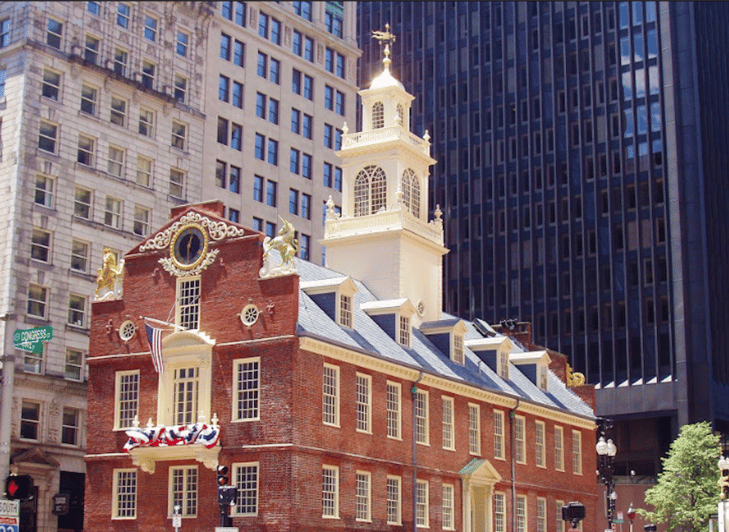
This combo works because the two buildings don’t just sit near each other. They represent two forces pulling Boston in opposite directions. One room (and one story) is about authority—royal rule in the Massachusetts Bay colony. The other is about civic action—big public meetings that helped move events toward the Boston Tea Party and the American Revolution.
I like that the ticket is set up so you can visit in either order. That matters because downtown timing is real life. You might start with the easier logistics for your day and still catch everything, as long as you enter during open hours.
You’re not paying for one “pretty historic stop.” You’re paying for two museums that try to help you think about urgent questions that never really went away: free speech, self-government, and how ordinary people push the system when they disagree.
Walking the two-block link on the Freedom Trail
You’ll find both sites in central Boston, right in the Freedom Trail zone. The distance is short enough that you can treat this as one continuous block of time, not two separate sightseeing chores.
Here’s a practical way to do it: plan to spend your energy on reading and exhibits, then use the walk as a breathing period. With only about a three-minute walk between them, you can keep the storyline connected in your head instead of bouncing between “old building #1” and “old building #2.”
Also, because the museums are open daily from 10 AM to 5 PM (with periodic holiday closures), you don’t have to race the clock as much as you would for sites with narrower hours. Still, I’d aim for earlier in the day. Downtown can get crowded, and the buildings are the main event.
The red brick line keeps going. More Trail walks here
Entering the Old State House: 1713, royal government, and the Massacre era
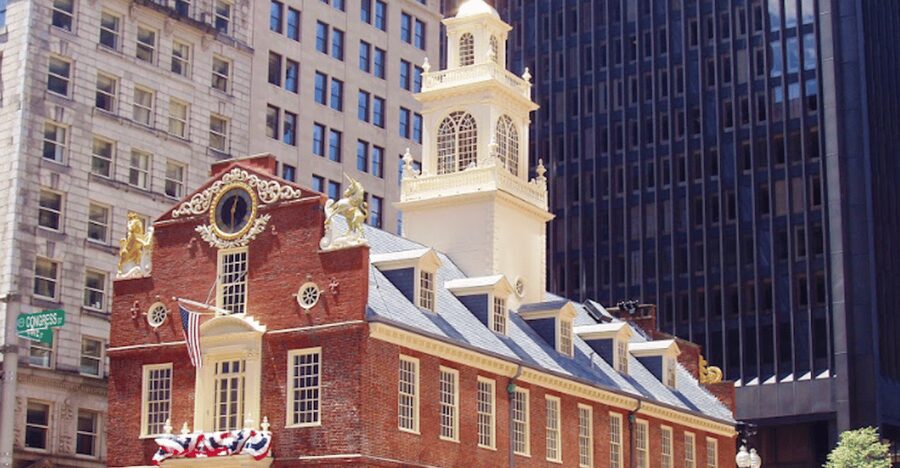
The Old State House is the one that feels like government lived here. Built in 1713, it was the center of royal government in the Massachusetts Bay colony. When you walk into a building like that, it’s easier to understand how power was physically located—signatures, decisions, enforcement, and the everyday machinery of rule.
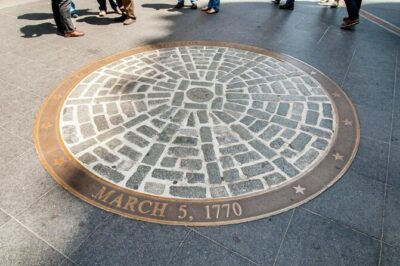
This is also where dramatic Revolutionary history clusters. The Old State House was a focal point for major events leading up to and including the Boston Massacre era. You’re not just hearing a dramatic story; you’re standing in a place tied to the escalation that made the conflict hard to unwind.
What I like most is the way the museum setting encourages you to notice tension. Old political systems don’t fall because one side gets bored. They break when civic pressure becomes unavoidable, and the Old State House helps you see how public disagreement can turn into confrontation.
One consideration: the building is not currently accessible and there are many stairs. If stairs are hard for you, you may still want to go—but it’s smart to plan with realistic mobility expectations.
Going into the Old South Meeting House: 1729, civic meetings, and the Tea Party path
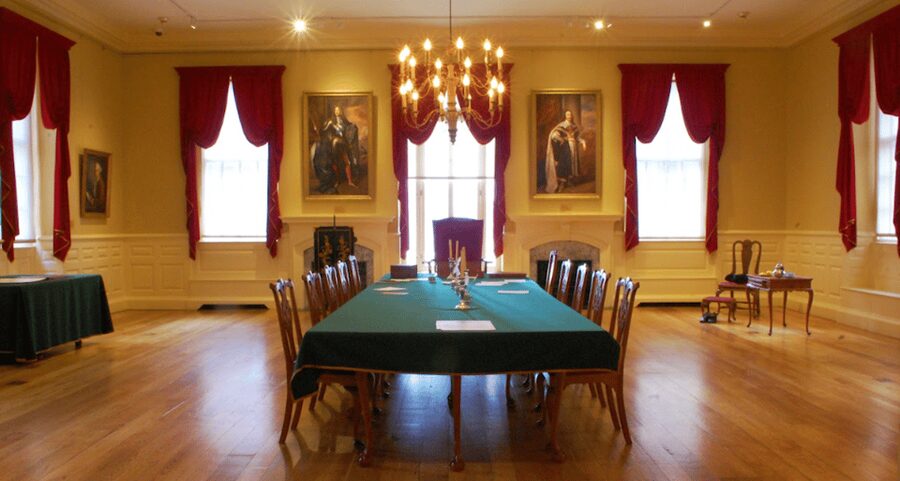
Then you switch gears.
Built in 1729, the Old South Meeting House was the largest building in colonial Boston. It’s a big deal not because it’s impressive architecture (though it helps), but because size matters for politics. When gatherings get bigger, ideas travel faster—and pressure becomes visible.
This meeting house is tied to the Boston Tea Party story and the broader American Revolution. The building served as a place for stirring mass meetings, and those mass meetings helped lead toward the Tea Party and the revolutionary break.
The best part of pairing this with the Old State House is that you don’t have to memorize names of events to understand the mechanics. You feel the contrast. One side is about command and control. The other is about collective voice—people showing up, speaking, and deciding to act together.
Accessibility note: Old South is wheelchair accessible, and there’s elevator access to the restrooms and the Museum Store on the lower level. So if you need one site that’s easier to navigate, this one is the safer bet.
What the exhibits and gallery talks help you do
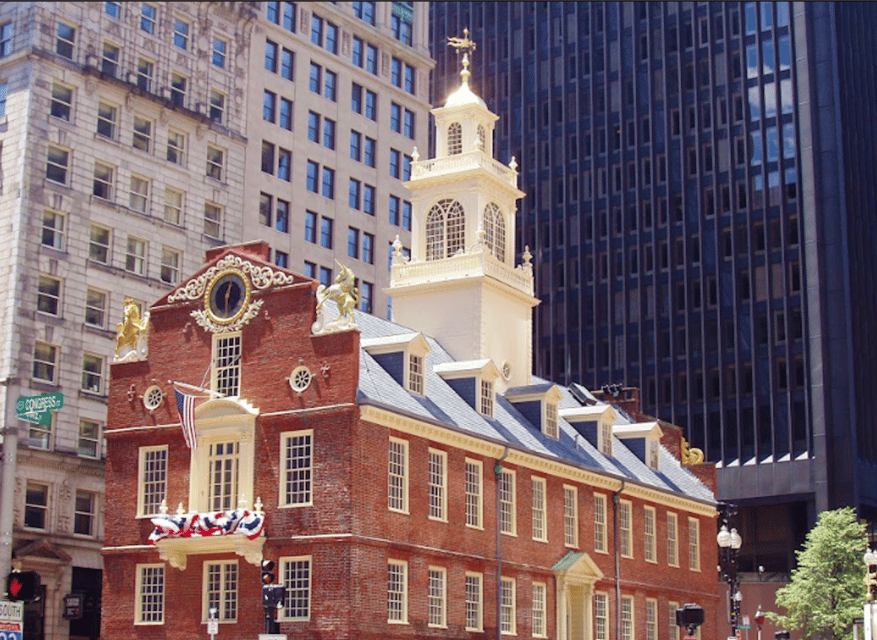
This is not just a “look up and read a few signs” stop. The combo ticket covers admission to both historic sites and all exhibits and gallery talks available inside. That means you can treat your visit like a guided mental timeline, without needing to join a separate tour.
At a good museum, the goal isn’t to overwhelm you with facts. It’s to give you enough context that the story makes sense. Here, the relationship between Old State House and Old South Meeting House becomes the lesson. You start to see why the same society can produce both legal authority and determined resistance.
You’ll also have opportunities through educational offerings and public programs, depending on the day. Even when those programs aren’t running, the museum structure is designed for you to move at your own pace while still staying inside a coherent narrative.
If you like history that has arguments in it—like debates about free speech and civic engagement—this pairing is built for you. If you only want dates and battle facts, you might still enjoy it, but you’ll get more from it if you’re curious about how public life works.
Is the $15 price good value for Boston?

At $15 per person for two sites, this is one of those Boston deals that feels reasonable because you’re getting two museum admissions in central downtown. The “value” part is that you’re not paying twice for separate experiences that don’t connect.
You’re paying for a single ticket that gets you into both locations—Old State House at 206 Washington St. and Old South Meeting House at 310 Washington St.—with time saved by their walkable proximity.
I also like that the experience is structured so you can enter at any point during open hours at either building. That flexibility is part of the value: you can fit it around your day without feeling locked into a timed entry that ruins your plan.
Finally, there’s the “what your ticket supports” angle. The admission ties into Revolutionary Spaces’ work to keep public history accessible and actively developed, and you’re prompted to donate at checkout. If that kind of civic mission matters to you, this ticket feels more purposeful than a one-and-done attraction.
Rainy day in Boston? These doors are open
- Boston: View Boston Observation Deck Entry Ticket★ 4.7 · 1,451 reviews
- New England Aquarium Admission Ticket in Boston★ 4.0 · 446 reviews
- Boston: Franklin Park Zoo Entry Ticket★ 4.3 · 430 reviews
- Boston Pass: 40+ Things To Do – Includes Franklin Park Zoo★ 4.0 · 359 reviews
- View Boston Observation Deck Admission Tickets★ 4.5 · 314 reviews
Timing your one-day plan without feeling rushed
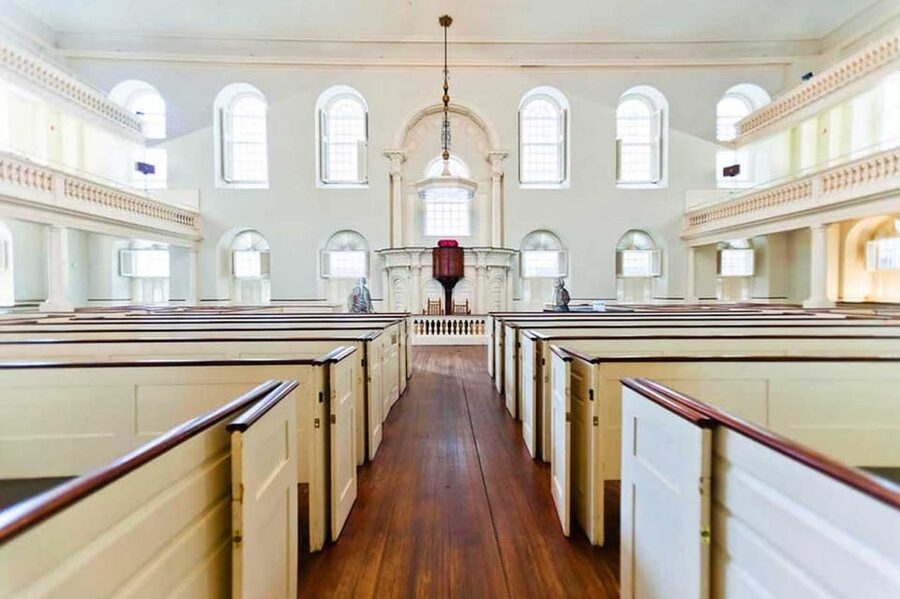
You’ve got a full day window, but don’t overstuff it. With two sites so close together, it’s easy to cram other stops next door and then wonder why the exhibits didn’t stick.
A simple pacing approach:
- Spend more time in the building that matches your main interest (government and conflict at Old State House, or mass meetings and civic action at Old South).
- Keep the walk time short, then immediately continue your reading and gallery viewing so the story stays continuous.
Because both attractions are open daily 10 AM to 5 PM, you can usually aim for mid-morning and still have a comfortable visit. If you’re visiting around a holiday period, keep in mind there can be periodic closures, so checking current hours is smart.
Also, plan your day around “museum energy,” not “tour speed.” This is the kind of history that rewards you for slowing down and connecting concepts.
Practical rules: what to expect when you arrive
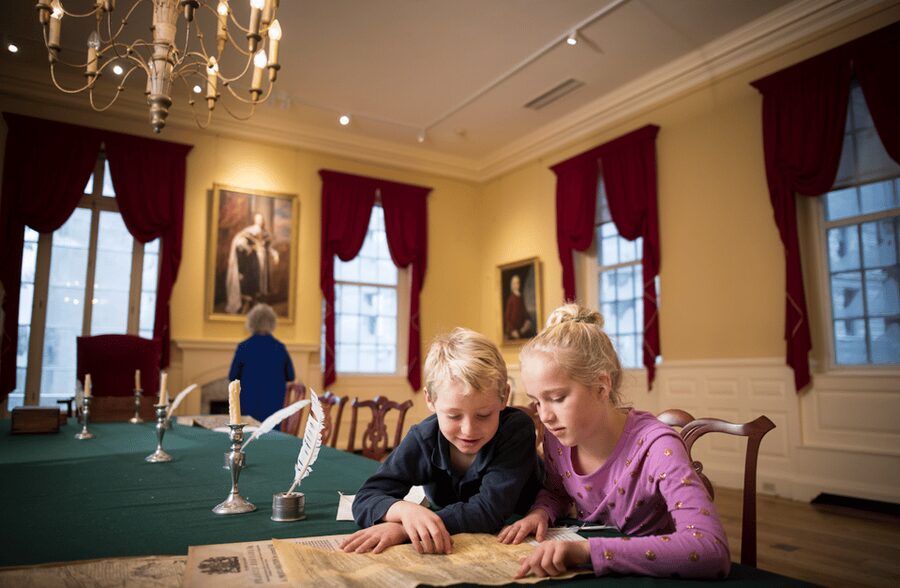
Museums in historic buildings can be strict because of safety and preservation, and this combo is no different. Be ready for rules like no weapons or sharp objects, no smoking, and no food or drinks inside. No luggage or large bags is listed too, which can be a real factor if you’re traveling with a lot of stuff.
You don’t need to bring much beyond what you can comfortably carry through exhibits. If you’re coming from a busy day, consider leaving bulky items at your lodging so you can focus on the exhibits.
If you’re the type who likes to take photos, I’d still treat the spaces as museums first. The main point here is the story on the walls, the gallery talks, and the way the buildings frame the events.
Accessibility and where the stairs change your plan
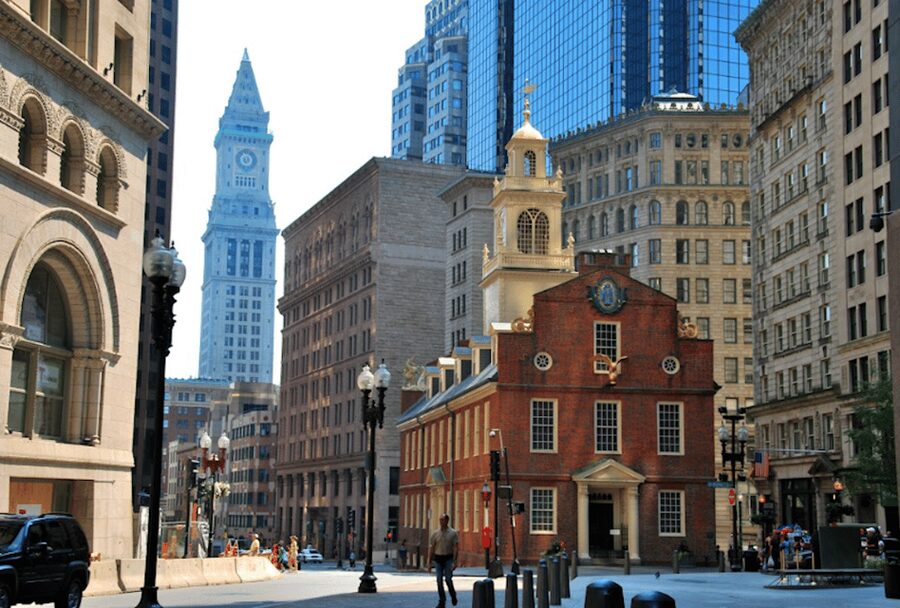
This combo has a mixed accessibility picture, and it’s worth planning around it before you waste time.
Old State House is currently not accessible and has many stairs. Old South Meeting House is wheelchair accessible, with elevator access to the restrooms and the Museum Store on the lower level. That means you can still do this experience meaningfully even if stairs are a deal-breaker, as long as you adjust your expectations for Old State House.
If you’re coordinating a group, I’d treat Old South as the reliable anchor and then decide whether the Old State House stairs work for everyone in your party.
Who this works best for
This is a strong choice if you like history that asks questions, not just history that tells you what happened. The topic—self-government, free speech, civic engagement—is baked into the relationship between the two buildings.
It’s also a good match if you want a compact, high-impact day in downtown Boston. Two sites, one ticket, a short walk, and enough exhibits to keep you engaged without needing a full-day walking tour.
If you’re traveling with teens or older kids, this combo can turn political vocabulary into something you can physically picture—where decisions were made and where public voice gathered.
And if you’re a history fan who hates wasting time, the location is a win. You’re in the middle of a walkable area, so you can build this into a larger Freedom Trail day without feeling stuck.
Should you book this Boston combo?
If you want a one-day experience that makes the American Revolution feel like a civic story—debate turning into action—then yes, book it. The pairing of Old State House and Old South Meeting House is the key advantage, because it helps you compare government power with public resistance in a way that a single museum stop can’t.
I’d especially recommend it if you’re comfortable with a self-guided pace and you like learning through exhibits and gallery talks. At $15 for two sites, it’s hard to argue with the value when you’re getting two admissions in the heart of Boston.
The one clear reason to hesitate: if stairs are a barrier for you or someone in your group. Since Old State House isn’t accessible and has many stairs, you may want to confirm your comfort level—or plan to focus more heavily on Old South.
If those logistics work for you, this is the kind of ticket that feels like more than the sum of its parts.
FAQ
What does the ticket include?
Your ticket covers admission to Revolutionary Spaces’ two sites: the Old State House and the Old South Meeting House, including the exhibits and gallery talks available there.
Where are the two locations?
Old State House is at 206 Washington St., Boston, MA 02109. Old South Meeting House is at 310 Washington St., Boston, MA 02108.
Can I visit the sites in any order?
Yes. You can enter at either site, and you can visit in any order during open hours.
What are the opening hours?
Both attractions are open daily between 10 AM and 5 PM, with periodic closures around the holidays or for special events. You should check revolutionaryspaces.org for the current schedule.
Is the Old State House wheelchair accessible?
The Old State House is currently not accessible and has many stairs. Old South Meeting House is wheelchair accessible, with elevator access to the restrooms and the Museum Store on the lower level.
Are there free admission options?
Yes. Revolutionary Spaces offers free admission (with ID) to Active US Military (including free admission for up to five guests), Veterans (Blue Star Museums), Massachusetts teachers, and EBT cardholders. Tickets for these individuals are available on site.
More of the Boston Ledger




Boston Behind the Turnstiles




Follow the Red Bricks Further


New on the Boston Docket
- Boston to Newport Mansions Private Day Trip
★ 5.0 · 3 reviews - Boston Massachusetts Private Photography Tour
★ 5.0 · 3 reviews - Homemade Dumplings 101 in Boston
★ 3.5 · 3 reviews - Self-Guided Audio Tour of Boston North End
★ 4.5 · 3 reviews - Old Boston: Beacon Hill & Back Bay Walking Tour in French
★ 4.7 · 3 reviews
Freedom Trail & Revolution Walks, compared.
 ★ 5.0Freedom Trail History Small Group Walking TourFrom $356,450 reviews
 ★ 4.5Boston Freedom Trail Walking Tour with Costumed GuideFrom $262,531 reviews
 ★ 4.5Boston Tea Party Ships and Museum AdmissionFrom $352,512 reviews
 ★ 5.0The Full Revolutionary Story Epic Small Group Boston Walking TourFrom $552,356 reviews
 ★ 4.8Boston Tea Party Ships and Museum Interactive TourFrom $351,926 reviews
 ★ 5.0Boston Food & History: Pizza, North End & Freedom TrailFrom $901,772 reviews
 ★ 4.9Boston’s Freedom Trail: A Revolutionary Walking TourFrom $311,748 reviews
★ 4.9Freedom Trail History Small Group Walking TourFrom $351,590 reviews
★ 4.9Boston’s Freedom Trail: A Revolutionary Walking TourFrom $311,748 reviews
★ 4.9Freedom Trail History Small Group Walking TourFrom $351,590 reviews
Browse the lists this tour appears in