
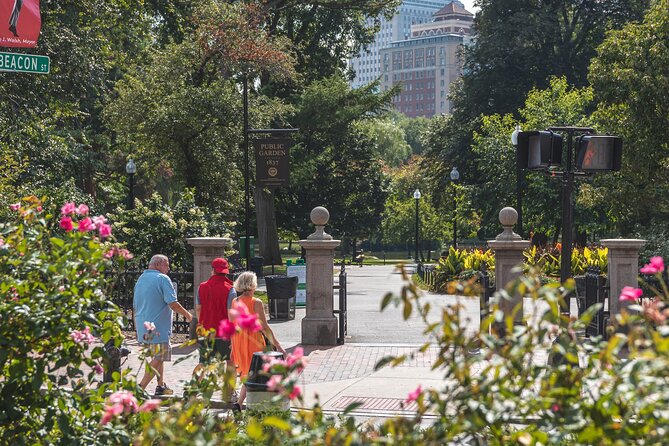
REVIEW · FREEDOM TRAIL & REVOLUTION WALKS
Boston History and Freedom Trail Private Walking Tour
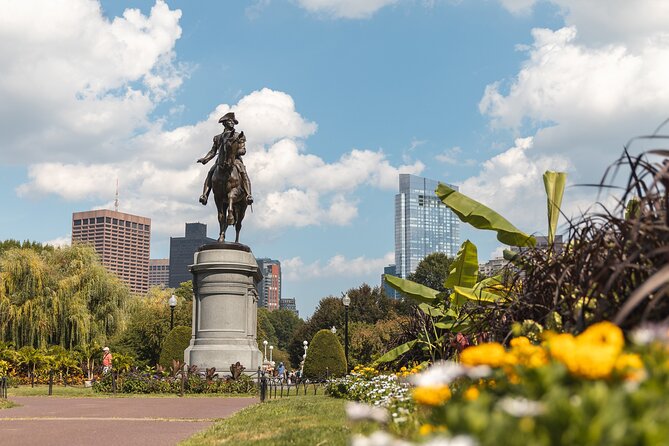
Boston’s founding story walks right up to you. This private Freedom Trail-style walk ties together the moments that turned colonial Boston into a political engine, with stops along downtown, the North End, and nearby neighborhoods, plus finish-line views around Boston Public Garden. You start near Faneuil Hall Marketplace and end in the Public Garden area, all with a guide guiding the flow instead of herding you with a giant crowd.
I especially like the small-group setup (up to 12), which keeps questions easy and the pace sane. I also love how the route links key sites like Granary Burying Ground and Old North Church to the bigger national story, so you’re not just looking at plaques.
One thing to consider: it’s still a real walking tour, roughly 2 to 4 hours, so bring comfortable shoes and plan for weather. Also, not every listed location is guaranteed, so keep a little flexibility in your expectations.
In This Review
- Key highlights worth planning around
- Private Freedom Trail in 2 to 4 Hours: the big picture
- Meeting at 191 Atlantic Ave and ending near Boston Public Garden
- Beacon Hill streets and Granary Burying Ground: where Boston gets personal
- North End, Paul Revere’s home, and Old North Church
- Faneuil Hall Marketplace and the speeches that turned heads
- The Boston Tea Party origin story: a church, a night, and a big turning point
- Massachusetts State House dome views and the skyline contrast
- The first bookstore stop and why publishers matter
- Old State House and the Boston Massacre: the stop that teaches you to look harder
- Bunker Hill, plus Seaport District energy on the way to and from history
- Price and group value: when $245 per group makes sense
- What makes the guides click (based on the patterns I’ve seen)
- Who should book this Boston Freedom Trail private walk
- Should you book this tour?
- FAQ
- FAQ
- How long is the Boston History and Freedom Trail private walking tour?
- What does it cost?
- Where does the tour start?
- Where does the tour end?
- Is this a private tour?
- Are tickets mobile?
- What sites does the tour cover?
- Is food or drink included?
- Do I need to pay for admissions?
- Can I cancel for a full refund?
Key highlights worth planning around

- Private group of up to 12 means more back-and-forth with your guide
- Freedom Trail focus with specific stops tied to the Revolution
- Granary Burying Ground dates back to 1660 and is free to enter
- North End + Old North Church pairs major history with great local coffee and food nearby
- Massachusetts State House dome views include Downtown, the Financial District, and the John Hancock Tower area
- You’ll walk from Seaport/downtown energy toward Boston Public Garden instead of looping randomly
Private Freedom Trail in 2 to 4 Hours: the big picture
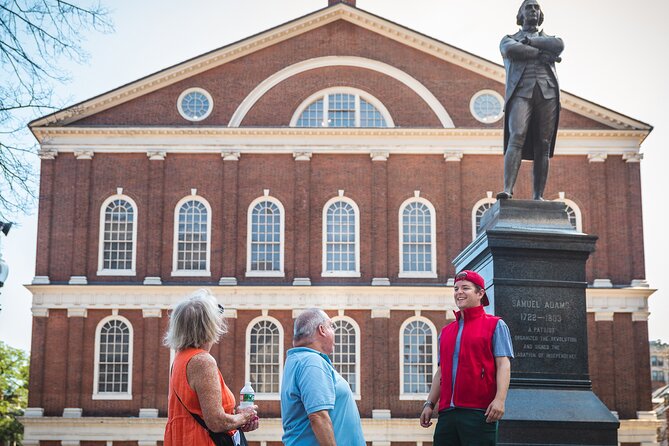
If you want Boston’s Revolutionary-era story, the Freedom Trail is the most straightforward path. What’s different here is the private, small-group format. You’re not stuck listening from 20 feet away while a dozen other voices compete for attention. With a group capped at 12, your guide can adjust the pace and spend more time where you lean in.
The tour is built around a clear arc: you start downtown near Faneuil Hall Marketplace, work through the places tied to major 18th-century events, then finish near Boston Public Garden. Along the way you’ll cover well-known names like Paul Revere and John Hancock, plus the places where events happened, including the Boston Massacre site and the Boston Tea Party origin story. The goal is not just to show you sights. It’s to help you connect them.
You’ll also get a bit of city texture. The North End segment isn’t only about historic doors and stone churches. It’s also where you’ll pass coffee spots and Italian food areas, so the tour has a modern Boston layer—even if you’re not ordering anything during the walk.
Meeting at 191 Atlantic Ave and ending near Boston Public Garden
The tour starts at 191 Atlantic Ave in downtown Boston, with a 1:00 pm start time. That’s a practical choice because it’s easy to reach on foot or public transit from many downtown hotels. If you’re coming from somewhere farther out, give yourself a little buffer so you’re not stressed at the starting line.
The end point is listed simply as Boston, but the tour overview says you’ll finish near Boston Public Garden. That matters because it gives you a clean next step. You can walk onward, grab lunch nearby, or simply take a breather in a place that feels like an oasis compared with the street-crossing energy downtown.
One minor heads-up: the starting location can be a detail that trips people up. Make sure you follow your final confirmation and the meeting-point details in your booking materials.
The red brick line keeps going. More Trail walks here
Beacon Hill streets and Granary Burying Ground: where Boston gets personal
A big part of this tour’s appeal is how it moves from civic events to human stories. You begin with the Beacon Hill area—those famous red-brick streets that make you feel like you’re stepping into an old postcard, even while the city skyline sits nearby. This segment works well as a transition. It slows you down visually, so the history hits harder when you start talking about who lived here and what happened next.
Then you reach Granary Burying Ground, with a key fact that sets the tone: it was originally part of Boston Common and dates back to 1660. That long timeline changes how you think about the Revolution. This isn’t just a set of isolated events. It’s one long chain of local decisions and local people.
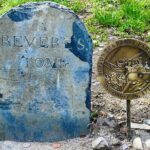
Granary is also where you get several Revolutionary-era figures in one place. You’ll pass the final resting spots of John Hancock, Paul Revere, and Sam Adams. It’s free to enter, which is a small but real plus for value. The guide’s job here is to keep it from becoming a silent, stop-and-stare experience. When the guide ties names to the events you’ll see later, the whole route starts making emotional sense.
What to watch: cemeteries require a respectful pace. If your group is the type that talks loudly or rushes, this stop is where your guide will likely steer you toward a calmer rhythm.
North End, Paul Revere’s home, and Old North Church
The North End is Boston’s classic “old meets everyday” neighborhood. On this tour, it’s a major history stop, but it doesn’t feel like a museum corridor. You’ll pass by key Revolutionary landmarks, including Paul Revere’s home and Old North Church.
Old North Church is built in 1723 and is described as the oldest standing church building in Boston. It also plays an important role in the lead-up to the American Revolution. That detail is why this stop sticks. You’re not just hearing a quick fact. You’re seeing a real structure from the era, then connecting it to how communication, risk, and timing mattered.
And the neighborhood context matters too. The North End is known for Italian eateries and local cafes, including locally roasted Beantown coffee. Even if you’re not buying anything during the tour, just having the atmosphere around you makes the history feel less like a textbook and more like a living city.
What to watch: this is still a walking tour. If you want deep photo time or a longer sit-down break for coffee, plan to do that after the tour ends rather than trying to squeeze it into the walking flow.
Faneuil Hall Marketplace and the speeches that turned heads
Downtown Boston’s political energy is hard to miss, and Faneuil Hall Marketplace is central to it. The stop is tied to a building dating to 1723, originally built as a public market house and assembly room. Later, it became a place for major speeches and political action, which is a big reason it shows up on any serious Revolution route.
What I like about this stop on a guided walk is the emphasis on function. You’ll hear how the building wasn’t just decorative. It was a public stage. That helps you understand why crowds, arguments, and public messaging mattered in a city that was still deciding what kind of country it would become.
Today, Faneuil Hall is also a mix of shops and food stands, so you get a change of tempo. The guide may talk about why it’s still such a magnet. That contrast is useful. You learn the original purpose, then you look at the modern version and recognize the same underlying need: people gather.
What to watch: the area is busy. A small private group helps you avoid the worst crowd crush, but it won’t turn Faneuil Hall into a quiet library.
The Boston Tea Party origin story: a church, a night, and a big turning point
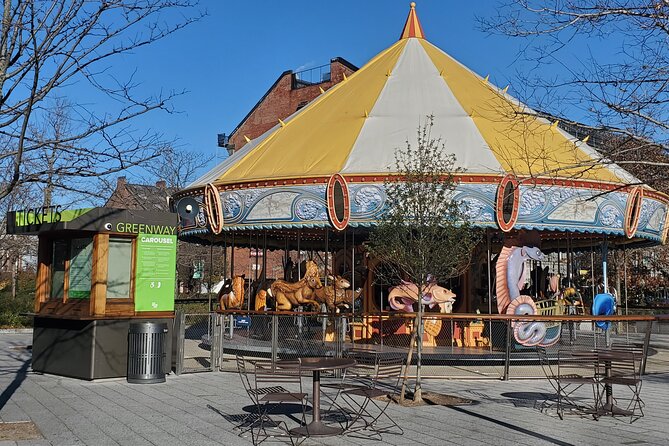
One of the most memorable parts of the tour is the stop connected to the Boston Tea Party. The key detail you’ll hear is that on one night in 1773, things kicked off in a church that was described as the largest building in the city at the time.
That may sound like a random detail until your guide connects the dots. The Tea Party wasn’t just a prank or a street-side argument. It was organized, discussed, and set into motion. Hearing it tied to a specific building helps you visualize how a secret or semi-secret movement could grow out of everyday gathering spaces.
What to watch: depending on timing, the guide’s exact routing for this segment may change. The tour info also says not all locations listed are guaranteed stops, so think of it as “Freedom Trail focused” rather than “every pin on the map, guaranteed in the same order.”
Boston was built for walking. More routes
- Boston: Freedom Trail History Small Group Walking Tour★ 5.0 · 6,450 reviews
- Harvard University Campus Guided Walking Tour★ 4.5 · 3,632 reviews
- Boston Freedom Trail Walking Tour with Costumed Guide★ 4.5 · 2,531 reviews
- The Full Revolutionary Story Epic Small Group Boston Walking Tour★ 5.0 · 2,356 reviews
- Boston’s Freedom Trail: A Revolutionary Walking Tour★ 4.9 · 1,748 reviews
Massachusetts State House dome views and the skyline contrast
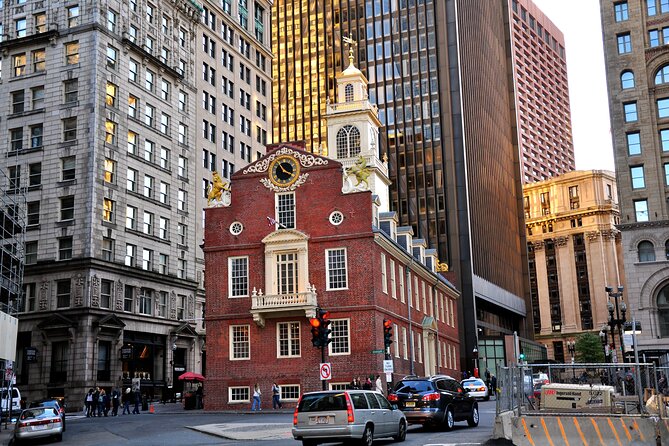
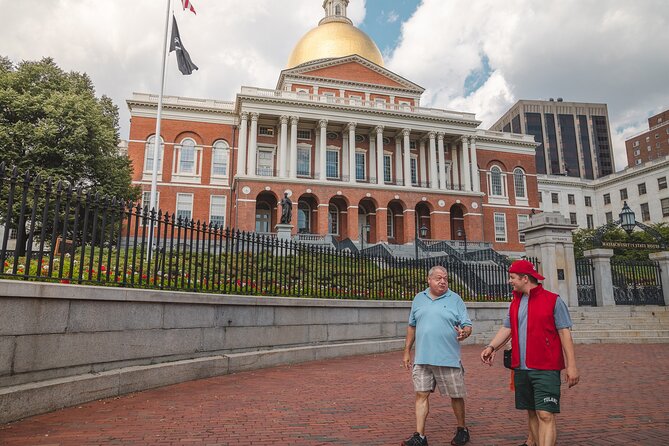
Then comes the payoff that many people love: the Massachusetts State House. The dome is a standout from the outside, and it was designed and built by the federalist architect Charles Bulfinch in 1798. This is where the story jumps forward from colonial streets to the formal civic face of Massachusetts.
Your guide will point out city views from here, including the skyscrapers in the Downtown and Financial District areas, plus mention of the John Hancock Tower as the tallest building in New England. That visual contrast is the kind of detail that helps your brain connect eras: you’re still on the same walk, but Boston’s priorities and scale have changed.
What to watch: outdoor viewpoint time depends on crowd conditions. If you’re sensitive to waiting, have a camera ready and expect a quick sweep rather than a long linger.
The first bookstore stop and why publishers matter
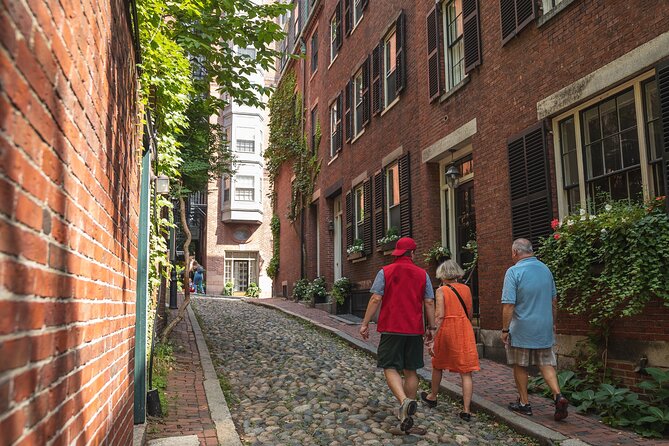
As you keep moving, you’ll pass by the site connected to the first bookstore in Boston. It’s tied to publishers of works by authors like Thoreau, Hawthorne, and Longfellow.
This is a great stop because it shows how history travels through words, not only through battles. Books and publishing shaped what people read, what ideas spread, and what people believed counted as truth. Your guide may also connect this area to the famous Paul Revere story, including the Midnight Ride of Paul Revere, which helps tighten the thread between communication and public action.
What to watch: this is one of those “you’ll get the story because the guide connects it” stops. If you’re the type who only wants big monument photos, you may value it less. If you enjoy narrative connections, it’s a satisfying middle.
Old State House and the Boston Massacre: the stop that teaches you to look harder
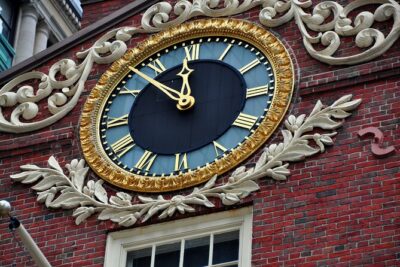
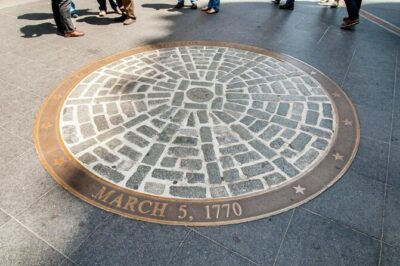
Another anchor on the route is the Old State House and the site of the Boston Massacre. This is described as one of Boston’s most iconic buildings and also one of the oldest public buildings in the country. On a walk like this, it’s not just impressive to see. It’s an opportunity to understand how conflict escalated.
Guides tend to bring the incident into focus by describing how people at the time interpreted events and how the location fits into the city’s civic layout. You’ll likely notice how the guide keeps pointing back to patterns: authority vs. public anger, rumor vs. evidence, and how one moment can change the direction of everything.
What to watch: the Massacre story can get intense. If you’re traveling with kids, it still often works, but you’ll want to keep expectations realistic for attention span. In a private or small-group setting, the guide can usually adjust the tone more easily.
Bunker Hill, plus Seaport District energy on the way to and from history
The tour includes a visit connected to the Battle of Bunker Hill as part of the Freedom Trail experience. Even if you’ve heard the battle mentioned in school, a guided stop helps you understand why it matters to Boston’s local arc and why it became such a rallying point.
And then there’s the modern-day Boston layer. The tour info highlights Seaport District sights and the city views you’ll catch while walking through. You’ll also hear some local favorite suggestions along the way. This is a nice balance if you’re the type who wants history but also wants to leave with practical ideas for where to eat or what neighborhood to wander next.
What to watch: since food and drink aren’t included, the Seaport atmosphere is more about experience than a meal stop. One guide-led group story includes time for a pub drink, but treat that as optional and pay-your-own if it happens on your day.
Price and group value: when $245 per group makes sense
The price is $245 per group for up to 12 people. That pricing is where the math gets interesting.
If you fill the group capacity, the cost becomes about $20 per person (245 ÷ 12). If you have fewer people, the per-person cost rises quickly. So this tour shines most when you’re traveling with family or friends and you can actually use the private-group pricing.
The duration—about 2 to 4 hours—also affects value. In that time you’re getting a guided walkthrough that covers multiple major landmarks tied to the Revolution, plus a North End neighborhood segment with coffee and food context. It’s a strong use of time if you only have one day where you want your bearings in downtown Boston.
Also, the tour uses a mobile ticket, and it’s a private tour/activity where only your group participates. Those pieces matter because they reduce the friction of logistics and crowd navigation.
What makes the guides click (based on the patterns I’ve seen)
The best part of a tour like this is the guide’s control of pace and focus. In the guide stories tied to this experience, the consistent theme is adjustment. Guides such as Alan, Allison, Lexie, Molly Mitchell, Trey Petrella, Dillion, Michael, and Alex are described as personable, engaging, and willing to tailor the tour to what you care about most. You also see an emphasis on answering questions without turning the walk into a lecture.
Some guides even follow up after the tour with a recap and restaurant ideas, which is handy when you’re deciding where to eat next without hunting around for guidance.
One small but real operational lesson: meeting place miscommunication can ruin your first ten minutes. So plan to confirm the final address on the day, and aim to arrive a bit early.
Who should book this Boston Freedom Trail private walk
This is a smart fit if:
- You want the Freedom Trail, but you hate being in a giant herd.
- You like guided storytelling that ties locations to named people and events.
- You’re traveling as a small group and can make the per-group pricing work for you.
- You want a downtown-and-north-end morning/afternoon with practical local context.
It may be less ideal if:
- You only care about seeing buildings and don’t want explanations that connect the dots.
- Your group has very limited mobility or you’re not comfortable with a steady walking pace.
- You’re hoping to stop at lots of extra food or shop places during the tour. Food and drink aren’t included, so you’ll likely need to plan that for after.
Should you book this tour?
I’d book it if you want a clean, guided route that hits the key Freedom Trail landmarks and explains how Boston’s political story connects to specific places. The small-group private format is the value multiplier here. It’s what turns the Freedom Trail from a checklist into a narrative walk you can actually follow.
I’d think twice if your plans are extremely strict about exact stop-by-stop guarantees. Since not all locations listed are guaranteed stops, keep a little flexibility. And do not skip the comfy-shoe rule. Boston streets look charming until you’ve been walking for hours.
If you want a practical way to get oriented fast and walk away with a real sense of why these sites matter, this is a strong choice.
FAQ
FAQ
How long is the Boston History and Freedom Trail private walking tour?
It runs for about 2 to 4 hours.
What does it cost?
It’s $245.00 per group, for up to 12 people.
Where does the tour start?
The meeting point is 191 Atlantic Ave, Boston, MA 02111, USA.
Where does the tour end?
The tour ends in Boston, and the overview indicates the endpoint is near Boston Public Garden.
Is this a private tour?
Yes. Only your group participates.
Are tickets mobile?
Yes, you’ll receive a mobile ticket.
What sites does the tour cover?
The tour includes sites connected to the Boston Massacre, the Boston Tea Party, and the Battle of Bunker Hill, plus stops tied to Paul Revere’s home and Old North Church.
Is food or drink included?
No. Additional food and drink are not included.
Do I need to pay for admissions?
The tour notes Granary Burying Ground admission ticket is free.
Can I cancel for a full refund?
Yes. You can cancel up to 24 hours in advance for a full refund.
On Foot Through Old Boston


More of the Boston Ledger



Follow the Red Bricks Further
New on the Boston Docket
- Boston to Newport Mansions Private Day Trip
★ 5.0 · 3 reviews - Boston Massachusetts Private Photography Tour
★ 5.0 · 3 reviews - Homemade Dumplings 101 in Boston
★ 3.5 · 3 reviews - Self-Guided Audio Tour of Boston North End
★ 4.5 · 3 reviews - Old Boston: Beacon Hill & Back Bay Walking Tour in French
★ 4.7 · 3 reviews
Freedom Trail & Revolution Walks, compared.
 ★ 5.0Freedom Trail History Small Group Walking TourFrom $356,450 reviews
 ★ 4.5Boston Freedom Trail Walking Tour with Costumed GuideFrom $262,531 reviews
 ★ 4.5Boston Tea Party Ships and Museum AdmissionFrom $352,512 reviews
 ★ 5.0The Full Revolutionary Story Epic Small Group Boston Walking TourFrom $552,356 reviews
 ★ 4.8Boston Tea Party Ships and Museum Interactive TourFrom $351,926 reviews
 ★ 5.0Boston Food & History: Pizza, North End & Freedom TrailFrom $901,772 reviews
 ★ 4.9Boston’s Freedom Trail: A Revolutionary Walking TourFrom $311,748 reviews
★ 4.9Freedom Trail History Small Group Walking TourFrom $351,590 reviews
★ 4.9Boston’s Freedom Trail: A Revolutionary Walking TourFrom $311,748 reviews
★ 4.9Freedom Trail History Small Group Walking TourFrom $351,590 reviews
Browse the lists this tour appears in