
REVIEW · FREEDOM TRAIL & REVOLUTION WALKS
Boston: Freedom Trail History and Architecture Walking Tour
The Freedom Trail turns streets into a story. In just 70 minutes, you connect Boston’s history to the buildings you’re actually standing beside. I especially like how the walk moves through the core downtown sites without feeling like a textbook, and you get the city’s logic fast.
Faneuil Hall through Boston Common is the main spine, and you’ll also pick up how Boston’s architecture evolved as ideas, power, and neighborhoods changed. One drawback to consider: this is an English-led walking tour, and if your English is still shaky, you may have a harder time keeping up with fast-moving questions and answers.
Here’s what I like most. First, the tour gives you clear context for the big moments, from the Boston Massacre Site to the churches and meeting houses that shaped public life. Second, the guide’s style matters, and the tour’s guide Allan has been praised as personable, patient, and great at answering questions—handy if you’re traveling with teenagers who ask everything.
Boston CityWalks runs the experience with a local feel, and that “ask me anything” energy is part of the value.
If you want a slower, self-paced photo walk, this format may feel a bit tight. It’s designed to cover a lot of ground in a short time, so you’ll want comfortable shoes and a willingness to listen while walking.
In This Review
- Key points at a glance
- Freedom Trail in 70 Minutes: What You’re Really Paying For
- Meeting at State Street: Starting Where Boston’s Power Shows
- Old and New State Houses: How Government Became Part of the Street
- Faneuil Hall: The Marketplace of Public Opinion
- Boston Massacre Site and Park Street Church: Conflict Meets Faith
- King’s Chapel and Old South Meeting House: The Sound of Ideas
- Old Granary Cemetery: Where Leadership and Memory Overlap
- Old City Hall and the First Schoolhouse Site: Learning, Training, and Civic Life
- Old Corner Bookstore, Boston Common, and the Irish Famine Memorial
- Architecture You Can Actually Read While Walking
- Guide Style Matters: Allan’s Personable, Q&A-Friendly Approach
- Price and Logistics: Is $30 for 70 Minutes Worth It?
- What to Wear and What to Ask on This Downtown Walk
- Who This Tour Suits Best (and Who Should Skip)
- Should You Book This Freedom Trail History and Architecture Walking Tour?
- FAQ
- How long is the Boston Freedom Trail history and architecture walking tour?
- Where do I meet for the tour?
- How much does the tour cost?
- What language is the tour guide speaking?
- What sites are included on the route?
- Is there free cancellation and flexible payment?
Key points at a glance
- 70 minutes that focuses on downtown’s core Freedom Trail sites, from Faneuil Hall to Boston Common
- Stories that tie history to architecture so buildings make sense, not just look old
- A local guide approach, including Allan’s patient Q&A style
- Stops that cover civic life, religion, and everyday learning (state houses, churches, meeting houses, schoolhouse site)
- You’ll see memorials like the Irish Famine Memorial, which adds a real human layer
Freedom Trail in 70 Minutes: What You’re Really Paying For
At $30 per person, you’re buying three things: a guided route, a fast way to understand downtown Boston, and a guide who helps you interpret what you’re seeing as you move. Seventy minutes sounds short until you remember the Freedom Trail is meant to be walked. This tour uses that idea well: it’s a morning-style orientation that helps you stop “looking at buildings” and start understanding the city’s timeline.
You should expect a steady walking pace and frequent stop-and-go moments. That’s not a downside; it’s the point. If you come in without a plan, you’ll leave with your bearings, plus a sense of why Boston’s downtown feels layered—newer structures standing beside older ones, all shaped by different eras of politics, protest, trade, and community life.
This is also a good value choice if you’re not spending days in Boston. A lot of self-guided wandering can be fun, but you risk missing the connective tissue. Here, the guide gives you that thread—why each place matters and how it links to the next.
Meeting at State Street: Starting Where Boston’s Power Shows
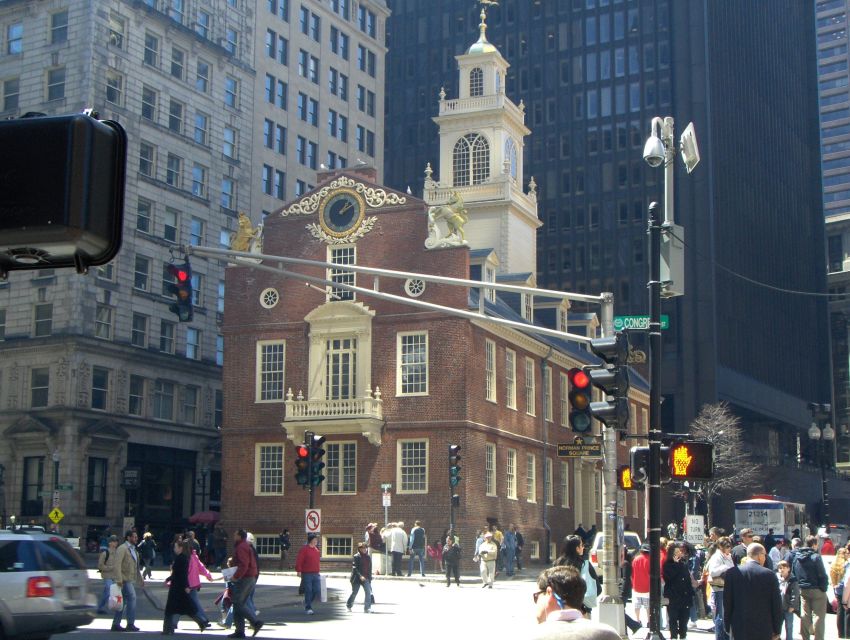
The meeting point is the NW corner of State and Congress Streets, outside 28 State Street (Citizens Bank), across the street from the Old State House. That location is smart because it anchors you at a real civic landmark right at the start. You’re not meeting at some random corner; you’re standing near the kind of building that historically drove decisions for the whole city.
Arrive a few minutes early. In the first minute or two, you’ll feel the benefit of being ready: you can settle in, take a quick scan of the streets, and then let the guide start weaving the story. Boston’s downtown can feel “busy but meaningful,” and getting oriented right away makes the rest of the walk easier.
The red brick line keeps going. More Trail walks here
Old and New State Houses: How Government Became Part of the Street
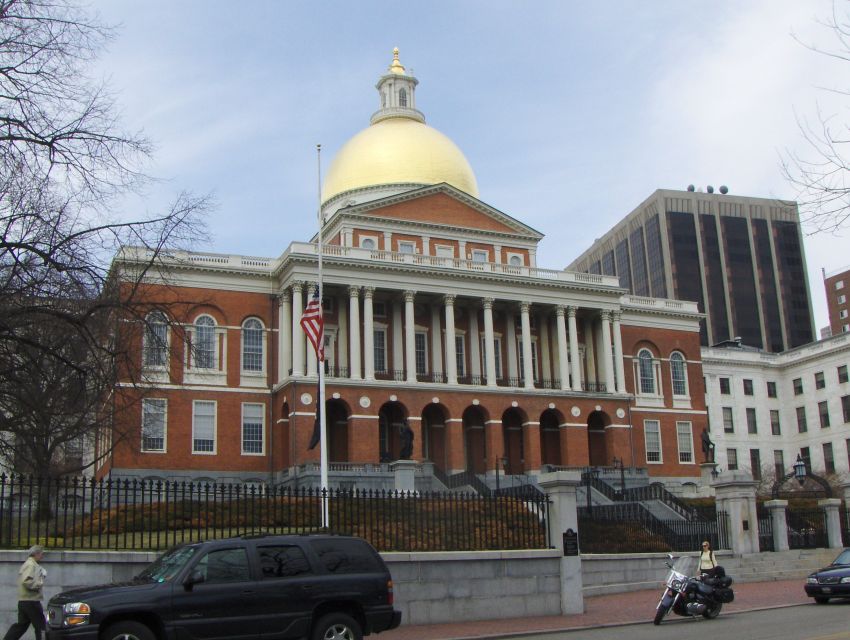
You’ll encounter both the Old and New State House on your path. That pair is a gift for anyone who likes architecture with context. The Old State House is one of those places where Boston’s civic identity becomes visible in stone, brick, and street-facing presence. You’re not just seeing a historic building; you’re seeing how authority physically claimed space in the city.
With the New State House nearby, the contrast becomes the lesson: Boston’s government didn’t freeze in time. Even in downtown, the city kept building, updating, and redefining where power lived. You’ll likely come away with a simple takeaway you can use later: look for what buildings suggest about who had influence when—and how that influence wanted to be seen.
If you’re the type who likes to connect the dots, this is one of the best early stops because it sets up how the tour will talk about later sites: protest becomes public, religion becomes architecture, and education becomes a landmark.
Faneuil Hall: The Marketplace of Public Opinion
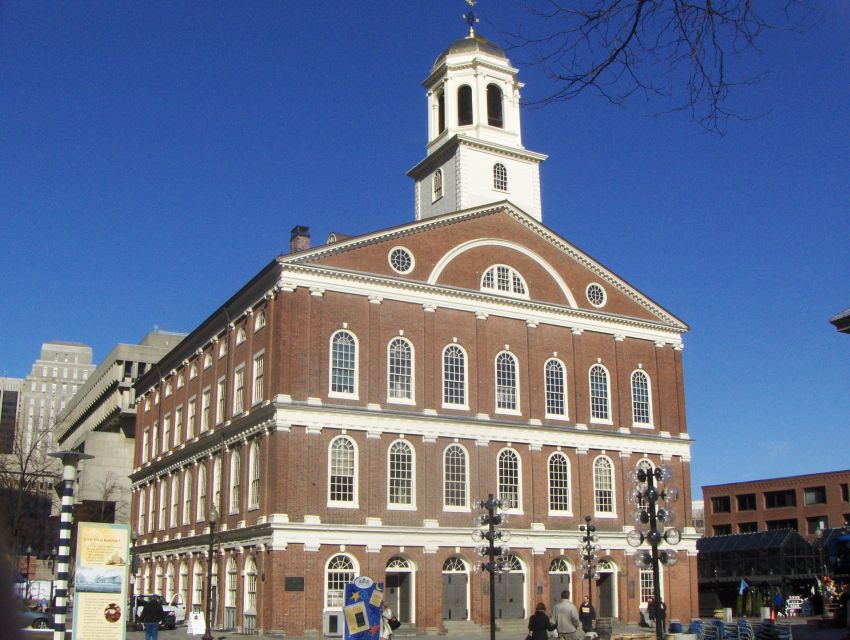
Faneuil Hall is one of the Freedom Trail’s headline stops, and it earns it. You’re going to hear stories that frame it as more than a pretty building. Faneuil Hall is about persuasion and debate—places where people gather because they believe words can change outcomes.
For architecture lovers, it’s also useful to notice how the building works as a focal point. The way it sits in the downtown grid helps explain why the site became important historically. This isn’t a quiet, tucked-away museum vibe. It’s a civic hub feeling built into the streetscape.
If you only remember one idea from this portion, make it this: Boston’s identity is strongly tied to public conversation. Once that clicks, the rest of the trail’s meeting houses and churches feel less random.
Boston Massacre Site and Park Street Church: Conflict Meets Faith
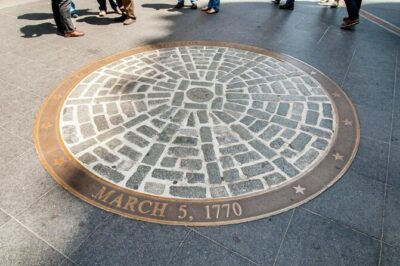
As you walk, you’ll reach the Boston Massacre Site. Even without getting lost in dates, this stop helps you understand how tension became visible. The Freedom Trail is often described as history you can walk, but the key here is emotional context. You’re seeing how public conflict played out in spaces that still shape downtown today.
Then you’ll move toward Park Street Church. This stop is valuable because it shifts you from civic protest to community structures—how people organized their lives through institutions, including religious buildings. Park Street Church also helps connect the architecture lesson: these buildings were built not only to function, but to signal presence, values, and identity.
If you’re someone who enjoys architecture, this sequence is a strong one because it shows a pattern. Boston used prominent buildings to communicate. The “why” is the key. The “how” is the architecture style and street impact you can notice as you pass.
King’s Chapel and Old South Meeting House: The Sound of Ideas
King’s Chapel is another key stop, bringing the tour back to religion and architecture in a very visible way. Churches like this didn’t just serve worship. They shaped community rhythm, and the buildings became recognizable markers in the city’s public mind.
From there, Old South Meeting House takes you into the arena of public assembly. Meeting houses are a big clue to how Boston handled disagreement: people gathered, talked, and mobilized. You’ll get a sense that protest and organization weren’t separate from daily life—they were part of it.
This is one of the places where the guide’s role matters. Good interpretation turns a building into a situation. Instead of seeing a historic room, you understand why rooms like this mattered and how architecture supported that role. That’s what makes this tour worth doing even if you’re not a hardcore history person.
Boston was built for walking. More routes
- Boston: Freedom Trail History Small Group Walking Tour★ 5.0 · 6,450 reviews
- Harvard University Campus Guided Walking Tour★ 4.5 · 3,632 reviews
- Boston Freedom Trail Walking Tour with Costumed Guide★ 4.5 · 2,531 reviews
- The Full Revolutionary Story Epic Small Group Boston Walking Tour★ 5.0 · 2,356 reviews
- Boston’s Freedom Trail: A Revolutionary Walking Tour★ 4.9 · 1,748 reviews
Old Granary Cemetery: Where Leadership and Memory Overlap
Old Granary Cemetery is where the tour slows its meaning down. Cemeteries can feel like a detour until you realize they often serve as a final public record of what a community valued. This stop helps you understand that history isn’t only in events. It’s also in who gets remembered and how.
You’ll also see how the tour connects the cemetery to the surrounding civic landmarks. The effect is subtle but powerful: downtown Boston isn’t just “where things happened,” it’s also where people left footprints over generations.
If you’re short on time in Boston, this kind of stop is a smart use of minutes because it changes your mental map. It adds depth and gives the walk a quieter, reflective pace between louder historical sites.
Old City Hall and the First Schoolhouse Site: Learning, Training, and Civic Life
You’ll also encounter the Old City Hall and First Schoolhouse Site. These stops help round out the picture. Boston’s story isn’t only protests and political changes. It’s also how a city trained people—how civic identity was built through schooling and local governance.
This is where architecture becomes more than style. Buildings connected to government and education make a point: a city grows by creating systems, not only by winning arguments.
If you’re traveling with kids or teenagers, this section can be a morale booster. It shows that history isn’t always about crises. Sometimes it’s about building the tools for future citizens.
Old Corner Bookstore, Boston Common, and the Irish Famine Memorial
The Old Corner Bookstore is a great mid-to-late stop because it adds a different kind of power: ideas carried through print. Bookstores aren’t always top-of-mind for Freedom Trail itineraries, but they belong in the conversation. They connect civic life to everyday culture—how people learned, argued, and shared information.
Then you reach Boston Common. This is the emotional reset point for many people. The Common is open space in a downtown packed with architecture, and it helps you feel how Boston’s public areas create room for community events, speeches, and gatherings across time.
Finally, the Irish Famine Memorial brings a needed human layer. It shifts the story from early civic life into later waves of suffering and survival that shaped Boston’s population and identity. It’s a reminder that history isn’t just old events—it’s migration, resilience, and lasting impact.
This trio—bookstore, Common, and memorial—gives the tour a balanced ending. You get thought, space, and remembrance.
Architecture You Can Actually Read While Walking
One of the smartest outcomes of this tour is that architecture becomes legible. You’ll walk past buildings that represent different eras and uses, and the guide helps you interpret them as parts of a timeline: civic buildings for governance, churches for community values, meeting houses for organized public action, and educational sites for how the city trained future generations.
A practical way to use this: as you approach each stop, look for two things:
- How the building faces the street (public presence matters in Boston)
- What kind of crowd it’s meant for (worship, debate, government, learning, gathering)
Once you start noticing those patterns, your independent sightseeing improves fast. Even if you move on to other parts of Boston after this walk, the city tends to feel clearer because you’ve practiced reading it.
Guide Style Matters: Allan’s Personable, Q&A-Friendly Approach
The guide Allan has been highlighted for being personable and for knowing the places well, but what really helps you as a visitor is the patient Q&A style. If you have questions that range from history-curious to straight-up curious, you won’t feel rushed. That matters on a tour like this, because you’ll see a lot in a short time.
If you’re traveling with teens, this kind of guide energy is especially useful. Teen-friendly tours are the ones that keep the conversation moving and let questions breathe instead of bulldozing through the script.
A quick tip: bring one or two questions before you start. Even something simple like what changed between the old and new state buildings can make the rest of the walk easier to follow.
Price and Logistics: Is $30 for 70 Minutes Worth It?
For $30 for a 70-minute guided walk, the value depends on how you travel.
This is a strong buy if:
- You want an orientation that connects major downtown sites in a short window
- You like history that explains architecture and how cities evolve
- You’d rather pay for context than spend hours googling while you walk
It’s less ideal if:
- You need a slow pace with lots of sitting time
- You prefer to wander without stopping for guided interpretation
Also, keep in mind the tour is in English. One consideration from an earlier experience: if your English isn’t strong, you might feel left behind when the guide takes questions or answers quickly. If you’re comfortable following spoken English at conversational speed, you should be fine.
As for flexibility, the experience offers free cancellation up to 24 hours in advance and reserve now & pay later, which helps when you’re balancing weather or planning.
What to Wear and What to Ask on This Downtown Walk
This is a walking tour through downtown streets, so comfort is your best friend. Wear supportive shoes. Boston sidewalks are manageable, but you’ll be on your feet, and you’ll move between several notable landmarks.
Bring curiosity. The best way to get value from a short tour is to ask smarter follow-ups when the guide pauses. Examples:
- What does this building’s design suggest about its purpose?
- How did public life connect to architecture in downtown?
- What changed over time as Boston grew?
If you can, do this early in your trip. An orientation tour like this helps you choose what to see next with less second-guessing.
Who This Tour Suits Best (and Who Should Skip)
This Freedom Trail history and architecture walk is best for people who want a tight downtown overview and enjoy learning through context. If you’re in Boston for a day or two, it’s an efficient way to get the downtown story down quickly.
It’s also a good fit for families and mixed-age groups—when the guide supports questions and keeps explanations clear, it works well for different attention spans.
Skip it if:
- You dislike walking for sustained stretches
- You want a deep, slow museum-style experience at each stop
- You need fully silent sightseeing time between locations
Should You Book This Freedom Trail History and Architecture Walking Tour?
I’d book this tour if you want Boston to make sense fast. The Freedom Trail stops are the right mix of civic life, religion, public debate, and remembrance. The 70-minute timing is practical, and the guide style—especially Allan’s patient, personable Q&A approach—helps the walk feel friendly instead of rushed.
If your English is strong enough to follow a guided conversation, this is a solid value. If English is still a struggle, consider how much you’ll enjoy listening while walking. Otherwise, you’ll likely get pulled along in the story, and that’s the whole point.
FAQ
How long is the Boston Freedom Trail history and architecture walking tour?
The tour lasts 70 minutes.
Where do I meet for the tour?
You meet at the NW corner of State and Congress Streets, outside 28 State Street (Citizens Bank), across the street from the Old State House.
How much does the tour cost?
The price is $30 per person.
What language is the tour guide speaking?
The live tour guide speaks English.
What sites are included on the route?
The tour covers downtown Freedom Trail stops including Faneuil Hall, the Old and New State House, the Boston Massacre Site, Park Street Church, the King’s Chapel, the Old South Meeting House, the Old Granary Cemetery, the Old City Hall and First Schoolhouse Site, the Old Corner Bookstore, Boston Common, and the Irish Famine Memorial, among others.
Is there free cancellation and flexible payment?
Yes. Free cancellation is available up to 24 hours in advance for a full refund, and you can reserve and pay later.
On Foot Through Old Boston




More of the Boston Ledger



Follow the Red Bricks Further

New on the Boston Docket
- Boston to Newport Mansions Private Day Trip
★ 5.0 · 3 reviews - Boston Massachusetts Private Photography Tour
★ 5.0 · 3 reviews - Homemade Dumplings 101 in Boston
★ 3.5 · 3 reviews - Self-Guided Audio Tour of Boston North End
★ 4.5 · 3 reviews - Old Boston: Beacon Hill & Back Bay Walking Tour in French
★ 4.7 · 3 reviews
Freedom Trail & Revolution Walks, compared.
 ★ 5.0Freedom Trail History Small Group Walking TourFrom $356,450 reviews
 ★ 4.5Boston Freedom Trail Walking Tour with Costumed GuideFrom $262,531 reviews
 ★ 4.5Boston Tea Party Ships and Museum AdmissionFrom $352,512 reviews
 ★ 5.0The Full Revolutionary Story Epic Small Group Boston Walking TourFrom $552,356 reviews
 ★ 4.8Boston Tea Party Ships and Museum Interactive TourFrom $351,926 reviews
 ★ 5.0Boston Food & History: Pizza, North End & Freedom TrailFrom $901,772 reviews
 ★ 4.9Boston’s Freedom Trail: A Revolutionary Walking TourFrom $311,748 reviews
★ 4.9Freedom Trail History Small Group Walking TourFrom $351,590 reviews
★ 4.9Boston’s Freedom Trail: A Revolutionary Walking TourFrom $311,748 reviews
★ 4.9Freedom Trail History Small Group Walking TourFrom $351,590 reviews
Browse the lists this tour appears in