

REVIEW · HISTORICAL TOURS
Boston: City History and Highlights Audio App Walking Tour
Boston history follows your footsteps. This self-guided walk from Copp’s Hill Burying Ground to the George Washington Statue strings together Founding-era stories and neighborhood life, guided by GPS. I like the GPS enabled turn-by-turn directions—they keep you moving without constantly checking the screen.
I also like the flexibility: you can pause and resume whenever you need. The possible drawback is that the audio guide is English only, and because it’s phone-based, you’ll want to be ready for an occasional tech hiccup.
In This Review
- Key moments you’ll hear (and where they fit)
- Walking Boston on a Phone: Copp’s Hill to the Public Garden
- Starting at Copp’s Hill Burying Ground: where the story begins
- North End and the Revolution Roadmap: names, neighborhoods, and 2 histories at once
- Old North Church and the Paul Revere setup: following the signal
- Paul Revere House area: where the neighborhood flavor meets the planning
- Rose Kennedy Greenway and the Big Dig: Boston changes in plain sight
- Quincy Market, Faneuil Hall, and Samuel Adams: public debate as a walkable landmark
- Old State House and John Adams: a surprising angle on the Boston Massacre
- Granary Burying Ground: John Adams, John Hancock, and Paul Revere, all in one place
- Tech and timing that actually matter: Voice Map, GPS cues, and your pace
- Language and access notes: English audio, Mondays, and who should skip it
- Price and value: how $7 buys context, not a human guide
- Should you book this Boston City History Audio Tour?
- FAQ
- Where does the walking tour start?
- How does the GPS guidance work?
- Is there a live guide?
- What language is the audio guide in?
- How long is the tour?
- Is the Old North Church accessible on Mondays?
- Is the tour suitable for people with mobility impairments?
Key moments you’ll hear (and where they fit)
- Copp’s Hill to 1692: early Boston, and the grave tied to Cotton Mather and the Salem Witch Trials.
- Old North Church signal story: the pre-Revolution years, including the midnight riders and the alerting of the Minutemen.
- Paul Revere House area: you get the Revolutionary setup and the neighborhood atmosphere around it.
- Rose Kennedy Greenway + the Big Dig: a modern city project placed right into the walking route.
- Faneuil Hall and Samuel Adams: liberty talk in a spot built for public debate.
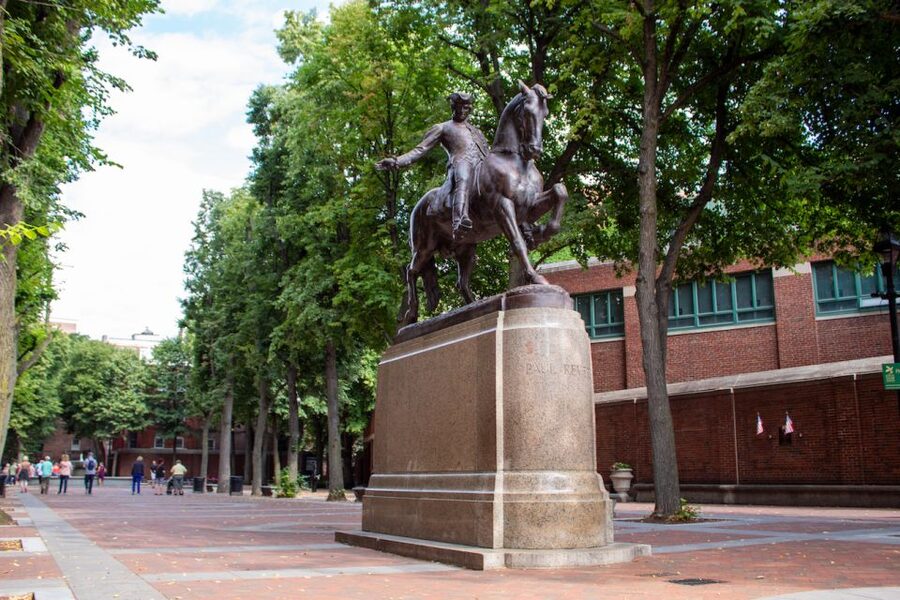
- Granary Burying Ground: where major Revolutionary figures are laid to rest, including John Adams, John Hancock, and Paul Revere.
Walking Boston on a Phone: Copp’s Hill to the Public Garden
If you want Boston in one smooth loop—old ghosts of the Revolution plus the neighborhoods that kept changing long after—this audio tour fits well. It runs about 2 hours, and it’s designed so the next track lines up with where you are, from the start at Copp’s Hill through landmarks in the North End and toward the Boston Public Garden.
What makes it especially workable is the “self-guided” format. You control your pace. That matters in Boston, where you might want to stop for a photo near the Old North Church exterior, or slow down around the Faneuil Hall area when the street energy picks up.
The value here is simple: for $7, you’re buying time-saving context. Instead of reading everything on your own, the route tells you what to look for as you walk.
Starting at Copp’s Hill Burying Ground: where the story begins
Your tour starts right at the entrance of Copp’s Hill Burying Ground. When you arrive, you open the Voice Map app and the audio starts once you’re at the starting point. That’s not a small detail. Boston streets can be confusing if you’re trying to navigate and interpret at the same time, so having the audio begin “on location” helps you keep momentum.
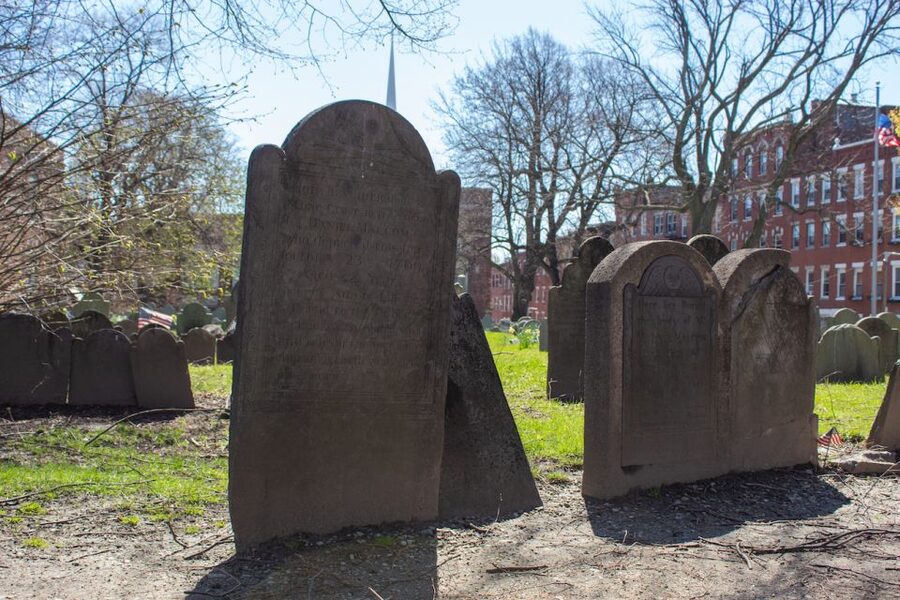
Copp’s Hill also sets the tone: you’re in one of Boston’s oldest neighborhood areas, and you’re not starting with the fireworks of 1775. You’re starting earlier—back toward the late 1600s. The route includes a stop that reaches as far back as 1692, tied to the minister Cotton Mather and the darker moments associated with the Salem Witch Trials.
Practical tip: if you’re the type who likes to read plaques slowly, plan a little extra time at this beginning. This is the part where the audio gives you names and context that will pay off later as the Revolution storyline fills in.
Boston was built for walking. More routes


North End and the Revolution Roadmap: names, neighborhoods, and 2 histories at once
From Copp’s Hill, the tour pushes into the North End and then onward toward key Revolutionary stops. One of the most useful things about this route is that it doesn’t treat Boston as a single-era museum. It ties the Revolution years to the way people kept moving into the city, shaping neighborhoods over time.
You’ll hear how multiple immigrations influenced the area, and the route includes sensory, neighborhood-level details—like the aromas and street-level feel around Little Italy. That matters because you’re not just learning a timeline. You’re learning how those famous sites live inside a real working city.
As the audio guides you from the early Massachusetts atmosphere toward the Revolution, it also helps you understand why specific places mattered. You’ll be able to connect what you see—church steeples, meeting spaces, civic buildings—to the roles people played. It’s the difference between seeing a landmark and understanding why someone would stand there on a tense night in history.
Old North Church and the Paul Revere setup: following the signal

A big highlight on this walk is the trip to the Old North Church. This is where the tour shifts from early context into a very specific Revolutionary moment: the pre-Revolution years and the way communication worked under pressure.
The audio covers Paul Revere and explains the midnight riders concept—how they were organized so they could alert the Minutemen about the British arrival. The story is structured to help you visualize the urgency and the “information problem” the colonists faced.
There’s also a real-world heads-up worth knowing: the Old North Church is closed on Mondays, so on Mondays you’ll only get the exterior. That doesn’t ruin the experience since the tour content includes what you can see, but it does affect what you can do on-site.
Practical tip: if you’re going on a Monday, download your headphones-ready mindset. Expect an outside-only stop and keep moving.
Paul Revere House area: where the neighborhood flavor meets the planning
After the Old North Church moment, the tour brings you toward the Paul Revere House area. This is one of those transitions that works well on a self-guided route: you’re coming out of a high-drama Revolutionary segment and back into everyday streets where people are eating, shopping, and going about their day.
The tour includes little neighborhood anchors—like the sense of “where you are” around bakeries and restaurants—so the walk doesn’t feel like a march between monuments. You also get a clean narrative bridge: the audio doesn’t just name Paul Revere. It helps explain what the midnight riders were supposed to accomplish and why it mattered.
If you plan to snack, this is a decent place to do it. Just don’t let your breaks stretch so long that you stop hitting the GPS cues. Keep your phone charged and check that your audio is playing normally.
Rose Kennedy Greenway and the Big Dig: Boston changes in plain sight

One of the more interesting surprises on this route is the stop along the Rose Kennedy Greenway for the story of Boston’s Big Dig. Even if you’re here mainly for the Revolution, this portion adds something important: Boston didn’t freeze in 1770.
You get a way to connect the past to the city you’re actually walking today. The Greenway is a modern layer, and hearing about the Big Dig during your walk helps you understand why the waterfront and downtown spaces look the way they do now.
This is also where the tour can help you enjoy the scenery a bit more. The audio gives you a reason to look up at the urban layout rather than just checking steps and corners.
The whole town in a single booking, other takes
- City Cruises Salem High Speed Ferry to/from Boston★ 4.5 · 727 reviews
- Boston City View Bicycle Tour: History and Landmarks★ 5.0 · 638 reviews
- City Cruises Boston Codzilla High-Speed Thrill Boat Ride★ 4.0 · 424 reviews
- City Cruises Boston 90-Minute Harbor Sunset Sightseeing Cruise★ 4.5 · 411 reviews
- Boston: City Cruises Sunset Skyline Cruise with Commentary★ 4.6 · 381 reviews
Quincy Market, Faneuil Hall, and Samuel Adams: public debate as a walkable landmark
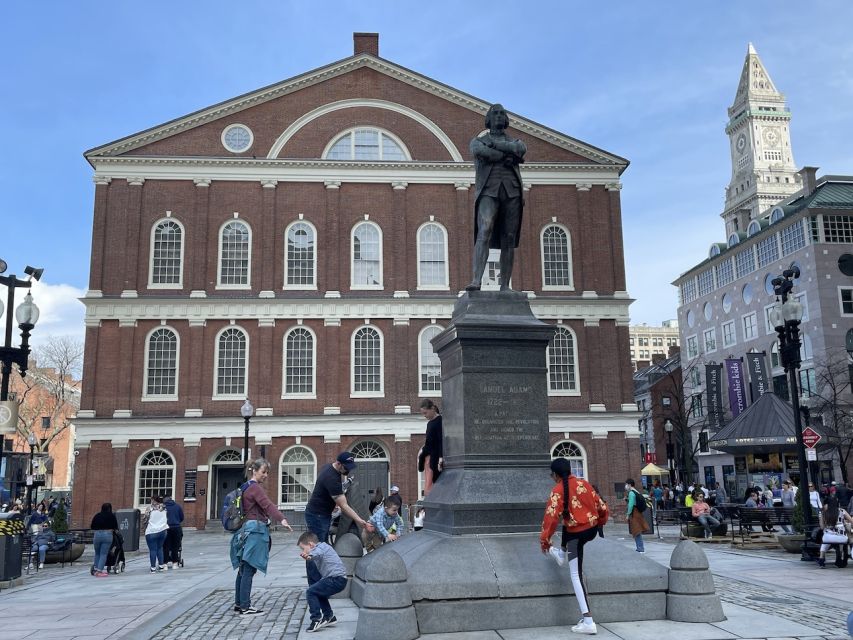
The route then swings toward the civic heartbeat of the city around Quincy Market and Faneuil Hall. Here, the audio focuses on the role of Samuel Adams as a fierce proponent of liberty.
What I like about placing this section here is that it makes the Revolution feel less like remote talk and more like public action. Faneuil Hall is the kind of place where crowds and speeches belong, and the audio helps you frame what you’re seeing in a “people showed up” context.
You also get the practical option to shop around Quincy Market or catch street performers while continuing the route. Just keep an eye on time. The tour is designed for about 2 hours, so long food detours can push you past the estimate.
Tip: if you want a snack and a quick sit-down, do it here. It’s a good rhythm break before you move into the more reflective burial-ground section.
Old State House and John Adams: a surprising angle on the Boston Massacre
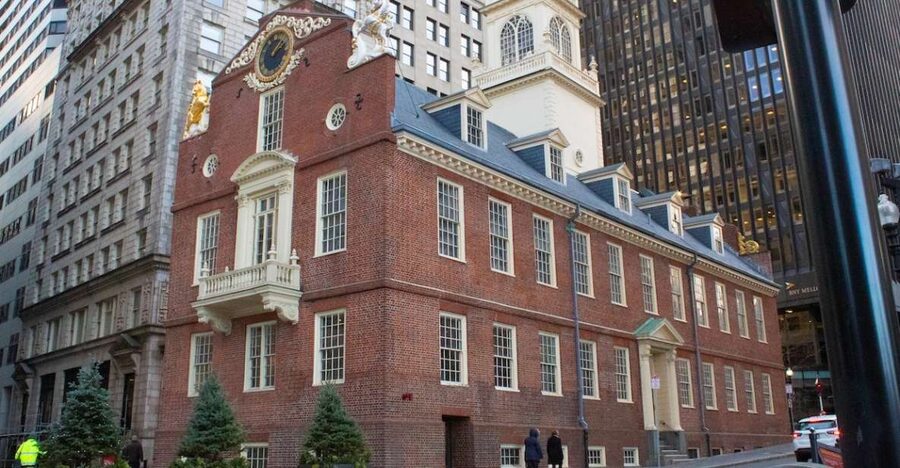
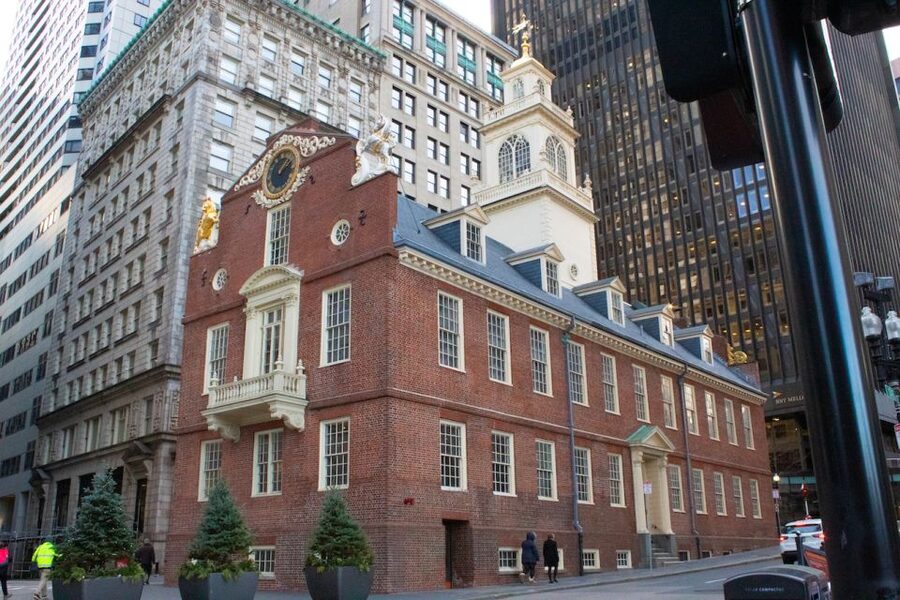
Next up is the Old State House, where the audio gives you a different kind of Revolutionary thinking. You hear about John Adams and how he defended perpetrators of the Boston Massacre.
That’s a useful moment in the tour because it adds legal and moral complexity. The Revolution wasn’t just shouting and marching. It was also arguments about rights, responsibility, and justice. Hearing it while standing near a major civic building makes the point stick.
As you move along, the audio also covers the Boston Irish Famine Memorial, including the idea that Irish families faced hard choices in the 1800s. This is one of those sections that broadens the story beyond 1776, tying the Revolution period to the reality that Boston kept receiving new waves of people—and kept paying for it in tough ways.
Granary Burying Ground: John Adams, John Hancock, and Paul Revere, all in one place
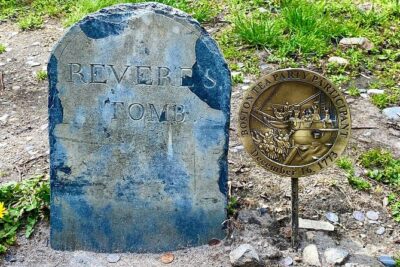
The route includes a visit to the Granary Burying Ground, where major Revolutionary figures are buried: John Adams, John Hancock, and Paul Revere. This part turns the tour from storytelling into a kind of respectful pause.
Hearing about the burial sites while the audio explains who did what during the Revolution helps you connect names to outcomes. You also get the specific “who sent the signal” angle from the Old North Church steeple and what Revere did after the revolution—so you aren’t left with only the famous midnight moment.
Then the tour adds a fascinating Boston footnote: you’ll hear about molasses congealing in the North End in 1919. That’s not Revolutionary-era, but it keeps the walk honest. Cities have their own dramatic stories long after the founding myths.
Tech and timing that actually matter: Voice Map, GPS cues, and your pace
This tour runs through an app, and it’s built around GPS enabled turn-by-turn directions. In other words, you shouldn’t have to keep hunting for where you are on a map. The audio tracks are designed to begin at the right time and place so you can keep walking.
Still, don’t treat it like magic. This is phone-based guidance, so your biggest enemies are dead batteries and missing headphones. Bring a charged smartphone and headphones before you start, and consider keeping the screen brightness low to save battery.
One more detail from experience with audio tours like this: even if the route is listed as about 2 hours, it can take longer if you stop for photos, read signage, or pause for a snack. That’s not a problem—it just means you should start earlier rather than later if you have dinner plans.
Also, the narration includes a lively voice character named Big Al, and that tone can make the Revolutionary stories feel less stiff.
Language and access notes: English audio, Mondays, and who should skip it
The audio guide is listed as English. If that’s comfortable, great. If you need another language, you’ll want to think carefully before buying in, since the content is meant to be listened to in English.
There’s also a specific accessibility note: the tour is not suitable for people with mobility impairments. Since it’s a walking route with stops around outdoor areas and streets, it may require more walking and uneven terrain than some folks can manage comfortably.
For Mondays, remember the Old North Church closure means only the exterior is available. The tour’s structure accounts for what you can see, but it’s still good to know so you don’t arrive expecting a fuller on-site experience.
Price and value: how $7 buys context, not a human guide
At $7 per person, this is positioned as budget-friendly. You’re not paying for a live guide, and you’re not paying for transportation. You’re paying for the heavy lifting: a coherent walking narrative, GPS positioning, and audio that keeps you oriented.
If you’re the kind of traveler who likes to wander but hates missing the meaning of what you’re seeing, the value makes sense. If you prefer deep discussion with a person, or you want hands-on flexibility like deciding on-the-spot where to go next, you might find a live guide fits better.
In practice, this tour works best when you commit to listening. Wear the headphones, follow the cues, and let the stories connect the landmarks instead of treating the audio as optional background.
Should you book this Boston City History Audio Tour?
Book it if you want a low-cost, self-paced way to connect Boston’s Revolution landmarks with neighborhood details. It’s a strong choice for travelers who like pacing that fits their day, not a rigid group schedule—and who can handle learning by listening.
Consider skipping or pairing it with a different plan if:
- You need non-English audio and English won’t work for you.
- You’re worried about relying on a smartphone (even with GPS support).
- You need an experience designed for mobility impairments.
If you do book, set yourself up for success: charge your phone, pack headphones, and start at the Copp’s Hill meeting point. Then let the route do what audio tours do best—turn a walk through Boston into a story you can actually follow.
FAQ
Where does the walking tour start?
The tour begins at the entrance of Copp’s Hill Burying Ground. Open the Voice Map app at the starting location, and the audio starts automatically.
How does the GPS guidance work?
The audio tour is GPS enabled with turn-by-turn directions, so the audio tracks begin at the right time and place without needing to constantly check your phone.
Is there a live guide?
No. This is a self-guided audio tour app, so there is no live guide to meet you.
What language is the audio guide in?
The audio guide is available in English.
How long is the tour?
The tour duration is listed as 2 hours.
Is the Old North Church accessible on Mondays?
The Old North Church is closed on Mondays, so only the exterior is available on Mondays.
Is the tour suitable for people with mobility impairments?
No. The tour is not suitable for people with mobility impairments.
The Full Boston Circuit




On Foot Through Old Boston


More of the Boston Ledger


New on the Boston Docket
- Boston to Newport Mansions Private Day Trip
★ 5.0 · 3 reviews - Boston Massachusetts Private Photography Tour
★ 5.0 · 3 reviews - Homemade Dumplings 101 in Boston
★ 3.5 · 3 reviews - Self-Guided Audio Tour of Boston North End
★ 4.5 · 3 reviews - Old Boston: Beacon Hill & Back Bay Walking Tour in French
★ 4.7 · 3 reviews
Historical Tours, compared.
 ★ 5.0History and Hauntings of Salem Guided Walking TourFrom $3614,564 reviews
 ★ 5.0Freedom Trail History Small Group Walking TourFrom $356,450 reviews
 ★ 4.5Tour of Historic Fenway Park, America’s Most Beloved BallparkFrom $453,013 reviews
 ★ 5.0Boston Food & History: Pizza, North End & Freedom TrailFrom $901,772 reviews
 ★ 4.6City Cruises Historical Sightseeing CruiseFrom $461,771 reviews
★ 4.9Freedom Trail History Small Group Walking TourFrom $351,590 reviews
 ★ 4.5City Cruises Boston Historic Sightseeing Harbor CruiseFrom $461,388 reviews
 ★ 5.0Boston’s North End Food Tour: Italian Flavors & Heritage WalkFrom $701,322 reviews
Browse the lists this tour appears in