
REVIEW · BOSTON DRIVING & CITY TOURS
Tour-in-Four — A Private four hour walking & driving city tour
Four hours in Boston, then you get it. This private Tour-in-Four mixes driving and short walks so you can see top sights fast, with a route your group can shape to your interests.
You’ll like the air-conditioned comfort during the driving parts, especially if Boston weather is doing its usual thing. I also like having a guide named Neal Roberts who brings local stories, humor, and clear commentary into the mix.
One thing to plan for: there is still walking, including Freedom Trail-style streets, so wear good shoes. Also, some stops list admission as not included.
In This Review
- Key things to know before you go
- How the private Tour-in-Four works (pickup, timing, and customization)
- Driving highlights that cover a lot of Boston in a short span
- USS Constitution and the feel of Old Ironsides
- Bunker Hill Monument and why the steps matter
- The Garden area: sports buildings with local personality
- North End on foot: Freedom Trail flavor, old streets, and snack-friendly pacing
- Practical North End advice
- Old North Church & Historic Site: the Revolution story you can point to
- Boston Common, Old State House, and the part of the city where events happened
- Boston Common: the oldest public park and the oldest subway station vibe
- Old State House: 1713 building, Massacre site, and the seat of government
- Back Bay to Copley Square: Victorian streets, shopping streets, and marathon finish energy
- Back Bay: Victorian brownstones and careful city design
- Newbury Street and Boylston Street
- Copley Square: Trinity Church, Old South Church, and the Boston Public Library
- Cambridge universities and Boston’s college-town connection
- Harvard and why it started so early
- MIT: innovation you can name
- Beacon Hill, Fenway Park, and Granary Burying Ground: the emotional loop closes
- Beacon Hill: federal-style streets and gaslit charm
- Fenway Park: oldest MLB ballpark and the parkland design story
- Granary Burying Ground: the Revolutionary names in the cemetery
- What to know before you go: shoes, tickets, and how to plan your energy
- Is this tour good value? Yes, if you want efficiency with real context
- Should you book Tour-in-Four in Boston?
- FAQ
- How long is the Tour-in-Four experience?
- Is pickup offered, and can I choose where to start?
- Is this tour private?
- What language is the tour offered in?
- Are admission tickets included for each stop?
- What happens if the tour is canceled due to weather?
Key things to know before you go
- Pickup where you are: choose a Boston hotel, B&B, or private home location for meeting
- Private group only: it’s just your party, not a mixed tour herd
- Drive in comfort: you’ll spend major chunks seated in an air-conditioned vehicle
- Freedom Trail connections: North End stops tie directly into the Revolution-era sites
- Classic Boston neighborhoods: you’ll thread through places like Back Bay, Beacon Hill, and Fenway
How the private Tour-in-Four works (pickup, timing, and customization)
This is a private tour/activity, so your group sets the pace and focus. The big idea is simple: in four hours, you need both context and shortcuts. Driving gets you between clusters of sights without losing the day to traffic and long transfers. Walking keeps the trip human-sized, letting you actually feel the neighborhoods.
Start time is 10:00 am, and the tour runs about four hours. The exact meeting spot depends on your pickup choice, and you’ll get confirmation before the day of the tour. You’ll also get a mobile ticket.
Customization matters here. The route is built to match what your group cares about—history, neighborhoods, universities, or landmark photo stops. That flexibility is a big value because Boston is dense. Two families can have totally different priorities, and a fixed bus loop can feel wrong.
Driving highlights that cover a lot of Boston in a short span
If you only walk, you’ll cover a small slice of Boston. This tour solves that by using driving to connect major areas quickly—then lets you step out for key moments.
The drive-it-all option, several ways
USS Constitution and the feel of Old Ironsides
You’ll stop at USS Constitution, also called Old Ironsides. It’s a wooden-hulled, three-masted heavy frigate of the U.S. Navy, launched in 1797 and noted as the world’s oldest commissioned naval vessel still afloat. Even if you’re not a maritime person, the ship gives you something rare on a city tour: a real object you can see and imagine through the timeline of the Revolution and beyond.
Practical tip: take a moment to look around before you focus on any single detail. The surrounding setting helps the story land.
Bunker Hill Monument and why the steps matter
Next is Bunker Hill Monument, built to commemorate the June 17, 1775 battle between British forces and Patriot forces. You’ll hear the key context—this was among the first major conflicts in the Revolutionary War—and you’ll also learn the number that makes the monument feel real: 294 steps to the top.
You don’t need to plan a top-of-the-monument climb just to appreciate the site. Knowing the steps count changes how you think about the monument. It’s not just a photo stop; it’s a physical memorial.
The Garden area: sports buildings with local personality
You’ll also pass by the area affectionately called The Garden, home to the Boston Bruins and the Boston Celtics. It’s a good reminder that Boston doesn’t only do old-time history. It has big modern energy too—and these venues help balance a tour that’s otherwise heavy on 1700s stories.
North End on foot: Freedom Trail flavor, old streets, and snack-friendly pacing
The North End is Boston’s “Little Italy,” and the tour spends about 1 hour 30 minutes here. That time is valuable because North End is best experienced slowly. Streets are narrow, buildings are older, and the neighborhood feels built for wandering.
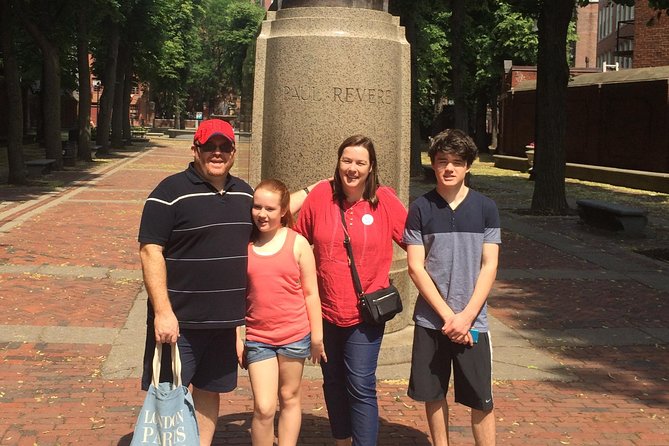
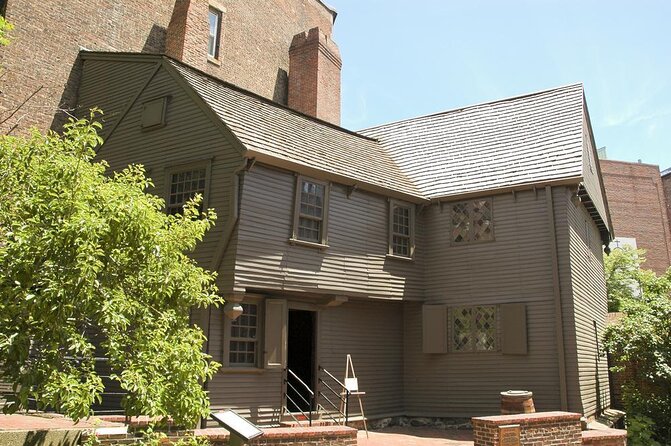
The route also ties into the Freedom Trail. You’ll pass major historic points connected to the Revolution, including the Paul Revere House and the Old North Church area (you’ll also spend separate time at Old North Church later). The North End piece works because you get the setting: tight streets, history nearby, and the everyday life that makes a neighborhood feel lived-in.
Boston was built for walking. More routes
- Boston: Freedom Trail History Small Group Walking Tour★ 5.0 · 6,450 reviews
- Harvard University Campus Guided Walking Tour★ 4.5 · 3,632 reviews
- Boston Freedom Trail Walking Tour with Costumed Guide★ 4.5 · 2,531 reviews
- The Full Revolutionary Story Epic Small Group Boston Walking Tour★ 5.0 · 2,356 reviews
- Boston’s Freedom Trail: A Revolutionary Walking Tour★ 4.9 · 1,748 reviews
Practical North End advice
- Expect real walking on narrow streets.
- Plan your snack strategy. Hanover Street is where pastry shops, coffeehouses, and delis cluster, so it’s easy to build small breaks without losing the tour flow.
- If you need bathroom or refreshment stops, the guide can be sensitive to pacing and needs, which is a genuine quality-of-life win on a half-day tour.
Old North Church & Historic Site: the Revolution story you can point to
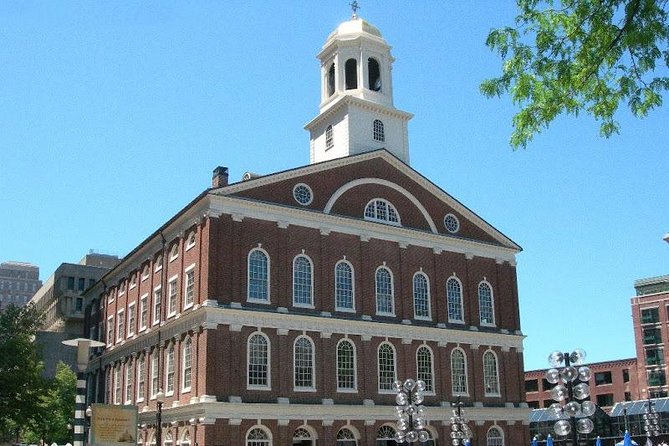
One of the cleanest history stops in the afternoon is Old North Church & Historic Site. You’ll spend about 15 minutes here. The church was founded in 1723 and is described as the oldest standing church in the city of Boston.
This stop matters because the famous signal story comes from this exact context. Paul Revere’s midnight ride is connected here, and you’ll hear the famous two-part signal concept—one if by land, two if by sea—used at the beginning of the Revolution.
Admission is not included for this stop, so if you want to go inside, you may need to budget time and money for the ticket.
Boston Common, Old State House, and the part of the city where events happened
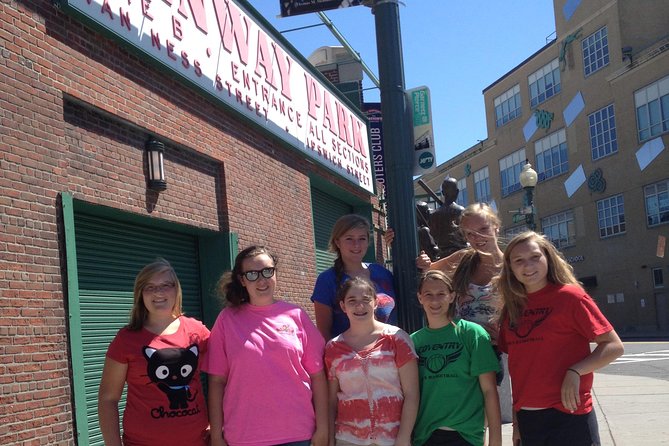
As you move from Revolution-era points toward the center of Boston, you pass places that make the city feel like a timeline you can walk through.
Boston Common: the oldest public park and the oldest subway station vibe
You’ll see Boston Common, the oldest public park in the United States dating from 1634. It’s connected to many significant events, and it’s also noted for having the oldest subway station in the Western Hemisphere.
Even if you’re not riding the subway that day, Boston Common works like a pause button. It gives you a real sense of scale and city planning—this is the kind of place where you can stand for a minute and feel how Boston’s center formed.
Old State House: 1713 building, Massacre site, and the seat of government
Next is the Old State House, built in 1713 and once the seat of the Massachusetts General Court until 1798. You’ll also connect it to the Boston Massacre.
This is one of those stops where the facts are simple, but the emotional weight is real. The building name sounds generic until you learn what happened there.
Back Bay to Copley Square: Victorian streets, shopping streets, and marathon finish energy
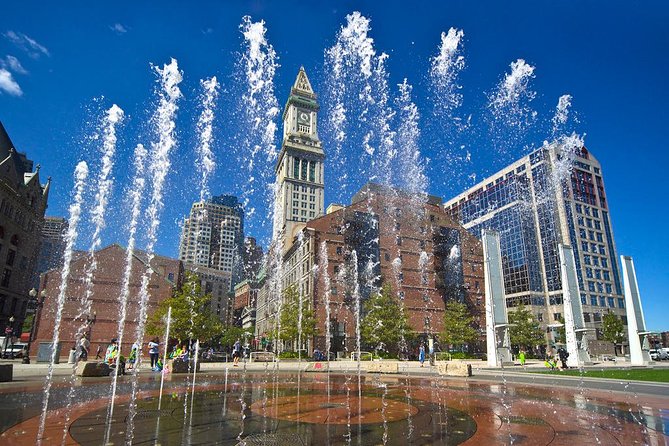
Boston’s neighborhoods can feel like different cities. The tour uses driving to thread you through that shift, then adds short looks where it counts.
Back Bay: Victorian brownstones and careful city design
You’ll see Back Bay, famous for rows of Victorian brownstone homes and described as one of the best-preserved examples of 19th-century urban design in the United States.
You’ll also notice how the tour frames Back Bay as a contrast to older areas like the North End. It’s the same city, but the style and planning show a different era.
Newbury Street and Boylston Street
You’ll pass Newbury Street, a fashionable shopping destination. You’ll also pass Boylston Street, the where the Boston Marathon finishes each year.
Even if you’re visiting outside marathon season, Boylston works as a mental waypoint. It tells you Boston knows how to turn history into an ongoing tradition.
Copley Square: Trinity Church, Old South Church, and the Boston Public Library
In Copley Square, you’ll see architecturally significant buildings listed for you, including Trinity Church, Old South Church, and the Boston Public Library, called the oldest free-lending library in the United States.
This portion of the tour is a good reminder that Boston has multiple kinds of heritage: political, religious, educational, and civic. The library detail is especially handy because it explains why Boston’s “learning” story isn’t just Ivy League campuses.
Cambridge universities and Boston’s college-town connection
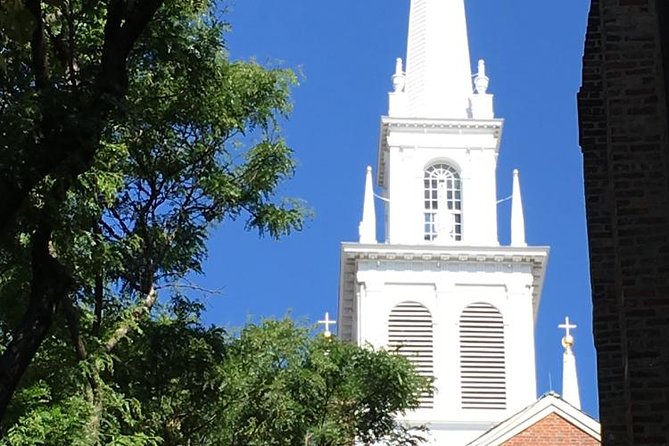
The tour routes you into Cambridge, across the Charles River. This is where you get a second layer of Boston identity: universities and research.
Harvard and why it started so early
You’ll see Harvard University, established in 1636 and described as the oldest college in America. It’s also noted as an Ivy League university with global prestige, shaped by history, influence, and wealth.
If you’re the kind of traveler who cares less about university rankings and more about cultural gravity, Harvard is still worth seeing. It’s a physical place that helped shape Boston’s modern tone.
MIT: innovation you can name
You’ll also see MIT (Massachusetts Institute of Technology), a private research university founded in 1861. It’s described as key to modern science and engineering, and known for innovation.
The best part of covering Harvard and MIT in one half-day is that you see how Boston doesn’t treat education as a side topic. It’s central to how neighborhoods function and how the city attracts people year-round.
Beacon Hill, Fenway Park, and Granary Burying Ground: the emotional loop closes
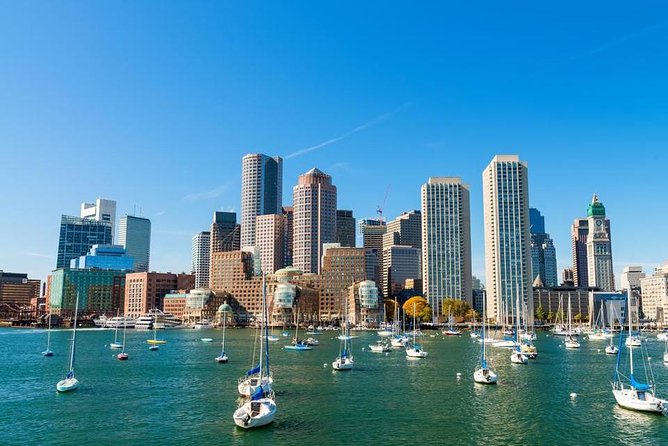
As the tour continues, it leans into neighborhoods and sites that connect Boston’s older streets with modern icons—and then back to Revolutionary names.
Beacon Hill: federal-style streets and gaslit charm
You’ll see Beacon Hill, described as an architectural gem with beginnings in the early 17th century. It’s known for federal-style rowhouses, narrow gaslit streets, and brick sidewalks. It’s also generally described as one of the more desirable and expensive areas of Boston.
This part is visually satisfying on purpose. Beacon Hill is where you’ll feel the “postcard Boston” vibe. And because you’ve already walked Freedom Trail-adjacent areas, the contrast feels sharper (in a good way).
Fenway Park: oldest MLB ballpark and the parkland design story
You’ll stop at Fenway Park, home of the Boston Red Sox and noted as the oldest ballpark in Major League Baseball. The area is described as the Back Bay-Fens or Fenway neighborhood, where parkland was established in 1879 by landscape architect Frederick Law Olmsted to link the Emerald Necklace park system.
This is a smart inclusion because it prevents a “four hours of 1700s only” problem. Baseball here is not just a game; it’s anchored in local design history.
Granary Burying Ground: the Revolutionary names in the cemetery
Next is Granary Burying Ground, founded in 1660 and described as Boston’s third-oldest cemetery. It’s highlighted as the final resting place of major Revolutionary War-era patriots, including Paul Revere, the five victims of the Boston Massacre, and three signers of the Declaration of Independence: Samuel Adams, John Hancock, and Robert Treat Paine.
This stop can feel heavy, but it also creates closure. After you’ve learned the Freedom Trail connections and visited major Revolution sites, Granary Burying Ground gives you a human roll call that makes the stories stick.
What to know before you go: shoes, tickets, and how to plan your energy
This tour is designed to balance walking and driving, but it’s still a walking-plus-seeing day. You’ll move through multiple neighborhoods, and some parts are on foot, including a substantial North End block.
Here’s how I’d plan it:
- Bring comfortable shoes. The city streets are uneven in places and North End is narrow-street walking.
- Consider travel needs. The guide is described as adjusting to walking ability and making room for basics like food, water, and bathroom breaks.
- Expect some admissions to be extra. Old North Church and Paul Revere House are marked as admission ticket not included. Other areas are listed as free, so it’s worth confirming which specific sites you want to enter.
Is this tour good value? Yes, if you want efficiency with real context
Even without a stated price tag here, you can judge value based on what you get in the time window. You’re covering major clusters: downtown historic sites, Freedom Trail connections, North End time, Cambridge universities, plus neighborhoods like Back Bay, Beacon Hill, and Fenway.
The private setup matters because it avoids the common half-day failure mode: spending half your time waiting for the group, then rushing through the last stop. Here, you’re paying for time management and a guide who can adapt the route to your interests. The added bonus is that the driving is air-conditioned, and that keeps the tour from turning into a sweaty endurance test.
Should you book Tour-in-Four in Boston?
Book it if you want a fast, organized orientation to Boston without sacrificing the feel of walking neighborhoods. It’s especially strong for first-timers who want both Revolutionary landmarks and modern Boston identity, all in about four hours.
Skip it if your group hates walking or you only want one micro-focus (like only universities or only Revolutionary sites). In that case, you’ll likely want a more specialized day.
If you do book, do one thing for success: tell the guide what you care about before you roll. That’s the difference between a generic “see the famous stuff” route and the kind of tour where your time actually matches your interests.
FAQ
How long is the Tour-in-Four experience?
It lasts about 4 hours.
Is pickup offered, and can I choose where to start?
Yes. Pickup is offered from a Boston location of your choice, such as hotels, B&Bs, or private homes. Your exact meeting location is confirmed before the tour.
Is this tour private?
Yes. It’s a private tour/activity, and only your group participates.
What language is the tour offered in?
The tour is offered in English.
Are admission tickets included for each stop?
Some stops are listed with admission ticket free, while others are listed as admission ticket not included, such as Old North Church & Historic Site and the Paul Revere House.
What happens if the tour is canceled due to weather?
This experience requires good weather. If it’s canceled due to poor weather, you’ll be offered a different date or a full refund.
On Foot Through Old Boston


More of the Boston Ledger



Boston by the Carload

New on the Boston Docket
- Boston to Newport Mansions Private Day Trip
★ 5.0 · 3 reviews - Boston Massachusetts Private Photography Tour
★ 5.0 · 3 reviews - Homemade Dumplings 101 in Boston
★ 3.5 · 3 reviews - Self-Guided Audio Tour of Boston North End
★ 4.5 · 3 reviews - Old Boston: Beacon Hill & Back Bay Walking Tour in French
★ 4.7 · 3 reviews
Boston Driving & City Tours, compared.
 ★ 4.5Boston Duck Boat Sightseeing City Tour with Cruise Along Charles RiverFrom $599,378 reviews
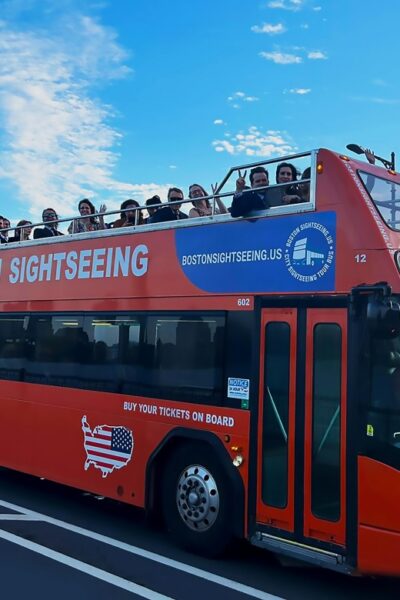 ★ 3.8Hop-On Hop-Off Double-Decker Bus Sightseeing TourFrom $47272 reviews
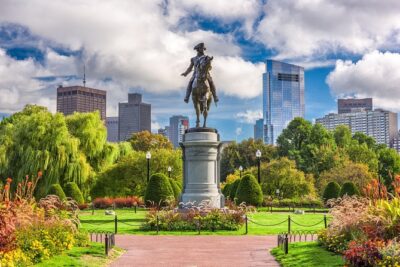 ★ 4.5Boston Premium Small Group Driving Tour With Boat CruiseFrom $199259 reviews
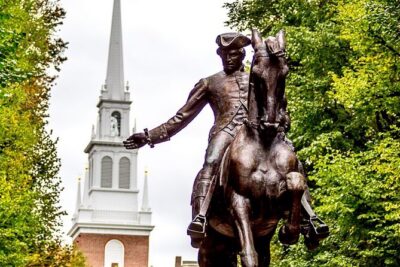 ★ 5.0Boston Private Driving City TourFrom $550127 reviews
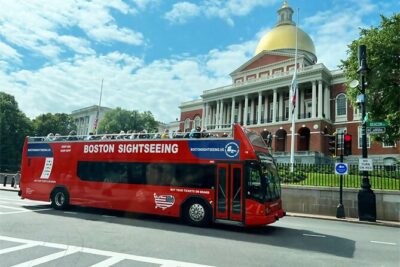 ★ 3.0Boston Hop-On Hop-Off All Day Sightseeing TourFrom $47124 reviews
 ★ 4.5Boston Private City TourFrom $61669 reviews
 ★ 5.0Boston Sightseeing Tour – a fully-narrated driving tourFrom $49557 reviews
 ★ 5.0Private City Tour of Boston and CambridgeFrom $46033 reviews
Browse the lists this tour appears in