

REVIEW · BOSTON SCAVENGER HUNTS & PUZZLE WALKS
Mysteries on the Move: Scavenger Hunt in Boston
A murder case turns into a street-walk. You’ll hunt clues for the 1926 killing of silent film director Rex King while moving through some of Boston’s best-known historic spots.
I like how the game is self-paced—you can slow down for photos or pick up speed when you feel it. I also like the phone-based passcode system that has you read free historical markers outdoors, which makes the walking feel purposeful rather than just wandering.
One thing to consider: you’re relying on your smartphone and browser, and a few people found the start confusing if they didn’t read the instructions carefully first.
Clue hunting is built around free, readable historical markers you can spot as you walk
A short 1.3-mile route keeps it doable while still hitting major landmarks
Private group play means it’s just your crew, not a mixed tour herd
The murder plot is a through-line, but the content is clue-focused rather than a deep story lecture
It works best if you prep before you start (especially your first steps in Boston Common)
In This Review
- A murder mystery you play with your browser
- How the Rex King plot actually unfolds on the route
- Starting at 139 Tremont St: where your hunt begins
- Boston Common to the first real clue: the rhythm of 10 stops
- Stop 1: Granary Burying Ground and the passcode hunt
- Old City Hall: when the game tightens into a case
- Boston Common: the moment you get it (or don’t)
- Old State House: where clues feel most rewarding
- Walking at your own pace with a private group
- What you do get: clues, not lectures
- Tech and comfort: phone skills matter
- Does the hunt feel worth it? The value question
- How to get the most fun out of 3 hours in Boston
- Should you book Mysteries on the Move in Boston?
- FAQ
- How long is the Mysteries on the Move scavenger hunt in Boston?
- Where does the tour start, and does it end nearby?
- Is this a private experience?
- What do I need to play the game?
- Which Boston landmarks are included?
- Do I need detailed walking experience or extreme fitness?
- Is historical commentary included?
- Is it refundable if I change my plans?
A murder mystery you play with your browser

This experience is called Mysteries on the Move: Scavenger Hunt in Boston, and it’s a smartphone game that turns a classic Boston walking route into a murder investigation.
The case centers on Rex King, a silent movie director who arrives in Boston in 1926 to film on location. In your game, he’s murdered. Your job is to solve whodunnit by collecting clues as you move from stop to stop. At each location, you’re meant to find a passcode by reading readily accessible (and free) historical markers, then enter it to unlock the next batch of prompts.
The format is important for how you’ll feel during the walk. This isn’t a sit-and-listen tour. It’s more like a city walk game where the plot comes from what you observe on the street and what you piece together on your phone.
How the Rex King plot actually unfolds on the route

The whole vibe is “outdoors first, phone second.” You’ll be physically moving between historic sites, and the phone is the tool that keeps the case moving. The game sends you from clue set to clue set, and you only progress by solving the passcode at each stop.
That design is great when you like active travel: look, read, type, continue. It also means you’re not going to get a lecture-style explanation at each site. You should expect brief, clue-driven interactions rather than in-depth storytelling.
One more expectation check: if you’re hoping to learn a full biography of Rex King or hear a detailed explanation of his murder right along the way, this may feel lighter than a traditional themed tour. The structure is set up to get you to the solution at the end, and some people felt the Boston history questions took over until the final moments.
If you’re okay with that, you’ll likely have more fun. If you want a narrative that tells you the story moment-by-moment, you might want to pair this hunt with some normal sightseeing afterward.
Starting at 139 Tremont St: where your hunt begins
Your hunt starts at 139 Tremont St, Boston, MA 02111 and ends back at the meeting point. That loop matters because it keeps the route simple: you’re not trying to track a long one-way walk across town.
It’s also a smart starting location for getting oriented. Tremont Street is a busy artery, so it’s generally easier to arrive via public transportation and then begin the game without major planning. In other words, you can show up, get started, and focus on the clue process rather than figuring out logistics.
A practical tip from the way people describe the experience: read how to start the game before you begin in Boston Common. The game is straightforward once you’re going, but the initial steps can be where confusion happens. If your phone setup is off or your browser steps aren’t clear, it can slow the whole hunt down.
More clues hidden between the cobblestones
Boston Common to the first real clue: the rhythm of 10 stops

The walking portion is about 1.3 miles (2 kilometers) total, and it’s spread across 10 historical stops. The pace is yours. You’re not on a strict schedule like a guided walking tour, so you can linger at the places that catch your eye.
Because it’s only 1.3 miles, you’re not dealing with exhaustion. Still, you should have moderate physical fitness, since it’s an outdoor walk with your phone in hand and some stops that require you to step in and out to read markers.
Here’s the rhythm you’ll repeat:
- You arrive at a stop.
- You look for a specific piece of information on the historical marker.
- You enter a passcode on your phone to unlock the next clue set.
- You continue walking to the next historic spot.
That loop turns Boston into a puzzle board. If you like solving small mysteries, it’s a fun way to keep your brain awake while sightseeing.
Stop 1: Granary Burying Ground and the passcode hunt
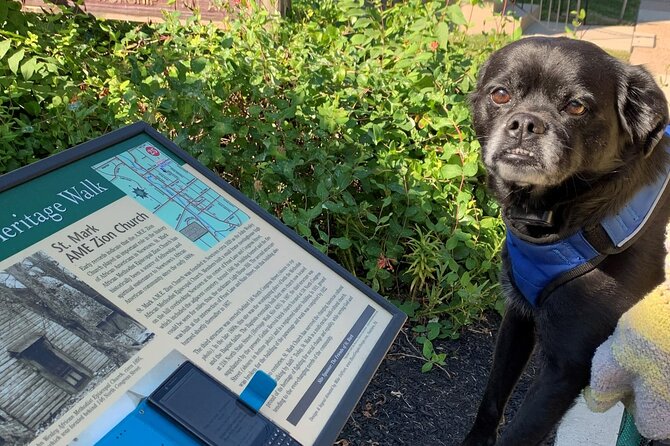
Your first stop is Granary Burying Ground. This is an especially good starting point because it sets the tone fast: you’re in a place packed with meaning, and the cemetery’s public accessibility makes it an easy place to “read and respond” as part of a game.
In the hunt, the key moment is the historical marker passcode. You’re not expected to study for hours. You’re meant to locate the marker, read what you can, and use it to unlock the next set of clues.
What I like about beginning here: it gives you immediate payoff. You step into a landmark that people recognize, then you turn that recognition into action. It also makes the game feel more connected to Boston instead of generic trivia.
What to watch for: don’t let the cemetery mood slow you down too much. You’re on a set of stops, and the fun comes from moving onward and keeping momentum.
Old City Hall: when the game tightens into a case
Stop 2 is Old City Hall. This is where the hunt starts feeling more like a coordinated investigation rather than a casual “answer the question” stroll.
Old City Hall is a good match for this kind of clue system because it’s the sort of location where markers and facts are easy to verify in real time. That’s the big advantage of this format: you can trust the clue inputs because you can read them where they’re posted.
You’re using the phone as a storyline manager. The game nudges you along, and your job is to provide the passcodes that keep the case moving.
If you enjoy interactive travel, you’ll likely feel engaged here. If you prefer to get history from a guide who explains things out loud, you may find the stop-by-stop clues too brief.
Boston Common: the moment you get it (or don’t)
Boston Common shows up as one of the hunt’s key sites. This part of the route matters because it’s where many people make their first “technical” mistake—wrong page, unclear instructions, or simply not knowing what you need to do at the start.
Once you’ve got your bearings, Boston Common becomes a smooth opening chapter. You walk, read, enter the code, and keep going. It’s also a visually friendly place for a game, since it’s open, familiar, and easy to navigate.
If you’re worried about tech, treat Boston Common as your test zone. Get the phone working early so later stops feel quick instead of frustrating.
- Boston Duck Boat Sightseeing City Tour with Cruise Along Charles River★ 4.5 · 9,378 reviews
- Boston: Freedom Trail History Small Group Walking Tour★ 5.0 · 6,450 reviews
- Boston Hop-On Hop-Off Trolley Tour with 13 Stops★ 4.5 · 5,576 reviews
- Boston Duck Tour: The Original and World-Famous★ 4.6 · 3,935 reviews
- Harvard University Campus Guided Walking Tour★ 4.5 · 3,632 reviews
Old State House: where clues feel most rewarding
Another major stop on the hunt is the Old State House. This is one of those Boston sites that visitors naturally want to see. Turning it into a clue checkpoint gives you a reason to linger and look more carefully.
In this game, you’ll again search for the passcode in free historical marker information. But by the time you reach Old State House, you’ve usually already solved a few earlier passes, which makes you more confident that your approach is working.
That confidence is one of the biggest factors in whether the hunt feels fun or stressful. A phone mystery is easier to enjoy when you’re sure your inputs are correct and you’re not guessing your way through.
Walking at your own pace with a private group
You get a private experience with only your group participating. That changes the feel in a good way. Nobody is waiting for someone else to catch up, and you’re not trying to hear instructions over a crowd.
Also, the game is built so your whole group can play with just one purchase. That’s a practical win if you’re traveling with friends who all want a role—someone can read, someone can enter codes, someone can keep the route moving.
Timing-wise, the whole experience is about 3 hours (approx.). Since the walking is only 1.3 miles, that three-hour window likely includes extra time to find markers, enter passcodes, and take breaks.
If you’re planning it on a travel day, you can pair it with nearby sightseeing without rushing your schedule.
What you do get: clues, not lectures
This hunt is explicitly not an in-depth history commentary experience. It’s more like clue-driven sightseeing.
You’re learning as you go, but in smaller pieces: you read marker text, solve a passcode, and assemble your clues at the end. That structure can be great for short attention spans, and it often makes history feel less like homework.
At the same time, if you want someone to explain the why behind every location, this might feel incomplete. In that case, plan a follow-up visit with a separate guided stop or a self-guided reading session afterward.
A good compromise: use the hunt for engagement, then use your own curiosity to connect dots later.
Tech and comfort: phone skills matter
For the game, you need a smart phone and knowledge of using your web browser. That’s key. It’s not listed as requiring a special paid app with a polished interface. It’s more of a “use your browser to play” setup.
That’s also why usability can make or break the experience. If you’re comfortable with browser prompts, entering codes, and navigating within a web game, you’ll probably sail through.
If you’re not, I’d recommend testing your phone browser before you walk into the first stop. At minimum, make sure you can access the game page and type without errors.
In terms of comfort, plan on walking outdoors and stopping to read markers. Bring shoes that handle city pavement. If you’re sensitive to long stretches of standing and scanning, that’s something to consider since the route relies on you reading information at each stop.
Service animals are allowed, and the route is near public transportation, which helps if your group wants to move efficiently.
Does the hunt feel worth it? The value question
The value of a phone scavenger hunt is personal. This one is built around:
- recognizable Boston landmarks,
- a short walk,
- a clear “solve to unlock” structure,
- and private group play.
If you like games, you’ll feel like you’re doing more than sightseeing. If your main goal is deep historical learning, you may feel like you’re paying for interaction rather than expert interpretation.
One of the more common complaints you’ll want to heed is mismatch. Some people said they expected a murder mystery experience and instead got more general Boston history questions until the last question. That can be disappointing if your mental picture is a guided whodunnit show.
My advice: decide what you want from the experience. Treat it as an interactive way to notice Boston’s landmarks and markers, with a mystery wrapper. If that fits your style, it can be excellent value for a fun, low-stress afternoon.
If you want a story told by a narrator, budget time for an additional history option.
How to get the most fun out of 3 hours in Boston
Here’s how I’d set yourself up for the best run-through.
First, go in with a tiny mindset shift: you’re not just walking—you’re collecting clues. When you reach each marker, focus on the exact info you need for the passcode, not everything the marker could teach you.
Second, assign roles. In a group, one person reads closely, one person types, and one person watches the route. You’ll move faster and avoid the messy situation where multiple people do the same thing at the same time.
Third, plan a steady pace. The walk is short, but you’ll still spend time stopping. If you rush past markers, you’ll slow down later when you have to redo steps.
Finally, give the ending a fair shot. The solution moment is where all your clue assembly pays off. If you start skipping steps early, the final answer can feel anticlimactic.
Should you book Mysteries on the Move in Boston?
Book it if you want a fun, interactive walk that keeps your group engaged and lets you control the pace. It’s a nice match for friends, couples, and small groups who enjoy solving puzzles while seeing key landmarks like Boston Common, Granary Burying Ground, Old City Hall, and the Old State House.
Skip it—or at least rethink expectations—if you want a guided, in-depth narrative about Rex King and the murder case. This is clue-driven and phone-centered, and some people found the mystery feeling thin until the end.
If you’re the type who likes city games and you’re comfortable with browser-based phone play, you’ll likely have a very enjoyable few hours in Boston.
FAQ
How long is the Mysteries on the Move scavenger hunt in Boston?
It runs for about 3 hours (approx.), with your pacing set by how long you take at each stop and to enter passcodes.
Where does the tour start, and does it end nearby?
It starts at 139 Tremont St, Boston, MA 02111, USA, and the activity ends back at the meeting point.
Is this a private experience?
Yes. It’s private, and only your group participates.
What do I need to play the game?
You need a smart phone and you’ll use your web browser to play. A mobile ticket is provided.
Which Boston landmarks are included?
The hunt includes sites such as Boston Common, Granary Burying Ground, Old City Hall, and the Old State House, plus additional historical stops along the route.
Do I need detailed walking experience or extreme fitness?
No extreme fitness is required, but it does call for a moderate physical fitness level since you’ll walk about 1.3 miles (2 kilometers) and stop to read markers.
Is historical commentary included?
The experience is described as not providing in-depth historical commentary. The learning mainly comes from the historical markers you read to solve clues.
Is it refundable if I change my plans?
No. The experience is non-refundable and cannot be changed for any reason.
More of the Boston Ledger




Boston, Solved Clue by Clue




New on the Boston Docket
- Boston to Newport Mansions Private Day Trip
★ 5.0 · 3 reviews - Boston Massachusetts Private Photography Tour
★ 5.0 · 3 reviews - Homemade Dumplings 101 in Boston
★ 3.5 · 3 reviews - Self-Guided Audio Tour of Boston North End
★ 4.5 · 3 reviews - Old Boston: Beacon Hill & Back Bay Walking Tour in French
★ 4.7 · 3 reviews
Boston Scavenger Hunts & Puzzle Walks, compared.
 ★ 4.5Outdoor Escape Room in Boston – the North EndFrom $7530 reviews
 ★ 4.0North End Boston Mafia Exploration Game and TourFrom $79 reviews
 ★ 4.0Boston Freedom Trail Scavenger Hunt AdventureFrom $497 reviews
 ★ 3.5Astounding Scavenger Hunt: Boston The Story of AmericaFrom $145 reviews
 ★ 4.5Boston Record Breakers: Self-Guided Scavenger HuntFrom $54 reviews
 ★ 4.5The Boston Bash Scavenger Hunt3 reviews
 ★ 4.0Harvard’s Secret Society: Exploration Game and TourFrom $63 reviews
Browse the lists this tour appears in