
REVIEW · SALEM DAY TRIPS & TOURS
Historian’s Guide to the Salem Witch Trials
Salem isn’t just spooky. It’s courtroom panic mapped on city streets, and this adults-only tour keeps it real. I love the way historian Krystina Yeager tells the story—clear, dark, and not padded with cheesy extras.
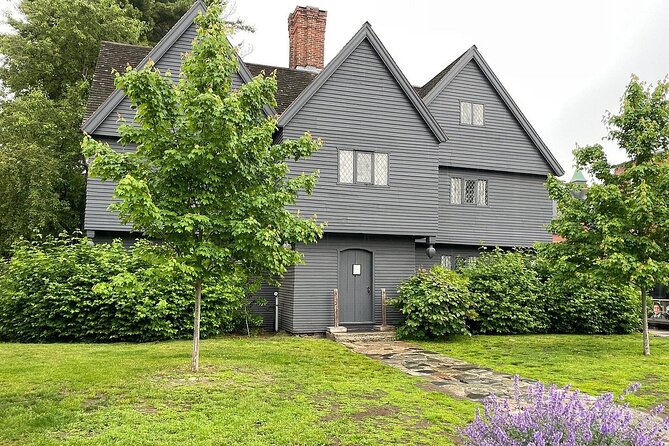
What I really liked most is the format: a tight 2-hour walking tour that hits key locations without dragging you all over town. You’ll move from the opening context near the Witch House area to the end point at the Salem Witch Trials Memorial.
One thing to consider: you’ll spend a lot of time standing and listening outside. Some stops are right at notable buildings, but there’s no entering, and the experience depends on good weather since it’s mostly a walk.
In This Review
- Key highlights you’ll feel right away
- Why Krystina Yeager’s approach hits differently in Salem
- Price and time: is $30 worth a 2-hour walk?
- Stop 1: Captain William Driver Park and the Witch House context
- Stop 2: First Church in Salem—no entry, but the backstory matters
- Stop 3: Turner’s Seafood at Lyceum Hall and Bridget Bishop
- Stop 4: 10 Federal St and the Old Witch Gaol
- Stop 5: Old Salem Jail Lot and the Giles Corey correction
- Stop 6: St. Peter’s-San Pedro Episcopal Church and Sheriff George Corwin
- Stop 7: Salem Witch Trials Memorial, plus the cemetery right beside it
- The pacing: how a 2-hour tour keeps the story coherent
- Who this tour is best for (and who should skip it)
- Practical tips to get more from the walk
- Ratings, reputation, and what the numbers suggest
- Should you book the Historian’s Guide to the Salem Witch Trials?
- FAQ
- How long is the Salem Witch Trials tour?
- Where does the tour start and end?
- What is the price?
- Is this a walking tour?
- Will we go inside any of the buildings on the route?
- Is the tour adults-only?
- What language is the tour offered in?
- How large is the group?
- Do I need a printed ticket?
- Is weather a factor?
Key highlights you’ll feel right away
- Small-group cap (up to 29 people) means you’re not lost in a crowd
- Historian storytelling, not theatrics—history comes first
- Real case details at specific sites, including Bridget Bishop
- Fact-checking disputed claims, including a Giles Corey location correction
- A strong ending at the Salem Witch Trials Memorial beside an old cemetery
- Adults-only tone for a serious subject
Why Krystina Yeager’s approach hits differently in Salem
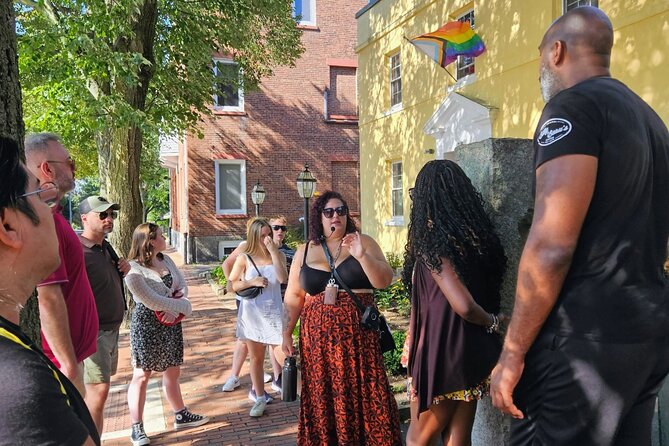
Salem has no shortage of tours. This one works because it treats the Salem Witch Trials like what they were: fear, power, and accusations that ruined lives. You don’t need jump scares to feel the weight of it.
Krystina Yeager leads with a historian’s focus and a storyteller’s rhythm. The tone stays serious, but the pacing stays human. You can ask questions along the way, and the answers stay grounded in what the sites and the people connected to the trials actually represent.
I also like that the tour leans into the victims and the mechanics of how accusations spread. It’s not just a “who was blamed” recap. It’s about how accusations turned into crimes, and how ordinary Salem life got pulled into it.
And yes, it’s for adults. This is a topic that deserves your full attention, not a quick scare-and-run through spooky props.
Price and time: is $30 worth a 2-hour walk?
At $30 per person for about two hours, you’re paying for interpretation plus focused time with a real historian, not just access to Salem’s geography. You could wander on your own, sure. But you’d have to stitch the story together yourself—names, motivations, and why certain places mattered.
This tour doesn’t try to cover every street corner in Salem. It chooses a set of stops that explain the rise of the trials, where key people fit into the story, and where justice went off the rails. That tight focus is part of the value.
With a small group size (29 max), the hour doesn’t feel like a lecture you can’t interrupt. The pacing is built for questions and short discussions at each stop.
If you’re visiting Salem for a limited time, this is an efficient way to get the big picture fast—and then explore on your own with better context.
The 1692 story has more chapters than one walk covers
Stop 1: Captain William Driver Park and the Witch House context
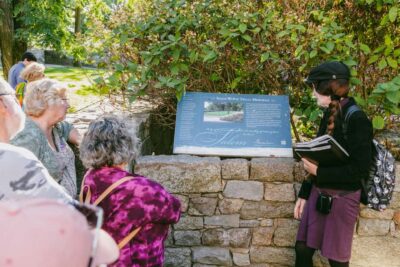
The tour starts at Captain William Driver Park, 309 Essex St. The key early move here is setting the scene in the right place—across from the Witch House area.
You don’t get a random “welcome to Salem” talk. You get context tied to the trials right away. This first stop is where you learn how Salem’s situation set the stage for accusations to escalate.
Expect a short, focused discussion—about 20 minutes—before you move on. It’s enough time to get your bearings and understand what you’re looking at as you walk.
Also, since this is an exterior stop, you can keep the walking pace going without feeling stuck waiting for entrances that never happen.
Stop 2: First Church in Salem—no entry, but the backstory matters
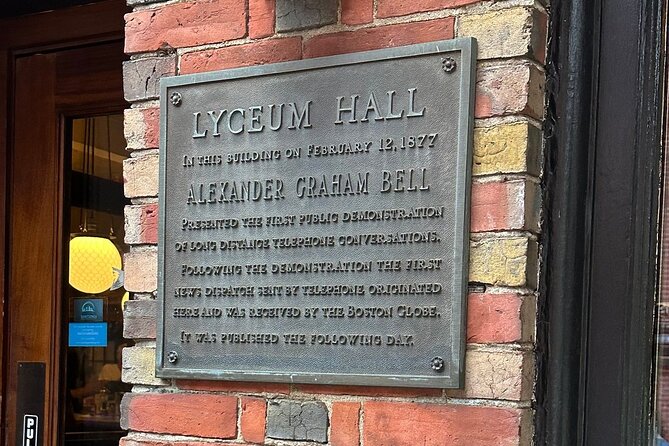
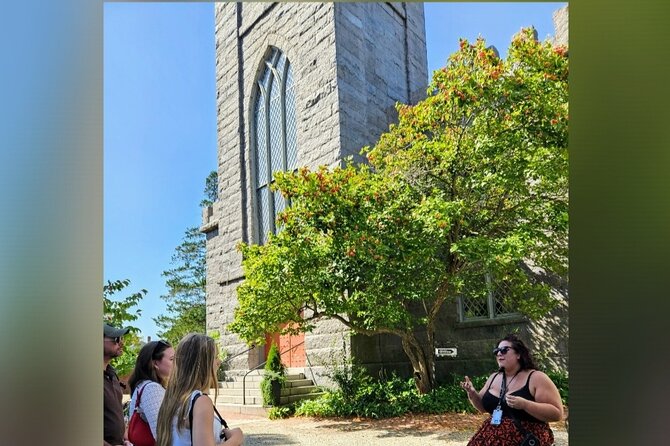
Next up is the First Church in Salem area. The plan is to talk about what led up to the trials, without entering the building.
That detail matters. It means you’re not paying your energy to navigate lines or interior rules. Instead, you stay with the story and the symbolism of the place: Salem’s institutions, authority, and community pressures all played roles in how accusations gathered force.
This stop is also about pacing. You get a chunk of explanation (around 20 minutes) that connects the opening context to the later, more specific events you’ll hear about next.
If you want a tour that feels like you’re learning the “why,” this is one of the places where it shows.
Stop 3: Turner’s Seafood at Lyceum Hall and Bridget Bishop
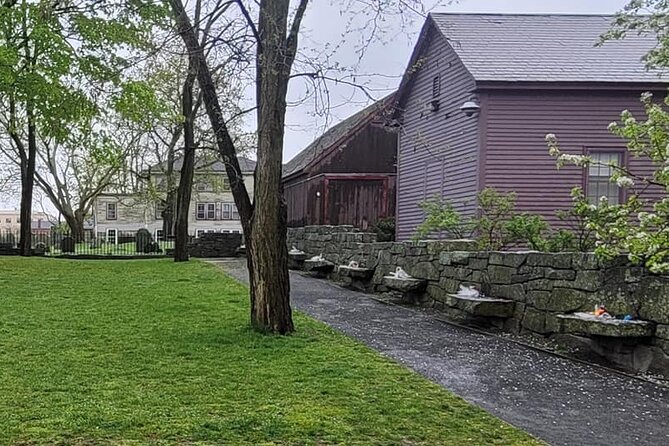
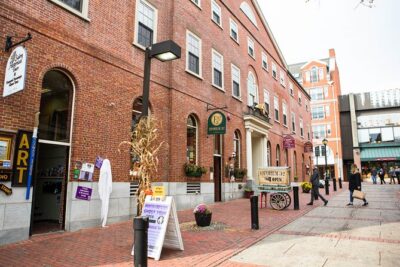
Then you’ll be in the Turner’s Seafood area at Lyceum Hall. Again, the emphasis is discussion, not sightseeing inside.
This is where the tour focuses on the beginning of the witch trials, including Bridget Bishop, identified here as the first victim. Hearing her in the flow of the story helps. You’re not just memorizing a name. You’re learning how the trials gained momentum and why the community’s fear hardened into accusations.
It’s also a useful moment for orientation. By the time you reach Bridget Bishop, you should understand the basics of how the accusations escalated and what made people vulnerable to being targeted.
Expect another short stop—about 20 minutes—so you get enough detail without losing the thread.
Stop 4: 10 Federal St and the Old Witch Gaol
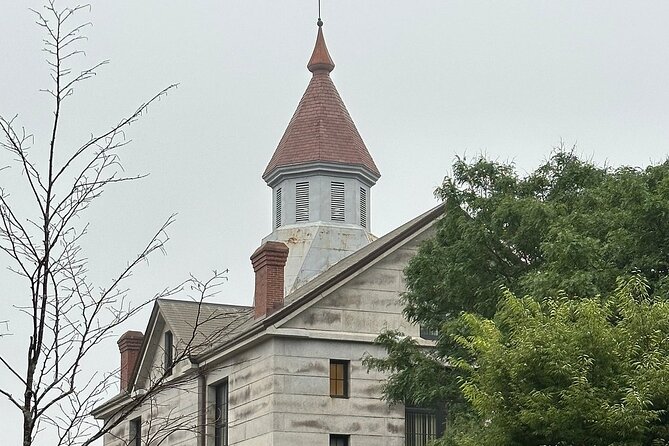
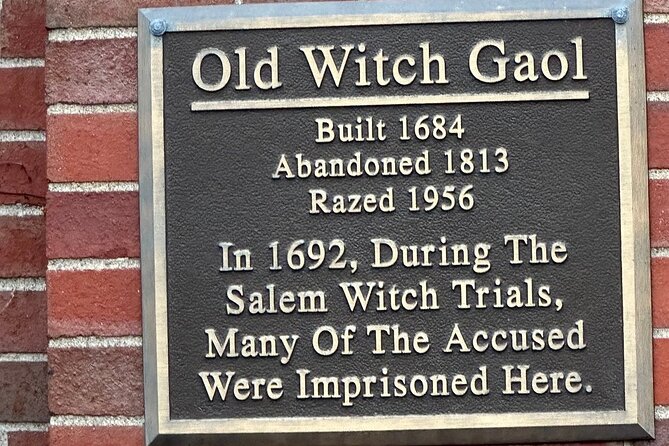
At 10 Federal St, the tour turns from accusation to consequence. This is the site associated with the Old Witch Gaol, where some of the accused were held.
This stop is one of the more sobering pieces of the route. The talk here shifts toward what confinement meant, and how the justice process operated once accusations turned into arrests.
You’ll likely feel the difference between earlier “setup” stops and this one. This is where the story starts to feel immediate. Not theatrical. Just real.
The time here is about 20 minutes. It’s enough to connect what you’ve learned to what happened next, without feeling rushed.
Half an hour north, Salem keeps going. More trips
- Salem’s Best Ghost Tour★ 4.5 · 4,186 reviews
- Bewitched Walking Tour of Salem★ 5.0 · 1,895 reviews
- Mysteries and Murders of Salem Guided Night-Time Walking Tour★ 5.0 · 1,488 reviews
- The Salem Witch Walk★ 4.5 · 1,301 reviews
- 2.5-Hour Salem History & Sightseeing Guided Walking Tour★ 5.0 · 850 reviews
Stop 5: Old Salem Jail Lot and the Giles Corey correction
Next is the Old Salem Jail Lot. This stop includes a disputed element: the claimed location of where Giles Corey was killed.
Here’s the useful part for you as a visitor: the tour points out the correction. In other words, you’re not just being told facts—you’re learning how some Salem “standards” have been repeated, then revised based on historical interpretation.
It’s a great moment to remember that walking tours can be full of myths—or they can help you spot what’s disputed. This stop leans into the second option.
Expect around 15 minutes here. It’s short, but it lands because it shows that history isn’t only scary. It’s also messy.
And when you leave the stop, you’ll carry that mindset into other Salem sites later.
Stop 6: St. Peter’s-San Pedro Episcopal Church and Sheriff George Corwin

After that, you’ll talk at St. Peter’s-San Pedro Episcopal Church. The focus is Sheriff George Corwin and his corruption.
This is a quick stop—about five minutes—but it doesn’t feel like a filler moment. The tour uses it to connect individual actions to the wider breakdown of justice.
If you care about how institutions fail, this is your moment. It’s also where the tour stops being only about witchcraft accusations and becomes about power—who benefited and how authority twisted the process.
Even at a brief stop, the point is clear: the trials weren’t just “people believing weird stories.” They were run through a system that behaved badly.
Stop 7: Salem Witch Trials Memorial, plus the cemetery right beside it
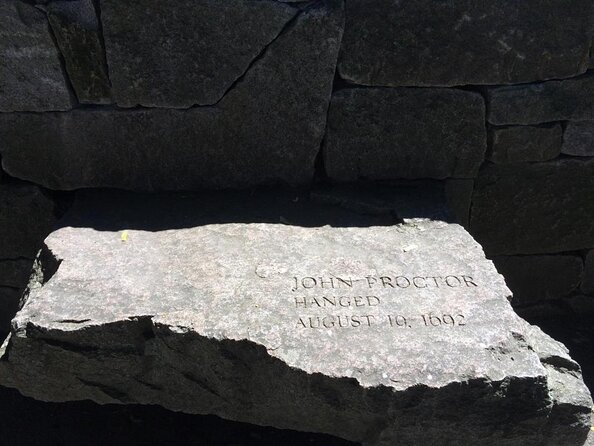
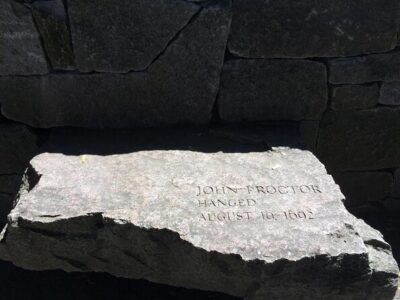
The final stop is the Salem Witch Trials Memorial at 24 Liberty St. The tour ends by tying the story back to the victims and offering additional information about what happened to the accused.
This is the emotional landing. You’ve walked through the rise, the confinement, and the political ugliness. At the memorial, you get the human scale.
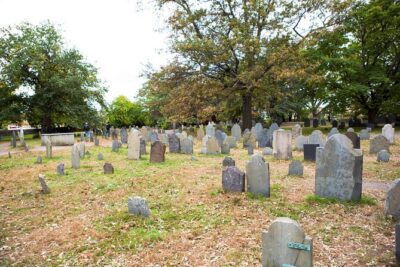
The location is also significant because the memorial sits beside one of the oldest cemeteries in the United States. That proximity matters. It makes the story less like a historical lecture and more like a piece of Salem’s physical memory.
This stop runs about 20 minutes, and it gives you a chance to ask final questions or soak in what you just heard.
The pacing: how a 2-hour tour keeps the story coherent
The whole route is built around short discussions, usually 15–20 minutes each. You’re not stuck at one location for half the tour. You’re also not sprinting between stops.
That matters for two reasons:
First, it helps you remember names. When each person and event is introduced right where it fits geographically, your brain doesn’t have to do extra work.
Second, it keeps the tone steady. The Salem Witch Trials are heavy. A tour that tries to fit too much into too little time can feel chaotic. This one stays structured.
And if you arrive late, don’t panic. The tour is designed so a late arrival can still be helped to catch up.
If it’s rainy, you’ll also want to know that the tour depends on weather. Poor weather can shorten the route. When that happens, you may miss the last portion of the walk.
Who this tour is best for (and who should skip it)
This is an adults-only tour for anyone who wants history without gimmicks. If you want spooky, you can find that elsewhere in Salem. This experience is for people who want the darker mechanics: accusations, authority, corruption, and how communities fracture.
It’s also a good fit for people who like a historian who can handle questions. If you’ve got curiosity—names, dates, disputed claims—this tour gives you a way to ask.
One other note: the storytelling can include a perspective on the victims, including a feminist lens. If you prefer history told with that victim-centered focus, you’ll probably feel at home here.
If you’re bringing kids, think carefully. The subject matter is dark and the tone isn’t built for children.
Practical tips to get more from the walk
Here’s how to set yourself up for a smoother experience.
- Wear comfortable shoes. You’re walking multiple blocks on sidewalks.
- Plan for cool or wet conditions. The tour requires good weather, so you may face adjustments if conditions are poor.
- Expect exterior stops. Several major sites are talked about without entering buildings.
- Use the stops to connect dots. As you move from one location to the next, try to restate the main point out loud in your head: setup, accusations, jail, corruption, memorial.
- Bring your questions. This tour is set up for Q&A, and the guide handles detailed curiosity well.
If you like to follow up after a tour, this is one of the better ones to do that with. You’ll leave with names and locations you can research further, without needing the tour to spoon-feed everything.
Ratings, reputation, and what the numbers suggest
The tour holds a 4.9 average rating from 66 reviews, with 97% recommending it. That kind of consistency usually points to two things: the history comes across clearly, and the experience is paced well enough that it doesn’t drag.
You’ll also notice the recurring themes in how people describe it: fact-first history, a sense of humor mixed into a serious topic, and a guide who can answer questions.
For a Salem experience, that’s a big deal. Lots of Salem tours blur into spooky entertainment. This one stays anchored.
Should you book the Historian’s Guide to the Salem Witch Trials?
Book it if you want a focused, adults-only Salem Witch Trials walkthrough that’s grounded in real locations and real people. At $30 for about two hours, it’s strong value because you’re buying interpretation plus structure, not just a place to stand.
Skip it if you’re hoping for heavy indoor time, building entry, or a classic ghost-tour style. This route is mostly outside, and several stops explicitly do not include entering.
If you’re deciding between a quick self-guided stroll and a guided version, I’d pick this. It helps you understand why Salem’s story unfolded the way it did—and it ends in the right place, at the memorial, where the names stop being facts on a page and start being reminders of what fear can do.
FAQ
How long is the Salem Witch Trials tour?
It’s about 2 hours, based on the scheduled walking time and stop discussions.
Where does the tour start and end?
The tour starts at Captain William Driver Park, 309 Essex St, Salem, MA 01970, and ends at the Salem Witch Trials Memorial, 24 Liberty St, Salem, MA 01970.
What is the price?
The price is $30.00 per person.
Is this a walking tour?
Yes. It’s a guided walking experience with short discussions at multiple stops around Salem.
Will we go inside any of the buildings on the route?
No. At multiple stops, the plan notes that you will not be entering buildings (including the First Church in Salem).
Is the tour adults-only?
Yes. It’s described as an adults-only tour.
What language is the tour offered in?
It’s offered in English.
How large is the group?
The tour has a maximum of 29 travelers.
Do I need a printed ticket?
No. You receive a mobile ticket.
Is weather a factor?
Yes. The experience requires good weather. If it’s canceled due to poor weather, you’ll be offered a different date or a full refund.
More of the Boston Ledger
The Witch City Docket
Salem, 1692 and After


New on the Boston Docket
- Private Walking Salem Legends Tour Professional Guide
★ 5.0 · 3 reviews - Pirates and Privateers Walking Tour with Real Pirates Admission
★ 4.5 · 3 reviews - Discover Salem’s History & Practice Authentic Witchcraft
★ 4.1 · 4 reviews - The Ghost Walk. Tortured Souls of Salem
★ 5.0 · 4 reviews - Cemetery and Witchcraft Trials Tour
★ 5.0 · 4 reviews
Salem Day Trips & Tours, compared.
 ★ 5.0History and Hauntings of Salem Guided Walking TourFrom $3614,564 reviews
 ★ 4.5Salem’s Best Ghost TourFrom $304,186 reviews
 ★ 5.0Salem Voodoo, Vampires, and Ghosts Guided Walking Tour1,931 reviews
 ★ 5.0Bewitched Walking Tour of SalemFrom $351,895 reviews
 ★ 5.0Satanic Salem Walking TourFrom $301,635 reviews
 ★ 5.0Mysteries and Murders of Salem Guided Night-Time Walking TourFrom $361,488 reviews
 ★ 4.5The Salem Witch WalkFrom $251,301 reviews
 ★ 5.0Wicked Awesome Tours: Witch Trial History and Salem Haunts!From $291,032 reviews
Browse the lists this tour appears in