
REVIEW · SALEM DAY TRIPS & TOURS
Best Salem Witch Trials Historical Walking Tour
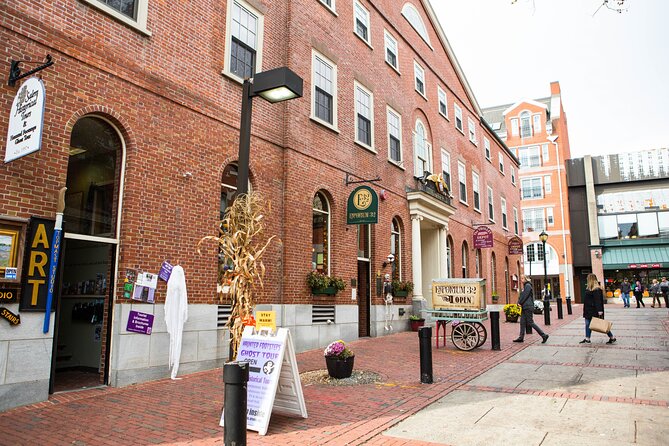
Salem’s witch trial sites make more sense on foot. This 90-minute Salem Witch Trials Historical Walking Tour links key downtown locations—from the memorial benches to the Witch House—so you can stop guessing and start understanding. You’ll also hear stories tied to accusers, victims, and the officials who drove the process.
I like that the tour is tightly planned around real stopping points you can actually reach in town. I also like the human focus at the Salem Witch Trials Memorial, where the names and fates of the 20 victims are front and center, not buried under vague spooky vibes. If you manage to get a guide like Bob (his name comes up often), the storytelling energy can make the whole thing feel vivid without turning it into a cheap scare.
One drawback to consider: much of Salem’s 1692 world is gone, so some stops are necessarily short and exterior. If you’re expecting a walk that lets you see every major event site clearly in-person, you may feel the tour is more about locations and context than standing in front of preserved buildings for every chapter of the saga.
In This Review
- Key Highlights You’ll Care About
- Salem in One Walk: What This Tour Does Better Than DIY
- Price and Value: Paying $30 for Clarity (Not Just Spooky Stops)
- Getting There: 8 Central St, Start Times, and Simple Timing Tips
- Stop 1: The Launch Point and How the Guide Sets the Tone
- Salem Witch Trials Memorial: Names, Dates, and the Human Cost
- Rockafellas and the First Church Site: How a Town Meeting Becomes a Court Story
- Joshua Ward House / Merchant Hotel and George Corwin’s Role
- The Witch House (Only Remaining Direct Tie): Judge Jonathan Corwin’s Home
- Salem YMCA and Sewall Street: Betty Parris and the Spread of Accusations
- Lyceum Hall and Bridget Bishop’s Land: Arrest, Trial, Execution in Eight Days
- Witch Dungeon Museum: Not 1692, But Perfect for Understanding Jail Reality
- Bewitched Statue: Samantha Stevens and the Ironic Salem Moment
- Essex Lodge and 50 St Peter St: Court and Jail Locations You Can Still Find
- How the Stories Feel: Strengths, and What Might Not Fit Your Style
- Who This Tour Suits Best
- Should You Book This Salem Witch Trials Walking Tour?
- FAQ
- How long is the Salem Witch Trials Historical Walking Tour?
- How much does the tour cost?
- Where do I meet the guide?
- What time do tours depart?
- Are tickets to all stops included?
- Does the tour run in bad weather?
- Is the walking route accessible?
Key Highlights You’ll Care About
- A guided walk that reduces guesswork across Salem’s downtown maze
- The Salem Witch Trials Memorial anchors the tour in names, deaths, and dates
- Still-standing 1692 connection at the Witch House, tied to Judge Jonathan Corwin
- Court and jail locations in the same walking loop, including the Essex Lodge area and 50 St Peter St
- You get built-in context for officials like George Corwin, Stephen Sewall, and others
- A small group feel with a maximum of 40 people
Salem in One Walk: What This Tour Does Better Than DIY
Salem is famous for witches. But the real story is about power, fear, and paperwork. This tour does a good job turning that into a walkable route with clear stops, so you’re not spending your vacation playing “where was it again?” on your phone.
The big win is that the route is built around what remains in downtown Salem. Some structures are gone. Still, you get the key locations tied to the trials, plus the reasoning behind why those places mattered. That’s what makes the tour feel practical: you leave with a map in your head, not just random facts.
You’ll also see how the story moves through town. It isn’t only about accusations. It’s about courtrooms, jails, and the people who benefited from the chaos. That angle makes the tour feel more grounded than the usual pop-culture-only approach.
Price and Value: Paying $30 for Clarity (Not Just Spooky Stops)
At $30 per person, this walking tour is priced like a solid history option rather than a high-ticket attraction. The value comes from a few things you would struggle to recreate on your own:
- You get a guide who connects the dots between sites that look unrelated today.
- You get time-saving structure: the tour hits a set cluster of places in about 90 minutes.
- Several stops are either free to view or easy to access without extra planning.
Also, admissions aren’t bundled everywhere. The tour notes that some stops have tickets not included. That means the base cost buys you the walking experience, guided interpretation, and the key stops. If you want to go inside a museum or pay for an entry at a specific location, you’ll need to budget for that separately.
For me, that’s the fair trade. You’re paying for interpretation and direction—exactly what makes Salem confusing if you’re doing it solo.
The 1692 story has more chapters than one walk covers
Getting There: 8 Central St, Start Times, and Simple Timing Tips
You check in at 8 Central St at the Salem Historical Tours office. Tours depart at 10 am, 1 pm, and 4 pm, and you’ll want to arrive about 15 minutes early. The meeting setup is straightforward: look for a guide holding a recognizable sign.
This is a walking tour, not a hop-on hop-off bus ride. You’re looking at about one mile total and about 90 minutes, with frequent pauses to view sites and hear stories. The tour also runs in all weather, so dress for rain, cold, and wind if you’re visiting outside peak summer.
Two practical notes:
- There’s no public restroom listed as available during the tour.
- Sidewalks can be narrow and uneven, with bricks, cobblestones, and stairs, so comfortable shoes matter.
And if you’re coming in October: Salem can get crowded fast, and parking can be a headache. Build extra time to get there, even if your GPS is confident.
Stop 1: The Launch Point and How the Guide Sets the Tone
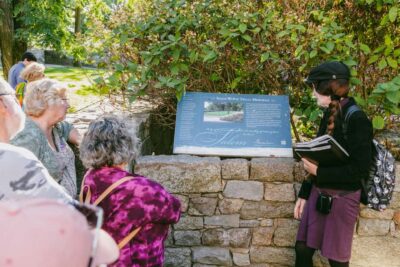
Right at the start, the tour introduces the event through themes: the demographics, competing theories, and personal stories tied to the 1692 panic. This early segment matters because it frames what you’re about to see.
A practical way to think about it: if you come in with zero context, this step helps you follow later stops without feeling lost. If you already know some names, it helps you understand which details the guide is going to emphasize.
Expect the pace to start quickly, then settle into site-by-site storytelling.
Salem Witch Trials Memorial: Names, Dates, and the Human Cost
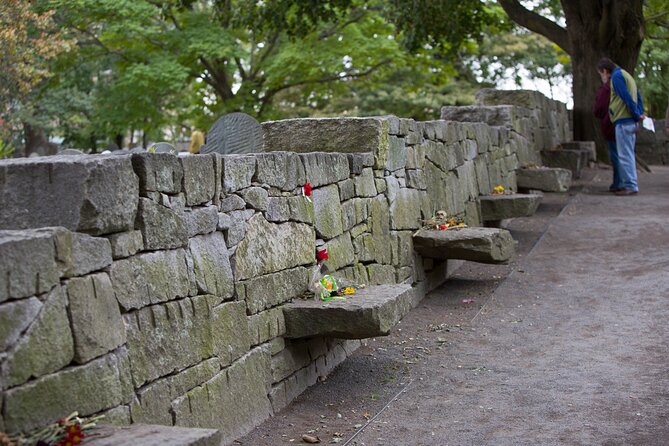
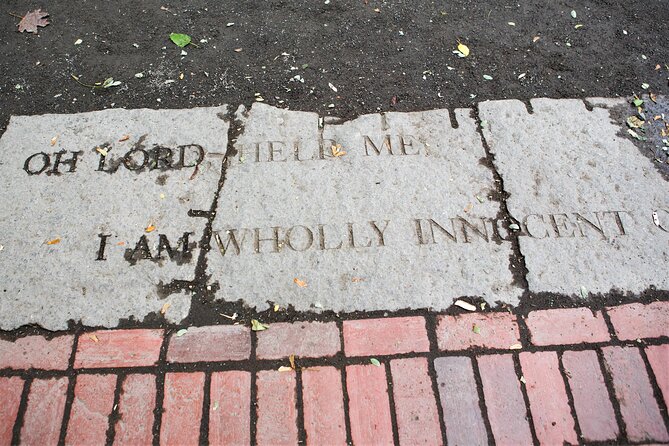
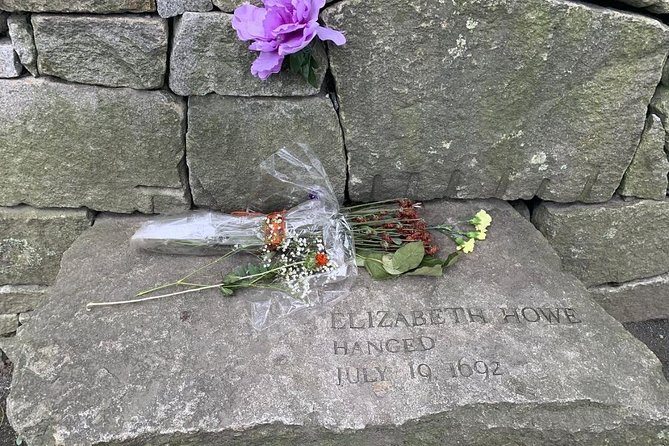
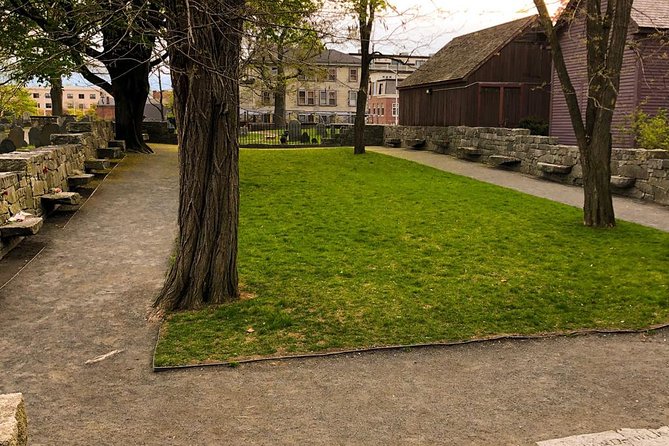
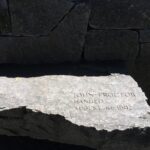
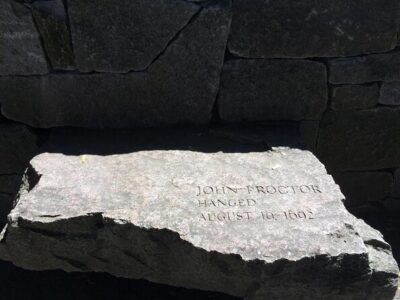
The Salem Witch Trials Memorial is where the tour turns from general history into something much more direct. Dedicated in 1992, the memorial is bench-style and includes the name of each victim, how they died, and the date.
Here’s what makes this stop powerful for your visit:
- You can see the victims as people with documented outcomes, not as faceless “witches.”
- The memorial’s symbolism gives you a framework for why remembrance matters decades later.
It’s also a good stop if you want to slow down. People sometimes expect every tour minute to be walking. This one gives you a clear pause to absorb the names before the route moves back into courts and officials.
Rockafellas and the First Church Site: How a Town Meeting Becomes a Court Story
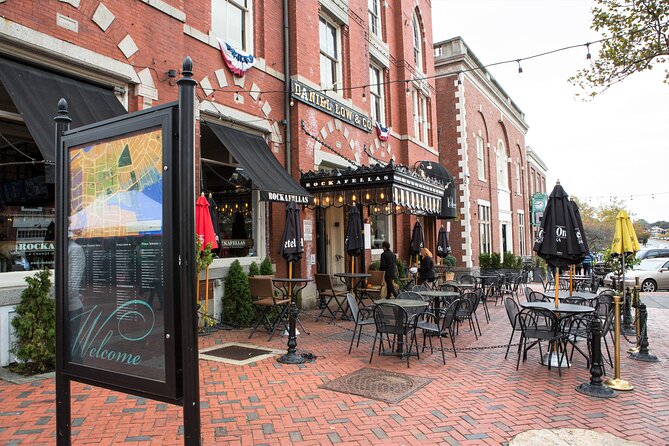
Next you’ll head to Rockafellas Restaurant, which is now in the Daniel Low and Co. building. During 1692, this was the First Church of Salem and also the city meeting house.
This stop works because it shows you how public life and legal life tangled together. A church space wasn’t only a spiritual place. In a small community, the same walls often hosted decisions, disputes, and collective judgment.
The practical value: even if the building serves a totally different purpose today, the tour helps you “read” the location with 1692 eyes. You’ll understand what kind of authority gathered there and why rumor could gain traction.
Half an hour north, Salem keeps going. More trips
- Salem’s Best Ghost Tour★ 4.5 · 4,186 reviews
- Bewitched Walking Tour of Salem★ 5.0 · 1,895 reviews
- Mysteries and Murders of Salem Guided Night-Time Walking Tour★ 5.0 · 1,488 reviews
- The Salem Witch Walk★ 4.5 · 1,301 reviews
- 2.5-Hour Salem History & Sightseeing Guided Walking Tour★ 5.0 · 850 reviews
Joshua Ward House / Merchant Hotel and George Corwin’s Role
Then it’s on to the Joshua Ward House, now the Merchant Hotel. The key figure here is George Corwin, described as the High Sheriff of Essex County in 1692.
This location matters because of what the tour highlights about Corwin’s involvement:
- He was responsible for signing arrest and execution warrants connected to the trials.
- The tour also notes that he took personal property and was caught torturing some people in his home.
That combination—paperwork power and physical cruelty—is what makes the witch trial story feel so chilling. It’s not only mass hysteria. It’s also enforcement by specific people with specific duties.
Expect a short stop, but a heavy one.
The Witch House (Only Remaining Direct Tie): Judge Jonathan Corwin’s Home
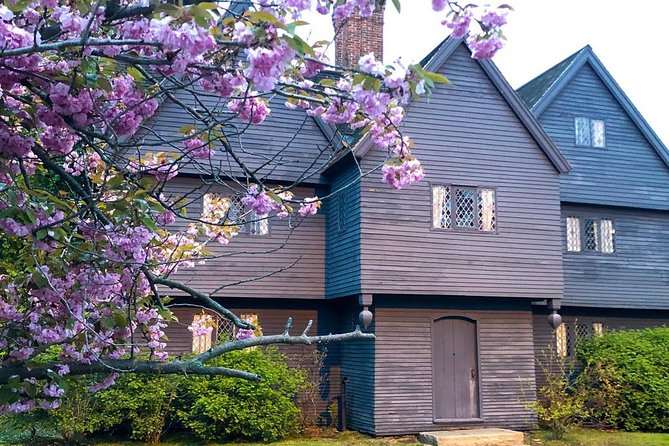
If you remember one place from this tour, make it the Witch House at Salem. It’s singled out as the only remaining Salem structure with direct ties to the 1692 witch trials.
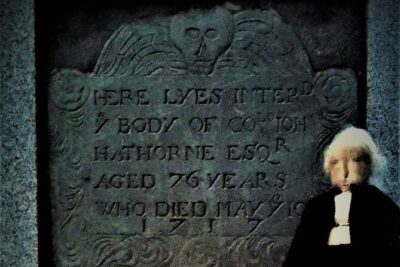
The house dates back to the 1660s and is described as home to Judge Jonathan Corwin. The tour notes that Judge Corwin used to meet there with Judge Hathorne to discuss who could be a witch.
This is where the tour becomes extra worth it for first-timers, because you’re not only learning about events that happened elsewhere. You’re standing near a surviving building connected to key decision-making. It gives the story a physical anchor.
And since the Witch House is a central Salem stop, it’s also a useful reference point for your free time afterward. You’ll likely return to browse or take more photos once you understand why it matters.
Salem YMCA and Sewall Street: Betty Parris and the Spread of Accusations
The tour then moves to the Salem YMCA on Sewall Street. Sewall Street is named for Judge Stephen Sewall, connected to the Witchcraft Court.
A very specific moment is tied to this stop: nine-year-old Betty Parris was moved here in July 1692. The tour also explains that Betty and her cousin played a role in starting the witchcraft hysteria.
This stop gives the story a different angle than the “officials only” version. It forces you to confront how accusations spread through households and community relationships, then turned into court actions.
If you care about how fear becomes a system, this YMCA stop is one of the most meaningful ones.
Lyceum Hall and Bridget Bishop’s Land: Arrest, Trial, Execution in Eight Days
Next up is Turner’s Seafood at Lyceum Hall, built on land once owned by Bridget Bishop and her husband Edward. Bridget Bishop is described here as the first woman executed in 1692.
The tour highlights how fast her path moved: it took eight days for her arrest, trial, and execution.
That timeline is a gut check. It turns the witch trials from a vague historical label into a sequence with speed and consequences. You don’t need to add dramatic imagination to understand what it did to a town.
Even if you don’t eat at Turner’s during your visit, this stop is a strong example of how modern storefronts sit above older, darker facts.
Witch Dungeon Museum: Not 1692, But Perfect for Understanding Jail Reality
After that, you’ll have a stop at the Witch Dungeon Museum. Important detail: the tour says the museum isn’t tied directly to the 1692 Witchcraft Trials. But it is used to show how people were jailed—small cells compared to a closet or phone-booth size.
The tour also includes an example activity: a photo op in the pillories, often described as stocks.
This part is best if you want your visit to connect history to lived conditions. Even if it’s not the exact same jail used in 1692, it helps you visualize the fear and restriction people faced when accused.
Admission for the museum isn’t included, so if you only want exterior stops, you may need to decide whether the photo op and displays are worth paying for.
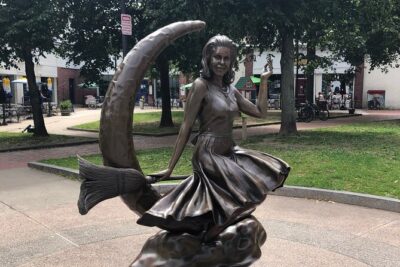
Bewitched Statue: Samantha Stevens and the Ironic Salem Moment
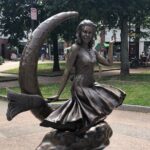
Then comes a fun tonal shift: the Bewitched Statue of Elizabeth Montgomery, featuring Samantha Stevens. The tour points out that Salem shot episodes for the show, and you’ll also learn whose land the statue sits on.
This stop works for two reasons:
- It reminds you that Salem built a later identity around witches.
- The tour uses irony without pretending the original story was entertainment.
If you’re traveling with mixed ages, this is often the moment that gets smiles without losing the seriousness of what you covered earlier.
Essex Lodge and 50 St Peter St: Court and Jail Locations You Can Still Find
The tour ends by hitting the locations tied to where major trial functions happened.
First, it visits the Salem Masonic Building – Essex Lodge. The tour explains that the Witchcraft Court, called the court of Oyer and Terminer, was located on Washington Street in front of the current building. It also notes:
- Most trials were held there.
- Additional trials took place in January 1693.
- One accused was declared innocent by the jury, but the judges nullified that decision.
That last point is one of those details that makes the story hard to forget. It’s not only about who was accused. It’s about how outcomes were controlled.
Next is 50 St Peter St, where the Witchcraft Jail used to be. The building is gone now, but the tour uses the site to explain where prisoners were held in the larger Boston area context.
You’ll hear names connected to imprisonment here, including Giles Corey, who was crushed during an interrogation. The tour also mentions that some prisoners died in jail.
This is the kind of stop where you appreciate why walking tours matter. Even when buildings disappear, the locations help you hold the story in place.
How the Stories Feel: Strengths, and What Might Not Fit Your Style
This tour has a lot of fans for a reason. The most praised parts are the story-driven format, the quick pace that still covers many core locations, and the overall ability to answer questions. People also like the balance of history with moments that keep the tour from becoming a lecture.
You might still notice a couple things, based on how the tour is designed:
- Since buildings are gone, you’re often interpreting sites rather than viewing preserved structures.
- The narration can feel like stories plus stops, which is great for many people, but if you want a strict start-to-finish chronology, you may need to ask your guide to slow down and clarify timeline links.
Also, the tour is designed to see as many stops as possible, and it may not follow a perfect order every time. That keeps the tour flexible, but it can change what you experience in your particular session.
If you want the best shot at a lively guide, consider asking for Bob, since his name shows up as a stand-out in the provided feedback.
Who This Tour Suits Best
This is a great match if you:
- Want a focused Salem Witch Trials walking experience without spending hours researching.
- Like historical storytelling tied to real places.
- Are comfortable standing and walking about a mile over uneven sidewalks.
It’s also a good family option for older kids, since the tour content and pacing are built for mixed ages, but children must be accompanied by an adult.
If you’re someone who wants fully preserved sites everywhere and long museum time, you might feel this is too short and too exterior-heavy. In that case, you’d probably pair the walking tour with a separate museum visit afterward.
Should You Book This Salem Witch Trials Walking Tour?
If your goal is to understand the 1692 witch trials in a practical, place-based way, this is an easy yes. For $30, you get a guided loop through major downtown locations, plus the Memorial and the Witch House connection that make Salem’s story feel real instead of foggy.
Book it if you like your history with names, places, and human consequences. Skip it (or plan to supplement it) if you want to see every original structure, or if you need a perfectly chronological lecture with no detours.
Either way, do one thing before you go: wear good shoes, arrive early, and give yourself permission to absorb something heavy. Salem’s witch trials were not a game. This tour helps you see why.
FAQ
How long is the Salem Witch Trials Historical Walking Tour?
It runs for about 90 minutes and covers roughly one mile on foot.
How much does the tour cost?
The price is $30.00 per person.
Where do I meet the guide?
You check in at Salem Historical Tours Office at 8 Central St, Salem, MA 01970. The guide starts from there and the tour returns you to the downtown area at the end.
What time do tours depart?
Tours depart at 10 am, 1 pm, and 4 pm. Plan to arrive about 15 minutes early to check in.
Are tickets to all stops included?
Admission is not included for some stops listed on the route. The tour notes that certain locations may require separate admission.
Does the tour run in bad weather?
Yes. It operates in all weather conditions, so dress appropriately.
Is the walking route accessible?
The tour can pose challenges for mobility and accessibility concerns. It’s about one mile and includes narrow and uneven sidewalks, bricks, cobblestones, and stairs, and each participant must be able to complete the one-mile tour within 90 minutes.
More of the Boston Ledger


The Witch City Docket
Salem, 1692 and After

New on the Boston Docket
- Private Walking Salem Legends Tour Professional Guide
★ 5.0 · 3 reviews - Pirates and Privateers Walking Tour with Real Pirates Admission
★ 4.5 · 3 reviews - Discover Salem’s History & Practice Authentic Witchcraft
★ 4.1 · 4 reviews - The Ghost Walk. Tortured Souls of Salem
★ 5.0 · 4 reviews - Cemetery and Witchcraft Trials Tour
★ 5.0 · 4 reviews
Salem Day Trips & Tours, compared.
 ★ 5.0History and Hauntings of Salem Guided Walking TourFrom $3614,564 reviews
 ★ 4.5Salem’s Best Ghost TourFrom $304,186 reviews
 ★ 5.0Salem Voodoo, Vampires, and Ghosts Guided Walking Tour1,931 reviews
 ★ 5.0Bewitched Walking Tour of SalemFrom $351,895 reviews
 ★ 5.0Satanic Salem Walking TourFrom $301,635 reviews
 ★ 5.0Mysteries and Murders of Salem Guided Night-Time Walking TourFrom $361,488 reviews
 ★ 4.5The Salem Witch WalkFrom $251,301 reviews
 ★ 5.0Wicked Awesome Tours: Witch Trial History and Salem Haunts!From $291,032 reviews
Browse the lists this tour appears in