
REVIEW · SALEM DAY TRIPS & TOURS
[ESP] History of Salem Witch Trials
Salem’s witch trial story hits fast. A 90-minute walk through key places makes the panic feel close, not dusty, with storytelling led by Emily and Georgie. I like how the route strings together the main sites without wasting time, and I like the way the guides keep a group moving and paying attention, even when Salem feels crowded. One drawback to plan around: it is a walking-focused format, so if you want lots of sitting and lingering, you may find the pace a bit brisk.
You meet at 7 Church St and finish at the Burying Point area on Charter St, with time for a stroll through the Charter Street Cemetery zone at the end. The tour also works well if you want a history lesson with a lighter tone, because the guides bring humor into serious material. If you prefer a strictly solemn approach, the mix of spooky-flavored storytelling and facts might not be your style.
In This Review
- Key points
- Salem’s witch trial story in 90 minutes on foot
- Price, time, and what’s included (snacks and tour photos)
- Meeting at 7 Church St and the walk to Charter Street
- Stop 1: 7 Church St orientation and setting the tone
- Stop 2: Turner’s Seafood and the idea of everyday Salem
- Stop 3: the Washington & Church St corner and how rumors travel
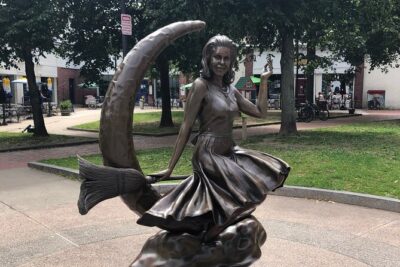
- Stop 4: Lappin Park as a mental pause
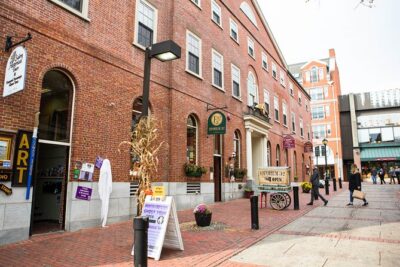
- Stop 5: Merchant Inn and public life during tense times
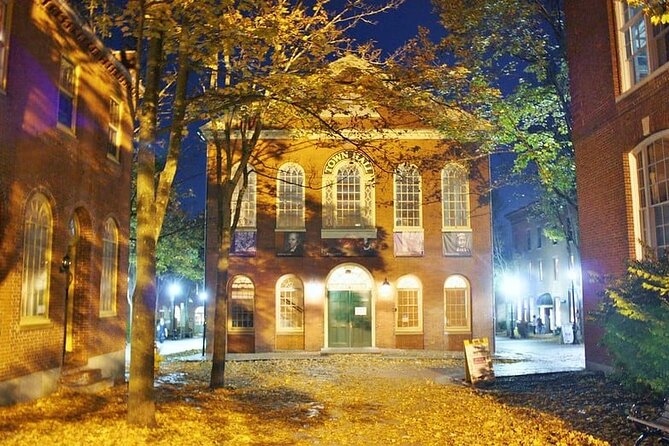
- Stop 6: Old Towne Hall and the power of institutions
- Stop 7: Old Burying Point and the reality of memory
- Stop 8: Salem Witch Trial Memorial and a final perspective
- The guides: Emily and Georgie’s mix of facts and fun
- How to get the most out of the tour
- Who should book this tour?
- Should you book the History of Salem Witch Trials tour?
- FAQ
- FAQ
- Where does the tour start?
- Where does it end?
- How long is the tour?
- How much does it cost?
- What languages are offered?
- Is there a maximum group size?
- What’s included in the ticket?
- What is not included?
- Is there a ticketed admission cost at the memorial?
- Is the tour suitable for people with accessibility needs?
- Can I cancel for a refund?
Key points
![[ESP] History of Salem Witch Trials - Key points](https://assets.thebostontraveller.com/wp-content/uploads/esp-history-of-salem-witch-trials-1.jpg)
- Small group size (max 20): easier to hear and keep everyone together.
- Emily and Georgie’s style: energetic pacing plus a natural local voice.
- Bilingual help (English and Spanish): the narrative can switch gears so more people can follow comfortably.
- Smart “major-site” route: you hit several Salem landmarks tied to the trials in about 90 minutes.
- Included snacks and tour photos: small perks that make the time feel like more than a basic stroll.
- Ends at the Burying Point / Charter St area: you can add a short walk through the nearby cemetery space.
Salem’s witch trial story in 90 minutes on foot
This is the kind of tour that helps you get your bearings fast in Salem. You start downtown and move through the spots that shaped (and later memorialized) the events around the witch trials, all without spending your limited time on transit.
The best part is how the tour links places to the story. You are not just hearing names and dates. You are getting a sense of how Salem’s streets, public buildings, and everyday corners became part of a mass fear event.
If you go into it expecting a “haunted house” experience, you will likely be happier knowing it’s primarily history—with a fun, spooky mood layered on top. That combination works for many people because it keeps the facts memorable without turning everything into a lecture.
Price, time, and what’s included (snacks and tour photos)
At $25 per person for about 1 hour 30 minutes, this is priced like a value-friendly walking tour rather than a long, multi-hour production. The time matters: Salem can eat your day with lines, museum tickets, and wandering, so a tight route is a practical way to see the core sites.
What you get with the ticket is also worth noticing:
- Snacks during the tour
- Tour photos taken for the group
- A licensed guide who can run the tour in English and Spanish
- A mobile ticket you can access on your phone
What you do not get is also clear: no private transportation, no parking included, and no alcoholic beverages. That’s fine, but it means you should plan to be on foot and near parking or transit on your own.
The 1692 story has more chapters than one walk covers
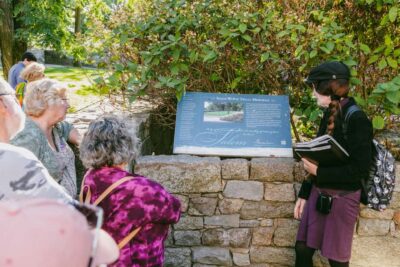
Meeting at 7 Church St and the walk to Charter Street
You start at 7 Church St, Salem, MA 01970. The end location is the Burying Point area at 51 Charter St, and the tour notes that this is about a 3-minute walk from the original starting area. That matters because it suggests a compact route overall, with minimal backtracking.
At the end, you also have the opportunity to walk through the Charter St Cemetery area. Even if you keep it brief, that last stretch is a nice way to let the story settle, because it’s a more reflective setting than the street corners.
This tour is also set up for easy logistics: it is near public transportation, it allows service animals, and it’s designed so most people can participate. If you have mobility concerns, the biggest thing to think about is simply the walking length across several stops during the 1.5-hour window.
Stop 1: 7 Church St orientation and setting the tone
The tour begins at 7 Church St for an introduction. This first stop is more than a meet-and-greet. It helps you understand the Salem witch trials in plain terms before you start connecting the story to specific buildings and corners.
I like tours that build context early because it changes how you read the streets. After a quick setup, the later stops feel like chapters you can follow instead of random landmarks.
A small practical note: because the tour is compact, arrive a couple minutes early so you’re not late to the orientation part. Once the group starts moving, it becomes a classic “stay with the pack” situation.
Stop 2: Turner’s Seafood and the idea of everyday Salem
Next up is Turner’s Seafood. On the surface, it’s a local food stop. In a witch trials tour, the point is different: you get a sense that this story did not unfold in a vacuum. Salem’s life—trade, travel, people coming and going—was happening right alongside the fear.
This stop can be surprisingly helpful if you want the history to feel human. You’re reminded that the events took place in a living town, not only in old portraits and plaques.
One consideration here is that there may be distractions if the area is busy. You may want to listen carefully when the guide is talking, because street-level activity can pull your attention.
Stop 3: the Washington & Church St corner and how rumors travel
The itinerary then moves to the corner of Washington & Church St. Corners like this matter because they are natural meeting points—places where people see each other, hear things, and decide what they believe.
This is where a good guide earns their pay by connecting street geography to social behavior. In Salem’s case, fear spreads when people think the threat is nearby and real, and public space makes that easier.
If you are the type who likes order and explanation, you’ll probably appreciate how guides can anchor the discussion to a specific spot instead of floating through the story. That focus is a big reason walking tours work so well for this subject.
Half an hour north, Salem keeps going. More trips
- Salem’s Best Ghost Tour★ 4.5 · 4,186 reviews
- Bewitched Walking Tour of Salem★ 5.0 · 1,895 reviews
- Mysteries and Murders of Salem Guided Night-Time Walking Tour★ 5.0 · 1,488 reviews
- The Salem Witch Walk★ 4.5 · 1,301 reviews
- 2.5-Hour Salem History & Sightseeing Guided Walking Tour★ 5.0 · 850 reviews
Stop 4: Lappin Park as a mental pause
Then you reach Lappin Park. Parks in history tours are useful because they give you a short breathing space to reset your brain between heavier points.
This stop can also help you zoom out. After you’ve heard about accusations and trials, it’s easier to understand the larger pattern when you’re not standing in the middle of street noise.
If you’re traveling with kids or you want the tour to stay upbeat, a pause like this helps. It’s also a good moment to check in with the group so you don’t lose the thread.
Stop 5: Merchant Inn and public life during tense times
Next is the Merchant Inn. Public-facing locations like inns and gathering places are often where networks form—who meets whom, who discusses what, and how quickly a rumor can turn into a belief.
This stop is the kind that can make the story feel less abstract. You start to see how everyday social spaces become critical during moments of uncertainty.
A practical tip: since the tour moves to buildings and landmarks, keep your phone handy for photos, but don’t let it turn into your focus. The landmarks are interesting, but the guide’s connections to the trials are what make this stop worth your time.
Stop 6: Old Towne Hall and the power of institutions
The itinerary continues to Old Towne Hall. This is the institutional side of the Salem story—where power, authority, and decisions get made.
When a guide explains how a town’s leadership and legal processes function, you’ll start to understand why accusations had consequences beyond personal fear. The witch trials weren’t only about superstition. They were also about systems.
This stop is often where the tour becomes most informative. If you only listen for the spooky parts, you might miss the part that gives the history its weight. Even with a lighter delivery, the institutional angle tends to land.
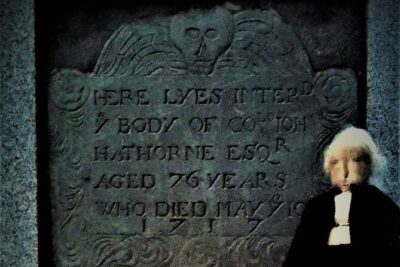
Stop 7: Old Burying Point and the reality of memory
You then reach Old Burying Point. Burial grounds are where you stop treating the story as a performance and start treating it as memory.
This stop adds emotional clarity without needing you to be in a museum. It’s not a room of artifacts; it’s a location that reminds you what the town chose to record and preserve.
A good guide will handle this respectfully, balancing facts with tone. If you want to learn while staying grounded, this is one of the most valuable stops on the route.
Stop 8: Salem Witch Trial Memorial and a final perspective
The last listed major stop is the Salem Witch Trial Memorial, noted as admission free. Memorials work best when you’ve already heard enough context to understand what is being remembered.
By the time you arrive here, you’ve traced the story across street corners and public landmarks. That makes the memorial feel like the closing argument of the tour, not a random photo stop.
You also end near the Burying Point area at 51 Charter St, with a chance to walk through the Charter Street Cemetery zone. If you have the time and energy, that extra minute or two can make the ending feel more complete, especially if you’re the type who likes to reflect for a moment rather than rush on.
The guides: Emily and Georgie’s mix of facts and fun
The tour’s personality is a major part of its appeal. The guide pair Emily & Georgie brings an upbeat local charm, and the storytelling style is clearly built to keep attention from drifting.
One thing I really value in this kind of historical walking tour is group control. In Salem, crowds can scatter people, but a strong guide can keep everyone together so you don’t miss key connections. Emily is specifically noted for maintaining energy and keeping the audience engaged.
The other standout is the language flexibility. The tour is offered in English, and the guides also provide a Spanish option. That makes it easier for mixed-language groups to stay unified—no one has to fall behind.
How to get the most out of the tour
A few practical moves will help you enjoy this more and stress less:
- Wear comfortable shoes. You’re walking between multiple stops in a short time.
- Bring water if you tend to get thirsty. Snacks are included, but Salem walking can add up fast.
- If you’re taking photos, do it during the guide’s pauses so you don’t miss the explanation.
- Keep expectations aligned: it’s a history route with a slightly spooky tone, not a full-length museum day.
Also, this is a tour where timing matters. If you’re tight on your schedule in Salem, the 1.5-hour format is a great way to cover the core sites without squeezing too many attractions into one day.
Who should book this tour?
You’ll likely love this if:
- You want a quick, structured way to connect Salem streets to the witch trial story.
- You like tours where the guide keeps energy up and the group stays together.
- You’re traveling with someone who prefers history with a lighter edge.
- Your group includes Spanish speakers and you want everyone to hear the main narrative.
You might think twice if:
- You dislike walking tours and prefer sit-down museum pacing.
- You want a strictly academic lecture with heavy reading, long stops, and minimal humor.
- You need a lot of downtime built in beyond the short pauses at each stop.
Should you book the History of Salem Witch Trials tour?
If your goal is to understand Salem’s witch trial story in a compact, practical way, this tour is a strong pick. The route focuses on key locations, the guides (Emily and Georgie) are set up to keep the experience lively, and the ticket includes small extras like snacks and tour photos that make the time feel worthwhile.
Just go in knowing it’s a walking experience with several stops in 90 minutes. If you’re okay with that, you’ll probably come away with clearer context and better “street memory” of Salem than you would from doing the same sites on your own.
FAQ
FAQ
Where does the tour start?
The tour starts at 7 Church St, Salem, MA 01970, USA.
Where does it end?
It ends at The Burying Point, 51 Charter St, Salem, MA 01970, USA. The end point is about a 3-minute walk from the original starting location.
How long is the tour?
The tour lasts about 1 hour 30 minutes.
How much does it cost?
The price is $25.00 per person.
What languages are offered?
The tour is offered in English, and the licensed guide can also provide the tour in Spanish.
Is there a maximum group size?
Yes. The experience has a maximum of 20 travelers.
What’s included in the ticket?
Snacks, tour photos, and a licensed guide (English/Spanish).
What is not included?
Private transportation, alcoholic beverages, and parking are not included.
Is there a ticketed admission cost at the memorial?
The Salem Witch Trial Memorial stop is listed as admission free.
Is the tour suitable for people with accessibility needs?
Most travelers can participate, and service animals are allowed. The tour does involve walking between stops, so comfort with walking is important.
Can I cancel for a refund?
Yes, you can cancel for a full refund if you cancel at least 24 hours in advance of the experience start time, and cancellations are free.
More of the Boston Ledger


The Witch City Docket
Salem, 1692 and After


New on the Boston Docket
- Private Walking Salem Legends Tour Professional Guide
★ 5.0 · 3 reviews - Pirates and Privateers Walking Tour with Real Pirates Admission
★ 4.5 · 3 reviews - Discover Salem’s History & Practice Authentic Witchcraft
★ 4.1 · 4 reviews - The Ghost Walk. Tortured Souls of Salem
★ 5.0 · 4 reviews - Cemetery and Witchcraft Trials Tour
★ 5.0 · 4 reviews
Salem Day Trips & Tours, compared.
 ★ 5.0History and Hauntings of Salem Guided Walking TourFrom $3614,564 reviews
 ★ 4.5Salem’s Best Ghost TourFrom $304,186 reviews
 ★ 5.0Salem Voodoo, Vampires, and Ghosts Guided Walking Tour1,931 reviews
 ★ 5.0Bewitched Walking Tour of SalemFrom $351,895 reviews
 ★ 5.0Satanic Salem Walking TourFrom $301,635 reviews
 ★ 5.0Mysteries and Murders of Salem Guided Night-Time Walking TourFrom $361,488 reviews
 ★ 4.5The Salem Witch WalkFrom $251,301 reviews
 ★ 5.0Wicked Awesome Tours: Witch Trial History and Salem Haunts!From $291,032 reviews
Browse the lists this tour appears in