
REVIEW · HAUNTED BOSTON WALKS
Boston After Dark Walking Tour
Boston at night tells different stories. This Boston After Dark walk turns familiar neighborhoods into a story stage, with crime, scandal, and strange accidents tied to real places. It’s a story-driven tour that goes beyond the usual plaques.
I especially like how the guides keep it conversational. When Beth and Mark are leading, the storytelling has humor, pace, and enough detail to keep you engaged without turning it into a lecture. The small group size (up to 15) also makes it easier to ask questions and react in the moment.
The main drawback to plan for is physical comfort: you’ll cover about 1.3 miles on occasionally uneven terrain, including cobblestones, some hills, and stairs. It’s not recommended for travelers with mobility issues, and it’s weather-dependent since it’s outdoors after dark.
In This Review
- Key points before you go
- Why this after-dark Boston walk feels different
- Meeting at City Hall Square and setting expectations
- Scollay Square at Government Center: Boston’s old red-light legend
- The West End: serial-crime stories and a case that stoked tensions
- Brinks Job Building: the kind of robbery that takes years to explain
- The Great Molasses Flood plaque and Copp’s Hill’s haunting pull
- North End after dark: immigrants, wartime bravery, and mob shadows
- Guides, humor, and why the small group size matters
- Price and value: is $30 worth two hours on foot?
- What to wear and how to survive the 1.3 miles
- Who this tour suits best
- Should you book Boston After Dark?
- FAQ
- FAQ
- How long is the Boston After Dark Walking Tour?
- How much does it cost?
- Where does the tour start and end?
- Is there transportation included?
- What kind of ticket do I need?
- Is it in English?
- Is the tour suitable for mobility issues?
- What happens if the weather is bad?
- Can I cancel for a full refund?
Key points before you go
- After-hours tone, not just “more history”: you’ll see Boston’s darker side when the streets feel quieter.
- True crime meets city lore: serial-killer rumors, gangster stories, and infamous cases are tied to real corners and buildings.
- Small group interaction: with a max of 15 people, you’re more likely to talk than just listen.
- Short stop-and-story pacing: quick walks between stops keep the flow moving for a 2-hour total.
- A mix of infamous and unexpected: from the Great Molasses Flood to a haunted cemetery, it’s not only murder cases.
- Ends in the North End: you’ll finish near food you’ll actually want to chase afterward.
Why this after-dark Boston walk feels different
Most Boston tours show you daytime highlights, then wrap up with a photo and a quick fact. This one changes the mood on purpose. When the sun goes down, places like Scollay Square and Copp’s Hill don’t feel like textbook locations. They feel like they belong to a story someone would warn you about—because the tour frames them that way.
I also like the way it refuses to stick to the standard “history tour” script. Instead of treating the city like a timeline, it treats Boston like a set of scenes: a specific block, a specific building, and a specific event that helps explain why the city earned its reputation. If you like true crime and macabre themes, that framing makes the walk feel fun and personal instead of heavy.
And it’s not all grim. You’ll still get plenty of normal Boston context—especially in the North End—so the darkness never swallows the whole evening.
Meeting at City Hall Square and setting expectations
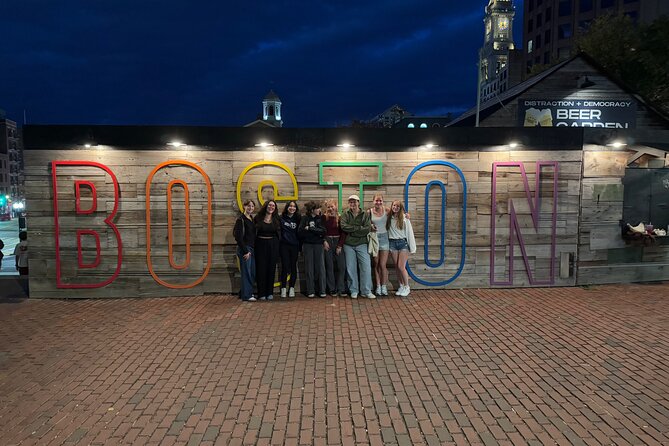
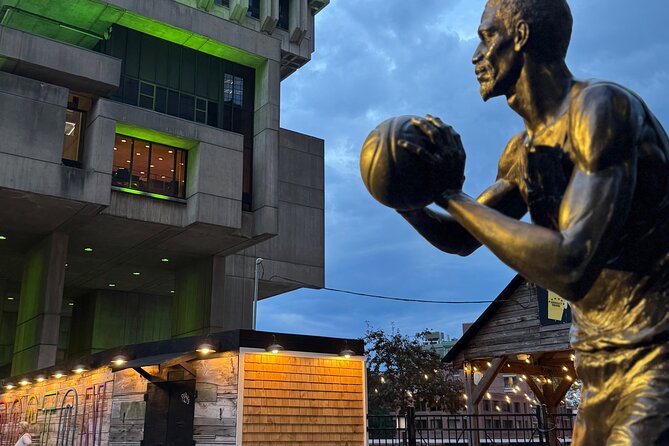
Your tour starts at the Bill Russell Statue in City Hall Square (1 City Hall Square, Boston, MA 02201). The walk ends near Bova’s Bakery at 134 Salem St in the North End, so you’re finishing in a lively neighborhood rather than back at your hotel or a random street corner.
Since it runs about 2 hours, you don’t need to treat this like a whole-day commitment. But you should treat it like a real nighttime stroll: dress for cooler air and uneven sidewalks, and wear shoes you trust on cobblestones and a few stairs. The route is about 1.3 miles total, and the terrain is occasionally rough.
Also, expect a guided walk only. There’s no transportation provided, so you’ll want to arrive on your own feet (or public transit, since it’s near public transportation).
The burying grounds stay open late. More Boston hauntings
Scollay Square at Government Center: Boston’s old red-light legend
The first stop is Government Center, where you’ll talk about Scollay Square—Boston’s original red-light district and a hub for some of the city’s wildest stories. This is where the tour’s tone clicks into place. You’re not just hearing crime as trivia. You’re hearing it as part of why Boston developed certain reputations.
What I like here is the framing. Scollay Square isn’t presented as a sensational gossip spot; it’s presented as an early chapter in how the city worked, who lived where, and how public space can carry secrets. Even if you’re not a true-crime fanatic, this stop helps you see why later stories in Boston make sense.
One practical consideration: this is a short stop (about 15 minutes), so come ready to listen fast. If you’re the type who likes to read every nearby plaque on your own, you might find you’re standing still for less time than you’d expect.
The West End: serial-crime stories and a case that stoked tensions
Next you’ll move into the West End for a longer stop (about 30 minutes). This is where the tour leans into the darker narratives: tales connected to female serial killers, stories about Boston’s most famous gangster, and the harrowing murder of a pregnant woman that reportedly set racial tensions ablaze.
This stop matters because it shows how crime becomes part of a city’s social mood. The tour doesn’t only mention what happened; it ties the event to how neighborhoods felt and how communities responded. That’s the difference between a list of cases and a walk that explains the city.
The downside is also tied to the theme. If you want a light, spooky vibe with zero heavy material, this stop may feel too real. The tour is built for true crime and macabre curiosity, so keep that expectation in mind before you commit.
Brinks Job Building: the kind of robbery that takes years to explain
Then comes a tight stop (about 5 minutes) at the Brinks Job Building. This is the scene for one of the most famous robberies in U.S. history—at the time considered the largest robbery in the country—and it reportedly went unsolved for six years.
I like the way this slot is handled as a quick burst of big-story energy. Even if you’re not learning minute-by-minute details, the case concept hits hard: a bold crime, a big score, and an extended mystery window. That structure works well in a walking tour format because it keeps the pace moving while still giving you something memorable.
This stop is brief, so focus on the story beats the guide gives you rather than trying to study the surroundings. The building becomes a reference point for the bigger narrative.
The Great Molasses Flood plaque and Copp’s Hill’s haunting pull
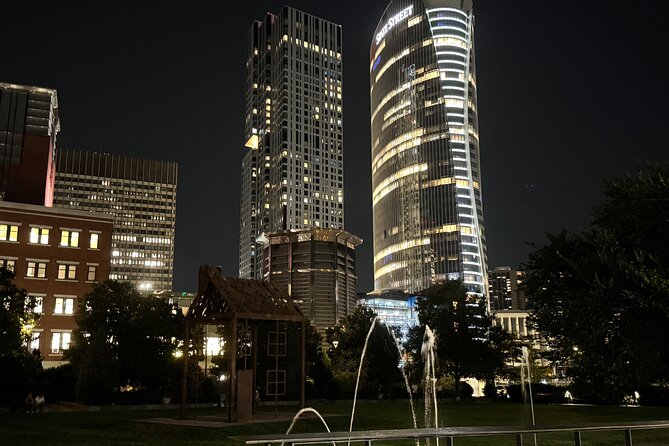
After the heist stop, you’ll hit two more short stops, each about 5 minutes: the Great Molasses Flood plaque, then Copp’s Hill Burying Ground.
At the Great Molasses Flood plaque, you’ll hear about one of the bizarre industrial accidents in American history. The point of the stop isn’t only that it’s strange; it’s that Boston had industrial risk long before modern safety standards. It’s a reminder that accidents can shape a city just like crime does.
Then you’ll turn to Copp’s Hill Burying Ground, widely known as one of Boston’s most haunted locations. Here, the tour explains why it’s seen as spooky and tells stories about who haunts this historic cemetery. This is a great breather from the heavier crime material, because it shifts from criminal investigation to folklore and fear—still grounded in place, but handled more like a story you’d want to tell later.
If you don’t like anything supernatural, you might still enjoy the practical angle: haunted reputations often come from real community memory, local legend, and the way a space gets spoken about over time.
Boston was built for walking. More routes
- Boston: Freedom Trail History Small Group Walking Tour★ 5.0 · 6,450 reviews
- Harvard University Campus Guided Walking Tour★ 4.5 · 3,632 reviews
- Boston Freedom Trail Walking Tour with Costumed Guide★ 4.5 · 2,531 reviews
- The Full Revolutionary Story Epic Small Group Boston Walking Tour★ 5.0 · 2,356 reviews
- Boston’s Freedom Trail: A Revolutionary Walking Tour★ 4.9 · 1,748 reviews
North End after dark: immigrants, wartime bravery, and mob shadows
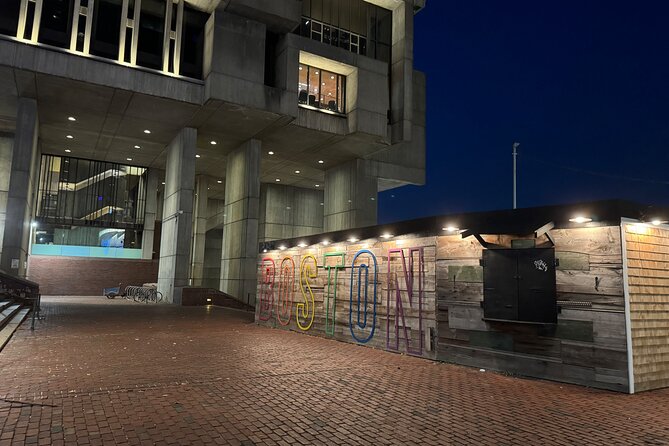
The final segment is in the North End, and it’s one of the most interesting parts because it balances the evening’s darkness with real neighborhood texture. You’ll get about 30 minutes here, walking through the area known for its Italian immigrant history and food scene.
The tour connects the North End story to more than immigration lore. It also brings in World War 2 experiences tied to brave women who lived here during the war, plus mentions of dangerous mobsters who roamed the streets. That blend can work well because the neighborhood isn’t reduced to one theme. It’s people, community life, and the underworld threads that sometimes ran alongside normal days.
This is also where you benefit from finishing near Bova’s Bakery. After the last story, you’re not stuck wondering where to go. You’re already in a place where grabbing a bite makes sense.
Guides, humor, and why the small group size matters
The tour’s biggest strength is how it’s delivered. The best moments come from the guide’s ability to keep the tone moving—dark topics, but not a drag. Beth and Mark were singled out for being engaging, with tons of historical facts and a funny sense of humor that keeps the group relaxed while the stories stay intense.
That’s not small stuff. True crime stories can tip into either dry facts or spooky sensationalism. A good guide steers it toward something usable: a clear sense of place, enough context to understand why people believed what they believed, and an atmosphere that feels like you’re walking with someone who actually cares.
With a maximum of 15 people, you’re less likely to fade into the crowd. You can ask questions, react to points in the story, and hear how others interpret what they’re seeing.
Price and value: is $30 worth two hours on foot?
At $30 per person for about two hours, this tour lands in the middle of the pack for guided walking experiences in a big city. What makes it feel like good value is the combination of things you’re paying for:
- A guided route (not just a self-guided list)
- Story-driven format with true crime and macabre themes
- No need for extra paid admissions at the listed stops
- A small group size that improves the quality of the interaction
If you’re already planning a couple of “standard” history stops, this works because it adds a different lens. It’s not trying to replace the Freedom Trail. It’s trying to show you the Boston stories that live in the shadows of the famous ones.
If you hate crime themes or you want purely educational museum-style content, the value depends on your tolerance for darker subjects. But for the right audience, $30 for a guided two-hour night walk with a tight story structure feels fair.
What to wear and how to survive the 1.3 miles
You’ll walk about 1.3 miles on occasionally uneven terrain. Cobblestones, some hills, and stairs are part of the picture, which matters for comfort more than distance. This is why the tour isn’t recommended for travelers with mobility issues.
My practical suggestion: wear shoes with good grip and plan for cool night air. If you get cold easily, bring a layer. Since it’s near public transportation, you can usually build it into a broader evening plan without fighting traffic or rideshare logistics.
Also, bring your phone. The tour uses a mobile ticket, and it’s helpful if your screen brightness is easy to read under street lighting.
Who this tour suits best
This is ideal if you’re one of these types:
- A true crime fan who likes cases tied to real streets
- A history buff who wants stories you won’t get from basic markers
- Someone who enjoys macabre themes with a guided, friendly tone
- People who like small groups and conversation instead of headsets and silence
It’s not ideal if you:
- Need a fully accessible route (it’s not recommended for mobility issues)
- Want an all-day outdoor walking plan with long breaks
- Prefer cheerful sightseeing only
The tour is offered in English and allows service animals, so for many visitors, it’s straightforward to join and follow.
Should you book Boston After Dark?
If you like your Boston stories a little darker—and you enjoy a guide who can keep the pace lively—this is a strong pick. The mix of Scollay Square, West End crime tales, the Brinks Job case, the Great Molasses Flood, Copp’s Hill haunting lore, and a North End finish makes the night feel like a complete arc instead of disconnected stops.
I’d book it if you’re traveling with a curiosity streak. This tour rewards people who like to look at the city and ask what else happened there besides the postcard version.
If you want quiet, gentle history with minimal grim content, you might find it heavy. But if that dark-and-curious vibe sounds like your kind of Boston, this $30, up-to-15-person night walk is an easy yes.
FAQ
FAQ
How long is the Boston After Dark Walking Tour?
It runs about 2 hours.
How much does it cost?
The price is $30.00 per person.
Where does the tour start and end?
It starts at the Bill Russell Statue in City Hall Square (1 City Hall Square, Boston, MA 02201) and ends near Bova’s Bakery at 134 Salem St, Boston, MA 02113.
Is there transportation included?
No. It’s a walking tour, so you’ll go on foot and handle getting there yourself.
What kind of ticket do I need?
You’ll use a mobile ticket.
Is it in English?
Yes, it’s offered in English.
Is the tour suitable for mobility issues?
It’s not recommended for travelers with mobility issues. The walk covers about 1.3 miles on occasionally uneven terrain, including cobblestones, some hills, and some stairs.
What happens if the weather is bad?
This experience requires good weather. If it’s canceled due to poor weather, you’ll be offered a different date or a full refund.
Can I cancel for a full refund?
Yes, you can cancel up to 24 hours in advance for a full refund. If you cancel less than 24 hours before the start time, the amount paid is not refunded.
On Foot Through Old Boston


More of the Boston Ledger

What Rattles Around Old Boston


New on the Boston Docket
- Boston to Newport Mansions Private Day Trip
★ 5.0 · 3 reviews - Boston Massachusetts Private Photography Tour
★ 5.0 · 3 reviews - Homemade Dumplings 101 in Boston
★ 3.5 · 3 reviews - Self-Guided Audio Tour of Boston North End
★ 4.5 · 3 reviews - Old Boston: Beacon Hill & Back Bay Walking Tour in French
★ 4.7 · 3 reviews
Haunted Boston Walks, compared.
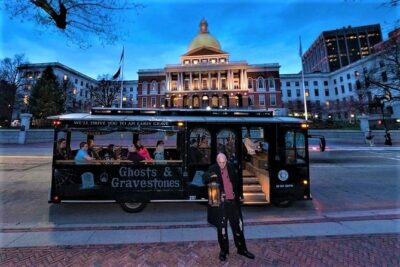 ★ 4.5Boston Ghosts and Gravestones Trolley TourFrom $472,413 reviews
 ★ 4.5Ghosts of Boston Night-Time Walking Tour267 reviews
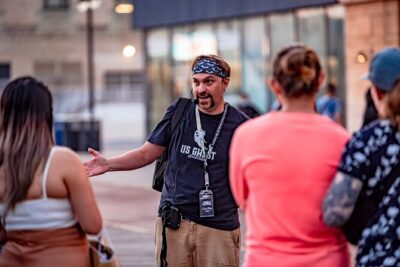 ★ 4.0Underground Boston Ghost Tours: Gravestones & GunpowderFrom $32249 reviews
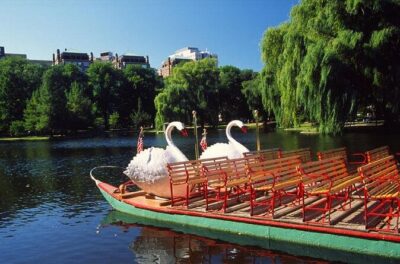 ★ 4.5Boston “Death and Dying” Walking Ghost Tour223 reviews
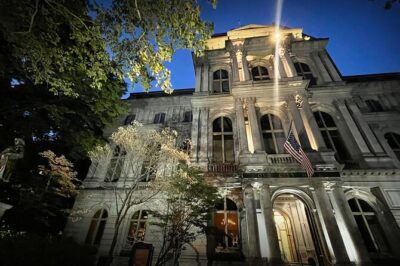 ★ 4.5Haunted Boston’s Historic Streets Walking Guided TourFrom $34184 reviews
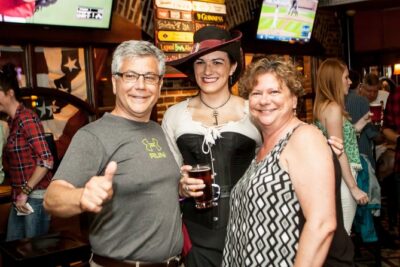 ★ 4.5Haunted Boston Booze and Boos Ghost Walking TourFrom $36155 reviews
 ★ 4.3History & Haunts Guided Ghost TourFrom $27154 reviews
 ★ 4.5Haunted Boston Ghost Tours133 reviews
Browse the lists this tour appears in