
REVIEW · PLYMOUTH & MAYFLOWER DAY TRIPS
From Boston: Quincy, Plymouth, and Mayflower II Day Trip
Presidents, Pilgrims, and sea breezes in one day. You’ll start in Quincy at the birthplaces of John Adams and John Quincy Adams, then cruise along the coast to Scituate for the lighthouse and the story behind the American Army of Two. The day ends in Plymouth with time at Plymouth Rock and two major 1620 stops—Plimoth Patuxet and Mayflower II.
What I like most is how smoothly the tour pairs big American stories with real places you can stand in. The second win is the live guide narration—in the best moments, it turns names and dates into something you can actually picture, including practical tips for where to eat and what to notice.
One thing to think about: it’s an 11-hour group day, and it’s not framed as a gentle sightseeing stroll the whole time. If you have back trouble or you hate tight seating and limited storage, you may want to consider that before you book.
In This Review
- Key things that make this day trip work
- A single-day route that keeps history from feeling like homework
- Boston pickup: the easy start that sets the tone
- Quincy: meeting the Adams presidents in the place they began
- Scituate and Cohasset coast: lighthouse views and real local storytelling
- Heading to Plymouth: built-in sightseeing without the stress
- Plymouth Rock: the quick-hit landmark you shouldn’t skip
- Plimoth Patuxet and Mayflower II: why the pair is worth the ticket
- Plimoth Patuxet: the 1620 setting
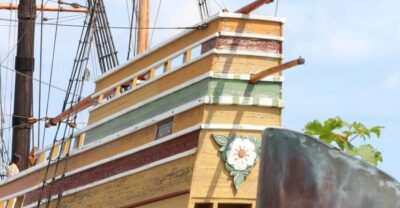
- Mayflower II: the ship you can picture
- The practical benefit: fewer ticket headaches
- Pace, food breaks, and when to wander on your own
- Comfort and who should (or shouldn’t) choose this style of tour
- Value: is $165 a fair deal for this much ground?
- Should you book this Quincy to Plymouth day trip?
Key things that make this day trip work

- Quincy’s Adams birthplaces: see where two U.S. presidents were born before you head to the coast
- Scituate Lighthouse stop: coastal views plus time to take in one of the area’s signature landmarks
- American Army of Two story: you’ll hear the local history behind that unusual nickname
- Plymouth Rock + Mayflower II: the emotional headline moment plus admission to the ship itself
- Plimoth Patuxet admission included: one ticket covers the 1620 site interpretation and exhibits
- Minibus comfort for a long day: air-conditioned ride, plus snacks and bottled water along the way
A single-day route that keeps history from feeling like homework

This tour is built for people who want “the highlights” without spending your whole vacation planning. The route is linear: Boston down to Quincy, then along the South Shore coast toward Plymouth. That matters because it keeps your day moving and saves you the headache of juggling parking, tickets, and multiple public-transport transfers.
You’re also not just doing museum-to-museum. You get coastal scenery built into the schedule, so it doesn’t feel like you’re stuck inside the whole time. And because the tour is fully narrated, the guide ties each stop to the larger story—Adams-era America to early Plymouth-era America—so the day feels like one connected timeline instead of a random checklist.
Boston pickup: the easy start that sets the tone
The day begins with pickup from downtown Boston—handled from five locations—in an air-conditioned, latest-model minibus. You’re told to wait in the hotel lobby about 10 minutes before your scheduled pickup time, which is one of those small details that prevents a lot of stress later.
This is the kind of setup you’ll appreciate if you’re traveling solo or you don’t want to drive. You’ll also have a guide onboard from the start, so the ride isn’t dead time. Snacks and bottled water are included, which helps when you’re out for most of the day.
Rain or shine is the plan. If the weather turns, one tip from real-world experience: be ready with a light layer, and do expect that umbrellas may be available through the group logistics when needed.
Pilgrim country runs deeper than the Rock

Quincy: meeting the Adams presidents in the place they began
Quincy is more than a quick photo stop here. You’ll visit the birthplaces of John Adams and John Quincy Adams, which gives you a clear starting point for how Massachusetts shaped two presidential generations.
Why this stop is valuable: it puts “government history” into a walkable, local context. Instead of learning about the Adamses as distant names in a textbook, you see their roots before you head toward Plymouth. It also gives you a nice contrast—Quincy feels civic and modern-adjacent, while Plymouth is raw beginnings.
A practical note: because this is part of a longer day, you’ll likely want comfortable shoes and a small bag. You won’t want to lug anything bulky around town.
Scituate and Cohasset coast: lighthouse views and real local storytelling
After Quincy, the route turns south along the coastline—passing through Cohasset and arriving at Scituate. This portion is one of the biggest quality-of-life wins on the tour. You get the New England coast vibe without having to plan a separate route.
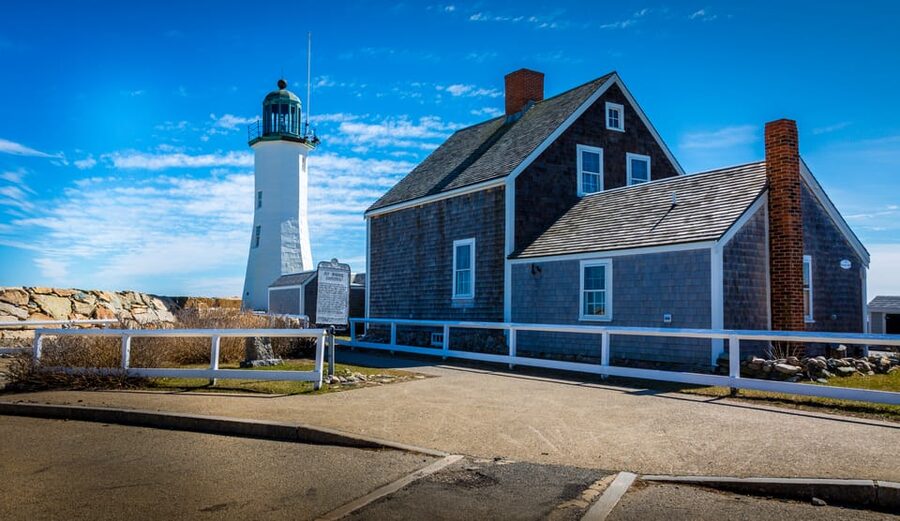
In Scituate, you can visit the Scituate Lighthouse, and you’ll have time built in for the lighthouse itself—not just a drive-by. If you enjoy coastal landmarks, this is the moment to slow down a bit and actually look. The guide narration helps you connect what you’re seeing to the maritime setting that shaped the region.
Then comes the part that many people probably won’t get on a standard “drive through Plymouth” day: you’ll hear the history behind the American Army of Two. The tour description doesn’t spell out the story in advance, but the key value is that it’s memorable local history, not the same generic facts you’ve already read.
Heading to Plymouth: built-in sightseeing without the stress
Between Scituate and Plymouth, the tour keeps you moving along the coast. You’ll see coastal towns, waterfront mansions, and lighthouses from the bus as you travel. For many people, this is a sweet spot: you get variety and photo opportunities without the effort of constantly getting in and out.
One caution: since this is a group ride, don’t count on storage space for big bags. If you bring a large suitcase or expect to keep lots of gear at your feet, you may end up frustrated. Keep it light—day bag only—and you’ll have a smoother time.
Plymouth Rock: the quick-hit landmark you shouldn’t skip

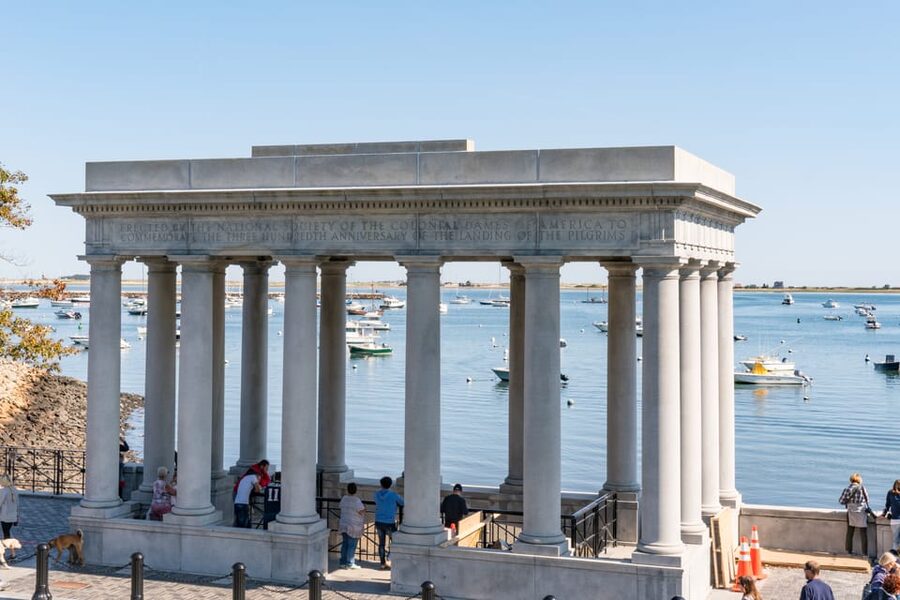
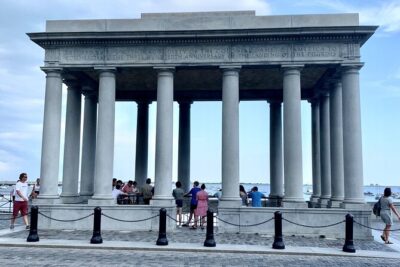
When you arrive in Plymouth, you’ll visit Plymouth Rock. It’s a famous stop, but it’s also one of those places you should take seriously for what it represents. Even if you’re not a reenactment fan, this is where the emotional “origin story” becomes physical.
The tour keeps it efficient: you’re not stuck waiting around for long stretches. You’ll also have the museum and ship experiences right after, which prevents Plymouth Rock from feeling like a shallow checkbox. Think of it as the headline moment that you’ll contextualize through the next two stops.
- Boston Duck Boat Sightseeing City Tour with Cruise Along Charles River★ 4.5 · 9,378 reviews
- Boston: Freedom Trail History Small Group Walking Tour★ 5.0 · 6,450 reviews
- Boston Hop-On Hop-Off Trolley Tour with 13 Stops★ 4.5 · 5,576 reviews
- Boston Duck Tour: The Original and World-Famous★ 4.6 · 3,935 reviews
- Harvard University Campus Guided Walking Tour★ 4.5 · 3,632 reviews
Plimoth Patuxet and Mayflower II: why the pair is worth the ticket

This tour includes admission to both Plimoth Patuxet and Mayflower II, and pairing them is the whole reason the day feels complete.
Plimoth Patuxet: the 1620 setting
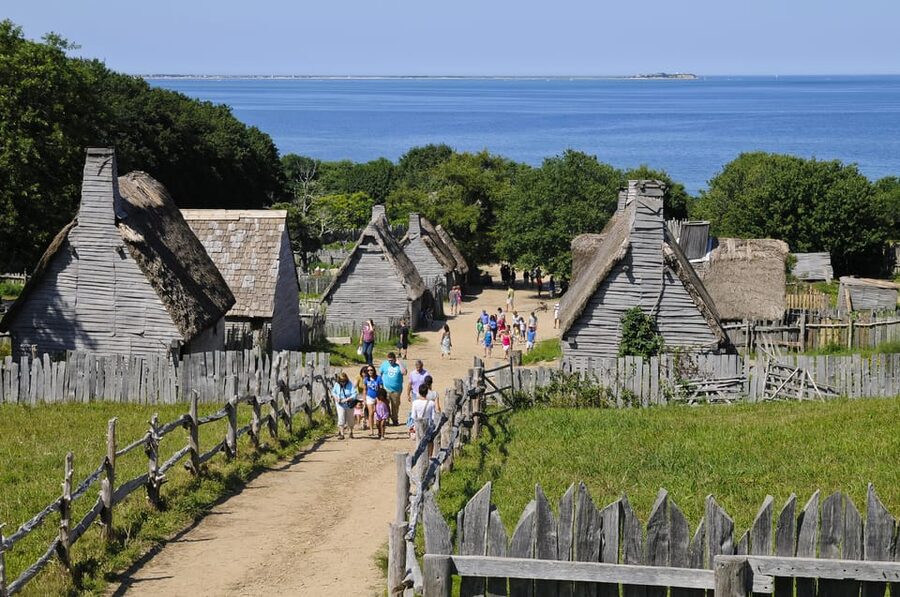
Plimoth Patuxet is your 1620-focused foundation. The tour frames it as a chance to learn about the site where New England was first established in 1620. This is where you’re set up to understand daily life, community layout, and the lived reality behind the founding story.
In reviews, one recurring favorite is how well this stop fits the “I want to see it, not just hear it” mindset. If you like museums that feel like environments you can walk around, you’ll probably enjoy the time here.
Mayflower II: the ship you can picture
Then you shift from environment to object: Mayflower II. Admission is included, and you’ll appreciate having skip-the-ticket-line built in. That matters because it protects your time. With a full day schedule, every minute you don’t waste in a queue gives you more actual experience time once you’re inside.
Mayflower II helps you visualize the scale and physical reality of the journey, which makes Plymouth Rock feel less symbolic and more specific.
The practical benefit: fewer ticket headaches
Because both admissions are included, you’re not juggling ticket apps or guessing entry times. For many visitors, that alone can be the difference between a relaxed day and a stressful one.
Pace, food breaks, and when to wander on your own
The tour is designed to be an all-day education without feeling like a full-on marathon. You’ll return to the bus at the end for the trip back to Boston, and the pacing is built around allowing time for independent exploring at key stops.
Food-wise, you’re not promised a formal sit-down meal in the tour description. What you will have is time in Plymouth to handle lunch on your own. Here’s my practical advice: plan for a long lunch window, not a 20-minute snack, because that’s usually how these days work out. If you’re hungry, you’ll enjoy the coast more if you eat before you overheat or get cranky.
Also, if weather is rough, don’t underestimate how much rain slows walking and museum time. If it’s pouring, you may move a bit slower through outdoor areas like the lighthouse viewing points, so wear a layer you can adjust.
Comfort and who should (or shouldn’t) choose this style of tour
This is a group tour in an 11-hour format. That can be great—if you’re fine sharing the day and letting someone else handle the driving and narration. It’s less ideal if you need a quiet, flexible schedule or you have mobility or comfort limits.
The tour is not suitable for children under 5 and not suitable for people with mobility impairments, based on the tour’s own guidance. Also, one real-world note from a past participant: the minibus setup can feel uncomfortable for guests with back issues, and there may be limited storage. If you fall into that category, you’ll want to think carefully before booking.
If you do want a history-filled day with minimal planning, this works well. It’s especially good for:
- First-timers in the Boston-to-Plymouth corridor
- People who want both “Adams” and “1620” in one trip
- Anyone who loves a strong storyteller in the driver’s seat—some guides named in past trips include David and Kristin, and the common thread is the storytelling style
Value: is $165 a fair deal for this much ground?
At $165 per person for an 11-hour day, the question isn’t just the price—it’s what you’re buying. You’re not only paying for transportation and narration. You’re also getting admission to both Mayflower II and Plimoth Patuxet, plus the benefit of skip-the-ticket-line.
In past feedback, people specifically called out how valuable the included museum tickets feel compared with buying separately. Even if you don’t treat the pricing as a strict math exercise, the value logic is simple: two admissions plus guided narration can easily exceed the cost when you factor in time and stress saved.
So if you were going to do these stops anyway, this tour often makes sense. If you mainly want just one site, you might find you’d rather pick a different single-attraction plan.
Should you book this Quincy to Plymouth day trip?
I’d book this if you want a single, guided day that hits major Massachusetts history nodes: Adams in Quincy, coastal Scituate, then Plymouth’s founding story with both Plimoth Patuxet and Mayflower II included. It’s structured to be both informative and manageable, and the onboard narration is a big part of why it feels worth the effort.
I’d hesitate if:
- You have significant mobility limitations that make group walking difficult
- You know you’ll struggle with small-vehicle seating or limited storage
- You dislike long days and would rather split Quincy and Plymouth into separate trips with more downtime
If you’re somewhere in the middle—curious, time-limited, and willing to go with the flow—this is a strong way to use one day well.
More of the Boston Ledger




Down to Plymouth



New on the Boston Docket
- Boston to Newport Mansions Private Day Trip
★ 5.0 · 3 reviews - Boston Massachusetts Private Photography Tour
★ 5.0 · 3 reviews - Homemade Dumplings 101 in Boston
★ 3.5 · 3 reviews - Self-Guided Audio Tour of Boston North End
★ 4.5 · 3 reviews - Old Boston: Beacon Hill & Back Bay Walking Tour in French
★ 4.7 · 3 reviews
Plymouth & Mayflower Day Trips, compared.
 ★ 5.0Boston to Plymouth Day-Trip including Quincy, Plimoth Patuxet and Mayflower IIFrom $165407 reviews
 ★ 4.4From Boston: Cape Cod and Plymouth Day TourFrom $15921 reviews
 ★ 5.0Plymouth half day private tour from BostonFrom $6957 reviews
 ★ 5.0Plymouth & South Shore Full Day Private Tour from BostonFrom $9953 reviews
Browse the lists this tour appears in