
REVIEW · WALKING TOURS
Building Blocks of Boston : Downtown Walking Tour
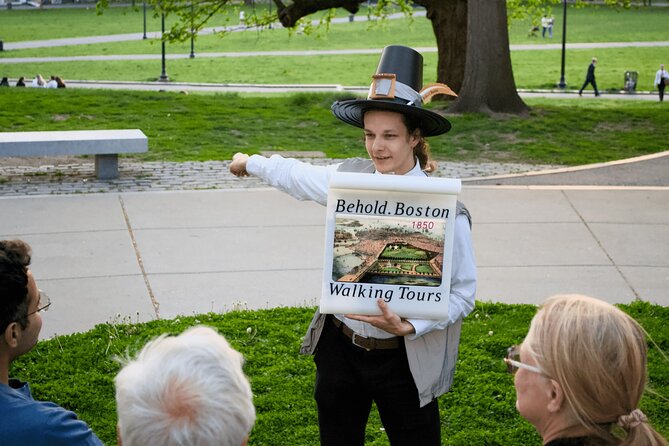
Boston history hits different when it’s explained step by step. I loved Arty’s calm, detailed storytelling and the UltraHD Scroll visuals that bring each corner to life. The only real catch is you’re walking for about two hours, so comfortable shoes and good weather matter.
You’ll cover major downtown anchors like Boston Common, Back Bay, Downtown Crossing, South Station, and the Old State House in a small group (max 16 people). The built-in 10-minute pause with restrooms and A/C is a nice reset, especially in warmer months.
If you want Boston’s landmarks with context you can actually use, this is a smart pick. You end at 11 Congress St, so it’s easy to keep exploring without backtracking.
Key moments and why they matter
- Boston Common origins: you’ll connect 1630-era Boston to the people shaping it early on
- A Back Bay lesson on city change: learn what it meant when it was literally a bay
- The Embrace and MLK meeting story: history that’s personal, not just dates and names
- Park St Church and early subway ties: why this area mattered for moving people
- Downtown Crossing’s Burnt District: see how a fire reshaped the city’s layout
- South Station transportation evolution: rail, highways, tunnels, and waterfront changes in one stop
In This Review
- A Boston downtown walking tour that makes big landmarks feel personal
- Where you start (and why the route shape is smart)
- Boston Common: the 1630 starting point that sets the tone
- Boston’s Soldiers and Sailors Monument: symbols, Civil War meaning, and a view cue
- Back Bay as a former bay: learning the city’s transformation
- The Embrace and MLK’s Boston connection: a human story in public art
- Park St Church, the old tallest-in-America claim, and the first subway connection
- Downtown Crossing and the Burnt District: how a fire changed city life
- Winthrop Square break: fountains, the Great Hall, and how writing influenced Boston
- South Station: transportation evolution and the story behind Charlie
- Post Office Square and Old State House: street logic, symbol changes, and time capsules
- The guide, the visuals, and the break: what the included extras really add
- Price and value: why $29.40 can feel fair
- Who should book this tour (and who might skip it)
- Should you book Building Blocks of Boston: Downtown Walking Tour?
- FAQ
- How long is the downtown walking tour?
- How much does the tour cost?
- What language is the tour offered in?
- Where does the tour start and end?
- What’s included in the price?
- Is admission required for the stops?
- Is there a weather requirement?
- How large are the groups?
A Boston downtown walking tour that makes big landmarks feel personal
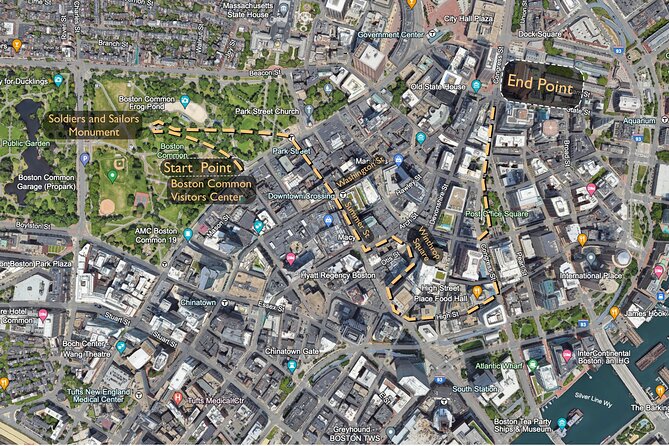
Boston can be a lot of things at once: college-town swagger, old brick-and-steeple gravity, and modern movement squeezed into narrow streets. What I like about this downtown walking tour is that it treats the city like a story you can follow on foot. You start with Boston Common, then work your way through the areas that became the city’s commercial and transportation brain.
Two things made it especially effective for me. First, Arty’s delivery is patient and easy to follow. He doesn’t rattle off facts at you; he connects the dots between landmarks so the whole walk feels coherent. Second, the UltraHD Scroll adds restored photographs, movies, and sounds that match where you are. It’s not just “look at this.” It’s more like, “Here’s what this spot looked like when the city was changing.”
The one consideration: it’s a walking tour. Even though many stops are short, you still need to be comfortable walking for roughly 2 hours and 5 minutes. And since the experience requires good weather, you’ll want to check conditions before you go.
Where you start (and why the route shape is smart)
Meeting at 139 Tremont St sets you right in the center of the downtown grid. And ending at 11 Congress St means you finish near more public transit and more options for food and browsing. You also get a bit of “open-city” walking: wide sidewalks near the big anchors, then narrower streets as the route tightens around historic cores.
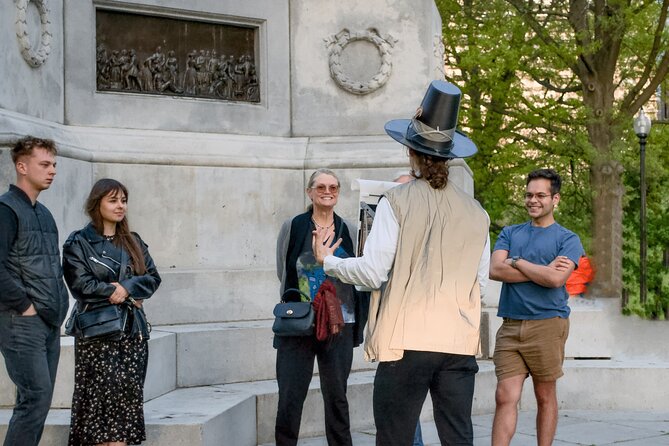
Group size matters for a tour like this. With a maximum of 16 travelers, you’re not just stuck behind a curtain of people. You can listen, look up at details on buildings, and still take photos without a constant traffic jam of bodies.
Also keep in mind: it’s offered in English, and you’ll get a mobile ticket plus a digital reference guide “for keeps.” That guide is useful if you want to revisit the main themes later, or if you’re the type who plans your next day’s sightseeing while dinner is cooling down.
Boston Common: the 1630 starting point that sets the tone
Boston Common isn’t just a park where people meet. It’s a starting line. When you’re standing there, it’s easy to forget how early the city began, or how long that early settlement influenced everything that followed.
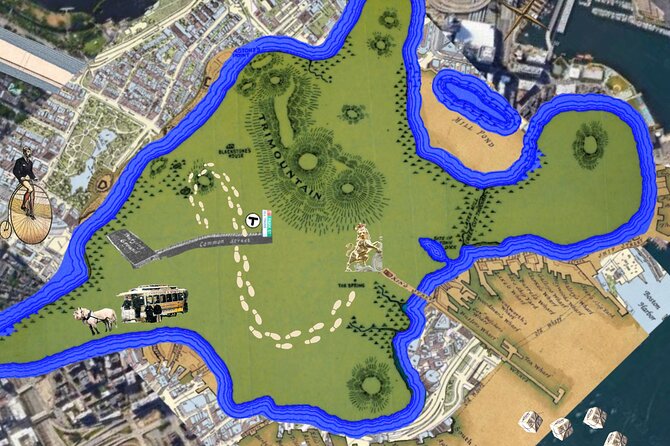
At this first stop, you get a quick origin-focused story: Boston’s beginnings in the 1630s, a sense of who was already on the land, and how daring voyages helped shape what came next. You’re basically priming your brain for the rest of the tour: instead of seeing downtown as random buildings, you start seeing it as layers.
This is one of the best ways to do Boston Common. If you only walk through the park on your own, you might miss the “why now” connection. With a guide, the park becomes a reference point for the entire city’s development.
Practical note: the stop is about 15 minutes, and admission isn’t required. That means you can stay oriented early without feeling like you’re paying for logistics.
Boston was built for walking. More routes
Boston’s Soldiers and Sailors Monument: symbols, Civil War meaning, and a view cue
From Boston Common, you move into a viewpoint-and-meaning moment at the Boston Soldiers and Sailors Monument. This isn’t just a big memorial to stand next to and then forget. You’ll learn how the monument’s symbols connect to the people who helped establish Boston, and you’ll get a sense of the bigger city geography from nearby sightlines.
One reason this stop works is that it bridges two things: solemn memorial art and practical orientation. Once you understand what to look for here, you’ll spot more “intent” in the rest of the route. Boston’s memorials aren’t isolated objects; they’re part of the urban story.
And you’ll also get an excellent view into Back Bay. Even if you don’t fully “get” Back Bay yet, this preview helps. It’s like seeing the set before the scene.
Back Bay as a former bay: learning the city’s transformation

Then comes one of the most Boston-specific lessons on the walk: Back Bay used to be a bay. That sounds simple, but it changes how you interpret what you see. You start noticing why the neighborhood looks the way it does, and why people settled here once the land was built up.
You’ll see how the area was filled in and then developed into a neighborhood for business and residents. The point isn’t just the fact of engineering. It’s what engineering enabled: commerce, housing, and an urban layout that became part of Boston’s identity.
A good walking tour doesn’t just name neighborhoods; it explains why they became neighborhoods. This stop does that. It also gives you an easy way to connect architecture you notice on the street with the land-use decisions that made it possible.
The Embrace and MLK’s Boston connection: a human story in public art
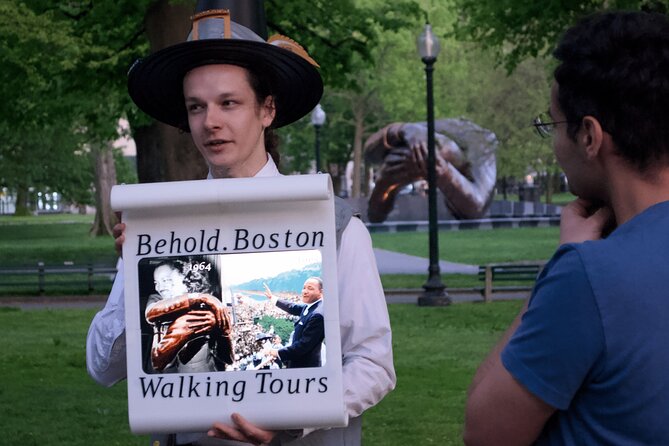
Next you’ll head to The Embrace, a sculpture tied to Dr. Martin Luther King Jr. It’s a short stop—around 5 minutes—but it lands because it’s more personal than many monument stops.
You’ll hear the story that inspired the sculpture, including how MLK met his wife, Coretta Scott, in Boston while studying at Boston University. That detail matters. It turns “a sculpture” into “a memory,” and it helps you understand why Boston keeps certain stories in view.
If public art is one of your travel interests, this is a high-payoff moment. The time is short, but the meaning is clear.
Park St Church, the old tallest-in-America claim, and the first subway connection
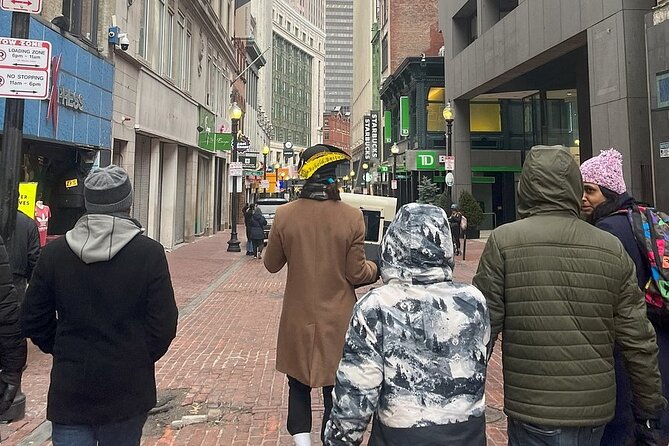
At Park St Church, you’ll learn about a few layers that make this spot important: it was the (former) tallest building in America, it’s connected to America’s first subway, and it sits near one of the busiest streets in Boston.
This is one of those stops where the visual reality on the ground (traffic, crowds, street energy) collides with the historic past. The guide’s job here is to help you hold both at once: the modern movement you feel today and the early infrastructure that made movement easier back then.
You also get a fast lesson in why transit matters for downtown. Streets get busy because people need to get places fast, and Boston’s transit story starts early. When you learn that the first subway connection is tied to this area, the city’s density makes more sense.
If you’re into architecture or infrastructure, you’ll probably find yourself looking up more here than you expected.
- Boston Duck Boat Sightseeing City Tour with Cruise Along Charles River★ 4.5 · 9,378 reviews
- Boston: Freedom Trail History Small Group Walking Tour★ 5.0 · 6,450 reviews
- Boston Hop-On Hop-Off Trolley Tour with 13 Stops★ 4.5 · 5,576 reviews
- Boston Duck Tour: The Original and World-Famous★ 4.6 · 3,935 reviews
- Harvard University Campus Guided Walking Tour★ 4.5 · 3,632 reviews
Downtown Crossing and the Burnt District: how a fire changed city life
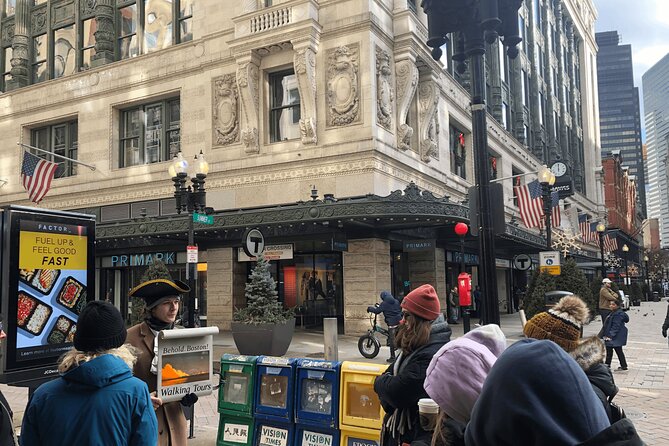
Downtown Crossing is one of Boston’s big shopping and crossing zones now. But the story you’ll hear reframes the area.
You’ll talk about downtown’s transformation across multiple centuries and specifically the Burnt District, the name given after a devastating fire. That fire detail isn’t just trivia. It explains why certain urban patterns exist where they do, and why city growth often comes after disruption.
This stop is about 25 minutes, which signals you’re not just “passing through.” You’re absorbing a longer context lesson that helps connect the streets you walk with the events that shaped them.
Drawback to consider: because the area can be active, you’ll want to keep your focus on the guide and the key points. If you drift too far for photos, you might lose the thread of the explanation.
Winthrop Square break: fountains, the Great Hall, and how writing influenced Boston
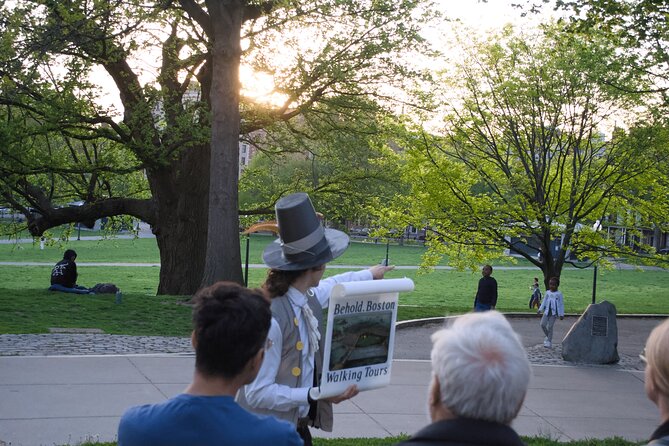
After the longer Downtown Crossing segment, you get a break at Winthrop Square. This is your around 10-minute reset with fountains and the brand new Great Hall in the Winthrop Center.
What I like is that the tour doesn’t treat the break as wasted time. On the walk there, you’ll talk about education and writings that influenced Bostonians and beyond the city. That means the pause isn’t just about water and restrooms—it’s a shift in how you interpret what you’re seeing.
The fountains help your eyes reset after street-level intensity. And the Great Hall gives you a modern counterpoint to the historic stops. It’s a good reminder that Boston isn’t stuck in one era; it keeps building over older layers.
If you’re planning photos, this is a solid point to steady your hands and grab a quick snapshot before you move into the transport-heavy finish.
South Station: transportation evolution and the story behind Charlie
Now you get to one of the most practical, real-world Boston lessons: South Station and the transportation systems around it. You’ll look at the transformation of how people moved through the city—railways, highways, tunnels, and waterfront routes.
This stop helps you read Boston like a map of connections. It isn’t just “a station.” It’s a hub shaped by changing tech and changing priorities over time.
You’ll also learn about the connection between Boston’s North and South Station, and there’s a fun detail tied to Charlie from the subway cards. That kind of small, specific touch is exactly what makes a city feel like it has a living culture, not only monuments.
This stop is about 15 minutes. It’s long enough to connect the big ideas, short enough to keep you moving.
If you’re arriving or departing around this area on your trip, this stop can also help you plan your next move. You’ll understand the downtown logic of where transit routes intersect.
Post Office Square and Old State House: street logic, symbol changes, and time capsules
You finish by moving through Post Office Square and then the Old State House, two places that make Boston feel like a timeline you can walk.
At Post Office Square, you’ll consider questions like whether the streets of Boston were once cow paths and why parking can feel so expensive here. That sort of street-origin thinking is useful because it changes how you interpret the city’s irregularities. You stop blaming randomness and start noticing patterns of older routes.
There’s also a light bit of wordplay about horse around versus morse around depending on crowd preferences. That kind of humor matters on a history tour. It keeps the mood friendly and helps people stay engaged, especially when stops are packed into a single morning or afternoon.
Then comes the Old State House, described in a way that makes it sound like a bright time capsule. You’ll learn about the removal and replica of British symbols atop the oldest public building in Massachusetts, tracing its evolution over more than 300 years.
This is a strong finale because it gives you the big theme behind much of the walk: Boston’s identity kept changing, and the city documented those shifts in stone and symbols. Standing here, the earlier stops make more sense. You’ve seen origins, engineering changes, civil and social history, and now the political symbolism too.
Admission isn’t required here as part of the tour flow, and the stop is about 15 minutes—enough time to understand the story without turning it into a lecture.
The guide, the visuals, and the break: what the included extras really add
The tour includes an expert guide, plus the UltraHD Scroll with restored photographs, movies, and sounds from the surroundings. Here’s why that matters: downtown Boston can look “consistent” at first glance. Old brick, modern storefronts, and busy streets can blur together. Visuals help you time-travel without making you squint at details you can’t easily see in real life.
You also get a 10-minute break with accessible restrooms and A/C. That’s not a throwaway line. Walking in Boston downtown can mean sun, wind, or sudden temperature swings, and having a real pause keeps you from getting cranky or rushed.
Finally, the digital reference guide is a practical extra. You can revisit the key themes later, and it’s a nice way to turn the walk into a lasting memory instead of something you forget by the time you head home.
And yes—based on what you’ll hear during the tour, you may walk away with a few photo tips. One review notes the guide helped with great photos at historic sites, and that matches the way the tour sets you up: short, focused stops where attention and timing matter.
Price and value: why $29.40 can feel fair
At $29.40 per person, this is priced for a short, focused downtown experience rather than a long-day expedition. What makes it feel like good value is that you’re paying for more than talking points.
You’re getting:
- an expert guide who ties landmarks together
- the UltraHD Scroll with photos, movies, and sounds
- a built-in break with restrooms and A/C
- a digital reference guide for keeps
- a route that strings together major downtown stops without extra admission costs
Also, the tour is small (max 16). That size helps the guide keep things clear and paced.
In other words, you’re not just buying time on a sidewalk. You’re buying a structured way to understand Boston’s layers quickly.
Who should book this tour (and who might skip it)
This fits you best if:
- you like walking city cores and learning as you go
- you want historical context without reading a book first
- you appreciate visuals that tie past and present together
- you want a friendly group size where you can still hear the guide
You might consider skipping it if:
- you need a very slow pace or mostly indoor stops
- you’re traveling on a tight schedule that can’t handle about two hours of walking
- you’re uncomfortable with standing in active downtown areas during certain segments
Should you book Building Blocks of Boston: Downtown Walking Tour?
I think it’s a smart booking if you want a high-clarity Boston downtown story in a couple of hours. The guide’s tone—calm, patient, and detailed—pairs well with the UltraHD visuals, so you don’t just see landmarks; you understand why they matter. The short break with restrooms and A/C is another practical win.
If you’re choosing between a DIY wander and a guided walk, this is the kind of tour that turns random sightseeing into a connected route. Just plan for real walking, and go when the weather is cooperative.
FAQ
How long is the downtown walking tour?
It runs for about 2 hours and 5 minutes.
How much does the tour cost?
The price is $29.40 per person.
What language is the tour offered in?
The tour is offered in English.
Where does the tour start and end?
It starts at 139 Tremont St, Boston, MA 02111 and ends at 11 Congress St, Boston, MA 02109.
What’s included in the price?
Included are an expert guide, an UltraHD Scroll with restored photographs, movies, and sounds, a 10-minute break with accessible restrooms and A/C, and a digital reference guide for keeps.
Is admission required for the stops?
Admission tickets for the listed stops are free as part of the tour experience.
Is there a weather requirement?
Yes. The experience requires good weather, and if it’s canceled due to poor weather, you’ll be offered a different date or a full refund.
How large are the groups?
The tour has a maximum of 16 travelers.
On Foot Through Old Boston




More of the Boston Ledger



New on the Boston Docket
- Boston to Newport Mansions Private Day Trip
★ 5.0 · 3 reviews - Boston Massachusetts Private Photography Tour
★ 5.0 · 3 reviews - Homemade Dumplings 101 in Boston
★ 3.5 · 3 reviews - Self-Guided Audio Tour of Boston North End
★ 4.5 · 3 reviews - Old Boston: Beacon Hill & Back Bay Walking Tour in French
★ 4.7 · 3 reviews
Walking Tours, compared.
 ★ 5.0History and Hauntings of Salem Guided Walking TourFrom $3614,564 reviews
 ★ 5.0Freedom Trail History Small Group Walking TourFrom $356,450 reviews
 ★ 4.6Cambridge: Harvard University Student-Guided Walking TourFrom $223,931 reviews
 ★ 4.5Harvard University Campus Guided Walking TourFrom $233,632 reviews
 ★ 4.5Boston Freedom Trail Walking Tour with Costumed GuideFrom $262,531 reviews
 ★ 5.0The Full Revolutionary Story Epic Small Group Boston Walking TourFrom $552,356 reviews
 ★ 5.0Salem Voodoo, Vampires, and Ghosts Guided Walking Tour1,931 reviews
 ★ 5.0Bewitched Walking Tour of SalemFrom $351,895 reviews
Browse the lists this tour appears in