
REVIEW · BOSTON MUSEUMS & ATTRACTION TICKETS
Boston: Mapparium® globe + How Do You See the World?™
A world tour inside stained glass. This experience mixes the three-story Mapparium globe with smart, hopeful exhibits on how we see the world. I love the sheer physical wow of the globe, and I also like the multimedia exhibits that connect big ideas to real people. The only real drawback: the Mapparium portion is timed and the whole show is short, so you’ll want to arrive ready.
You’ll step into a snapshot of history set in 1935, then move into displays about progress since then, including human rights, science, exploration, and more. There’s also a clear thread tying it together through the Christian Science Monitor and Mary Baker Eddy, founder of the Monitor’s parent organization.
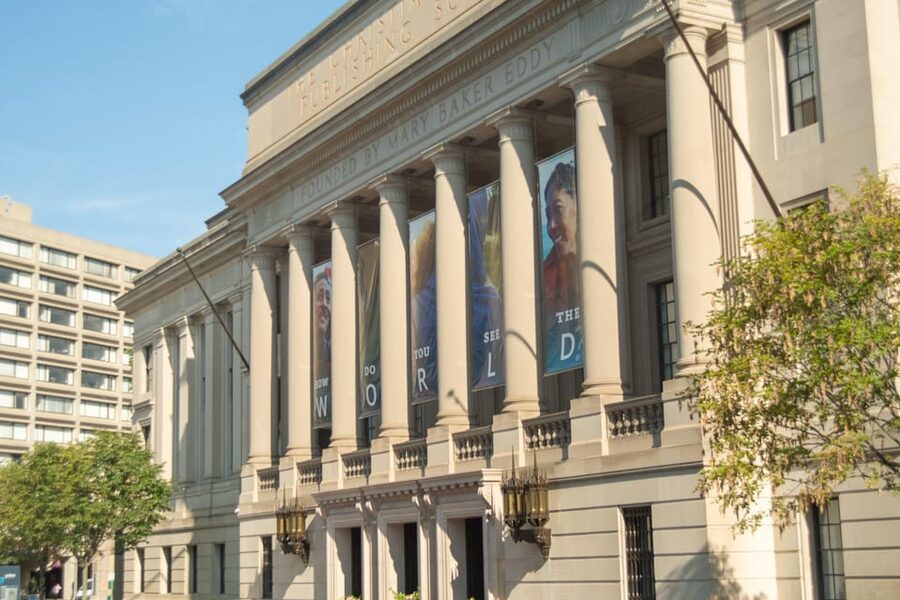
Logistics are simple. Find the large banners that read How Do You See the World? on the building next to the church, grab your bearings, and plan to avoid lingering with food because food and drinks aren’t allowed.
In This Review
- Key things to know before you go
- The three-story Mapparium globe, frozen in 1935
- What to watch for while you’re inside
- A small caution
- Our World: Mapping Progress and the case for hope
- Why the 1935-to-now framing matters
- Points of Progress: human rights, science, exploration, and more
- How to get more from this section
- Christian Science and Mary Baker Eddy: history with a clear mission
- Interactive storytelling through the Monitor
- Where the library exhibit fits: The Mary Baker Eddy Library and Exhibit
- How the 20-minute experience runs (and how to plan for it)
- Meeting point: the banners next to the church
- Food and drinks
- Price and value: $6 for the globe plus multiple exhibits
- Is it worth it if you like maps and history?
- Is it worth it if you want something deep?
- Who should book this, and who might want to skip
- Should you book the Mapparium and How Do You See the World experience?
- FAQ
- How long is the experience?
- How much does it cost?
- Is entry to the Mapparium globe timed?
- Do I need a timed ticket for the other exhibits?
- What’s included with the ticket?
- Where do I meet for the experience?
- Is food and drink allowed?
- What language is the experience offered in?
- Is it wheelchair accessible?
- Is there free cancellation and a reserve option?
Key things to know before you go
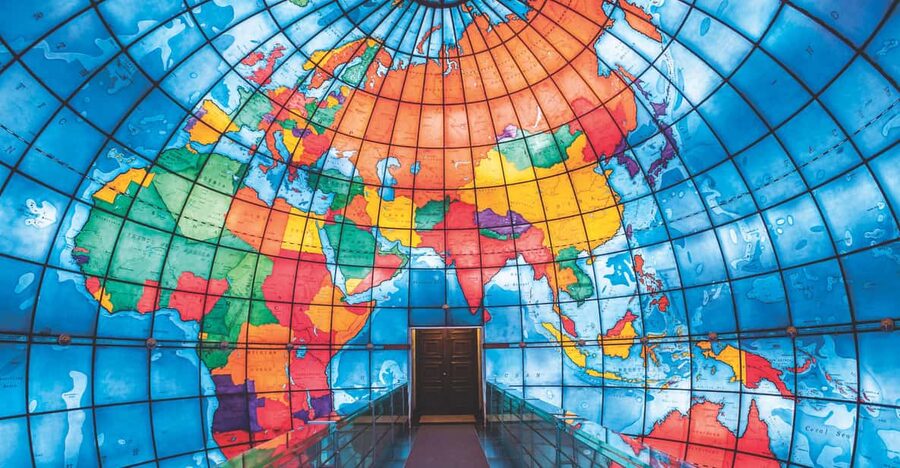
- Three-story stained glass Mapparium: A globe you walk through, not just look at
- Frozen-in-time view from 1935: A pre–World War II snapshot of how the world was portrayed
- Multimedia progress exhibits: Built to make history feel current, not dusty
- Christian Science Monitor storytelling: Interactive story sets tied to resilience and progress
- Mary Baker Eddy-focused exhibits: Options to learn about her life and ideas, plus a library exhibit
- Timed Mapparium entry, 20 minutes total: Your schedule matters more than with the free exhibits
The three-story Mapparium globe, frozen in 1935
The main event is the Mapparium globe itself: a tall, stained-glass world you enter and walk around inside. Think of it as a room that happens to be a globe—vertical, colorful, and designed so you can feel your position inside the picture. It’s set in the year 1935, which is a big part of the appeal. You’re not just seeing geography; you’re seeing a particular worldview from just before World War II.
One detail that makes this work is the way the experience is built around your movement. Instead of standing in one spot and watching a screen, you’re placed inside the glass globe and guided by narration coming from within the installation. That approach changes the tone. It feels less like a museum lecture and more like you’re stepping into a time capsule.
I especially like the visual logic of stained glass for this kind of subject. Light changes how you read the world, and the colors help your eye pick out regions and patterns while the narration frames what you’re looking at. If you’re even a little curious about cartography, maps, or how people imagined the world, you’ll get more out of the visit than you might expect.
What to watch for while you’re inside
- Take a moment to look up and down, not just straight ahead. The globe is three stories tall, so angles matter.
- Listen closely during the narration parts, because the story is what turns the imagery into context.
- Don’t plan to linger. The Mapparium portion runs on a timed schedule, and the whole experience is about 20 minutes.
Rainy day in Boston? These doors are open
A small caution
This is a short experience. If you’re the type who needs extra time to read every label and photosign, you might feel slightly rushed. The good news is that the other exhibits are free, so you can slow down around the edges after you complete the timed globe part.
Our World: Mapping Progress and the case for hope
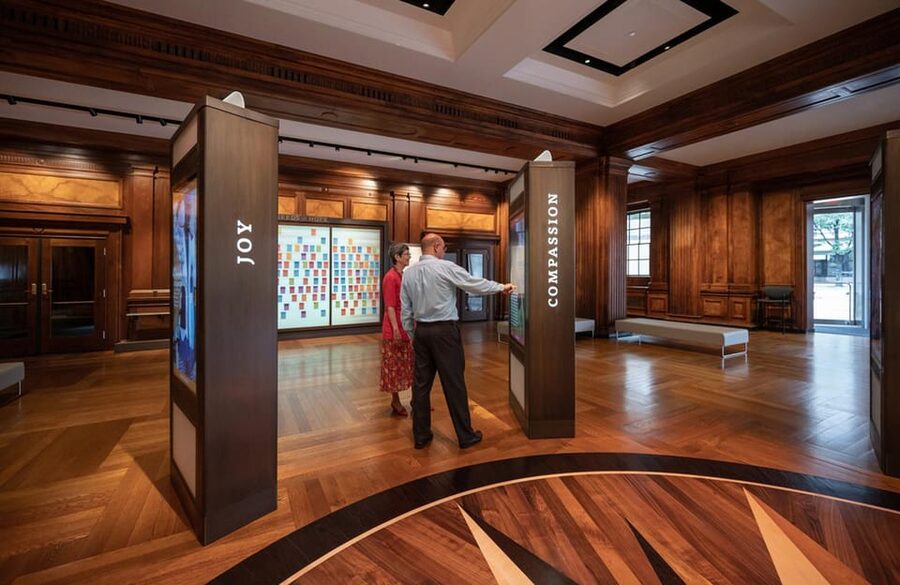
After the globe, you move into an exhibit experience built around the question of what progress even means. The featured section is called Our World: Mapping Progress, and it looks at humanity’s advancements since 1935.
The reason this works is that it gives the 1935 time capsule a follow-up. You start with a world frozen in a specific year, and then you’re shown how much changed afterward—technological, scientific, political, and social. Even if you’re not a museum person, this structure helps you connect the dots without having to do extra homework.
You’ll also notice the tone shift. The globe portion feels like looking at history through glass. The Mapping Progress area is more about momentum—why change happened, and what it has done for people. It’s not just facts; it’s designed to keep the story going.
Why the 1935-to-now framing matters
The year 1935 is more than a date on the wall. It’s a turning point in how people read the twentieth century. By starting there, the exhibits can highlight change in a way that feels grounded. You’re not learning progress as a vague concept; you’re seeing it placed against a world that had different realities, different assumptions, and different power structures.
Points of Progress: human rights, science, exploration, and more
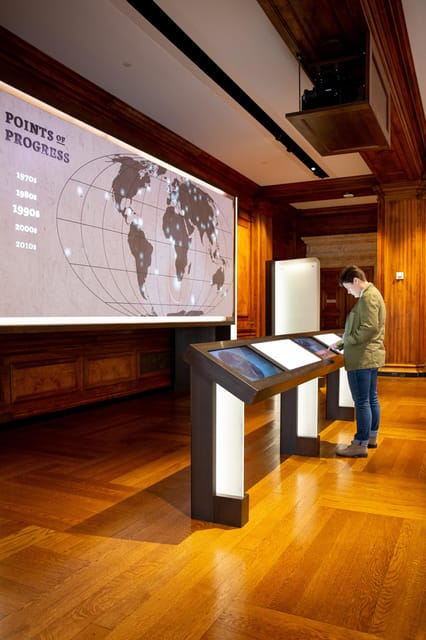
Next comes Points of Progress, which is a dynamic showcase of pivotal moments. This is where the experience stretches beyond a single theme and gives you categories like human rights, scientific breakthroughs, exploration, and more.
What I like here is the mix of topics. It avoids the trap of treating progress as only technology or only politics. Instead, it suggests that progress shows up in many forms—and that different advances support each other over time.
Because it’s described as dynamic, you can expect a presentation style meant to keep you moving and paying attention rather than reading one long timeline. If you’re visiting with someone who gets bored in static galleries, this part is a safer bet. It’s built to feel like an active exhibit, not just a room of posters.
- Boston Duck Boat Sightseeing City Tour with Cruise Along Charles River★ 4.5 · 9,378 reviews
- Boston: Freedom Trail History Small Group Walking Tour★ 5.0 · 6,450 reviews
- Boston Hop-On Hop-Off Trolley Tour with 13 Stops★ 4.5 · 5,576 reviews
- Boston Duck Tour: The Original and World-Famous★ 4.6 · 3,935 reviews
- Harvard University Campus Guided Walking Tour★ 4.5 · 3,632 reviews
How to get more from this section
If you have limited time, don’t try to memorize everything. Instead, pick two or three areas that interest you—like human rights and scientific breakthroughs—and watch how the exhibit connects them. The value is in seeing patterns, not collecting every detail.
Christian Science and Mary Baker Eddy: history with a clear mission
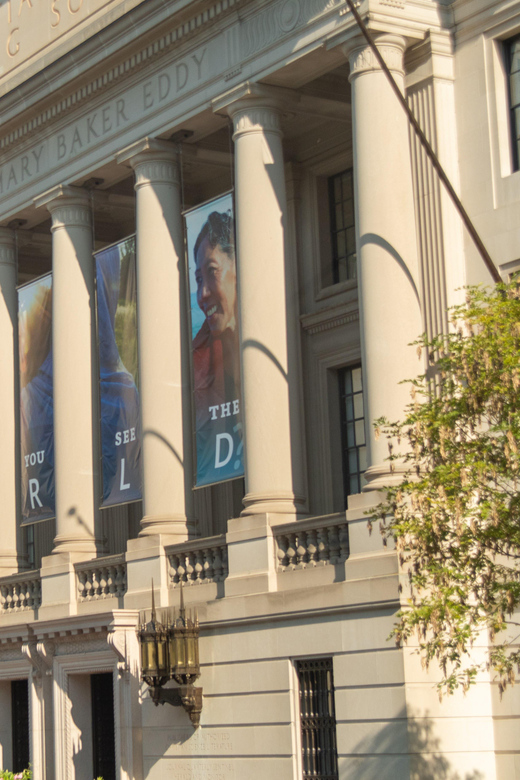
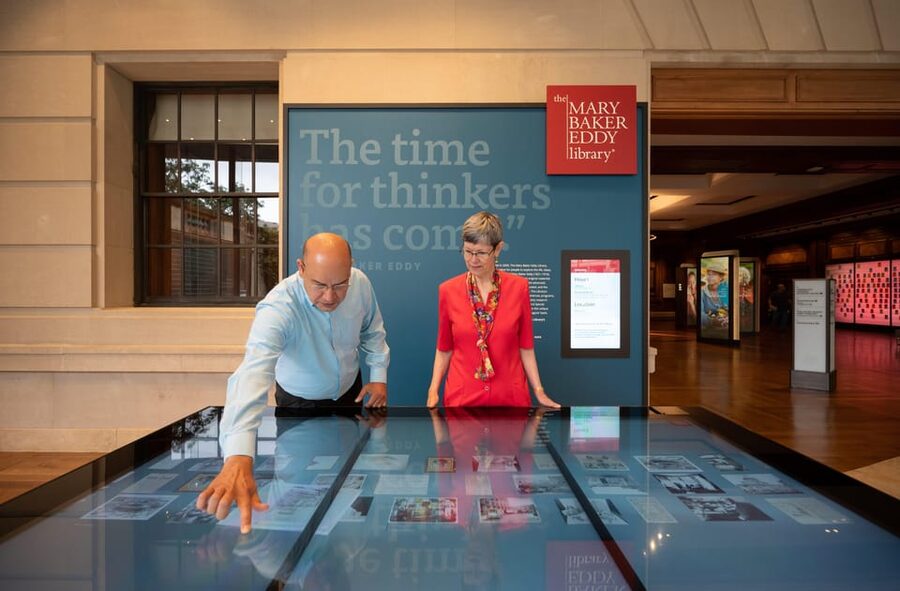
The exhibits titled Christian Science and Mary Baker Eddy bring in a very different kind of context. Rather than focusing on maps and scientific progress only, this section centers on Mary Baker Eddy and her role in the Christian Science movement.
From the information provided, you’re looking at the life and ideas of Mary Baker Eddy, plus her ongoing love of the Bible and how her approach is presented as relevant to universal questions. If you’re already familiar with Christian Science, you’ll recognize names and themes. If you’re not, you can still approach it like a museum-style biography: a place to understand how one person’s ideas helped shape a publication and a mission.
Then you get a direct link to the Christian Science Monitor. The Christian Science Monitor is described as Pulitzer Prize–winning and founded in 1908 by Mary Baker Eddy. The mission shown is injure no man, but to bless all mankind. That line matters because it explains why the Monitor’s style is presented the way it is—focused on resilience and progress rather than sensational conflict.
Interactive storytelling through the Monitor
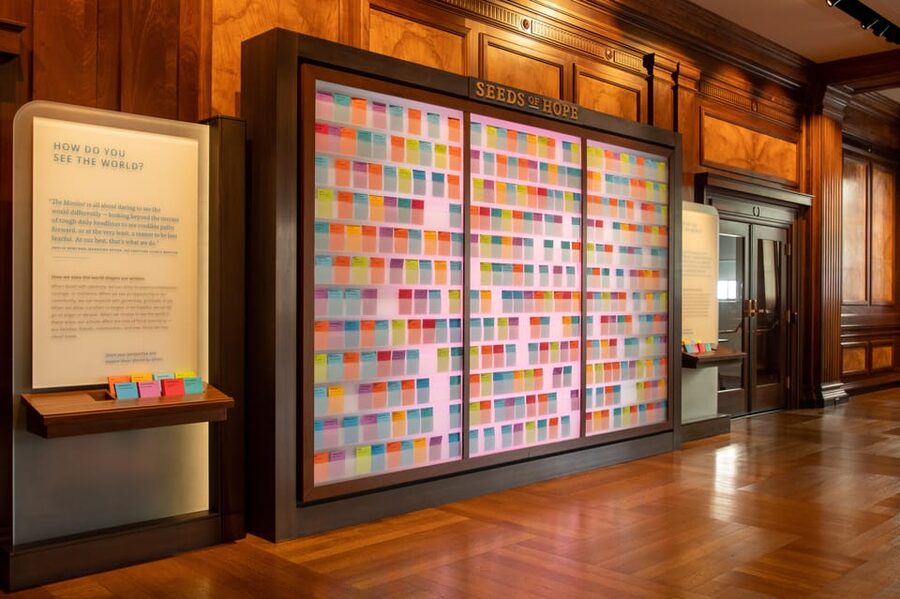
The experience includes eight sets of interactive stories connected to the Christian Science Monitor. This part is designed to bring the publication’s idea of resilience and progress into your hands, not just your eyes. For many people, this is the most human piece of the overall visit, because it gives the sense of real-world impact.
If you’re the type who likes news and media, this section will feel especially meaningful. You’re not just reading headlines—you’re seeing a curated thread of how the paper’s mission shows up in global stories.
Where the library exhibit fits: The Mary Baker Eddy Library and Exhibit
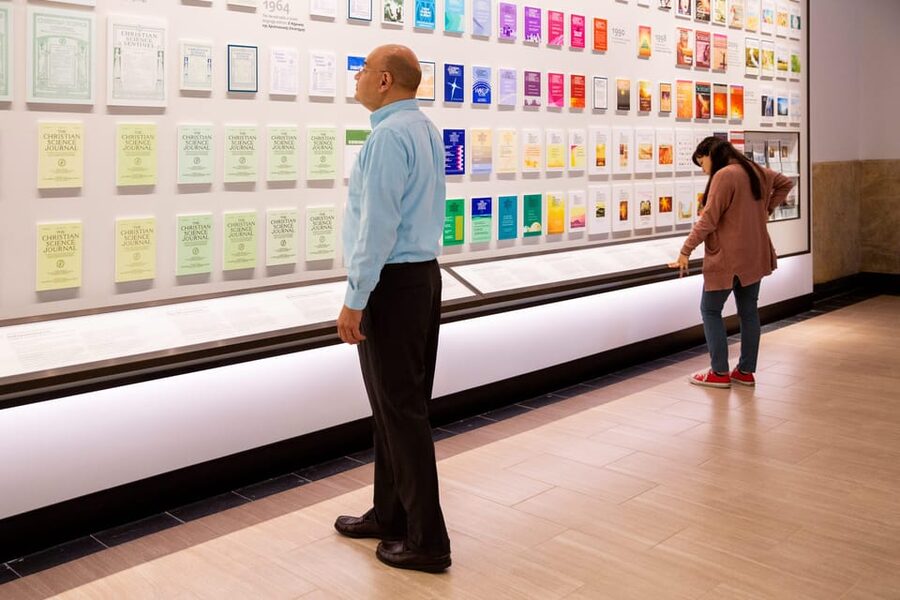
In addition to the Christian Science and Mary Baker Eddy display, there’s The Mary Baker Eddy Library and Exhibit. This is where you get more depth, with the library exhibit as an extra layer on her work.
Libraries can be hit-or-miss in museums, but here the intent is clear: to support the larger story of Eddy’s ideas. If you want something calmer after the more fast-moving progress sections, this can serve as a natural slowdown point. It’s also helpful if you want to focus on one person’s influence and how it shaped a publication and an approach to world events.
Because the overall guided portion is time-boxed, I like that the library exhibit is part of your admission. You can move at a pace that fits you.
How the 20-minute experience runs (and how to plan for it)
The Mapparium globe is timed and ticketed, and the total listed duration is about 20 minutes. That’s short enough that you should treat this as a focused stop, not a half-day wandering project.
Here’s the practical approach I’d recommend:
- Arrive a few minutes early so you’re not stressed.
- Go straight for the timed globe first, then use your time for the other exhibits.
- Keep your expectations realistic. The globe itself is the show; the rest of the admission is there to extend the theme without rushing.
You can also think of the visit in two layers. The first layer is the timed Mapparium experience and narration. The second layer is the free-to-enter exhibit areas—so you can stretch out your understanding even after the timed part ends.
Meeting point: the banners next to the church
To get started, look for the large banners that say How Do You See the World? on the building next to the church. That’s your anchor point in a neighborhood where you might otherwise end up wandering the wrong entrance.
Food and drinks
No food and drinks are allowed. If you’re pairing this with other stops nearby, plan a snack break before you come in. Inside, you’ll want to focus on exhibits, not eating on the go.
Price and value: $6 for the globe plus multiple exhibits
At $6 per person, this is one of those museum values that feels almost unfair. Why? Because your admission doesn’t stop with the Mapparium globe. It also includes entry to:
- The How Do You See the World experience
- The Christian Science and Mary Baker Eddy exhibit
- The Mary Baker Eddy Library and Exhibit
On top of that, the price includes a timed globe component, which is usually where attractions add cost. Many similar experiences charge more for timed entry alone. Here, you’re paying for the inside-the-globe portion and getting extra thematic exhibits bundled in.
Is it worth it if you like maps and history?
If you like maps, geography, or how people imagine the world, the Mapparium globe alone can justify the trip. But even if you don’t, the progress exhibits and Monitor-linked storytelling give you multiple ways in.
Is it worth it if you want something deep?
It’s still a 20-minute experience for the main attraction. If you want to spend hours reading every panel, you may want to treat this as a smart introduction and then follow up elsewhere. The upside is that you can revisit the ideas afterward in your own way.
Who should book this, and who might want to skip
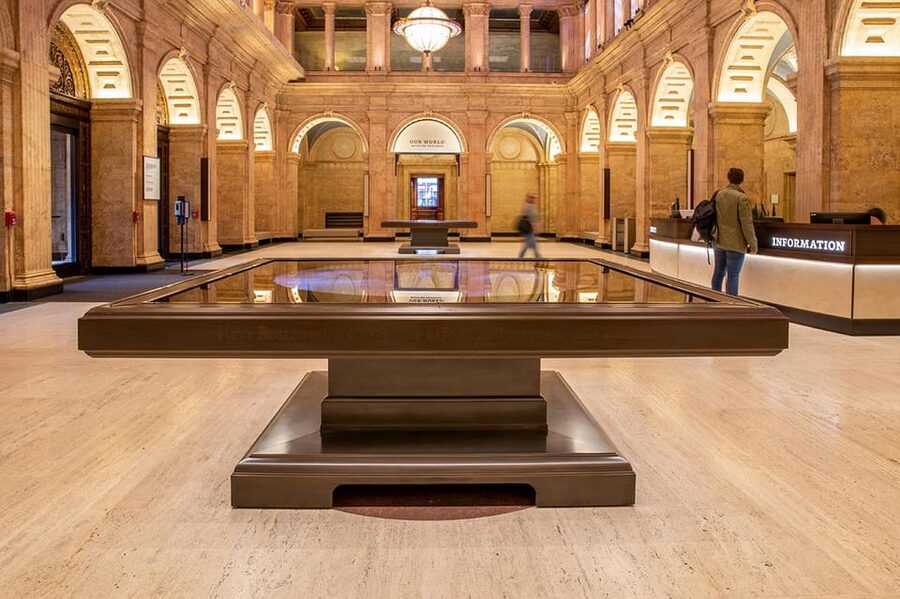
This is a strong fit for:
- People who like unusual, hands-on museum installations
- Anyone curious about cartography and how worldviews change
- Visitors who want a short but meaningful stop between longer Boston plans
- Families looking for a visual experience with story-based exhibits
You might decide to skip if:
- You need long guided time in one place
- You prefer quiet galleries with lots of time to read
- You don’t enjoy exhibits that connect history to media and mission
The fact that many parts of the larger experience are always free and do not require timed ticketing also helps. It makes the whole area feel flexible around your schedule.
Should you book the Mapparium and How Do You See the World experience?
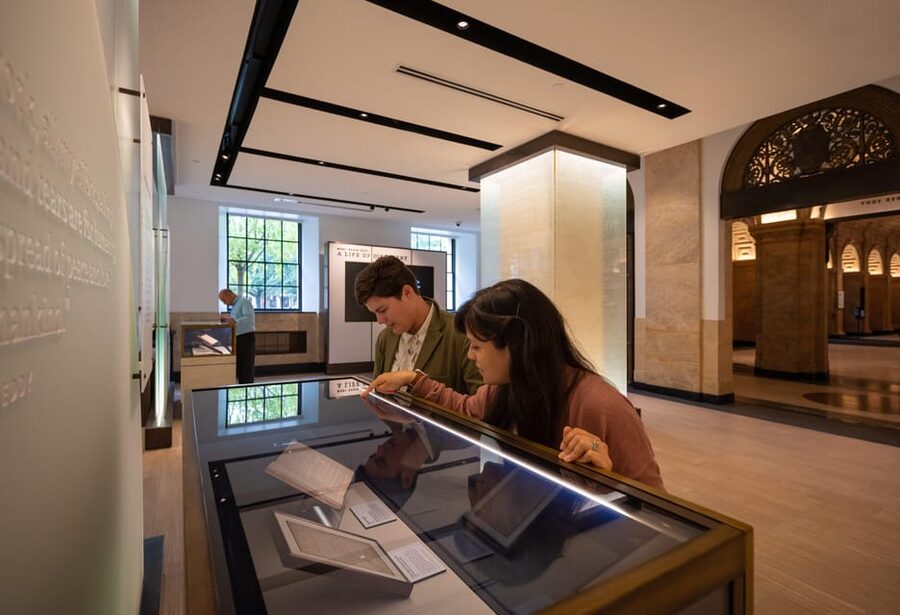
If you’re in Boston and want a compact stop that feels different from the usual big-ticket attractions, I’d book this. The Mapparium globe is the kind of thing you remember because you’re inside it, not just beside it. And the follow-up exhibits give you a clear second chapter: how progress since 1935 is framed through science, rights, exploration, and the mission-driven storytelling of the Christian Science Monitor.
If you want to be efficient, go early, do the timed globe first, then take your time with the free exhibits around it.
FAQ
How long is the experience?
It’s listed as about 20 minutes.
How much does it cost?
The price is $6 per person.
Is entry to the Mapparium globe timed?
Yes. The Mapparium globe is a timed, ticketed exhibit.
Do I need a timed ticket for the other exhibits?
No. The other exhibits are free and do not require a timed ticket.
What’s included with the ticket?
Included are the timed entry to the Mapparium globe, entry to the How Do You See the World experience, entry to the Christian Science and Mary Baker Eddy exhibit, and entry to The Mary Baker Eddy Library and Exhibit.
Where do I meet for the experience?
Look for the large banners that read How Do You See the World? on the building next to the church.
Is food and drink allowed?
No. Food and drinks are not allowed.
What language is the experience offered in?
English.
Is it wheelchair accessible?
Yes, it is wheelchair accessible.
Is there free cancellation and a reserve option?
Yes. You can cancel up to 24 hours in advance for a full refund, and there’s a reserve now & pay later option.
If you’d like, tell me your travel dates and what else you’re doing in Boston that day, and I’ll suggest a tight schedule that fits this in without rushing.
More of the Boston Ledger




Boston Behind the Turnstiles




New on the Boston Docket
- Boston to Newport Mansions Private Day Trip
★ 5.0 · 3 reviews - Boston Massachusetts Private Photography Tour
★ 5.0 · 3 reviews - Homemade Dumplings 101 in Boston
★ 3.5 · 3 reviews - Self-Guided Audio Tour of Boston North End
★ 4.5 · 3 reviews - Old Boston: Beacon Hill & Back Bay Walking Tour in French
★ 4.7 · 3 reviews
Boston Museums & Attraction Tickets, compared.
 ★ 4.5Boston Tea Party Ships and Museum AdmissionFrom $352,512 reviews
 ★ 4.8Boston Tea Party Ships and Museum Interactive TourFrom $351,926 reviews
 ★ 4.7View Boston Observation Deck Entry TicketFrom $341,451 reviews
 ★ 4.0New England Aquarium Admission Ticket in Boston446 reviews
 ★ 4.3Franklin Park Zoo Entry TicketFrom $24430 reviews
 ★ 3.9Salem Witch Museum Admission TicketFrom $18417 reviews
 ★ 4.0Boston Pass: 40+ Things To Do – Includes Franklin Park ZooFrom $79359 reviews
 ★ 4.5View Boston Observation Deck Admission TicketsFrom $34314 reviews
Browse the lists this tour appears in