
REVIEW · SALEM DAY TRIPS & TOURS
Salem Merchants and Mansions Guided Architecture Walking Tour
Salem gets real when you walk its streets. This Merchants and Mansions guided architecture tour turns Salem from a witch-themed stop into a place you can actually read, using buildings, streets, and the people who paid for them. You’ll get stories behind landmarks like the Witch House, but the focus stays on architecture and the centuries that shaped it.
I love how the tour gives you specific place-based history right at street level, with a guide who can keep the details moving (I’ve seen guides like Topher, Seán, and Henry lead this walk). I also like that the route mixes big-name stops with smaller architecture moments, so you leave with a clear picture of how Salem changed over time.
One thing to plan for: this is outdoor-only with no public restrooms on the route, and it’s not recommended if you can’t stand for long periods. You’ll also be walking between stops for about 1 hour 30 minutes to 2 hours.
In This Review
- Key reasons this Salem architecture tour is worth your time
- What this tour is really about: merchants made Salem’s look
- Old Town Hall to the Custom House: the port economy starts the story
- Derby House and Narbonne House: how styles grow with money and time
- The Daniels House and Salem Common: from marshy ground to Second Empire swagger
- Hawthorne Hotel, Peabody Essex Museum, and Church Street: the street grid as a time map
- Witch City Mall and the Bewitched Statue: pop culture, but grounded
- How to get more out of the walk: watch for these architectural clues
- Price and value: $36 for a focused, story-driven architecture route
- Should you book the Salem Merchants and Mansions guided architecture tour?
- FAQ
- How long is the Salem Merchants and Mansions Guided Architecture Walking Tour?
- What does the $36 ticket include, and what is not included?
- Is this tour only outside?
- Are there restrooms on the tour route?
- Does the tour run in bad weather?
- Is it okay for kids and dogs?
Key reasons this Salem architecture tour is worth your time
- It focuses on Salem’s commercial power, from merchant wealth to port life, not just spooky storytelling
- You’ll see multiple architectural “eras” in one walk, including Georgian and First Period additions
- Salem Common is treated like a time machine, moving from marshy ground to a fashionable park district
- The Hocus Pocus nod isn’t the whole point, it’s used to point you back to the real historic place
- Pop culture shows up with a purpose, including the Bewitched Statue of Elizabeth Montgomery
- Small-city logistics are friendly: a compact route, near public transportation, dogs welcome
What this tour is really about: merchants made Salem’s look
If you’ve only seen Salem through the witch-lore filter, this tour can be a pleasant reset. Instead of treating buildings like backdrops, it uses them as evidence—who built them, why they mattered, and what the neighborhood’s fortunes were doing at the time.
You’ll walk through a city block story. The guide ties architecture styles to real forces: trade, wealth, and civic life. It’s also the kind of tour where you start noticing things you used to ignore—window shape, rooflines, and how additions changed older homes.
Guides on this route—like Topher, Seán, and Henry—tend to mix clean explanations with fun storytelling. That balance helps if you’re coming with kids or friends who don’t want to spend an entire afternoon in “lecture mode.” And because the tour is outdoor-only, the atmosphere stays flexible. You can take photos, pause, and keep following the narrative.
One more practical point: the group can be up to 40 people, so it helps to arrive a few minutes early and stand where you can hear well when stops get busy.
Old Town Hall to the Custom House: the port economy starts the story
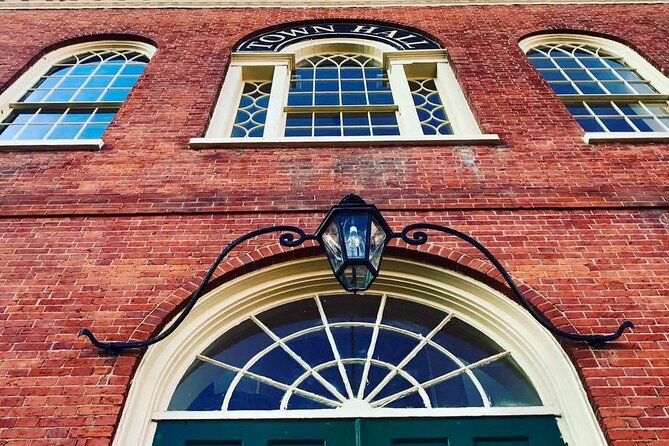
The tour begins at 32 Derby Square, at Salem Old Town Hall. This first stop is short, but it sets the stage: Salem wasn’t just a town with stories—it was a town with systems, rules, and power.
From there, the walk quickly moves into the heart of the old town area, including a stop described simply as Salem. Think of this as orientation time—enough context so the next big building moments make sense.
Then comes one of the most telling stops: the Custom House. Here you’ll hear about Salem’s spice trade and the city’s motto, including why it appears and what it points to. It also covers the location of an older shipbuilding yard area—near where you’ll find Adirondack chairs at the far end of the open space. That’s a smart way to teach you how to “read” the modern layout: the landscape today is different, but the working geography used to be right there.
You’ll also look toward where the mansions visible from near Derby Wharf tie into merchant wealth. In other words, you’re connecting the money-making waterfront world to the grand homes that came later.
Why this matters for you: once you get the port-and-trade frame, Salem’s architecture stops feeling random. The buildings become a map of economic ambition.
Half an hour north, Salem keeps going. More trips
Derby House and Narbonne House: how styles grow with money and time
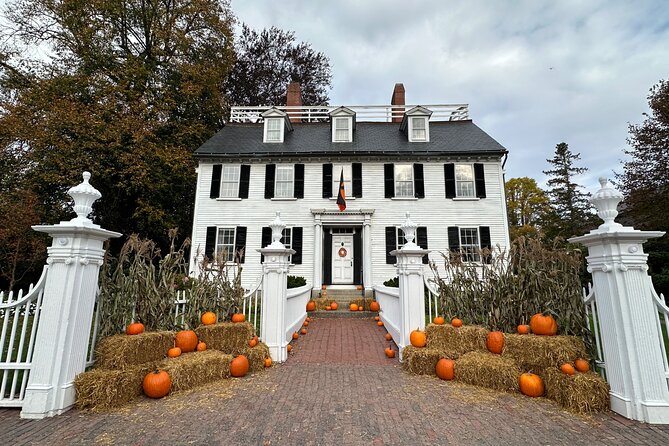
Next, you’ll slow down at the Derby House, where the guide talks through Georgian architecture. What I find useful about this stop is that it doesn’t treat style like a museum label. It explains how a “simple” building can signal the rise of wealth and influence—especially in a region where merchants were gaining power.
You’ll likely start noticing Georgian clues as you walk: the sense of order, proportion, and the “built to last” feeling. Even if you’re not an architecture nerd, you can usually spot the way Georgian homes look planned, not improvised.
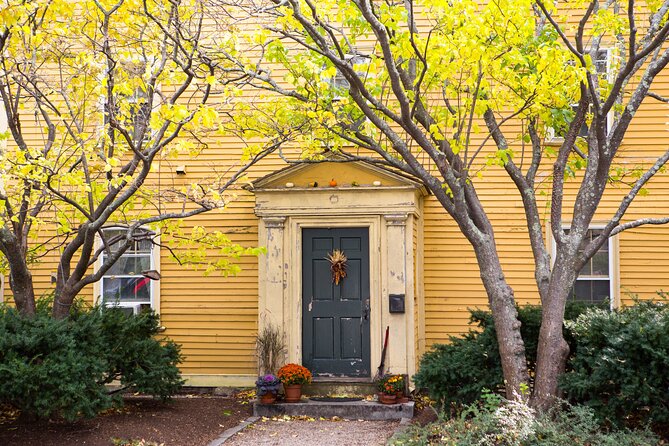
After that, the tour hits Narbonne House, which is described as a great example of First Period architecture that was later modified and expanded. This is where the tour gets extra human. Homes here aren’t frozen in time. They change as needs and budgets change.
So instead of seeing a single-era building, you’re learning that Salem’s older structures often tell layered stories: what they were at first, what was added, and how expansion reshaped the look. That’s a big mental shift for most people. It makes you look at changes and seams like clues, not flaws.
Possible drawback to keep in mind: since none of these stops involve entering buildings, you’ll depend on what the guide can point out from the sidewalk. If you’re sensitive to hearing challenges, choose a spot where you can see the features being discussed.
The Daniels House and Salem Common: from marshy ground to Second Empire swagger
At the Daniels House Historic Site, the tour offers discussion time—short, but focused. This stop works like a bridge from private homes to public spaces. It reminds you that architecture isn’t just for individuals; it shapes how a community forms around itself.
Then you reach Salem Common, one of the best places on the route for understanding Salem’s turning points. The guide doesn’t just point and name. It explains how the Common evolved: starting as marshy pools and unusable ground in the 17th and early 18th centuries, then becoming a manicured pleasure park in the 19th century.
This matters because it connects a city plan to a wealth shift. When the Common gets landscaped and made fashionable, the neighborhood energy follows. That’s why the tour also talks about how Salem’s last gasp of wealth and mansions shows up here, with Second Empire and Greek Revival style buildings.
Salem Common is also where you’ll get the tour’s Hocus Pocus location reference, described as the old school. It’s a pop-culture hook, but it’s used to steer you back to the actual historic place and its role in the area’s development.
A practical note: admission is included at this stop (at least in the sense that an admission ticket is part of what’s covered here). Since the tour is outdoor-only, you’re not expecting a long museum-style visit, but do plan to stay attentive during this part because the Common is the storytelling engine for the neighborhood transformation.
Hawthorne Hotel, Peabody Essex Museum, and Church Street: the street grid as a time map
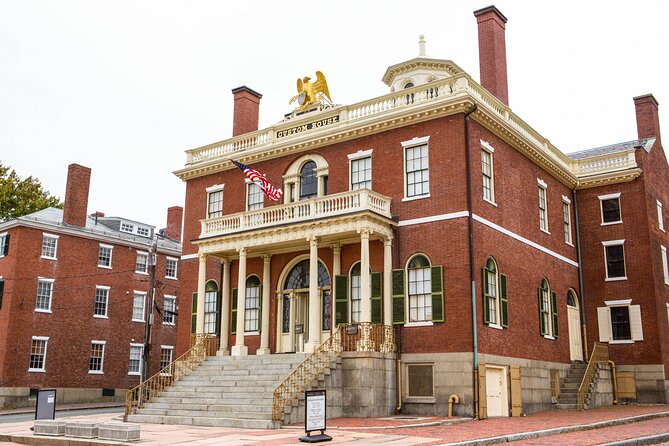
Once you’re past the Common, the tour keeps tightening the lens. At the Hawthorne Hotel, you get a quick architecture-focused stop. Even when the time is brief, the intent is clear: show you that “famous Salem” isn’t just houses tied to single legends. It’s also the built environment around writers, visitors, and civic identity.
Next is the Peabody Essex Museum. The stop is described as a chance to see variety in the museum’s collection homes. Even though you’re not going inside, it’s a useful framing moment. The museum helps you understand that Salem’s domestic story isn’t just one style or one century. The guide can point you toward the bigger idea: collections and preservation are part of how Salem continues to tell its own story.
You’ll also walk through Church Street, again with architecture notes. Church Street is one of those places where the shape of the street and the continuity of older buildings makes it easier to feel how neighborhoods “stack” over time. You’ll likely start comparing what you saw earlier in the tour to what you see here—newer façades versus older bones, public emphasis versus private grandeur.
Then comes Saint Peter’s Episcopal Church, where the guide touches on unique religious heritage. This stop is a reminder that architecture and belief aren’t separate topics. In Salem, religious identity helped shape community life and, in many cases, the way important buildings were built and sustained.
Witch City Mall and the Bewitched Statue: pop culture, but grounded
As the tour progresses, it keeps its balance between Salem as a real town and Salem as a storytelling magnet. At Witch City Mall, the guide includes an architecture stop—brief, but it’s part of the pattern: even modern-looking places can be tied back to Salem’s style habits and urban identity.
Then you reach the tour’s final themed highlight: the Bewitched Statue of Elizabeth Montgomery. This is a “last stop” moment, and it’s designed to land with a smile. The guide gives discussion time, tying the pop culture reference back to the city’s identity as a place people come to talk about stories, myths, and history.
Why this ending works: you don’t leave feeling like you went on a witch tour. You leave feeling like you went on an architecture tour that includes witch-era pop references as wayfinding. The spooky layer becomes seasoning, not the main course.
And because the tour is outdoor-only, you can naturally peel off afterward and keep exploring nearby on your own. If you want to expand, you’ll know what to look for next: not just “witch-related spots,” but building style clues and civic planning hints.
Boston was built for walking. More routes
- Satanic Salem Walking Tour★ 5.0 · 1,635 reviews
- Mysteries and Murders of Salem Guided Night-Time Walking Tour★ 5.0 · 1,488 reviews
- The Salem Witch Walk★ 4.5 · 1,301 reviews
- 2.5-Hour Salem History & Sightseeing Guided Walking Tour★ 5.0 · 850 reviews
- Best Salem Witch Trials Historical Walking Tour★ 4.0 · 743 reviews
How to get more out of the walk: watch for these architectural clues
Even if architecture isn’t your hobby, you’ll have an easier time if you “look like a guide” for a few minutes at a time. Here are the kinds of details this tour helps you notice:
- Style evolution: You’ll see how buildings can start in one era and be modified later, especially with First Period expansion at Narbonne House.
- Wealth signals in “plain” forms: The tour treats Georgian architecture as a marker of merchant power, not just an aesthetic choice at the Derby House.
- Public space as economic proof: Salem Common isn’t just a park stop. It’s the city plan showing how usable ground became fashionable ground, leading to big style statements like Second Empire and Greek Revival.
- Maritime trade as a design driver: The Custom House stop helps you connect spice trade and port industry to the grand homes you can see from the waterfront area.
- Pop culture pointers: The Hocus Pocus old school mention and the Elizabeth Montgomery statue give you an easy reference point without letting it erase the deeper story.
If you like taking photos, this is one of those walks where you’ll shoot more than you thought. Aim for building façades, then step back for street context. That way you capture both the details the guide is pointing out and the overall neighborhood feel.
Price and value: $36 for a focused, story-driven architecture route
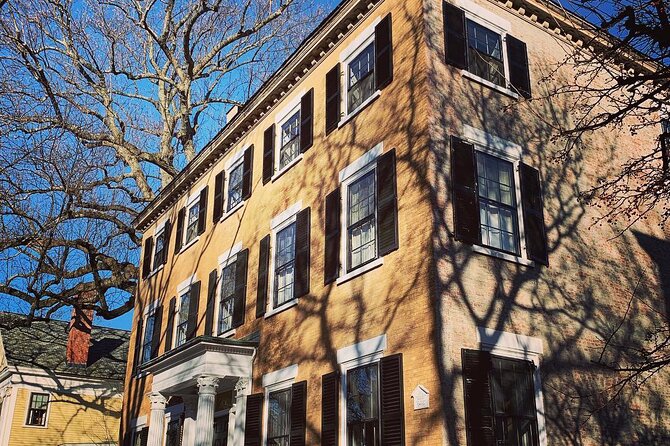
The price is $36.00 per person, for about 1 hour 30 minutes to 2 hours. For Salem, that’s a fair cost when you consider what you’re getting: a licensed guide, an architectural guide, and guided explanations that connect multiple stops across eras.
What makes the value feel real is the structure. The tour isn’t “one legend, one stop.” It’s a sequence of architectural lessons tied to civic and economic changes: port trade, merchant wealth, neighborhood development, and the way public spaces shifted from marshy ground to a landscaped pleasure district.
The other value factor is time. If you’re short on days in Salem, a tight walking loop gives you an organized introduction. And since it’s booked about 23 days in advance on average, it’s clearly something people plan around rather than a last-minute gamble.
If you’re debating whether to choose this over a more witch-forward option, I’d frame it like this: this tour is for people who want Salem’s visible history—the buildings that still hold the story—served with a bit of pop-culture spice.
Should you book the Salem Merchants and Mansions guided architecture tour?
Book it if you want Salem to make sense fast. You’ll get a strong introduction to how merchants and civic life shaped what you see: Georgian homes, First Period additions, and major style waves around Salem Common. It’s also a good pick if your group has mixed interests, because the pop-culture touchpoints (Hocus Pocus and Bewitched) show up without taking over.
Skip it or choose a different option if you can’t stand comfortably for much of a 1.5–2 hour outdoor walk, or if you really need restrooms during the outing. This route has no public restrooms, and the tour stays outside with no building entries.
If you do go, wear comfortable shoes, bring water, and show up a few minutes early at Derby Square so you can hear the guide when the group tightens up at each stop.
FAQ
How long is the Salem Merchants and Mansions Guided Architecture Walking Tour?
The tour runs about 1 hour 30 minutes to 2 hours.
What does the $36 ticket include, and what is not included?
The tour includes a licensed guide and an architectural guide. Gratuity is not included, and admission tickets are not included at most stops (with Salem Common specifically listed as admission included).
Is this tour only outside?
Yes. It is an outdoor activity only, and the tour does not enter any buildings or cemeteries.
Are there restrooms on the tour route?
No. There are no public restrooms on the tour route, so plan ahead.
Does the tour run in bad weather?
Yes. The tours run rain or shine, and they do not cancel for weather.
Is it okay for kids and dogs?
Children must be accompanied by a ticketed adult. The tour is dog friendly, and service animals are allowed.
On Foot Through Old Boston




More of the Boston Ledger
The Witch City Docket
New on the Boston Docket
- Private Walking Salem Legends Tour Professional Guide
★ 5.0 · 3 reviews - Pirates and Privateers Walking Tour with Real Pirates Admission
★ 4.5 · 3 reviews - Discover Salem’s History & Practice Authentic Witchcraft
★ 4.1 · 4 reviews - The Ghost Walk. Tortured Souls of Salem
★ 5.0 · 4 reviews - Cemetery and Witchcraft Trials Tour
★ 5.0 · 4 reviews
Salem Day Trips & Tours, compared.
 ★ 5.0History and Hauntings of Salem Guided Walking TourFrom $3614,564 reviews
 ★ 4.5Salem’s Best Ghost TourFrom $304,186 reviews
 ★ 5.0Salem Voodoo, Vampires, and Ghosts Guided Walking Tour1,931 reviews
 ★ 5.0Bewitched Walking Tour of SalemFrom $351,895 reviews
 ★ 5.0Satanic Salem Walking TourFrom $301,635 reviews
 ★ 5.0Mysteries and Murders of Salem Guided Night-Time Walking TourFrom $361,488 reviews
 ★ 4.5The Salem Witch WalkFrom $251,301 reviews
 ★ 5.0Wicked Awesome Tours: Witch Trial History and Salem Haunts!From $291,032 reviews
Browse the lists this tour appears in