
REVIEW · SALEM DAY TRIPS & TOURS
Best Historic Overview of Salem Walking Tour
Salem makes sense on foot. This historic walking tour maps the big turning points of Salem—from early settlement to the 1692 witch trials—in about 90 minutes. The story thread is what makes it work: you start seeing Salem as one connected place, not a list of spooky stops.
I like two things most. First, the guide brings Salem’s Revolutionary and maritime past right into view, including the era when Salem was America’s richest port. Second, you hit major “must-see” sites fast but not shallow—Old Burying Point Cemetery and the Witch Trials Memorial give the tone without overdoing it.
One possible drawback: you’re on city sidewalks and cobblestones for about a mile, and noise can interfere with hearing if your guide speaks quickly. Also, if you mainly want witch-trials-only facts, this tour’s mix of Revolution, church history, and local lore may feel like more story than you expected.
In This Review
- Key Highlights to Expect on This Tour
- Why This Salem Walk Feels Like a Shortcut to Real Context
- Tour Pace, Distance, and How You’ll Actually Experience the Stops
- Stop by Stop: What Each Moment Teaches You (And What to Watch For)
- 1) Starting at 8 Central St and the Salem History Frame
- 2) Salem’s Multi-Century Story: From 1626 to the Modern City
- 3) Red’s Sandwich Shop: Revolutionary Planning in Everyday Salem
- 4) Old Burying Point Cemetery (1637): Where Salem’s Early Leaders Are Laid to Rest
- 5) Salem Witch Trials Memorial: Remembering the Executed
- 6) Turners Seafood at Lyceum Hall: Bridget Bishop’s Connection and Bell’s First Public Phone Demo
- 7) Salem Old Town Hall: Port Power, Wealth, and Even Pop Culture
- 8) The Merchant: George Corwin, Washington’s Visit, and Amelia Earhart’s Teaching
- 9) Rockafellas Restaurant: Churches, Town House Square, and Political Meetings
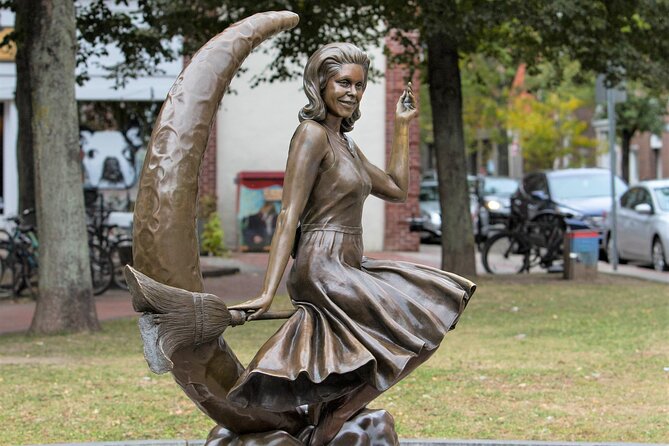
- 10) Bewitched Sculpture in Lappin Park: TV History Meets Witch-Trial Irony
- 11) Salem YMCA: Bell Again, plus a Home and Attic Laboratory
- 12) The Witch House: Judge Jonathan Corwin’s Home (Built 1660s)
- 13) Wesley United Methodist Church: Leslie’s Retreat at the North Bridge
- Who This Tour Is Best For (And Who Might Want Something Else)
- Real-World Value: How Well It Uses Your Time
- Should You Book the Best Historic Overview of Salem Walking Tour?
- FAQ
- How long is the Salem historic walking tour?
- Where does the tour start?
- What does the tour cover besides the witch trials?
- Is food or drink included?
- Are there paid admissions during the tour?
- How much walking is involved?
Key Highlights to Expect on This Tour
- 12 meaningful stops across downtown Salem, planned to help you orient fast
- Cemetery + memorial moments that put 1692 in a human, local context
- Maritime wealth and port history that explains why Salem mattered long before TV
- Revolution-era sites tied to planning, raids, and political meetings
- A small-ish group (max 40) with an amplified guide meant to keep the narration clear
- Guides with a track record for energy and humor, including names like Bob, Glenn, Anna, Amber, and Stosha
Why This Salem Walk Feels Like a Shortcut to Real Context
Salem is famous for witch trials, but it’s also famous for everything that came before and after. This tour is built for that reality. You get an overview that connects Salem’s Puritan start, its role in the American Revolution, and the way the town later reinvented itself through the 1800s.
At $30 per person for about 90 minutes, you’re paying for time and interpretation—not just sightseeing. You’re also paying for someone to point out what most people walk past: specific buildings tied to famous (and infamous) names, plus the political and maritime threads that explain why Salem’s streets look the way they do.
Tour Pace, Distance, and How You’ll Actually Experience the Stops
Plan on a one-mile walk stretched to roughly 90 minutes, with frequent pauses to view sites and hear the story. It’s not a sprint, but it’s not a sit-down lecture either. Wear comfortable shoes and expect narrow, uneven sidewalks with brick and cobblestones, plus stairs in places.
The tour runs at 12 pm, and you’ll want to arrive early for check-in at 8 Central St. Salem traffic and parking can get tricky, and October is often a slower mess. If you’re driving, parking is available in garages and lots around New Liberty, Bridge, Congress, Church Street, Front Street, and Klopp Alley, but you’ll still want a buffer.
A guide’s mic/amplifier is described as part of the experience, which is a huge deal in a loud downtown. Still, street noise can win—especially around popular attractions—so keep your questions ready and position yourself where you can hear clearly.
Half an hour north, Salem keeps going. More trips
Stop by Stop: What Each Moment Teaches You (And What to Watch For)
1) Starting at 8 Central St and the Salem History Frame
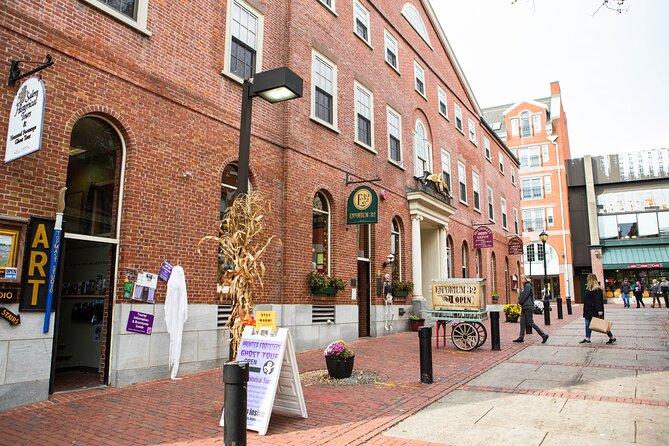
Your tour begins at Salem Historical Tours office at 8 Central St. From there, the guide sets the tone: Salem as a place of settlement, commerce, and politics—not just scandal. This matters because the rest of the walk works like a map; you learn names and connections early, and later stops click into place.
One good sign you’re on the right tour is how fast you get oriented. You should leave feeling like you can point down the street and explain what happened there, not just name a building.
2) Salem’s Multi-Century Story: From 1626 to the Modern City
At the first stop, the narration frames Salem as a town with a long timeline, starting in 1626 and continuing into the present. You hear why Salem became infamous in 1692, but you also get the “other Salem” that history fans often crave—Revolution, maritime strength, and notable people who lived here.
The value here is pacing your understanding. If you start only with witch trials, the rest of Salem’s architecture feels random. This approach builds a reason for what you’re seeing.
3) Red’s Sandwich Shop: Revolutionary Planning in Everyday Salem
Next you stop at Red’s Sandwich Shop, connected to local revolutionaries meeting to discuss plans for conflict with England. It’s a reminder that big political moves often happened in ordinary places. Watch for the way the guide makes the town’s civic life feel real, not like a museum diorama.
If you’re traveling with someone who thinks history is boring, this is the kind of stop that can change their mind. It’s specific, local, and grounded in the actual streets.
Boston was built for walking. More routes
- Satanic Salem Walking Tour★ 5.0 · 1,635 reviews
- Mysteries and Murders of Salem Guided Night-Time Walking Tour★ 5.0 · 1,488 reviews
- The Salem Witch Walk★ 4.5 · 1,301 reviews
- 2.5-Hour Salem History & Sightseeing Guided Walking Tour★ 5.0 · 850 reviews
- Best Salem Witch Trials Historical Walking Tour★ 4.0 · 743 reviews
4) Old Burying Point Cemetery (1637): Where Salem’s Early Leaders Are Laid to Rest
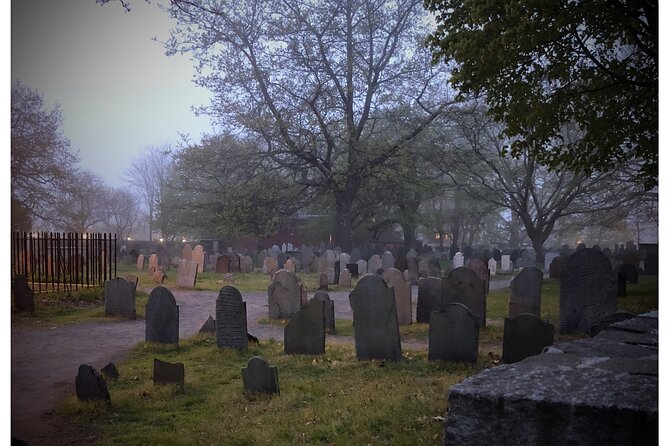
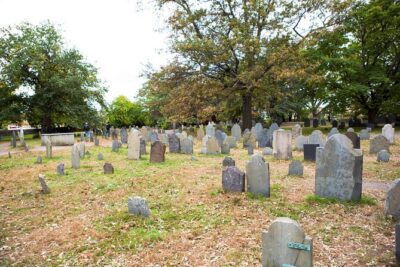
Then comes one of the most powerful stops: Old Burying Point Cemetery, dating back to 1637. You’ll learn it’s among the oldest cemeteries in the country and the resting place of Puritans and figures tied to Salem’s leadership, including judges John Hathorne and Bartholomew Gedney.
This stop does two things for you. It anchors the walk in physical time—people lived, argued, and died here long before the Revolutionary era. It also adds emotional weight to the story of 1692, since the same networks and beliefs shaped the town’s decisions.
A practical tip: take a moment to look around rather than only listening. Old cemeteries reward slow attention, and this one is especially good for connecting names to place.
5) Salem Witch Trials Memorial: Remembering the Executed
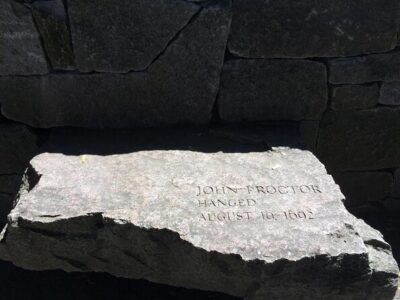
At the Salem Witch Trials Memorial, you’ll visit the dedicated space honoring the 20 people executed in 1692. The memorial includes a bench for each person, featuring names and details about execution—an approach that keeps it from feeling like a vague spooky legend.
Even if you’ve read about the witch trials before, this stop helps because it’s local and structured. You don’t just hear the tragedy; you see it categorized and remembered.
6) Turners Seafood at Lyceum Hall: Bridget Bishop’s Connection and Bell’s First Public Phone Demo
At Turner’s Seafood at Lyceum Hall, you get two big storylines in one. You’ll hear that Bridget Bishop, the first woman executed for witchcraft in 1692, lived on the grounds. And in 1877, Alexander Graham Bell performed the first public demonstration of the telephone here.
This is a great example of why the tour earns its name. Salem isn’t stuck in one era. You watch the story shift from 1600s hysteria to 1800s invention, and you start to understand how towns evolve instead of repeating their worst chapter.
7) Salem Old Town Hall: Port Power, Wealth, and Even Pop Culture
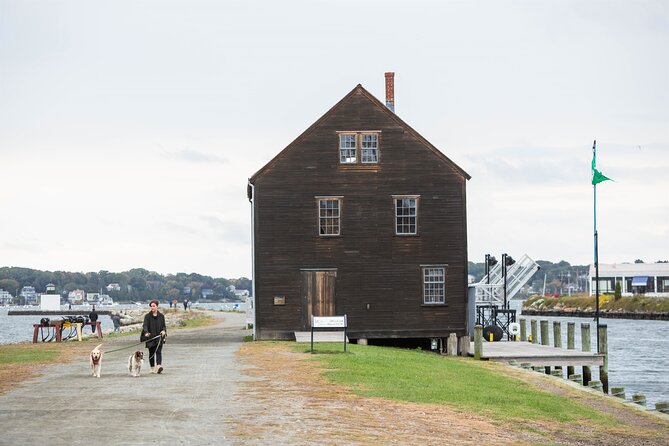
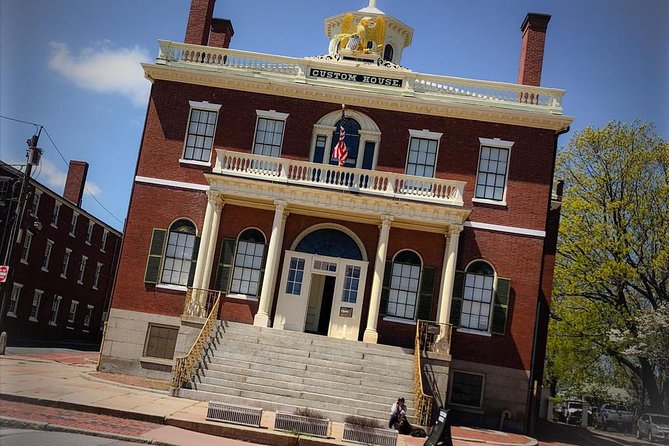
Next is Salem Old Town Hall, where the guide focuses on maritime history beginning right after the American Revolution. From 1790 to 1812, Salem was described as the richest port in the country, and you’ll hear why that mattered: ships meant money, money meant influence, and influence shaped the town’s buildings and civic life.
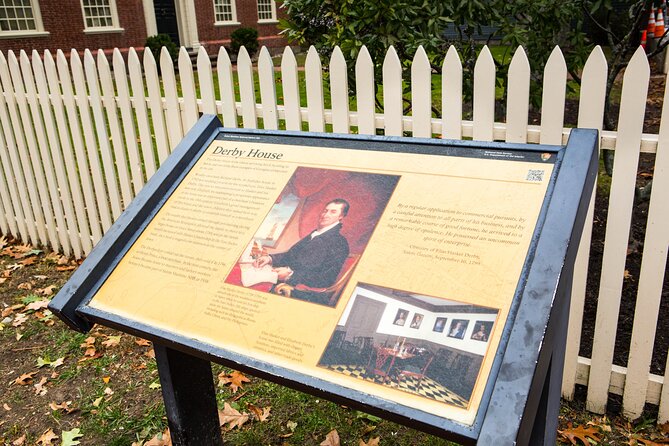
You’ll also hear names like Elias Haskett Derby, described as America’s first millionaire in 1793. Plus, the stop connects to modern storytelling, including mention that parts of Hocus Pocus were filmed at the site, and that Harry Houdini was involved with the jail across the street.
For your planning brain: this stop is a bridge between “why Salem mattered” and “why Salem looks like it does now.” If you only do witch-themed attractions later, you’ll still understand the town’s bigger identity better after this.
8) The Merchant: George Corwin, Washington’s Visit, and Amelia Earhart’s Teaching
Then you head to a stop called The Merchant, tied to George Corwin, high sheriff during the 1692 trials. You’ll also hear that George Washington visited Salem and stayed in a room that’s today called the Washington Room. And nearby, Amelia Earhart taught English at the Salem Commercial School.
This is one of the stops I’d call “plot twist” history. It forces you to hold two images at once: Salem as a place that participated in national events and Salem as a place that later produced one of the most infamous local tragedies in American history.
9) Rockafellas Restaurant: Churches, Town House Square, and Political Meetings
At Rockafellas, you’ll learn the building traces back to earlier church locations, with the guide explaining how that footprint carried political significance too. You’ll hear that a local congress of representatives met on the grounds before going on to Ipswich, Concord, and finally the continental congress in Philadelphia.
This stop is useful for understanding Salem’s civic culture—how meetings, governance, and religious life were intertwined in the same spaces. It’s also a good time to ask yourself what you’re seeing: not just a restaurant today, but a site that used to be the town’s center of gravity.
10) Bewitched Sculpture in Lappin Park: TV History Meets Witch-Trial Irony
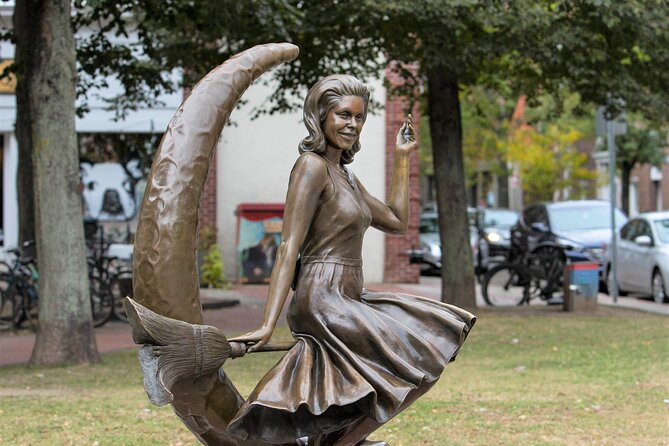
At Lappin Park, you’ll find the Bewitched sculpture (Samantha Stevens of the TV show), plus the note that episodes were shot in Salem. The sharpest detail here is the irony: the statue sits on land owned by hanging judge John Hathorne.
This is a fun stop, but it also carries a point. Salem’s pop-culture layer sits directly on top of the town’s real historical layer. You can’t separate the two when you walk the streets here.
11) Salem YMCA: Bell Again, plus a Home and Attic Laboratory
Next is Salem YMCA, where the guide connects the site to Mrs. Brown’s home and to Alexander Graham Bell again. You’ll hear he lived at the home, educated her grandson, and worked from an attic laboratory on the telephone. The story also says he later took the train to Boston to teach at Boston University.
Having Bell’s story show up twice on the walk makes it feel intentional rather than random. It also helps you understand why Salem became part of the invention conversation, not just the witch-trials conversation.
12) The Witch House: Judge Jonathan Corwin’s Home (Built 1660s)
At the Witch House at Salem, you’ll see the home associated with Judge Jonathan Corwin—built in the 1660s, purchased by Corwin in 1675. The guide emphasizes that no witches lived there, but it remains one of the last Salem homes with direct ties to the 1692 trials.
This stop is a great reality check. Salem’s marketing often turns everything into one spooky category. Here you get boundaries and context, which helps you understand what’s documented versus what’s legend.
13) Wesley United Methodist Church: Leslie’s Retreat at the North Bridge
Finally, at Wesley United Methodist Church, the tour covers Leslie’s Retreat. The narration describes 140 redcoats under Colonel Leslie trying to cross the river for weapons and cannons on the other side. Colonists stopped them by pulling up the draw bridge, and no shots were fired—an event noted as happening two months before Lexington and Concord.
If you want one reason to book this tour beyond witch trials, it’s this: the Revolution story is here, and it’s early. It adds a layer many Salem visitors miss because they focus only on 1692.
Who This Tour Is Best For (And Who Might Want Something Else)
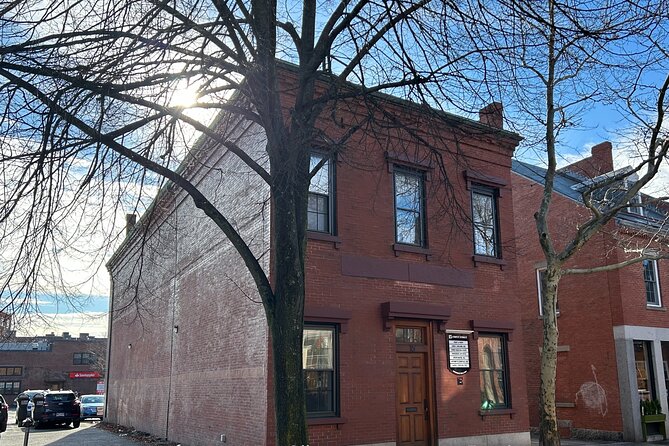
This is ideal if you want Salem 101 in a tight time window. It’s also a strong fit for history buffs who like a bigger framework—Puritan roots, maritime wealth, and the Revolution—so the witch trials sit in proper context.
It’s less ideal if you need a quiet, strictly factual version of Salem history with minimal storytelling. The overall style leans into narrative and humor, and some people may find it too much “backstory” rather than only core trial facts.
On the plus side, you can get a lot out of it even if you’re visiting for the first time. The guide’s job is to connect the dots, and this tour is built to help you do that fast.
Real-World Value: How Well It Uses Your Time
Ninety minutes is a practical window for Salem. You’ll see major sites that would take much longer to understand on your own, especially because Salem’s story runs across centuries. You’re also paying for a human guide who can tie names together—like Hathorne and the cemetery, or Corwin and the Witch House, or Bell and the Lyceum Hall and YMCA.
For $30, the value is strongest if you care about orientation and connections. If you already know Salem’s timeline cold and only want one theme, you may prefer a more focused attraction. But for most people—especially first-timers—this is a fast, satisfying way to get your bearings.
Also, the tour is designed with stops that don’t require much wandering between separate attractions. That matters in Salem, where crowds and October crowds can turn a simple walk into a slow grind.
Should You Book the Best Historic Overview of Salem Walking Tour?
If you’re visiting Salem for a short stay and want the town’s story to make sense, I’d book this. It’s one of the better ways to connect the witch trials to the larger civic and maritime Salem that shaped America’s early years, with stops like Old Burying Point Cemetery and the Witch House doing real emotional work.
Book it too if you like lively guides who answer questions and keep energy up—names like Bob, Glenn, Anna, Amber, and Stosha show up often in the guide lineup, and the style tends to be part history lesson, part street-level storytelling. Just go in knowing it’s not strictly trial facts-only, and hearing can be a challenge in busy areas.
If that sounds like your kind of history walk, this one is a solid use of time and money.
FAQ
How long is the Salem historic walking tour?
It’s about 90 minutes (approximately 1 hour 30 minutes).
Where does the tour start?
The meeting point is 8 Central St, Salem, MA 01970, and the tour ends back in downtown Salem.
What does the tour cover besides the witch trials?
You’ll hear about Salem’s early settlement, its role in the American Revolution, and its maritime history, along with key locations tied to people from multiple eras.
Is food or drink included?
No. There’s no food or drink offered, but you can buy snacks.
Are there paid admissions during the tour?
Most stops have free admission, but one stop (The Merchant) lists that an admission ticket is not included.
How much walking is involved?
The tour is about one mile in total walking time, with frequent stops for viewing locations and hearing the guide.
On Foot Through Old Boston



More of the Boston Ledger
The Witch City Docket
New on the Boston Docket
- Private Walking Salem Legends Tour Professional Guide
★ 5.0 · 3 reviews - Pirates and Privateers Walking Tour with Real Pirates Admission
★ 4.5 · 3 reviews - Discover Salem’s History & Practice Authentic Witchcraft
★ 4.1 · 4 reviews - The Ghost Walk. Tortured Souls of Salem
★ 5.0 · 4 reviews - Cemetery and Witchcraft Trials Tour
★ 5.0 · 4 reviews
Salem Day Trips & Tours, compared.
 ★ 5.0History and Hauntings of Salem Guided Walking TourFrom $3614,564 reviews
 ★ 4.5Salem’s Best Ghost TourFrom $304,186 reviews
 ★ 5.0Salem Voodoo, Vampires, and Ghosts Guided Walking Tour1,931 reviews
 ★ 5.0Bewitched Walking Tour of SalemFrom $351,895 reviews
 ★ 5.0Satanic Salem Walking TourFrom $301,635 reviews
 ★ 5.0Mysteries and Murders of Salem Guided Night-Time Walking TourFrom $361,488 reviews
 ★ 4.5The Salem Witch WalkFrom $251,301 reviews
 ★ 5.0Wicked Awesome Tours: Witch Trial History and Salem Haunts!From $291,032 reviews
Browse the lists this tour appears in