
REVIEW · FOOD & DRINK
️ Boston Most Famous Foodie Tour (Private & All-Inclusive)
First bite is history, too. This private Boston foodie tour mixes famous food stops with tight sightseeing so you don’t waste time hunting for the good stuff. I especially like the customizable angle—if you’re more curious about landmarks than snacks, your guide can steer the pace—and I also like that it stays efficient, starting downtown and ending near subway access. One thing to flag: the tour can feel more history-heavy than true food-forward, so it’s worth clarifying expectations up front (a guide named Manny is praised, but one booking didn’t match the stated vibe).
You’ll meet at the Aquarium T Station and finish at Haymarket, with your guide helping you get on the subway. At $288 per person for about three hours and a 4.7 rating (with a strong “recommended” signal), this is aimed at people who want a guided plan without lots of decision-making.
In This Review
- Key things to know before you go
- Private foodie tour in three hours: value vs. pace
- Meeting at the Aquarium T Station and ending by Haymarket
- Freedom Trail stop: how you get bearings fast
- New England Aquarium area: start strong near the water
- Paul Revere House and Old North Church: Revolution stories in the streets
- Bunker Hill Monument and Granary Burying Ground: outdoor history you can walk through
- Old State House: a compact dose of Boston’s political past
- Quincy Market and Faneuil Hall Marketplace: where the food energy lives
- Copley Place: modern Boston food stops between sights
- Fenway Park: baseball context for non-baseball fans, too
- Isabella Stewart Gardner Museum and the Fenway arts stop
- Franklin Park Zoo and Harvard Museum of Natural History: big names, short visits
- The floating history museum stop with reenactments and a tearoom
- Price and logistics: is $288 per person worth it?
- Who should book this tour?
- Should you book Boston Most Famous Foodie Tour (Private & All-Inclusive)?
- FAQ
- How long is the Boston Most Famous Foodie Tour?
- Is this tour private?
- What’s the price per person?
- Where does the tour start and end?
- What language is the tour offered in?
- Do I get a mobile ticket?
- Can I cancel and get a full refund?
- What if the weather is bad?
Key things to know before you go
- Private and all-inclusive: your group sets the tone, and you avoid the stress of piecing plans together.
- Fast-paced route: you’ll touch a lot of famous Boston names in a short window.
- Markets are the anchor: Faneuil Hall Marketplace and Quincy Market are built for food-watching and quick bites.
- History shows up at every stop: Freedom Trail-style storytelling is part of the package.
- Easy transit end point: you close near Haymarket, so your next move is simple.
Private foodie tour in three hours: value vs. pace
Let’s start with the big promise: a “most famous foodie” experience in just about three hours, with a private format. That combination is great when you’re short on time and want a guided line through the city. It’s also expensive enough that you should think about whether you’ll actually use the advantage.
Here’s how it tends to work in practice: a private guide can keep things moving—walk faster between photo points, stop longer where your interests are strongest, and cut time where you’d rather not linger. I like that. You get a plan, not a list.
The trade-off is pace. With so many landmark-style stops on the map (from Revolution-era sites to Fenway), the tour can’t turn every location into a long, sit-down experience. So if you’re the type who wants to park your feet in one neighborhood and snack slowly, this may feel like a sprint.
Meeting at the Aquarium T Station and ending by Haymarket
Logistics matter more than people admit, especially when you’re paying for a private tour. This one starts at Aquarium T Station (183 State St), a very practical spot if you’re using public transportation or you’re already near the waterfront area. Then it ends at Haymarket (136 Blackstone St), and the guide helps you board the subway there.
Why this is a plus: you don’t have to circle back. You’re not spending the last part of the tour trying to get your bearings. Instead, you can hop on the train and keep your day moving.
If you want to make the most of it, I’d plan your other activities to start after the tour ends—especially if you’ll be hungry. Markets and snack zones tend to be where you’ll naturally want to add a little extra after you’ve walked through them.
Still hungry? Boston keeps serving
Freedom Trail stop: how you get bearings fast
The tour includes the Freedom Trail, a 2.5-mile path tied to major moments in U.S. history. Even if you’re not planning to walk the whole thing, the key value here is orientation. Boston can feel like it has layers—neighborhoods, eras, stories—stacked on top of each other. A Freedom Trail-style approach helps you understand why the city looks the way it does.
What you’ll likely get: quick, guide-led context at multiple notable points. That can pair well with food because it gives you meaning for what you’re seeing—why a certain block matters, why a building is famous, and why people talk about a specific turning point.
Possible drawback: if you booked specifically for a food tour and you’re hoping for long tastings, this kind of historical framing can take time away from eating. The best move is to say clearly what you want at the start—more snacks, fewer stories, or a 50/50 split.
New England Aquarium area: start strong near the water
The New England Aquarium stop is a recognizable Boston anchor. Even if you don’t go inside, being near it sets the tone: you’re in a tourist-friendly zone with plenty of energy and foot traffic, which can make it easier for a guide to move the group quickly to nearby meal stops.
Also, the aquarium area is useful for timing. It helps you start at a point that’s easy to reach and then work your way toward other downtown landmarks.
The consideration: aquariums are a big draw. If your goal is maximum time spent eating, you may find that the time near big attractions is more about getting your bearings than about slowing down for a lot of food.
Paul Revere House and Old North Church: Revolution stories in the streets
Two of the tour’s most famous Revolutionary stops are the Paul Revere House (built around 1680) and Old North Church in the North End. These aren’t random stops. They’re places people point to when they talk about early America.
What this adds to your experience is contrast. You’ll see story-rich sites in a city that’s also a working modern food destination. The guide’s job is to connect the dots—what happened here, what people did, and how the city kept those memories visible.
Where it can feel challenging: Old North and Revere-linked sites are very “about the moment.” If your definition of a foodie tour is mostly about tasting and less about heritage, you may want to keep the guide focused on food logistics: where you’re stopping, what you’re trying, and how much time you’ll spend eating.
Bunker Hill Monument and Granary Burying Ground: outdoor history you can walk through
The tour also includes the Bunker Hill Monument, commemorating the June 17, 1775 battle. And it visits Granary Burying Ground, Boston’s third-oldest cemetery, founded in 1660 and located on Tremont Street.
These stops work well in a short timeframe because they don’t require museum-level commitment to appreciate. You can get a lot just from standing near the locations and hearing what the guide wants you to notice.
The practical consideration is comfort. These are exterior, walking-heavy stops. If the weather is hot, cold, or rainy, plan for quick pauses and keep your movement smooth. The tour does require good weather, so it’s smart to bring layers and treat this like an outdoor day.
- Boston Duck Boat Sightseeing City Tour with Cruise Along Charles River★ 4.5 · 9,378 reviews
- Boston: Freedom Trail History Small Group Walking Tour★ 5.0 · 6,450 reviews
- Boston Hop-On Hop-Off Trolley Tour with 13 Stops★ 4.5 · 5,576 reviews
- Boston Duck Tour: The Original and World-Famous★ 4.6 · 3,935 reviews
- Harvard University Campus Guided Walking Tour★ 4.5 · 3,632 reviews
Old State House: a compact dose of Boston’s political past
The Old State House (built 1713) is one of those buildings that quietly does a lot of work. It was the seat of the Massachusetts General Court until 1798, and it’s often described as one of the oldest public buildings in the U.S.
In a 3-hour tour, a stop like this is valuable because it gives you a “why it matters” anchor. It helps you understand Boston not just as scenery, but as a civic engine where key decisions happened.
Again, if you’re mainly after food, you’ll want your guide to keep the story portion tight and move you toward the eating zones. That balance is the whole game with a tour like this.
Quincy Market and Faneuil Hall Marketplace: where the food energy lives
If you want the most naturally food-friendly moments on the route, this is where you’ll feel it. The tour includes Faneuil Hall Marketplace—a set of historic market buildings and a promenade—and Quincy Market, a historic market complex constructed in the 1820s.
Here’s why these places tend to pay off: you can experience the “food city” feeling without needing a lot of explanation. The architecture and layout push you toward stalls, restaurants, and the kind of casual browsing that makes a foodie tour fun even beyond the official tastings.
If you’re short on time, these markets are also efficient. They’re designed for foot traffic and quick decisions, which makes them ideal for a guided eating plan.
The drawback to expect: these areas get crowded, especially during peak hours. A private guide helps you time stops, but it still helps to be flexible—some waits are simply part of the experience.
Copley Place: modern Boston food stops between sights
The tour also hits Copley Place, an upscale enclosed mall in Back Bay. This is a different mood than Quincy Market and Faneuil Hall. It’s more polished, more indoor, and more built for convenient dining between landmarks.
Why it can be useful: weather-proof time. If the day turns, you’re not trapped outside. You can still grab snacks, rest your feet, and keep the tour moving.
The consideration: this is more “shopping mall” than “old market.” If you’re chasing atmosphere over convenience, you might find Copley Place less memorable than the older market streets.
Fenway Park: baseball context for non-baseball fans, too
The tour includes Fenway Park, the oldest Major League Baseball stadium still in use. Even if you don’t care about baseball, Fenway’s value is that it’s tied to Boston identity. It also gives your guide something concrete to explain: how a city’s culture shows up in its institutions.
The listing notes Fenway offers one-hour walking tours, so you may get at least some orientation-style baseball and city history as you pass through the area.
Possible drawback: if you want actual stadium time or a full Fenway tour, this 3-hour format may not be enough. This stop is likely more about context than about a long inside visit.
Isabella Stewart Gardner Museum and the Fenway arts stop
The experience includes a stop connected to the Isabella Stewart Gardner Museum, created after Isabella Stewart Gardner’s husband died in 1898. The museum opened to display her Italian art collection.
Why it matters for your day: not every “foodie” tour stays strictly in food mode. Art stops can add variety so the tour feels less like a checklist and more like a guided walk through the way people in Boston spend their lives—over meals, in public spaces, and in cultural institutions.
The consideration: museums tend to slow you down. With limited time, you may not get a long look inside—so if that’s your top interest, you’d want to plan a separate museum visit on another day.
Franklin Park Zoo and Harvard Museum of Natural History: big names, short visits
This tour also includes stops linked to the Franklin Park Zoo (72 acres, operated by Zoo New England) and the Harvard Museum of Natural History on Harvard’s campus in Cambridge.
That’s a lot of educational weight to pack into a short tour. The upside is that your guide can give you quick, interesting context—why these institutions are famous, what makes them different, and how they fit Boston’s broader identity.
The downside is simple: you won’t get deep. If you’re the type who wants to spend an hour inside a natural history museum or walk a zoo route, you’ll need a separate block of time. In this format, these stops are more about the highlights and photo moments than extended visits.
The floating history museum stop with reenactments and a tearoom
The tour includes a floating history museum with live reenactments, multimedia exhibits, and a tearoom. That’s a very distinctive kind of stop—part story, part performance, part place to pause.
In a foodie tour context, it can also serve as a pacing reset. You’re not walking nonstop, and you get a break from street level.
Practical note: reenactment schedules and museum pacing can affect time. With a 3-hour tour, it’s smart to arrive expecting quick involvement rather than long showtime.
Price and logistics: is $288 per person worth it?
At $288 per person for about three hours, you’re paying for three things: the guide, the private format, and the promise that it’s all-inclusive. All-inclusive matters because it reduces the mental load of figuring out which meals to book and where to go next.
Here’s how I’d judge value for your trip:
- If you want a plan that blends food stops with major landmarks, private time saves effort.
- If you’re comfortable navigating Boston on your own and you mainly want food, you may find a cheaper option works better.
- If you care a lot about food volume (not just food context), make sure the guide understands that from the start, since the tour can tilt toward historical storytelling.
The route is also described as near public transportation, and the meeting and end points support that. That’s a real value point. Good transit access means you spend less time figuring out where you are and more time enjoying what you came for.
Who should book this tour?
Book it if:
- You have limited time in Boston and want a guided route that touches the city’s biggest landmarks.
- You want a private experience where your interests can shape the pace.
- You like the idea of eating while you learn the city’s story.
Skip or think twice if:
- You want a strict, food-heavy tour with lots of tasting time and minimal history talk.
- You need long museum or zoo-style visits within one afternoon.
Should you book Boston Most Famous Foodie Tour (Private & All-Inclusive)?
If your ideal day is part snacks, part famous sights, and part “make sense of Boston fast,” this is a strong match. The private format is the main selling point, especially with a clear start at Aquarium T Station and a finish near Haymarket.
My main caution is expectation management. This experience can blend food with history enough that you may want to tell the guide—up front—that you want the eating to lead. If you do that, you’re more likely to get the kind of day you paid for: efficient, guided, and fun.
If you want, tell me your travel dates and what you care about most (food vs. landmarks). I can suggest how to frame your preferences before you go so the tour feels like a win from minute one.
FAQ
How long is the Boston Most Famous Foodie Tour?
The tour lasts about 3 hours.
Is this tour private?
Yes. It’s a private tour, meaning only your group participates.
What’s the price per person?
The price is $288.00 per person.
Where does the tour start and end?
It starts at Aquarium T Station, 183 State St, Boston, MA 02109. It ends near Haymarket at 136 Blackstone St, Boston, MA 02109.
What language is the tour offered in?
The tour is offered in English.
Do I get a mobile ticket?
Yes. The tour includes a mobile ticket.
Can I cancel and get a full refund?
You can cancel for a full refund if you cancel at least 24 hours before the experience’s start time.
What if the weather is bad?
This experience requires good weather. If it’s canceled due to poor weather, you’ll be offered a different date or a full refund.
The Boston Table Keeps Filling



More of the Boston Ledger

New on the Boston Docket
- Boston to Newport Mansions Private Day Trip
★ 5.0 · 3 reviews - Boston Massachusetts Private Photography Tour
★ 5.0 · 3 reviews - Homemade Dumplings 101 in Boston
★ 3.5 · 3 reviews - Self-Guided Audio Tour of Boston North End
★ 4.5 · 3 reviews - Old Boston: Beacon Hill & Back Bay Walking Tour in French
★ 4.7 · 3 reviews
Food & Drink, compared.
 ★ 5.0Boston Food & History: Pizza, North End & Freedom TrailFrom $901,772 reviews
 ★ 5.0Boston North End Food Tour of 6+ Tastings, Cannoli, Lobster RollFrom $1191,404 reviews
 ★ 5.0Boston’s North End Food Tour: Italian Flavors & Heritage WalkFrom $701,322 reviews
 ★ 4.5Boston Pizza Lovers Food and History Walking Food TourFrom $691,082 reviews
 ★ 5.0Boston’s North End Food and History Walking Tour459 reviews
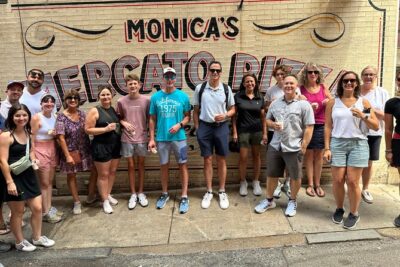 ★ 5.0Boston’s Politically Incorrect North End Food TourFrom $98453 reviews
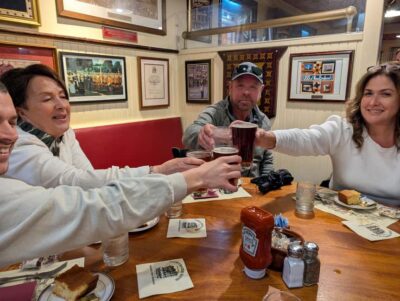 ★ 4.8North End & Little Italy Food Tour with Local DishesFrom $60229 reviews
 ★ 5.0Boston Seafood Lovers Food and History Walking TourFrom $159208 reviews
Browse the lists this tour appears in