
REVIEW · SALEM DAY TRIPS & TOURS
Salem Bewitched Tour With Tarot Reading
Tarot meets Salem history in 2 hours. This Salem Bewitched Tour with tarot reading mixes trial-era landmarks with a hands-on mystic moment, plus a fun pop-culture stop tied to the TV show Bewitched. I like that it keeps moving through the city instead of trapping you in one museum room, and I like that the group stays small enough to ask questions without feeling rushed.
My second favorite thing is the way the walk includes both the solemn memorial sites and the human details around them, not just spooky scenery. One thing to consider: Witch House admission (and any museum entry that may be required) isn’t included, so you may need a little extra cash on the day.
In This Review
- Key Highlights You’ll Actually Notice
- A Witchy History Walk With a Tarot Twist
- Pickman House: Warming Up Before the Memorial
- Salem Witch Trials Memorial: Granite, Names, and Dates
- Old Burying Point Cemetery: The Quiet Backbone of Salem
- Salem Old Town Hall: Federal Architecture in the Center of It All
- Bewitched Statue of Elizabeth Montgomery: Pop Culture With a Local Beat
- The Witch House: Jonathan Corwin and the Trial-Era Link
- Turner’s Seafood at Lyceum Hall and the Bridget Bishop Thread
- Roger Conant Statue: Salem’s English Settlement Roots
- Finishing at Peabody Essex Museum: Tarot and Palm Reading
- Price and What You’re Really Getting
- Tips to Make It Smooth (And Worth Your Time)
- Should You Book the Salem Bewitched Tour With Tarot Reading?
- FAQ
- How long is the Salem Bewitched Tour with Tarot Reading?
- Where does the tour start and end?
- Is the tour in English only?
- How big is the group?
- What’s included in the tarot reading?
- Is admission to the Witch House included?
- Is admission to the Peabody Essex Museum included?
- What’s the cancellation policy?
- Are service animals allowed?
Key Highlights You’ll Actually Notice

- Small-group feel (max 6 people): more time to talk and get personal answers from the guide
- Cynthia-style guidance: multilingual, friendly, and able to frame Salem in a new way
- Trial sites you can picture: the Witch Trials Memorial and Charter Street Cemetery hit hard, fast
- Bewitched statue photo stop: a wink of 1960s TV history right in downtown Salem
- Tarot and palm reading time: a dedicated moment at the Peabody Essex Museum end point
A Witchy History Walk With a Tarot Twist
Salem can feel like two different towns at once: one side is granite walls, court dates, and names carved into stone. The other side is street corners full of TV trivia, souvenir shops, and the same locations turned into stories you can enjoy today. This tour works because it lets you experience both without pretending they’re the same.
What makes it especially good value is the structure. You get a fast, guided circuit through key locations that most people either skip or cobble together on their own with limited context. Then you finish with a mystic add-on: tarot and palm reading, led by an experienced host. In other words, it’s not just “look at spooky stuff.” It’s “understand why Salem still matters” and then “make it personal.”
The tour runs about 2 to 3 hours and uses a mobile ticket, so you can show up, get oriented, and start listening right away. It’s also offered in multiple languages, so if English isn’t your strong suit, you still get the same core experience.
Pickman House: Warming Up Before the Memorial
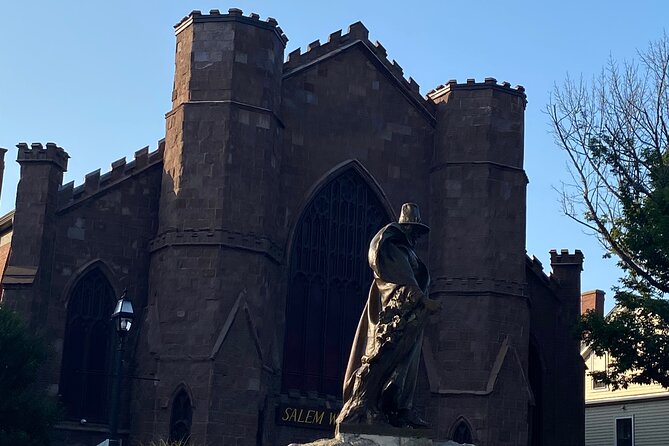
Your walk starts at the Peabody Essex Museum area and moves into downtown history right away. Before the Witch Trials Memorial, you stop at the Pickman House, one of Salem’s oldest houses.
This is a smart start because it sets the tone. Instead of jumping immediately to the memorial, you get stories about how this part of Salem looked and why it mattered. Even if you’ve read about the Salem Witch Trials before, it helps to hear how lived-in spaces and power structures connect—where people lived, where decisions got made, and how reputation could turn into punishment.
Practical note: because this is a quick stop, come with at least a basic expectation of what you want from the tour—atmosphere, clarity, or both. The guide’s pacing is built for a short overall timeline.
Half an hour north, Salem keeps going. More trips
Salem Witch Trials Memorial: Granite, Names, and Dates
Then you hit the main event: the Salem Witch Trials Memorial. The memorial is surrounded on three sides by a handcrafted granite wall, which immediately makes it feel more like a place of remembrance than a themed attraction. The threshold itself is inscribed with the victims’ protests of innocence, which is one of those details that stops you cold.
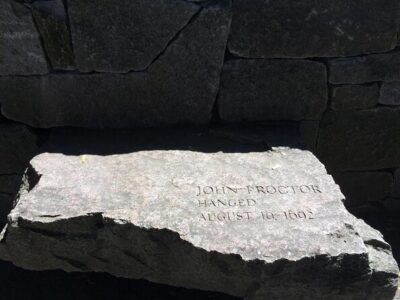
Inside the memorial perimeter, benches list the names and execution dates of the 20 victims. That matters because it turns Salem’s story from a foggy “bad event” into something specific: real people, real dates, and the horrifying speed of the court system.
This stop works for all ages, which I take to mean it’s built with respectful clarity. You don’t need to be a history buff to understand what you’re looking at. The only drawback is time: it’s enough to absorb the memorial, but not enough to read every inscription forever. So if you’re the type who likes to stand and study, expect a “guided look” rather than a slow walk-and-read session.
Old Burying Point Cemetery: The Quiet Backbone of Salem
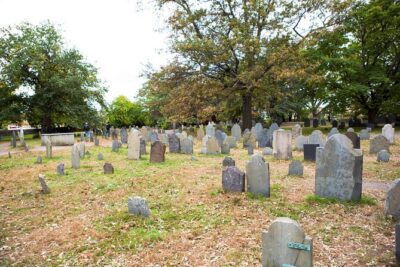
Next comes the Old Burying Point Cemetery, also called the Charter Street Cemetery. Opened in 1637, it’s the oldest maintained cemetery in Salem and among the oldest in the United States. If you want to feel how long Salem’s roots run, this is one of the best ways to do it without getting lost in facts.
This is a short stop, but the impact is long. Cemeteries don’t offer the same dramatic staging as trial sites, but they do something better: they remind you that these events were happening inside an actual community that kept living, burying, and counting time.
If you’re taking photos, keep them respectful. This place reads as quiet and reflective, and you’ll get the most out of it by slowing down for a minute even if the tour doesn’t linger.
Salem Old Town Hall: Federal Architecture in the Center of It All
From the cemetery, you move into civic Salem at the Old Town Hall. It’s a Federal-style building erected in 1816, and it’s tied to the Old Town Hall National Historic District.
This stop is short, but it gives you context for the city’s “how did it transform?” story. When you compare the memorial and cemetery with a formal civic building, you can sense how Salem shifted from earlier community life to later public institutions. That contrast helps you see the big picture: Salem didn’t stop evolving just because the trials happened.
Architecturally, it’s a treat even in passing—two-story brickwork, Palladian windows, carved wood details, decorative columns, and antique chandeliers.
Bewitched Statue of Elizabeth Montgomery: Pop Culture With a Local Beat
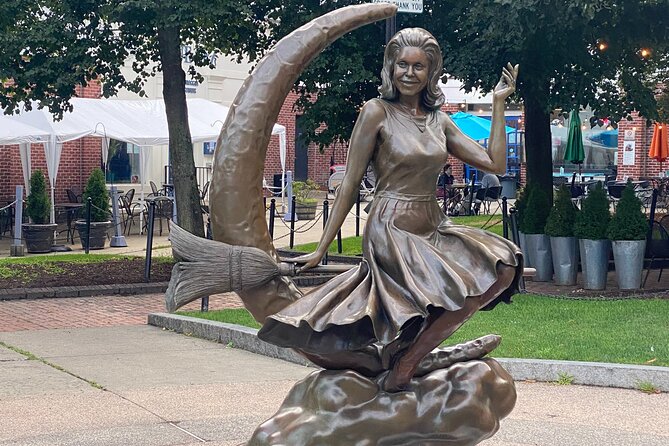
Now for the fun part. You get a photo stop at the Bewitched statue of Elizabeth Montgomery. The bronze statue shows Samantha Stephens, played by Montgomery, sitting sidesaddle on a broom next to a crescent moon.
Several episodes of Bewitched were filmed in Salem in 1970, and the city has leaned into that connection. This doesn’t erase the darker parts of Salem—it just adds a second way to engage. If your group has mixed tastes (history lovers plus TV fans), this stop prevents the tour from feeling like one long lecture.
It’s also a nice reminder that Salem’s story keeps getting retold. Even the way people talk about witches today is tied to how media and memory work.
- Satanic Salem Walking Tour★ 5.0 · 1,635 reviews
- Mysteries and Murders of Salem Guided Night-Time Walking Tour★ 5.0 · 1,488 reviews
- The Salem Witch Walk★ 4.5 · 1,301 reviews
- Wicked Awesome Tours: Witch Trial History and Salem Haunts!★ 5.0 · 1,032 reviews
- 2.5-Hour Salem History & Sightseeing Guided Walking Tour★ 5.0 · 850 reviews
The Witch House: Jonathan Corwin and the Trial-Era Link
The tour then visits the Witch House, the home of Jonathan Corwin (1640–1718)—the uncle of High Sheriff George Corwin. This building is the only extant structure with direct ties to the Salem Witch Trials.
What makes it important is not just the label. Jonathan Corwin served on the court of Oyer and Terminer that convicted the witches. When you hear that while standing in (or near) the building connected to the case, the story becomes painfully concrete.
There’s also a detail that brings the building’s survival into focus: the Witch House was moved 11 meters from its past location in the 1940s to accommodate road widening. That means you’re seeing both trial-era roots and later preservation decisions.
One caution: Witch House admission is not included, so if you want to go inside or spend extra time inside the house, plan for that cost separately. The exterior/interpretive portion may feel enough for some people, but history-first folks usually want a bit more.
Turner’s Seafood at Lyceum Hall and the Bridget Bishop Thread
Next you’re in an area tied to Bridget Bishop, the first person executed for witchcraft during the Salem Witch Trials in 1692. The tour points you toward the location of her property connected to Turner’s Seafood at Lyceum Hall.
This matters because Bishop’s place in the timeline changes how you understand the whole event. Being first means the court didn’t have to learn as it went; it acted with confidence and speed. Hearing her named here helps you connect the memorial’s general tragedy to a specific person.
After that, you continue toward the site of the infamous Salem Jail, where people were arrested and imprisoned before being hanged. Even if you don’t stop long at the jail site, the idea of movement—arrest to prison to execution—gives the tour a strong narrative arc.
Roger Conant Statue: Salem’s English Settlement Roots
A quick stop brings you to a Roger Conant statue. In 1913, sculptor Henry Hudson Kitson (famous for the Lexington Minuteman Memorial) created this statue of Roger Conant, described here as the founder of the English settlement in Salem.
This is a short, almost breather-like moment. It shifts you away from the trial focus and back toward the broader settlement timeline. When you connect Conant to the later trials, you get a sense of how long institutions and community power structures took to form.
If you like your history in short segments, this works. If you’re hungry for more detail, consider pairing the tour with reading or a follow-up stop afterward.
Finishing at Peabody Essex Museum: Tarot and Palm Reading
The tour ends back at the Peabody Essex Museum, where you get the tarot and palm reading experience. The guide is described as an experienced tarot reader, numerologist, and palmistry master, and time is set aside for reading—about 15 minutes as part of what you’re paying for in the tour’s included experience, with an overall longer stop window in that area.
What I like about ending here is that it gives you a mental switch. You go from stone and names to symbolic interpretation. For some people, that means fun and curiosity. For others, it’s a way to reflect on what the stories stir up emotionally. Either way, it’s a more personal ending than the usual “thank you, goodbye.”
A practical note: there’s mention that an admission ticket for the museum stop isn’t included. The reading time is part of the tour, but you should check what you personally need for entry to the museum space on the day. If you’re bringing a large group or you’re tight on timing, give yourself extra buffer at the start.
Price and What You’re Really Getting
This tour is built for value in time. At roughly 2–3 hours and a maximum group size of 6 people, you’re not spending half your day in transit or waiting behind a crowd.
Also, you get more than one type of experience:
- Trial-era education at the memorial and key linked sites
- Cultural context through civic and architectural stops
- Local pop culture via the Bewitched statue
- A guided mystic reading moment with tarot and palmistry
What’s not included is important for budgeting. Witch House admission and the museum-related ticket details are not included. That doesn’t make the tour bad value—it just means you should plan to pay those site costs separately if you want the full inside-the-building experience.
If you’re someone who likes to see a lot in a short window, this tour will feel efficient. If you want hours inside multiple buildings, you might find the pace light. You’re paying for a guided circuit plus the reading, not a day-long deep dive into every stop.
Tips to Make It Smooth (And Worth Your Time)
A few practical moves will help you get the most out of the walk:
- Wear shoes you can stand in. The stops are short, but you’ll still be walking.
- Bring a light layer. Salem weather can shift, and you’ll feel it more outdoors.
- Have a camera ready, but don’t rush the memorial and cemetery. Take your photos quickly, then give yourself a minute to actually read or absorb what’s there.
- If you’re going for the tarot and palm reading, decide ahead of time what you want to ask. A focused question gets better results than vague curiosity.
- If you’re not sure about the Witch House or museum entry costs, confirm what you’ll need for entry the day of. The tour is clear that those items aren’t included.
And yes: if you’re curious about how the guide reframes Salem, watch how the story connects the memorial names, the linked court roles, and the idea of community reputation.
Should You Book the Salem Bewitched Tour With Tarot Reading?
Book it if you want a Salem experience that balances serious trial-era remembrance with a playful local twist, and you like the idea of ending with a tarot and palm reading moment you didn’t have to plan yourself.
Skip it (or pair it with something else) if you expect museum-level time at every site or you only want deep interior access where tickets are required. This tour is designed as a guided overview with standout moments, not a slow, read-every-label marathon.
One more way to decide: if your group includes people who think Salem is either too dark or too goofy, this tour manages both moods. It doesn’t erase the tragedy, but it also doesn’t treat the entire city like a single theme park.
FAQ
How long is the Salem Bewitched Tour with Tarot Reading?
It runs about 2 to 3 hours.
Where does the tour start and end?
It starts at the Peabody Essex Museum, 161 Essex St, Salem, MA 01970, and ends back at the same meeting point.
Is the tour in English only?
No. The tour is offered in English, French, Spanish, and Italian.
How big is the group?
The tour has a maximum group size of 6 people.
What’s included in the tarot reading?
The tour includes a 15-minute tarot reading from the host tour guide.
Is admission to the Witch House included?
No. Admission for the Witch House is not included.
Is admission to the Peabody Essex Museum included?
Admission ticket for the museum stop is listed as not included, so you may need to handle any entry requirements separately.
What’s the cancellation policy?
Free cancellation is available up to 24 hours in advance for a full refund.
Are service animals allowed?
Yes, service animals are allowed.
More of the Boston Ledger



The Witch City Docket
New on the Boston Docket
- Private Walking Salem Legends Tour Professional Guide
★ 5.0 · 3 reviews - Pirates and Privateers Walking Tour with Real Pirates Admission
★ 4.5 · 3 reviews - Discover Salem’s History & Practice Authentic Witchcraft
★ 4.1 · 4 reviews - The Ghost Walk. Tortured Souls of Salem
★ 5.0 · 4 reviews - Cemetery and Witchcraft Trials Tour
★ 5.0 · 4 reviews
Salem Day Trips & Tours, compared.
 ★ 5.0History and Hauntings of Salem Guided Walking TourFrom $3614,564 reviews
 ★ 4.5Salem’s Best Ghost TourFrom $304,186 reviews
 ★ 5.0Salem Voodoo, Vampires, and Ghosts Guided Walking Tour1,931 reviews
 ★ 5.0Bewitched Walking Tour of SalemFrom $351,895 reviews
 ★ 5.0Satanic Salem Walking TourFrom $301,635 reviews
 ★ 5.0Mysteries and Murders of Salem Guided Night-Time Walking TourFrom $361,488 reviews
 ★ 4.5The Salem Witch WalkFrom $251,301 reviews
 ★ 5.0Wicked Awesome Tours: Witch Trial History and Salem Haunts!From $291,032 reviews
Browse the lists this tour appears in