
REVIEW · HARVARD, MIT & CAMBRIDGE TOURS
Public Innovation Trail Tour in Cambridge
This trail turns science into street stories. The Public Innovation Trail in Cambridge is a guided walk through Kendall Square where you connect famous inventions to the people and labs pushing new ideas right now. I like that the focus stays on real-world impact, not just facts on a plaque, and I also love the way the guide keeps the pacing tight so you never feel lost.
You’ll get two big wins for the price: a guided circuit of major tech stops for $20 and a tour built for an easy rhythm (about 1 hour 30 minutes). One consideration: you do not go into the active labs, and even some lobby exhibits can be closed on certain days, so plan to enjoy what’s viewable from public areas.
In This Review
- Key Points to Know Before You Walk Kendall Square
- A 90-Minute Kendall Square Walk That Links Science to Real People
- Price and Value: What $20 Really Buys You
- What You’ll Actually Do: Mobile Ticket, Tight Timing, No Lab Entry
- Start at Broadway and Get Oriented Fast
- Stop 1 to 4: Entrepreneur Walk of Fame, CIC Startup Hub, MIT Museum, Google
- Stop 1: Entrepreneur Walk of Fame
- Stop 2: CIC Cambridge @ 245 Main
- Stop 3: MIT Museum
- Stop 4: 355 Main St (Google)
- Stop 5 to 8: Stata Center, iRobot, Broad Institute, and the Human Genome Project
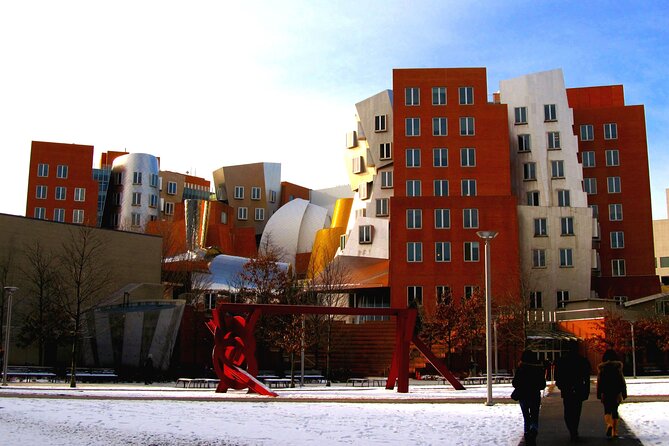
- Stop 5: Stata Center at MIT
- Stop 6: Broad Institute of MIT and Harvard
- Stop 7: Whitehead Institute (Human Genome Project)
- Stop 8: 225 Binney St (Biogen)
- Stop 9 to 13: Akamai’s Internet Accelerator, Draper Moon Math, Moderna RNA, LabCentral, and Tootsie Candy
- Stop 9: 145 Broadway (Akamai)
- Stop 10: Draper Labs and the Giant Moon
- Stop 11: Moderna
- Stop 12: LabCentral
- Stop 13: 810 Main St Candy Factory (Tootsie Brands)
- The Real Payoff: How the Tour Teaches You to Spot Innovation
- When Lobbies Look Different: A Friendly Warning
- Who Should Book This Tour
- Should You Book the Public Innovation Trail Tour in Cambridge?
- FAQ
- How much does the Public Innovation Trail Tour cost?
- How long is the tour?
- Where do I meet and where does the tour end?
- Do I need to print anything, or is there a mobile ticket?
- Is the tour inside buildings?
- Are the stops free to view?
- How big is the group?
- What’s the meeting time?
- Is the tour weather-dependent?
- What’s the cancellation policy?
Key Points to Know Before You Walk Kendall Square
- Short, story-packed stops keep you moving, with lots of context per location
- No inside lab access means you’ll mostly see public-facing lobbies, exteriors, and exhibits
- MIT Museum + MIT hot spots show how research turns into public learning
- Robotics and software engineering links connect modern tech to Apollo-era code
- Biotech stops from Broad to Moderna explain how breakthroughs reach patients
- Even the candy factory is part of the theme, including the secrecy behind production
A 90-Minute Kendall Square Walk That Links Science to Real People
Cambridge’s Kendall Square can feel like a blur if you’re sightseeing on your own: sleek buildings, big names, and constant construction. This tour gives you a storyline you can hold in your head. You’re basically learning how innovation gets built—one decision, one lab, one startup idea at a time.
The tour’s whole pitch is simple: history isn’t just old. Today’s work in anti-aging tech, gene-editing, AI, and internet delivery grows from earlier inventions (even the weird ones). You’ll hear how concepts travel from one era to the next, and how the people involved shape what comes next.
Price and Value: What $20 Really Buys You
At $20 per person, this is a strong value if you like guided context more than museum wandering. The tour lasts about 1.5 hours, and the guide provides the interactive, in-person storytelling that turns each site into a chapter.
Most stops are free to view, and the tour includes a mobile ticket (so you’re not scrambling with paper). Also, you’re capped at a maximum of 25 travelers, which matters for hearing the guide without constantly craning your neck or backing up to let others pass.
Across the river to Cambridge, more campus time
What You’ll Actually Do: Mobile Ticket, Tight Timing, No Lab Entry
This is a walking tour with a clear constraint: you typically won’t enter buildings. Many of the spaces are active labs, so access is limited to what’s publicly viewable—lobbies, ground-floor areas, and the kinds of exhibits that don’t require you to cross restricted doors.
The timing is built around that reality. Several stops are only about 5 minutes, so your guide has to be selective—and that’s a good thing. You’ll get the key idea quickly, plus a bit of why it matters, before moving on.
Practical note: wear comfortable shoes and expect to move between sites. The experience is listed as requiring moderate physical fitness, and it runs in good weather—so if rain rolls in, you’ll be offered another date or a refund.
Start at Broadway and Get Oriented Fast
You meet at 50 Broadway, Cambridge, MA 02142 with a 2:00 pm start time. The walk ends near the MIT Media Lab, 75 Amherst St, Cambridge, MA 02139.
If you’re pairing this with other MIT-area plans, the end point is a convenient handoff. Even if you don’t go inside anything else, you’ll leave knowing where you are in the maze of MIT and startup campus zones.
Stop 1 to 4: Entrepreneur Walk of Fame, CIC Startup Hub, MIT Museum, Google
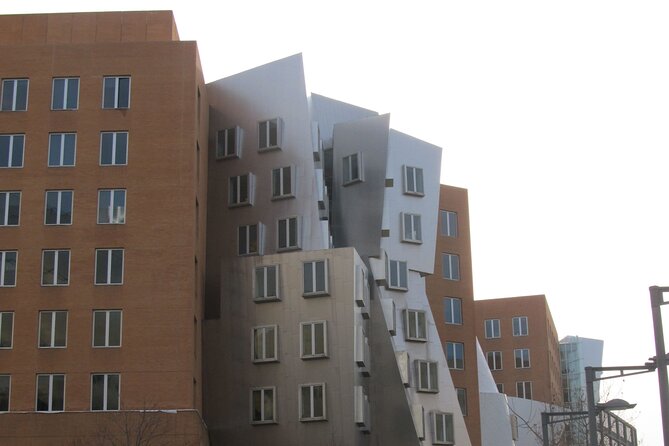
Stop 1: Entrepreneur Walk of Fame
You start with the Entrepreneur Walk of Fame, a quick way to set the theme. It’s not just name-dropping; you get a feel for how Cambridge treats entrepreneurship like a long-running craft, not a one-time miracle.
- Boston: Harvard & Cambridge Walking Food Tour★ 5.0 · 18 reviews
- Harvard Square Chocolate Tour★ 4.5 · 14 reviews
- Harvard Square Cambridge Food & Walking Tour★ 5.0 · 5 reviews
- Union Square, Somerville Neighborhood Food Tour★ 5.0 · 4 reviews
Stop 2: CIC Cambridge @ 245 Main
Next is CIC Cambridge, formerly the Cambridge Incubator. You’ll learn about the startup-hub story through Tim Rowe, a detail worth remembering because it connects MIT-adjacent education to the day-to-day grind of launching companies.
This stop is valuable even if you don’t work in tech, because it shows how ecosystems are built: mentors, facilities, and a culture that expects experimentation.
Stop 3: MIT Museum
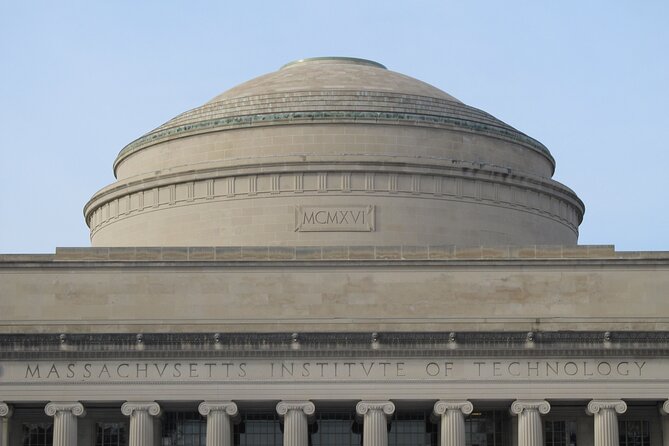
Then you reach the MIT Museum, reopened in October 2022. The theme here is how institutions bring cutting-edge work to the public, helping non-scientists understand what all the lab buzz actually means.
Even if you only view what’s accessible during your visit, you’ll come away with a better sense of MIT’s role in turning research into public learning.
Stop 4: 355 Main St (Google)
At 355 Main St, you’ll learn about Cambridge’s relationship with tech giants and how creativity emerges from those office doors. You might hear how products become cultural symbols—like Android—because these companies often operate like idea factories, with local roots and global reach.
This stop is quick, so don’t expect a deep technical explanation here. Instead, it bridges the story from startups and academic labs into the world of platforms.
Stop 5 to 8: Stata Center, iRobot, Broad Institute, and the Human Genome Project
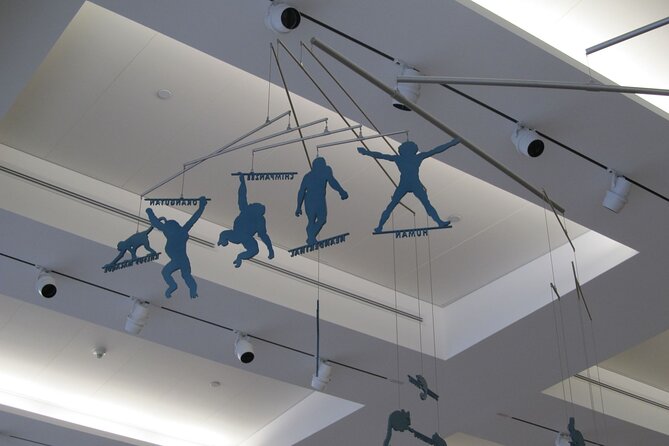
Stop 5: Stata Center at MIT
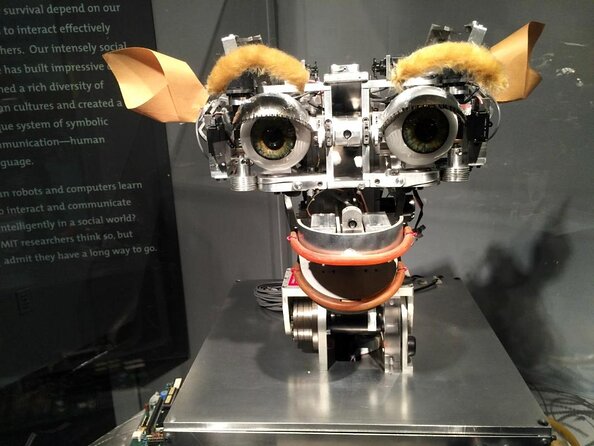
The Stata Center is where the tour leans into the future-facing tech side. You’ll hear about computer science, artificial intelligence, and robotics—plus the big connection to iRobot and the Roomba.
There’s also a small, ground-floor exhibit tied to student “hacks,” or pranks, through the years. That matters because it frames innovation as something human: curiosity, mischief, and the willingness to test ideas even when they’re not supposed to work.
Stop 6: Broad Institute of MIT and Harvard
At the Broad Institute of MIT and Harvard, the focus shifts to disease and what it takes to translate biological insights into patient impact. You’ll hear how the institute aims to connect research with real outcomes, narrowing the gap between discovery and treatment.
For me, this is one of the most meaningful stops on the walk. Tech is exciting, but it’s the medicine angle that makes you understand the stakes.
Stop 7: Whitehead Institute (Human Genome Project)
Next is the Human Genome Project story at the Whitehead Institute. You’ll get the founding context: it was created in 1982 by Jack Whitehead and David Baltimore, and it was built with a clear mission—assemble top researchers, fund them well, and eliminate virtually any impediments to scientific discovery.
That emphasis on reducing bureaucracy is a useful lens. It helps you see why some environments produce faster breakthroughs than others.
Stop 8: 225 Binney St (Biogen)
At 225 Binney St, you’ll hear about Biogen, including its founding by two Nobel Prize winners and its history of innovation. The tour uses this stop to show how biotech companies grow from major scientific leadership into ongoing development work.
Stop 9 to 13: Akamai’s Internet Accelerator, Draper Moon Math, Moderna RNA, LabCentral, and Tootsie Candy
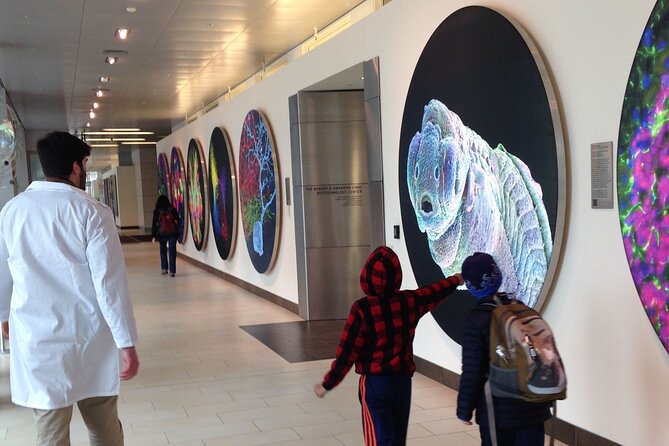
Stop 9: 145 Broadway (Akamai)
At 145 Broadway, you meet Akamai and the idea behind the Internet Accelerator. The core concept is a worldwide network of servers that cache content closer to where people access it, speeding up web delivery.
A genuinely memorable detail: early large-scale demonstrations in 1999 included delivering a movie trailer for Star Wars: The Phantom Menace and ESPN’s March Madness coverage. That’s a great example of how infrastructure becomes culture.
Stop 10: Draper Labs and the Giant Moon
Now it’s time for Draper Labs at 555. You’ll spot the giant moon hanging in the lobby, a striking visual shortcut into the story of navigation tech.
The big technical-human connection here is Apollo guidance computers and the software behind them. Margaret Hamilton is highlighted as a code developer credited with helping define the field of software engineering. It’s one of those moments where the tour makes you realize modern software has deep roots in mission-critical work.
Stop 11: Moderna
At Moderna, you’ll hear how it started in 2010 to explore modified RNA molecules—mod-RNA—for treating diseases and serving as vaccines. This stop gives you a modern biotech framing: how platforms, not just single discoveries, can shape future medicine.
Stop 12: LabCentral
LabCentral is another “how the ecosystem works” stop. It’s had many past uses—Davenport Car Works, Walworth Manufacturing Company, Polaroid—and today it’s a hub for innovators.
The value here is perspective. A place doesn’t have to be built from scratch to matter. Sometimes the building just keeps getting repurposed, and that continuity helps ideas keep stacking over time.
Stop 13: 810 Main St Candy Factory (Tootsie Brands)
You finish with 810 Main St, the last operating candy factory in Cambridge, owned by Tootsie Brands. The tour uses it to show that innovation isn’t only high-tech labs—it’s also food production, branding, and manufacturing know-how.
You’ll hear why tours aren’t offered: candy companies tend to be secretive about equipment and processes. Inside, they make 26 million pieces of candy a day.
It’s a fun closer because it reminds you that innovation is practical. It’s the difference between an idea and a thing that shows up at the store tomorrow.
The Real Payoff: How the Tour Teaches You to Spot Innovation
The best moments aren’t just the big names. It’s how the guide connects them into a pattern.
You start to see that breakthroughs often depend on:
- Support systems (incubators, funding, research environments)
- Translation pathways (lab insights moving toward patients)
- Infrastructure (how internet delivery gets faster with smarter systems)
- Software and execution (not only what’s invented, but how it runs)
- Iteration culture (including the playful side of experimentation)
If your brain likes cause-and-effect, this walk will keep you engaged. And if your brain just likes stories, you’ll still enjoy it, because the guide’s job is to turn each location into a readable narrative.
It also helps that the guides on this tour are named in the experience feedback—people mention Jul and Julia as enthusiastic and easy to listen to. That matters because a tech-heavy route can turn into a lecture. On this one, the energy is part of the experience.
When Lobbies Look Different: A Friendly Warning
Because most stops focus on what’s publicly viewable, some details can vary. For example, one common hiccup is that on certain days (like Sundays), some lobby exhibits may be closed.
That doesn’t ruin the tour, but it does change what you can physically see at a few stops. If you want the most visual payoff, a weekday might work better than a day when buildings are more likely to limit public-facing hours.
Who Should Book This Tour
This is a great fit if you:
- want an efficient way to understand Kendall Square without needing technical jargon
- like science and tech stories that connect to real products and real outcomes
- enjoy walking tours where the guide keeps you moving and thinking
It may be less ideal if you:
- are hoping for extensive interior access to active research labs
- want a long museum-style visit at one place rather than many short stops
Should You Book the Public Innovation Trail Tour in Cambridge?
Yes, if you want a guided walk that makes Cambridge tech feel human and understandable. For $20, you’re getting a tight route through MIT-adjacent innovation hubs—plus biotech, internet infrastructure, software roots, and a surprisingly relevant candy-industry finish. The format is efficient, the pace works, and the guide-led storytelling is the main reason this tour lands.
I’d book it especially if it’s your first time in Cambridge for tech sightseeing. You’ll leave with names you recognize, a map in your head, and a clearer sense of how today’s breakthroughs grew out of earlier ideas.
FAQ
How much does the Public Innovation Trail Tour cost?
It costs $20.00 per person.
How long is the tour?
The duration is about 1 hour 30 minutes.
Where do I meet and where does the tour end?
You start at 50 Broadway, Cambridge, MA 02142, and the tour ends at MIT Media Lab, 75 Amherst St, Cambridge, MA 02139.
Do I need to print anything, or is there a mobile ticket?
It uses a mobile ticket.
Is the tour inside buildings?
Access inside buildings is limited. Most of these spaces are active labs, so you do not enter them.
Are the stops free to view?
The tour information lists admission ticket free for the listed stops.
How big is the group?
There is a maximum of 25 travelers.
What’s the meeting time?
The start time listed is 2:00 pm.
Is the tour weather-dependent?
Yes. It requires good weather. If canceled due to poor weather, you’ll be offered a different date or a full refund.
What’s the cancellation policy?
You can cancel for free up to 24 hours in advance for a full refund. If you cancel less than 24 hours before the start time, the amount paid will not be refunded.
More of the Boston Ledger



Across the Charles to Cambridge
New on the Boston Docket
- Union Square, Somerville Neighborhood Food Tour
★ 5.0 · 4 reviews - Harvard Square Cambridge Food & Walking Tour
★ 5.0 · 5 reviews - Harvard Square Chocolate Tour
★ 4.5 · 14 reviews - Boston: Harvard & Cambridge Walking Food Tour
★ 5.0 · 18 reviews - Public Innovation Trail Tour in Cambridge
★ 5.0 · 19 reviews
Harvard, MIT & Cambridge Tours, compared.
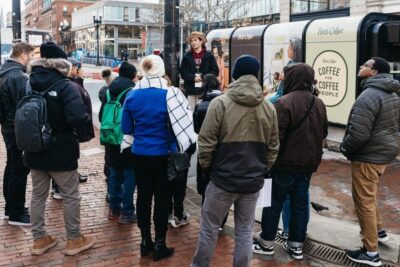 ★ 4.6Cambridge: Harvard University Student-Guided Walking TourFrom $223,931 reviews
 ★ 4.5Harvard University Campus Guided Walking TourFrom $233,632 reviews
 ★ 4.7Cambridge, Massachusetts: MIT and Harvard Walking TourFrom $49486 reviews
 ★ 4.5MIT Campus Guided Walking TourFrom $22175 reviews
 ★ 5.0Illustrious Schools: Group Tour of MIT And HarvardFrom $50107 reviews
 ★ 5.0Tour de Cambridge Guided Bicycle TourFrom $7834 reviews
 ★ 5.0Private City Tour of Boston and CambridgeFrom $46033 reviews
 ★ 5.0Delicious Donuts of Harvard Square: A Historical Walking TourFrom $7031 reviews
Browse the lists this tour appears in